
What is a Paragraph A paragraph is a
- Slides: 11
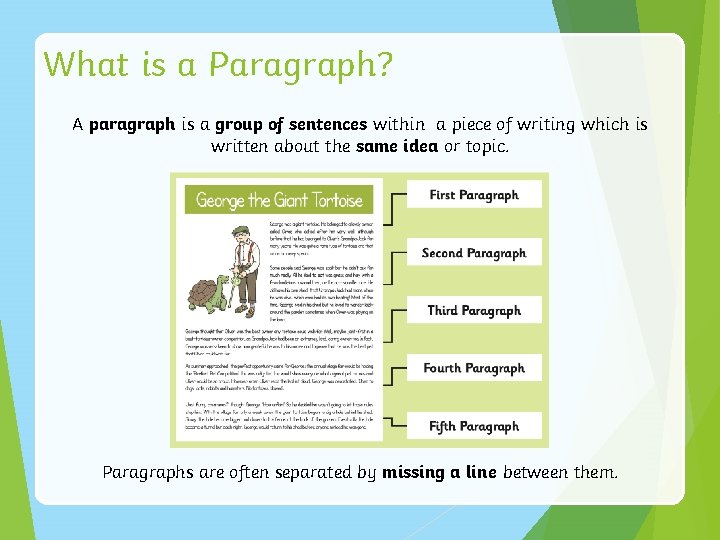
What is a Paragraph? A paragraph is a group of sentences within a piece of writing which is written about the same idea or topic. Paragraphs are often separated by missing a line between them.
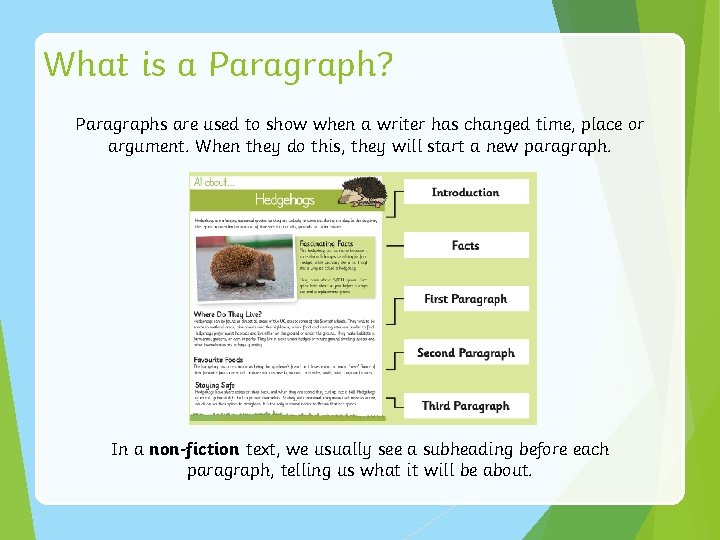
What is a Paragraph? Paragraphs are used to show when a writer has changed time, place or argument. When they do this, they will start a new paragraph. In a non-fiction text, we usually see a subheading before each paragraph, telling us what it will be about.
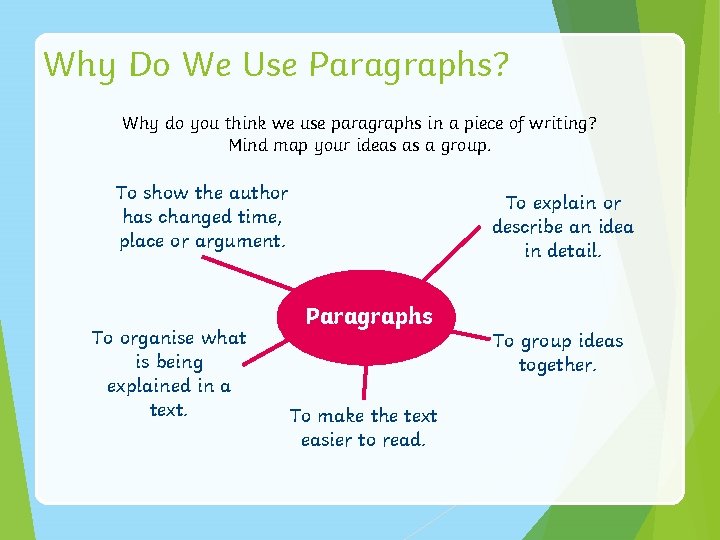
Why Do We Use Paragraphs? Why do you think we use paragraphs in a piece of writing? Mind map your ideas as a group. To show the author has changed time, place or argument. To organise what is being explained in a text. To explain or describe an idea in detail. Paragraphs To make the text easier to read. To group ideas together.
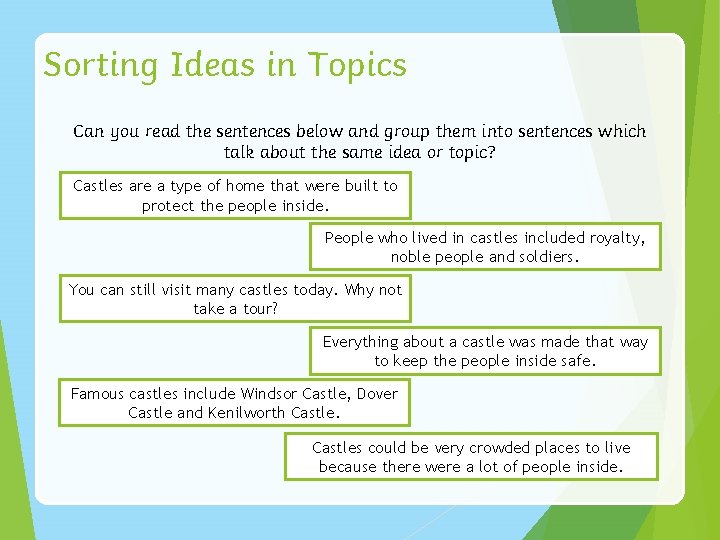
Sorting Ideas in Topics Can you read the sentences below and group them into sentences which talk about the same idea or topic? Castles are a type of home that were built to protect the people inside. People who lived in castles included royalty, noble people and soldiers. You can still visit many castles today. Why not take a tour? Everything about a castle was made that way to keep the people inside safe. Famous castles include Windsor Castle, Dover Castle and Kenilworth Castles could be very crowded places to live because there were a lot of people inside.
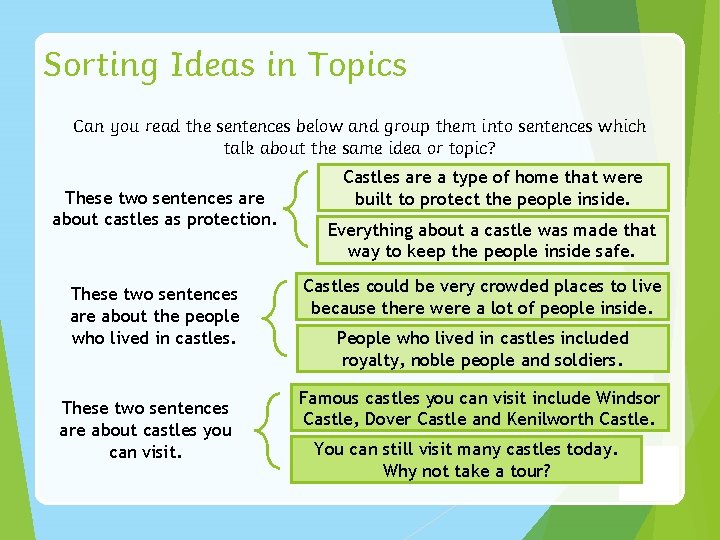
Sorting Ideas in Topics Can you read the sentences below and group them into sentences which talk about the same idea or topic? These two sentences are about castles as protection. These two sentences are about the people who lived in castles. These two sentences are about castles you can visit. Castles are a type of home that were built to protect the people inside. Everything about a castle was made that way to keep the people inside safe. Castles could be very crowded places to live because there were a lot of people inside. People who lived in castles included royalty, noble people and soldiers. Famous castles you can visit include Windsor Castle, Dover Castle and Kenilworth Castle. You can still visit many castles today. Why not take a tour?
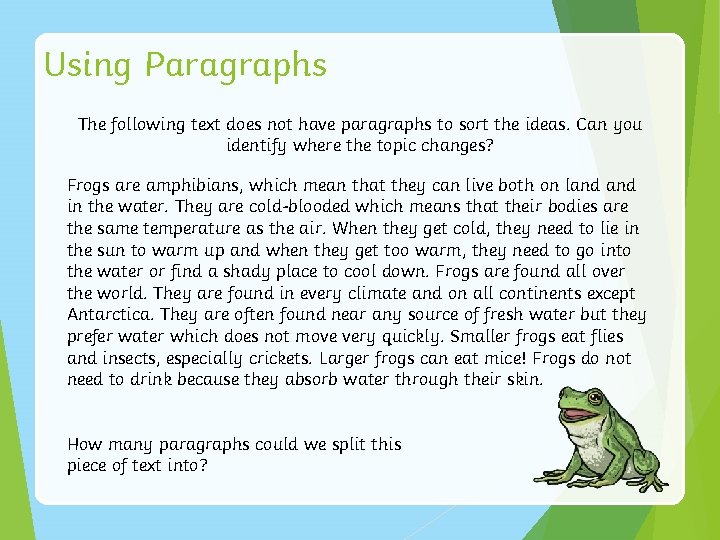
Using Paragraphs The following text does not have paragraphs to sort the ideas. Can you identify where the topic changes? Frogs are amphibians, which mean that they can live both on land in the water. They are cold-blooded which means that their bodies are the same temperature as the air. When they get cold, they need to lie in the sun to warm up and when they get too warm, they need to go into the water or find a shady place to cool down. Frogs are found all over the world. They are found in every climate and on all continents except Antarctica. They are often found near any source of fresh water but they prefer water which does not move very quickly. Smaller frogs eat flies and insects, especially crickets. Larger frogs can eat mice! Frogs do not need to drink because they absorb water through their skin. How many paragraphs could we split this piece of text into?
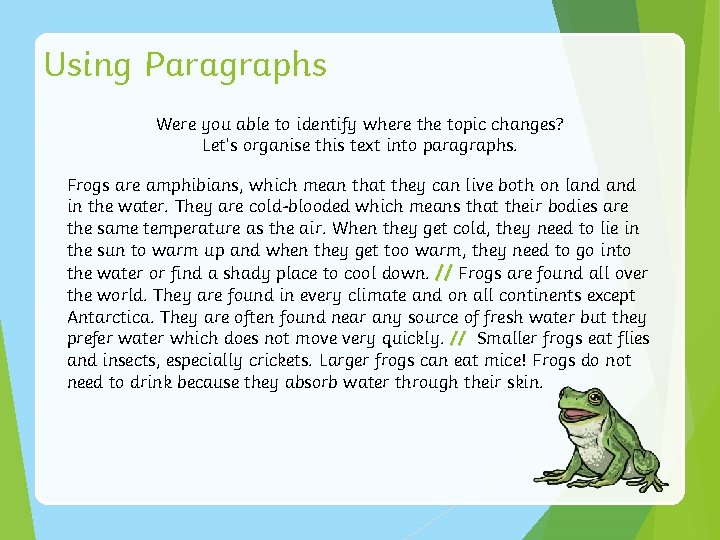
Using Paragraphs Were you able to identify where the topic changes? Let’s organise this text into paragraphs. Frogs are amphibians, which mean that they can live both on land in the water. They are cold-blooded which means that their bodies are the same temperature as the air. When they get cold, they need to lie in the sun to warm up and when they get too warm, they need to go into the water or find a shady place to cool down. // Frogs are found all over the world. They are found in every climate and on all continents except Antarctica. They are often found near any source of fresh water but they prefer water which does not move very quickly. // Smaller frogs eat flies and insects, especially crickets. Larger frogs can eat mice! Frogs do not need to drink because they absorb water through their skin.
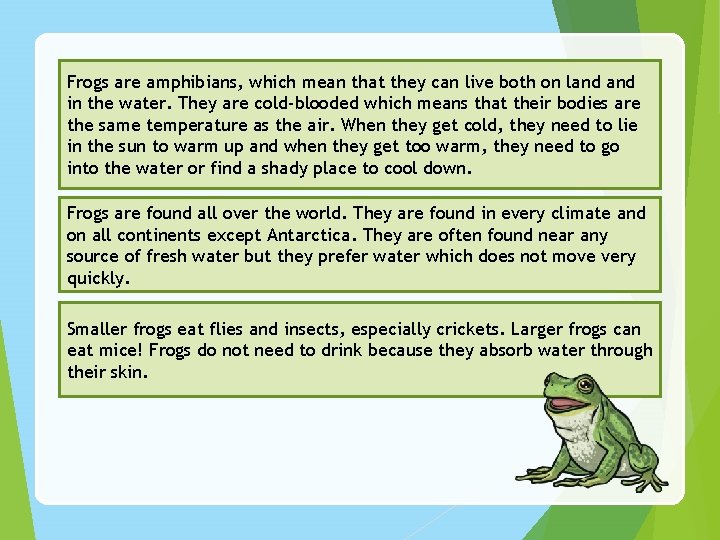
Frogs are amphibians, which mean that they can live both on land in the water. They are cold-blooded which means that their bodies are the same temperature as the air. When they get cold, they need to lie in the sun to warm up and when they get too warm, they need to go into the water or find a shady place to cool down. Frogs are found all over the world. They are found in every climate and on all continents except Antarctica. They are often found near any source of fresh water but they prefer water which does not move very quickly. Smaller frogs eat flies and insects, especially crickets. Larger frogs can eat mice! Frogs do not need to drink because they absorb water through their skin.
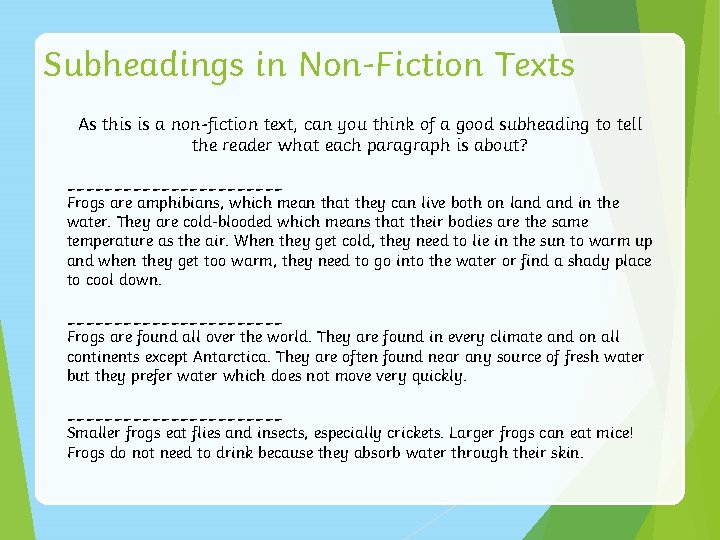
Subheadings in Non-Fiction Texts As this is a non-fiction text, can you think of a good subheading to tell the reader what each paragraph is about? ____________ Frogs are amphibians, which mean that they can live both on land in the water. They are cold-blooded which means that their bodies are the same temperature as the air. When they get cold, they need to lie in the sun to warm up and when they get too warm, they need to go into the water or find a shady place to cool down. ____________ Frogs are found all over the world. They are found in every climate and on all continents except Antarctica. They are often found near any source of fresh water but they prefer water which does not move very quickly. ____________ Smaller frogs eat flies and insects, especially crickets. Larger frogs can eat mice! Frogs do not need to drink because they absorb water through their skin.
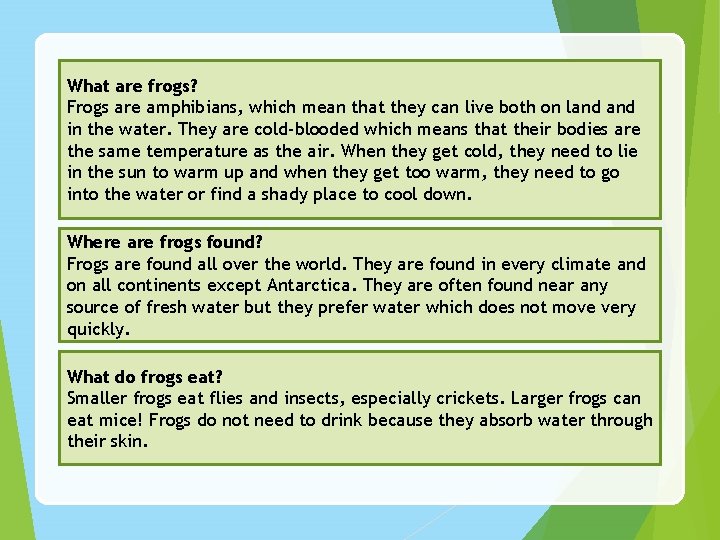
What are frogs? Frogs are amphibians, which mean that they can live both on land in the water. They are cold-blooded which means that their bodies are the same temperature as the air. When they get cold, they need to lie in the sun to warm up and when they get too warm, they need to go into the water or find a shady place to cool down. Where are frogs found? Frogs are found all over the world. They are found in every climate and on all continents except Antarctica. They are often found near any source of fresh water but they prefer water which does not move very quickly. What do frogs eat? Smaller frogs eat flies and insects, especially crickets. Larger frogs can eat mice! Frogs do not need to drink because they absorb water through their skin.
How would it work in newspapers? What is the job of the introduction of a newspaper? How could we use this to help us organise our main piece of writing?