
What is a Mineral n Naturallyformed solid substance
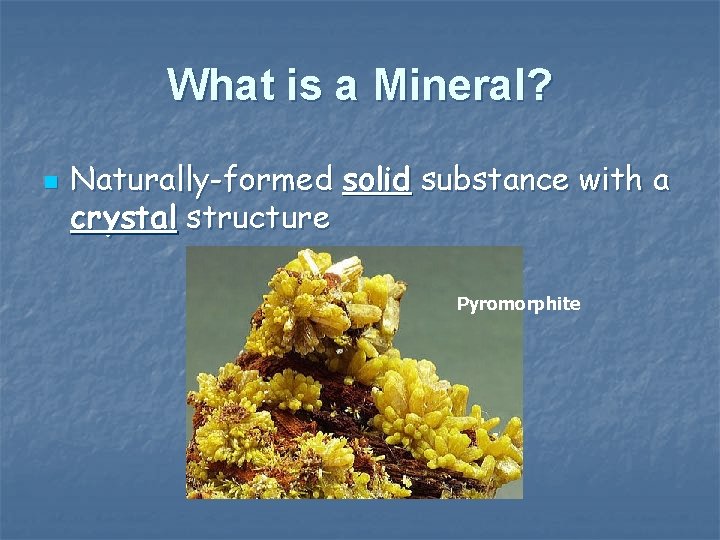
What is a Mineral? n Naturally-formed solid substance with a crystal structure Pyromorphite
What do all minerals have in common? All: 1. 2. 3. 4. 5. Are formed by natural processes. Are NOT alive and NEVER were alive Have a definite volume and shape Are elements or compounds with a unique chemical makeup Are made up of particles that are arranged in a pattern that is repeated over and over (called a CRYSTAL)
Watch “Crystals” by Brainpop… 1. What element are diamonds made from? 2. What do all crystals have in common?
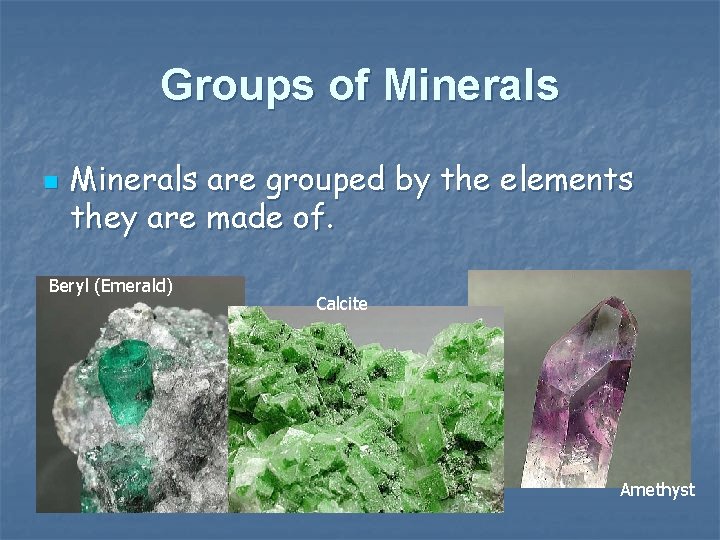
Groups of Minerals n Minerals are grouped by the elements they are made of. Beryl (Emerald) Calcite Amethyst
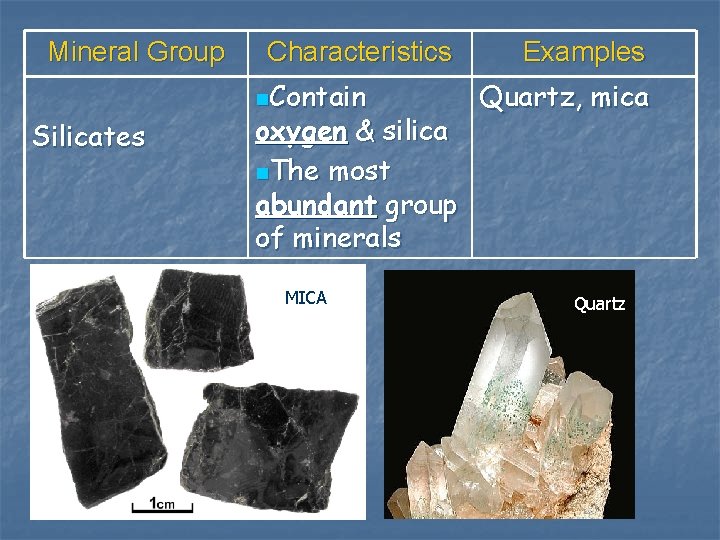
Mineral Group Silicates Characteristics n. Contain oxygen & silica n. The most abundant group of minerals MICA Examples Quartz, mica Quartz
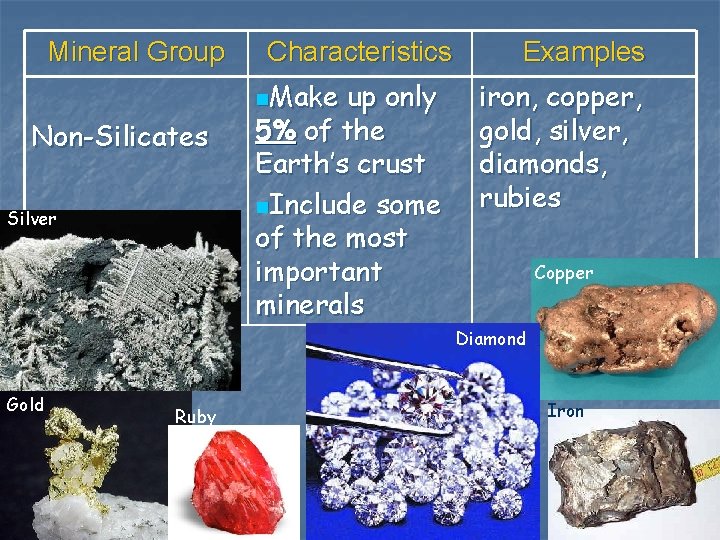
Mineral Group Non-Silicates Silver Characteristics n. Make up only 5% of the Earth’s crust n. Include some of the most important minerals Examples iron, copper, gold, silver, diamonds, rubies Copper Diamond Gold Ruby Iron
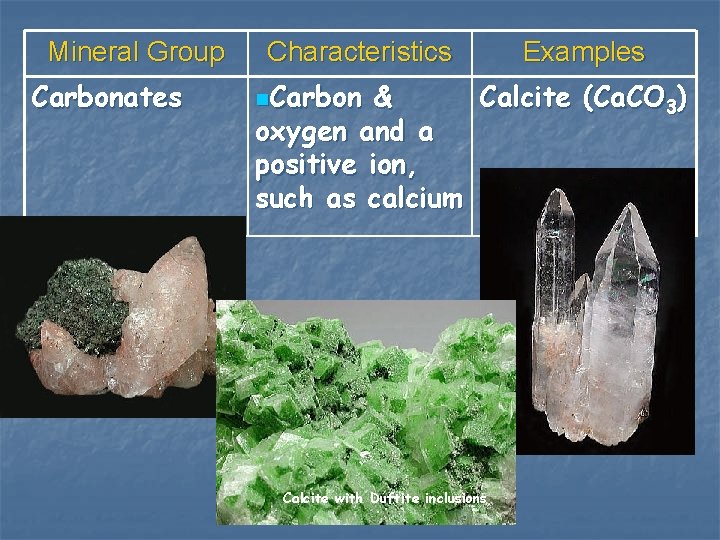
Mineral Group Carbonates Characteristics n. Carbon Examples & Calcite (Ca. CO 3) oxygen and a positive ion, such as calcium Calcite with Duftite inclusions
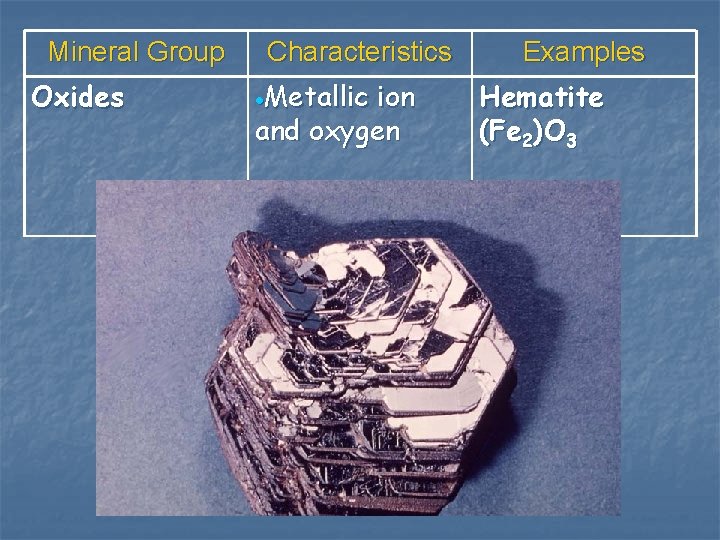
Mineral Group Oxides Characteristics Metallic ion and oxygen Examples Hematite (Fe 2)O 3
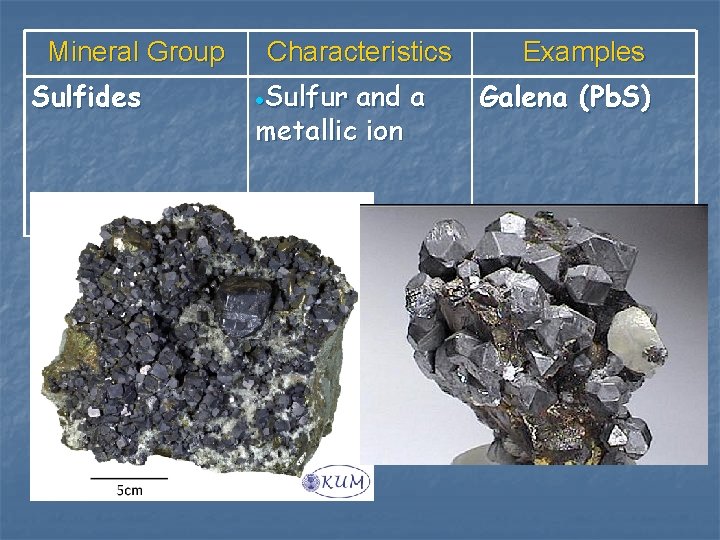
Mineral Group Sulfides Characteristics Sulfur and a metallic ion Examples Galena (Pb. S)
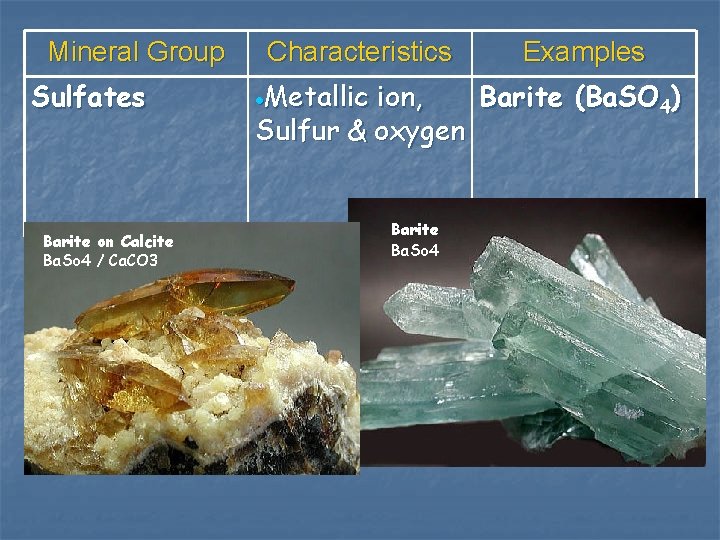
Mineral Group Sulfates Barite on Calcite Ba. So 4 / Ca. CO 3 Characteristics Metallic Examples ion, Barite (Ba. SO 4) Sulfur & oxygen Barite Ba. So 4

Mineral Group Native Elements Characteristics Single elements Examples Gold (Au), Diamond (C), Silver (Ag)
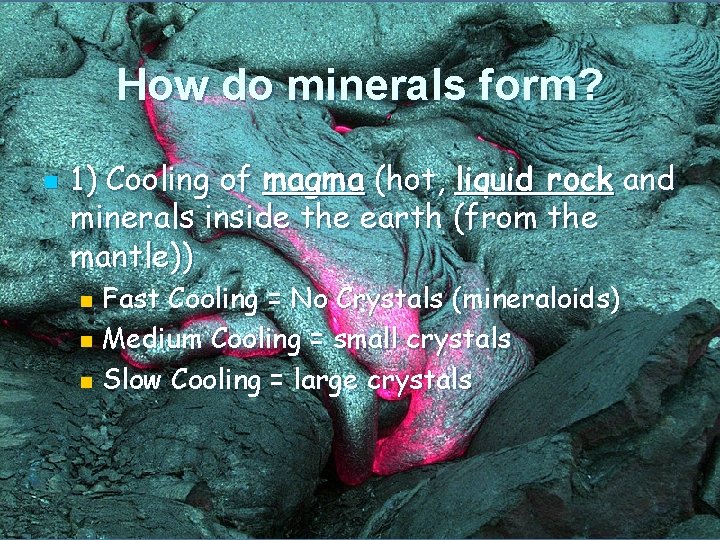
How do minerals form? n 1) Cooling of magma (hot, liquid rock and minerals inside the earth (from the mantle)) Fast Cooling = No Crystals (mineraloids) n Medium Cooling = small crystals n Slow Cooling = large crystals n
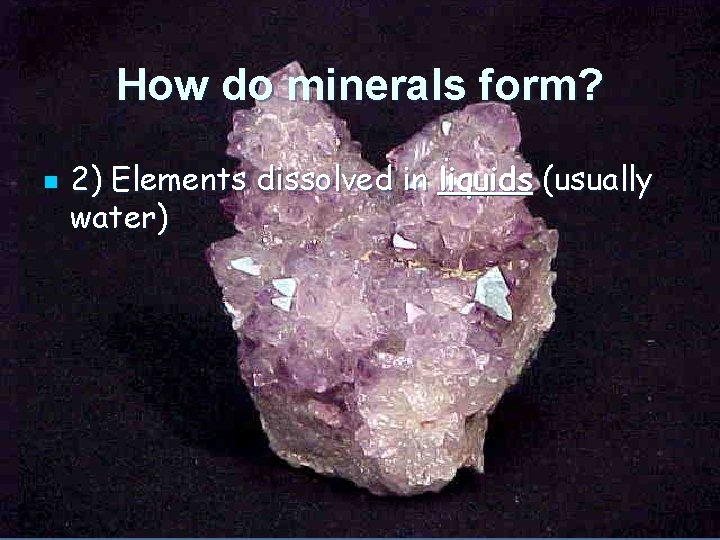
How do minerals form? n 2) Elements dissolved in liquids (usually water)
Physical Properties of Minerals (can be used to identify the mineral) Color n Can be misleading n Can vary with the type of impurities

Physical Properties of Minerals (can be used to identify the mineral) Luster n Surface reflection n metallic = shiny like metal n non-metallic = dull, non-shiny surface Pyrite has a metallic luster Calcite has a non-metallic luster
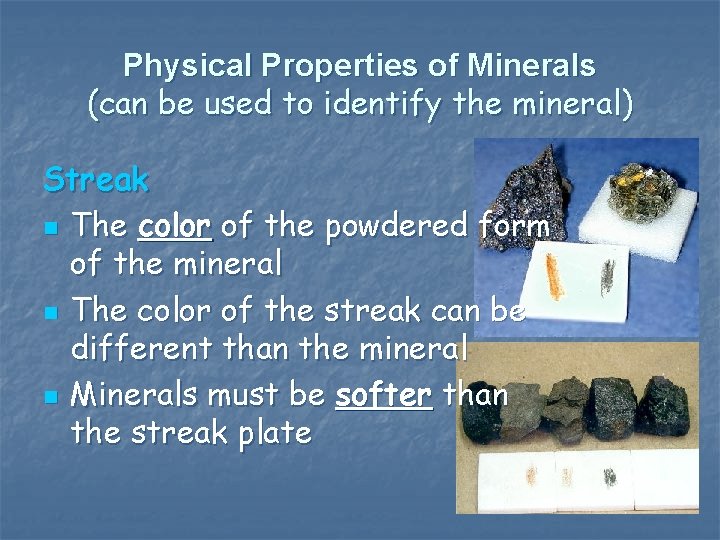
Physical Properties of Minerals (can be used to identify the mineral) Streak n The color of the powdered form of the mineral n The color of the streak can be different than the mineral n Minerals must be softer than the streak plate
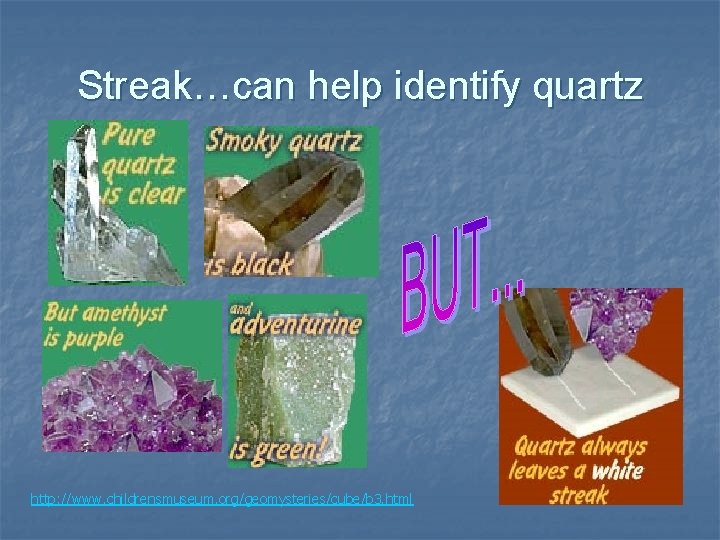
Streak…can help identify quartz http: //www. childrensmuseum. org/geomysteries/cube/b 3. html
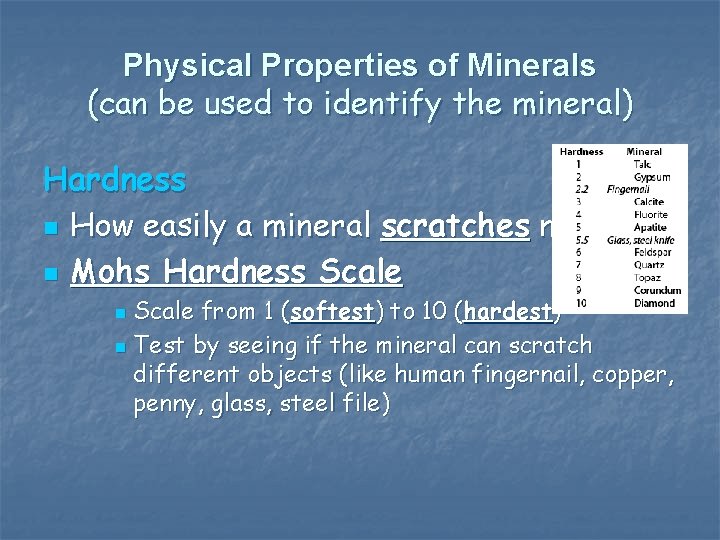
Physical Properties of Minerals (can be used to identify the mineral) Hardness n How easily a mineral scratches materials n Mohs Hardness Scale from 1 (softest) to 10 (hardest) n Test by seeing if the mineral can scratch different objects (like human fingernail, copper, penny, glass, steel file) n
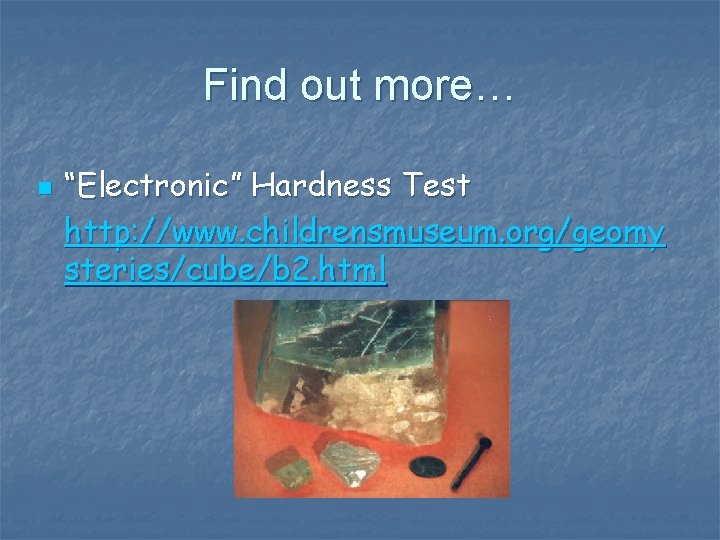
Find out more… n “Electronic” Hardness Test http: //www. childrensmuseum. org/geomy steries/cube/b 2. html
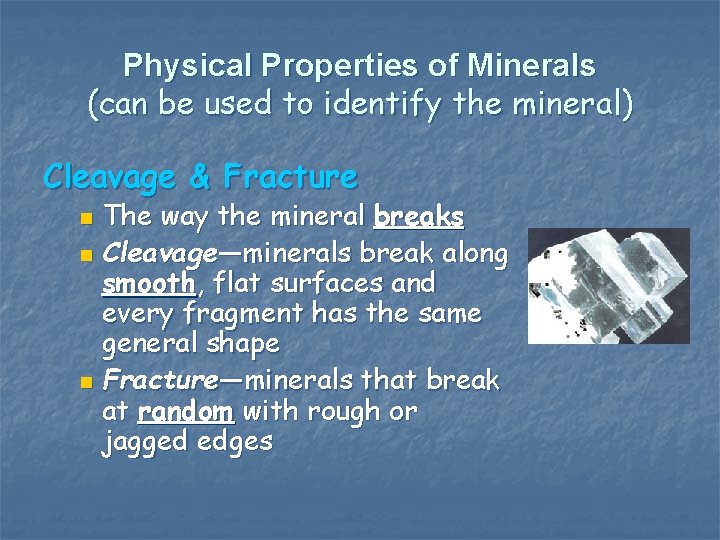
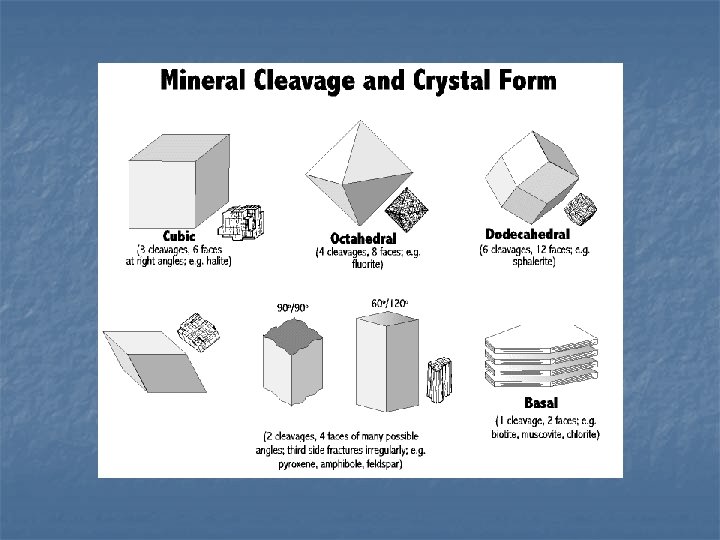
Physical Properties of Minerals (can be used to identify the mineral) Cleavage & Fracture The way the mineral breaks n Cleavage—minerals break along smooth, flat surfaces and every fragment has the same general shape n Fracture—minerals that break at random with rough or jagged edges n
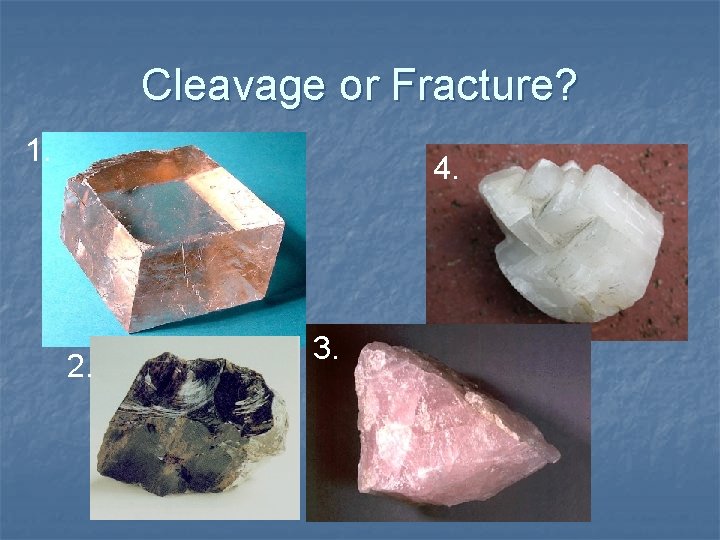
Cleavage or Fracture? 1. 4. 2. 3.
Physical Properties of Minerals (can be used to identify the mineral) Other Properties Specific gravity (*excellent clue to mineral’s identity) http: //www. childrensmuseum. org/geomysteries/cube/b 4. html n Attraction to magnets n Bending of light n Reaction with hydrochloric acid n Smell & taste n
Watch Brainpop—“Mineral Identification” 1. If a mineral can scratch your fingernail, the mineral is ________ than your fingernail. 2. What is luster?
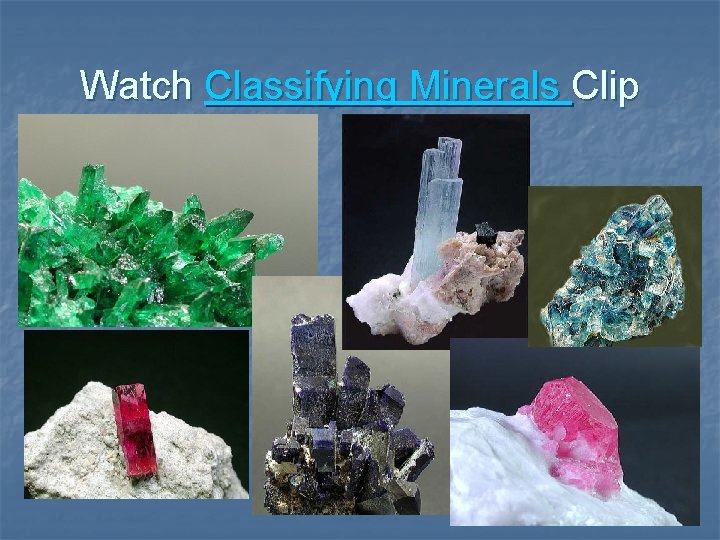
Watch Classifying Minerals Clip
- Slides: 26