
What is a manor Feudalism is the political
- Slides: 12
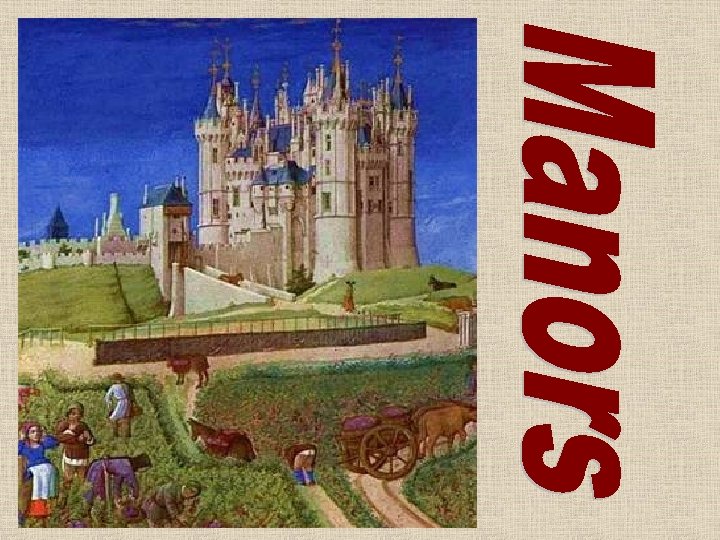
What is a manor? • • Feudalism is the political / military relationship Manorialism is the economic relationships between people Manor - the lord’s estate Largely self-sufficient community – What does this mean?
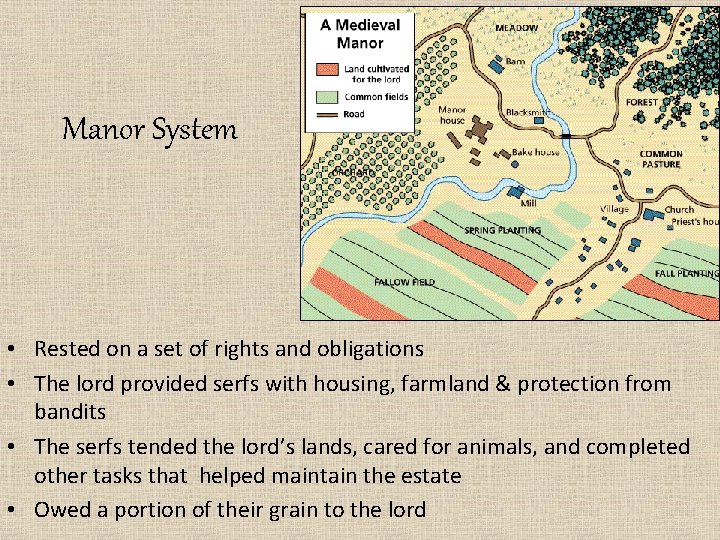
What did manors include? • • Manor House- house of the lord, his family and servants. Village Church- place of religious and public meetings Peasant Cottages-where the peasants lived Lord’s Demesne – fields the lord owned where the peasants worked Peasant Crofts- gardens that belonged to the peasants Mill- used for grinding grain Common pasture- common area for grazing animals Woodland-provided wood for fuel
Manor System • Rested on a set of rights and obligations • The lord provided serfs with housing, farmland & protection from bandits • The serfs tended the lord’s lands, cared for animals, and completed other tasks that helped maintain the estate • Owed a portion of their grain to the lord
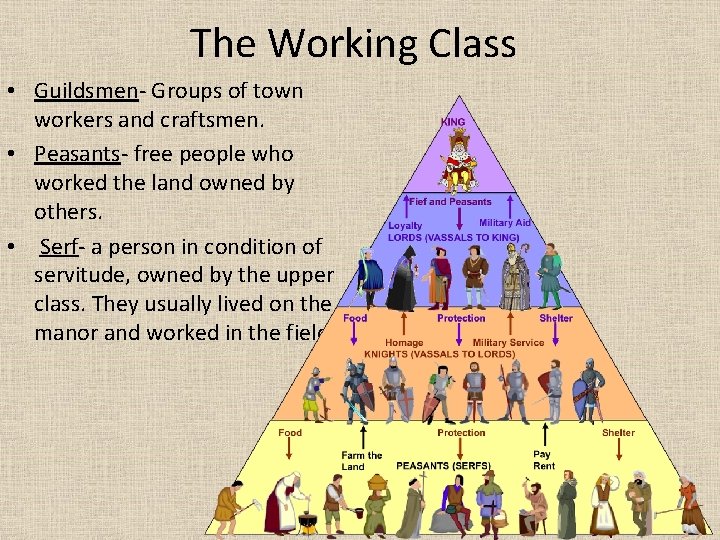
The Working Class • Guildsmen- Groups of town workers and craftsmen. • Peasants- free people who worked the land owned by others. • Serf- a person in condition of servitude, owned by the upper class. They usually lived on the manor and worked in the fields.
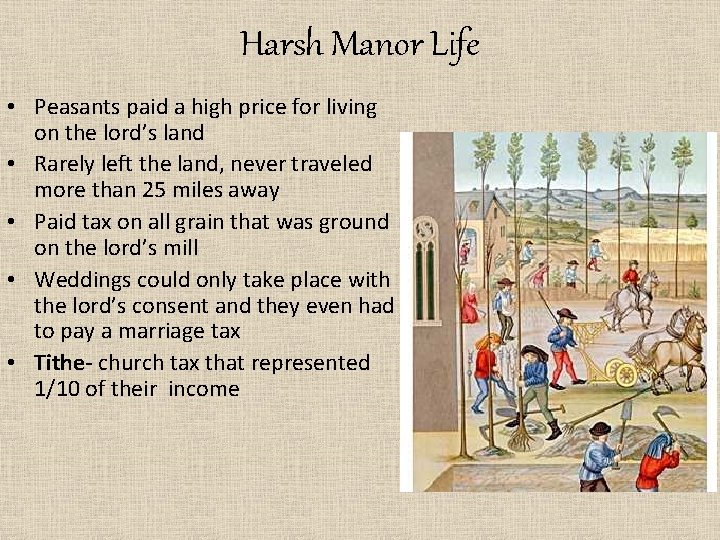
Harsh Manor Life • Peasants paid a high price for living on the lord’s land • Rarely left the land, never traveled more than 25 miles away • Paid tax on all grain that was ground on the lord’s mill • Weddings could only take place with the lord’s consent and they even had to pay a marriage tax • Tithe- church tax that represented 1/10 of their income
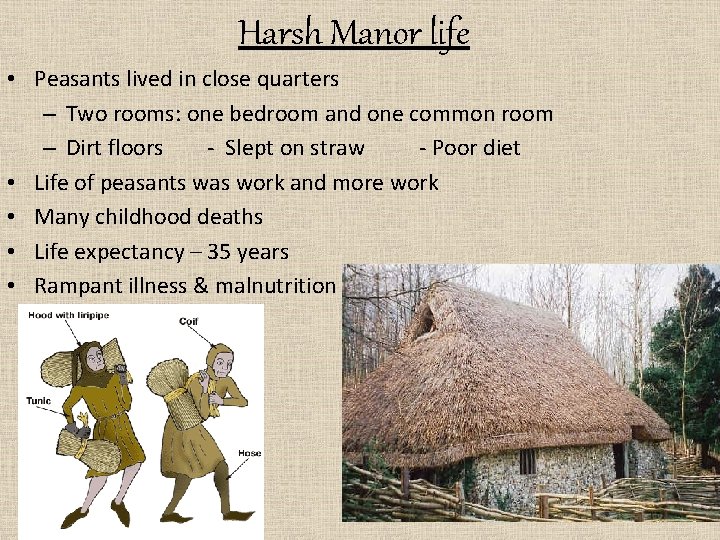
Harsh Manor life • Peasants lived in close quarters – Two rooms: one bedroom and one common room – Dirt floors - Slept on straw - Poor diet • Life of peasants was work and more work • Many childhood deaths • Life expectancy – 35 years • Rampant illness & malnutrition
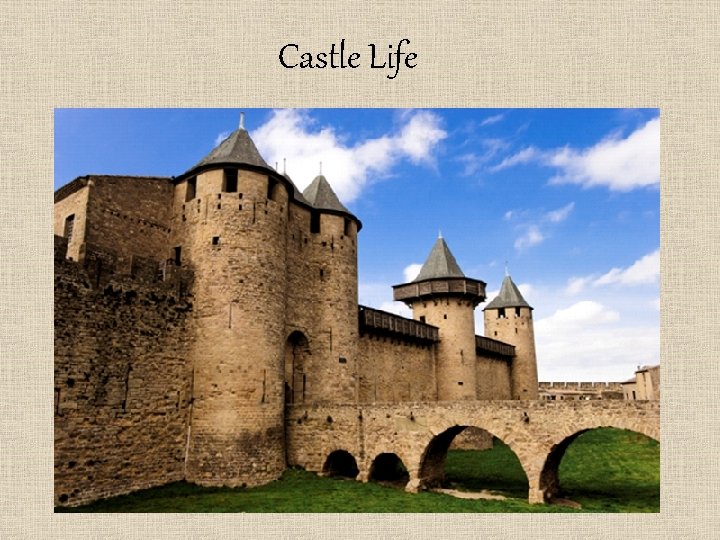
Castle Life
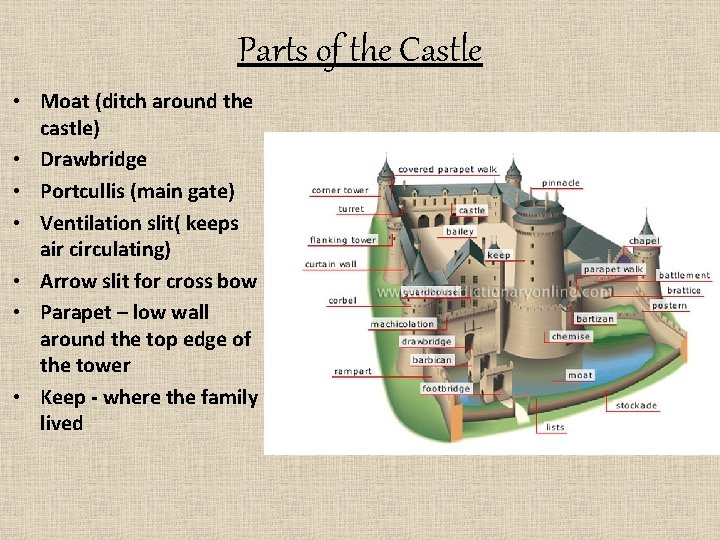
Parts of the Castle • Moat (ditch around the castle) • Drawbridge • Portcullis (main gate) • Ventilation slit( keeps air circulating) • Arrow slit for cross bow • Parapet – low wall around the top edge of the tower • Keep - where the family lived
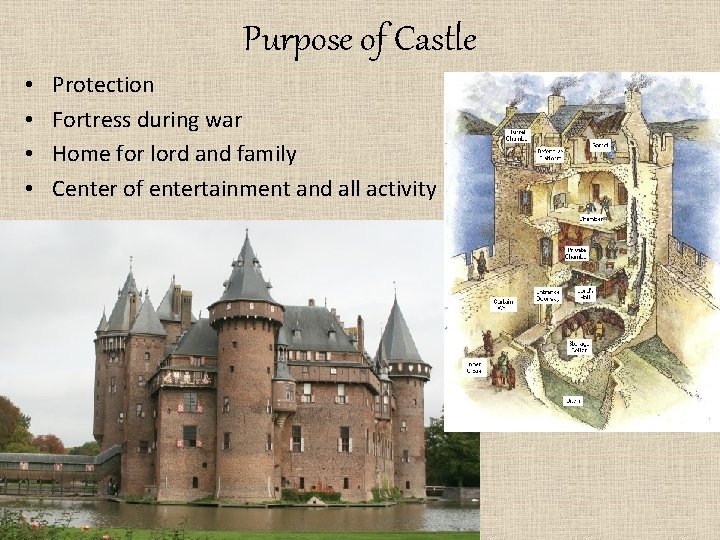
Purpose of Castle • • Protection Fortress during war Home for lord and family Center of entertainment and all activity
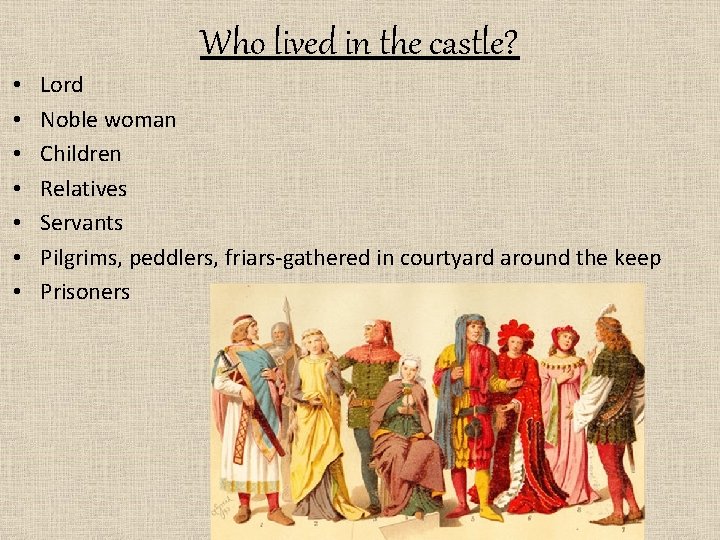
Who lived in the castle? • • Lord Noble woman Children Relatives Servants Pilgrims, peddlers, friars-gathered in courtyard around the keep Prisoners
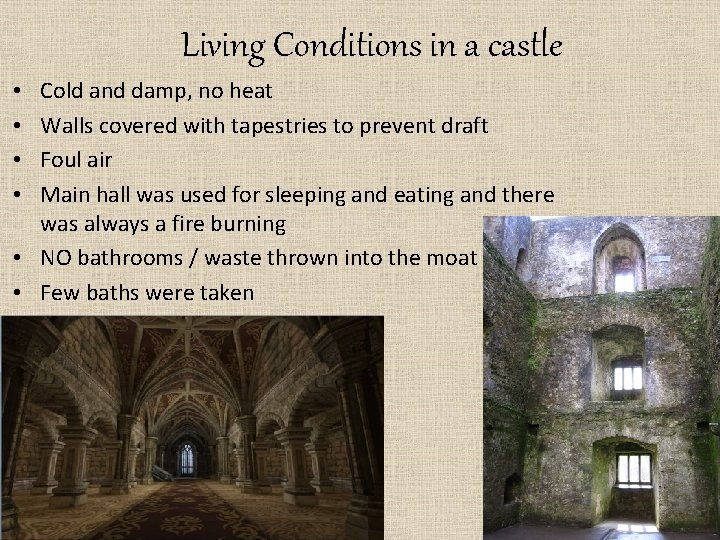
Living Conditions in a castle Cold and damp, no heat Walls covered with tapestries to prevent draft Foul air Main hall was used for sleeping and eating and there was always a fire burning • NO bathrooms / waste thrown into the moat • Few baths were taken • •