
What is a group discussion Why group Why


- Slides: 20
What is a group discussion? Why group? Why discussion? 1. 2. 3. 4. 5. 6. Ideas can be generated. Ideas can be shared. Ideas can be tried. Ideas can be responded. Groups provide support for any effort. Working in groups drive away monotony.
PREPARING FOR
Preparing for group discussions K A S H Strategies. K – KNOWLEDGE Social awareness Knowledge in current affairs. National and international issues. A – Attitude Set your goal – plan actions Winning attitudes Continuing learning. Practice skills
Preparing for group discussions K A S H Strategies. S - Skills Develop through practice. Presentation skills. Communication Skills Non-verbal skills H – Honesty all through your efforts. Admit your mistakes. Learn from mistakes.
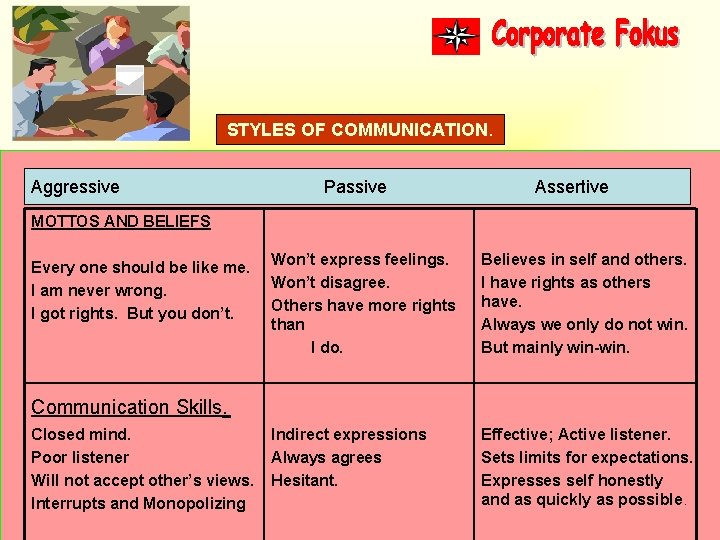
STYLES OF COMMUNICATION. Aggressive Passive Assertive MOTTOS AND BELIEFS Every one should be like me. I am never wrong. I got rights. But you don’t. Won’t express feelings. Won’t disagree. Others have more rights than I do. Believes in self and others. I have rights as others have. Always we only do not win. But mainly win-win. Indirect expressions Always agrees Hesitant. Effective; Active listener. Sets limits for expectations. Expresses self honestly and as quickly as possible. Communication Skills. Closed mind. Poor listener Will not accept other’s views. Interrupts and Monopolizing
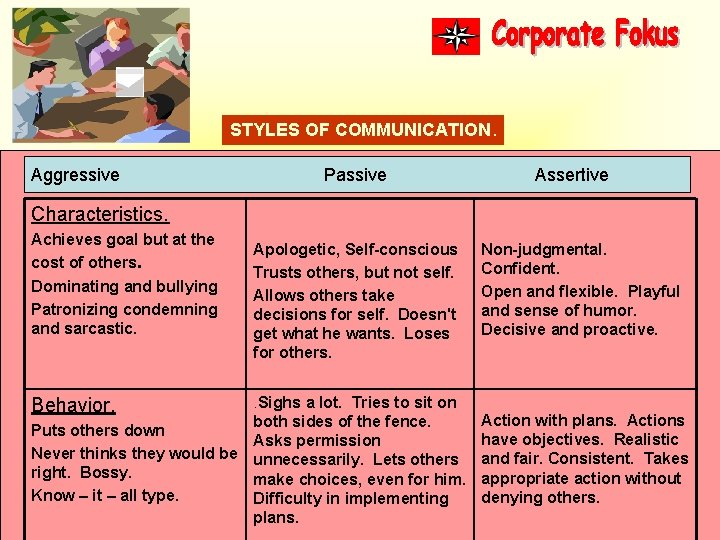
STYLES OF COMMUNICATION. Aggressive Passive Assertive Characteristics. Achieves goal but at the cost of others. Dominating and bullying Patronizing condemning and sarcastic. Apologetic, Self-conscious Trusts others, but not self. Allows others take decisions for self. Doesn't get what he wants. Loses for others. . Sighs a lot. Tries to sit on both sides of the fence. Puts others down Asks permission Never thinks they would be unnecessarily. Lets others right. Bossy. make choices, even for him. Know – it – all type. Difficulty in implementing plans. Behavior. Non-judgmental. Confident. Open and flexible. Playful and sense of humor. Decisive and proactive. Action with plans. Actions have objectives. Realistic and fair. Consistent. Takes appropriate action without denying others.
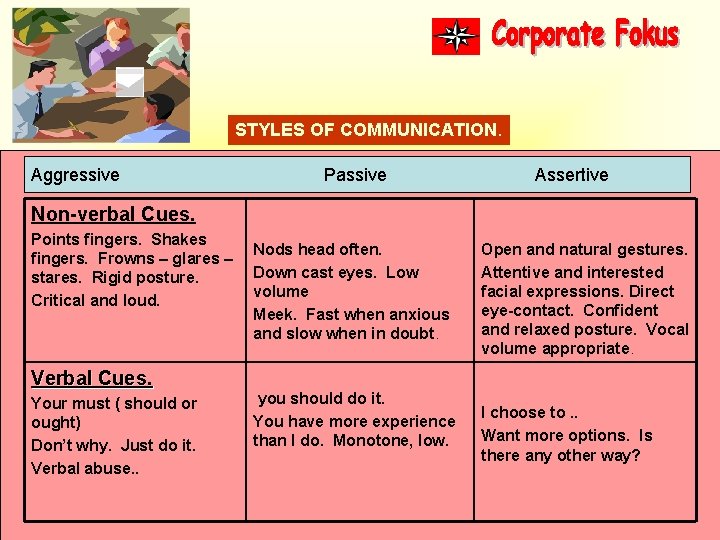
STYLES OF COMMUNICATION. Aggressive Passive Assertive Non-verbal Cues. Points fingers. Shakes fingers. Frowns – glares – stares. Rigid posture. Critical and loud. Verbal Cues. Your must ( should or ought) Don’t why. Just do it. Verbal abuse. . Nods head often. Down cast eyes. Low volume Meek. Fast when anxious and slow when in doubt. you should do it. You have more experience than I do. Monotone, low. Open and natural gestures. Attentive and interested facial expressions. Direct eye-contact. Confident and relaxed posture. Vocal volume appropriate. I choose to. . Want more options. Is there any other way?
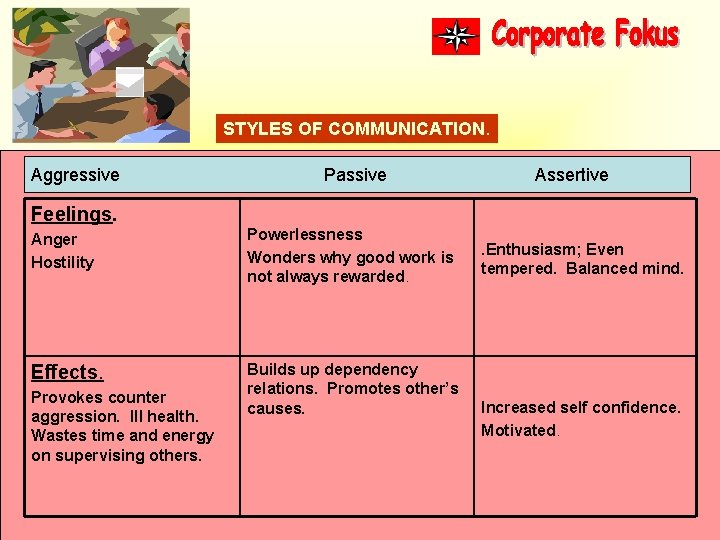
STYLES OF COMMUNICATION. Aggressive Passive Assertive Feelings. Anger Hostility Powerlessness Wonders why good work is not always rewarded. Effects. Builds up dependency relations. Promotes other’s causes. Provokes counter aggression. Ill health. Wastes time and energy on supervising others. . Enthusiasm; Even tempered. Balanced mind. Increased self confidence. Motivated.
EVALUATION FOR GROUP DISCUSSIONS. HOW ARE YOU EVALUATED IN YOUR GROUP DISCUSSIONS? Personality Communication Skills Knowledge Leadership and teamwork.
EVALUATION FOR GROUP DISCUSSIONS. HOW ARE YOU EVALUATED IN YOUR GROUP DISCUSSIONS? Personality Smartness – dress – smile on the face Cheerfulness – free from tensions and nervousness. Enthusiasm – attitude of taking that one step extra.
EVALUATION FOR GROUP DISCUSSIONS. HOW ARE YOU EVALUATED IN YOUR GROUP DISCUSSIONS? Communication Skills Fluency – not speed. But poise and right word in the right place. Clarity – Effectiveness of the message. Logic – the presentation skill.
EVALUATION FOR GROUP DISCUSSIONS. HOW ARE YOU EVALUATED IN YOUR GROUP DISCUSSIONS? Knowledge Relevance. – Topic related. Depth – in and out of the subject. Factual info and data.
EVALUATION FOR GROUP DISCUSSIONS. HOW ARE YOU EVALUATED IN YOUR GROUP DISCUSSIONS? Leadership Initiative – taking the lead. Breaking the ice. Being in the forefront. Team Spirit. – ability to work with people. Cooperation and consolidation.
Your Innate Skills. 1. Interpersonal Skills - Ability to interact with others. - Emotional balance. - More people centric, that self-centered. 2. Persuasive Skills - Ability to analyze and persuade others to see the problem from a different perspective.
Your Innate Skills. 3. Pressure. Too short a time like 20 minutes, and about 10 – 15 group of people each trying to ascertain themselves. So naturally there will be pressure on you. You may scream shout, annoy or agitate. But to remain calm and balanced is your ability to withstand pressure. 4. Generate Idea. - Don’t remain to be a copy cat. Think differently and Search for new ideas. This shows your creative ability.
Your Innate Skills. 5. Conceptualizing Skills. Your ability to grasp the situation and look it to a macro level. This is a overall perspective. 6. In depth knowledge. An overall picture as related to other issues in that environment. Examining the issue from different disciplinary perspective. Read books/magazines/Newspapers/ watch TVs. Talk to educated elite and discuss problems.
Behavioural Traits. 1. DO NOT SHOUT. It will take you no where. As already chaos exists, it is you that has to bring order in the house. Direct the house with some new thinking. Then the whole group jumps on it and sanity is restored. 2. DISPLAY AN OPEN MIND. GD is not fighting for your stand. A word of appreciation any good idea would be idea. Assertiveness to your stand. If there is disagreement, say it politely, but appreciate the idea. “ I do appreciate your idea, but I am convinced about mine. ”
Behavioural Traits. 3. BE AWARE OF YOUR POSTURE AND BODY MOVEMENT Your body posture speaks a lot about your attitude. a) Too much laid back with all your weight, tells that you are totally relaxed and not participative. b) Too much of forward bend make you a shaky person. c) Try to look at a person who is speaking/listening, and then pass on your looks to the whole crowd. d) Don’t show finger and shake. Instead, move your hands approbatory. Occasionally, nod your head indicating that you are listening carefully.
THANK Q