
What is a gene and what does that
- Slides: 45
What is a gene, and what does that have to do with evolution?
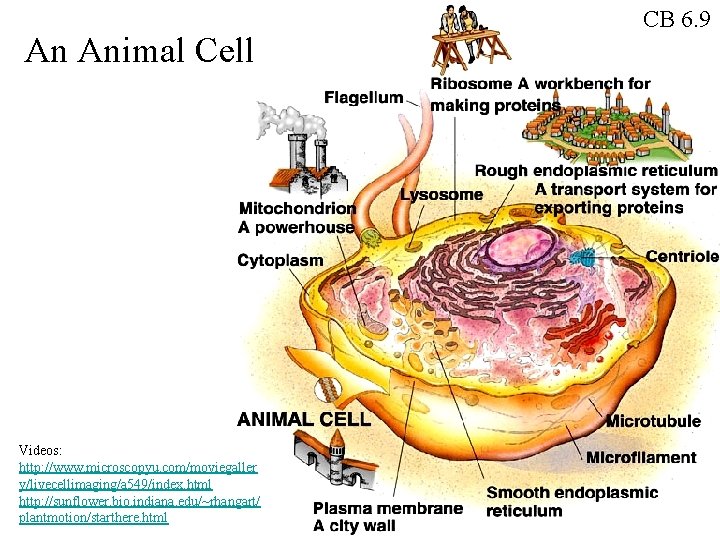
An Animal Cell Videos: http: //www. microscopyu. com/moviegaller y/livecellimaging/a 549/index. html http: //sunflower. bio. indiana. edu/~rhangart/ plantmotion/starthere. html CB 6. 9
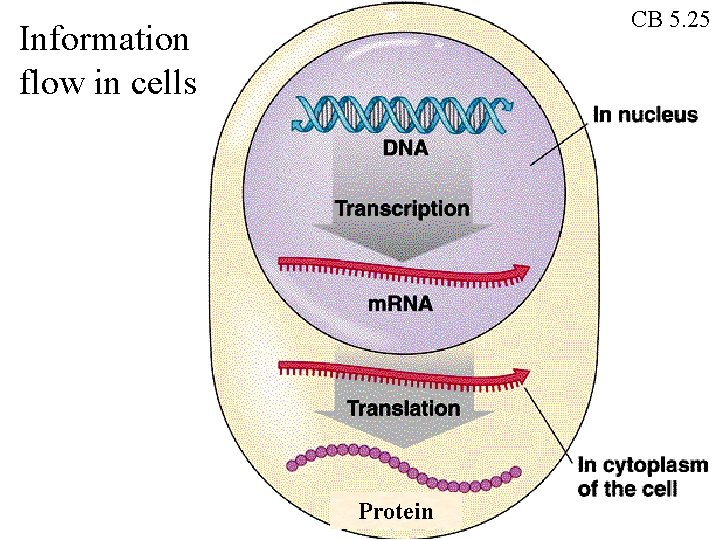
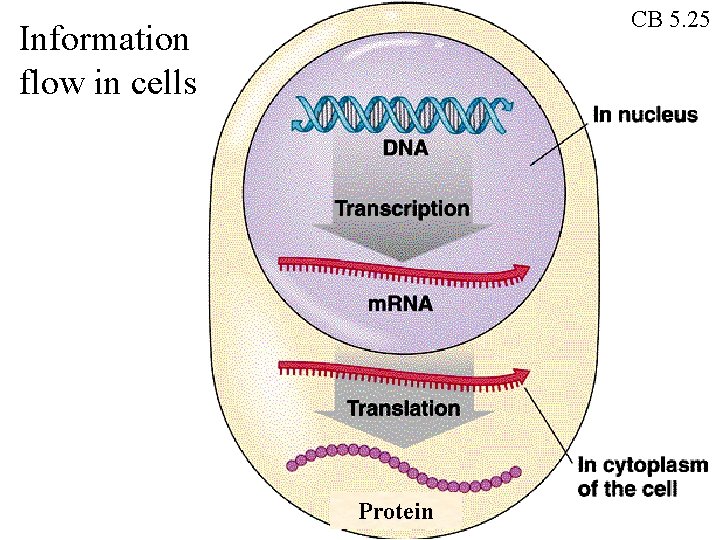
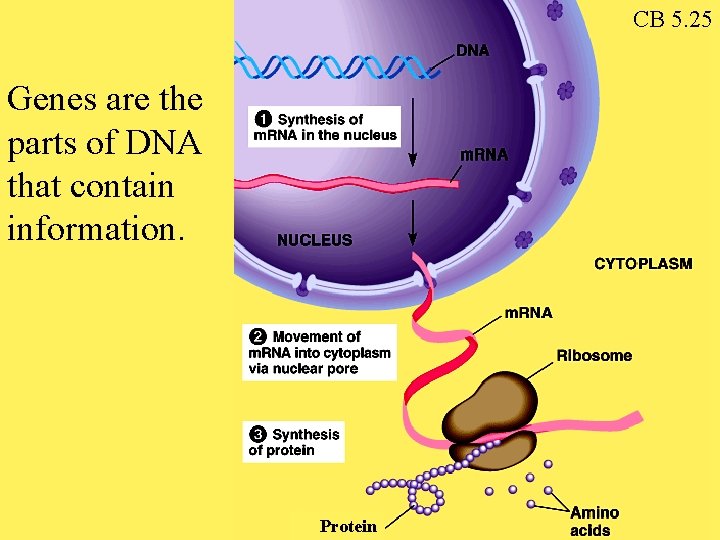
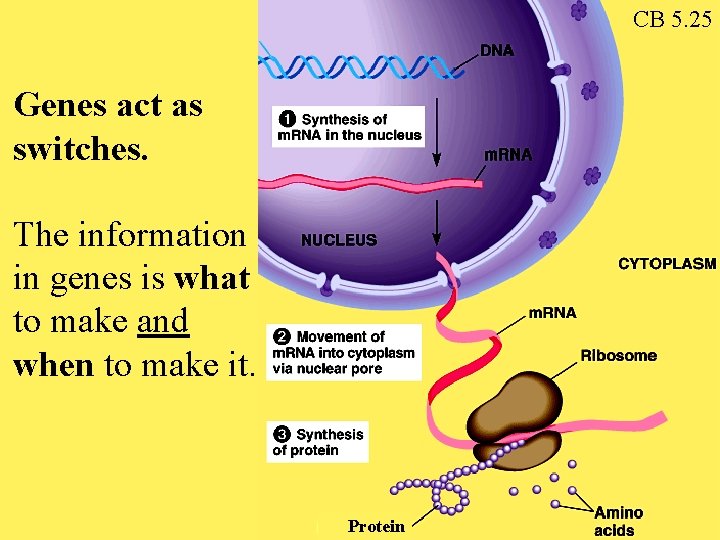
CB 5. 25 Information flow in cells Protein
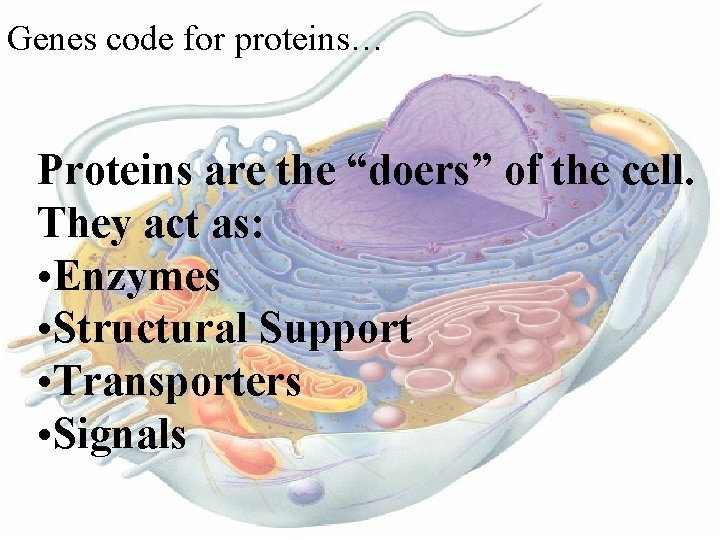
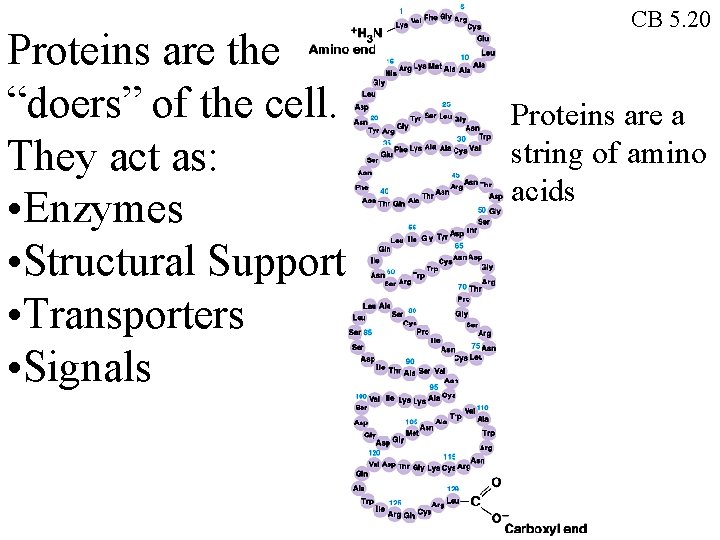
Genes code for proteins… Proteins are the “doers” of the cell. They act as: • Enzymes • Structural Support • Transporters • Signals
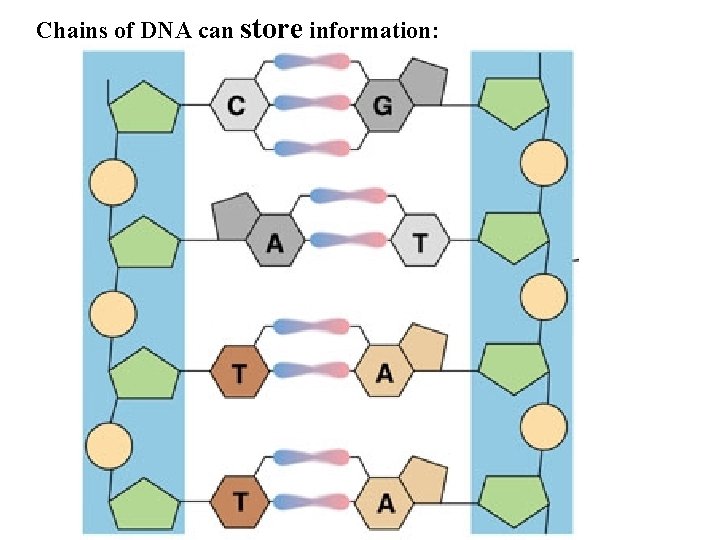
Chains of DNA can store information:
CB 5. 25 Information flow in cells Protein
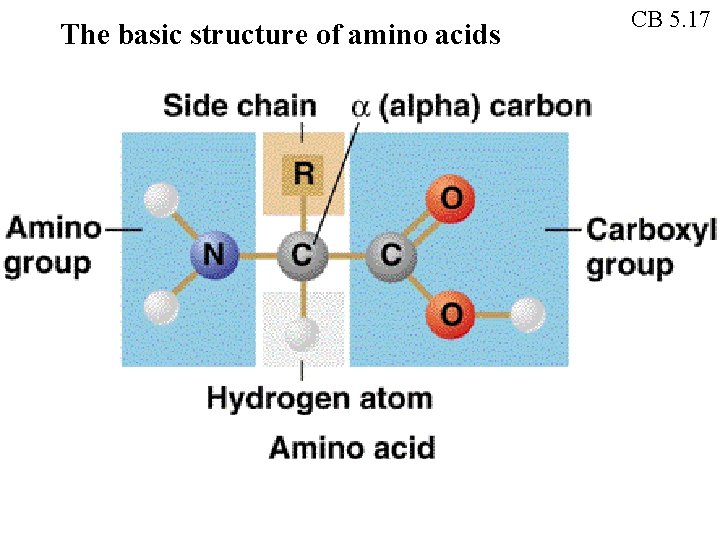
The basic structure of amino acids CB 5. 17
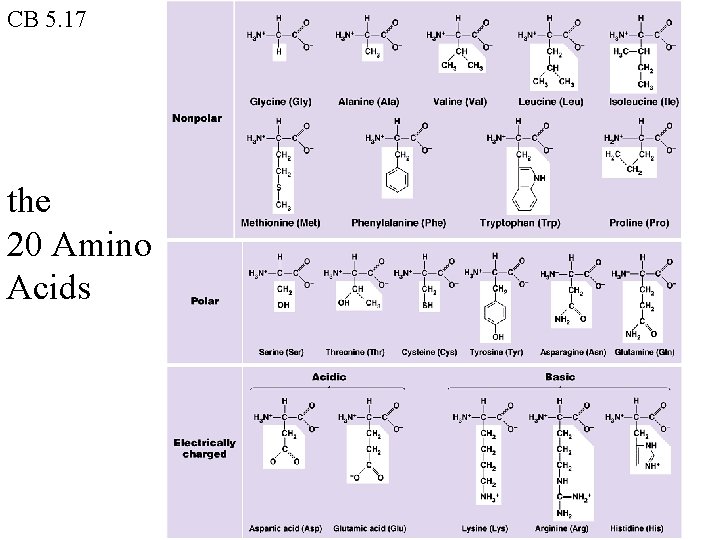
CB 5. 17 the 20 Amino Acids
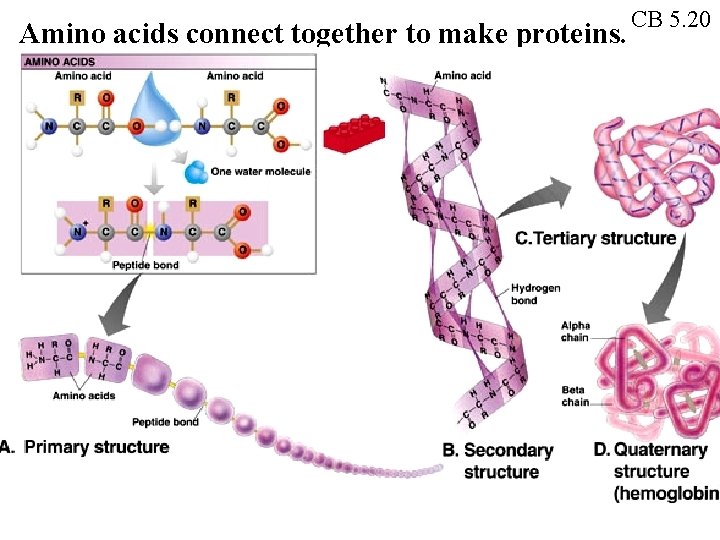
Amino acids connect together to make proteins. CB 5. 20
Proteins are the “doers” of the cell. They act as: • Enzymes • Structural Support • Transporters • Signals CB 5. 20 Proteins are a string of amino acids
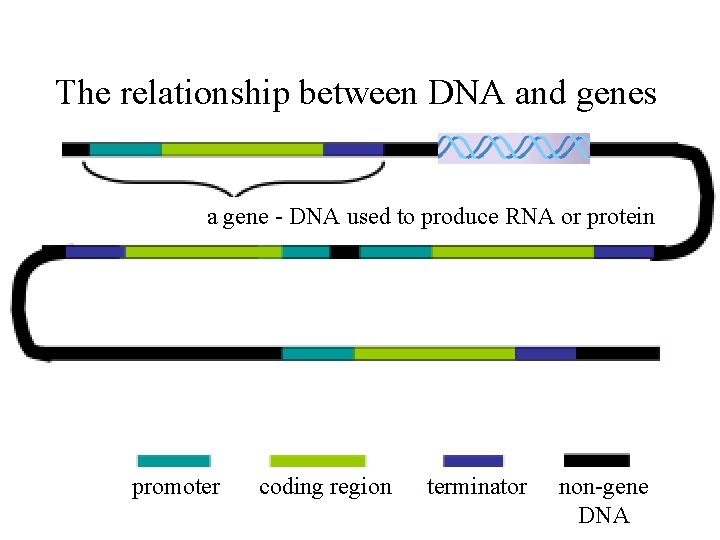
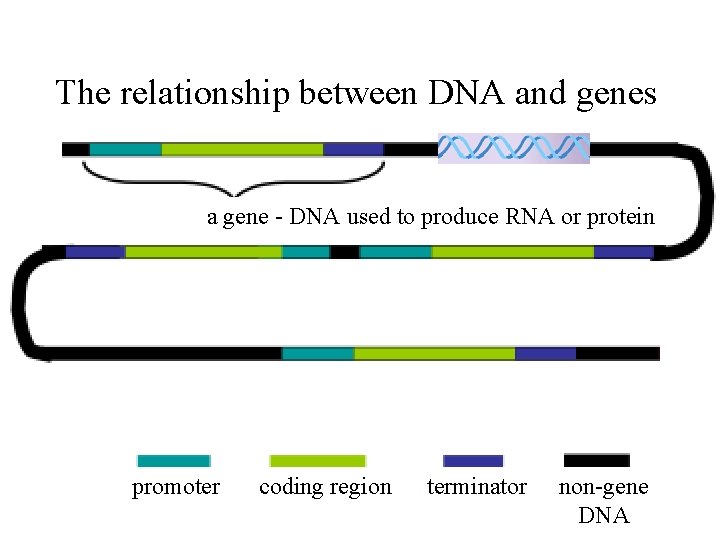
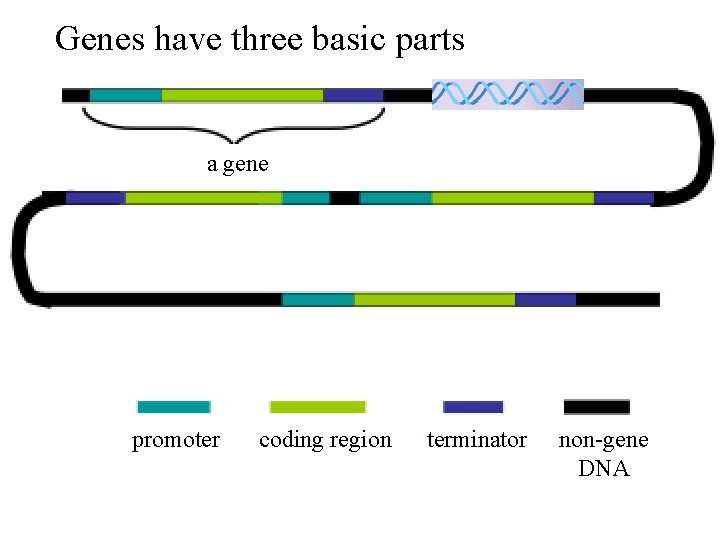
The relationship between DNA and genes a gene - DNA used to produce RNA or protein promoter coding region terminator non-gene DNA
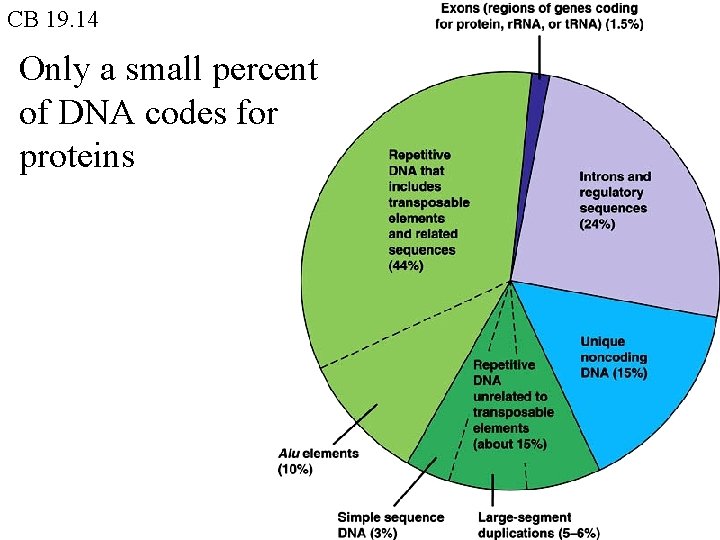
CB 19. 14 Only a small percent of DNA codes for proteins
DNA Composition: In humans: • Each cell contains ~6 billion nucleotides of DNA. • This DNA is ~2 meters long and 2 nm wide. • ~98% does not directly code for amino acids • In a single human cell only about 3 -5% of genes are expressed at a time.
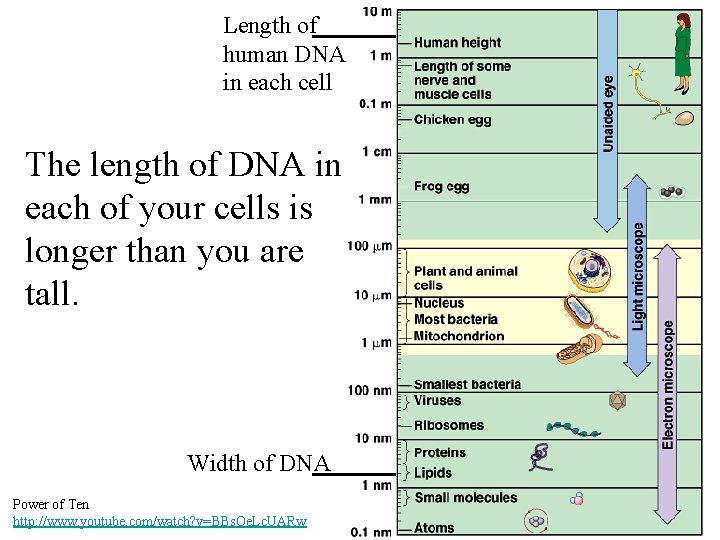
Length of human DNA in each cell The length of DNA in each of your cells is longer than you are tall. Width of DNA Power of Ten http: //www. youtube. com/watch? v=BBs. Oe. Lc. UARw
DNA Composition: In humans: • Each cell contains ~6 billion base pairs of DNA. • This DNA is ~2 meters long and 2 nm wide. • ~1. 5% directly codes for amino acids • ~25% is genes • In a single human cell only about 5 -10% of genes are expressed at a time.
The relationship between DNA and genes a gene - DNA used to produce RNA or protein promoter coding region terminator non-gene DNA
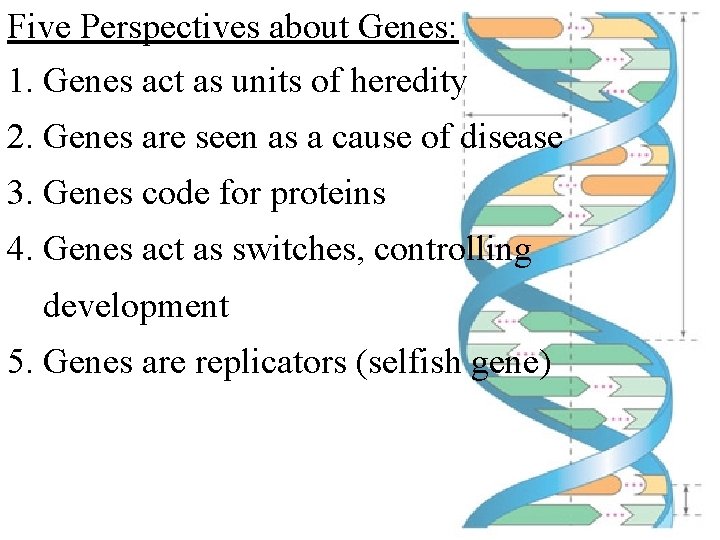
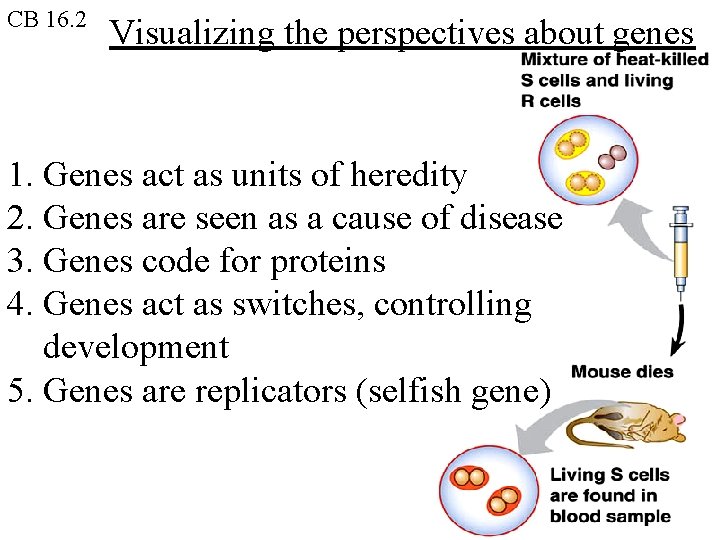
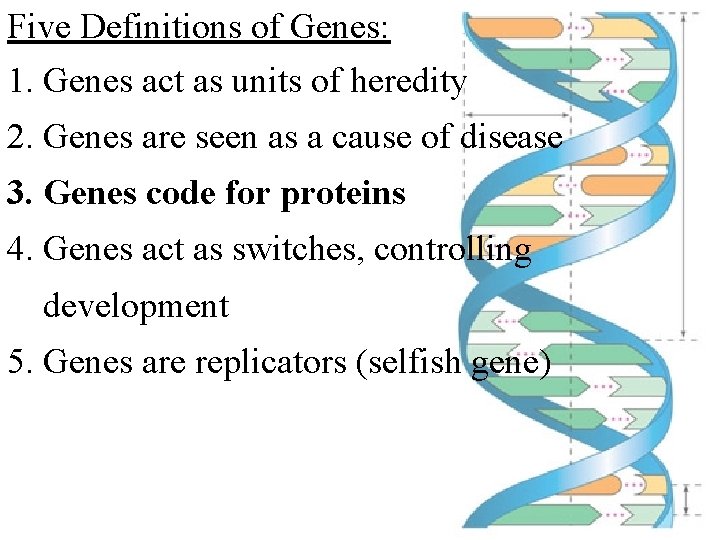
Five Perspectives about Genes: 1. Genes act as units of heredity 2. Genes are seen as a cause of disease 3. Genes code for proteins 4. Genes act as switches, controlling development 5. Genes are replicators (selfish gene)
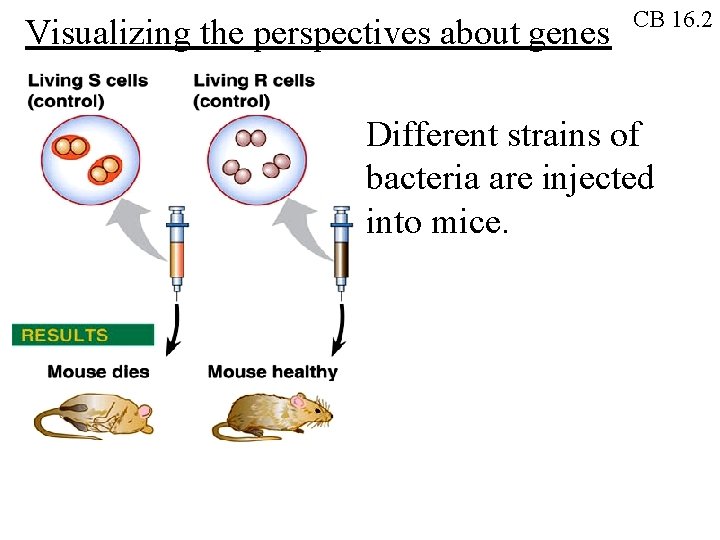
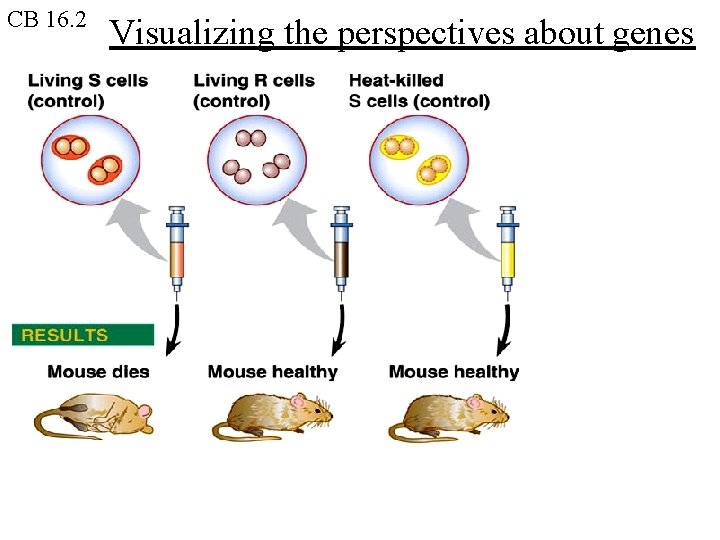
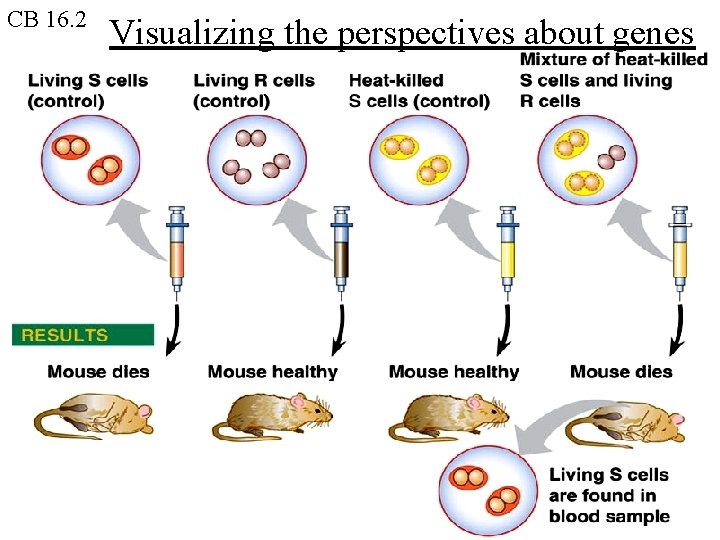
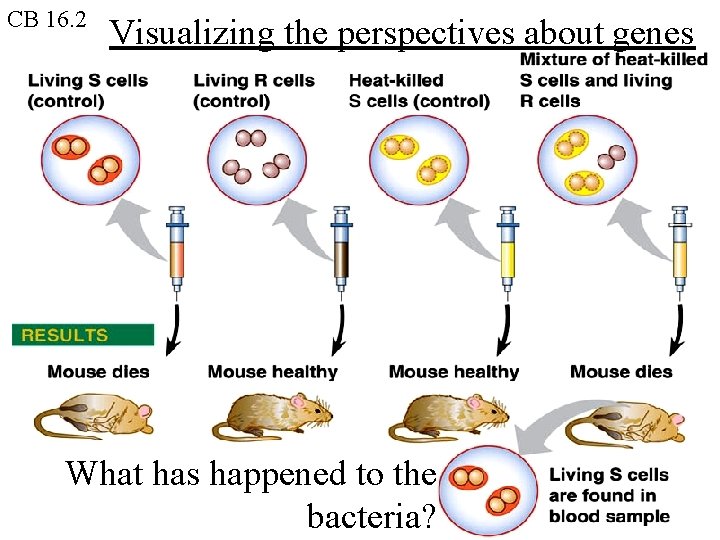
Visualizing the perspectives about genes CB 16. 2 Different strains of bacteria are injected into mice.
CB 16. 2 Visualizing the perspectives about genes
CB 16. 2 Visualizing the perspectives about genes
CB 16. 2 Visualizing the perspectives about genes What has happened to the bacteria?
CB 16. 2 Visualizing the perspectives about genes 1. Genes act as units of heredity 2. Genes are seen as a cause of disease 3. Genes code for proteins 4. Genes act as switches, controlling development 5. Genes are replicators (selfish gene)
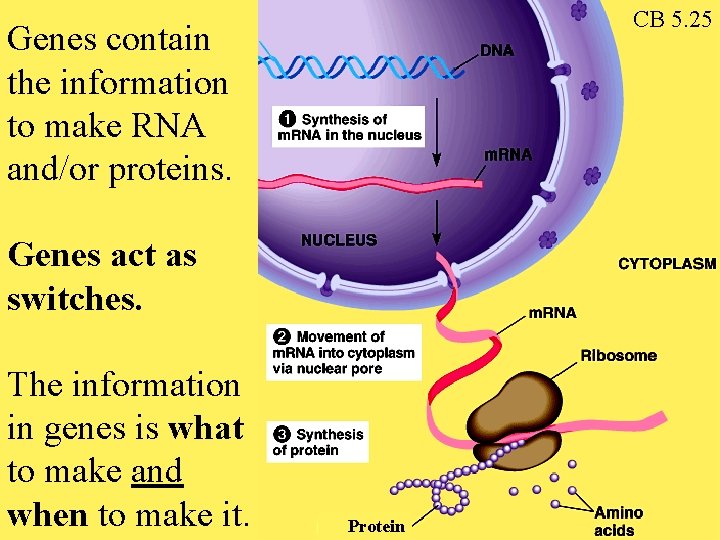
CB 5. 25 Genes are the parts of DNA that contain information. Protein
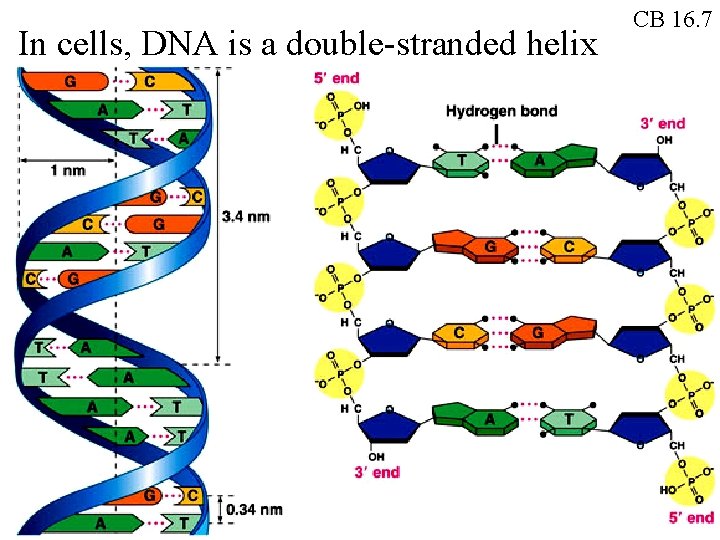
In cells, DNA is a double-stranded helix CB 16. 7
Five Definitions of Genes: 1. Genes act as units of heredity 2. Genes are seen as a cause of disease 3. Genes code for proteins 4. Genes act as switches, controlling development 5. Genes are replicators (selfish gene)
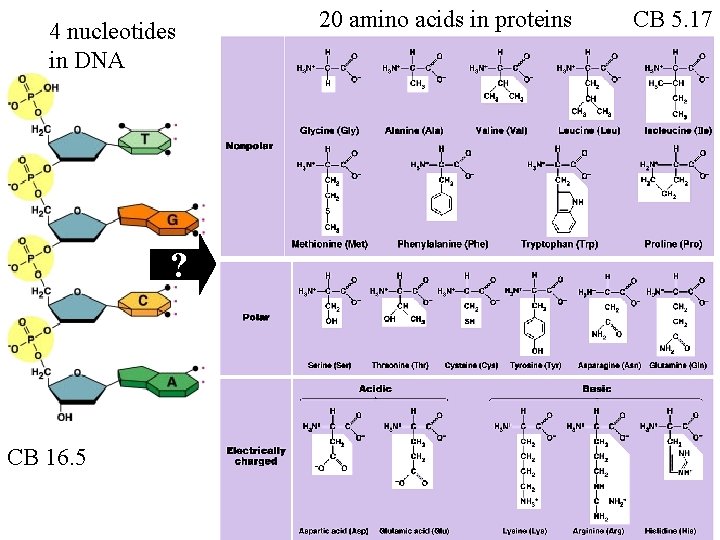
4 nucleotides in DNA ? CB 16. 5 20 amino acids in proteins CB 5. 17
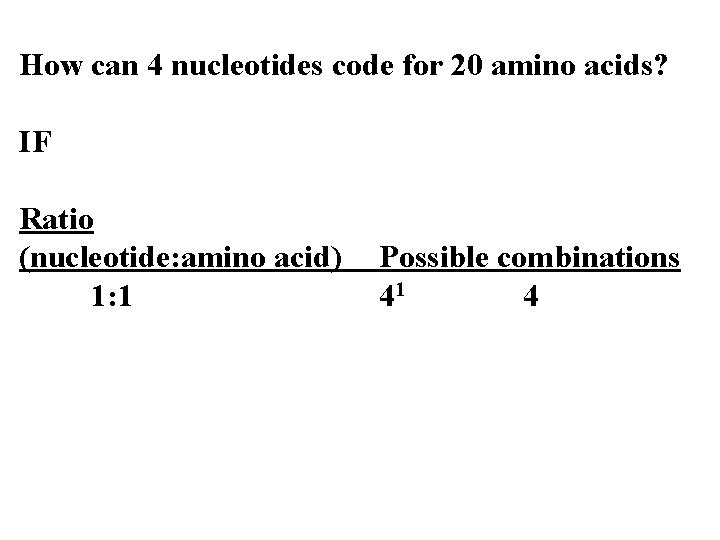
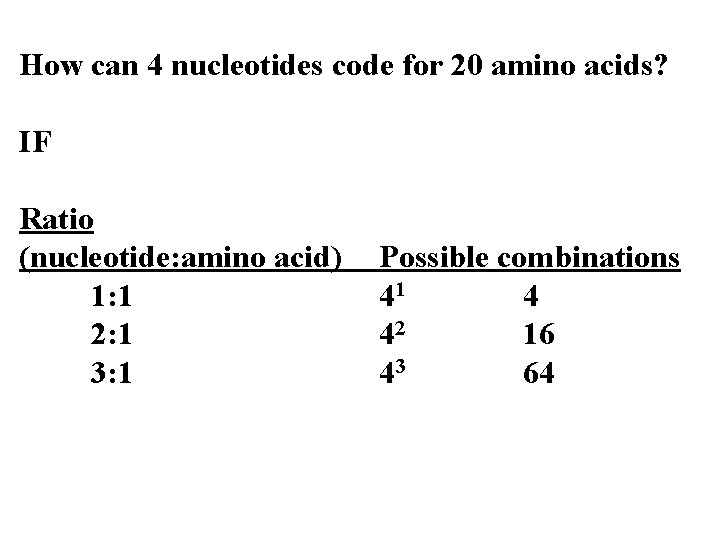
How can 4 nucleotides code for 20 amino acids? IF Ratio (nucleotide: amino acid) 1: 1 Possible combinations 41 4
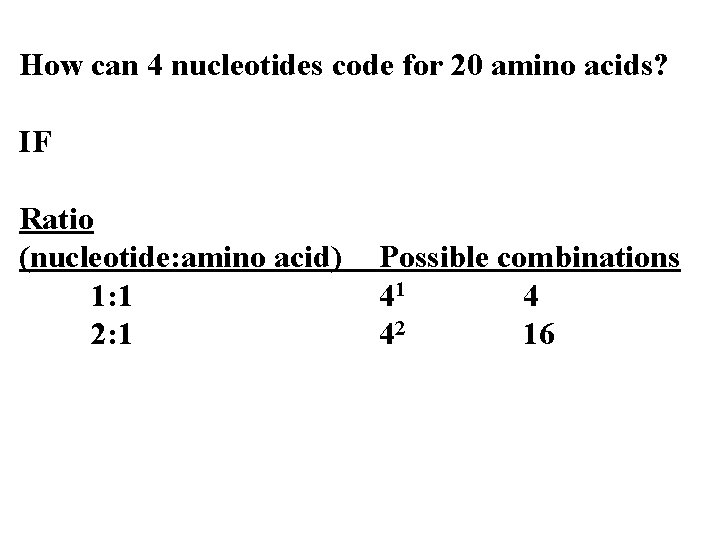
How can 4 nucleotides code for 20 amino acids? IF Ratio (nucleotide: amino acid) 1: 1 2: 1 Possible combinations 41 4 42 16
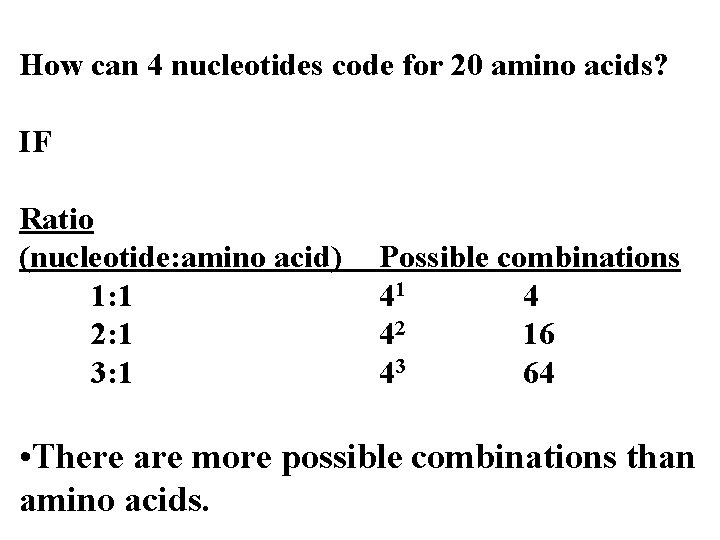
How can 4 nucleotides code for 20 amino acids? IF Ratio (nucleotide: amino acid) 1: 1 2: 1 3: 1 Possible combinations 41 4 42 16 43 64
How can 4 nucleotides code for 20 amino acids? IF Ratio (nucleotide: amino acid) 1: 1 2: 1 3: 1 Possible combinations 41 4 42 16 43 64 • There are more possible combinations than amino acids.
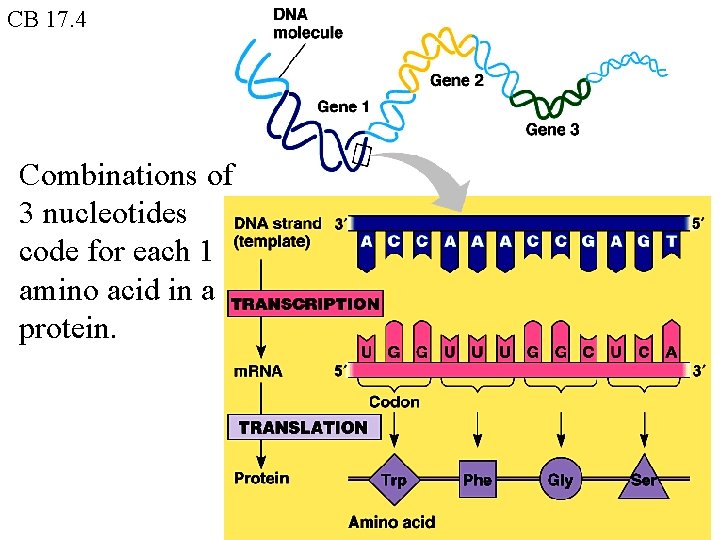
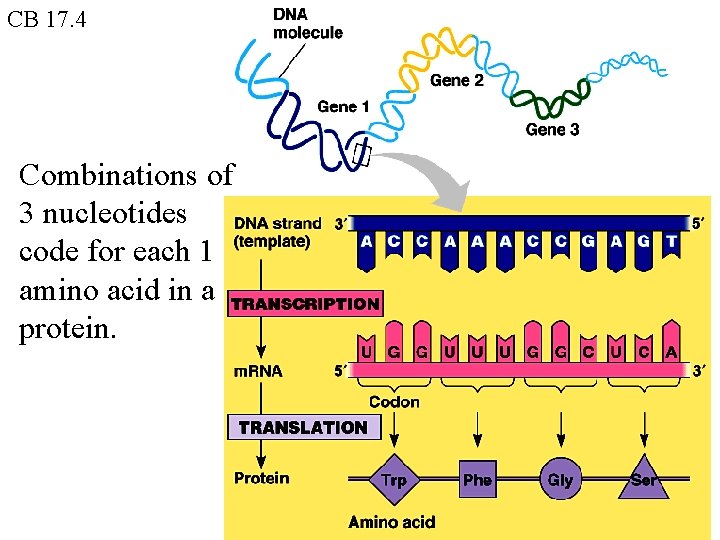
CB 17. 4 Combinations of 3 nucleotides code for each 1 amino acid in a protein.
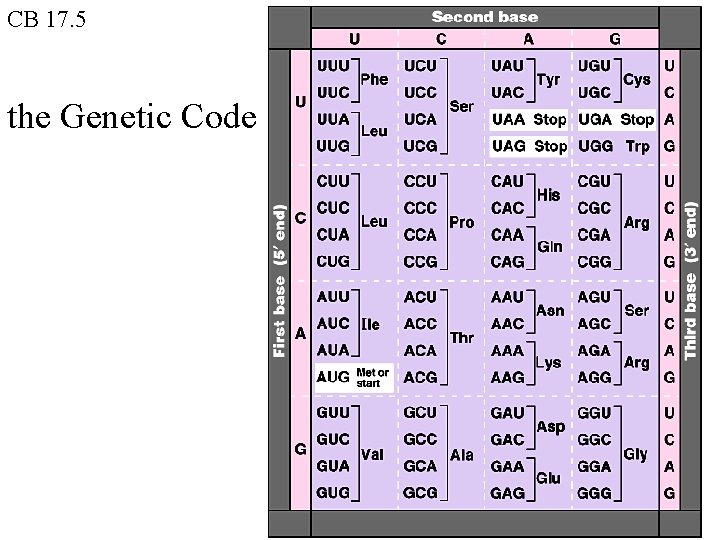
CB 17. 5 the Genetic Code
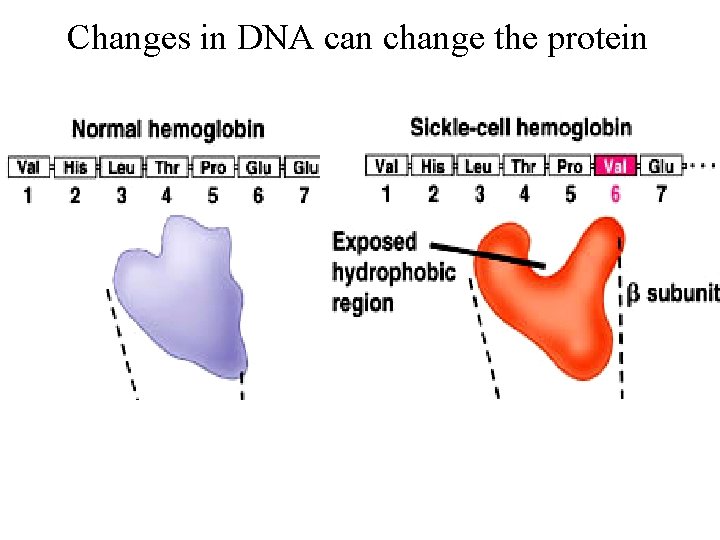
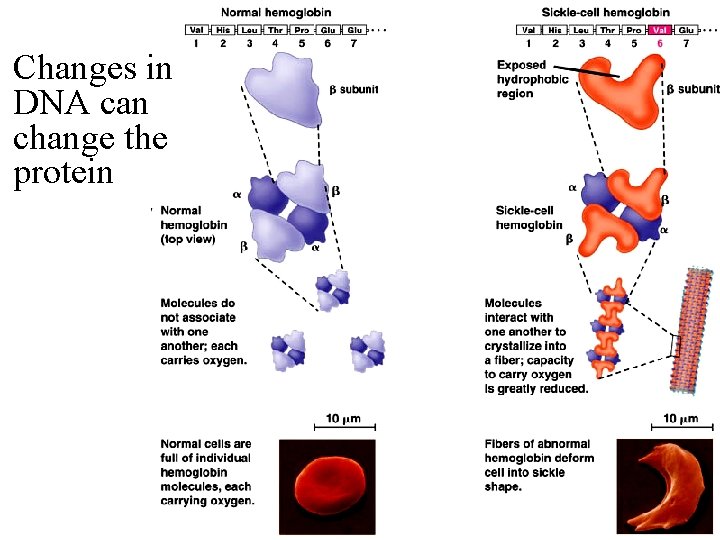
Changes in DNA can change the protein
Changes in DNA can change the protein
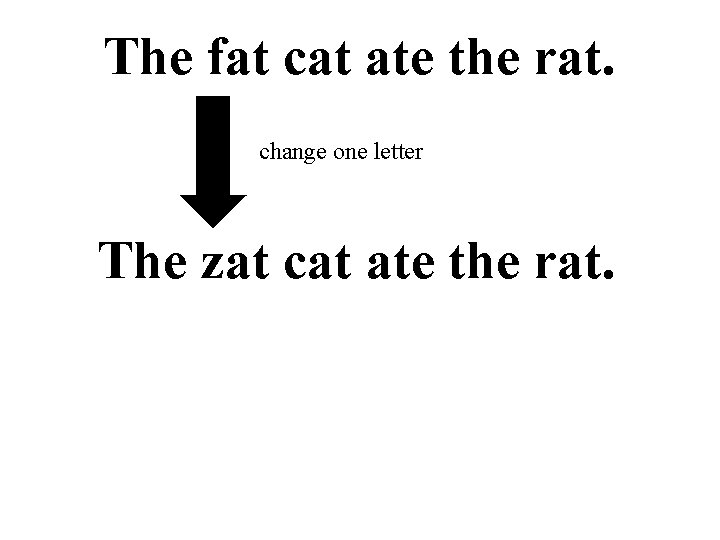
The fat cat ate the rat. change one letter The zat cat ate the rat.
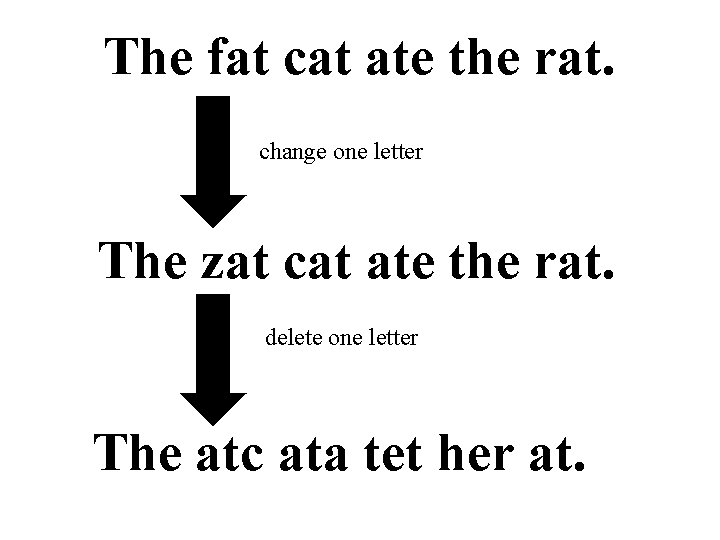
The fat cat ate the rat. change one letter The zat cat ate the rat. delete one letter The atc ata tet her at.
CB 17. 4 Combinations of 3 nucleotides code for each 1 amino acid in a protein.
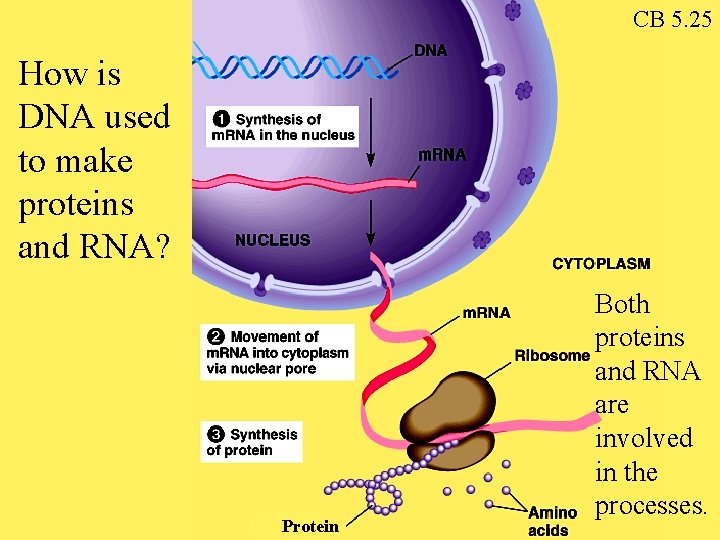
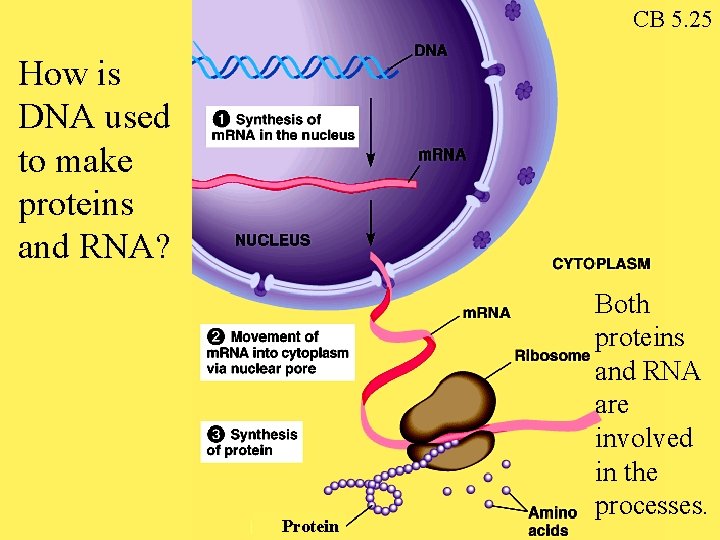
CB 5. 25 How is DNA used to make proteins and RNA? Protein Both proteins and RNA are involved in the processes.
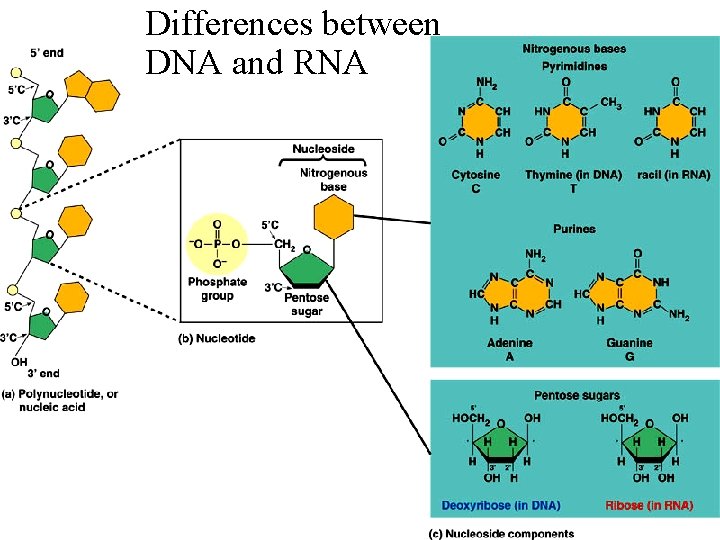
Differences between DNA and RNA
CB 5. 25 How is DNA used to make proteins and RNA? Protein Both proteins and RNA are involved in the processes.
CB 5. 25 Genes act as switches. The information in genes is what to make and when to make it. Protein
Genes have three basic parts a gene promoter coding region terminator non-gene DNA
CB 5. 25 Genes contain the information to make RNA and/or proteins. Genes act as switches. The information in genes is what to make and when to make it. Protein
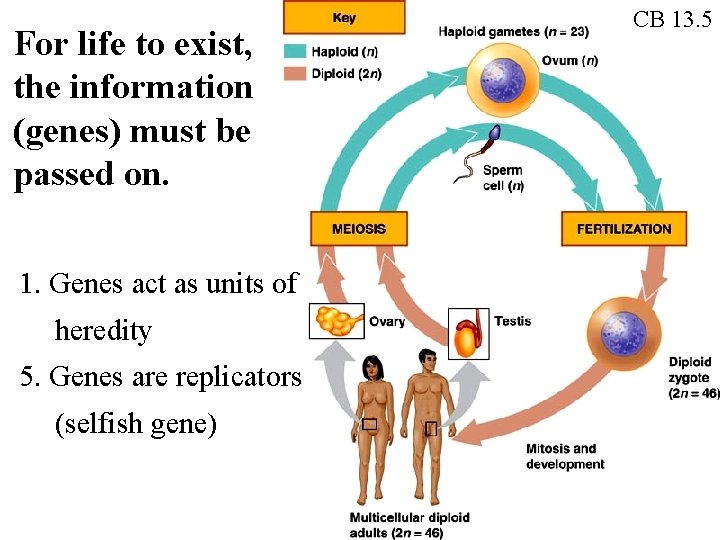
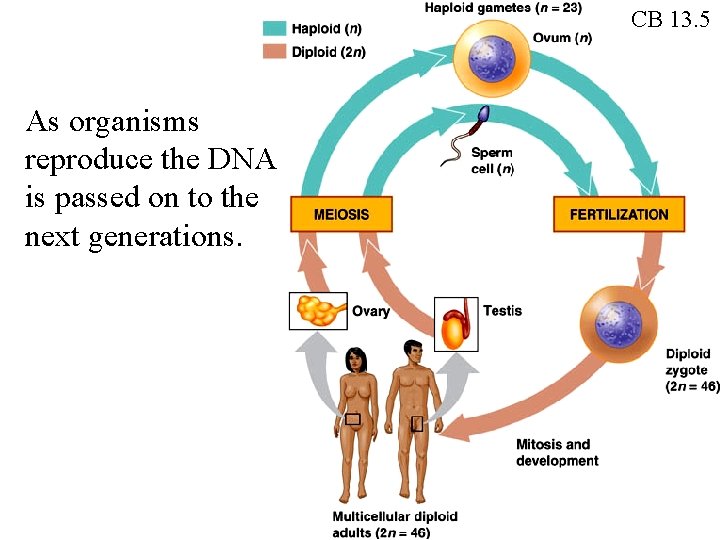
For life to exist, the information (genes) must be passed on. 1. Genes act as units of heredity 5. Genes are replicators (selfish gene) CB 13. 5
CB 13. 5 As organisms reproduce the DNA is passed on to the next generations.