
What is a Crime Definition Examples Criminal vs
- Slides: 6
What is a Crime? ? • Definition: • Examples:
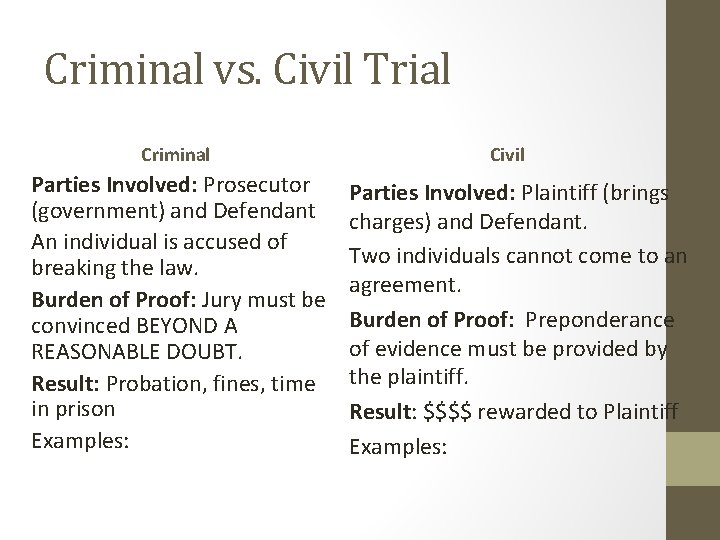
Criminal vs. Civil Trial Criminal Parties Involved: Prosecutor (government) and Defendant An individual is accused of breaking the law. Burden of Proof: Jury must be convinced BEYOND A REASONABLE DOUBT. Result: Probation, fines, time in prison Examples: Civil Parties Involved: Plaintiff (brings charges) and Defendant. Two individuals cannot come to an agreement. Burden of Proof: Preponderance of evidence must be provided by the plaintiff. Result: $$$$ rewarded to Plaintiff Examples:
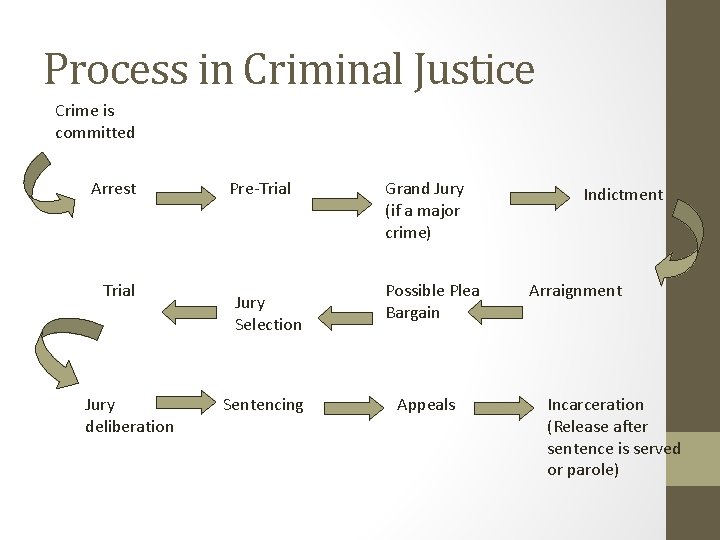
Process in Criminal Justice Crime is committed Arrest Trial Jury deliberation Pre-Trial Jury Selection Sentencing Grand Jury (if a major crime) Possible Plea Bargain Appeals Indictment Arraignment Incarceration (Release after sentence is served or parole)
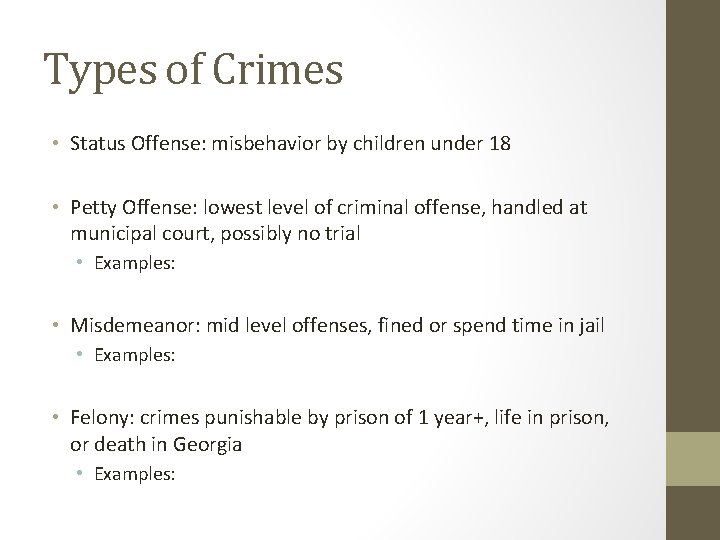
Types of Crimes • Status Offense: misbehavior by children under 18 • Petty Offense: lowest level of criminal offense, handled at municipal court, possibly no trial • Examples: • Misdemeanor: mid level offenses, fined or spend time in jail • Examples: • Felony: crimes punishable by prison of 1 year+, life in prison, or death in Georgia • Examples:
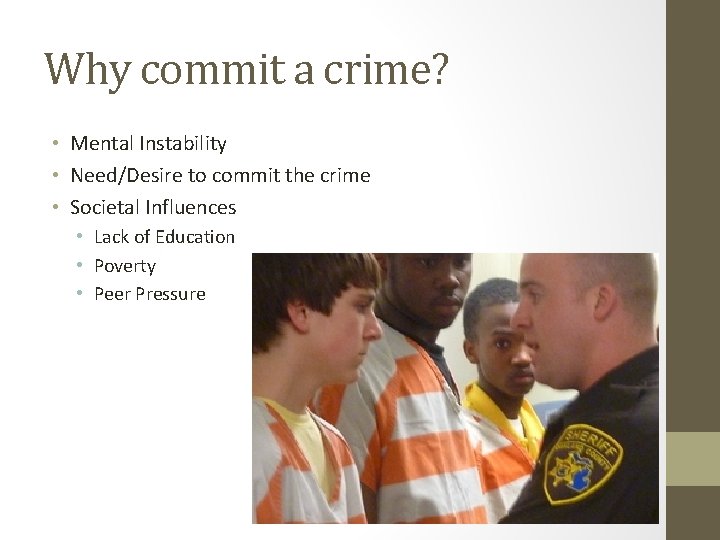
Why commit a crime? • Mental Instability • Need/Desire to commit the crime • Societal Influences • Lack of Education • Poverty • Peer Pressure
Consequences Victim • Injury • Psychological effects • loss Person committing the Crime • • Community service Incarceration Loss of rights Fines