
What is a Civilization What makes one group
- Slides: 36
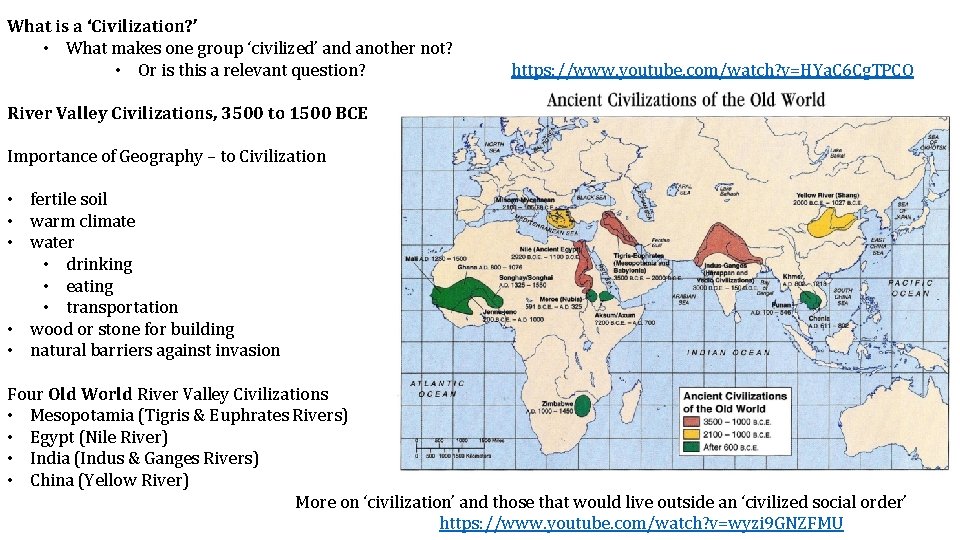
What is a ‘Civilization? ’ • What makes one group ‘civilized’ and another not? • Or is this a relevant question? https: //www. youtube. com/watch? v=HYa. C 6 Cg. TPCQ River Valley Civilizations, 3500 to 1500 BCE Importance of Geography – to Civilization • fertile soil • warm climate • water • drinking • eating • transportation • wood or stone for building • natural barriers against invasion Four Old World River Valley Civilizations • Mesopotamia (Tigris & Euphrates Rivers) • Egypt (Nile River) • India (Indus & Ganges Rivers) • China (Yellow River) More on ‘civilization’ and those that would live outside an ‘civilized social order’ https: //www. youtube. com/watch? v=wyzi 9 GNZFMU
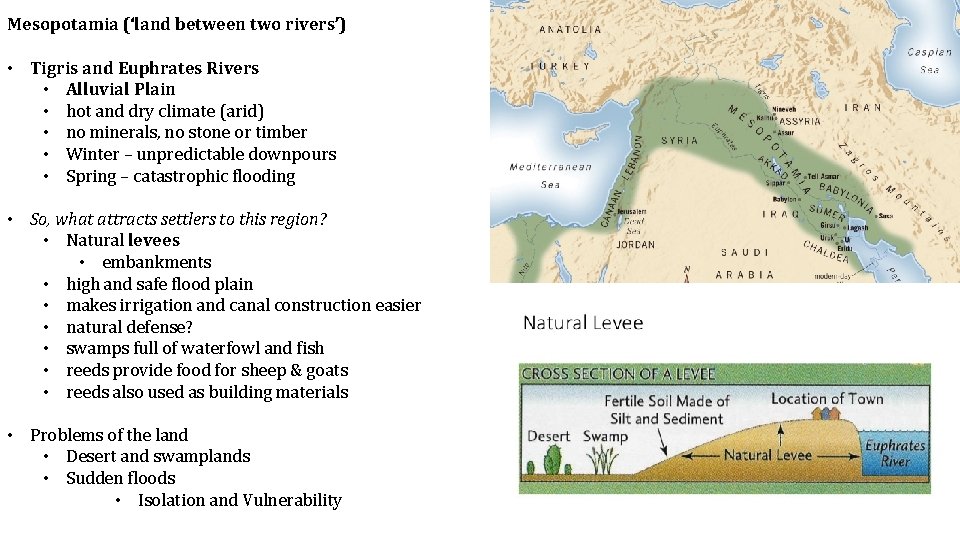
Mesopotamia (‘land between two rivers’) • Tigris and Euphrates Rivers • Alluvial Plain • hot and dry climate (arid) • no minerals, no stone or timber • Winter – unpredictable downpours • Spring – catastrophic flooding • So, what attracts settlers to this region? • Natural levees • embankments • high and safe flood plain • makes irrigation and canal construction easier • natural defense? • swamps full of waterfowl and fish • reeds provide food for sheep & goats • reeds also used as building materials • Problems of the land • Desert and swamplands • Sudden floods • Isolation and Vulnerability
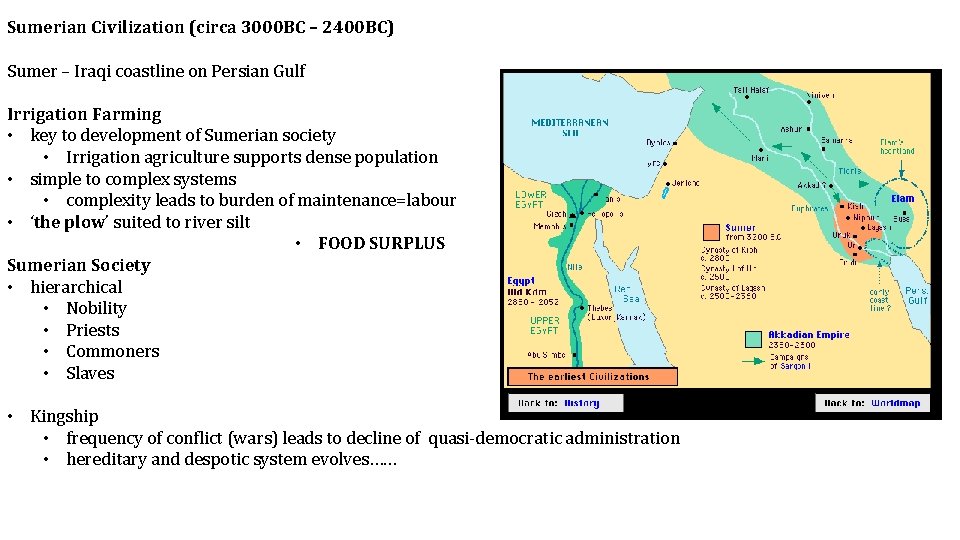
Sumerian Civilization (circa 3000 BC – 2400 BC) Sumer – Iraqi coastline on Persian Gulf Irrigation Farming • key to development of Sumerian society • Irrigation agriculture supports dense population • simple to complex systems • complexity leads to burden of maintenance=labour • ‘the plow’ suited to river silt • FOOD SURPLUS Sumerian Society • hierarchical • Nobility • Priests • Commoners • Slaves • Kingship • frequency of conflict (wars) leads to decline of quasi-democratic administration • hereditary and despotic system evolves……
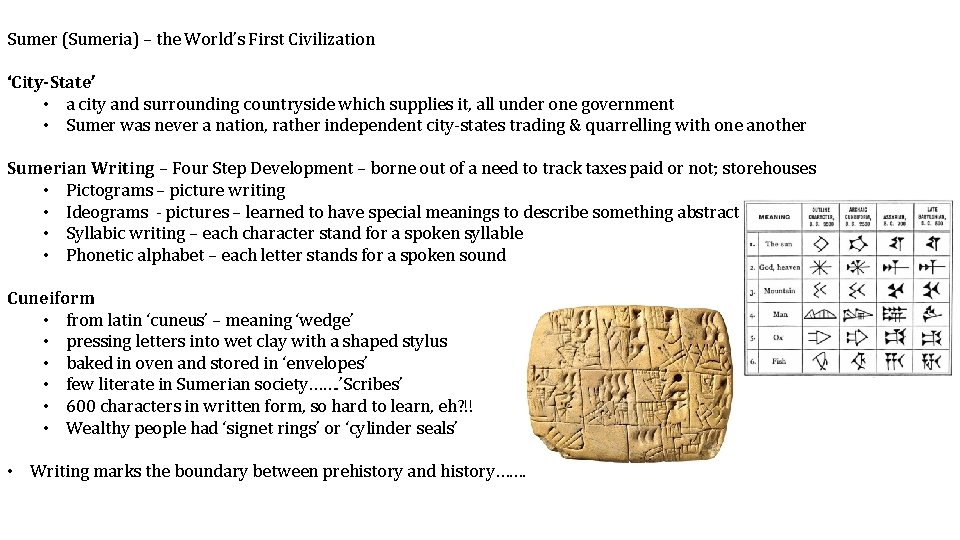
Sumer (Sumeria) – the World’s First Civilization ‘City-State’ • a city and surrounding countryside which supplies it, all under one government • Sumer was never a nation, rather independent city-states trading & quarrelling with one another Sumerian Writing – Four Step Development – borne out of a need to track taxes paid or not; storehouses • Pictograms – picture writing • Ideograms - pictures – learned to have special meanings to describe something abstract • Syllabic writing – each character stand for a spoken syllable • Phonetic alphabet – each letter stands for a spoken sound Cuneiform • from latin ‘cuneus’ – meaning ‘wedge’ • pressing letters into wet clay with a shaped stylus • baked in oven and stored in ‘envelopes’ • few literate in Sumerian society……. ’Scribes’ • 600 characters in written form, so hard to learn, eh? !! • Wealthy people had ‘signet rings’ or ‘cylinder seals’ • Writing marks the boundary between prehistory and history…….
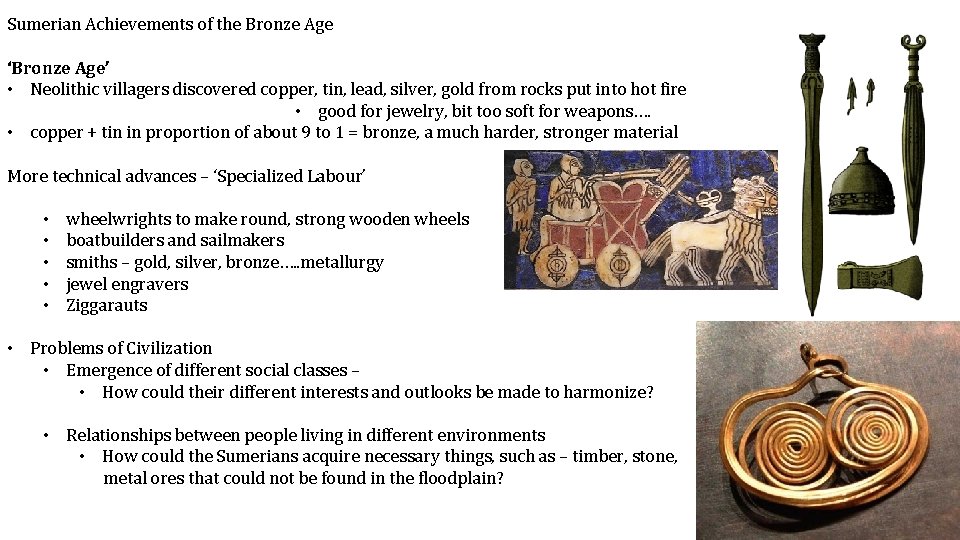
Sumerian Achievements of the Bronze Age ‘Bronze Age’ • Neolithic villagers discovered copper, tin, lead, silver, gold from rocks put into hot fire • good for jewelry, bit too soft for weapons…. • copper + tin in proportion of about 9 to 1 = bronze, a much harder, stronger material More technical advances – ‘Specialized Labour’ • • • wheelwrights to make round, strong wooden wheels boatbuilders and sailmakers smiths – gold, silver, bronze…. . metallurgy jewel engravers Ziggarauts • Problems of Civilization • Emergence of different social classes – • How could their different interests and outlooks be made to harmonize? • Relationships between people living in different environments • How could the Sumerians acquire necessary things, such as – timber, stone, metal ores that could not be found in the floodplain?
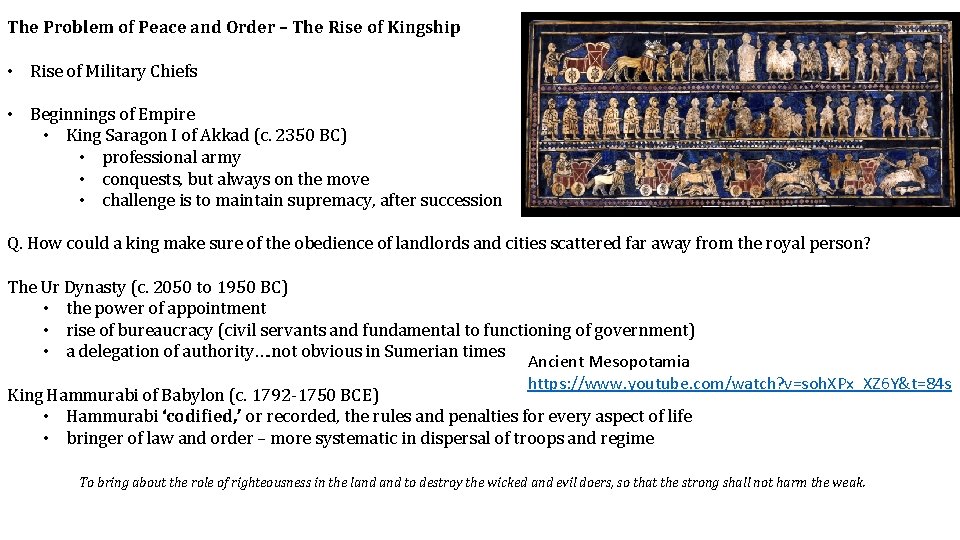
The Problem of Peace and Order – The Rise of Kingship • Rise of Military Chiefs • Beginnings of Empire • King Saragon I of Akkad (c. 2350 BC) • professional army • conquests, but always on the move • challenge is to maintain supremacy, after succession Q. How could a king make sure of the obedience of landlords and cities scattered far away from the royal person? The Ur Dynasty (c. 2050 to 1950 BC) • the power of appointment • rise of bureaucracy (civil servants and fundamental to functioning of government) • a delegation of authority…. not obvious in Sumerian times Ancient Mesopotamia https: //www. youtube. com/watch? v=soh. XPx_XZ 6 Y&t=84 s King Hammurabi of Babylon (c. 1792 -1750 BCE) • Hammurabi ‘codified, ’ or recorded, the rules and penalties for every aspect of life • bringer of law and order – more systematic in dispersal of troops and regime To bring about the role of righteousness in the land to destroy the wicked and evil doers, so that the strong shall not harm the weak.
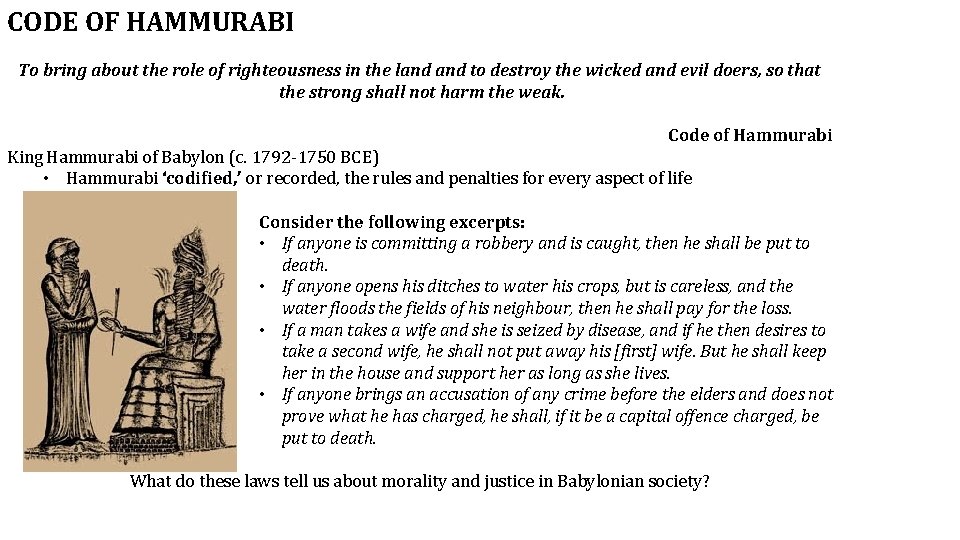
CODE OF HAMMURABI To bring about the role of righteousness in the land to destroy the wicked and evil doers, so that the strong shall not harm the weak. Code of Hammurabi King Hammurabi of Babylon (c. 1792 -1750 BCE) • Hammurabi ‘codified, ’ or recorded, the rules and penalties for every aspect of life Consider the following excerpts: • If anyone is committing a robbery and is caught, then he shall be put to death. • If anyone opens his ditches to water his crops, but is careless, and the water floods the fields of his neighbour, then he shall pay for the loss. • If a man takes a wife and she is seized by disease, and if he then desires to take a second wife, he shall not put away his [first] wife. But he shall keep her in the house and support her as long as she lives. • If anyone brings an accusation of any crime before the elders and does not prove what he has charged, he shall, if it be a capital offence charged, be put to death. What do these laws tell us about morality and justice in Babylonian society?
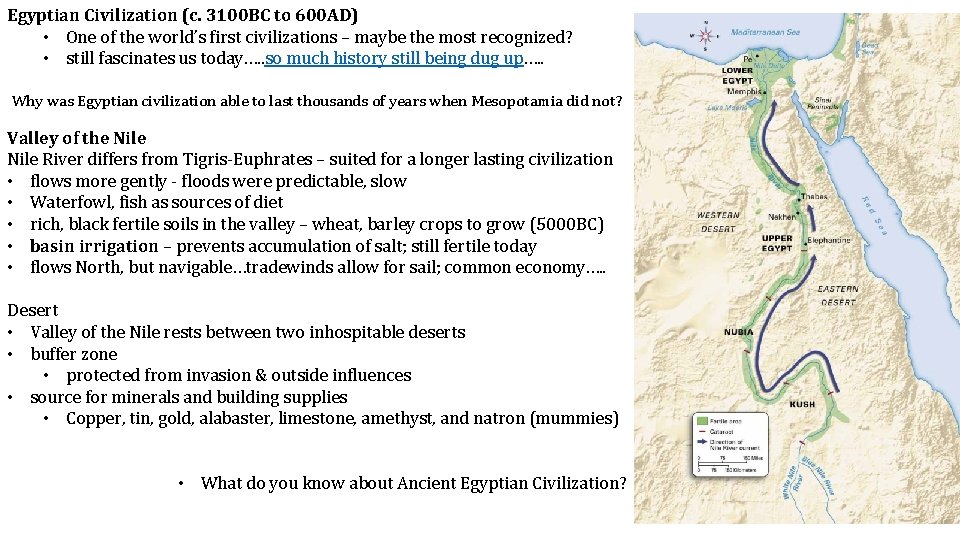
Egyptian Civilization (c. 3100 BC to 600 AD) • One of the world’s first civilizations – maybe the most recognized? • still fascinates us today…. . so much history still being dug up…. . Why was Egyptian civilization able to last thousands of years when Mesopotamia did not? Valley of the Nile River differs from Tigris-Euphrates – suited for a longer lasting civilization • flows more gently - floods were predictable, slow • Waterfowl, fish as sources of diet • rich, black fertile soils in the valley – wheat, barley crops to grow (5000 BC) • basin irrigation – prevents accumulation of salt; still fertile today • flows North, but navigable…tradewinds allow for sail; common economy…. . Desert • Valley of the Nile rests between two inhospitable deserts • buffer zone • protected from invasion & outside influences • source for minerals and building supplies • Copper, tin, gold, alabaster, limestone, amethyst, and natron (mummies) • What do you know about Ancient Egyptian Civilization?
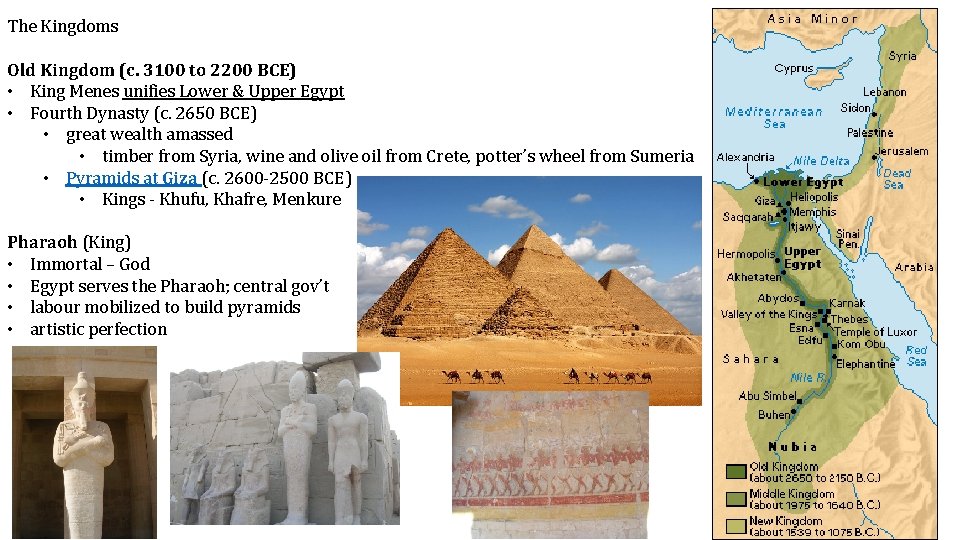
The Kingdoms Old Kingdom (c. 3100 to 2200 BCE) • King Menes unifies Lower & Upper Egypt • Fourth Dynasty (c. 2650 BCE) • great wealth amassed • timber from Syria, wine and olive oil from Crete, potter’s wheel from Sumeria • Pyramids at Giza (c. 2600 -2500 BCE) • Kings - Khufu, Khafre, Menkure Pharaoh (King) • Immortal – God • Egypt serves the Pharaoh; central gov’t • labour mobilized to build pyramids • artistic perfection
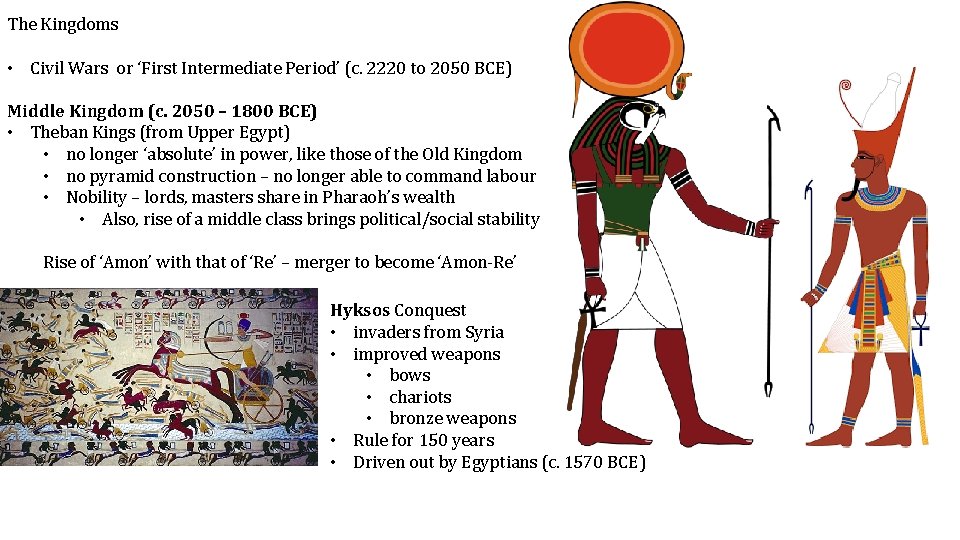
The Kingdoms • Civil Wars or ‘First Intermediate Period’ (c. 2220 to 2050 BCE) Middle Kingdom (c. 2050 – 1800 BCE) • Theban Kings (from Upper Egypt) • no longer ‘absolute’ in power, like those of the Old Kingdom • no pyramid construction – no longer able to command labour • Nobility – lords, masters share in Pharaoh’s wealth • Also, rise of a middle class brings political/social stability Rise of ‘Amon’ with that of ‘Re’ – merger to become ‘Amon-Re’ Hyksos Conquest • invaders from Syria • improved weapons • bows • chariots • bronze weapons • Rule for 150 years • Driven out by Egyptians (c. 1570 BCE)
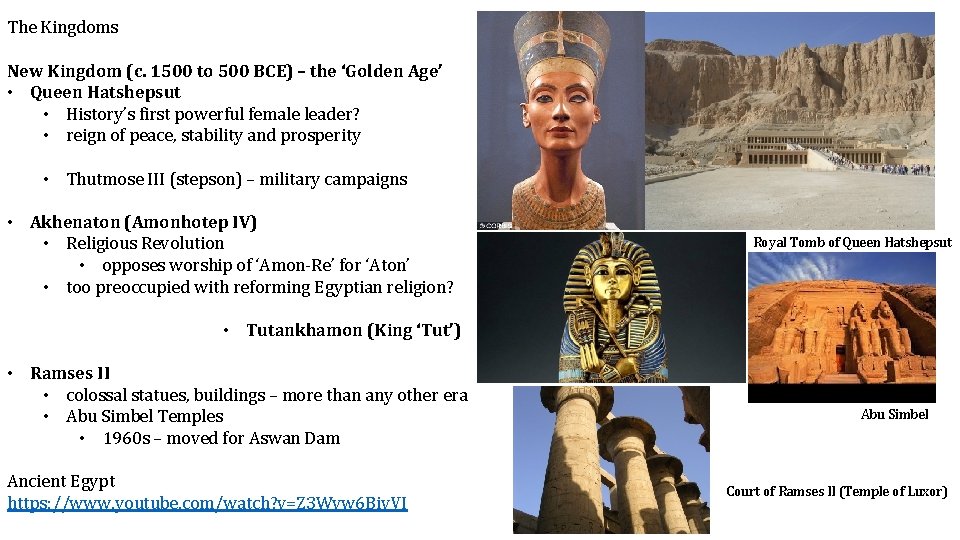
The Kingdoms New Kingdom (c. 1500 to 500 BCE) – the ‘Golden Age’ • Queen Hatshepsut • History’s first powerful female leader? • reign of peace, stability and prosperity • Thutmose III (stepson) – military campaigns • Akhenaton (Amonhotep IV) • Religious Revolution • opposes worship of ‘Amon-Re’ for ‘Aton’ • too preoccupied with reforming Egyptian religion? Royal Tomb of Queen Hatshepsut • Tutankhamon (King ‘Tut’) • Ramses II • colossal statues, buildings – more than any other era • Abu Simbel Temples • 1960 s – moved for Aswan Dam Ancient Egypt https: //www. youtube. com/watch? v=Z 3 Wvw 6 Biv. VI Abu Simbel Court of Ramses II (Temple of Luxor)
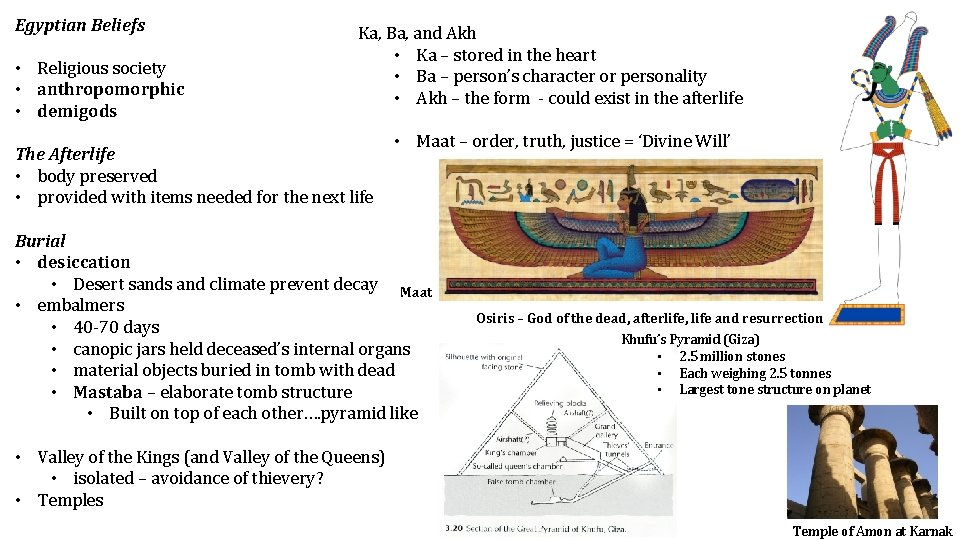
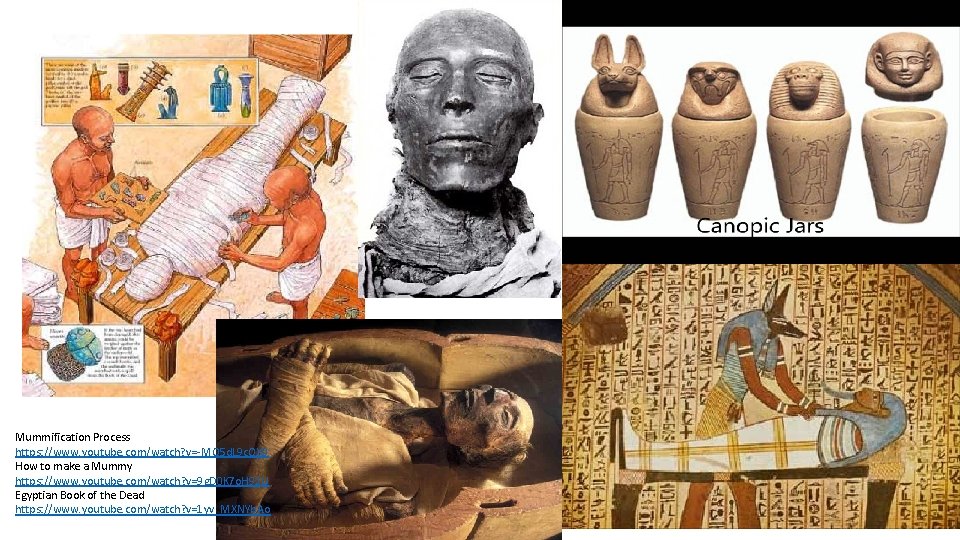
Egyptian Beliefs • Religious society • anthropomorphic • demigods Ka, Ba, and Akh • Ka – stored in the heart • Ba – person’s character or personality • Akh – the form - could exist in the afterlife The Afterlife • body preserved • provided with items needed for the next life • Maat – order, truth, justice = ‘Divine Will’ Burial • desiccation • Desert sands and climate prevent decay Maat • embalmers • 40 -70 days • canopic jars held deceased’s internal organs • material objects buried in tomb with dead • Mastaba – elaborate tomb structure • Built on top of each other…. pyramid like Osiris – God of the dead, afterlife, life and resurrection Khufu’s Pyramid (Giza) • 2. 5 million stones • Each weighing 2. 5 tonnes • Largest tone structure on planet • Valley of the Kings (and Valley of the Queens) • isolated – avoidance of thievery? • Temples Temple of Amon at Karnak
Mummification Process https: //www. youtube. com/watch? v=-MQ 5 d. L 9 c. QX 0 How to make a Mummy https: //www. youtube. com/watch? v=9 g. D 0 K 7 o. H 92 U Egyptian Book of the Dead https: //www. youtube. com/watch? v=1 yv_MXNYb. Ao
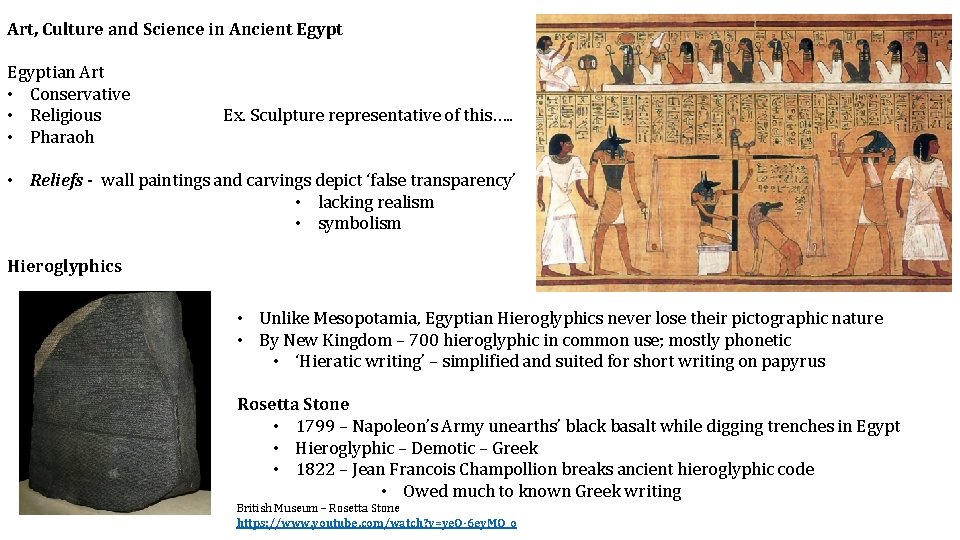
Art, Culture and Science in Ancient Egyptian Art • Conservative • Religious • Pharaoh Ex. Sculpture representative of this…. . • Reliefs - wall paintings and carvings depict ‘false transparency’ • lacking realism • symbolism Hieroglyphics • Unlike Mesopotamia, Egyptian Hieroglyphics never lose their pictographic nature • By New Kingdom – 700 hieroglyphic in common use; mostly phonetic • ‘Hieratic writing’ – simplified and suited for short writing on papyrus Rosetta Stone • 1799 – Napoleon’s Army unearths’ black basalt while digging trenches in Egypt • Hieroglyphic – Demotic – Greek • 1822 – Jean Francois Champollion breaks ancient hieroglyphic code • Owed much to known Greek writing British Museum – Rosetta Stone https: //www. youtube. com/watch? v=ye. Q-6 ey. MQ_o
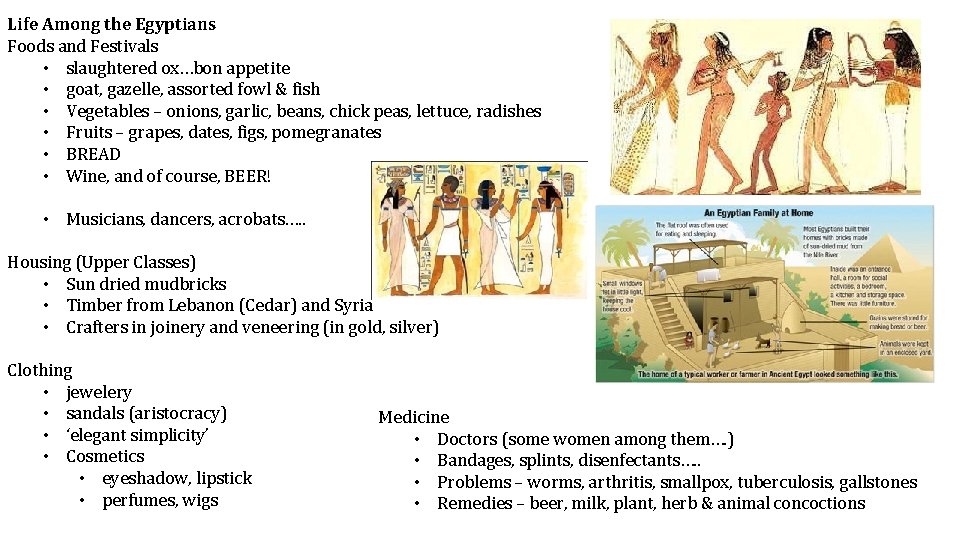
Life Among the Egyptians Foods and Festivals • slaughtered ox…bon appetite • goat, gazelle, assorted fowl & fish • Vegetables – onions, garlic, beans, chick peas, lettuce, radishes • Fruits – grapes, dates, figs, pomegranates • BREAD • Wine, and of course, BEER! • Musicians, dancers, acrobats…. . Housing (Upper Classes) • Sun dried mudbricks • Timber from Lebanon (Cedar) and Syria • Crafters in joinery and veneering (in gold, silver) Clothing • jewelery • sandals (aristocracy) • ‘elegant simplicity’ • Cosmetics • eyeshadow, lipstick • perfumes, wigs Medicine • Doctors (some women among them…. ) • Bandages, splints, disenfectants…. . • Problems – worms, arthritis, smallpox, tuberculosis, gallstones • Remedies – beer, milk, plant, herb & animal concoctions
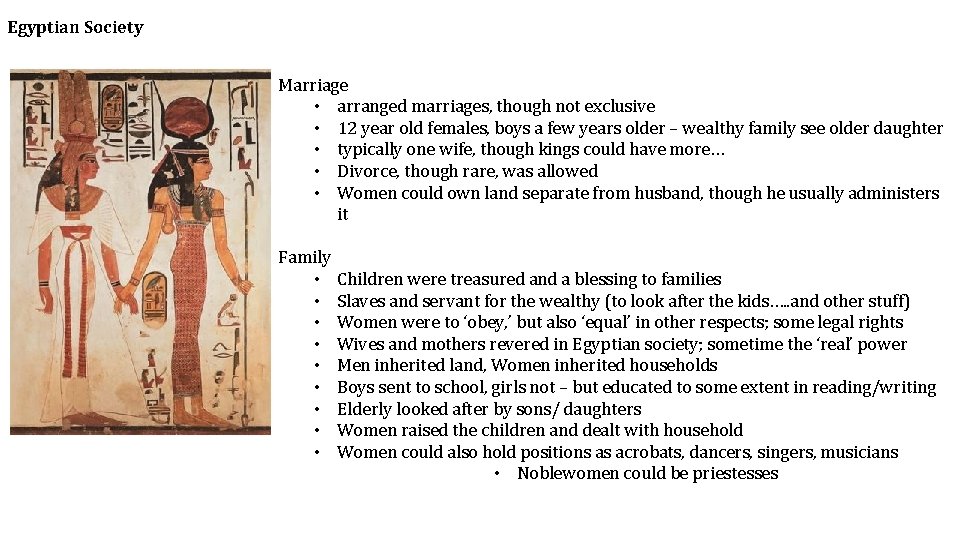
Egyptian Society Marriage • arranged marriages, though not exclusive • 12 year old females, boys a few years older – wealthy family see older daughter • typically one wife, though kings could have more… • Divorce, though rare, was allowed • Women could own land separate from husband, though he usually administers it Family • • • Children were treasured and a blessing to families Slaves and servant for the wealthy (to look after the kids…. . and other stuff) Women were to ‘obey, ’ but also ‘equal’ in other respects; some legal rights Wives and mothers revered in Egyptian society; sometime the ‘real’ power Men inherited land, Women inherited households Boys sent to school, girls not – but educated to some extent in reading/writing Elderly looked after by sons/ daughters Women raised the children and dealt with household Women could also hold positions as acrobats, dancers, singers, musicians • Noblewomen could be priestesses
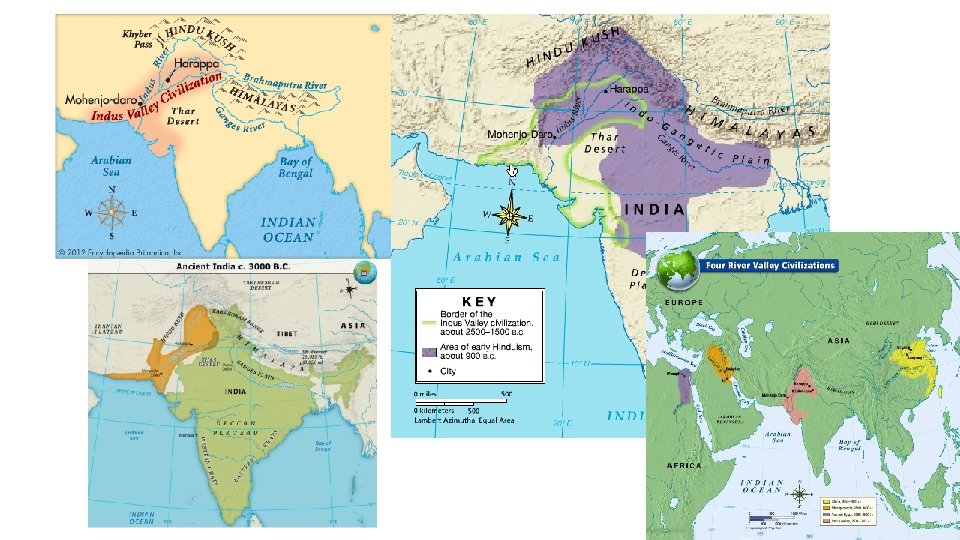
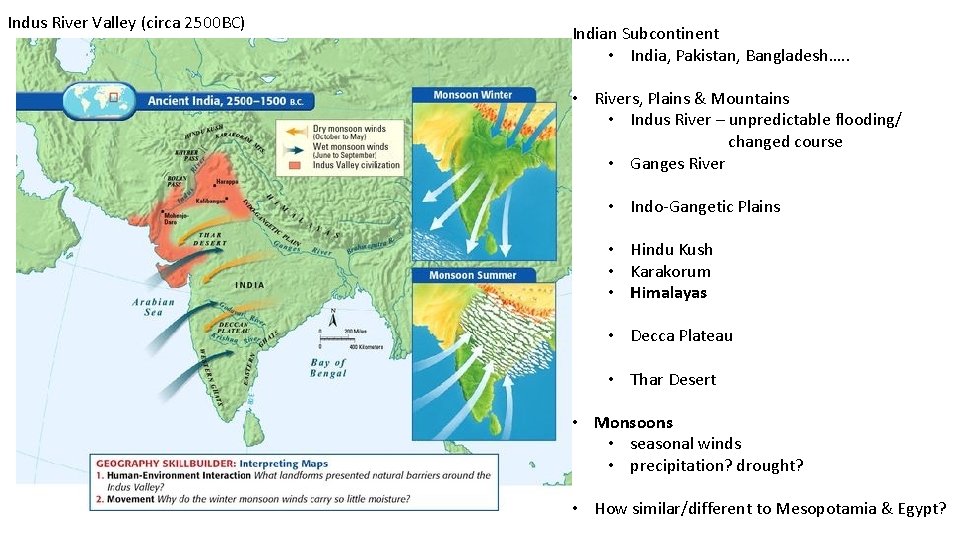
Indus River Valley (circa 2500 BC) Indian Subcontinent • India, Pakistan, Bangladesh…. . • Rivers, Plains & Mountains • Indus River – unpredictable flooding/ changed course • Ganges River • Indo-Gangetic Plains • Hindu Kush • Karakorum • Himalayas • Decca Plateau • Thar Desert • Monsoons • seasonal winds • precipitation? drought? • How similar/different to Mesopotamia & Egypt?
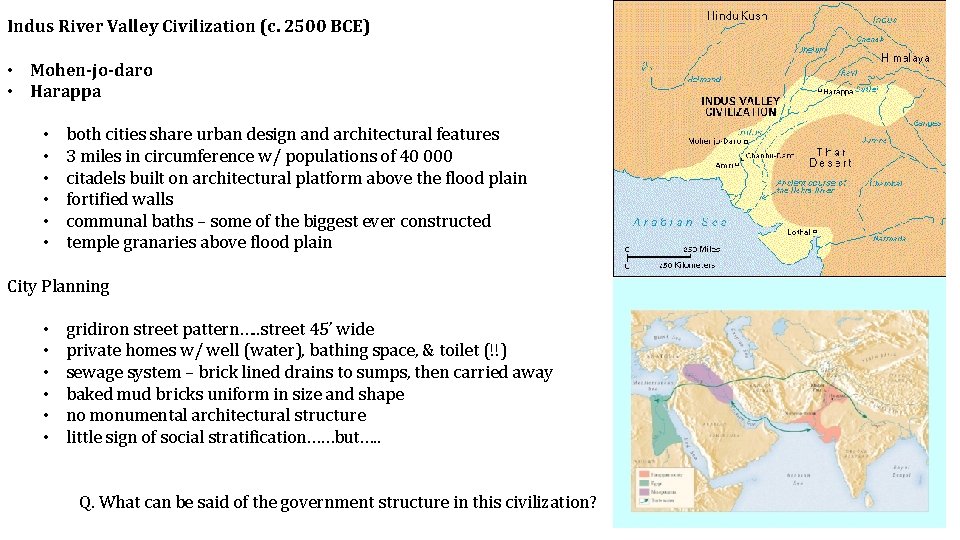
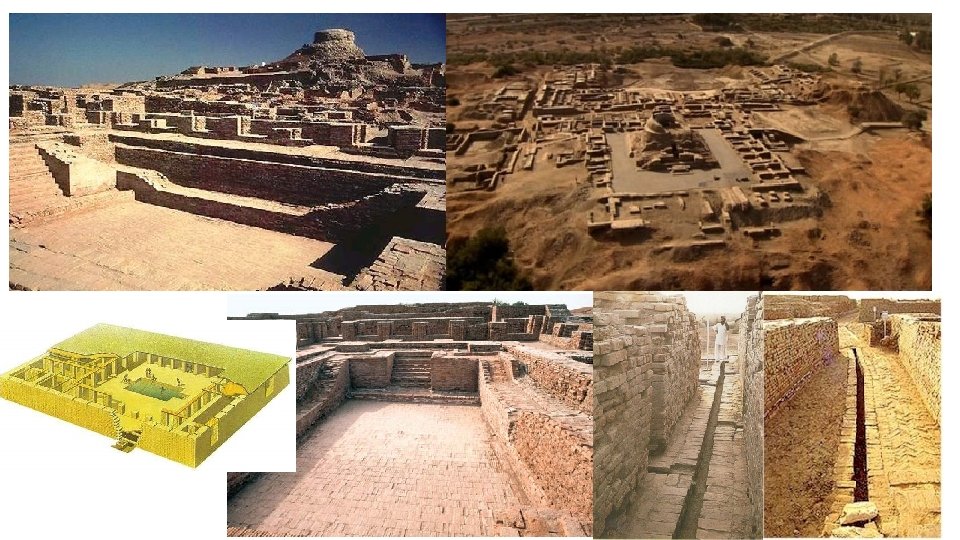
Indus River Valley Civilization (c. 2500 BCE) • Mohen-jo-daro • Harappa • • • both cities share urban design and architectural features 3 miles in circumference w/ populations of 40 000 citadels built on architectural platform above the flood plain fortified walls communal baths – some of the biggest ever constructed temple granaries above flood plain City Planning • • • gridiron street pattern…. . street 45’ wide private homes w/ well (water), bathing space, & toilet (!!) sewage system – brick lined drains to sumps, then carried away baked mud bricks uniform in size and shape no monumental architectural structure little sign of social stratification……but…. . Q. What can be said of the government structure in this civilization?
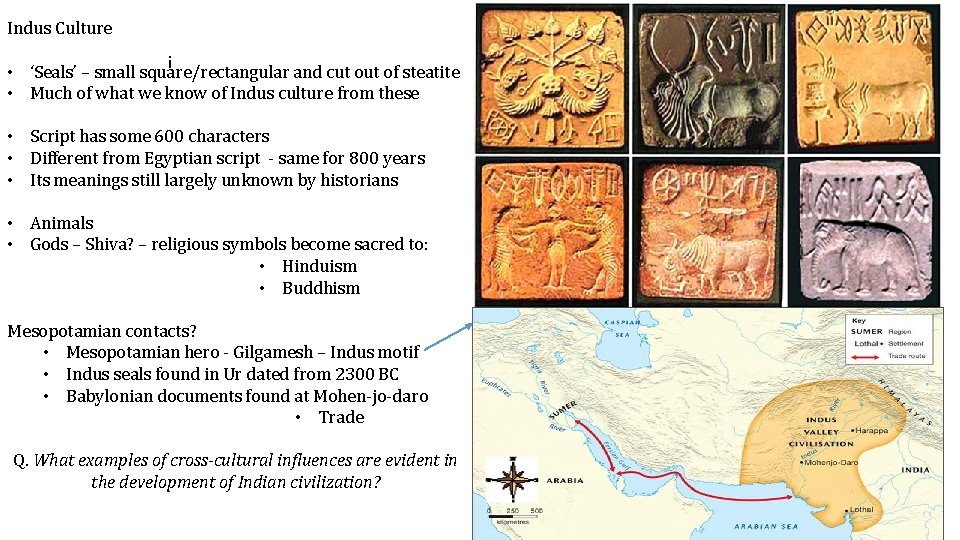
Indus Culture i • ‘Seals’ – small square/rectangular and cut of steatite • Much of what we know of Indus culture from these • Script has some 600 characters • Different from Egyptian script - same for 800 years • Its meanings still largely unknown by historians • Animals • Gods – Shiva? – religious symbols become sacred to: • Hinduism • Buddhism Mesopotamian contacts? • Mesopotamian hero - Gilgamesh – Indus motif • Indus seals found in Ur dated from 2300 BC • Babylonian documents found at Mohen-jo-daro • Trade Q. What examples of cross-cultural influences are evident in the development of Indian civilization?
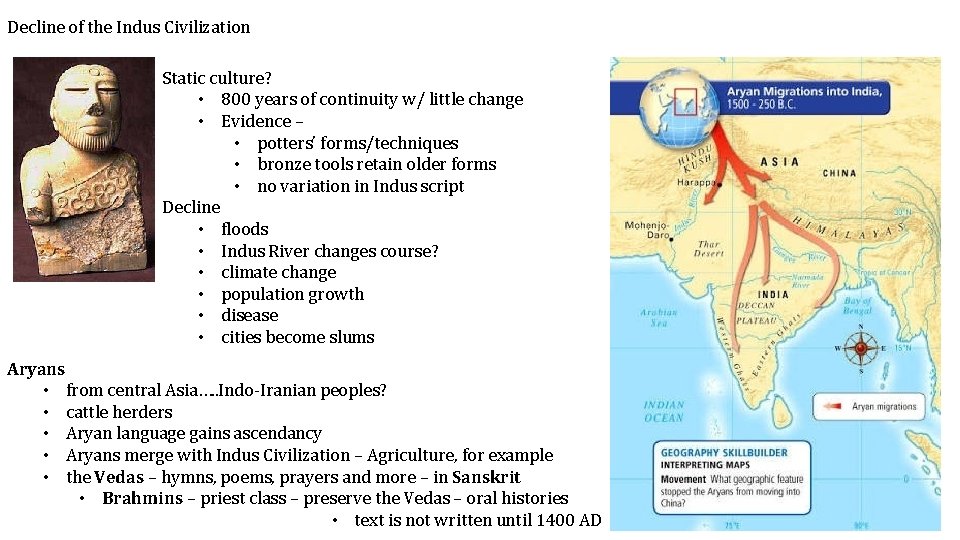
Decline of the Indus Civilization Static culture? • 800 years of continuity w/ little change • Evidence – • potters’ forms/techniques • bronze tools retain older forms • no variation in Indus script Decline • floods • Indus River changes course? • climate change • population growth • disease • cities become slums Aryans • from central Asia…. . Indo-Iranian peoples? • cattle herders • Aryan language gains ascendancy • Aryans merge with Indus Civilization – Agriculture, for example • the Vedas – hymns, poems, prayers and more – in Sanskrit • Brahmins – priest class – preserve the Vedas – oral histories • text is not written until 1400 AD
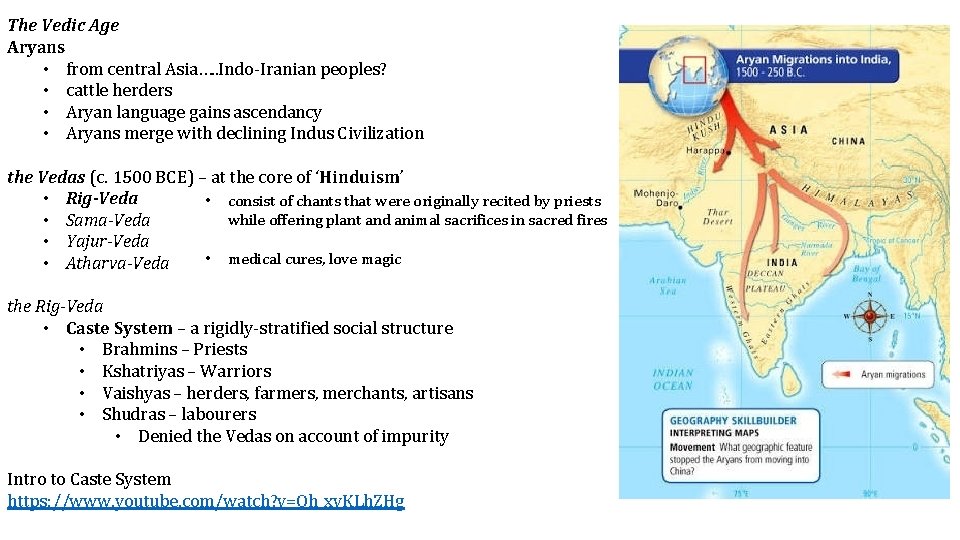
The Vedic Age Aryans • from central Asia…. . Indo-Iranian peoples? • cattle herders • Aryan language gains ascendancy • Aryans merge with declining Indus Civilization the Vedas (c. 1500 BCE) – at the core of ‘Hinduism’ • Rig-Veda • consist of chants that were originally recited by priests while offering plant and animal sacrifices in sacred fires • Sama-Veda • Yajur-Veda • medical cures, love magic • Atharva-Veda the Rig-Veda • Caste System – a rigidly-stratified social structure • Brahmins – Priests • Kshatriyas – Warriors • Vaishyas – herders, farmers, merchants, artisans • Shudras – labourers • Denied the Vedas on account of impurity Intro to Caste System https: //www. youtube. com/watch? v=Oh_xv. KLh. ZHg
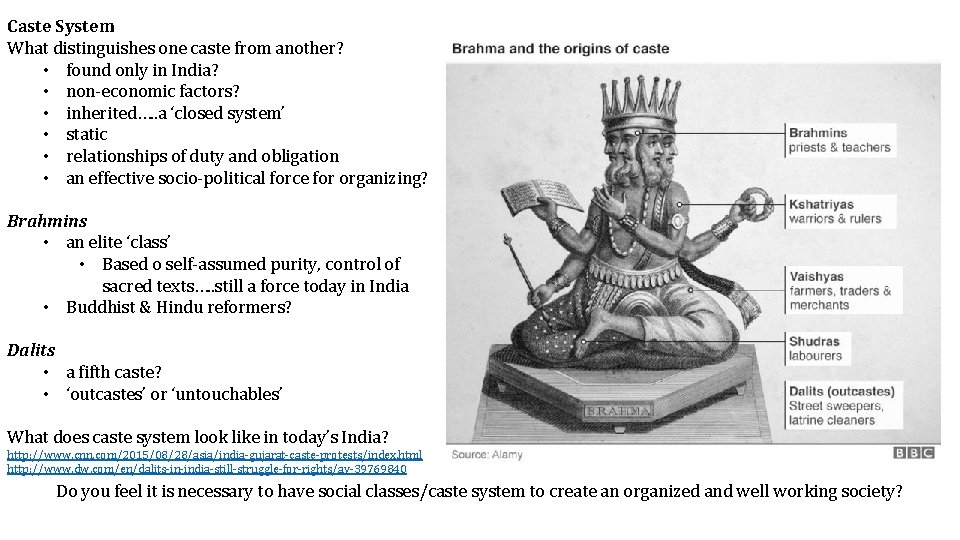
Caste System What distinguishes one caste from another? • found only in India? • non-economic factors? • inherited…. . a ‘closed system’ • static • relationships of duty and obligation • an effective socio-political force for organizing? Brahmins • an elite ‘class’ • Based o self-assumed purity, control of sacred texts…. . still a force today in India • Buddhist & Hindu reformers? Dalits • a fifth caste? • ‘outcastes’ or ‘untouchables’ What does caste system look like in today’s India? http: //www. cnn. com/2015/08/28/asia/india-gujarat-caste-protests/index. html http: //www. dw. com/en/dalits-in-india-still-struggle-for-rights/av-39769840 Do you feel it is necessary to have social classes/caste system to create an organized and well working society?
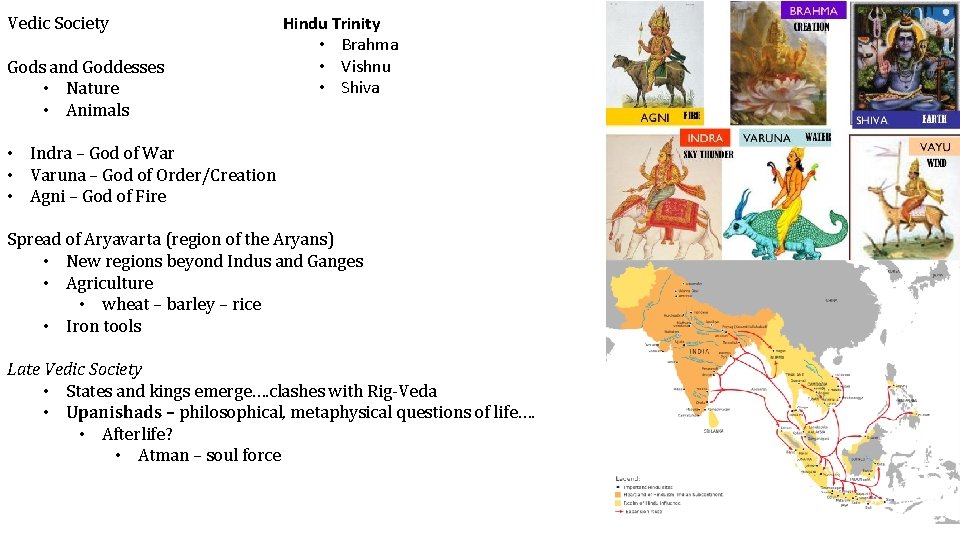
Vedic Society Gods and Goddesses • Nature • Animals Hindu Trinity • Brahma • Vishnu • Shiva • Indra – God of War • Varuna – God of Order/Creation • Agni – God of Fire Spread of Aryavarta (region of the Aryans) • New regions beyond Indus and Ganges • Agriculture • wheat – barley – rice • Iron tools Late Vedic Society • States and kings emerge…. clashes with Rig-Veda • Upanishads – philosophical, metaphysical questions of life…. • Afterlife? • Atman – soul force
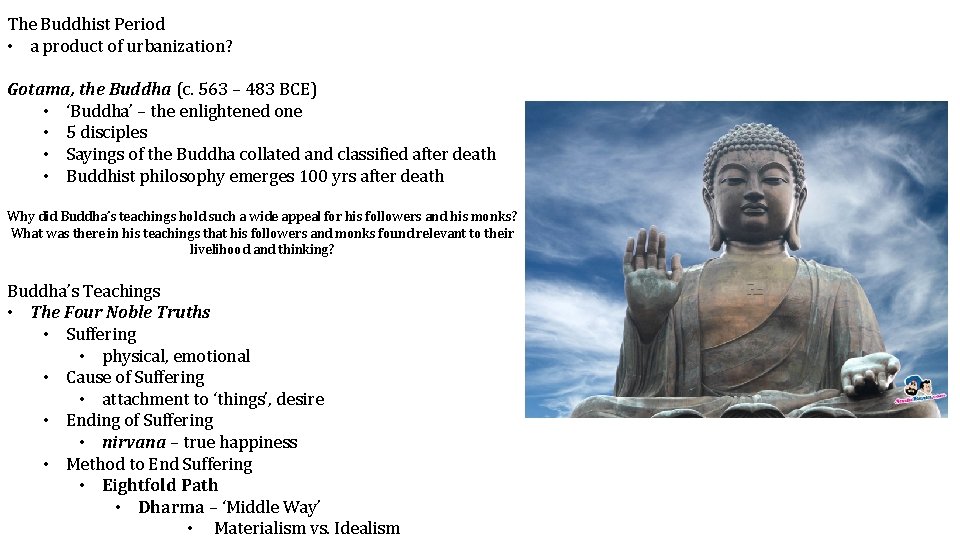
The Buddhist Period • a product of urbanization? Gotama, the Buddha (c. 563 – 483 BCE) • ‘Buddha’ – the enlightened one • 5 disciples • Sayings of the Buddha collated and classified after death • Buddhist philosophy emerges 100 yrs after death Why did Buddha’s teachings hold such a wide appeal for his followers and his monks? What was there in his teachings that his followers and monks found relevant to their livelihood and thinking? Buddha’s Teachings • The Four Noble Truths • Suffering • physical, emotional • Cause of Suffering • attachment to ‘things’, desire • Ending of Suffering • nirvana – true happiness • Method to End Suffering • Eightfold Path • Dharma – ‘Middle Way’ • Materialism vs. Idealism
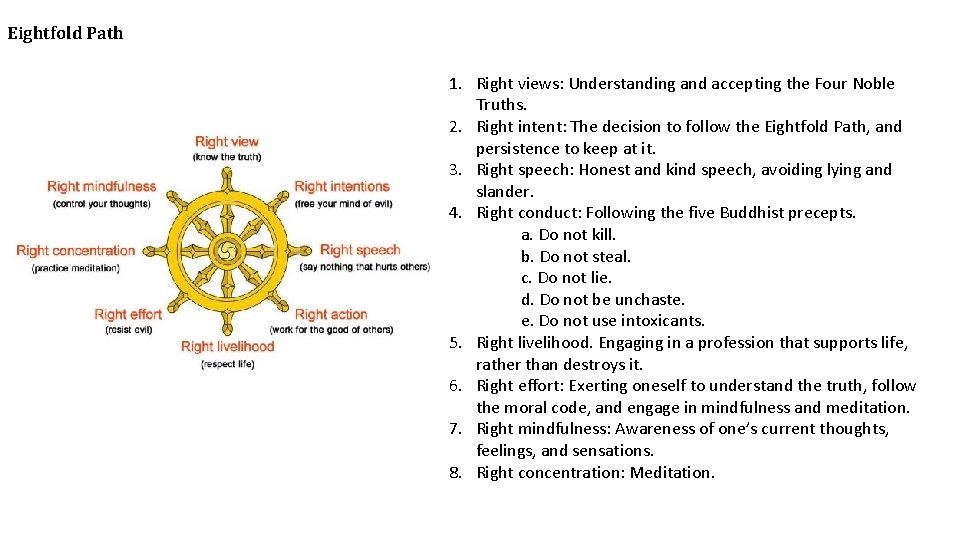
Eightfold Path 1. Right views: Understanding and accepting the Four Noble Truths. 2. Right intent: The decision to follow the Eightfold Path, and persistence to keep at it. 3. Right speech: Honest and kind speech, avoiding lying and slander. 4. Right conduct: Following the five Buddhist precepts. a. Do not kill. b. Do not steal. c. Do not lie. d. Do not be unchaste. e. Do not use intoxicants. 5. Right livelihood. Engaging in a profession that supports life, rather than destroys it. 6. Right effort: Exerting oneself to understand the truth, follow the moral code, and engage in mindfulness and meditation. 7. Right mindfulness: Awareness of one’s current thoughts, feelings, and sensations. 8. Right concentration: Meditation.
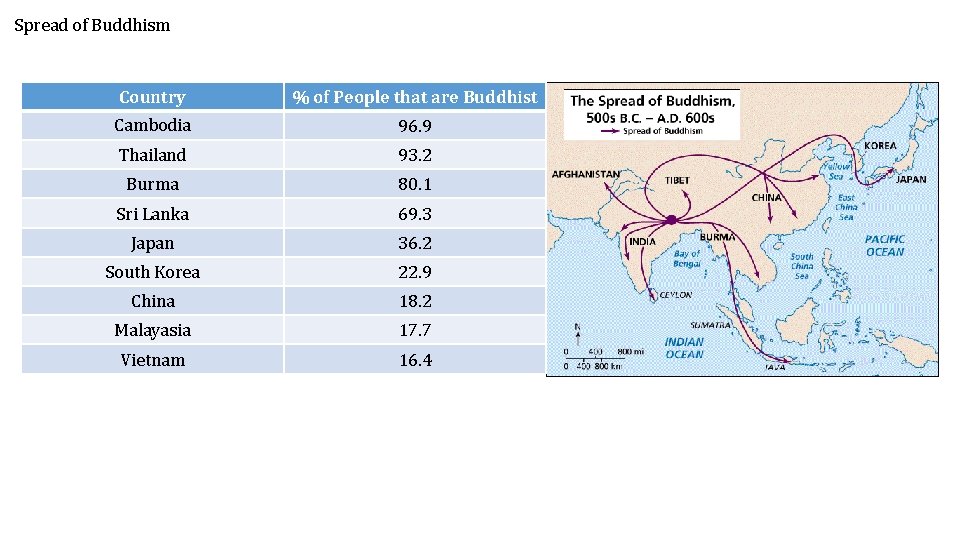
Spread of Buddhism Country % of People that are Buddhist Cambodia 96. 9 Thailand 93. 2 Burma 80. 1 Sri Lanka 69. 3 Japan 36. 2 South Korea 22. 9 China 18. 2 Malayasia 17. 7 Vietnam 16. 4
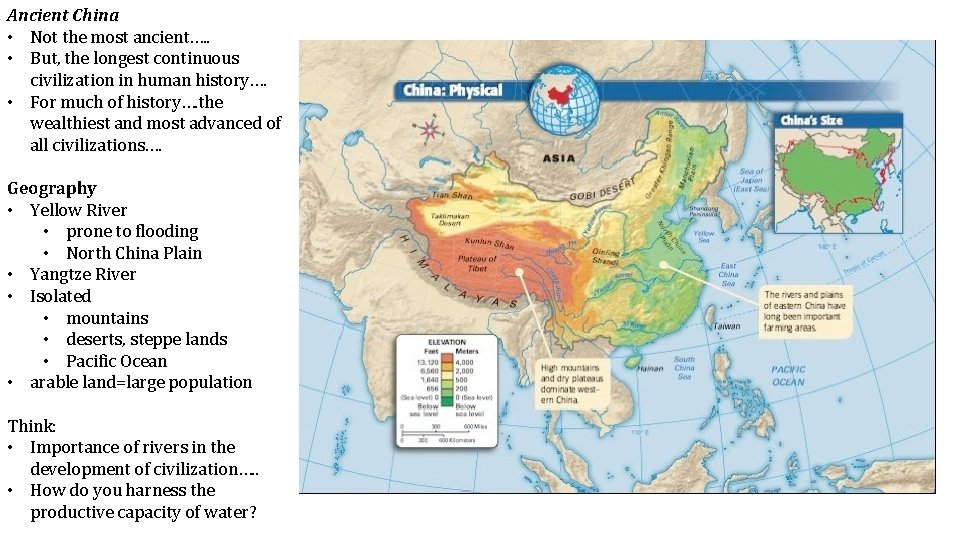
Ancient China • Not the most ancient…. . • But, the longest continuous civilization in human history…. • For much of history…. the wealthiest and most advanced of all civilizations…. Geography • Yellow River • prone to flooding • North China Plain • Yangtze River • Isolated • mountains • deserts, steppe lands • Pacific Ocean • arable land=large population Think: • Importance of rivers in the development of civilization…. . • How do you harness the productive capacity of water?
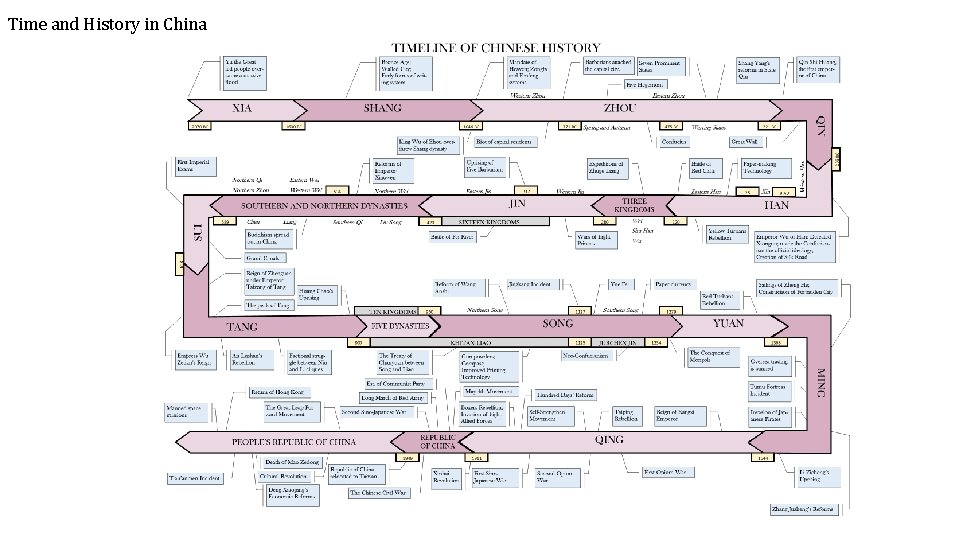
Time and History in China
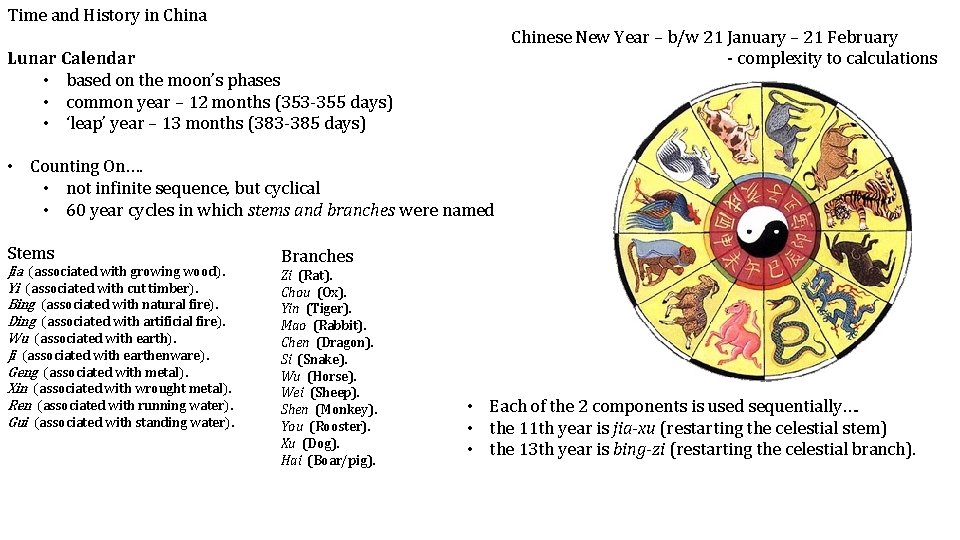
Time and History in China Chinese New Year – b/w 21 January – 21 February - complexity to calculations Lunar Calendar • based on the moon’s phases • common year – 12 months (353 -355 days) • ‘leap’ year – 13 months (383 -385 days) • Counting On…. • not infinite sequence, but cyclical • 60 year cycles in which stems and branches were named Stems Jia (associated with growing wood). Yi (associated with cut timber). Bing (associated with natural fire). Ding (associated with artificial fire). Wu (associated with earth). Ji (associated with earthenware). Geng (associated with metal). Xin (associated with wrought metal). Ren (associated with running water). Gui (associated with standing water). Branches Zi (Rat). Chou (Ox). Yin (Tiger). Mao (Rabbit). Chen (Dragon). Si (Snake). Wu (Horse). Wei (Sheep). Shen (Monkey). You (Rooster). Xu (Dog). Hai (Boar/pig). • Each of the 2 components is used sequentially…. • the 11 th year is jia-xu (restarting the celestial stem) • the 13 th year is bing-zi (restarting the celestial branch).
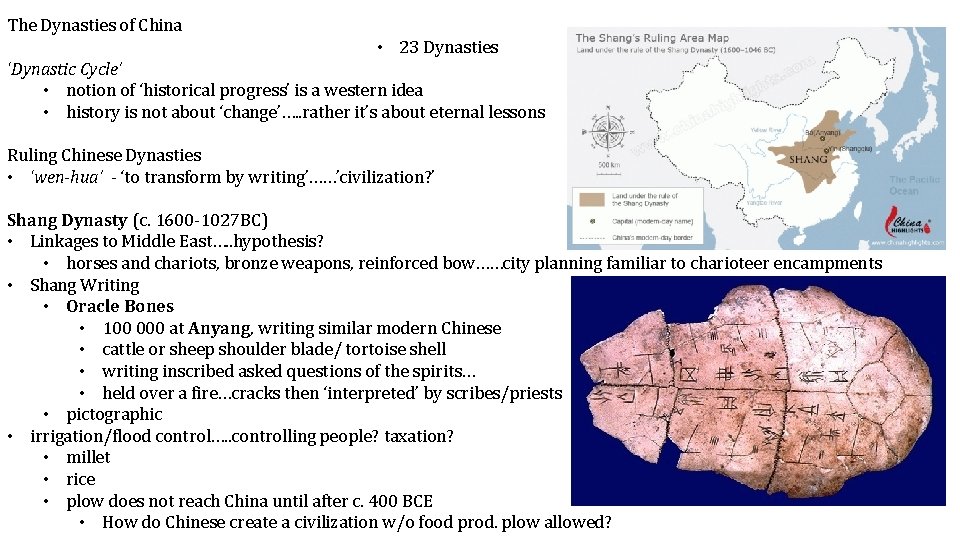
The Dynasties of China • 23 Dynasties ‘Dynastic Cycle’ • notion of ‘historical progress’ is a western idea • history is not about ‘change’…. . rather it’s about eternal lessons Ruling Chinese Dynasties • ‘wen-hua’ - ‘to transform by writing’……’civilization? ’ Shang Dynasty (c. 1600 -1027 BC) • Linkages to Middle East…. . hypothesis? • horses and chariots, bronze weapons, reinforced bow……city planning familiar to charioteer encampments • Shang Writing • Oracle Bones • 100 000 at Anyang, writing similar modern Chinese • cattle or sheep shoulder blade/ tortoise shell • writing inscribed asked questions of the spirits… • held over a fire…cracks then ‘interpreted’ by scribes/priests • pictographic • irrigation/flood control…. . controlling people? taxation? • millet • rice • plow does not reach China until after c. 400 BCE • How do Chinese create a civilization w/o food prod. plow allowed?
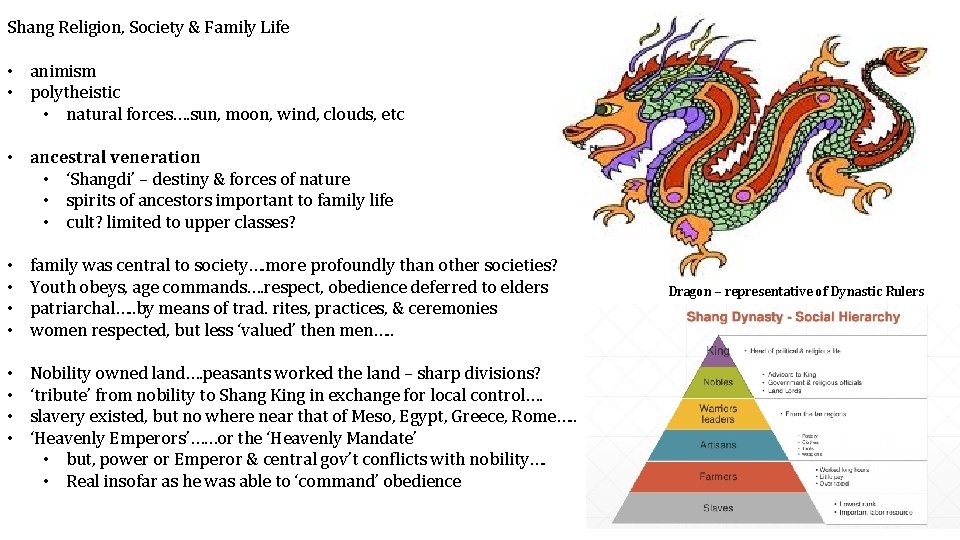
Shang Religion, Society & Family Life • animism • polytheistic • natural forces…. sun, moon, wind, clouds, etc • ancestral veneration • ‘Shangdi’ – destiny & forces of nature • spirits of ancestors important to family life • cult? limited to upper classes? • • family was central to society…. more profoundly than other societies? Youth obeys, age commands…. respect, obedience deferred to elders patriarchal…. . by means of trad. rites, practices, & ceremonies women respected, but less ‘valued’ then men…. . • • Nobility owned land…. peasants worked the land – sharp divisions? ‘tribute’ from nobility to Shang King in exchange for local control…. slavery existed, but no where near that of Meso, Egypt, Greece, Rome…. . ‘Heavenly Emperors’……or the ‘Heavenly Mandate’ • but, power or Emperor & central gov’t conflicts with nobility…. • Real insofar as he was able to ‘command’ obedience Dragon – representative of Dynastic Rulers
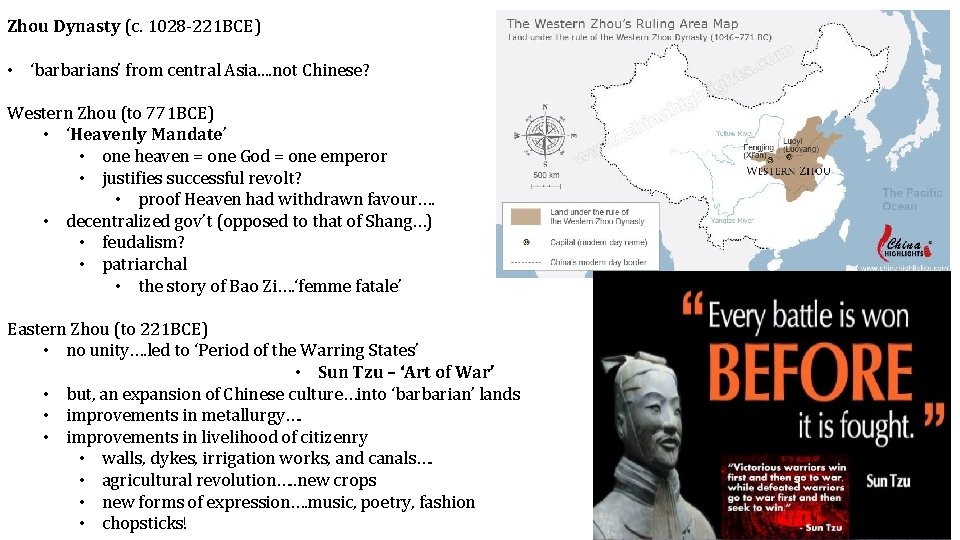
Zhou Dynasty (c. 1028 -221 BCE) • ‘barbarians’ from central Asia. . not Chinese? Western Zhou (to 771 BCE) • ‘Heavenly Mandate’ • one heaven = one God = one emperor • justifies successful revolt? • proof Heaven had withdrawn favour…. • decentralized gov’t (opposed to that of Shang…) • feudalism? • patriarchal • the story of Bao Zi…. ‘femme fatale’ Eastern Zhou (to 221 BCE) • no unity…. led to ‘Period of the Warring States’ • Sun Tzu – ‘Art of War’ • but, an expansion of Chinese culture…into ‘barbarian’ lands • improvements in metallurgy…. • improvements in livelihood of citizenry • walls, dykes, irrigation works, and canals…. • agricultural revolution…. . new crops • new forms of expression…. music, poetry, fashion • chopsticks!
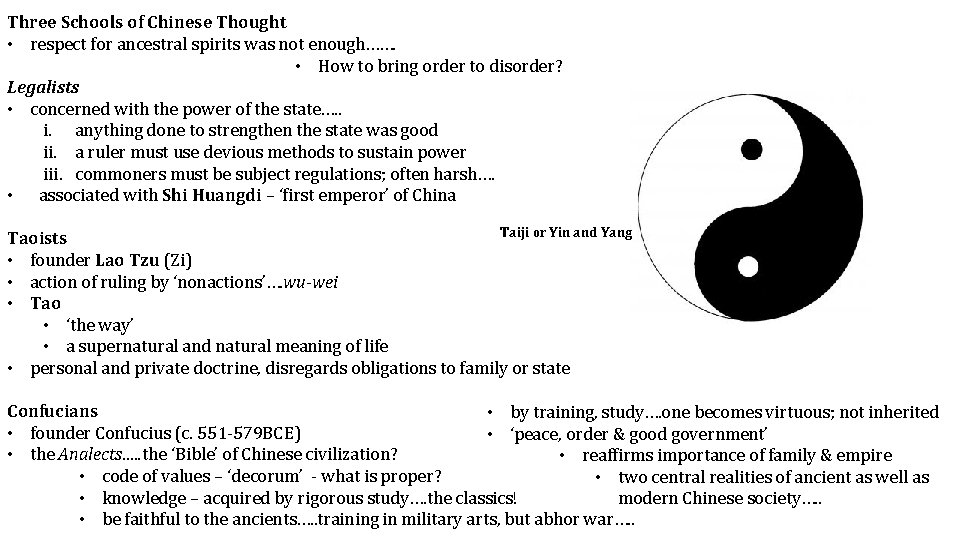
Three Schools of Chinese Thought • respect for ancestral spirits was not enough……. • How to bring order to disorder? Legalists • concerned with the power of the state…. . i. anything done to strengthen the state was good ii. a ruler must use devious methods to sustain power iii. commoners must be subject regulations; often harsh…. • associated with Shi Huangdi – ‘first emperor’ of China Taiji or Yin and Yang Taoists • founder Lao Tzu (Zi) • action of ruling by ‘nonactions’…. wu-wei • Tao • ‘the way’ • a supernatural and natural meaning of life • personal and private doctrine, disregards obligations to family or state Confucians • by training, study…. one becomes virtuous; not inherited • founder Confucius (c. 551 -579 BCE) • ‘peace, order & good government’ • the Analects…. . the ‘Bible’ of Chinese civilization? • reaffirms importance of family & empire • code of values – ‘decorum’ - what is proper? • two central realities of ancient as well as • knowledge – acquired by rigorous study…. the classics! modern Chinese society…. . • be faithful to the ancients…. . training in military arts, but abhor war…. .
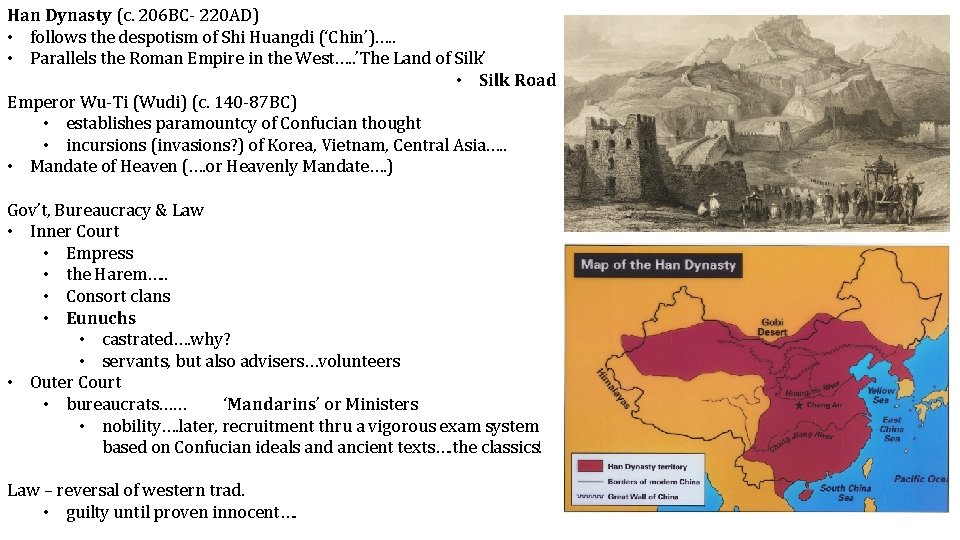
Han Dynasty (c. 206 BC- 220 AD) • follows the despotism of Shi Huangdi (‘Chin’)…. . • Parallels the Roman Empire in the West…. . ’The Land of Silk’ • Silk Road Emperor Wu-Ti (Wudi) (c. 140 -87 BC) • establishes paramountcy of Confucian thought • incursions (invasions? ) of Korea, Vietnam, Central Asia…. . • Mandate of Heaven (…. or Heavenly Mandate…. ) Gov’t, Bureaucracy & Law • Inner Court • Empress • the Harem…. . • Consort clans • Eunuchs • castrated…. why? • servants, but also advisers…volunteers • Outer Court • bureaucrats…… ‘Mandarins’ or Ministers • nobility…. later, recruitment thru a vigorous exam system based on Confucian ideals and ancient texts…. the classics! Law – reversal of western trad. • guilty until proven innocent….