
What is a civil war An internal war




- Slides: 50
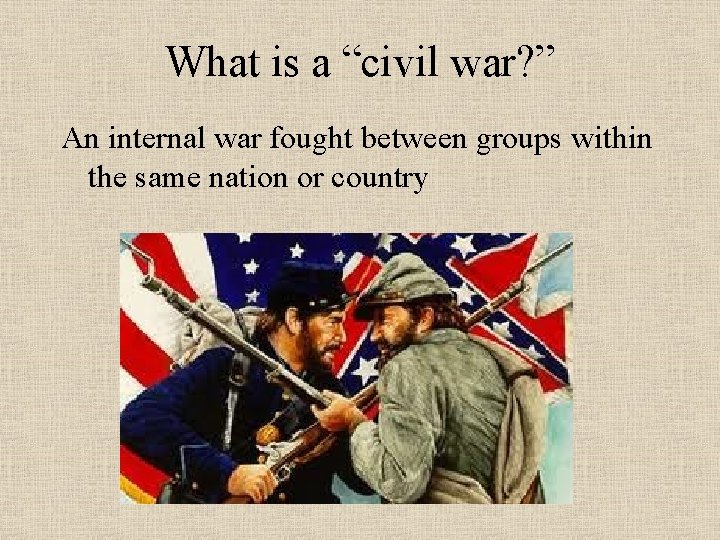
What is a “civil war? ” An internal war fought between groups within the same nation or country
Events Leading to the Civil War • • Compromise of 1850 Kansas-Nebraska Act Bleeding Kansas Dred Scott Decision John Brown’s Raid Lincoln’s Election The South secedes
Slave vs. Free As more territories wanted to become states, the problem of who would be free and who would be slave came to everyone’s attention. WHY? If there were more slave states, slave states would have more power in Congress. If there were more free states, free states would have more power in Congress. (Congress is so important because it is the law-making body of the United States. )
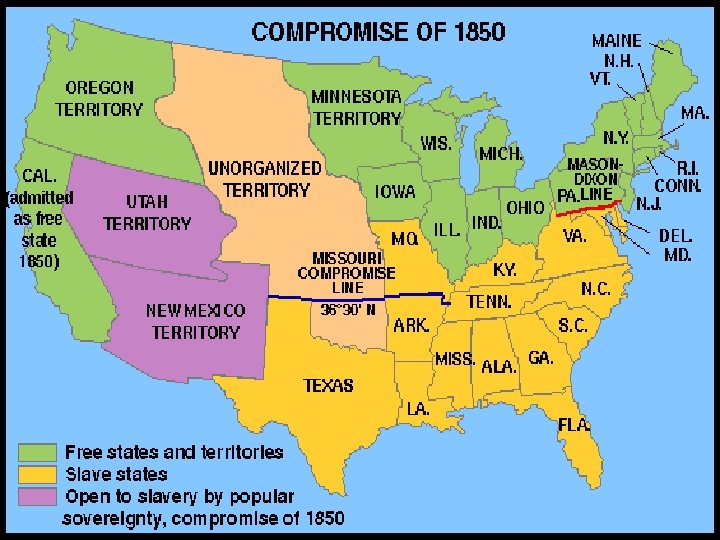
The Compromise of 1850 1. Texas received $10 million for the New Mexico territory and its final border was set.
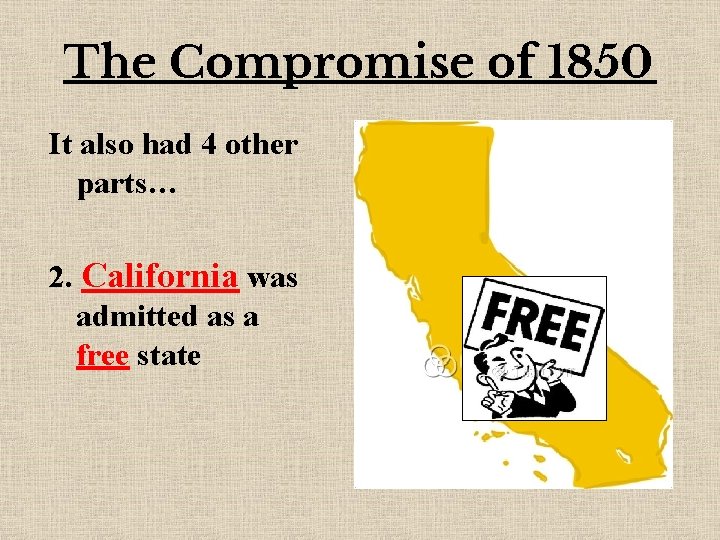
The Compromise of 1850 It also had 4 other parts… 2. California was admitted as a free state
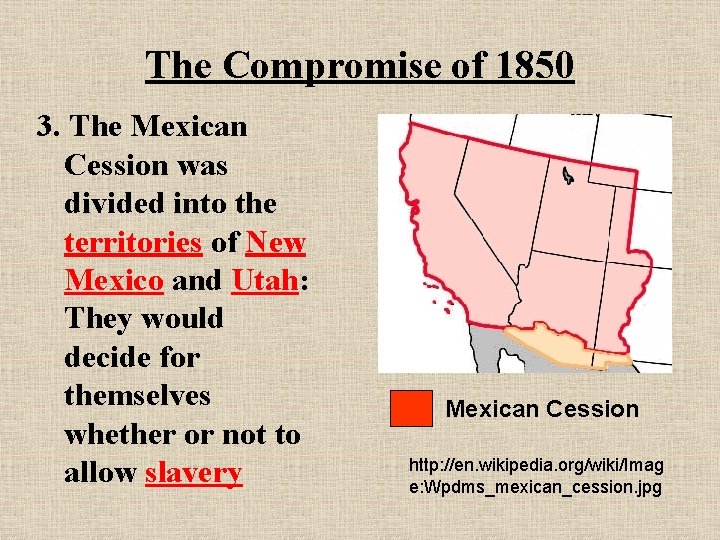
The Compromise of 1850 3. The Mexican Cession was divided into the territories of New Mexico and Utah: They would decide for themselves whether or not to allow slavery Mexican Cession http: //en. wikipedia. org/wiki/Imag e: Wpdms_mexican_cession. jpg
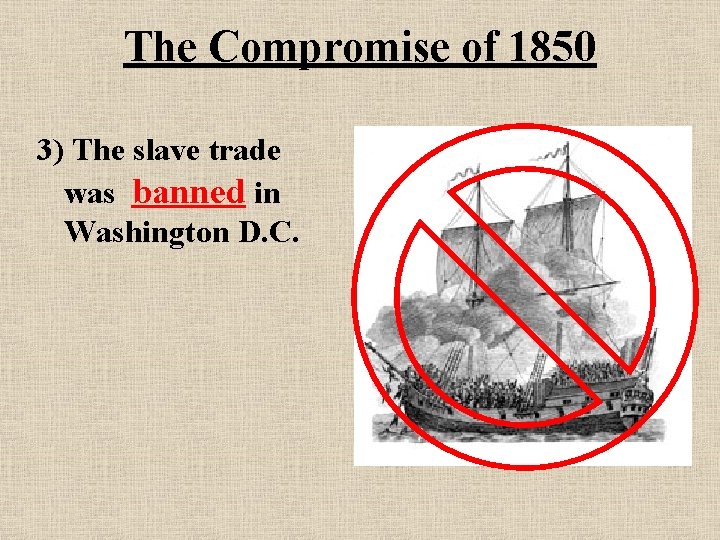
The Compromise of 1850 3) The slave trade was banned in Washington D. C.
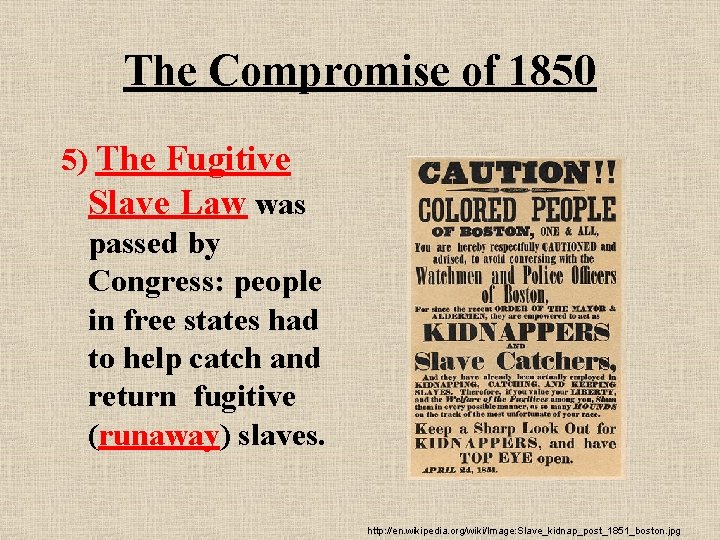
The Compromise of 1850 5) The Fugitive Slave Law was passed by Congress: people in free states had to help catch and return fugitive (runaway) slaves. http: //en. wikipedia. org/wiki/Image: Slave_kidnap_post_1851_boston. jpg
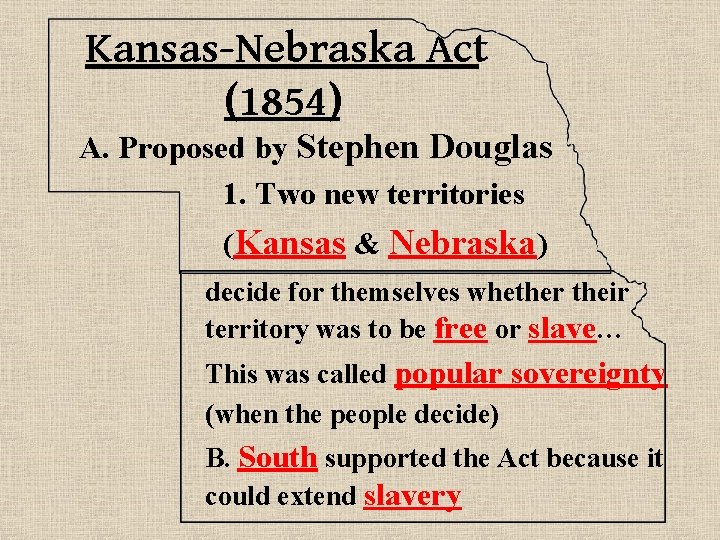
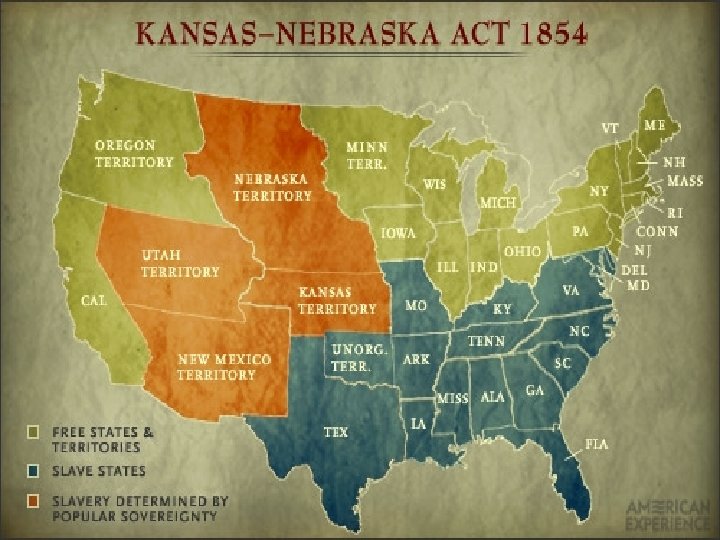
Kansas-Nebraska Act (1854) A. Proposed by Stephen Douglas 1. Two new territories (Kansas & Nebraska) decide for themselves whether their territory was to be free or slave… This was called popular sovereignty (when the people decide) B. South supported the Act because it could extend slavery
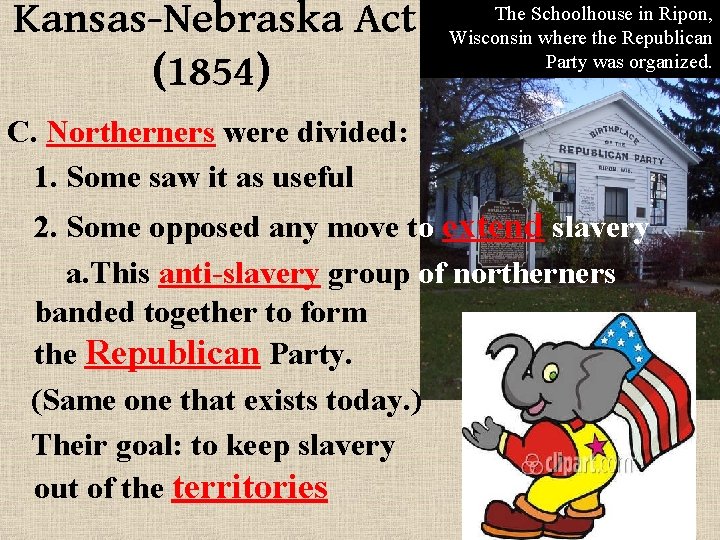
Kansas-Nebraska Act (1854) The Schoolhouse in Ripon, Wisconsin where the Republican Party was organized. C. Northerners were divided: 1. Some saw it as useful 2. Some opposed any move to extend slavery a. This anti-slavery group of northerners banded together to form the Republican Party. (Same one that exists today. ) Their goal: to keep slavery out of the territories
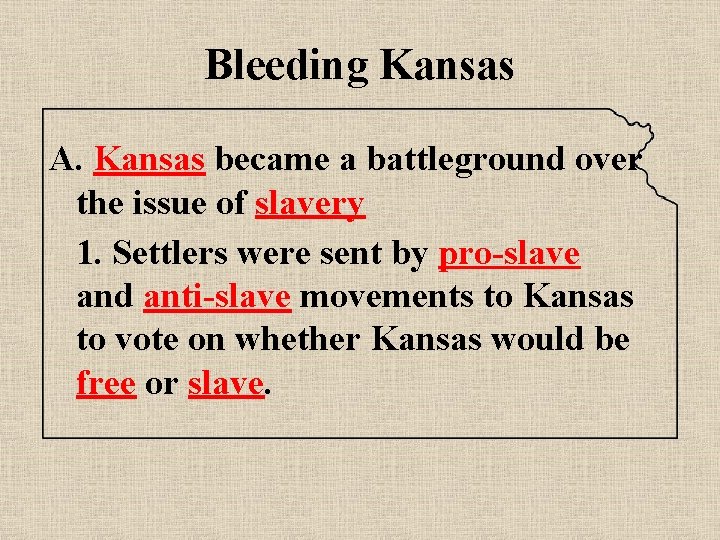
Bleeding Kansas A. Kansas became a battleground over the issue of slavery 1. Settlers were sent by pro-slave and anti-slave movements to Kansas to vote on whether Kansas would be free or slave.
Bleeding Kansas 2. Anti-slavery settlers were more numerous, so pro-slavery Missourians crossed the border to stuff the ballot boxes. MISSOURI
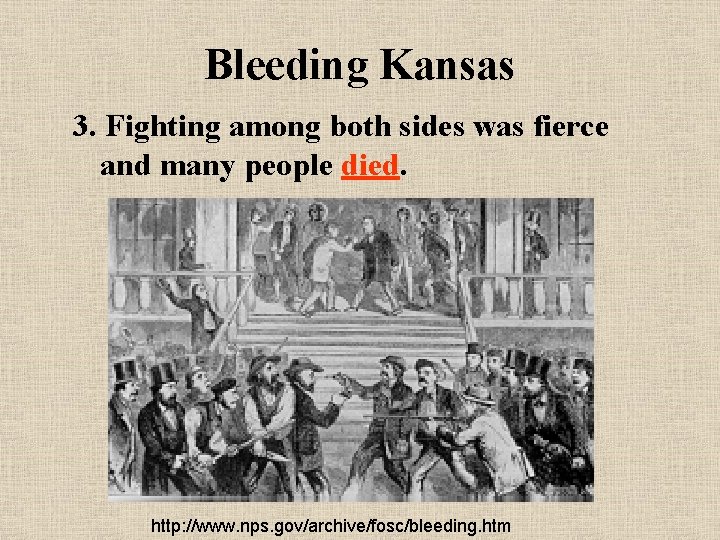
Bleeding Kansas 3. Fighting among both sides was fierce and many people died. http: //www. nps. gov/archive/fosc/bleeding. htm
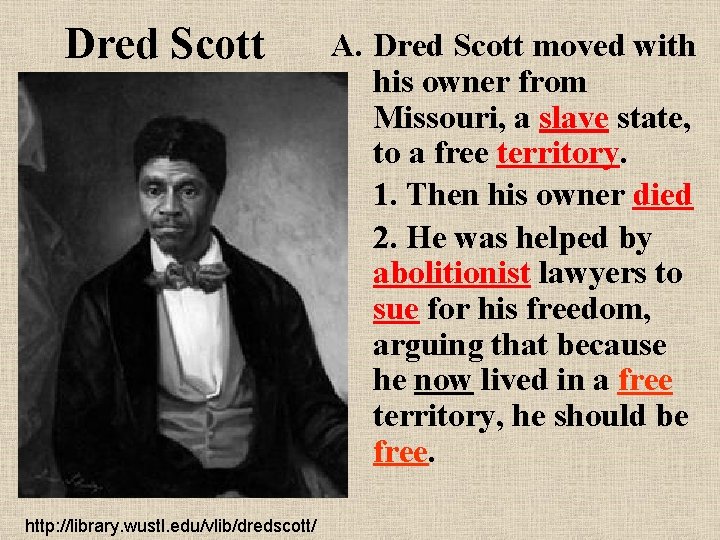
Dred Scott http: //library. wustl. edu/vlib/dredscott/ A. Dred Scott moved with his owner from Missouri, a slave state, to a free territory. 1. Then his owner died 2. He was helped by abolitionist lawyers to sue for his freedom, arguing that because he now lived in a free territory, he should be free.
Dred Scott Decision B. Supreme Court Decision 1. Dred Scott was not a citizen, but merely property, and could not sue because no person of African blood had the rights of citizenship under the U. S. Constitution. X http: //www. archives. gov/national-archives-experience/charters/constitution. html
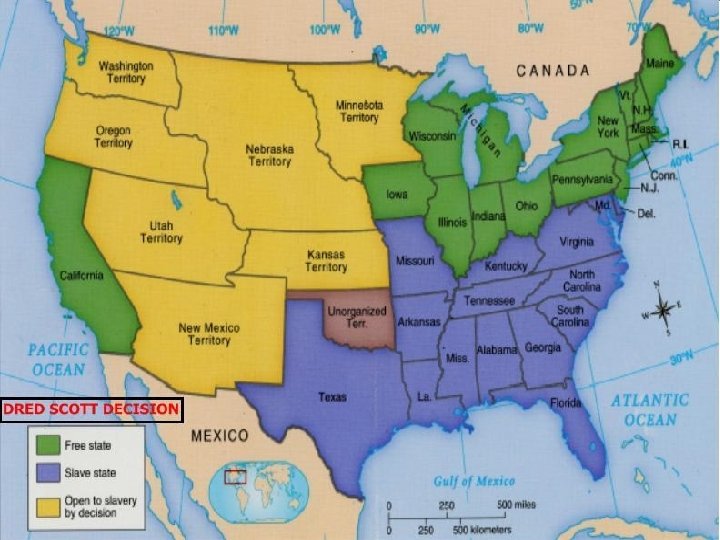
Dred Scott Decision The Supreme Court decided that the Missouri Compromise was unconstitutional. X (It was a law that drew a line and stated slavery was illegal in the free territory above that line. )
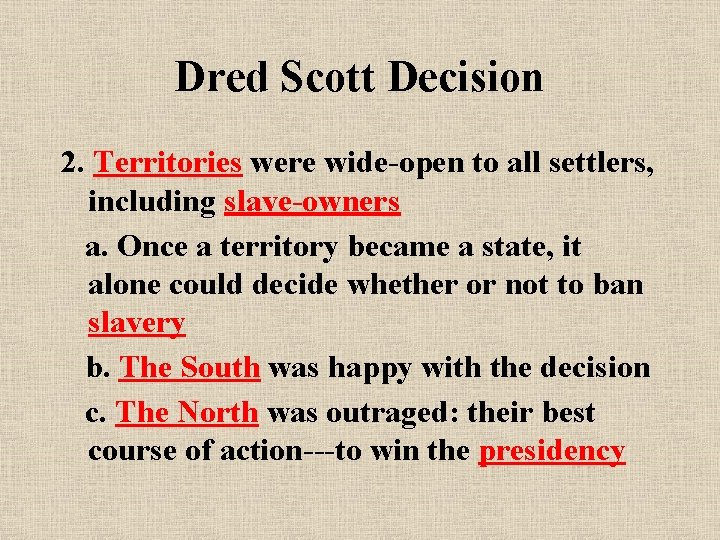
Dred Scott Decision 2. Territories were wide-open to all settlers, including slave-owners a. Once a territory became a state, it alone could decide whether or not to ban slavery b. The South was happy with the decision c. The North was outraged: their best course of action---to win the presidency
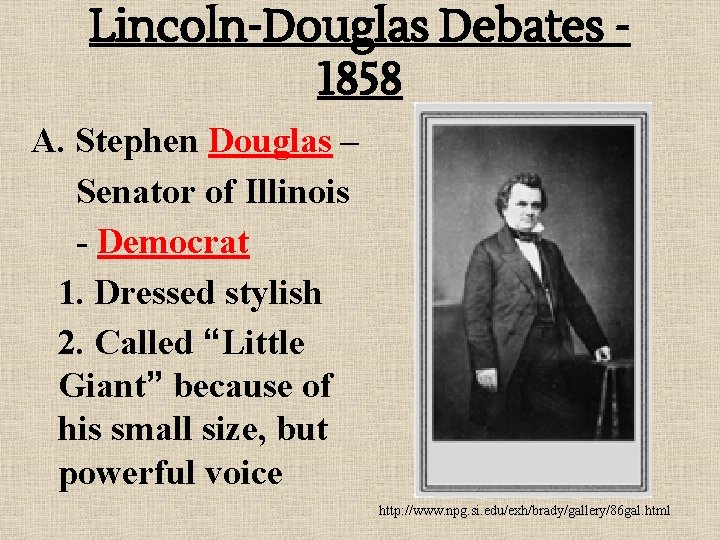
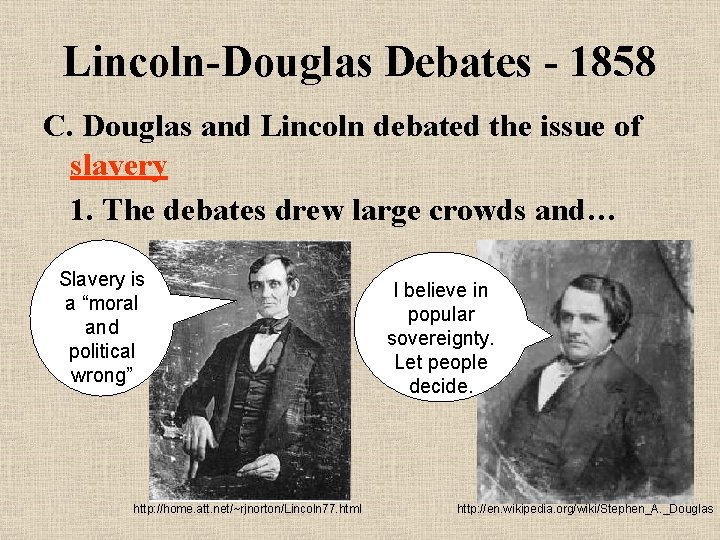
Lincoln-Douglas Debates 1858 A. Stephen Douglas – Senator of Illinois - Democrat 1. Dressed stylish 2. Called “Little Giant” because of his small size, but powerful voice http: //www. npg. si. edu/exh/brady/gallery/86 gal. html
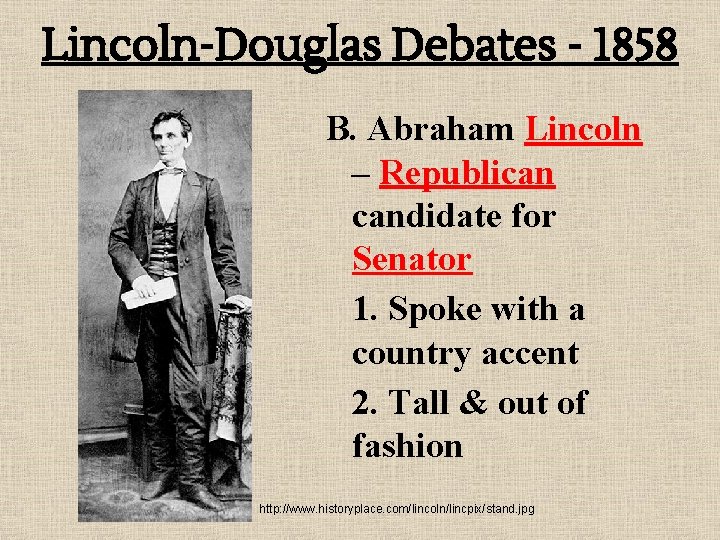
Lincoln-Douglas Debates - 1858 B. Abraham Lincoln – Republican candidate for Senator 1. Spoke with a country accent 2. Tall & out of fashion http: //www. historyplace. com/lincoln/lincpix/stand. jpg
Lincoln-Douglas Debates - 1858 C. Douglas and Lincoln debated the issue of slavery 1. The debates drew large crowds and… Slavery is a “moral and political wrong” http: //home. att. net/~rjnorton/Lincoln 77. html I believe in popular sovereignty. Let people decide. http: //en. wikipedia. org/wiki/Stephen_A. _Douglas
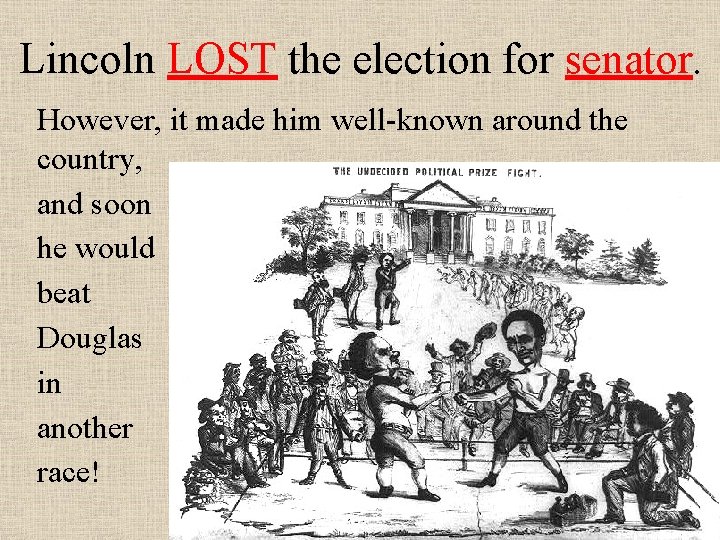
Lincoln LOST the election for senator. However, it made him well-known around the country, and soon he would beat Douglas in another race!
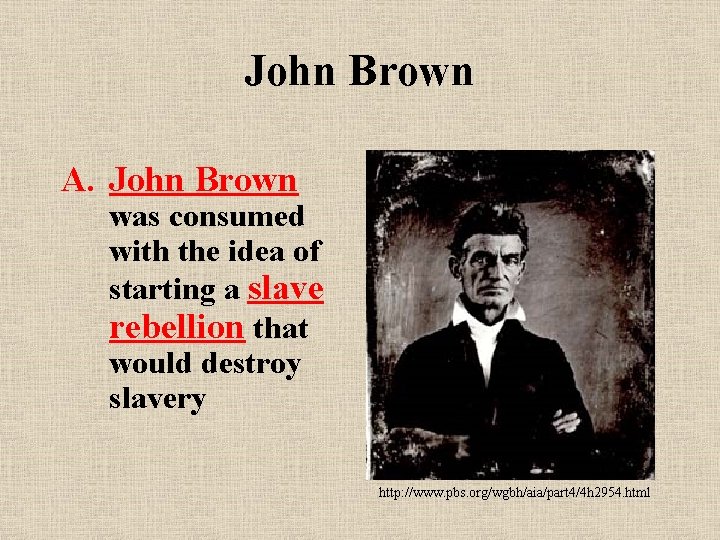
John Brown A. John Brown was consumed with the idea of starting a slave rebellion that would destroy slavery http: //www. pbs. org/wgbh/aia/part 4/4 h 2954. html
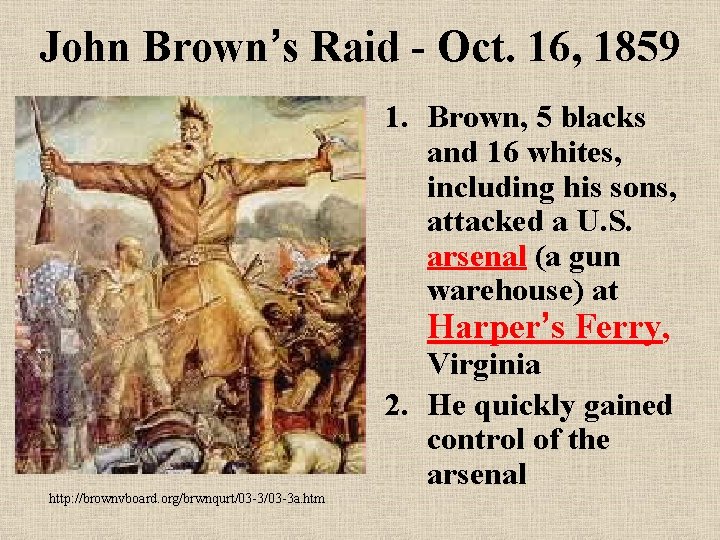
John Brown’s Raid - Oct. 16, 1859 1. Brown, 5 blacks and 16 whites, including his sons, attacked a U. S. arsenal (a gun warehouse) at Harper’s Ferry, Virginia 2. He quickly gained control of the arsenal http: //brownvboard. org/brwnqurt/03 -3 a. htm
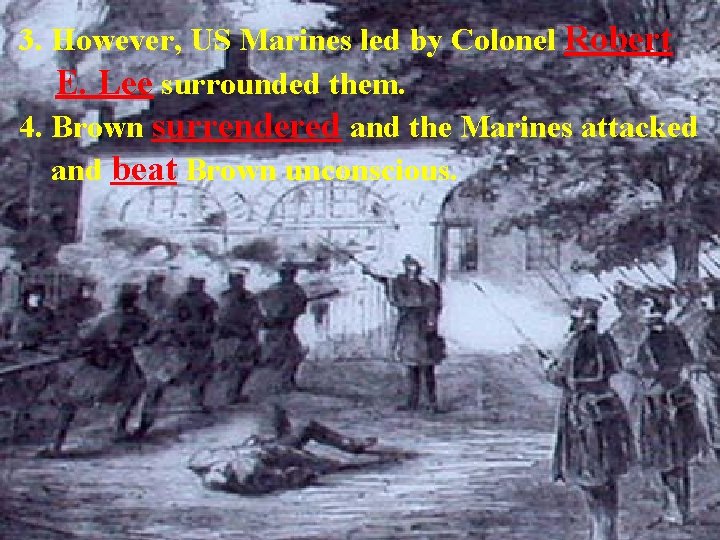
3. However, US Marines led by Colonel Robert E. Lee surrounded them. 4. Brown surrendered and the Marines attacked and beat Brown unconscious.
Abolitionists Movement http: //www. youtube. com/watch? v=Rq 119 y M_h. YM&feature=related&safety_mode=tr ue&persist_safety_mode= Start at 6: 50 Continue to 9/9 - stop at 3: 25
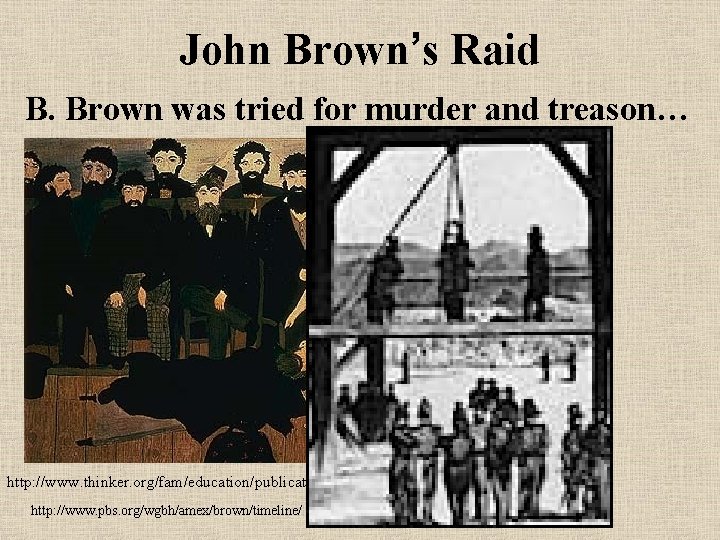
John Brown’s Raid B. Brown was tried for murder and treason… and hanged http: //www. thinker. org/fam/education/publications/guide-american/15. html http: //www. pbs. org/wgbh/amex/brown/timeline/
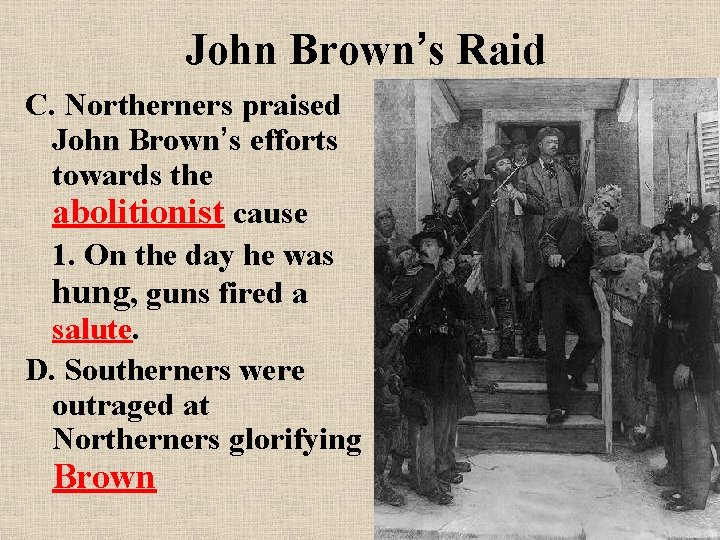
John Brown’s Raid C. Northerners praised John Brown’s efforts towards the abolitionist cause 1. On the day he was hung, guns fired a salute. D. Southerners were outraged at Northerners glorifying Brown
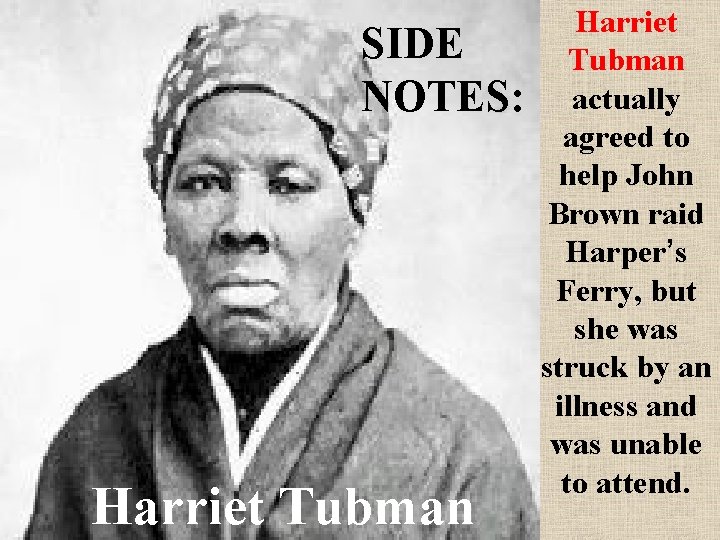
SIDE NOTES: Harriet Tubman actually agreed to help John Brown raid Harper’s Ferry, but she was struck by an illness and was unable to attend.
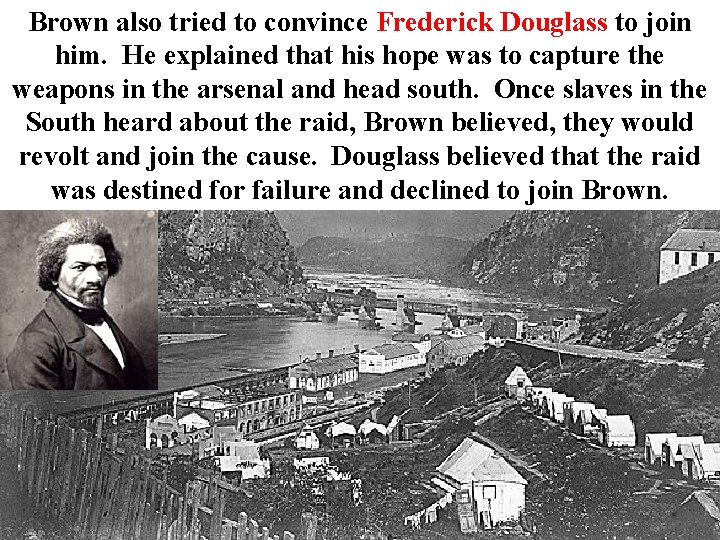
Brown also tried to convince Frederick Douglass to join him. He explained that his hope was to capture the weapons in the arsenal and head south. Once slaves in the South heard about the raid, Brown believed, they would revolt and join the cause. Douglass believed that the raid was destined for failure and declined to join Brown.
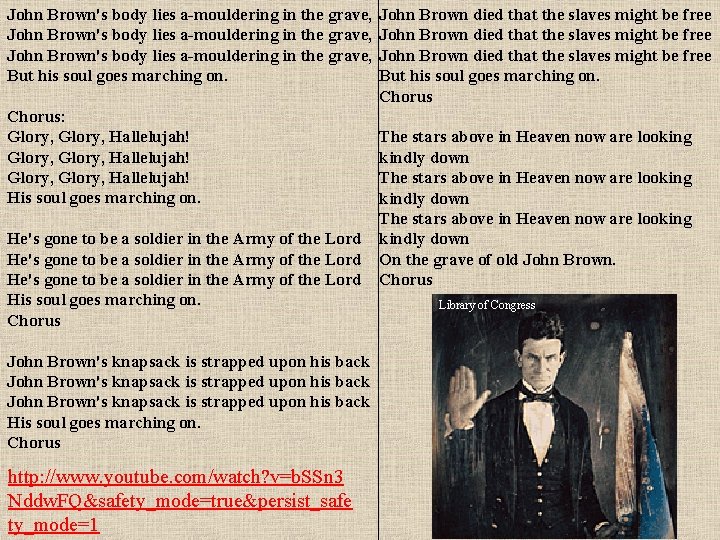
John Brown's body lies a-mouldering in the grave, But his soul goes marching on. Chorus: Glory, Hallelujah! Glory, Hallelujah! His soul goes marching on. He's gone to be a soldier in the Army of the Lord His soul goes marching on. Chorus John Brown's knapsack is strapped upon his back His soul goes marching on. Chorus http: //www. youtube. com/watch? v=b. SSn 3 Nddw. FQ&safety_mode=true&persist_safe ty_mode=1 John Brown died that the slaves might be free But his soul goes marching on. Chorus The stars above in Heaven now are looking kindly down On the grave of old John Brown. Chorus Library of Congress
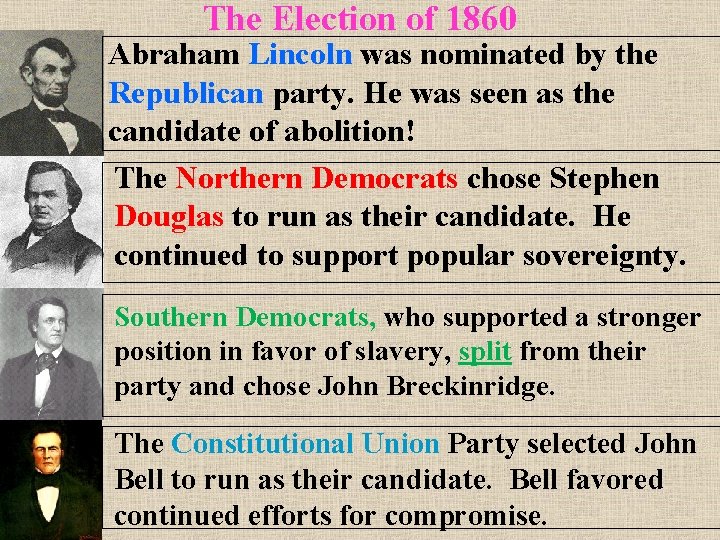
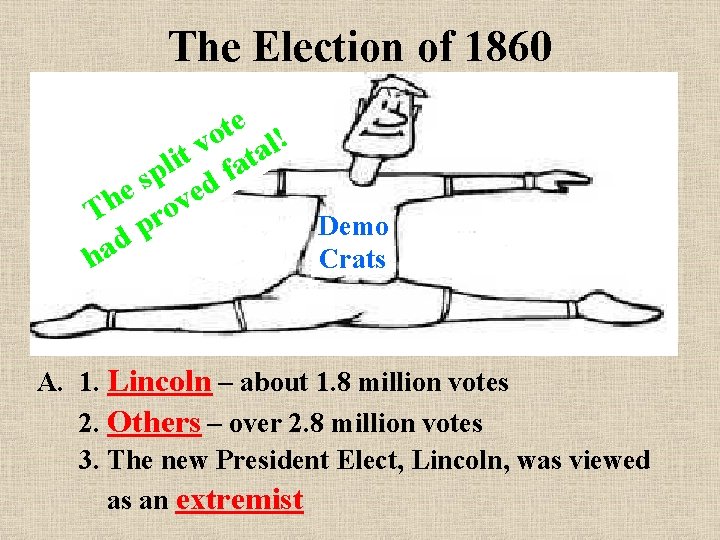
The Election of 1860 Abraham Lincoln was nominated by the Republican party. He was seen as the candidate of abolition! The Northern Democrats chose Stephen Douglas to run as their candidate. He continued to support popular sovereignty. Southern Democrats, who supported a stronger position in favor of slavery, split from their party and chose John Breckinridge. The Constitutional Union Party selected John Bell to run as their candidate. Bell favored continued efforts for compromise.
The Election of 1860 te l! o v a t t i l p d fa s e ve h T pro Demo d a Crats h A. 1. Lincoln – about 1. 8 million votes 2. Others – over 2. 8 million votes 3. The new President Elect, Lincoln, was viewed as an extremist
Brown’s Raid & Lincoln’s Election http: //www. youtube. com/watch? v=Rq 119 y M_h. YM&feature=related&safety_mode=tr ue&persist_safety_mode= Go to 9/9 - start at 3: 25 to end (8: 00)
Pie Charts
Secession 1860
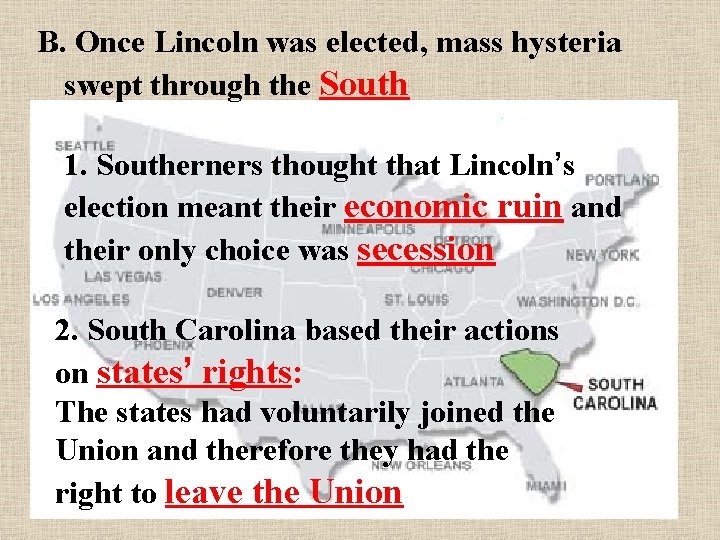
B. Once Lincoln was elected, mass hysteria swept through the South 1. Southerners thought that Lincoln’s election meant their economic ruin and their only choice was secession 2. South Carolina based their actions on states’ rights: The states had voluntarily joined the Union and therefore they had the right to leave the Union
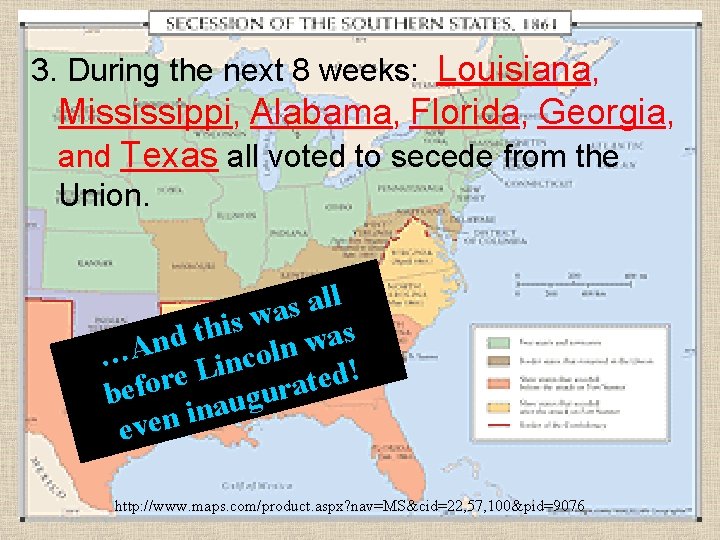
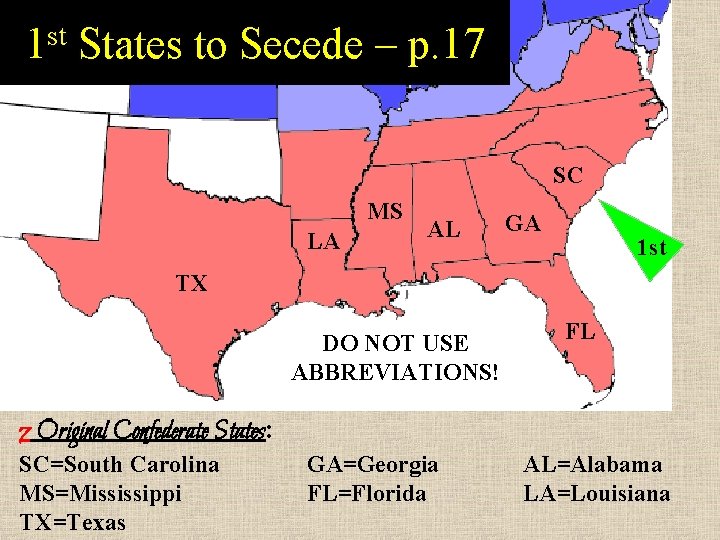
3. During the next. Secession 8 weeks: Louisiana, Mississippi, Alabama, Florida, Georgia, and Texas all voted to secede from the Union. l l a s a w s i h t s a d w n …A Lincoln ! d e e r t o a r u bef g u a n i even http: //www. maps. com/product. aspx? nav=MS&cid=22, 57, 100&pid=9076
1 st States to Secede – p. 17 SC MS LA AL GA 1 st TX DO NOT USE ABBREVIATIONS! FL 7 Original Confederate States: SC=South Carolina MS=Mississippi TX=Texas GA=Georgia FL=Florida AL=Alabama LA=Louisiana
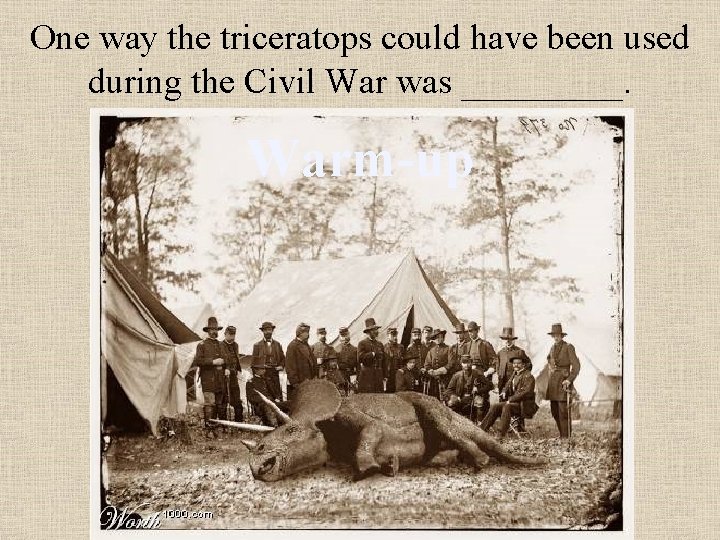
One way the triceratops could have been used during the Civil War was _____. Warm-up
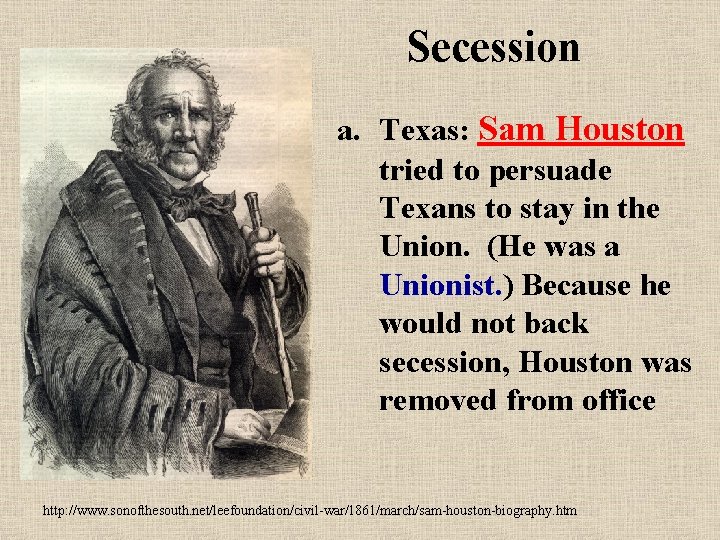
Secession a. Texas: Sam Houston tried to persuade Texans to stay in the Union. (He was a Unionist. ) Because he would not back secession, Houston was removed from office http: //www. sonofthesouth. net/leefoundation/civil-war/1861/march/sam-houston-biography. htm
Primary Sources Sam Houston Documents
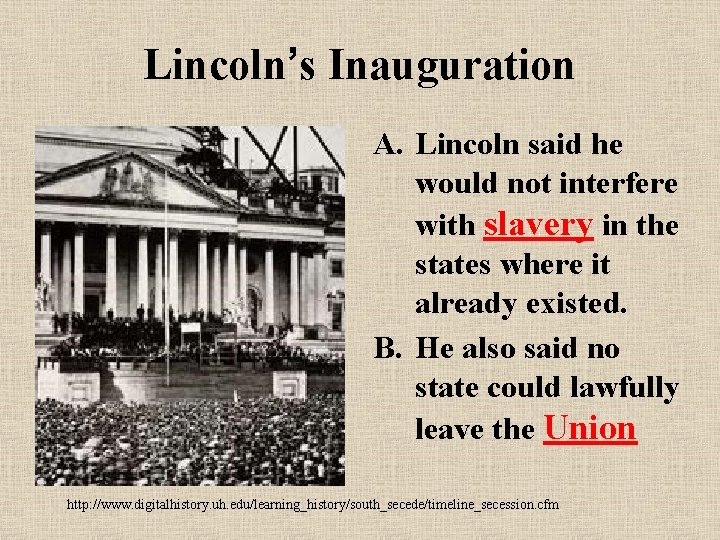
Lincoln’s Inauguration A. Lincoln said he would not interfere with slavery in the states where it already existed. B. He also said no state could lawfully leave the Union http: //www. digitalhistory. uh. edu/learning_history/south_secede/timeline_secession. cfm
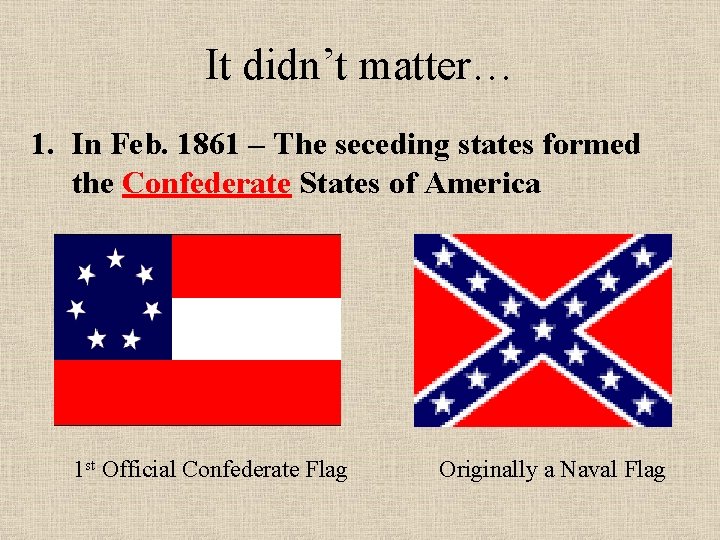
It didn’t matter… 1. In Feb. 1861 – The seceding states formed the Confederate States of America 1 st Official Confederate Flag Originally a Naval Flag
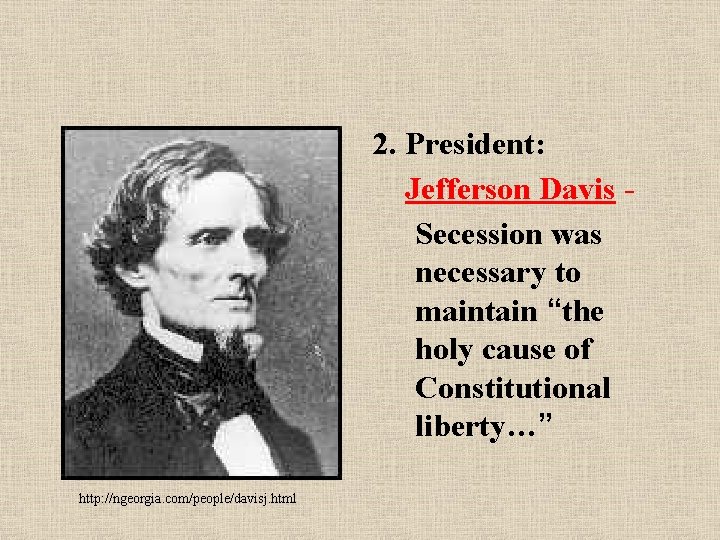
2. President: Jefferson Davis Secession was necessary to maintain “the holy cause of Constitutional liberty…” http: //ngeorgia. com/people/davisj. html
The North said, How could the South talk about liberty while holding 3. 5 million slaves?
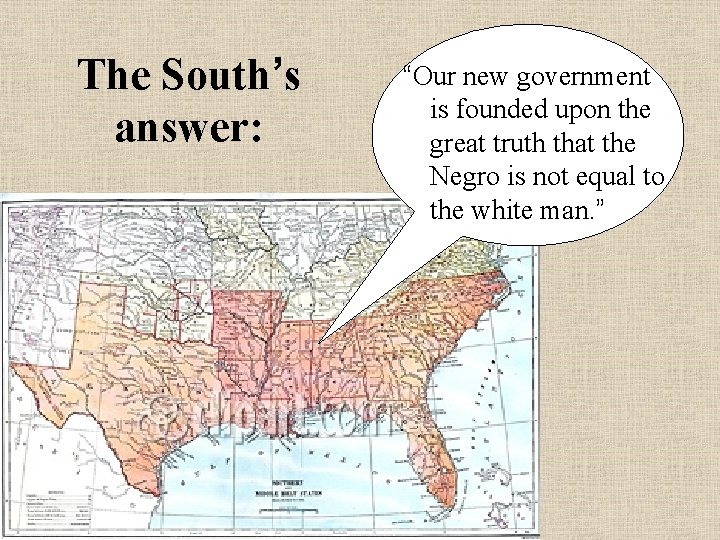
The South’s answer: “Our new government is founded upon the great truth that the Negro is not equal to the white man. ”
Causes of the Civil War 1. Slavery ($$$$) 2. Sectionalism (caused by economic and cultural differences) 3. States’ Rights – states have the power 4. Tariff (taxes on imports) Disputes - South wanted low tariffs b/c they imported many goods from Europe - North wanted high tariffs (They made goods so they wanted to protect their goods)