
WHAT IS A CELLULAR AUTOMATA Concept introduced by
WHAT IS A CELLULAR AUTOMATA ? • Concept introduced by Von Neumann, Ulam and Burk in late 1940 -ies and 1950 -ies; (Self-reproducible mechanical automata) • Conway’s ‘Game of Life’ (Gardner, 1970) Mathematical object defined as: � n-dimensional homogeneous and infinite cellular space, consisting of cells of equal size � Cells in one of a discrete number of states; � Cells change state as the result of a transition rule; � Transition rule is defined in terms of the states of cells that are part of a neighbourhood; � Time progresses in discrete steps. All cells change state simultaneously.
WHAT IS A CELLULAR AUTOMATON? • • • A one-dimensional cellular automaton (CA) consists of two things: a row of "cells" and a set of "rules". Each of the cells can be in one of several "states". The number of possible states depends on the automaton. Think of the states as colors. In a 2 -state automaton, each of the cells can be either black or white. Over time, the cells can change from state to state. The cellular automaton's rules determine how the states change. It works like this: When the time comes for the cells to change state, each cell looks around and gathers information on its neighbors' states. (Exactly which cells are considered "neighbors" is also something that depends on the particular CA. ) Based on its own state, its neighbors' states, and the rules of the CA, the cell decides what its new state should be. All the cells change state at the same time.
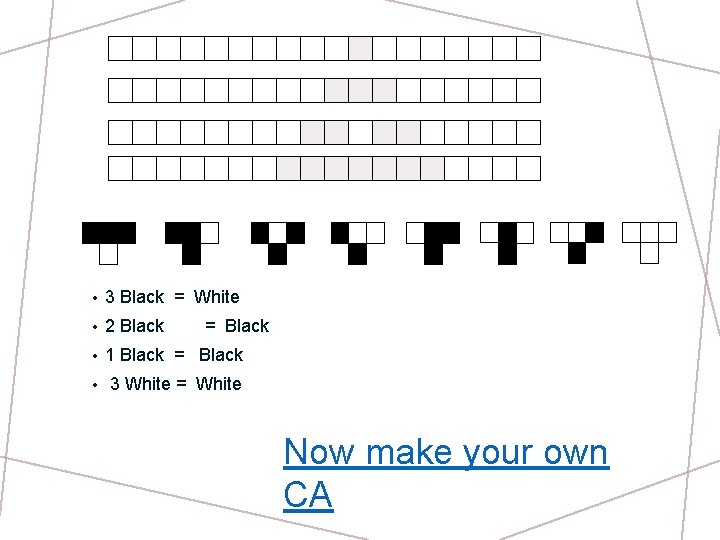
• 3 Black = White • 2 Black • 1 Black = Black • 3 White = Black Now make your own CA
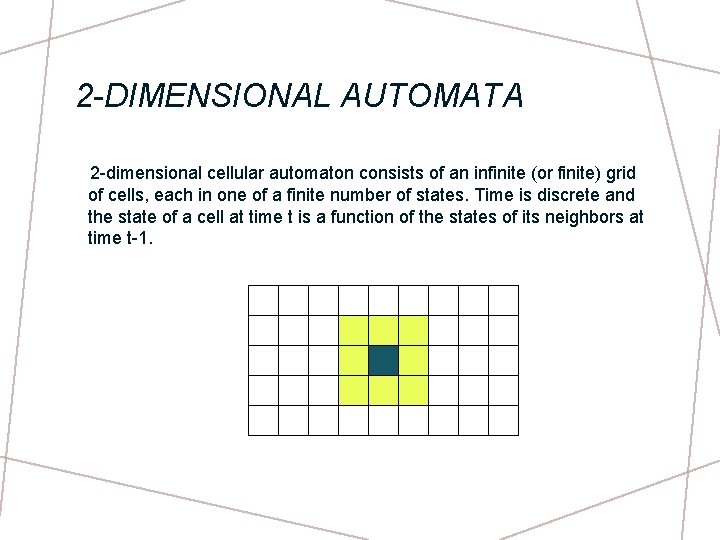
2 -DIMENSIONAL AUTOMATA 2 -dimensional cellular automaton consists of an infinite (or finite) grid of cells, each in one of a finite number of states. Time is discrete and the state of a cell at time t is a function of the states of its neighbors at time t-1.
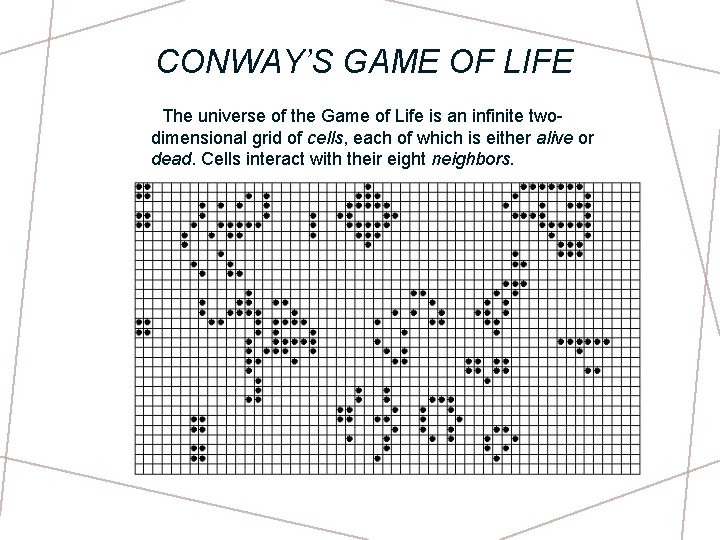
CONWAY’S GAME OF LIFE The universe of the Game of Life is an infinite twodimensional grid of cells, each of which is either alive or dead. Cells interact with their eight neighbors.
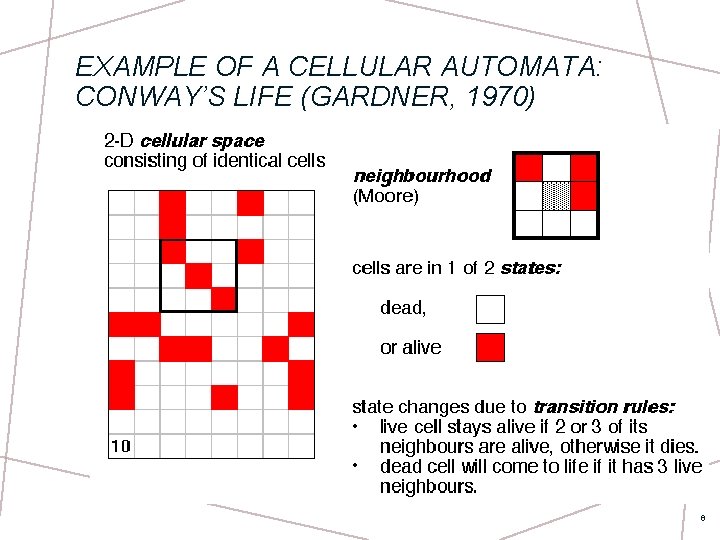
EXAMPLE OF A CELLULAR AUTOMATA: CONWAY’S LIFE (GARDNER, 1970) 6
CONWAY’S GAME OF LIFE At each step in time, the following effects occur: 1. Any live cell with fewer than two neighbors dies, as if by loneliness. 2. Any live cell with more than three neighbors dies, as if by overcrowding. 3. Any live cell with two or three neighbors lives, unchanged, to the next generation. 4. Any dead cell with exactly three neighbors comes to life. • The initial pattern constitutes the first generation of the system. The second generation is created by applying the above rules simultaneously to every cell in the first generation -- births and deaths happen simultaneously. The rules continue to be applied repeatedly to create further generations. • Let's play. . .

APPLICATIONS OF CELLULAR AUTOMATA • • Simulation of Biological Processes Simulation of Cancer cells growth Predator – Prey Models Art Simulation of Forest Fires Simulations of Social Movement …many more. . It’s a very active area of research.
PARALLELISM • A single CPU has to do it all: • • • 9 Applies rules to first cell in array Repeats rules for each successive cell in array After every cell is processed, array is updated One generation has passed Repeat this process for many generations Every certain number of generations, convert array to colored pixels and send results to screen
PARALLELISM • How to split the work among 20 CPUs 1 CPU acts as Master (has copy of whole array) • 18 CPUs act as Slaves (handle parts of the array) • 1 CPU takes care of screen updates • • Problem: communication issue concerning cells along array boundaries among slaves • Next several screens show behavior over a span of 10, 000+ generations (about 25 minutes on a cluster of 20 processors ) 10
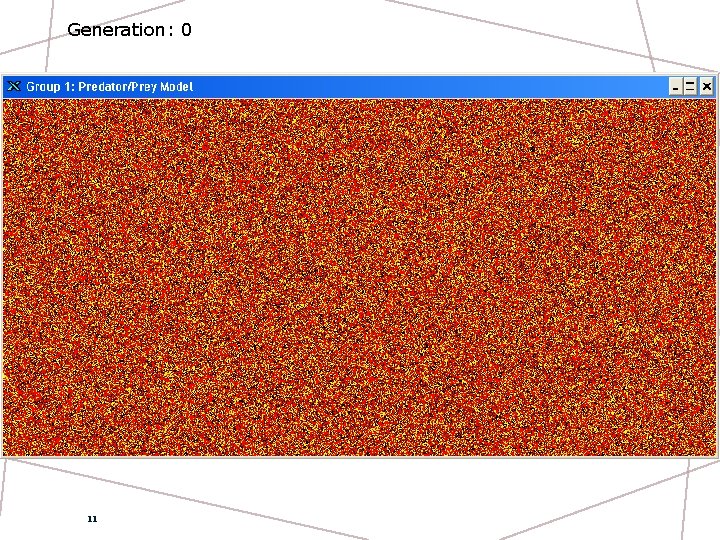
Generation: 0 11
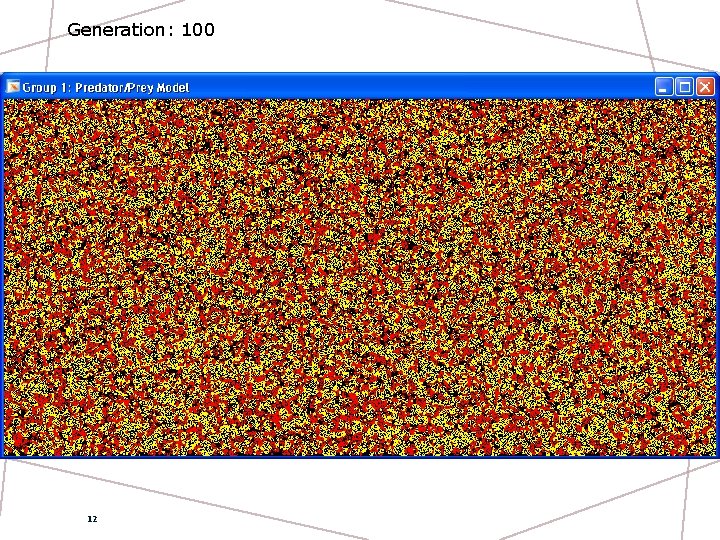
Generation: 100 12
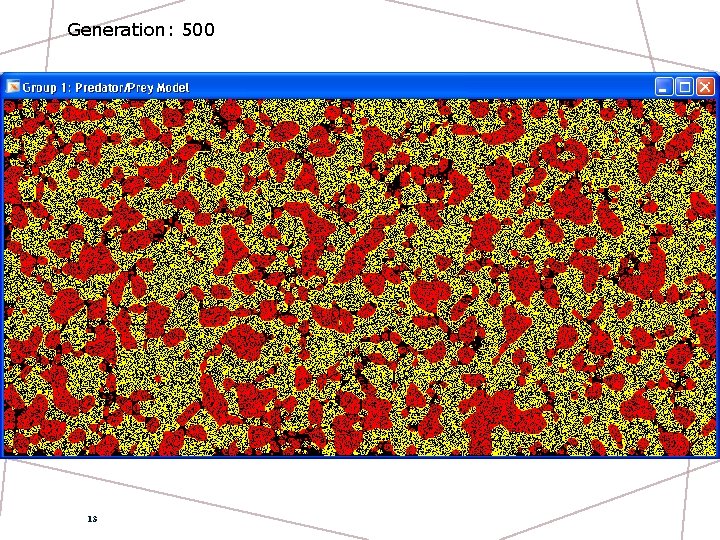
Generation: 500 13
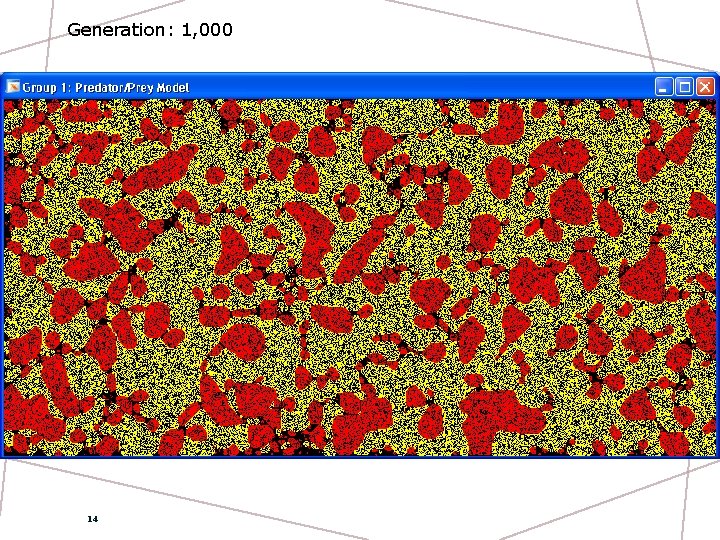
Generation: 1, 000 14
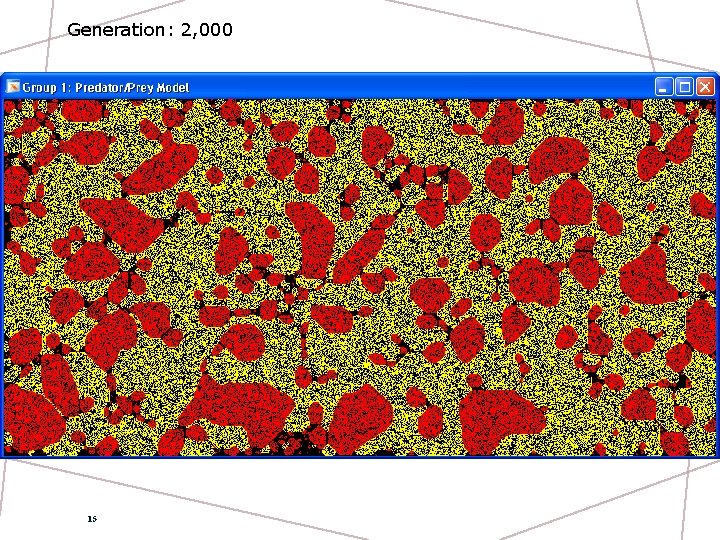
Generation: 2, 000 15
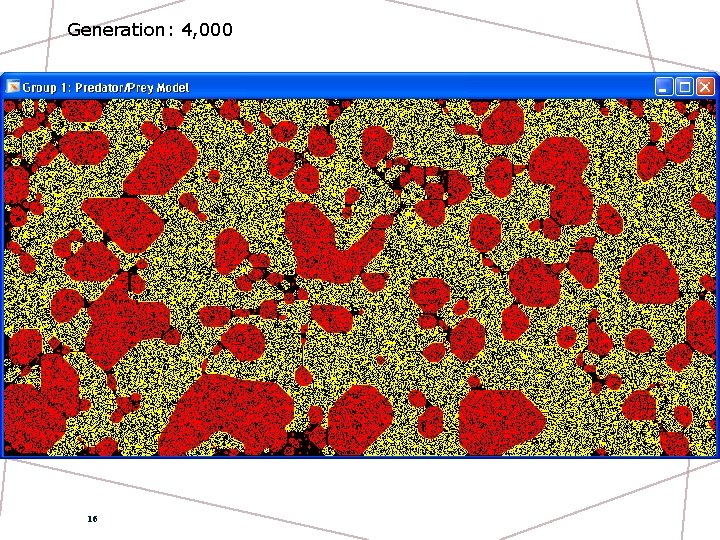
Generation: 4, 000 16
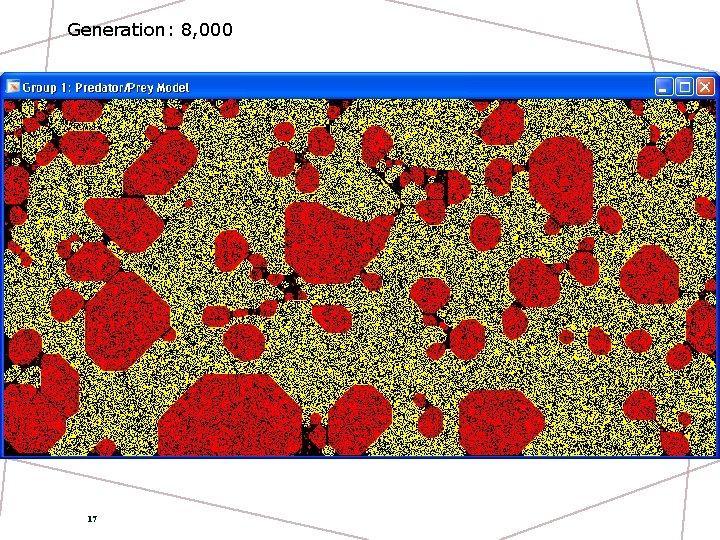
Generation: 8, 000 17
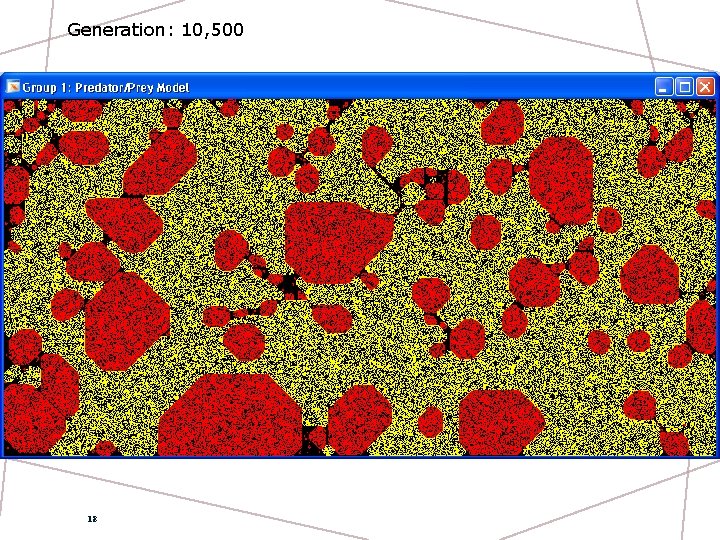
Generation: 10, 500 18
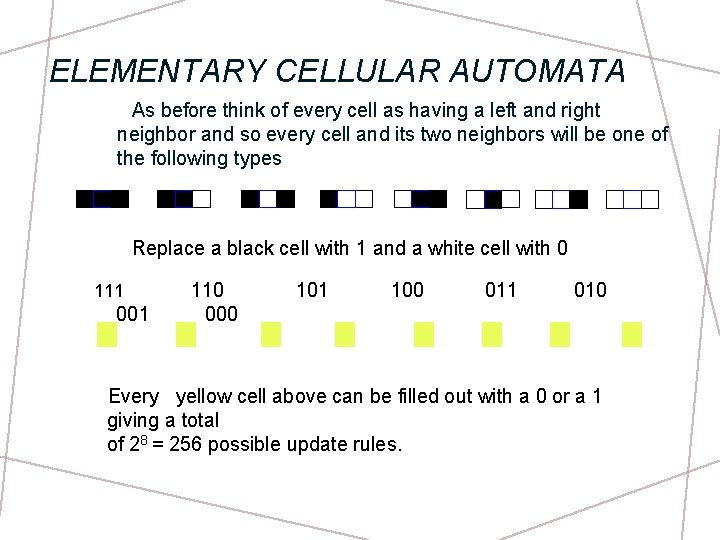
ELEMENTARY CELLULAR AUTOMATA As before think of every cell as having a left and right neighbor and so every cell and its two neighbors will be one of the following types Replace a black cell with 1 and a white cell with 0 111 001 110 000 101 100 011 010 Every yellow cell above can be filled out with a 0 or a 1 giving a total of 28 = 256 possible update rules.
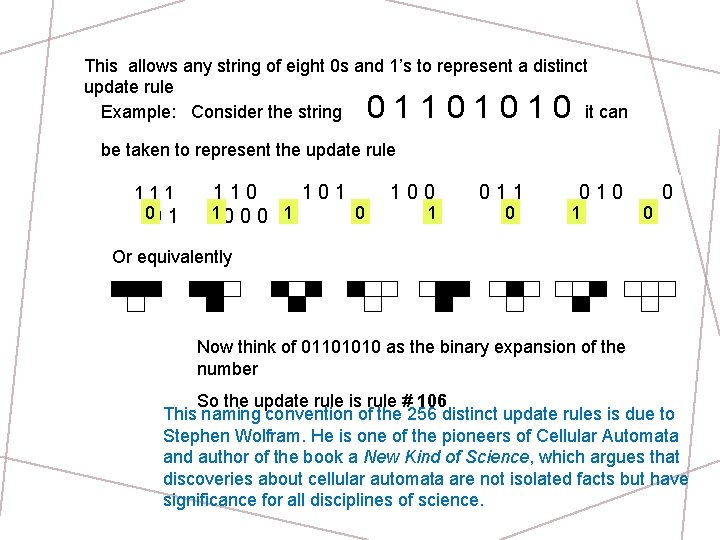
This allows any string of eight 0 s and 1’s to represent a distinct update rule Example: Consider the string it can 01101010 be taken to represent the update rule 111 00 1 110 101 10 0 0 100 1 011 0 010 1 0 0 Or equivalently Now think of 01101010 as the binary expansion of the number So the update rule is rule # 106 This naming convention of the 256 distinct update rules is due to Stephen Wolfram. He is one of the pioneers of Cellular Automata and author of the book a New Kind of Science, which argues that discoveries about cellular automata are not isolated facts but have significance for all disciplines of science.
RULE 184 • Rule 184 is a one-dimensional binary cellular automaton rule, notable for solving the majority problem as well as for its ability to simultaneously describe several, seemingly quite different, particle systems: • Rule 184 can be used as a simple model for traffic flow in a single lane of a highway, and forms the basis for many cellular automaton models of traffic flow with greater sophistication. In this model, particles (representing vehicles) move in a single direction, stopping and starting depending on the cars in front of them. The number of particles remains unchanged throughout the simulation. Because of this application, Rule 184 is sometimes called the "traffic rule. ” • Rule 184 also models a form of deposition of particles onto an irregular surface, in which each local minimum of the surface is filled with a particle in each step. At each step of the simulation, the number of particles increases. Once placed, a
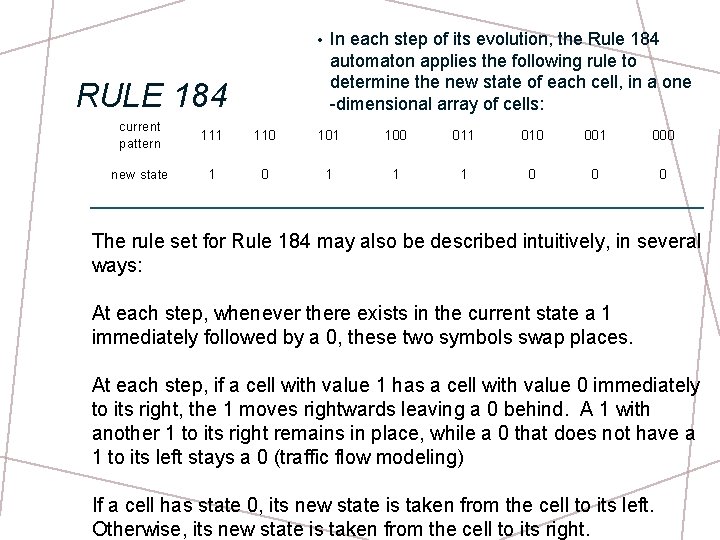
• RULE 184 In each step of its evolution, the Rule 184 automaton applies the following rule to determine the new state of each cell, in a one -dimensional array of cells: current pattern 111 110 101 100 011 010 001 000 new state 1 0 1 1 1 0 0 0 The rule set for Rule 184 may also be described intuitively, in several ways: At each step, whenever there exists in the current state a 1 immediately followed by a 0, these two symbols swap places. At each step, if a cell with value 1 has a cell with value 0 immediately to its right, the 1 moves rightwards leaving a 0 behind. A 1 with another 1 to its right remains in place, while a 0 that does not have a 1 to its left stays a 0 (traffic flow modeling) If a cell has state 0, its new state is taken from the cell to its left. Otherwise, its new state is taken from the cell to its right.
- Slides: 23