
What is a cell The Cell Theory says
- Slides: 13
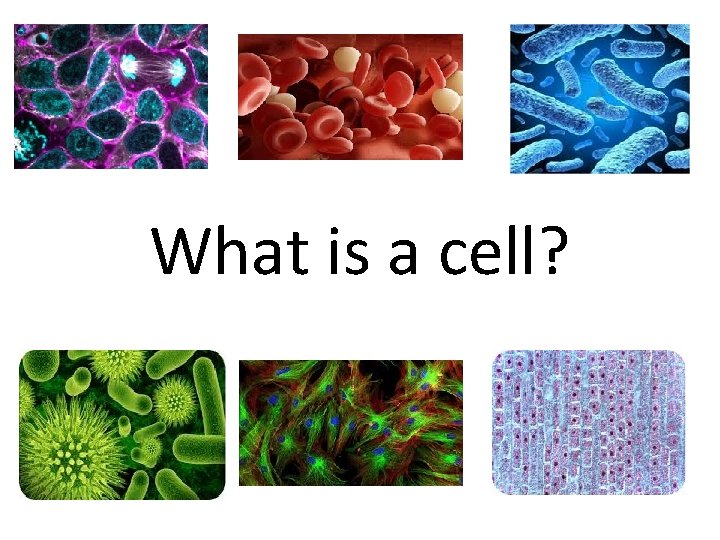
What is a cell?
The Cell Theory says • All living things are made of cells • Cells are the basic unit of structure AND function in all living things. • New cells come from pre-existing cells
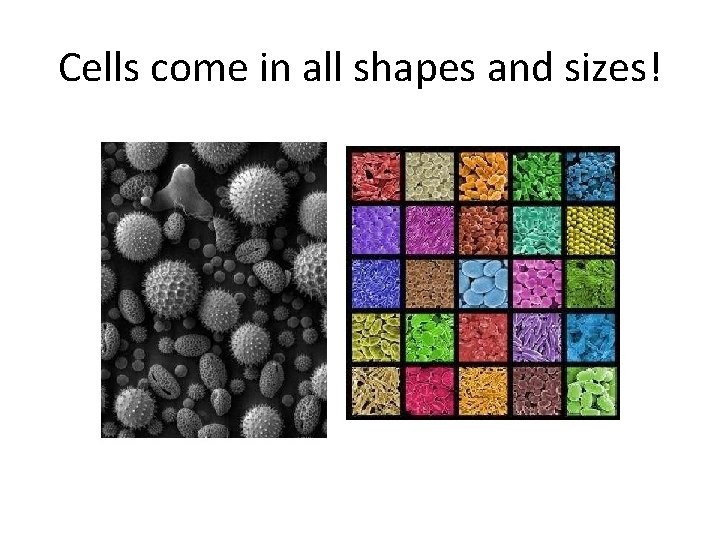
Cells come in all shapes and sizes!
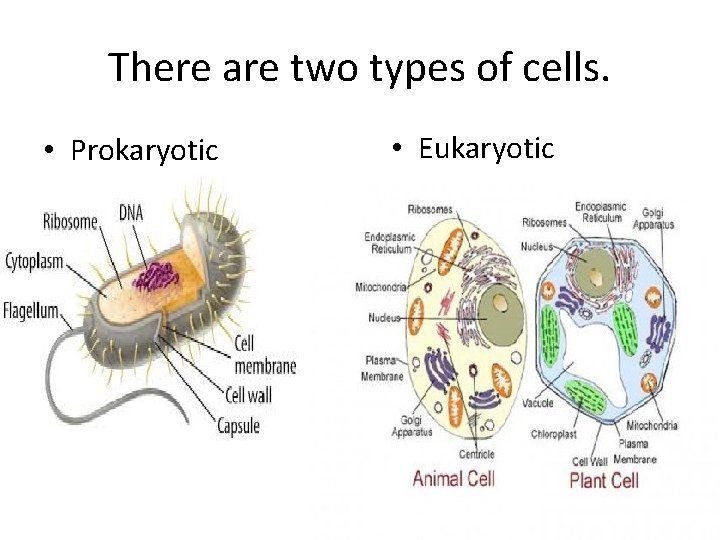
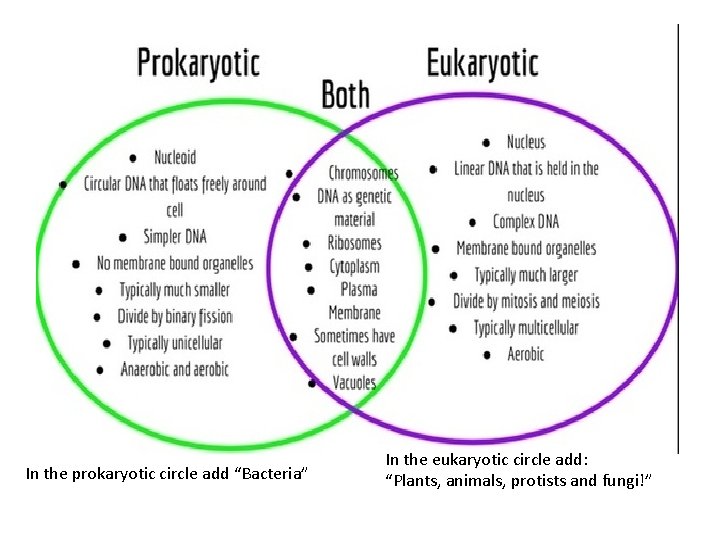
There are two types of cells. • Prokaryotic • Eukaryotic
In the prokaryotic circle add “Bacteria” In the eukaryotic circle add: “Plants, animals, protists and fungi!”
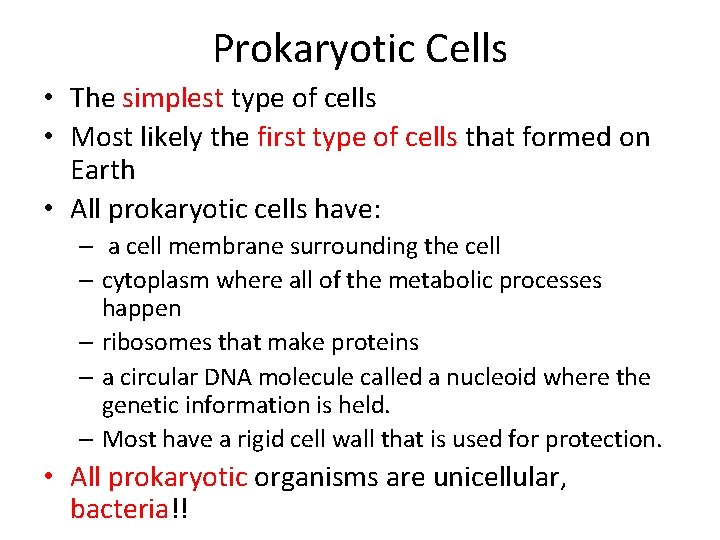
Prokaryotic Cells • The simplest type of cells • Most likely the first type of cells that formed on Earth • All prokaryotic cells have: – a cell membrane surrounding the cell – cytoplasm where all of the metabolic processes happen – ribosomes that make proteins – a circular DNA molecule called a nucleoid where the genetic information is held. – Most have a rigid cell wall that is used for protection. • All prokaryotic organisms are unicellular, bacteria!!
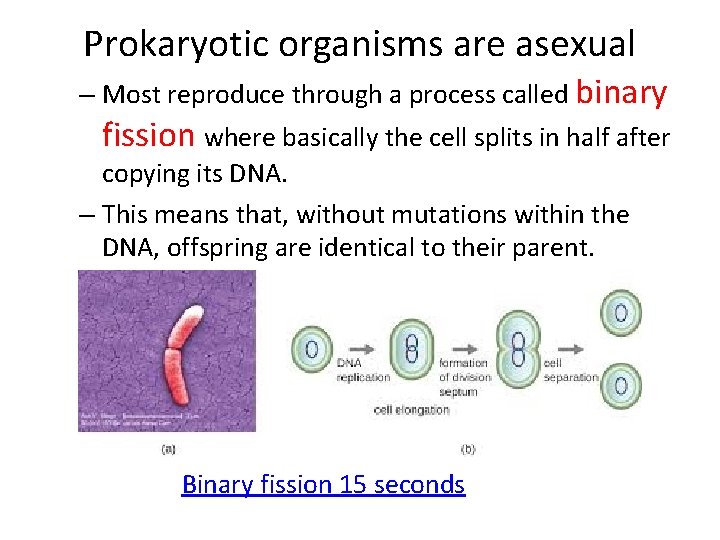
Prokaryotic organisms are asexual – Most reproduce through a process called binary fission where basically the cell splits in half after copying its DNA. – This means that, without mutations within the DNA, offspring are identical to their parent. Binary fission 15 seconds
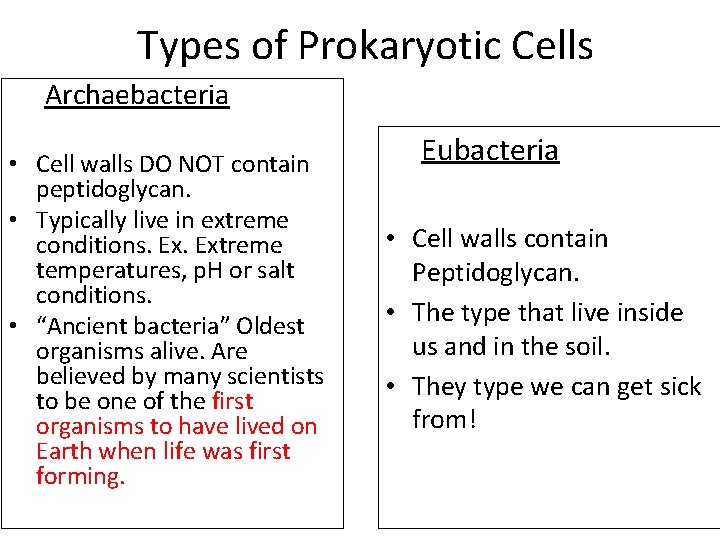
Types of Prokaryotic Cells Archaebacteria • Cell walls DO NOT contain peptidoglycan. • Typically live in extreme conditions. Extreme temperatures, p. H or salt conditions. • “Ancient bacteria” Oldest organisms alive. Are believed by many scientists to be one of the first organisms to have lived on Earth when life was first forming. Eubacteria • Cell walls contain Peptidoglycan. • The type that live inside us and in the soil. • They type we can get sick from!
Eukaryotic Cells • There are many more organelles within eukaryotic cells. In addition to most of the organelles in prokaryotic cells Eukaryotic cells have many more! – a nucleus to house the DNA – a nucleolus where ribosomes are made – rough endoplasmic reticulum for protein assembly – smooth endoplasmic reticulum for making lipids – Golgi apparatus for sorting and exporting proteins – mitochondria for creating energy – a cytoskeleton for structure and transporting information – vesicles to move proteins around the cell. – centrioles for splitting the cell during mitosis. – Cell walls can also be found surrounding some types of eukaryotic cells.
Most eukaryotic organisms are multicellular. • This allows the eukaryotic cells within the organism to become specialized through a process called differentiation. – Stem cells take on characteristics and job functions that work with other types of cells to create an entire organism. • There a few unicellular eukaryotes as well. •
Depending on the organism's complexity • Eukaryotes may use either asexual or sexual reproduction – Sexual reproduction allows more diversity in offspring and population by mixing the genes of the parents to form a new combination and hopefully a more favorable adaptation for the environment.
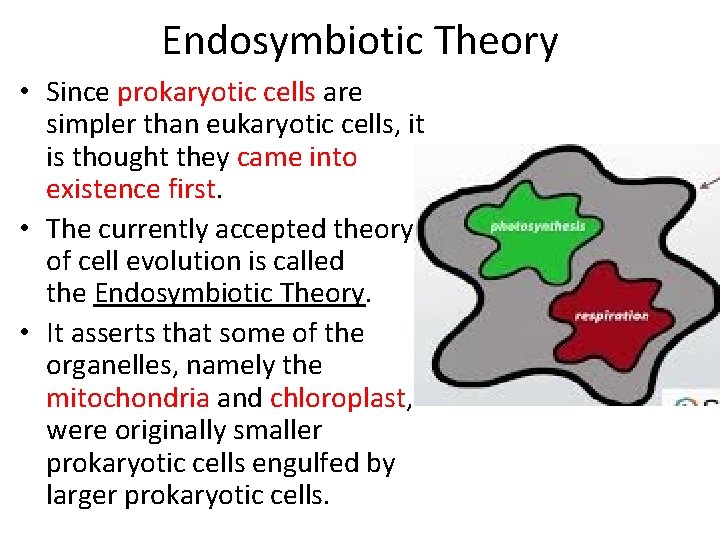
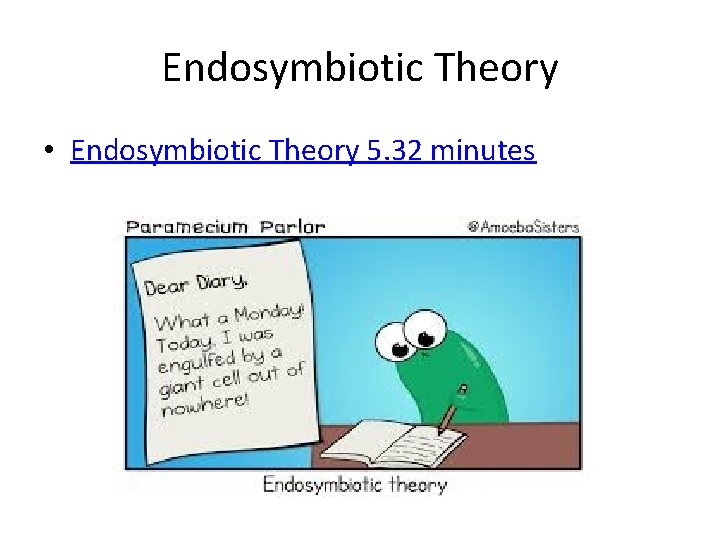
Endosymbiotic Theory • Since prokaryotic cells are simpler than eukaryotic cells, it is thought they came into existence first. • The currently accepted theory of cell evolution is called the Endosymbiotic Theory. • It asserts that some of the organelles, namely the mitochondria and chloroplast, were originally smaller prokaryotic cells engulfed by larger prokaryotic cells.
Endosymbiotic Theory • Endosymbiotic Theory 5. 32 minutes