
What is a Biosensor Biosensor Any device that
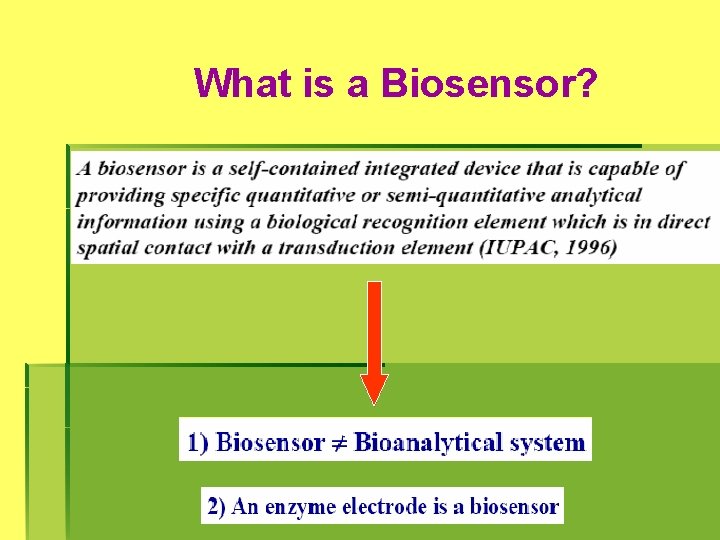
What is a Biosensor?
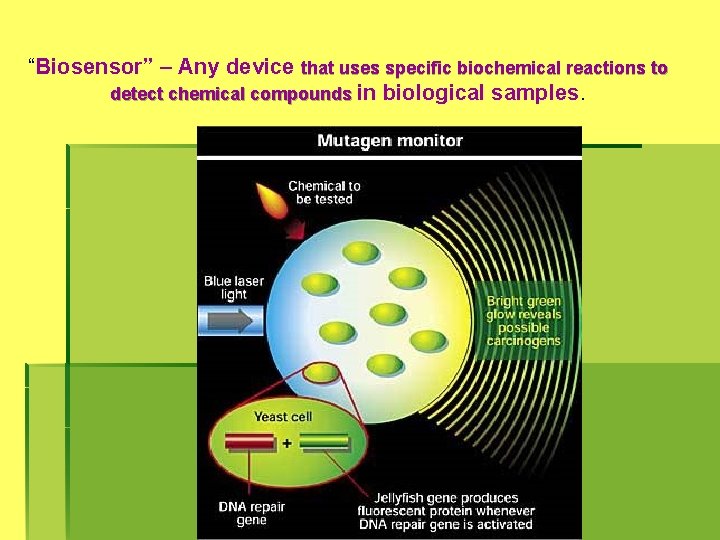
“Biosensor” – Any device that uses specific biochemical reactions to detect chemical compounds in biological samples.
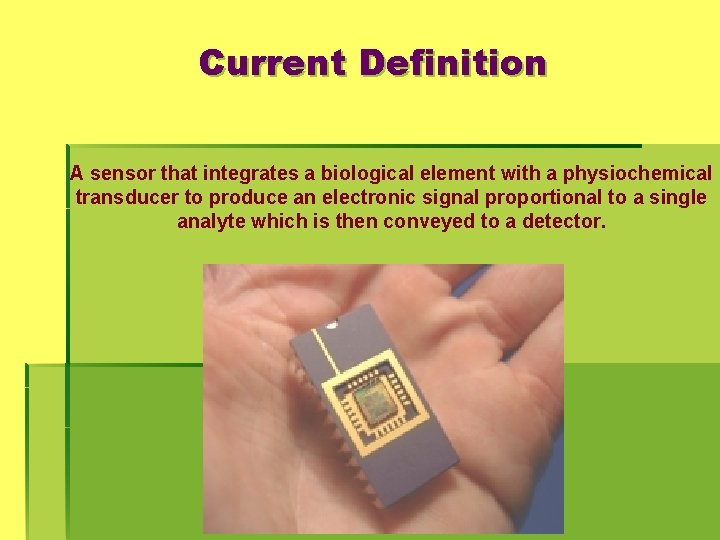
Current Definition A sensor that integrates a biological element with a physiochemical transducer to produce an electronic signal proportional to a single analyte which is then conveyed to a detector.
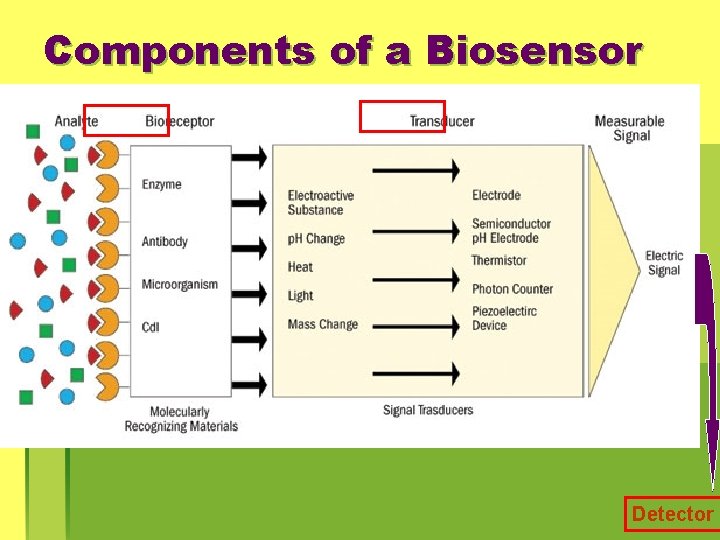
Components of a Biosensor Detector

Father of the Biosensor Professor Leland C Clark Jnr 1918– 2005
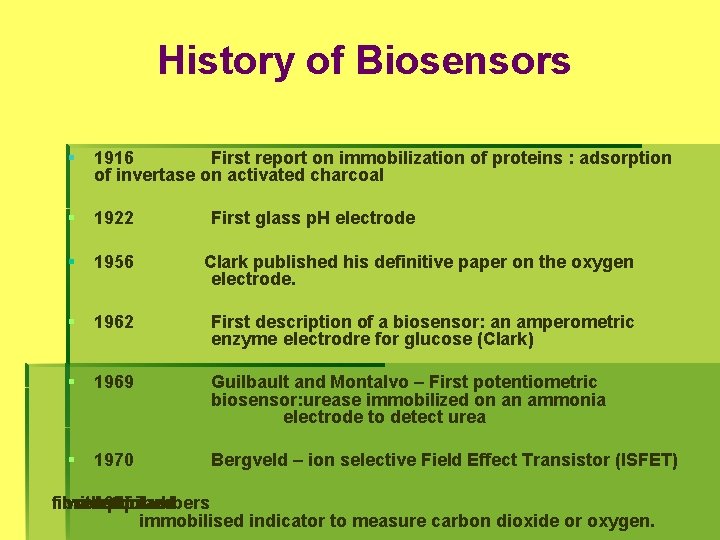
History of Biosensors § 1916 First report on immobilization of proteins : adsorption of invertase on activated charcoal § 1922 § 1956 Clark published his definitive paper on the oxygen electrode. § 1962 First description of a biosensor: an amperometric enzyme electrodre for glucose (Clark) § 1969 Guilbault and Montalvo – First potentiometric biosensor: urease immobilized on an ammonia electrode to detect urea § 1970 Bergveld – ion selective Field Effect Transistor (ISFET) First glass p. H electrode fibre-optic with §sensor described 1975 a. Opitz Lubbers and immobilised indicator to measure carbon dioxide or oxygen.
Basic Characteristics of a Biosensor
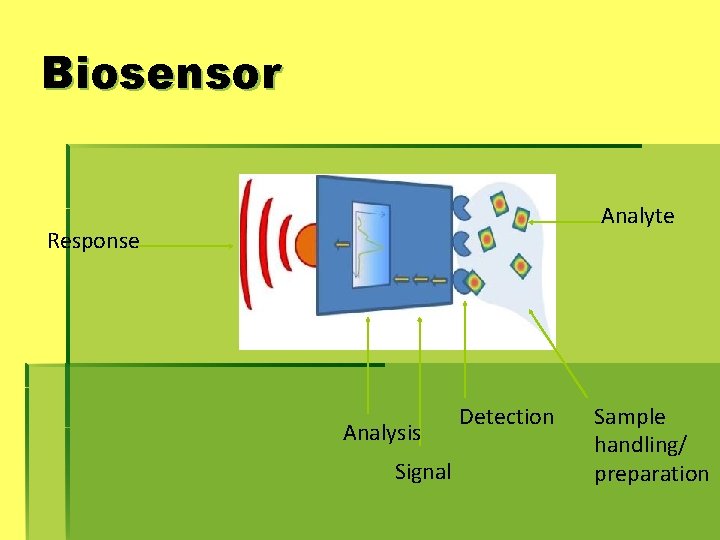
Biosensor Analyte Response Analysis Signal Detection Sample handling/ preparation
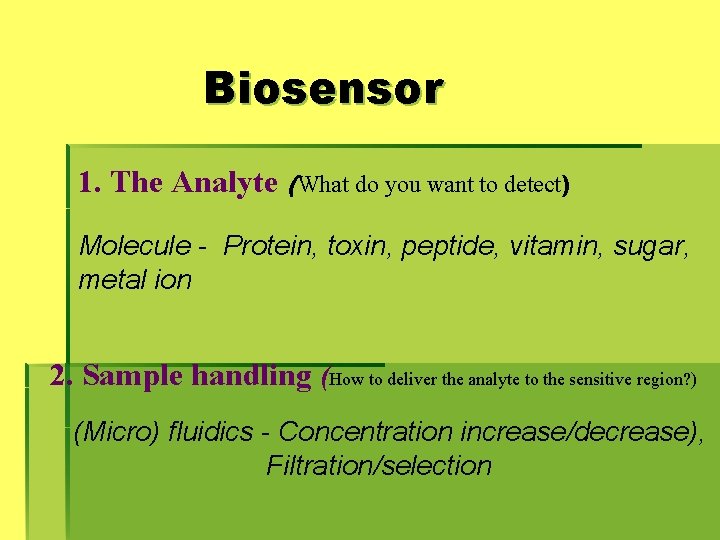
Biosensor 1. The Analyte (What do you want to detect) Molecule - Protein, toxin, peptide, vitamin, sugar, metal ion 2. Sample handling (How to deliver the analyte to the sensitive region? ) (Micro) fluidics - Concentration increase/decrease), Filtration/selection
Biosensor v 3. Detection/Recognition (How do you specifically recognize the analyte? ) 4. Signal (How do you know there was a detection)
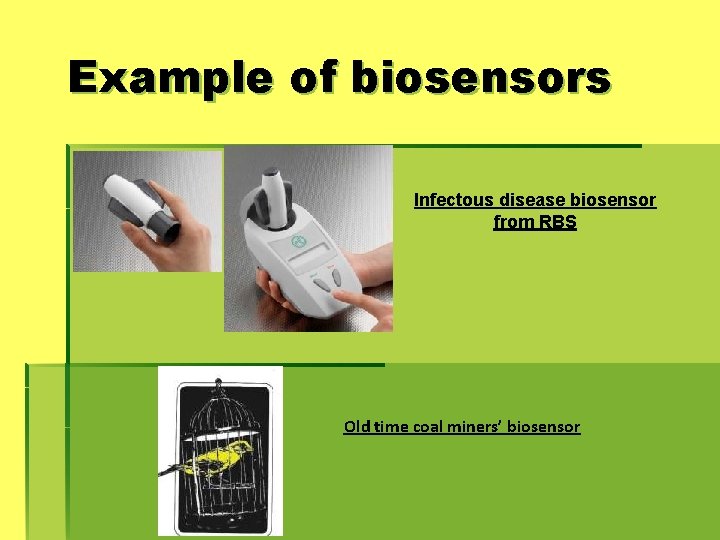
Example of biosensors Infectous disease biosensor from RBS Old time coal miners’ biosensor
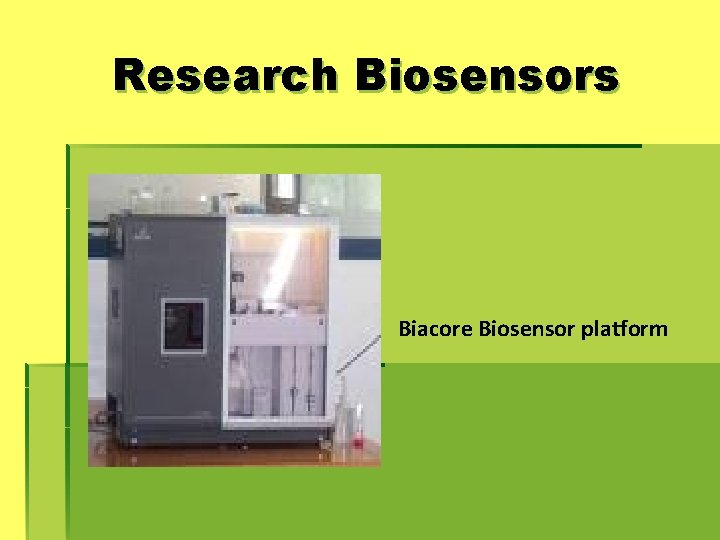
Research Biosensors Biacore Biosensor platform
Types of Biosensors 1. Calorimetric Biosensor 2. Potentiometric Biosensor 3. Amperometric Biosensor 4. Optical Biosensor 5. Piezo-electric Biosensor
Piezo-Electric Biosensors Piezo-electric devices use gold to detect the specific angle at which electron waves are emitted when the substance is exposed to laser light or crystals, such as quartz, which vibrate under the influence of an electric field. The change in frequency is proportional to the mass of absorbed material.
Electrochemical Biosensors • For applied current: Movement of e- in redox reactions detected when a potential is applied between two electrodes.
Potentiometric Biosensor § For voltage: Change in distribution of charge is detected using ion-selective electrodes, such as p. H-meters.
Optical Biosensors • Colorimetric for color Measure change in light adsorption • Photometric for light intensity Photon output for a luminescent or fluorescent process can be detected with photomultiplier tubes or photodiode systems.
Calorimetric Biosensors If the enzyme catalyzed reaction is exothermic, two thermistors may be used to measure the difference in resistance between reactant and product and, hence, the analyte concentration.
Electrochemical DNA Biosensor § Steps involved in electrochemical DNA hybridization biosensors: § Formation of the DNA recognition layer § Actual hybridization event § Transformation of the hybridization event into an electrical signal
DNA biosensor Motivated by the application to clinical diagnosis and genome mutation detection Types DNA Biosensors § § § Electrodes Chips Crystals
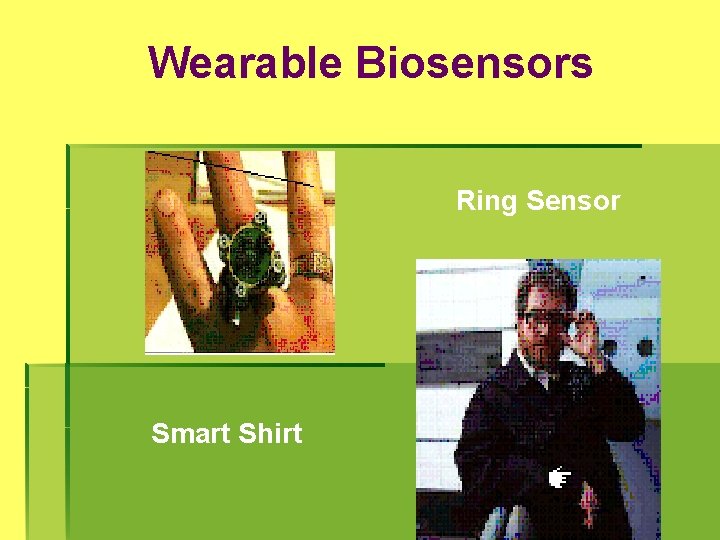
Wearable Biosensors Ring Sensor Smart Shirt
Biosensors on the Nanoscale q Molecular sheaths around the nanotube are developed that respond to a particular chemical and modulate the nanotube's optical properties. q A layer of olfactory proteins on a nanoelectrode react with low-concentration odorants (SPOT-NOSED Project). Doctors can use to diagnose diseases at earlier stages. q Nanosphere lithography (NSL) derived triangular Ag nanoparticles are used to detect streptavidin down to one picomolar concentrations. q. The School of Biomedical Engineering has developed an antibody based piezoelectric nanobiosensor to be used for anthrax, HIV hepatitis detection.
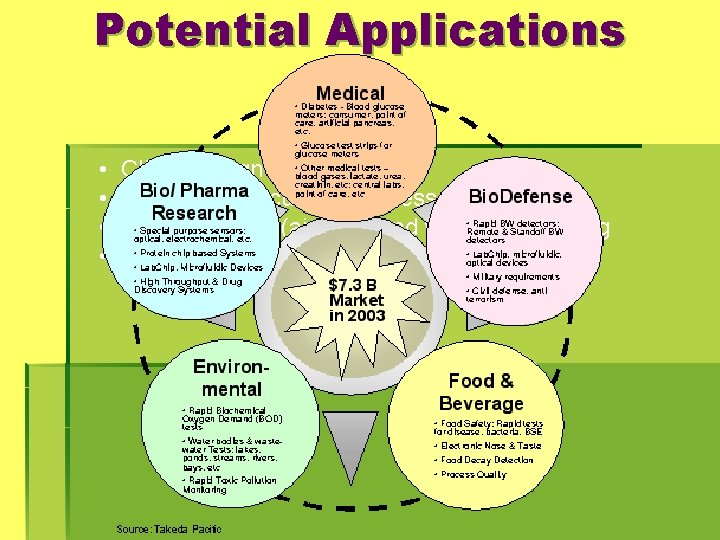
Potential Applications • • Clinical diagnostics Food and agricultural processes Environmental (air, soil, and water) monitoring Detection of warfare agents.
Application of Biosensor v Food Analysis v Study of biomolecules and their interaction v Drug Development v Crime detection v Medical diagnosis (both clinical and laboratory use) v Environmental field monitoring v Quality control v Industrial Process Control v Detection systems for biological warfare agents v Manufacturing of pharmaceuticals and replacement organs
§ Biosensors play a part in the field of environmental quality, medicine and industry mainly by identifying material and the degree of concentration present

- Slides: 26