
WHAT IMPACTS THE WEIGHT OF A BATTERY 1
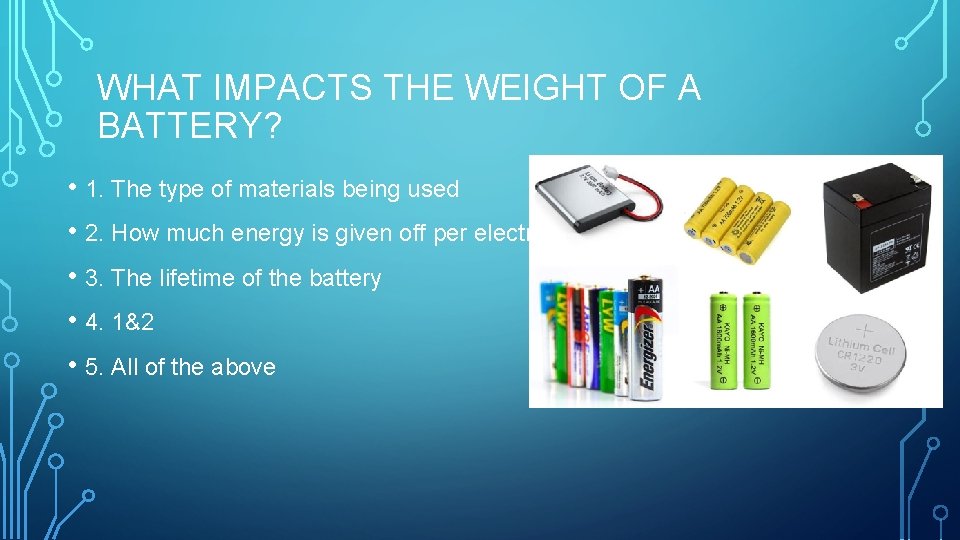
WHAT IMPACTS THE WEIGHT OF A BATTERY? • 1. The type of materials being used • 2. How much energy is given off per electron • 3. The lifetime of the battery • 4. 1&2 • 5. All of the above
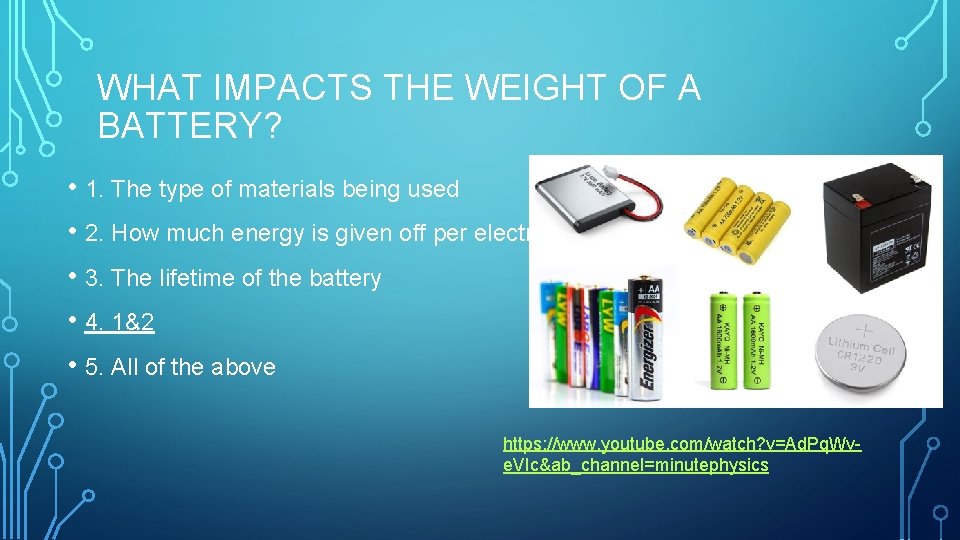
WHAT IMPACTS THE WEIGHT OF A BATTERY? • 1. The type of materials being used • 2. How much energy is given off per electron • 3. The lifetime of the battery • 4. 1&2 • 5. All of the above https: //www. youtube. com/watch? v=Ad. Pq. Wve. VIc&ab_channel=minutephysics
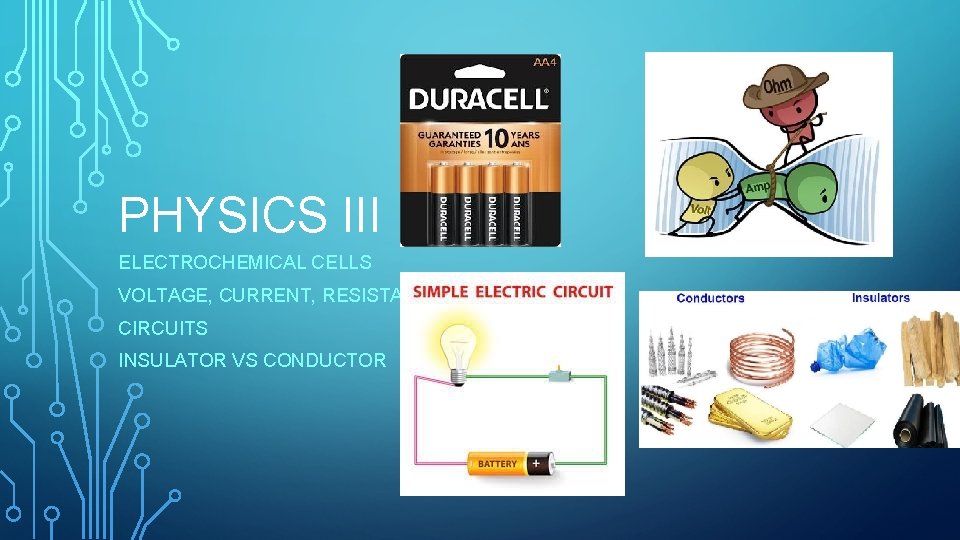
PHYSICS III ELECTROCHEMICAL CELLS VOLTAGE, CURRENT, RESISTANCE CIRCUITS INSULATOR VS CONDUCTOR
ELECTROCHEMICAL CELL • Electrochemical cell: • Transforms chemical energy into electrical energy • The common name for an electrochemical cell is a battery • Battery: • A connection of two or more cells • We can consider electrochemical cells and batteries as sources. A source is anything that supplies electrical energy. An electric outlet would also be considered a source.
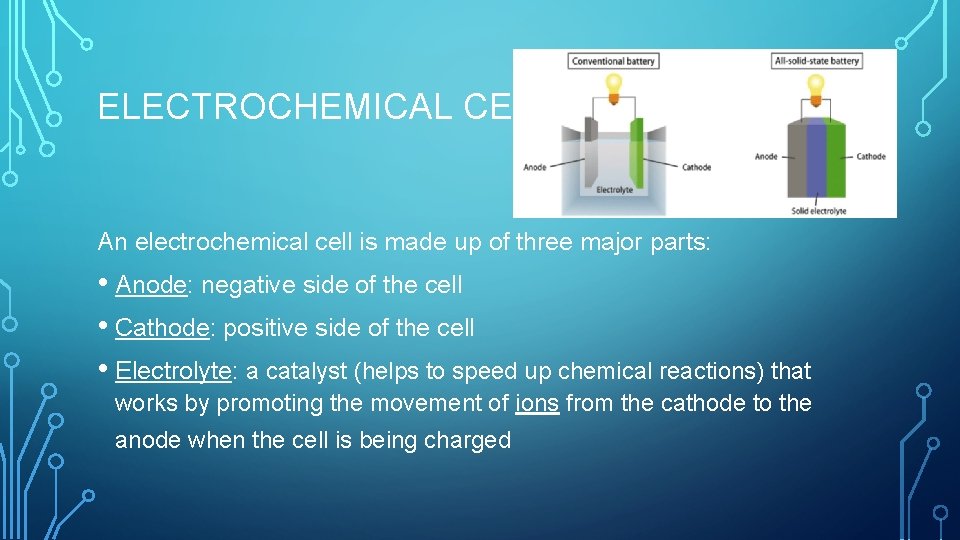
ELECTROCHEMICAL CELL An electrochemical cell is made up of three major parts: • Anode: negative side of the cell • Cathode: positive side of the cell • Electrolyte: a catalyst (helps to speed up chemical reactions) that works by promoting the movement of ions from the cathode to the anode when the cell is being charged

HOW DOES AN ELECTROCHEMICAL CELL WORK? • Chemical reactions occur on the surface of electrodes (a metal conductor which allows electricity to enter and leave) • The electrodes are placed in a solution called electrolyte • The chemical reactions that occur causes one electrode to be positively charged (cathode) and one electrode to be negatively charged (anode) • The electrodes are then placed in contact with the terminals of the cell • When we connect the terminals to an electrical pathway, charges flow through it
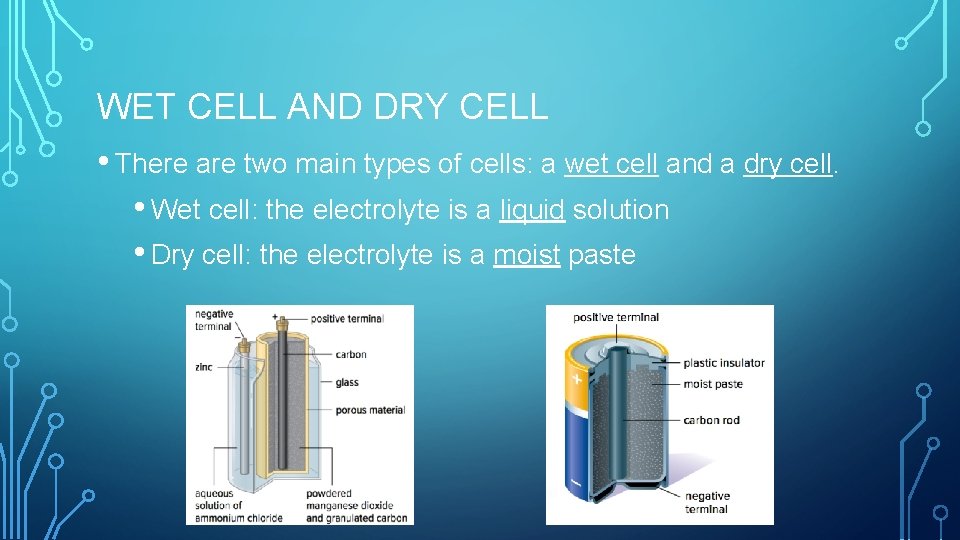
WET CELL AND DRY CELL • There are two main types of cells: a wet cell and a dry cell. • Wet cell: the electrolyte is a liquid solution • Dry cell: the electrolyte is a moist paste
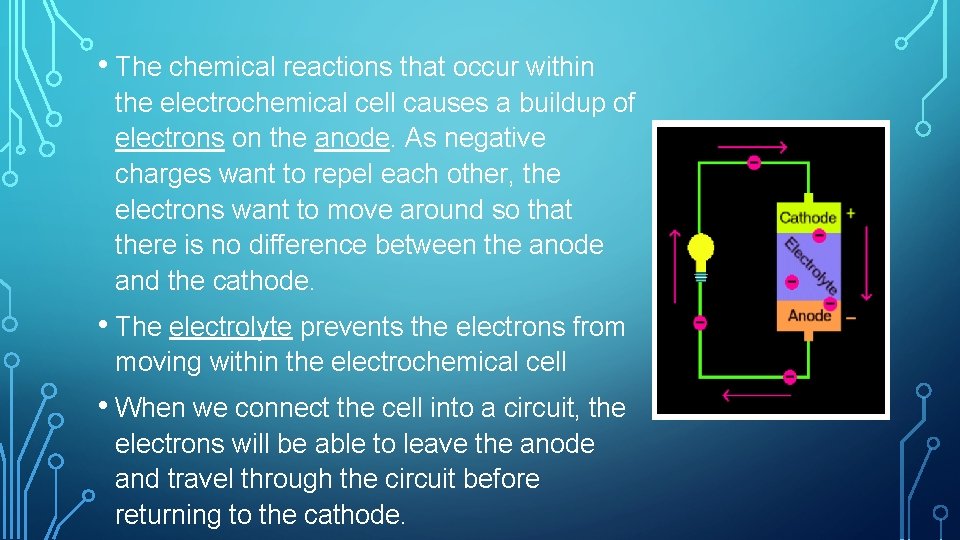
• The chemical reactions that occur within the electrochemical cell causes a buildup of electrons on the anode. As negative charges want to repel each other, the electrons want to move around so that there is no difference between the anode and the cathode. • The electrolyte prevents the electrons from moving within the electrochemical cell • When we connect the cell into a circuit, the electrons will be able to leave the anode and travel through the circuit before returning to the cathode.
PRACTICE QUESTIONS 1. What are the similarities and differences between an electrochemical cell and a battery? - Similarities: both transform chemical energy into electrical energy; both considered sources, both have an anode, cathode, and electrolyte - Difference: a battery is made up of 2 + electrochemical cells 2. Describe the functions of the electrolyte in an electrochemical cell - The electrolyte conducts charge and prevents the electrons from moving within the electrochemical cell

MEASURES OF ELECTRICITY • https: //www. youtube. com/watch? v=b 7 f. Tkf. Pan. Xs

MOVEMENT BREAK Challenge! Place one leg on the ground and raise the other leg into a triangle position. Raise both hand above your head. Stay in this position for as long as possible. Try and be the last one standing.
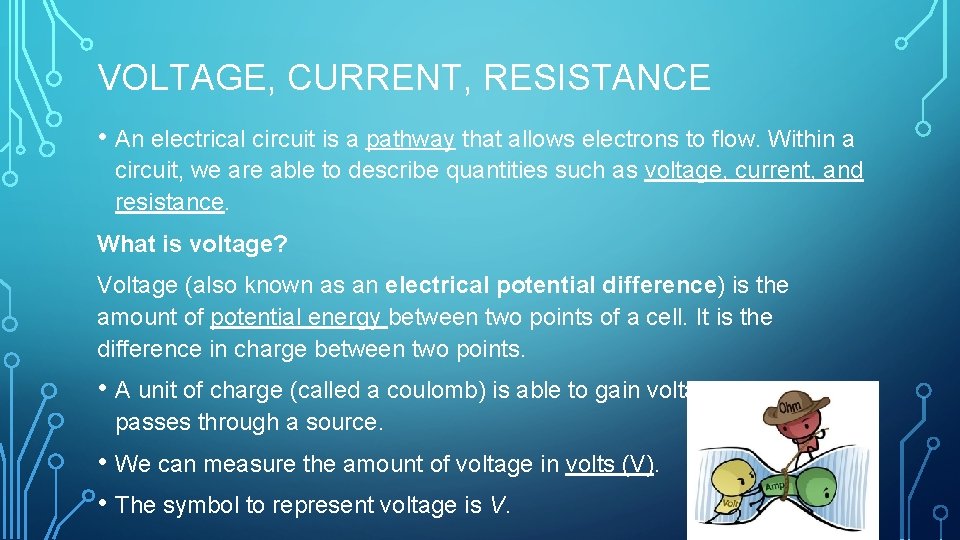
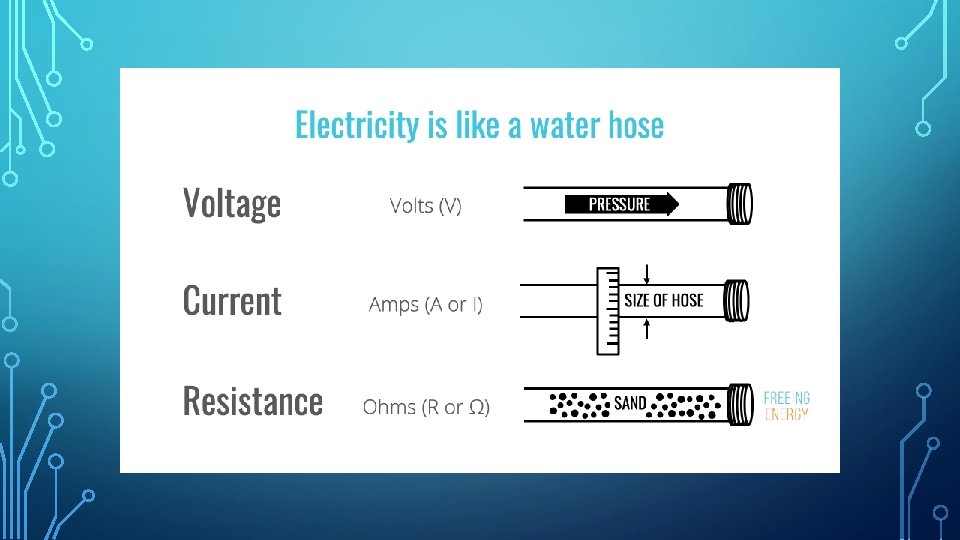
VOLTAGE, CURRENT, RESISTANCE • An electrical circuit is a pathway that allows electrons to flow. Within a circuit, we are able to describe quantities such as voltage, current, and resistance. What is voltage? Voltage (also known as an electrical potential difference) is the amount of potential energy between two points of a cell. It is the difference in charge between two points. • A unit of charge (called a coulomb) is able to gain voltage when it passes through a source. • We can measure the amount of voltage in volts (V). • The symbol to represent voltage is V.
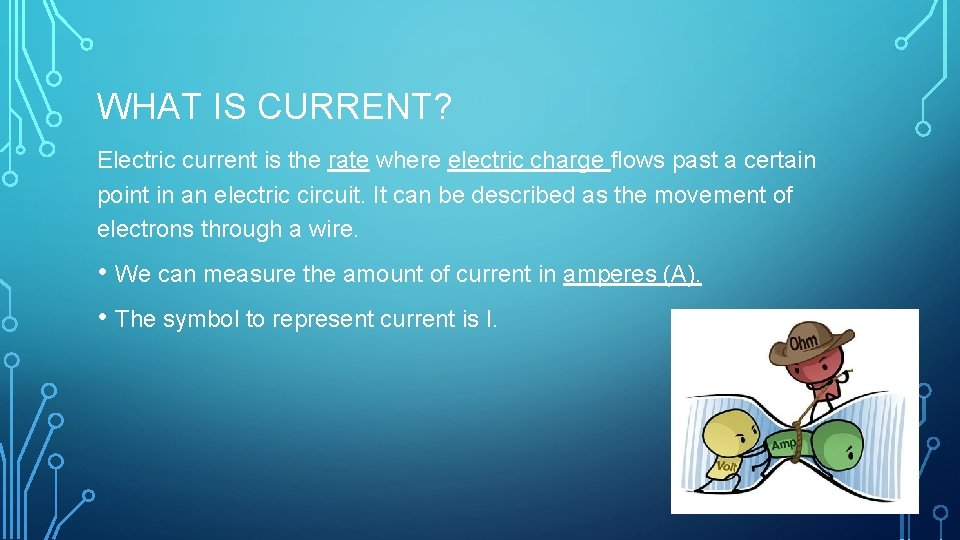
WHAT IS CURRENT? Electric current is the rate where electric charge flows past a certain point in an electric circuit. It can be described as the movement of electrons through a wire. • We can measure the amount of current in amperes (A). • The symbol to represent current is I.
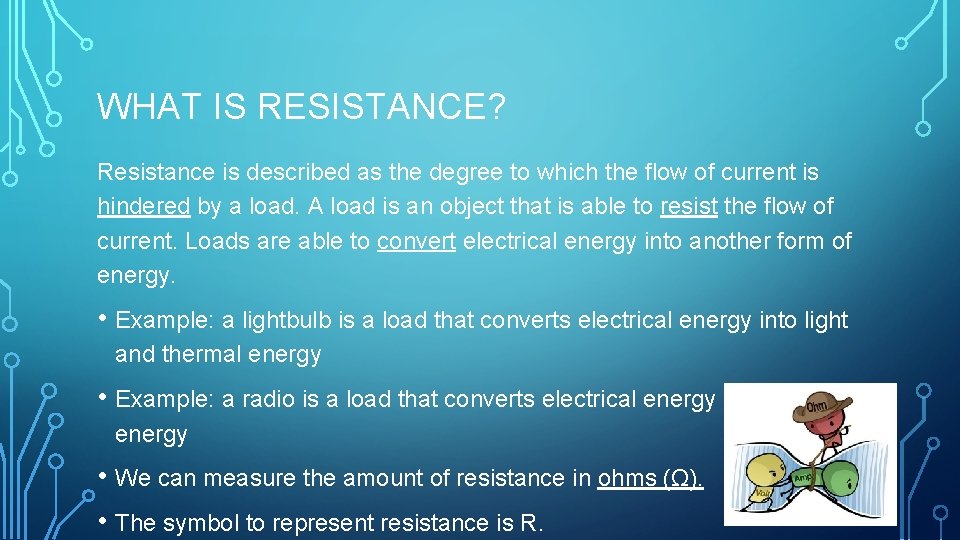
WHAT IS RESISTANCE? Resistance is described as the degree to which the flow of current is hindered by a load. A load is an object that is able to resist the flow of current. Loads are able to convert electrical energy into another form of energy. • Example: a lightbulb is a load that converts electrical energy into light and thermal energy • Example: a radio is a load that converts electrical energy into sound energy • We can measure the amount of resistance in ohms (Ω). • The symbol to represent resistance is R.
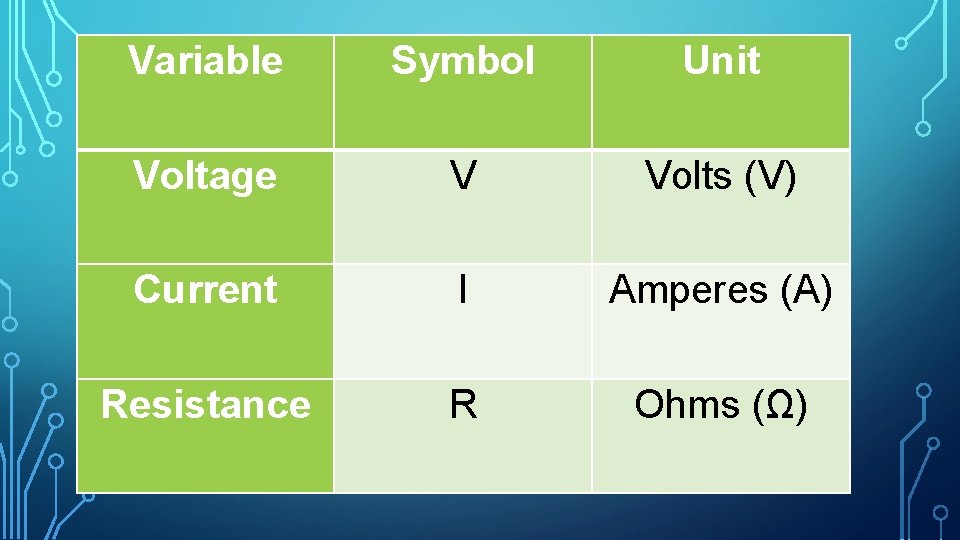
Variable Symbol Unit Voltage V Volts (V) Current I Amperes (A) Resistance R Ohms (Ω)

WHICH OF THE FOLLOWING HAS THE POTENTIAL OF BECOMING A NEW ENERGY SOURCE FOR THE WORLD? 1. 2. 3. 4. Waste Honey Metal Plastic

WHICH OF THE FOLLOWING HAS THE POTENTIAL OF BECOMING A NEW ENERGY SOURCE FOR THE WORLD? 1. 2. 3. 4. Waste Honey Metal Plastic https: //www. youtube. com/watch? v=JYda 2 v 94 dgc&ab_channel=Minute. Ear
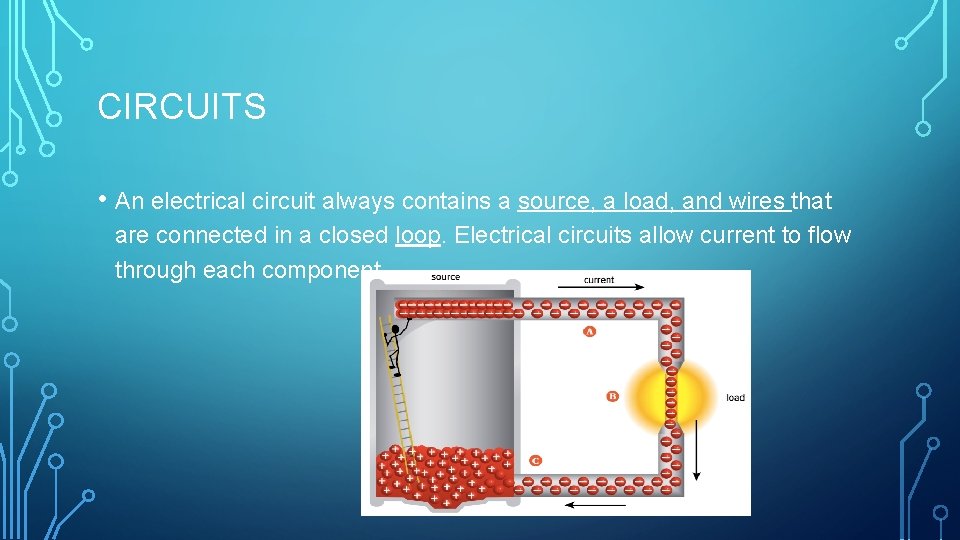
CIRCUITS • An electrical circuit always contains a source, a load, and wires that are connected in a closed loop. Electrical circuits allow current to flow through each component.
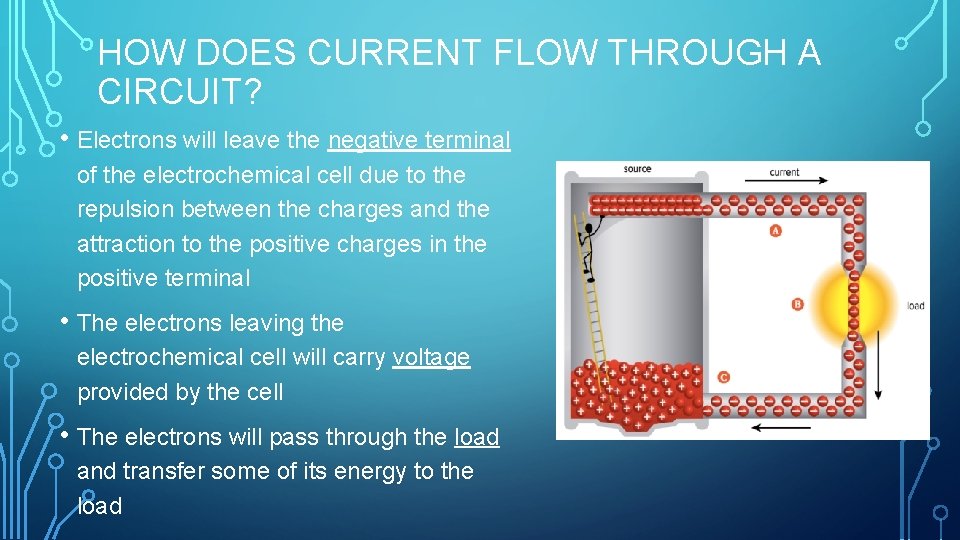
HOW DOES CURRENT FLOW THROUGH A CIRCUIT? • Electrons will leave the negative terminal of the electrochemical cell due to the repulsion between the charges and the attraction to the positive charges in the positive terminal • The electrons leaving the electrochemical cell will carry voltage provided by the cell • The electrons will pass through the load and transfer some of its energy to the load
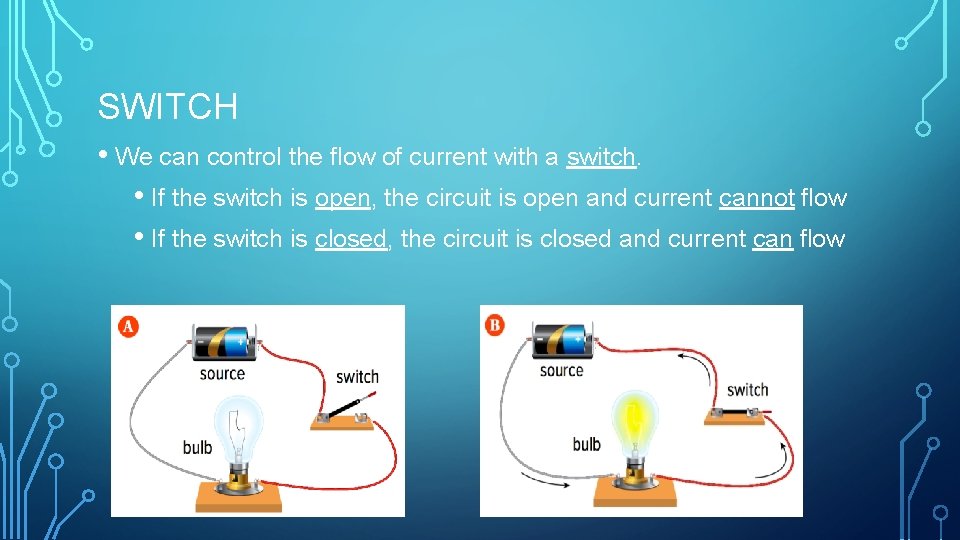
SWITCH • We can control the flow of current with a switch. • If the switch is open, the circuit is open and current cannot flow • If the switch is closed, the circuit is closed and current can flow
ELECTRICITY AND BATTERIES EXPLAINED • https: //www. youtube. com/watch? v=Ackbov. TAd. YY
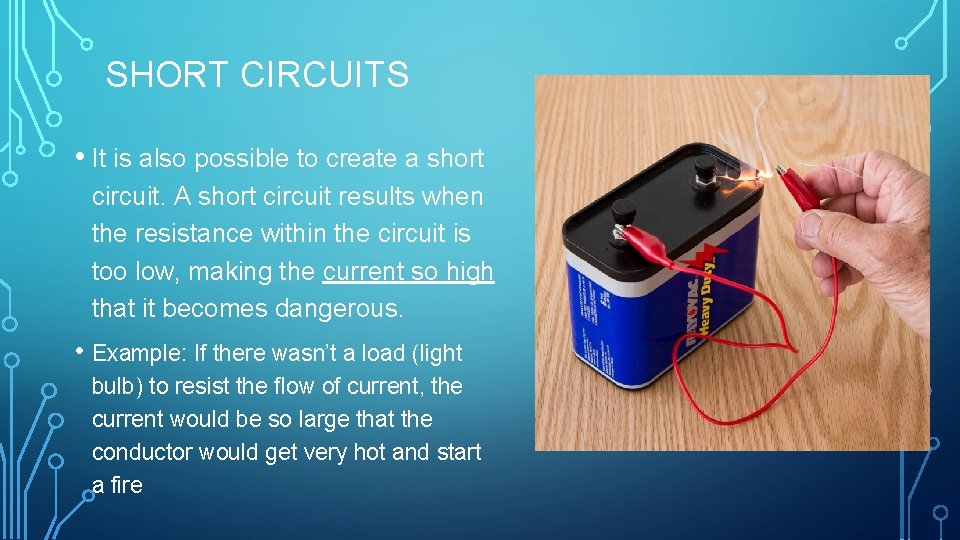
SHORT CIRCUITS • It is also possible to create a short circuit. A short circuit results when the resistance within the circuit is too low, making the current so high that it becomes dangerous. • Example: If there wasn’t a load (light bulb) to resist the flow of current, the current would be so large that the conductor would get very hot and start a fire
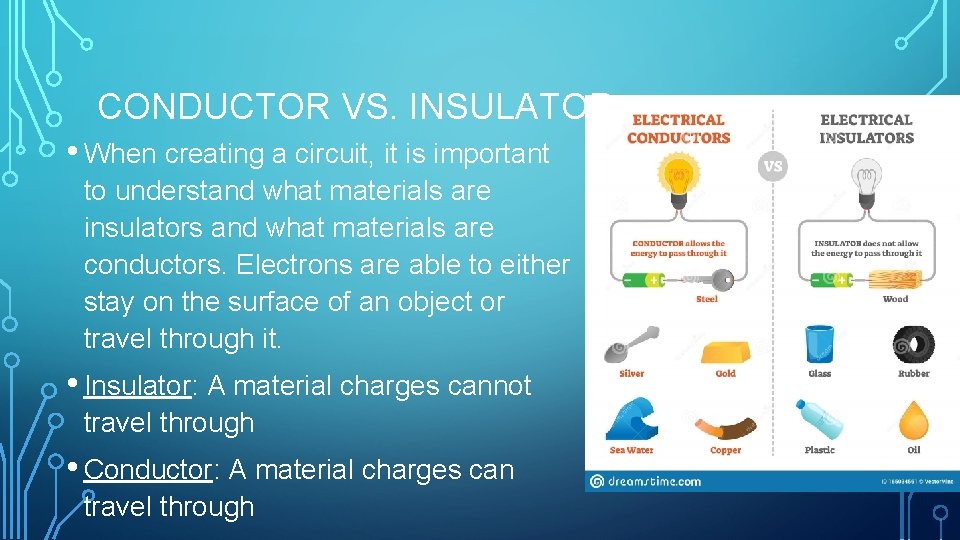
CONDUCTOR VS. INSULATOR • When creating a circuit, it is important to understand what materials are insulators and what materials are conductors. Electrons are able to either stay on the surface of an object or travel through it. • Insulator: A material charges cannot travel through • Conductor: A material charges can travel through
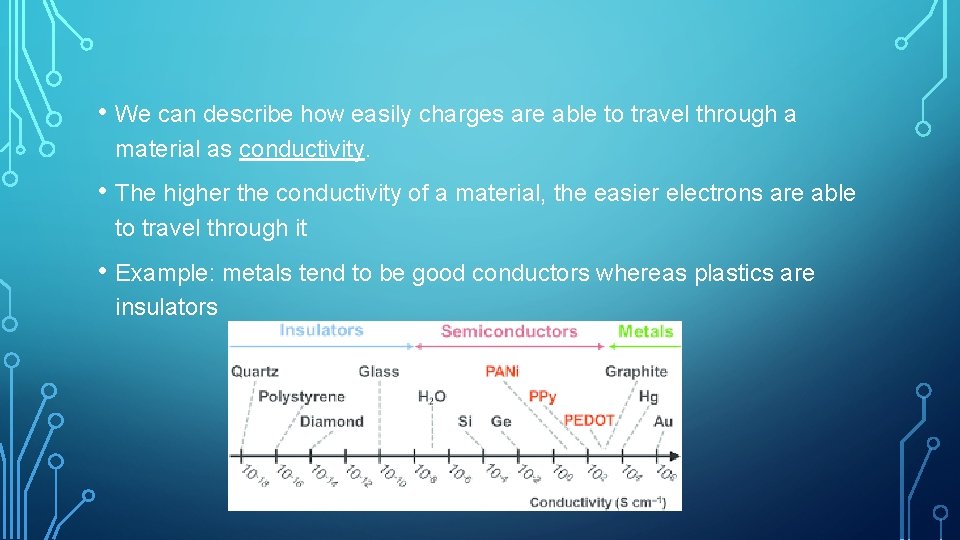
• We can describe how easily charges are able to travel through a material as conductivity. • The higher the conductivity of a material, the easier electrons are able to travel through it • Example: metals tend to be good conductors whereas plastics are insulators
- Slides: 25