
What happened to the Roman Empire by 500
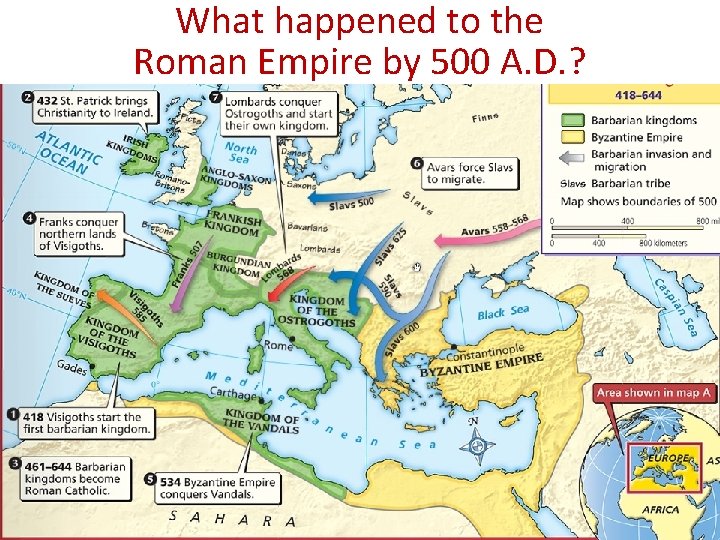
What happened to the Roman Empire by 500 A. D. ?
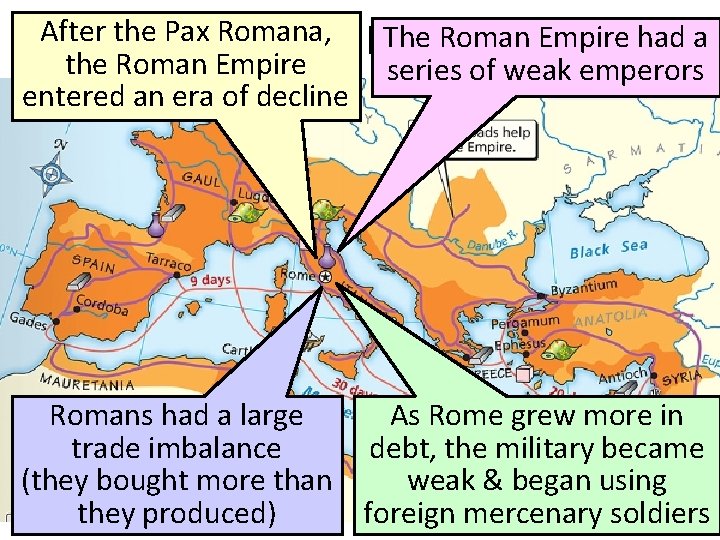
After. The the Pax Romana, The Roman Empire had a Fall of the Roman Empire series of weak emperors entered an era of decline Romans had a large As Rome grew more in trade imbalance debt, the military became (they bought more than weak & began using they produced) foreign mercenary soldiers
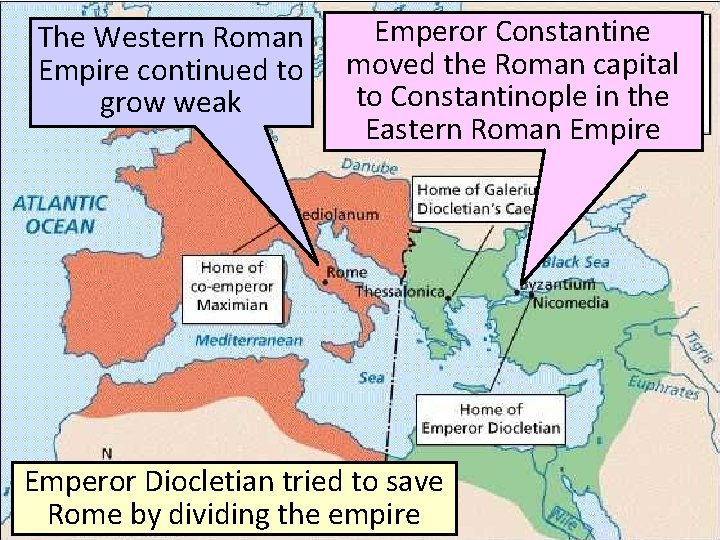
The Western Roman Empire continued to ■ Textgrow weak Emperor Constantine moved the Roman capital to Constantinople in the Eastern Roman Empire Emperor Diocletian tried to save Rome by dividing the empire
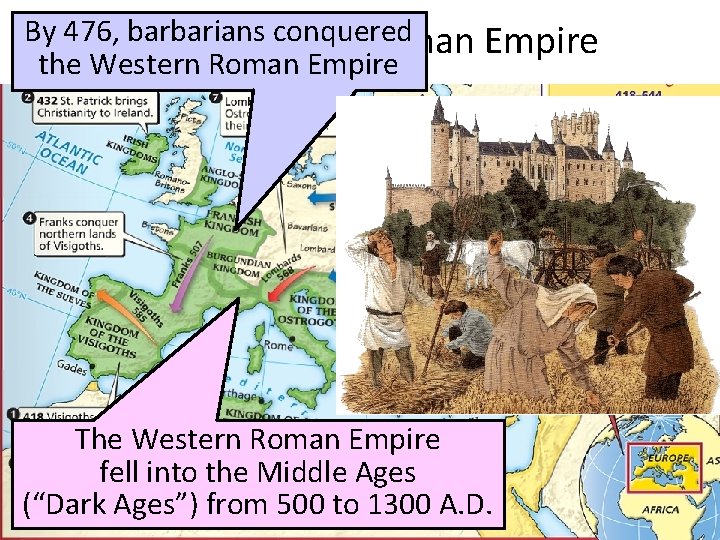
By 476, The barbarians Fall ofconquered the Roman Empire the Western Roman Empire The Western Roman Empire fell into the Middle Ages (“Dark Ages”) from 500 to 1300 A. D.
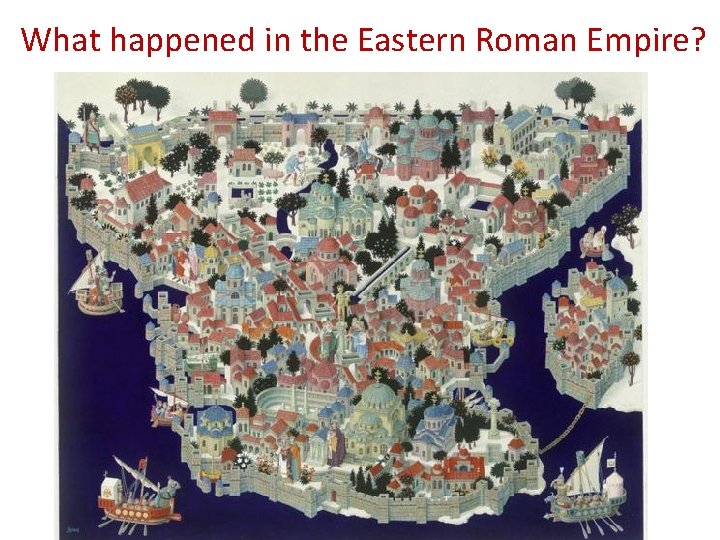
What happened in the Eastern Roman Empire?
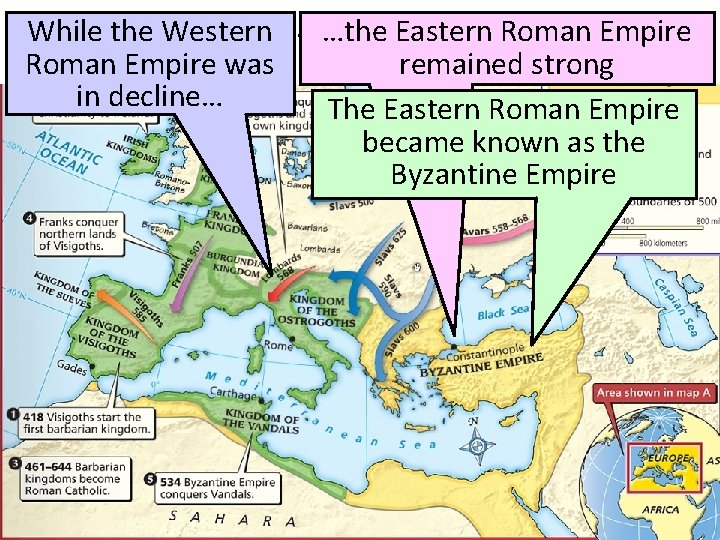
While the …the Eastern. Empire Roman Empire The. Western Fall of the Roman Empire was remained strong in decline… The Eastern Roman Empire became known as the Byzantine Empire
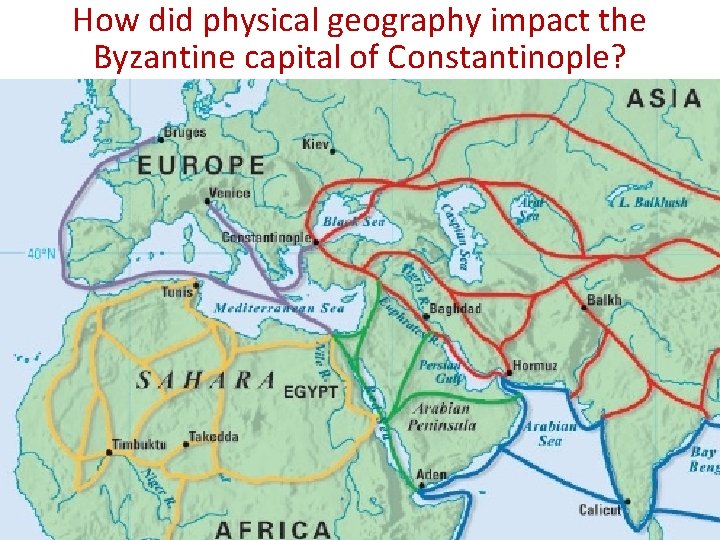
How did physical geography impact the Byzantine capital of Constantinople? ■ Text
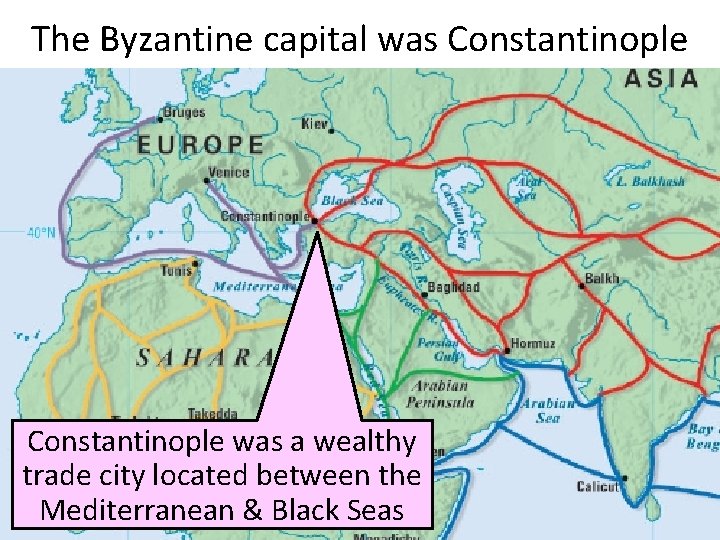
The Byzantine capital was Constantinople was a wealthy trade city located between the Mediterranean & Black Seas
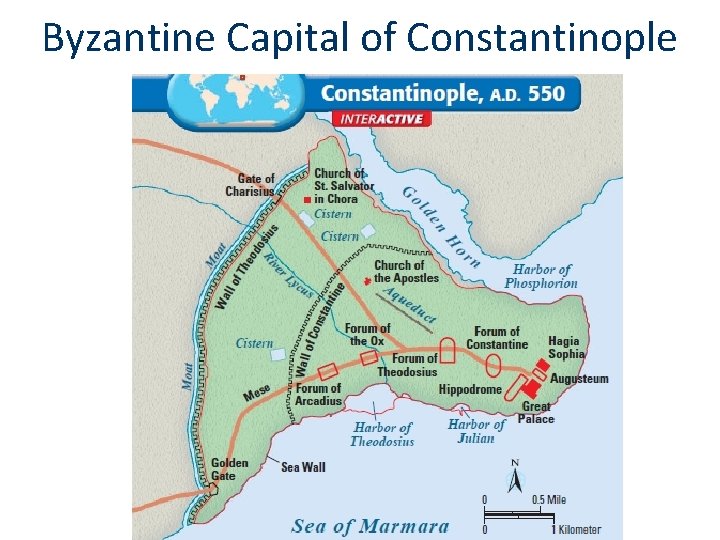
Byzantine Capital of Constantinople
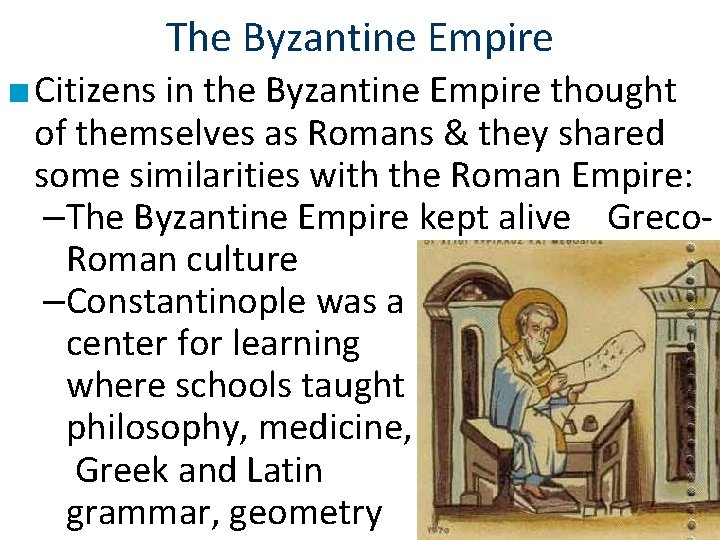
The Byzantine Empire ■ Citizens in the Byzantine Empire thought of themselves as Romans & they shared some similarities with the Roman Empire: –The Byzantine Empire kept alive Greco. Roman culture –Constantinople was a center for learning where schools taught philosophy, medicine, Greek and Latin grammar, geometry
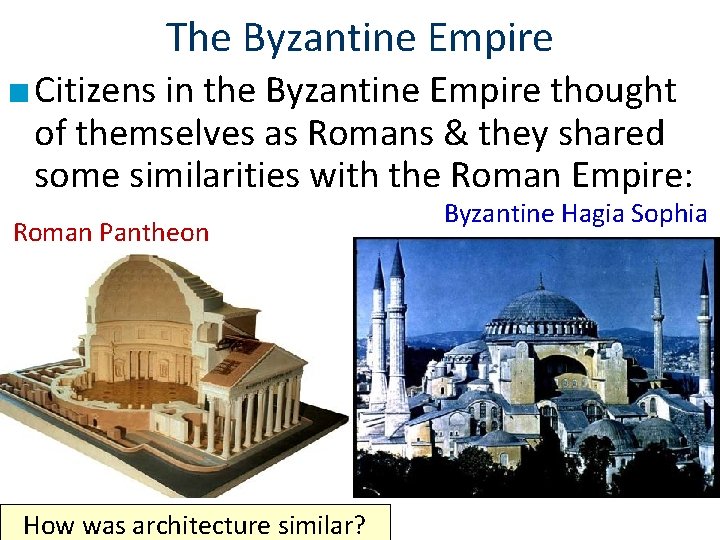
The Byzantine Empire ■ Citizens in the Byzantine Empire thought of themselves as Romans & they shared some similarities with the Roman Empire: Roman Pantheon How was architecture similar? Byzantine Hagia Sophia
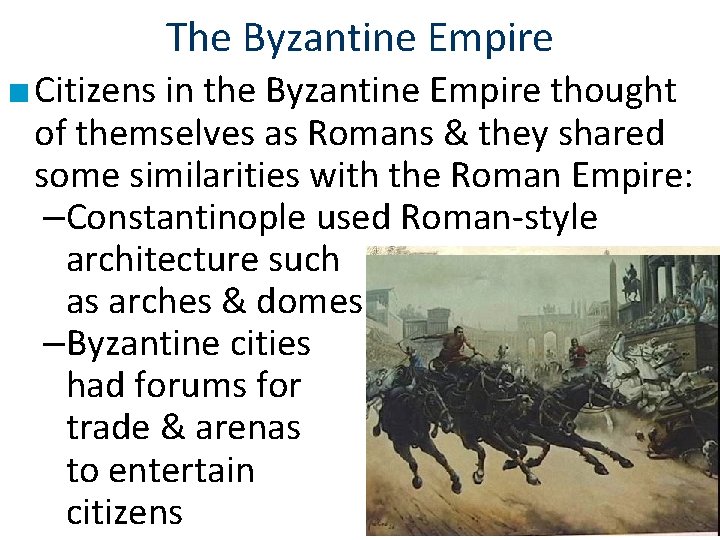
The Byzantine Empire ■ Citizens in the Byzantine Empire thought of themselves as Romans & they shared some similarities with the Roman Empire: –Constantinople used Roman-style architecture such as arches & domes –Byzantine cities had forums for trade & arenas to entertain citizens
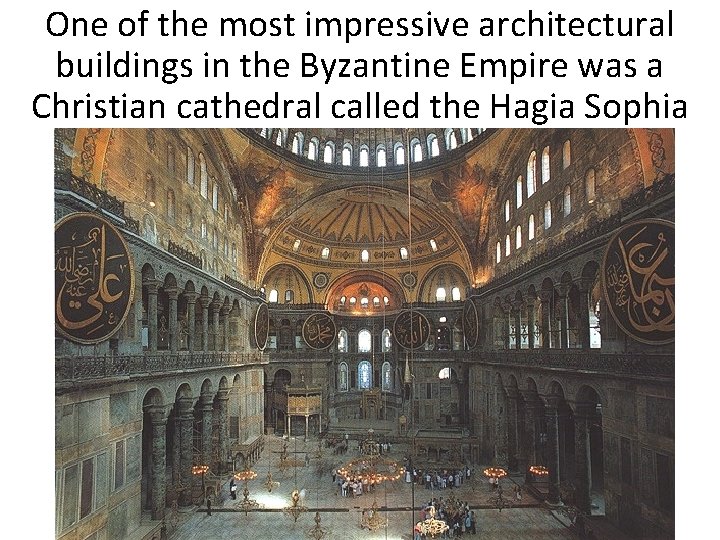
One of the most impressive architectural buildings in the Byzantine Empire was a Christian cathedral called the Hagia Sophia
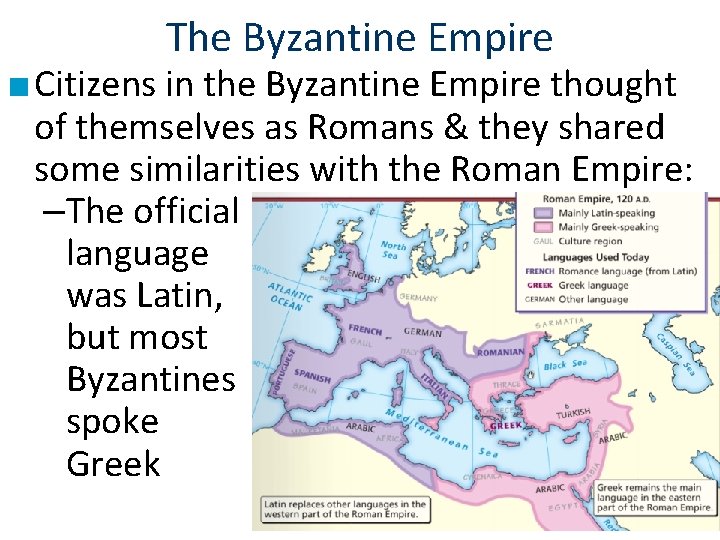
The Byzantine Empire ■ Citizens in the Byzantine Empire thought of themselves as Romans & they shared some similarities with the Roman Empire: –The official language was Latin, but most Byzantines spoke Greek
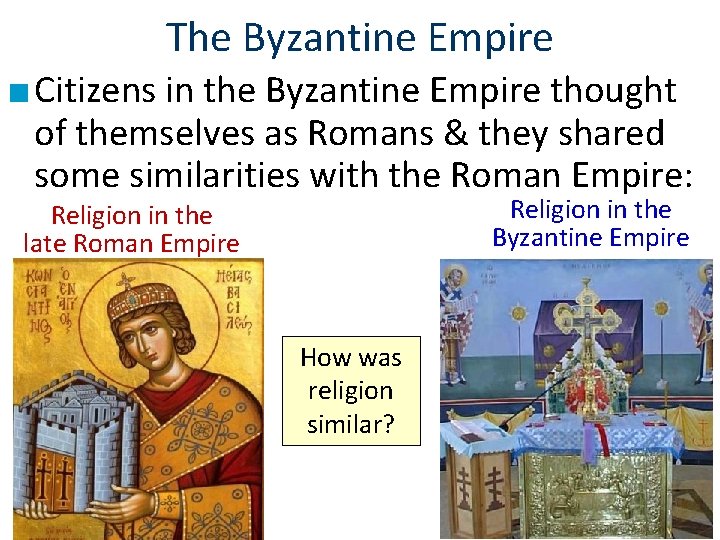
The Byzantine Empire ■ Citizens in the Byzantine Empire thought of themselves as Romans & they shared some similarities with the Roman Empire: Religion in the Byzantine Empire Religion in the late Roman Empire How was religion similar?
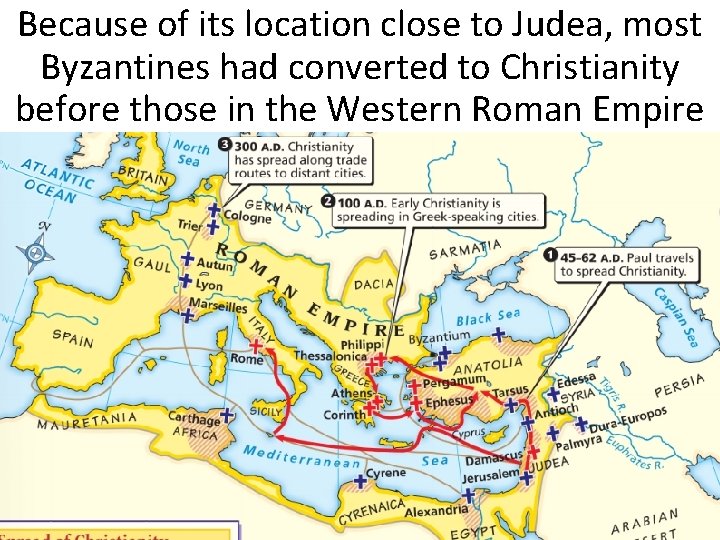
Because of its location close to Judea, most Byzantines had converted to Christianity before those in the Western Roman Empire
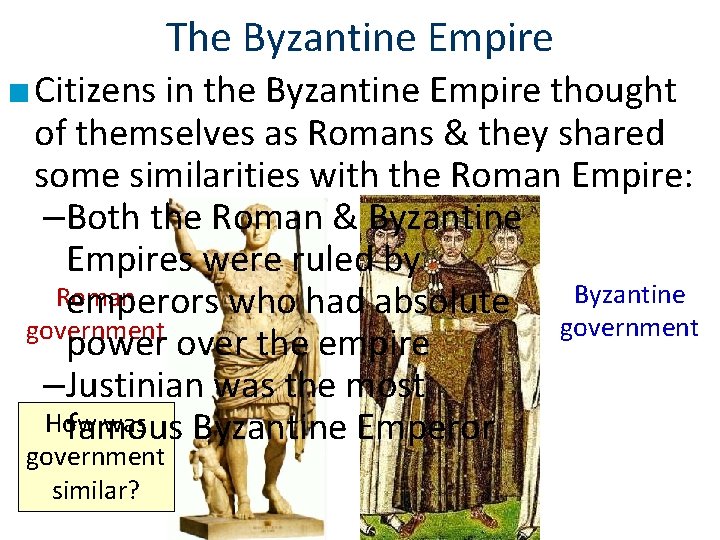
The Byzantine Empire ■ Citizens in the Byzantine Empire thought of themselves as Romans & they shared some similarities with the Roman Empire: –Both the Roman & Byzantine Empires were ruled by Byzantine Roman emperors who had absolute government power over the empire –Justinian was the most How was famous Byzantine Emperor government similar?
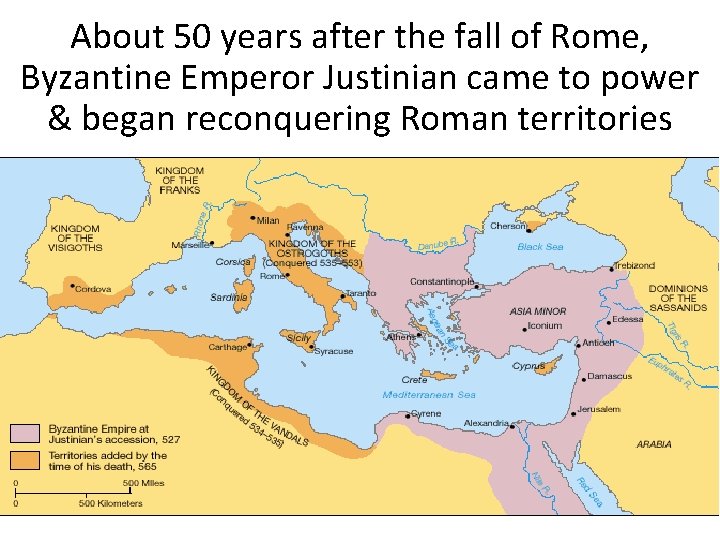
About 50 years after the fall of Rome, Byzantine Emperor Justinian came to power & began reconquering Roman territories
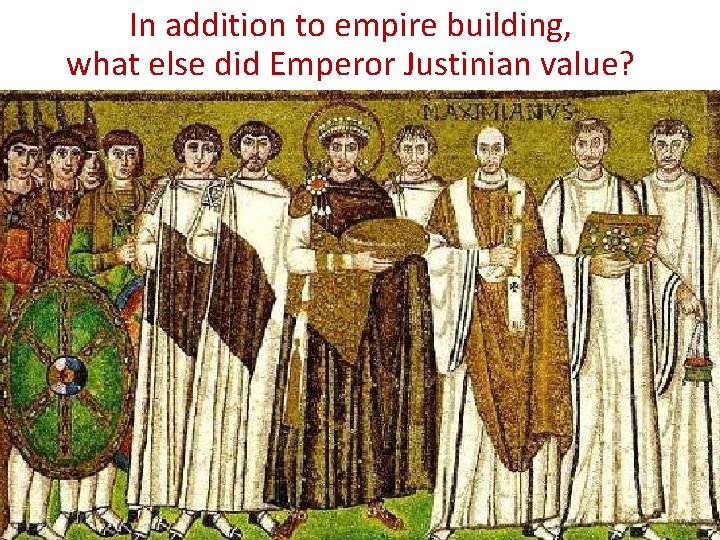
In addition to empire building, what else did Emperor Justinian value?
The Justinian Code ■ To oversee his new empire, Justinian ordered legal experts to consolidate old Roman laws into a single law code –The Justinian Code served as the legal basis for criminal justice, marriage, property, slavery, & women’s rights –The law code became one of the most important legacies of the Byzantine Empire & served as the basis for laws for the next 900 years
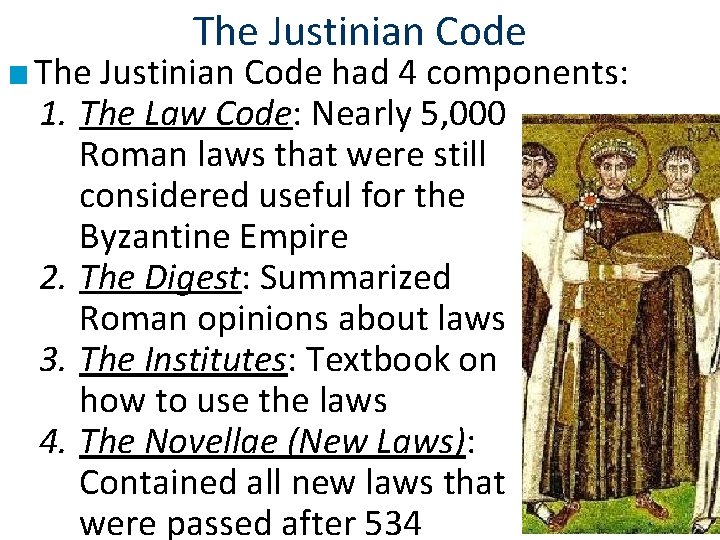
The Justinian Code ■ The Justinian Code had 4 components: 1. The Law Code: Nearly 5, 000 Roman laws that were still considered useful for the Byzantine Empire 2. The Digest: Summarized Roman opinions about laws 3. The Institutes: Textbook on how to use the laws 4. The Novellae (New Laws): Contained all new laws that were passed after 534
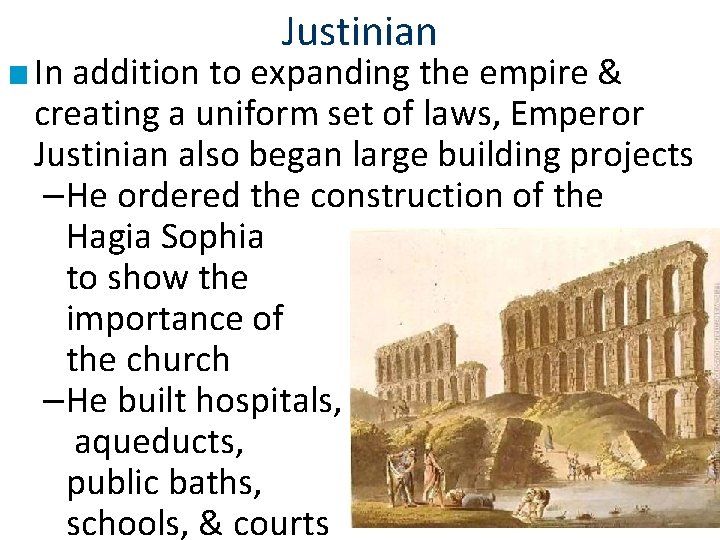
Justinian ■ In addition to expanding the empire & creating a uniform set of laws, Emperor Justinian also began large building projects –He ordered the construction of the Hagia Sophia to show the importance of the church –He built hospitals, aqueducts, public baths, schools, & courts
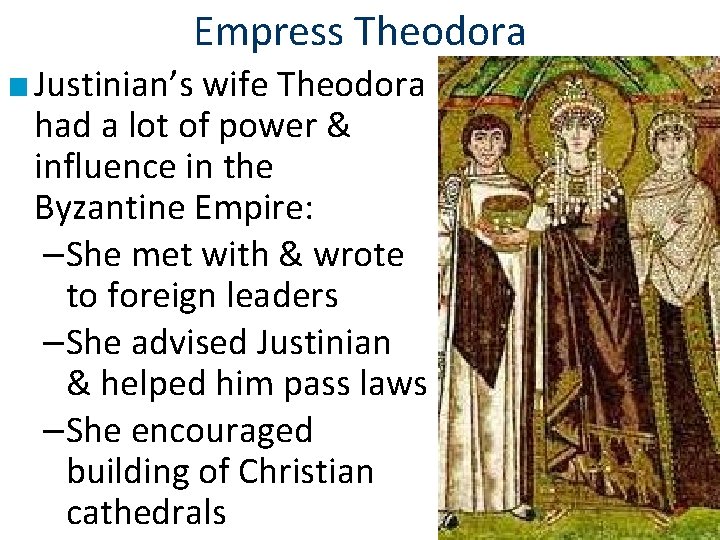
Empress Theodora ■ Justinian’s wife Theodora had a lot of power & influence in the Byzantine Empire: –She met with & wrote to foreign leaders –She advised Justinian & helped him pass laws –She encouraged building of Christian cathedrals
Closure Activity ■ You are a Roman citizen who was caught in an avalanche and frozen during the Pax Romana. You were found 250 years later during Justinian’s reign & defrosted in the city of Constantinople. You awoke to find yourself in a new city that you have never seen before. Some things are different, some are familiar. – Write a paragraph journal entry from the perspective of a frozen Roman that compares your home in Rome with this new city of Constantinople. (Think about gov’t, location, entertainment, religion, language) – Include at least 4 facts in your journal entry
■ Essential Question: –Why did the Christian Church split into Roman Catholic & Eastern Orthodox denominations? ■ Warm-Up Question: –How did the Byzantine Empire begin? –What was the Justinian Code? –Name 3 differences or similarities between Rome & Byzantine Empire –Who was Theodora?
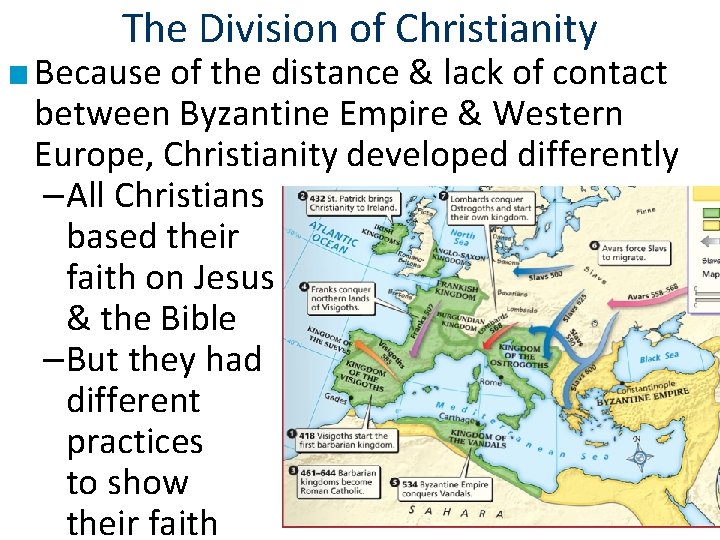
The Division of Christianity ■ Because of the distance & lack of contact between Byzantine Empire & Western Europe, Christianity developed differently –All Christians based their faith on Jesus & the Bible –But they had different practices to show their faith
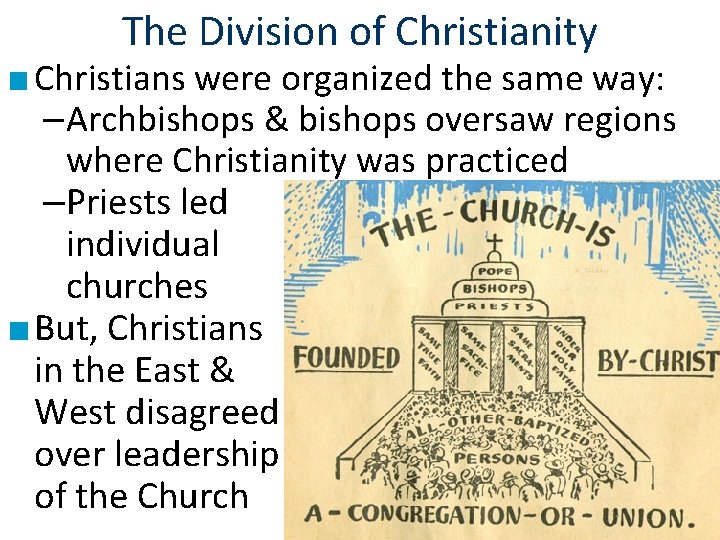
The Division of Christianity ■ Christians were organized the same way: –Archbishops & bishops oversaw regions where Christianity was practiced –Priests led individual churches ■ But, Christians in the East & West disagreed over leadership of the Church
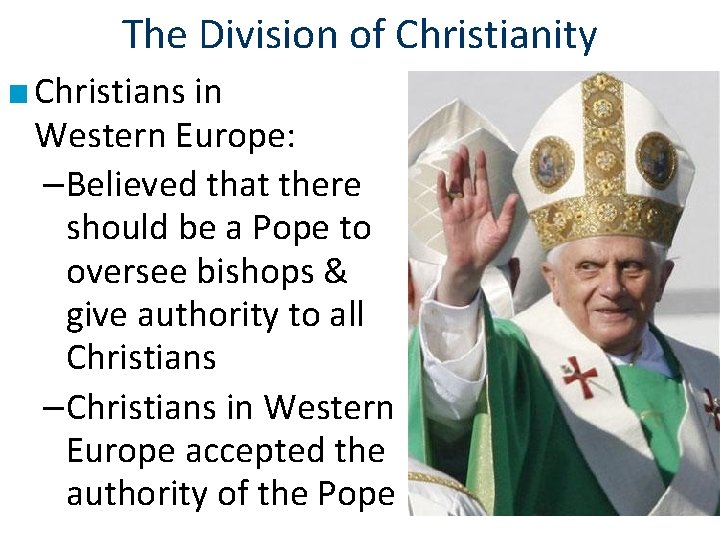
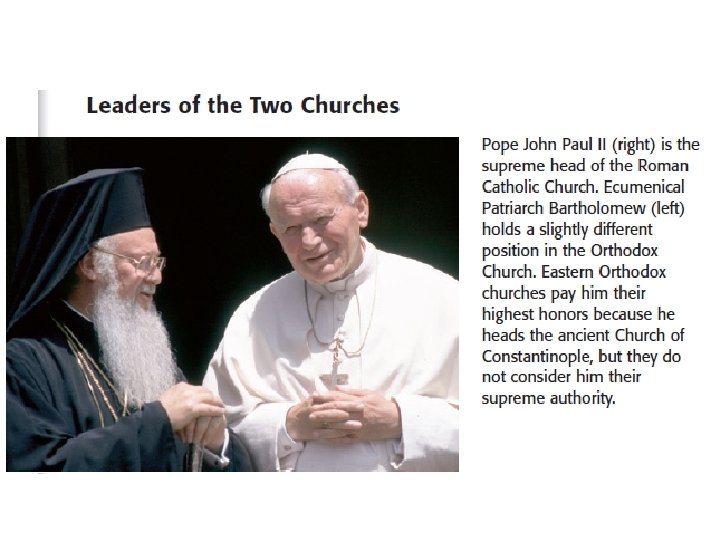
The Division of Christianity ■ Christians in Western Europe: –Believed that there should be a Pope to oversee bishops & give authority to all Christians –Christians in Western Europe accepted the authority of the Pope
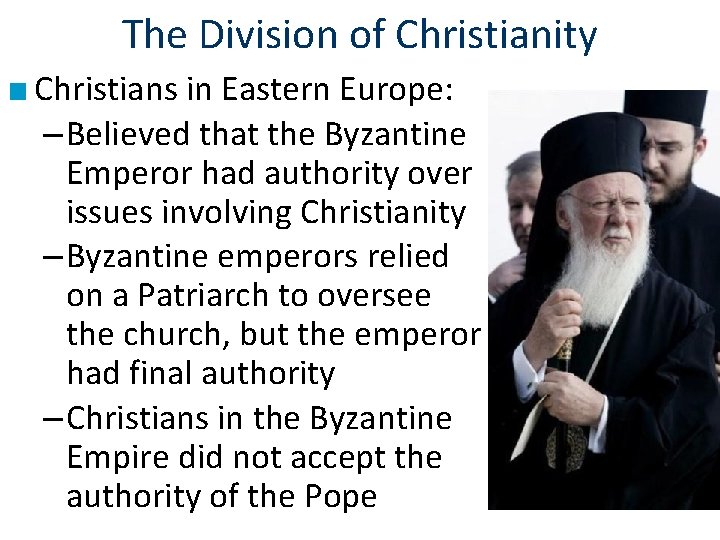
The Division of Christianity ■ Christians in Eastern Europe: – Believed that the Byzantine Emperor had authority over issues involving Christianity – Byzantine emperors relied on a Patriarch to oversee the church, but the emperor had final authority – Christians in the Byzantine Empire did not accept the authority of the Pope
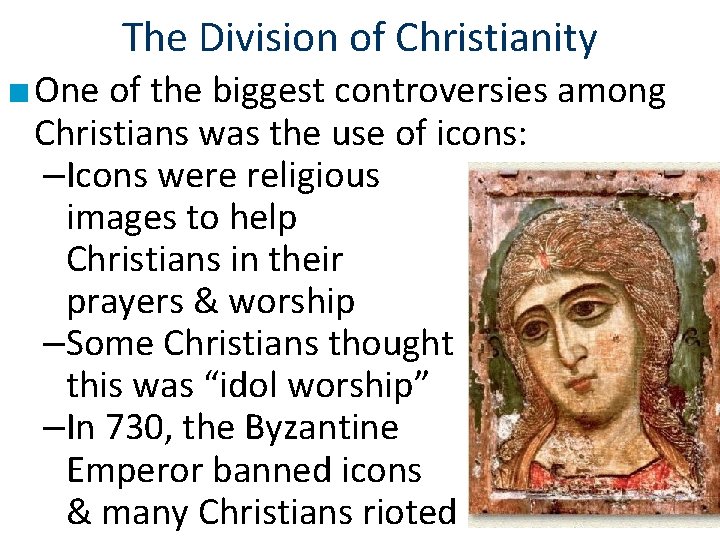
The Division of Christianity ■ One of the biggest controversies among Christians was the use of icons: –Icons were religious images to help Christians in their prayers & worship –Some Christians thought this was “idol worship” –In 730, the Byzantine Emperor banned icons & many Christians rioted
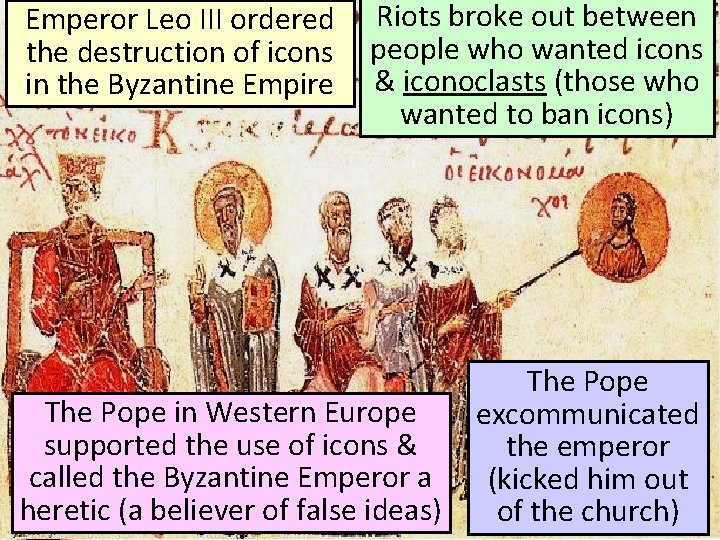
Emperor Leo III ordered the destruction of icons in the Byzantine Empire Riots broke out between people who wanted icons & iconoclasts (those who wanted to ban icons) The Pope in Western Europe supported the use of icons & called the Byzantine Emperor a heretic (a believer of false ideas) The Pope excommunicated the emperor (kicked him out of the church)
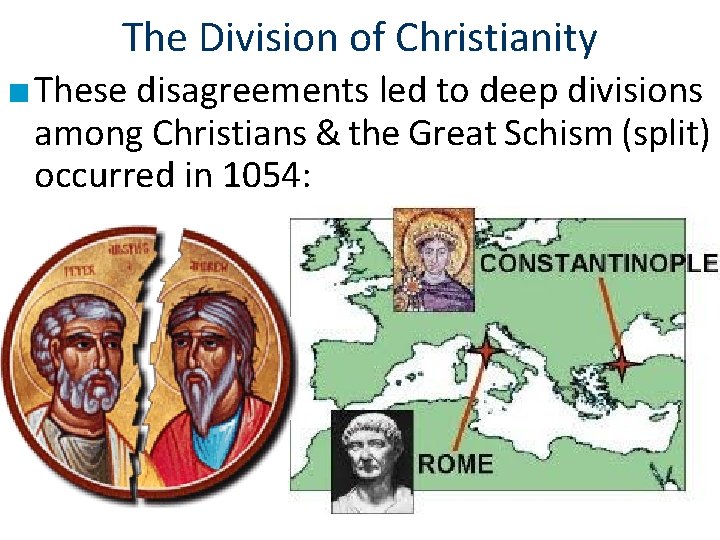
The Division of Christianity ■ These disagreements led to deep divisions among Christians & the Great Schism (split) occurred in 1054:
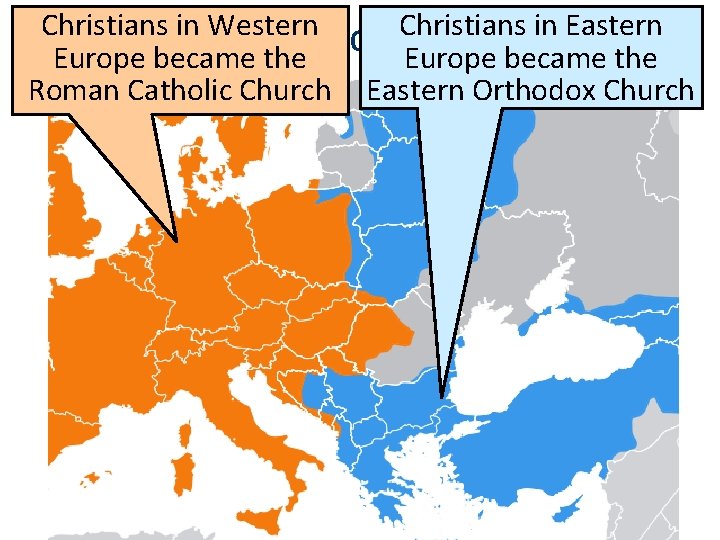
Christians in Western Christians in Eastern The Division of Christianity Europe became the Roman Catholic Church Eastern Orthodox Church
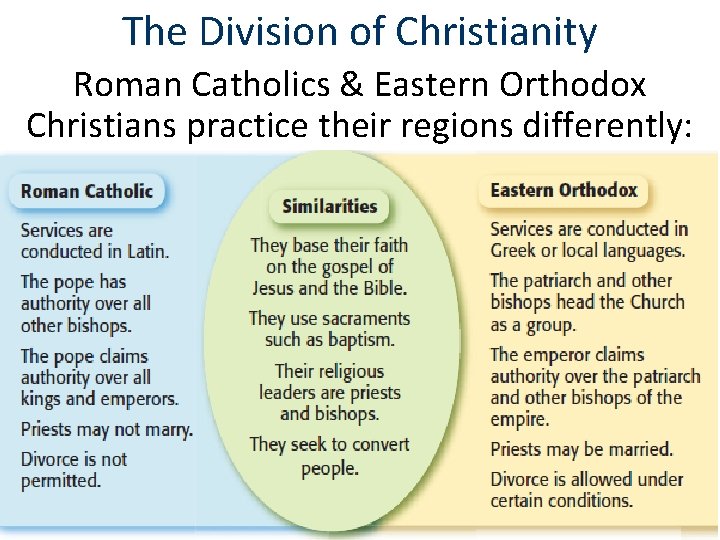
The Division of Christianity Roman Catholics & Eastern Orthodox Christians practice their regions differently:
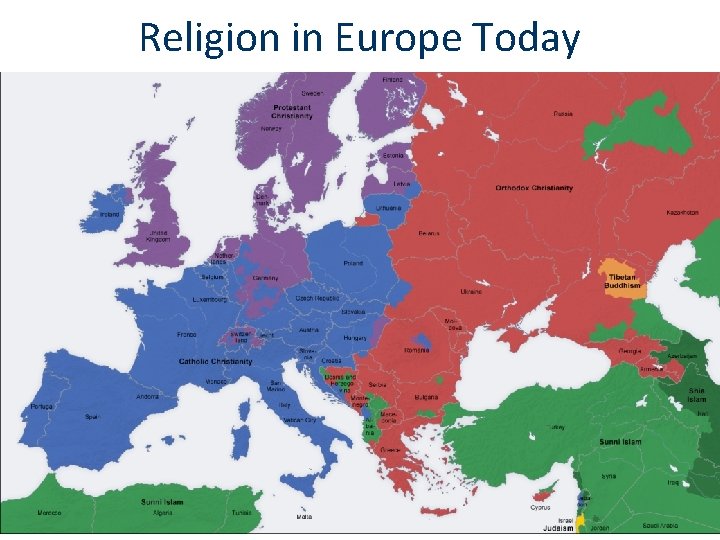
Religion in Europe Today
Closure Activity ■ You are a Roman citizen who was caught in an avalanche and frozen during the Pax Romana. You were found 250 years later during Justinian’s reign & defrosted in the city of Constantinople. You awoke to find yourself in a new city that you have never seen before. Some things are different, some are familiar. – Write a paragraph journal entry from the perspective of a frozen Roman that compares your home in Rome with this new city of Constantinople. (Think about gov’t, location, entertainment, religion, language) – Include at least 4 facts in your journal entry
- Slides: 37