
What Grows in Canada Canadas Vegetation Regions Vegetation
- Slides: 7
What Grows in Canada? Canada’s Vegetation Regions
Vegetation Climatic conditions affect the types of vegetation that grow Plants need moisture and heat to survive – Warm, moist climate=larger, denser vegetation – Cool, dry climate=grasses
Vegetation Key Terms Natural Vegetationplants that grow without human influence Transition Zone-an area where the characteristics of one region gradually change into the next (boundary between regions)
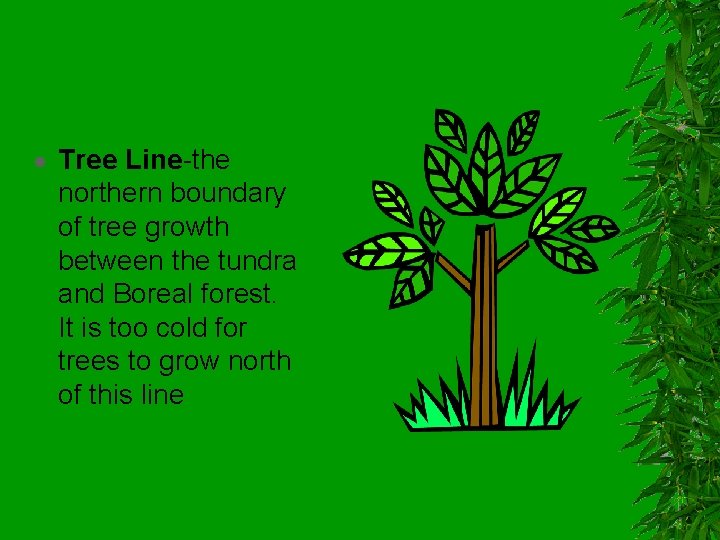
Tree Line-the northern boundary of tree growth between the tundra and Boreal forest. It is too cold for trees to grow north of this line
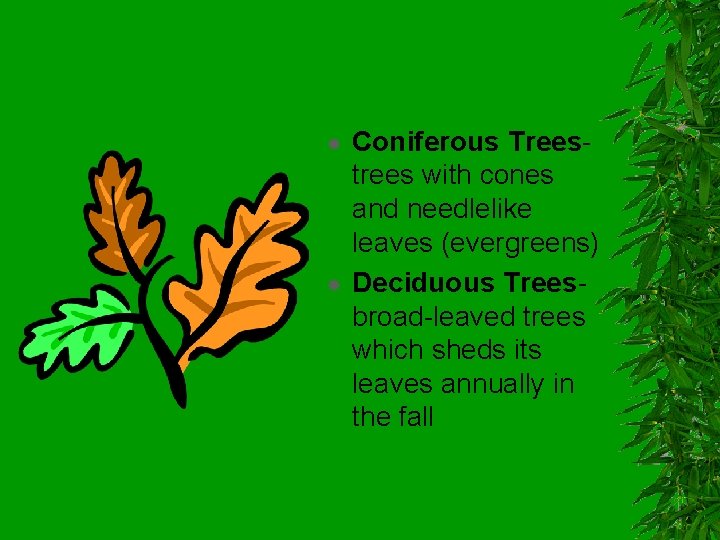
Coniferous Treestrees with cones and needlelike leaves (evergreens) Deciduous Treesbroad-leaved trees which sheds its leaves annually in the fall
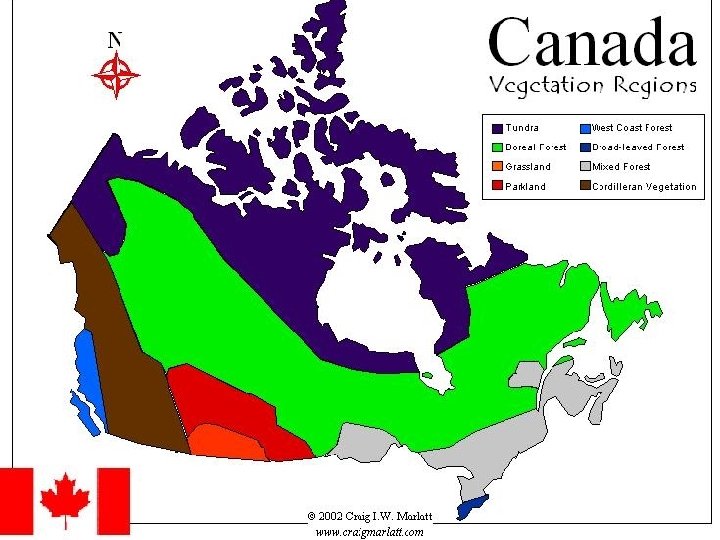
Vegetation Regions (Zones) Tundra: Northernmost region in Canada. Only contains small bushes, grasses and moss. West Coast Forest: A temperate rainforest which contains the largest trees in Canada Cordilleran: Vegetation varies by elevation (deciduous trees at the base of mountains, tundra near the top) Boreal and Taiga Forest: Region of coniferous trees which stretches across Canada Grassland: Region consisting of wild species of grasses, shrubs, and some small trees Mixed Forest: Region of Southern Canada containing coniferous and deciduous trees Deciduous: (Broad-leafed) Forest: Region of Southwest Ontario containing deciduous trees.