
What exactly is PYP exhibition What Culminating project
What exactly is PYP exhibition?
What? Culminating project in the final PYP year that allows students to apply learning from previous years An in-depth collaborative inquiry that starts from personal interests and passions, but extends into real world local and global issues. (This issue matters to me and affects my life, my community and my world. It’s Global!)
What It Isn’t… Not a Science Fair project Not adult-directed Not a “free for all”
“Little people can think big!” Cody Englander

Why?

What? Demonstration of the five essentials elements of the PYP Knowledge Key Concepts Attitudes and Attributes Skills Action

Knowledge
Our Theme We determined theme. At Bolton we are going to do Exhibition under “How we organize ourselves. ” The central idea: Access to equal oppotunites and social justice depends on the actions of individuals, organizations and governments.
Theme: How We Organize Ourselves” An inquiry into the interconnectedness of human-made systems and communities; the structure and function of organizations; societal decision-making; economic activities and their impact on humankind and the environment.
Students select an issue: Significant/relevant (Locally and globally) Real life issue/problem Lends itself to open-ended inquiry Lends itself to local research Actionable Age/ audience appropriate Inclusive of all learners and learning styles
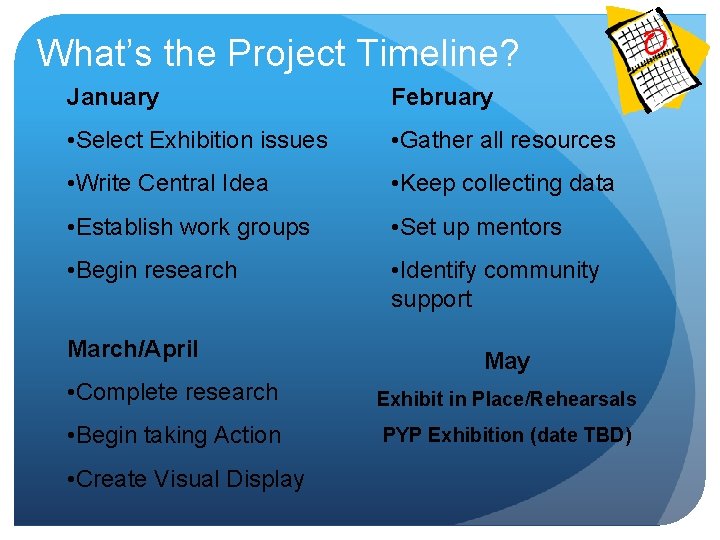
What’s the Project Timeline? January February • Select Exhibition issues • Gather all resources • Write Central Idea • Keep collecting data • Establish work groups • Set up mentors • Begin research • Identify community support March/April May • Complete research Exhibit in Place/Rehearsals • Begin taking Action PYP Exhibition (date TBD) • Create Visual Display
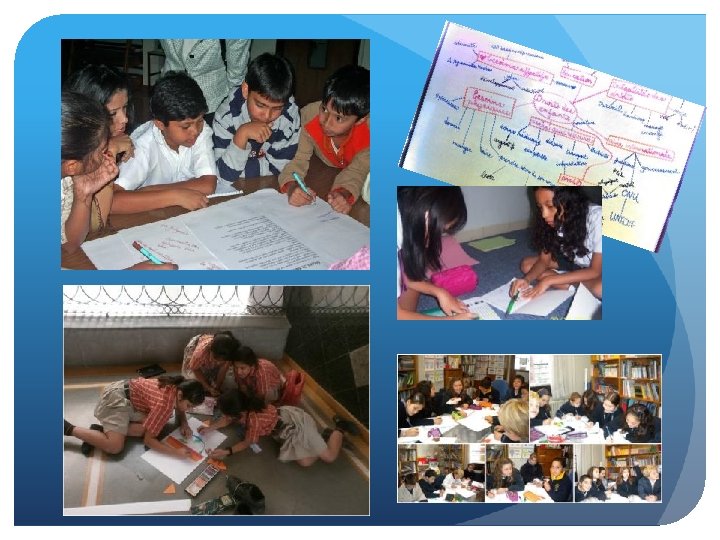



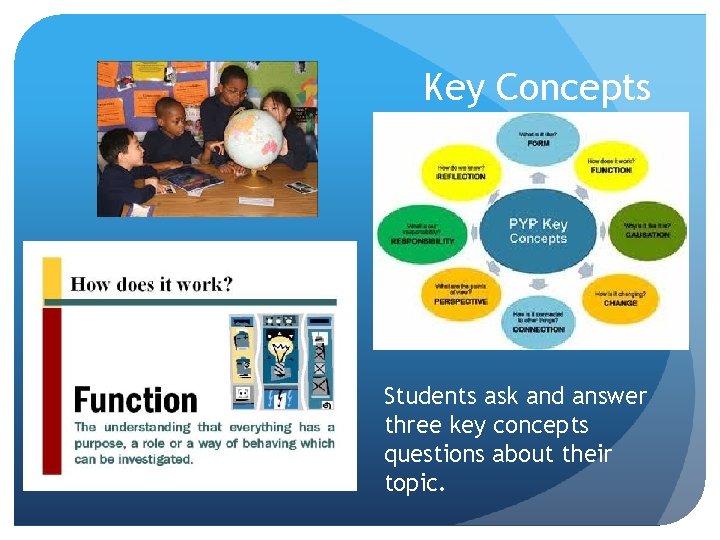
Key Concepts Students ask and answer three key concepts questions about their topic.
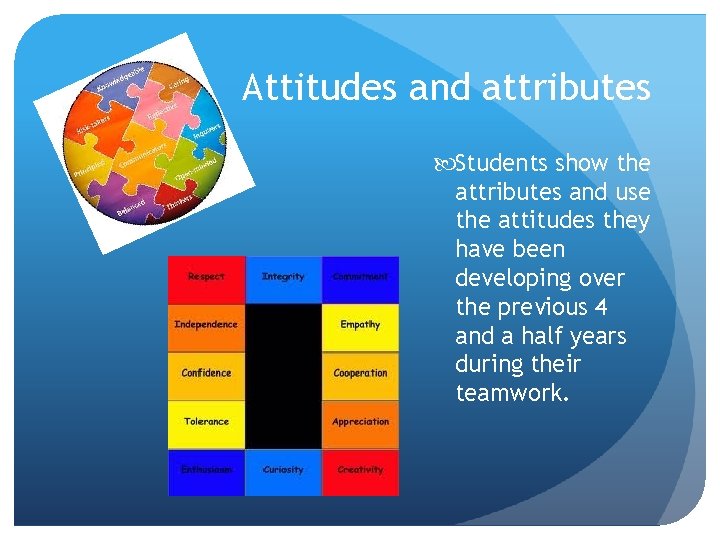
Attitudes and attributes Students show the attributes and use the attitudes they have been developing over the previous 4 and a half years during their teamwork.
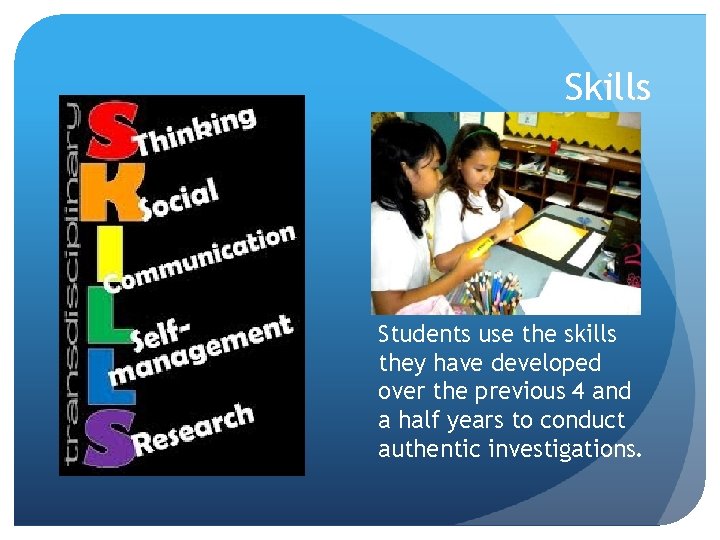
Skills Students use the skills they have developed over the previous 4 and a half years to conduct authentic investigations.
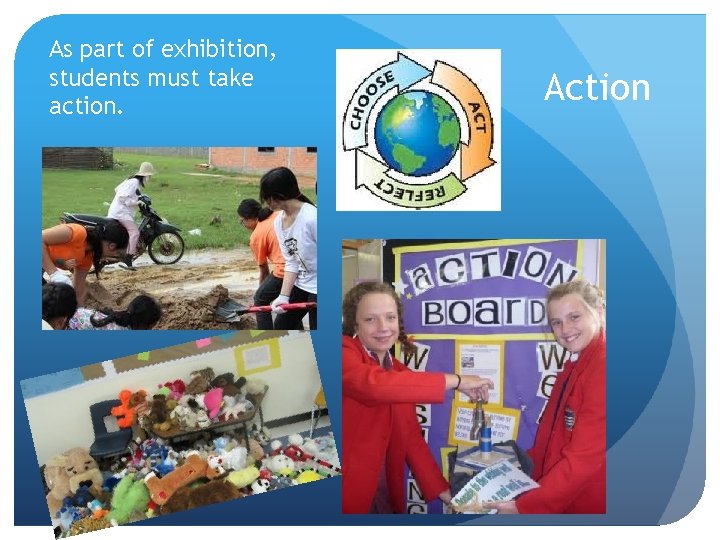
As part of exhibition, students must take action. Action

When? The final grade of the PYP. Near the end of the school year, as a celebration and demonstration of K-5 PYP learning. Ours is scheduled for May.
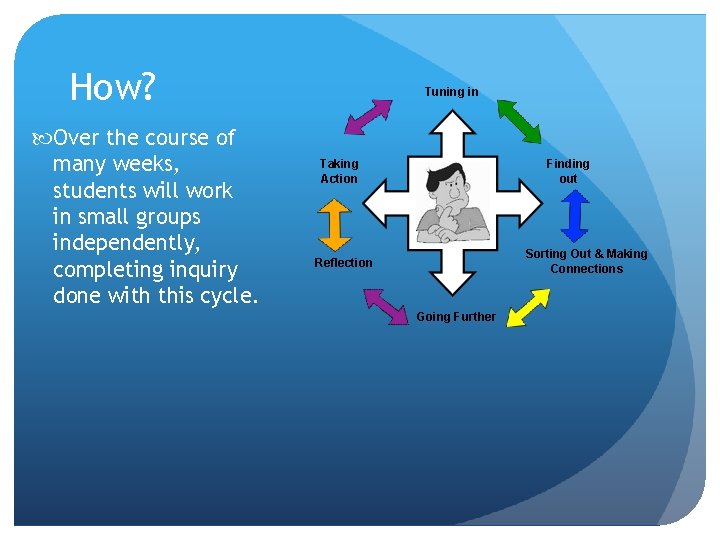
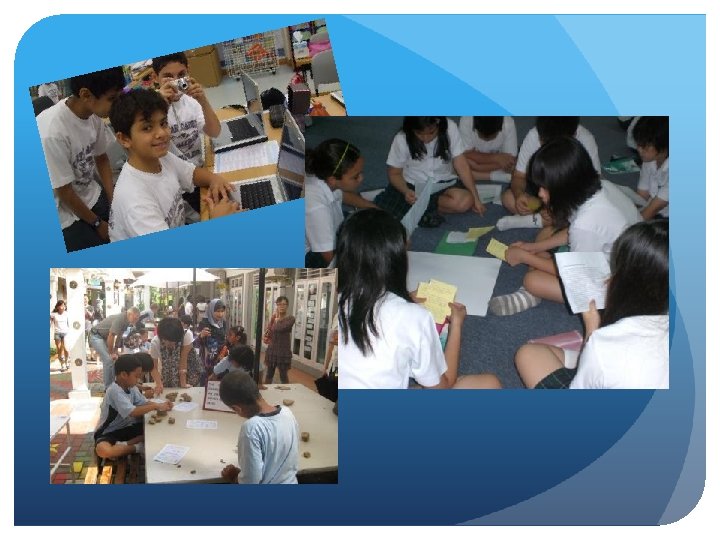
How? Over the course of many weeks, students will work in small groups independently, completing inquiry done with this cycle. Tuning in Taking Action Finding out Sorting Out & Making Connections Reflection Going Further
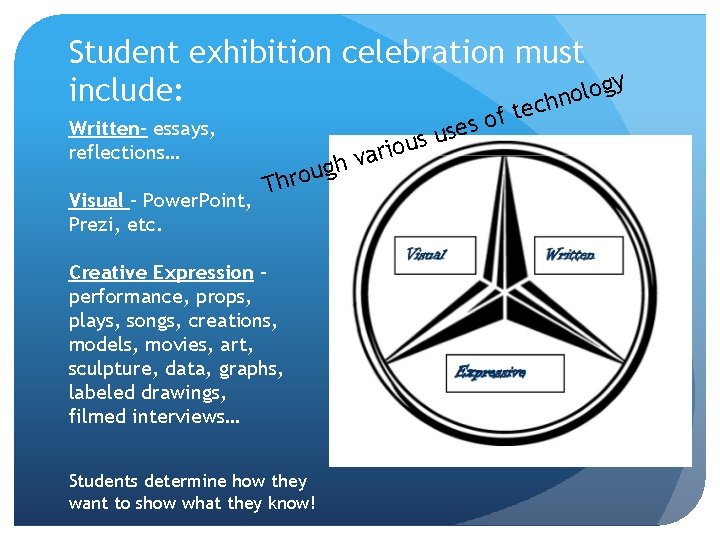
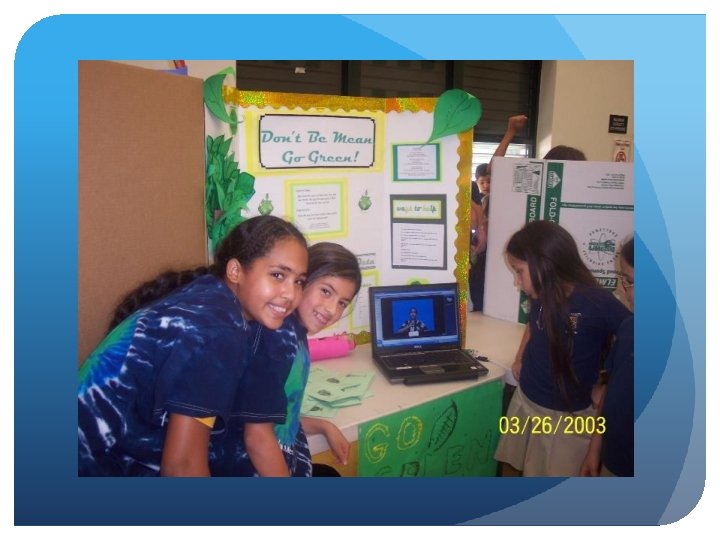
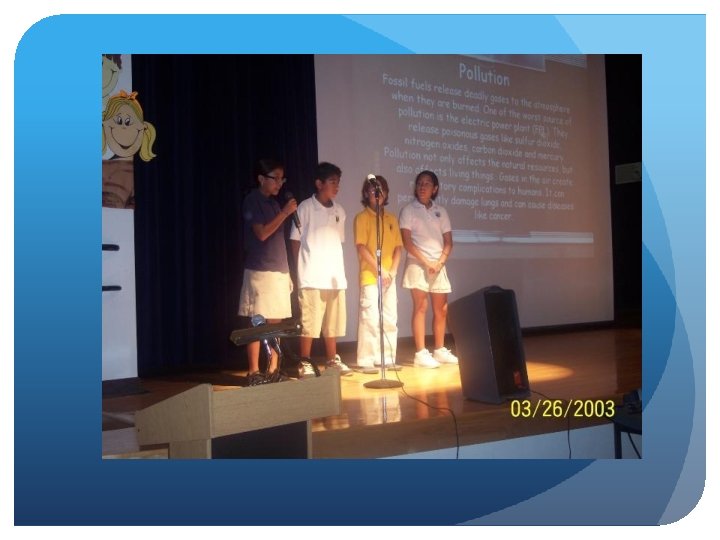
Student exhibition celebration must gy o l include: o chn Written- essays, reflections… Visual – Power. Point, Prezi, etc. T rio a v gh u o r h Creative Expression – performance, props, plays, songs, creations, models, movies, art, sculpture, data, graphs, labeled drawings, filmed interviews… Students determine how they want to show what they know! te f o s e s u us
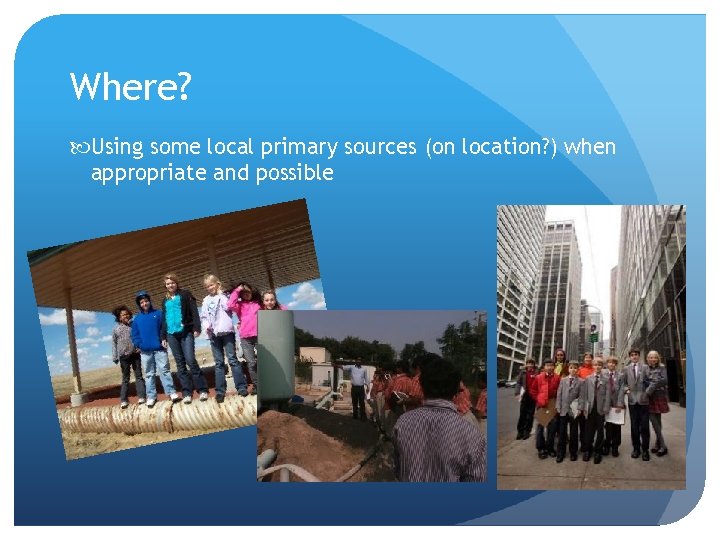
Where? Using some local primary sources (on location? ) when appropriate and possible
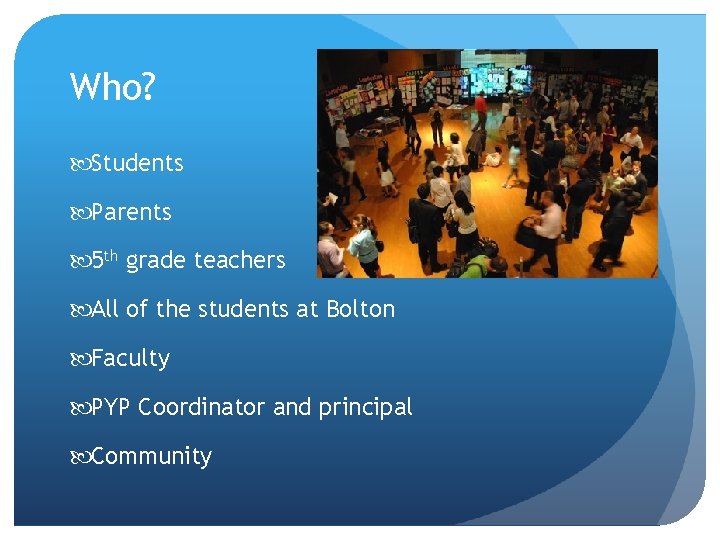
Who? Students Parents 5 th grade teachers All of the students at Bolton Faculty PYP Coordinator and principal Community
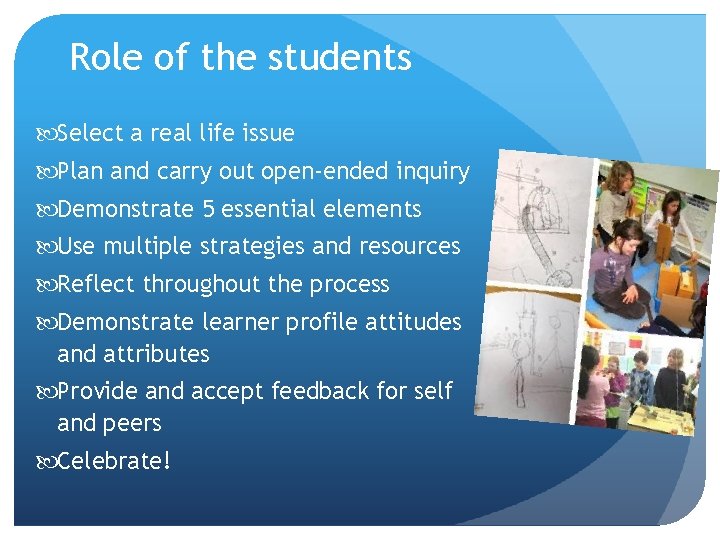
Role of the students Select a real life issue Plan and carry out open-ended inquiry Demonstrate 5 essential elements Use multiple strategies and resources Reflect throughout the process Demonstrate learner profile attitudes and attributes Provide and accept feedback for self and peers Celebrate!

Role of the parents -Support and encourage your child -Ask questions -Listen -Provide assistance with resources (e. g. an expert to interview) -Keep informed through newsletters and notifications -Let the students do their own work -Be part of the celebration! Attend Exhibition in May!!
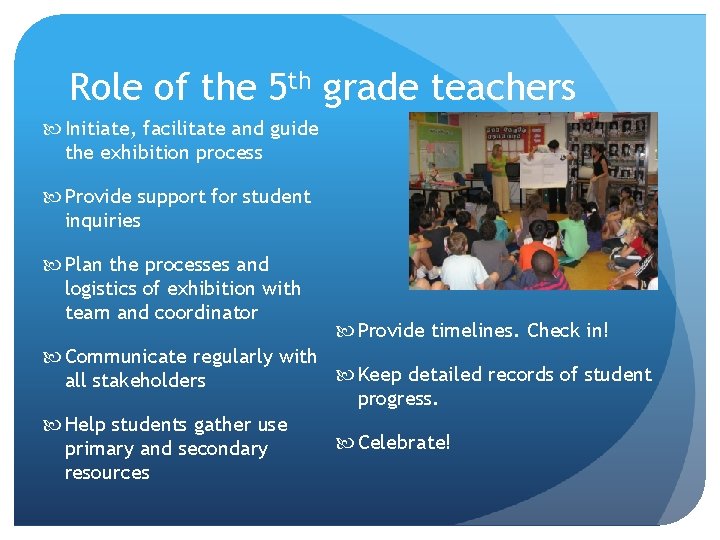
Role of the 5 th grade teachers Initiate, facilitate and guide the exhibition process Provide support for student inquiries Plan the processes and logistics of exhibition with team and coordinator Provide timelines. Check in! Communicate regularly with Keep detailed records of student all stakeholders progress. Help students gather use Celebrate! primary and secondary resources

Role of community…perhaps you? Provide primary resource information Share expertise
Assessment • Students will receive ongoing feedback from various people throughout the Exhibition process. This feedback is formative – and meant to assist students in being successful – it is an assessment FOR learning. • Self and peer assessments of group work • The presentation is the students’ summative assessment

Your questions. . .
- Slides: 36