
What does the term Domestic Mean DOMESTIC POLICIES
- Slides: 7
What does the term Domestic Mean? DOMESTIC POLICIES RELATED TO ECONOMIC GROWTH
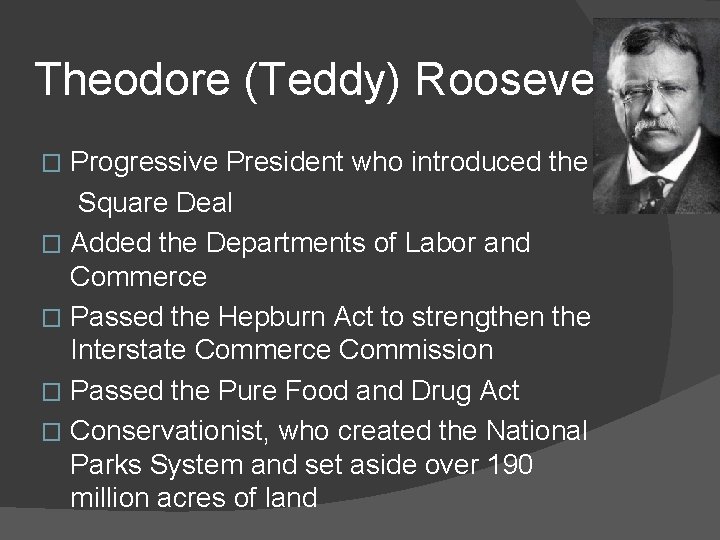
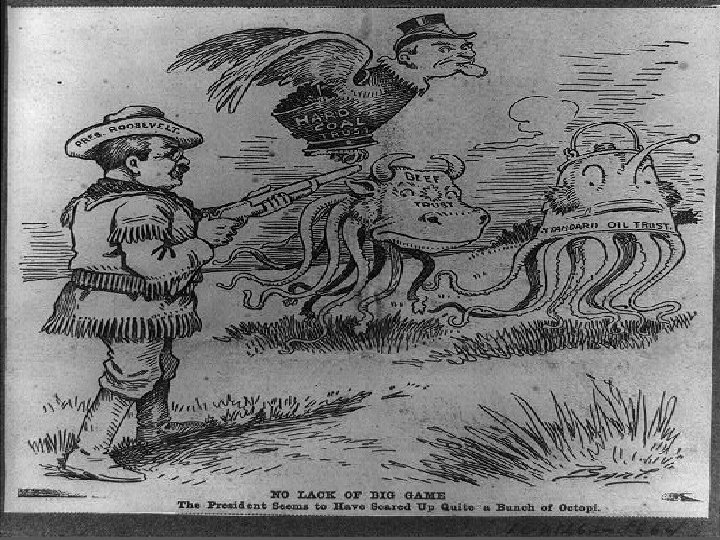
Theodore (Teddy) Roosevelt Progressive President who introduced the Square Deal � Added the Departments of Labor and Commerce � Passed the Hepburn Act to strengthen the Interstate Commerce Commission � Passed the Pure Food and Drug Act � Conservationist, who created the National Parks System and set aside over 190 million acres of land �
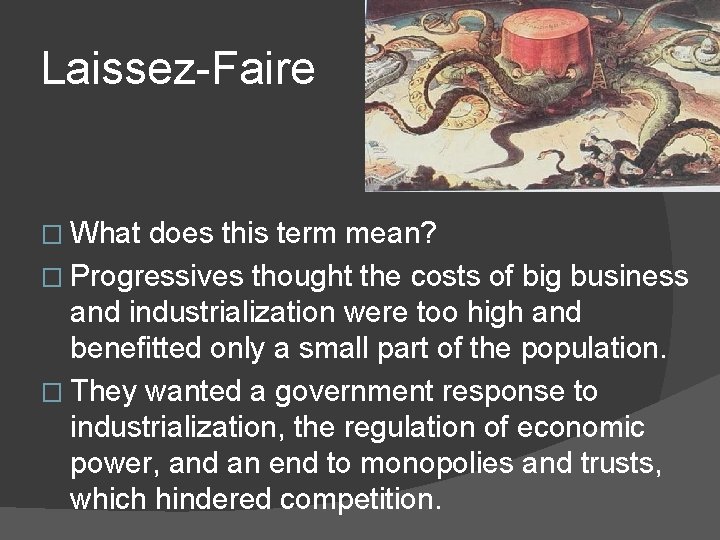
Laissez-Faire � What does this term mean? � Progressives thought the costs of big business and industrialization were too high and benefitted only a small part of the population. � They wanted a government response to industrialization, the regulation of economic power, and an end to monopolies and trusts, which hindered competition.
Anti-Trust Acts Sherman Anti-Trust Act outlawed any combination of companies that restrained interstate trade or commerce. � Clayton Anti-Trust Act strengthened the Sherman Anti-Trust Act by spelling out specific activities that big businesses could not do. � The Clayton Anti-Trust Act legalized labor unions because “the labor of a human being is not a commodity or article of commerce” � Roosevelt used these laws to set in motion 43 anti-trust lawsuits. �
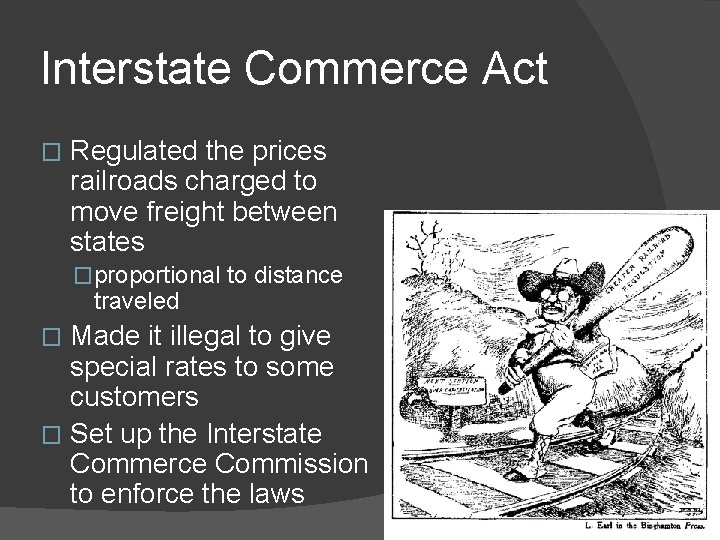
Interstate Commerce Act � Regulated the prices railroads charged to move freight between states �proportional to distance traveled Made it illegal to give special rates to some customers � Set up the Interstate Commerce Commission to enforce the laws �
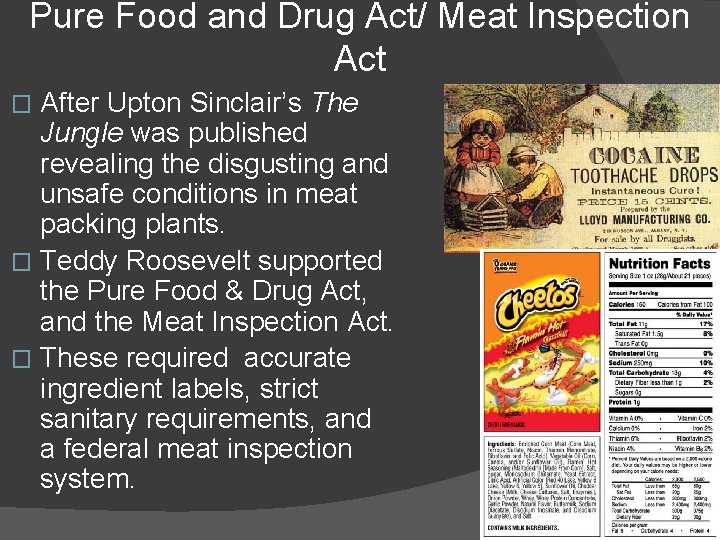
Pure Food and Drug Act/ Meat Inspection Act After Upton Sinclair’s The Jungle was published revealing the disgusting and unsafe conditions in meat packing plants. � Teddy Roosevelt supported the Pure Food & Drug Act, and the Meat Inspection Act. � These required accurate ingredient labels, strict sanitary requirements, and a federal meat inspection system. �