
What does the cancer landscape look like now
- Slides: 19
What does the cancer landscape look like now? - The national context for cancer intelligence Jason Poole, Deputy Head (Local Interface), National Cancer Intelligence Network (NCIN)
The Health & Social Care Act 2012: two new organisations from April 2013 NHS England • “The purpose of NHS England is to use the £ 80 bn commissioning budget to secure the best possible outcomes for patients” • To ensure the whole commissioning architecture is in place; will also commission some services directly Public Health England (PHE) • Use information & Intelligence to support local Public Health (PH) organsiations and the public to make healthier choices • National Leadership to PH, supporting national policy • Development of PH workforce • A civil service function, not NHS 2
Independent Cancer Taskforce • The NHS Five Year Forward View (FYFV) presents a vision for improving health, including for all those diagnosed with cancer: - better prevention - swifter diagnosis - better treatment, care and aftercare • Taskforce established in January 2015 to produce a new fiveyear national cancer strategy for England, delivering this vision • Taskforce recommends that this strategy is adopted by the FYFV Board: Care Quality Commission, Health Education England, Monitor, NHS England, NICE, Public Health England, Trust Development Authority 3 Presentation title - edit in Header and Footer
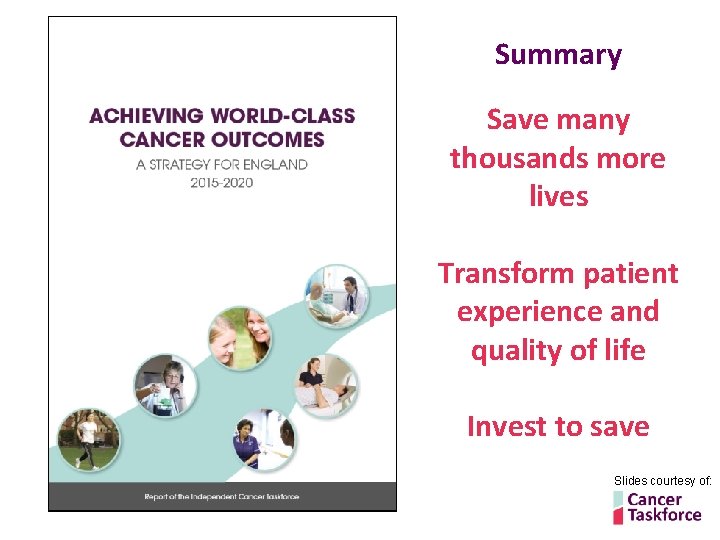
Summary Save many thousands more lives Transform patient experience and quality of life Invest to save Slides courtesy of:
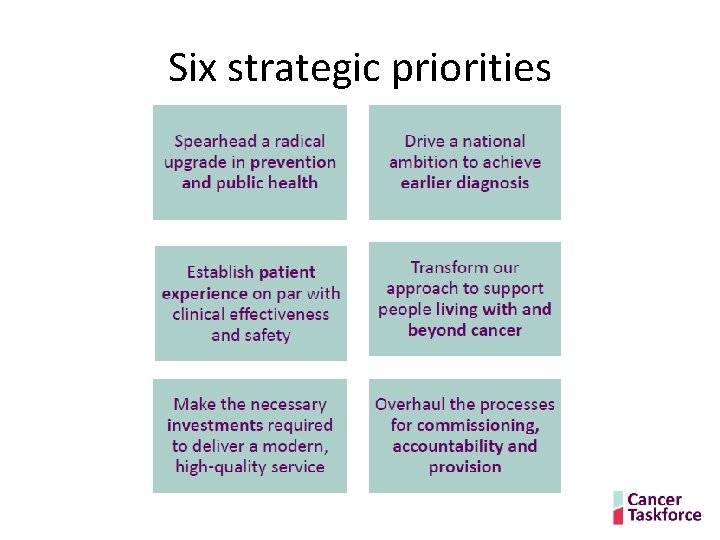
Six strategic priorities 5
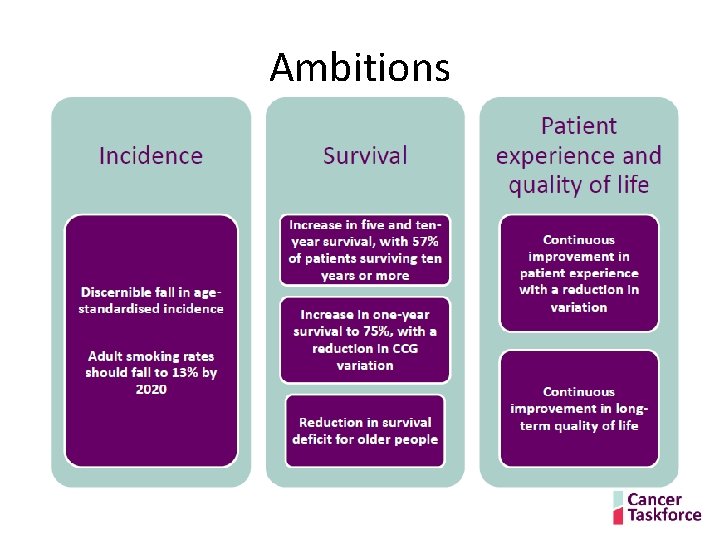
Ambitions 6
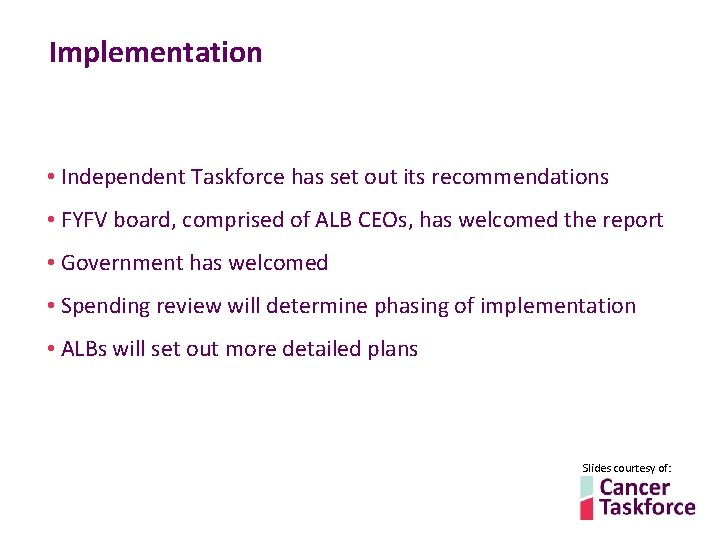
Implementation • Independent Taskforce has set out its recommendations • FYFV board, comprised of ALB CEOs, has welcomed the report • Government has welcomed • Spending review will determine phasing of implementation • ALBs will set out more detailed plans Slides courtesy of:
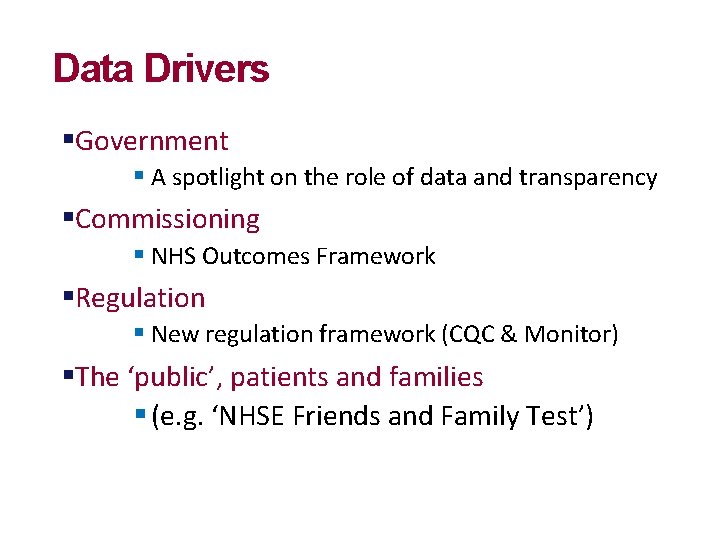
Data Drivers §Government § A spotlight on the role of data and transparency §Commissioning § NHS Outcomes Framework §Regulation § New regulation framework (CQC & Monitor) §The ‘public’, patients and families § (e. g. ‘NHSE Friends and Family Test’)
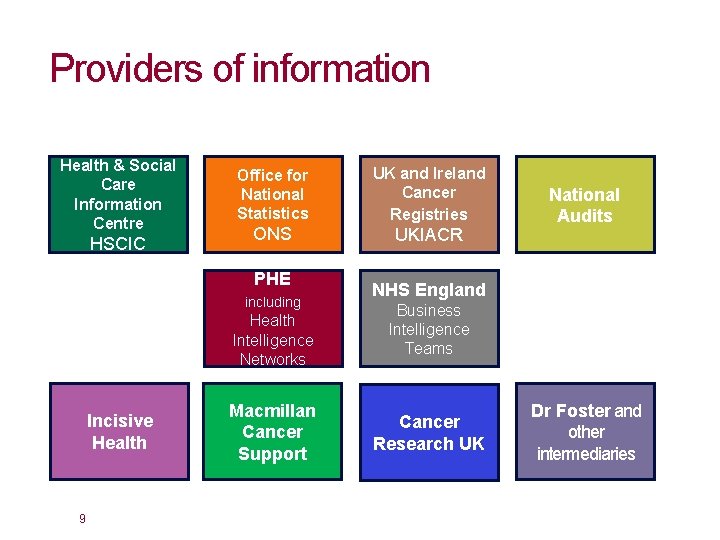
Providers of information Health & Social Care Information Centre HSCIC Office for National Statistics UK and Ireland Cancer Registries ONS UKIACR PHE including Health Intelligence Networks Incisive Health 9 Macmillan Cancer Support National Audits NHS England Business Intelligence Teams Cancer Research UK Dr Foster and other intermediaries
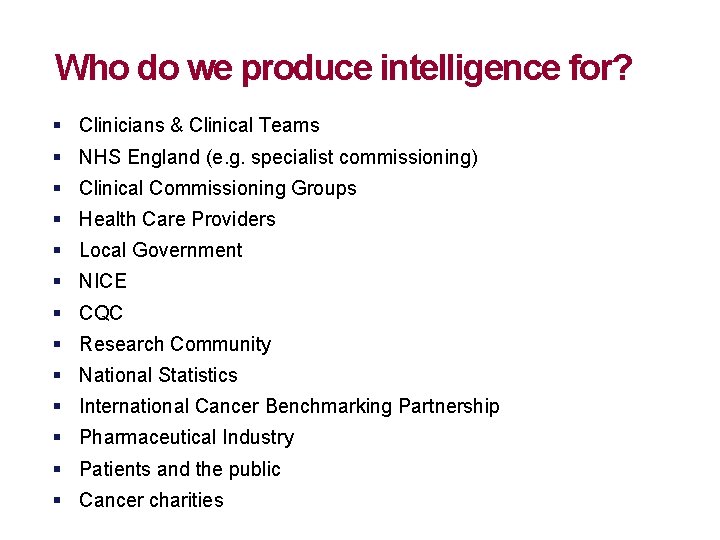
Who do we produce intelligence for? § Clinicians & Clinical Teams § NHS England (e. g. specialist commissioning) § Clinical Commissioning Groups § Health Care Providers § Local Government § NICE § CQC § Research Community § National Statistics § International Cancer Benchmarking Partnership § Pharmaceutical Industry § Patients and the public § Cancer charities
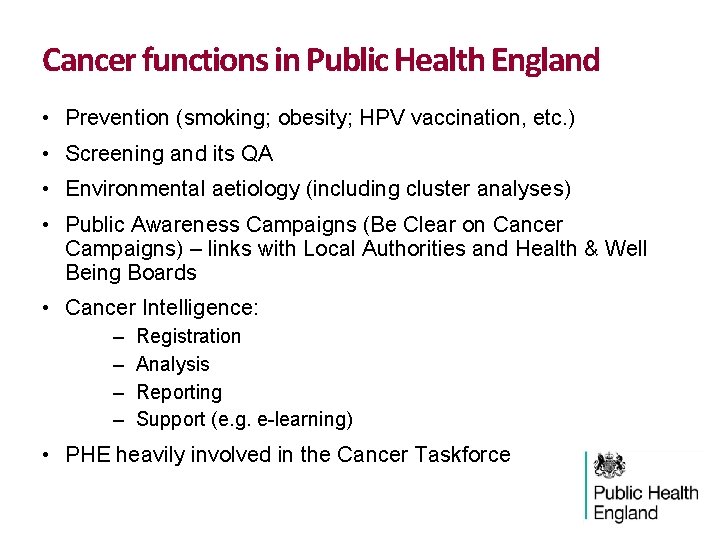
Cancer functions in Public Health England • Prevention (smoking; obesity; HPV vaccination, etc. ) • Screening and its QA • Environmental aetiology (including cluster analyses) • Public Awareness Campaigns (Be Clear on Cancer Campaigns) – links with Local Authorities and Health & Well Being Boards • Cancer Intelligence: – – Registration Analysis Reporting Support (e. g. e-learning) • PHE heavily involved in the Cancer Taskforce
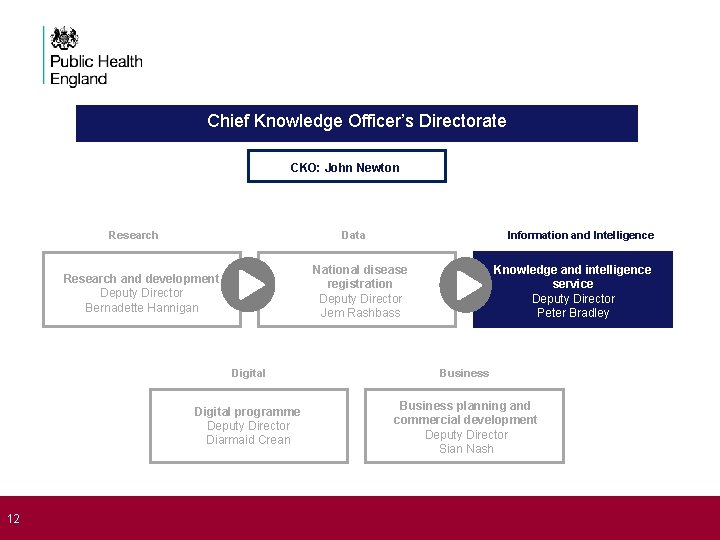
Chief Knowledge Officer’s Directorate CKO: John Newton Research Data National disease registration Deputy Director Jem Rashbass Research and development Deputy Director Bernadette Hannigan 12 Information and Intelligence Knowledge and intelligence service Deputy Director Peter Bradley Digital Business Digital programme Deputy Director Diarmaid Crean Business planning and commercial development Deputy Director Sian Nash
National Cancer Registration Service § 8 Regional Cancer Registries now incorporated into a National Cancer Registration Service for England § 1 Director, 8 local offices § Complete migration ‘normalisation’ of 8 legacy systems with 11 m cancer registrations to ENCORE § Same practice and processes, single national system § Standardised data, consistency, comparability & efficiency
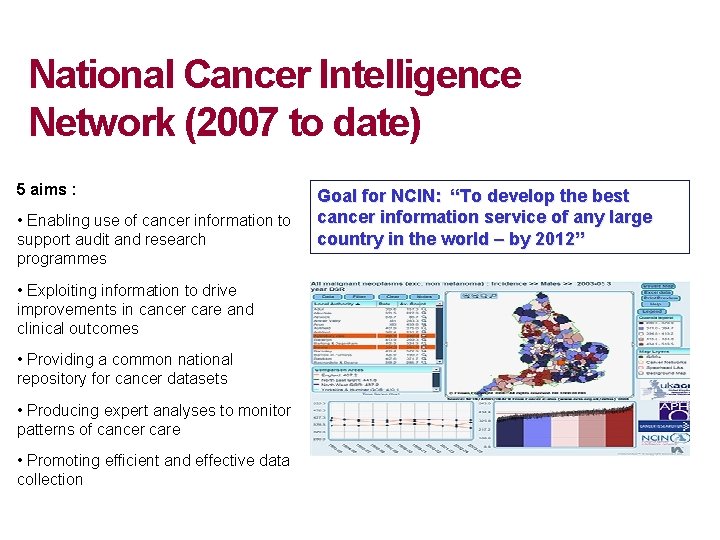
National Cancer Intelligence Network (2007 to date) 5 aims : • Enabling use of cancer information to support audit and research programmes Goal for NCIN: “To develop the best cancer information service of any large country in the world – by 2012” • Exploiting information to drive improvements in cancer care and clinical outcomes • Providing a common national repository for cancer datasets • Producing expert analyses to monitor patterns of cancer care • Promoting efficient and effective data collection For more information about the PHE NCIN visit www. ncin. org. uk
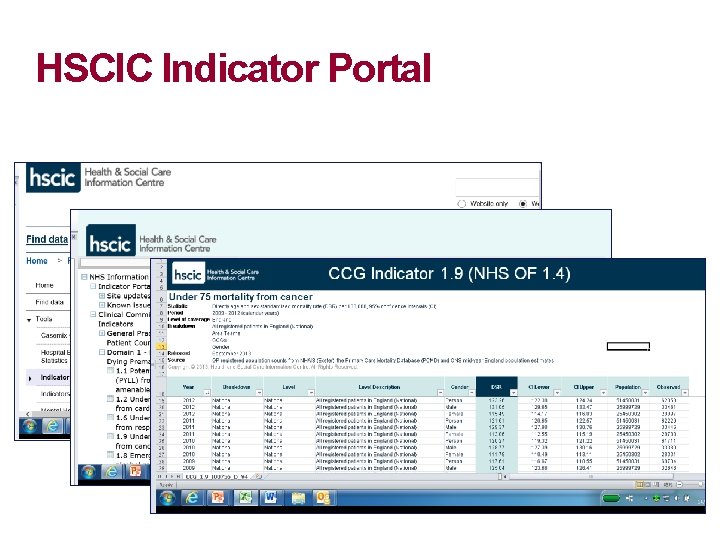
HSCIC Indicator Portal
CCG Outcomes Indicator Set (cancer) 2013/14 § under 75 mortality rate from cancer § 1 and 5 year survival from all cancers § 1 and 5 year survival from breast, lung & colorectal cancers 2014/15 and 2015/16 additional indicators § cancers diagnosed via emergency routes § cancer stage at diagnosis § cancers early detection (stage 1 or 2) § record of lung cancer stage at diagnosis § breast cancer mortality
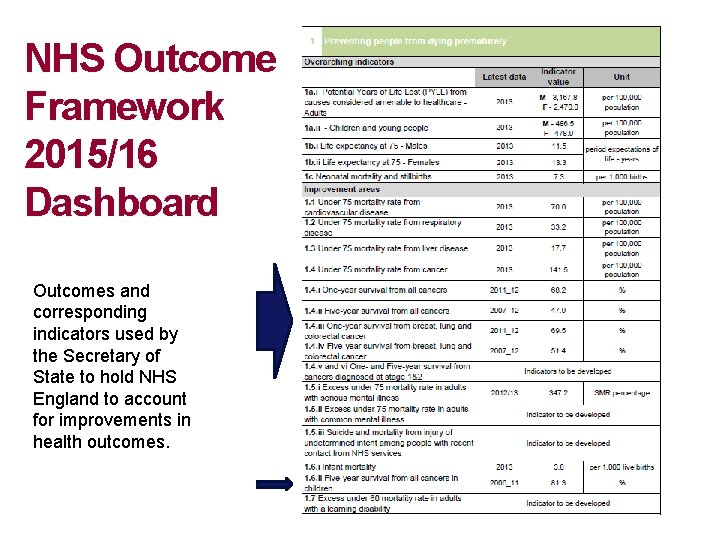
NHS Outcome Framework 2015/16 Dashboard Outcomes and corresponding indicators used by the Secretary of State to hold NHS England to account for improvements in health outcomes.
Examples of the clinical value of new data § Supporting ‘intelligent commissioning’ § Demonstration of variation § Teasing out the causes of variation § Demonstrating value of specialisation § Building data into quality improvement § Adding outcome data into Quality Surveillance Team (Peer Review) § More meaningful regulation - CQC § Providing robust evidence behind National Guidelines and Quality Standards (NICE) § Supporting Clinical Trials
Conclusions • The quality and range of clinically relevant data on cancer is increasing rapidly • The collection and intelligent use of data are at the heart of good clinical practice and commissioning • We now have a large and expanding clinical and patient community engaged with cancer data • Feedback and ongoing interaction with clinicians is an essential part of the process – peer pressure is powerful • There is a need to improve how information is used at a local level, and we hope this roadshow can help to achieve that.