
WHAT DOES IT MEAN TO THINK CRITICALLY Stephen

- Slides: 25
WHAT DOES IT MEAN TO THINK CRITICALLY? Stephen Brookfield University of St. Thomas Minneapolis-St. Paul www. stephenbrookfield. com
Home Page: stephenbrookfield. com • My home page is open access so if you want to find out more about any of the exercises or activities I mention go to the page and click on the ‘Resources’ link. There you will find multiple PDF files of workshop packets stuffed with activities or power point files. Also collection of writings. • You do not need to ask my permission to use any of these resources. If they’re useful then please try them out and adapt them to your context. • www. stephenbrookfield. com/
Backchannelchat. com • Go to www. backchannelchat. com • Create a page for the topic of the class • Get students to log in on smart phones, I-pads tablets – keep their identities anonymous by using random #’s to sign in, not names • Pose questions about skill applications & information you’re teaching to check for understanding / open up areas for discussion • Within 30 seconds you’ll get a good ‘read’ of where students are in their comprehension
www. backchannelchat. com • For ‘display name’ use only numbers • For ‘code’ enter 9 zqew • Write your response to this question: • HOW DO YOU KNOW THAT YOUR STUDENTS ARE THINKING CRITICALLY?
Introducing Myself • History of academic mediocrity – failed my college track exams, my university entrance exams, graduated well in the bottom half of my class, failed my master’s degree exam – Broadening student-centered assessment measures • Watching my doctoral supervisor – giving me ‘bad’ inconvenient news in a way that I knew was in my own best interests Ethical use of teacher power Relational underpinnings to teaching
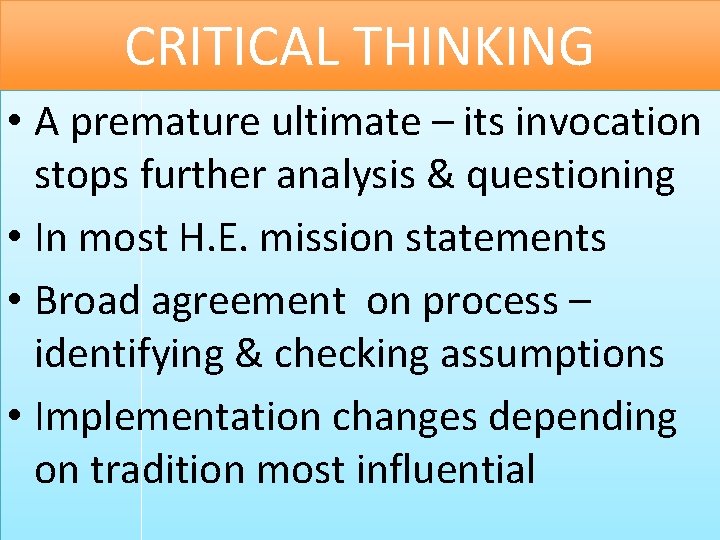
CRITICAL THINKING • A premature ultimate – its invocation stops further analysis & questioning • In most H. E. mission statements • Broad agreement on process – identifying & checking assumptions • Implementation changes depending on tradition most influential
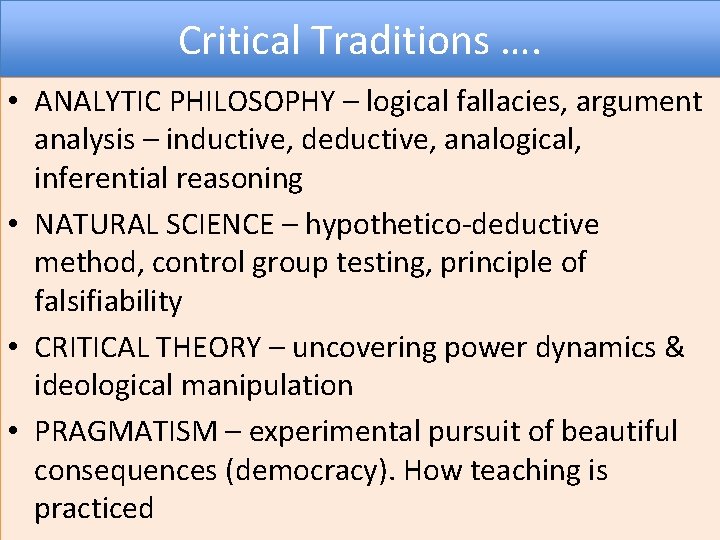
Critical Traditions …. • ANALYTIC PHILOSOPHY – logical fallacies, argument analysis – inductive, deductive, analogical, inferential reasoning • NATURAL SCIENCE – hypothetico-deductive method, control group testing, principle of falsifiability • CRITICAL THEORY – uncovering power dynamics & ideological manipulation • PRAGMATISM – experimental pursuit of beautiful consequences (democracy). How teaching is practiced
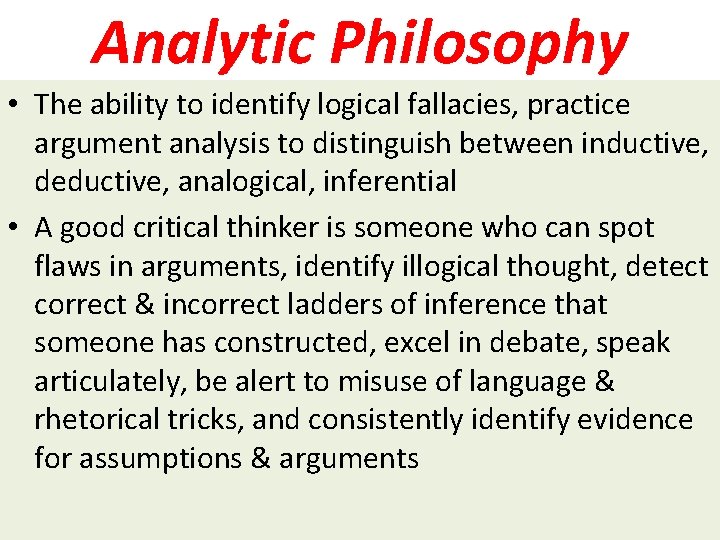
Analytic Philosophy • The ability to identify logical fallacies, practice argument analysis to distinguish between inductive, deductive, analogical, inferential • A good critical thinker is someone who can spot flaws in arguments, identify illogical thought, detect correct & incorrect ladders of inference that someone has constructed, excel in debate, speak articulately, be alert to misuse of language & rhetorical tricks, and consistently identify evidence for assumptions & arguments
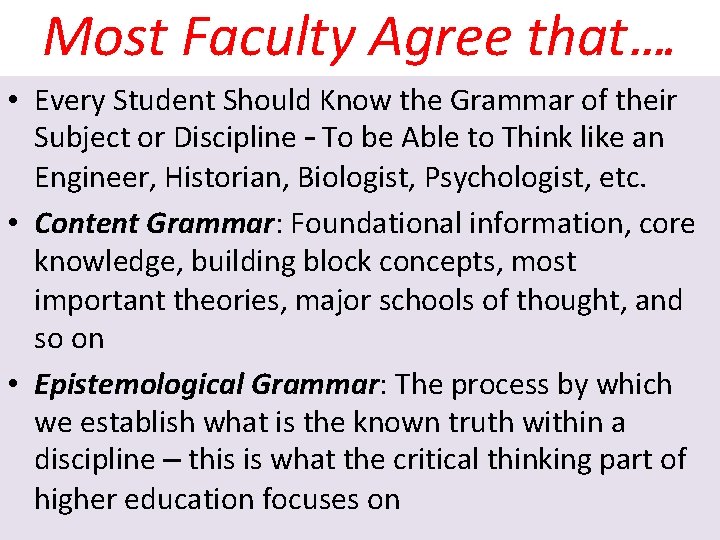
Most Faculty Agree that…. • Every Student Should Know the Grammar of their Subject or Discipline – To be Able to Think like an Engineer, Historian, Biologist, Psychologist, etc. • Content Grammar: Foundational information, core knowledge, building block concepts, most important theories, major schools of thought, and so on • Epistemological Grammar: The process by which we establish what is the known truth within a discipline – this is what the critical thinking part of higher education focuses on
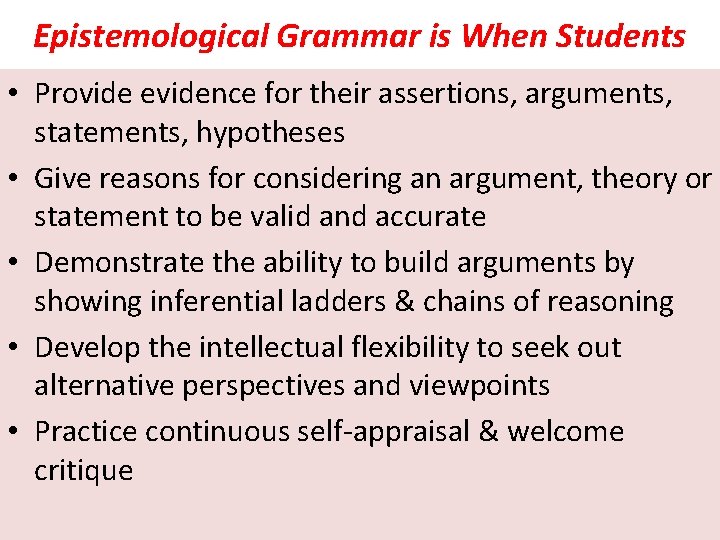
Epistemological Grammar is When Students • Provide evidence for their assertions, arguments, statements, hypotheses • Give reasons for considering an argument, theory or statement to be valid and accurate • Demonstrate the ability to build arguments by showing inferential ladders & chains of reasoning • Develop the intellectual flexibility to seek out alternative perspectives and viewpoints • Practice continuous self-appraisal & welcome critique
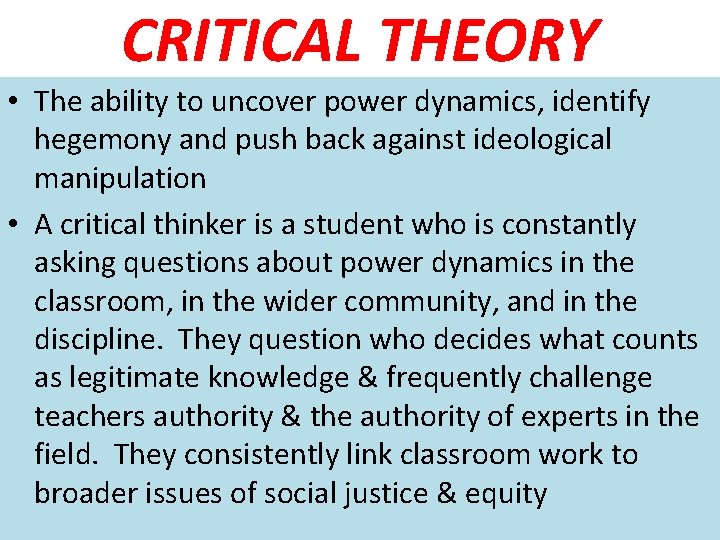
CRITICAL THEORY • The ability to uncover power dynamics, identify hegemony and push back against ideological manipulation • A critical thinker is a student who is constantly asking questions about power dynamics in the classroom, in the wider community, and in the discipline. They question who decides what counts as legitimate knowledge & frequently challenge teachers authority & the authority of experts in the field. They consistently link classroom work to broader issues of social justice & equity
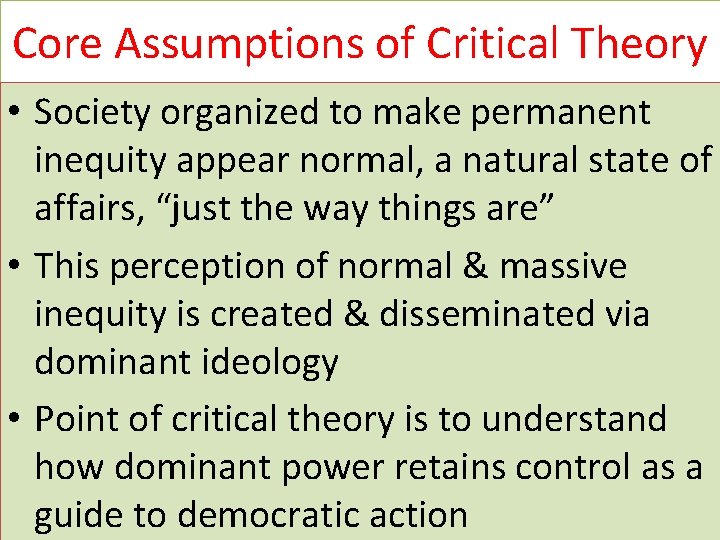
Core Assumptions of Critical Theory • Society organized to make permanent inequity appear normal, a natural state of affairs, “just the way things are” • This perception of normal & massive inequity is created & disseminated via dominant ideology • Point of critical theory is to understand how dominant power retains control as a guide to democratic action
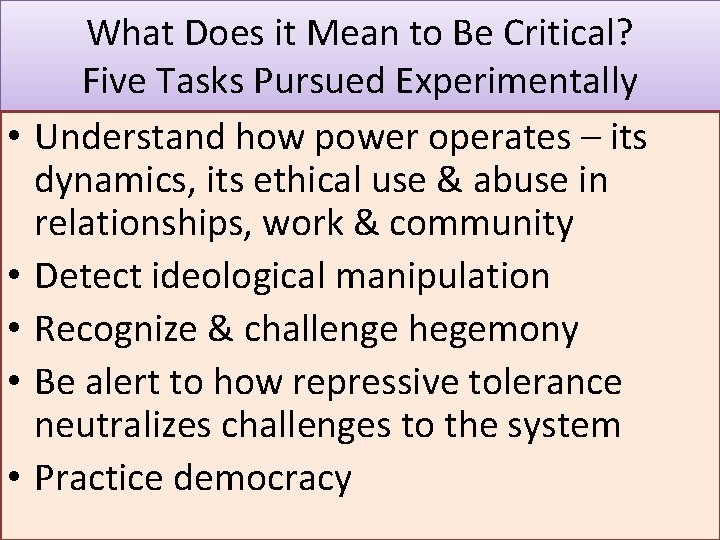
• • • What Does it Mean to Be Critical? Five Tasks Pursued Experimentally Understand how power operates – its dynamics, its ethical use & abuse in relationships, work & community Detect ideological manipulation Recognize & challenge hegemony Be alert to how repressive tolerance neutralizes challenges to the system Practice democracy
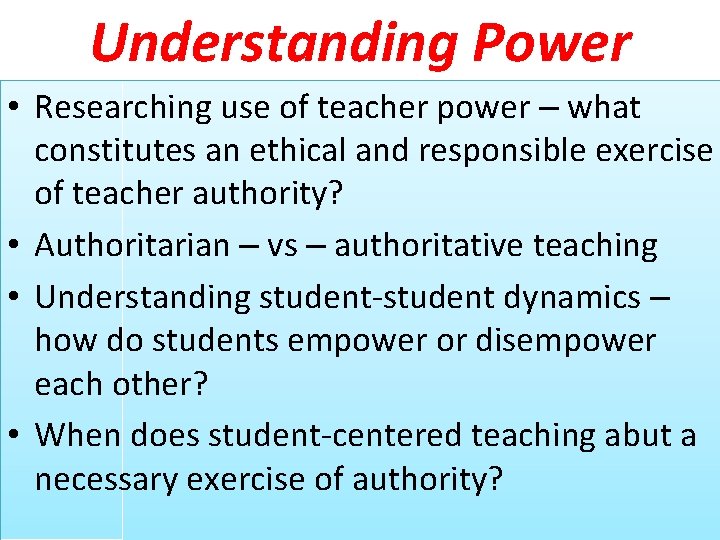
Understanding Power • Researching use of teacher power – what constitutes an ethical and responsible exercise of teacher authority? • Authoritarian – vs – authoritative teaching • Understanding student-student dynamics – how do students empower or disempower each other? • When does student-centered teaching abut a necessary exercise of authority?
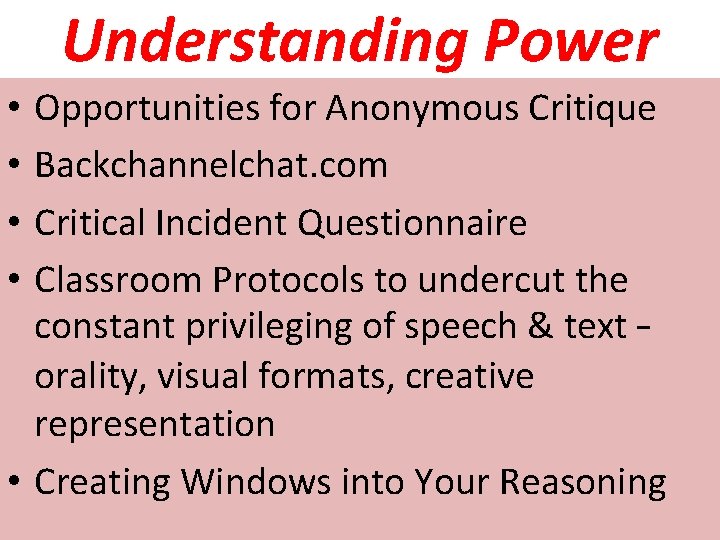
Understanding Power Opportunities for Anonymous Critique Backchannelchat. com Critical Incident Questionnaire Classroom Protocols to undercut the constant privileging of speech & text – orality, visual formats, creative representation • Creating Windows into Your Reasoning • •
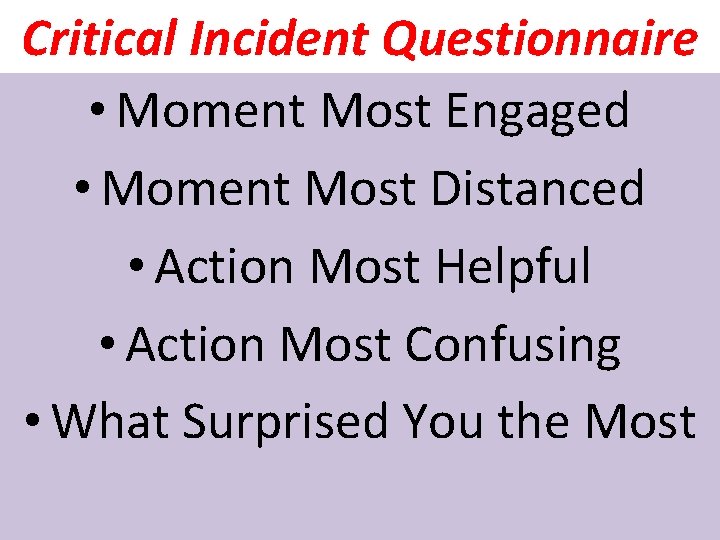
Critical Incident Questionnaire • Moment Most Engaged • Moment Most Distanced • Action Most Helpful • Action Most Confusing • What Surprised You the Most
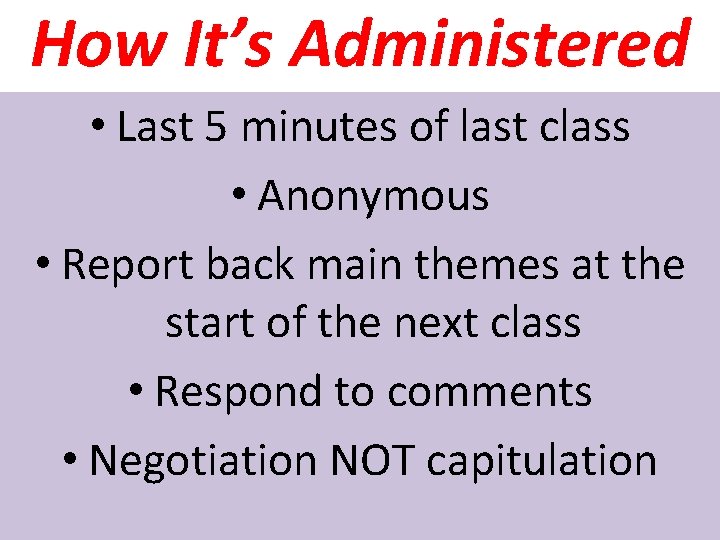
How It’s Administered • Last 5 minutes of last class • Anonymous • Report back main themes at the start of the next class • Respond to comments • Negotiation NOT capitulation
IDEOLOGICAL MANIPULATION • How is ideology embedded in micro-actions & everyday decisions? • Depression – patriarchy • White Supremacy – the ‘good white’ • Democracy – the circle
HEGEMONY • Gramsci argued that ideology is actively learned and enthusiastically embraced by people. It is so powerful because we take pride in learning and internalizing it. • Hegemony describes the enthusiastic embrace of ideas and practices that seem obvious and morally desirable, but that actually work against our best interest and harm us. When hegemony is in place, we become our own enthusiastic jailers, working to make sure we don’t step out of line and feeling good about how well we work assiduously to stay within social and political limits.
Hegemonic Assumptions • Education as the practice of vocation – I know I’ve done a good day’s work if I come home exhausted • Student success is all down to my charismatic ability to inspire & motivate. It all depends on me • The perfect 10 – I reach my zenith when I get 100% positive evaluations from students & colleagues • Deep space nine – the answer to my problems must be out there somewhere, I just need to find it
Repressive Tolerance (Marcuse) • When institutions are challenged they often respond by appearing to embrace the challenge. But they do this in such a way as to ensure that dominant structures stay in place. Repressive tolerance describes the process of seemingly welcoming change whilst neutering its disruptive effect. It’s a social pressure valve to allow steam to escape. Institutions look as if they’re changing while keeping basic power structures intact
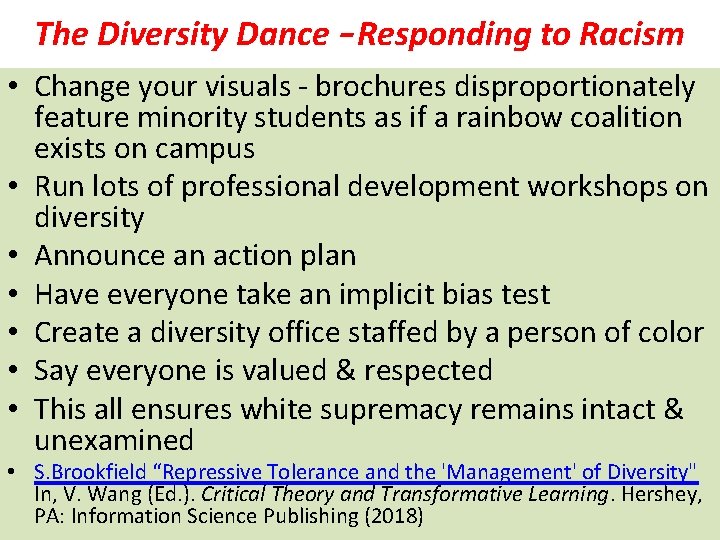
The Diversity Dance – Responding to Racism • Change your visuals - brochures disproportionately feature minority students as if a rainbow coalition exists on campus • Run lots of professional development workshops on diversity • Announce an action plan • Have everyone take an implicit bias test • Create a diversity office staffed by a person of color • Say everyone is valued & respected • This all ensures white supremacy remains intact & unexamined • S. Brookfield “Repressive Tolerance and the 'Management' of Diversity" In, V. Wang (Ed. ). Critical Theory and Transformative Learning. Hershey, PA: Information Science Publishing (2018)
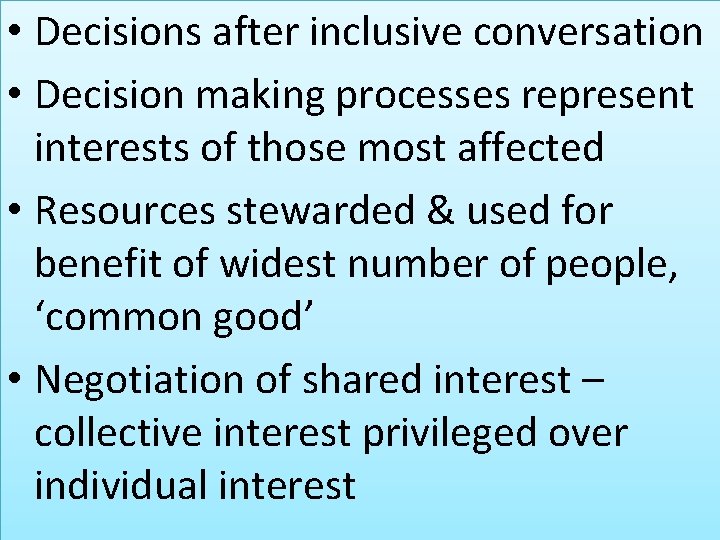
• Decisions after inclusive conversation • Decision making processes represent interests of those most affected • Resources stewarded & used for benefit of widest number of people, ‘common good’ • Negotiation of shared interest – collective interest privileged over individual interest
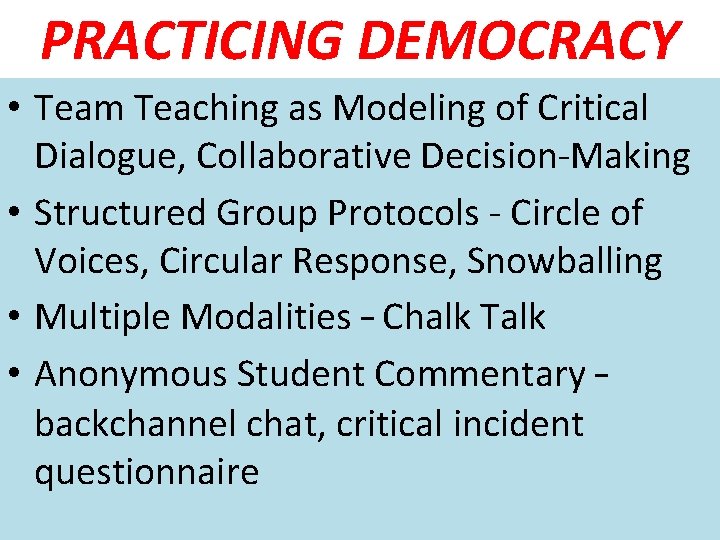
PRACTICING DEMOCRACY • Team Teaching as Modeling of Critical Dialogue, Collaborative Decision-Making • Structured Group Protocols - Circle of Voices, Circular Response, Snowballing • Multiple Modalities – Chalk Talk • Anonymous Student Commentary – backchannel chat, critical incident questionnaire
RESOURCES • www. stephenbrookfield. com • The Power of Critical Theory (2004) • Learning as a Way of Leading (2008) (w/Stephen Preskill) • Radicalizing Learning (2010) (w/ John Holst) • Teaching for Critical Thinking (2012) • Powerful Techniques for Teaching Adults (2013) • All published by Jossey-Bass/Wiley