
What does it MEAN THEME Definition the message
- Slides: 7
What does it MEAN? THEME
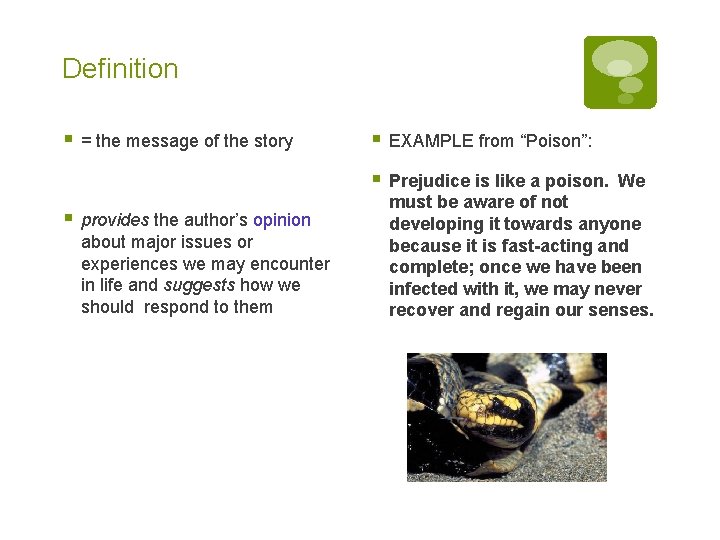
Definition § = the message of the story § EXAMPLE from “Poison”: § Prejudice is like a poison. § provides the author’s opinion about major issues or experiences we may encounter in life and suggests how we should respond to them We must be aware of not developing it towards anyone because it is fast-acting and complete; once we have been infected with it, we may never recover and regain our senses.
Where is theme in a piece of writing? § In fiction, theme is implied through the author’s controlled and deliberate use of the elements of narration. (Think: Theme. EASE chart. Also, see “How to Find Theme” below. ) § In nonfiction, theme is called thesis. It is often stated directly, usually in one-totwo sentences, somewhere in the writing (usually in the introduction).
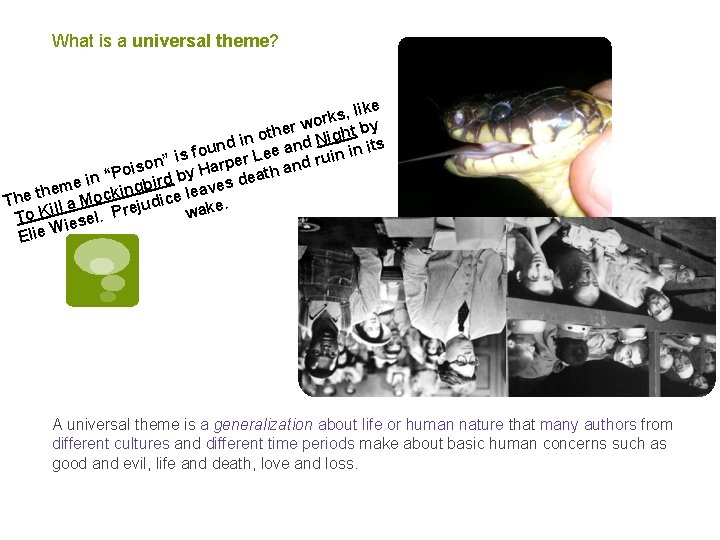
What is a universal theme? like , s k r r wo ht by e h t Nig in o d d n n a u n its o i e f e n s i L i u son” y Harper th and r i o P “ e in ingbird b aves dea m e e th The ill a Mock ejudice l ke. wa To K iesel. Pr W Elie A universal theme is a generalization about life or human nature that many authors from different cultures and different time periods make about basic human concerns such as good and evil, life and death, love and loss.
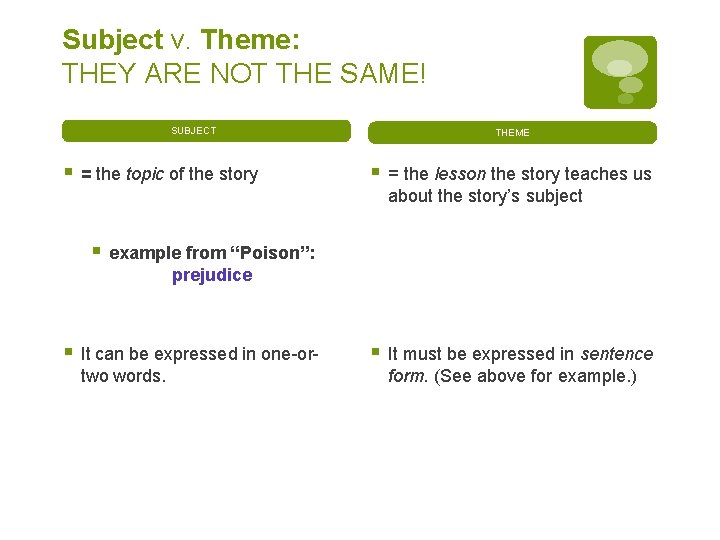
Subject v. Theme: THEY ARE NOT THE SAME! SUBJECT § = the topic of the story THEME § = the lesson the story teaches us about the story’s subject § example from “Poison”: prejudice § It can be expressed in one-ortwo words. § It must be expressed in sentence form. (See above for example. )
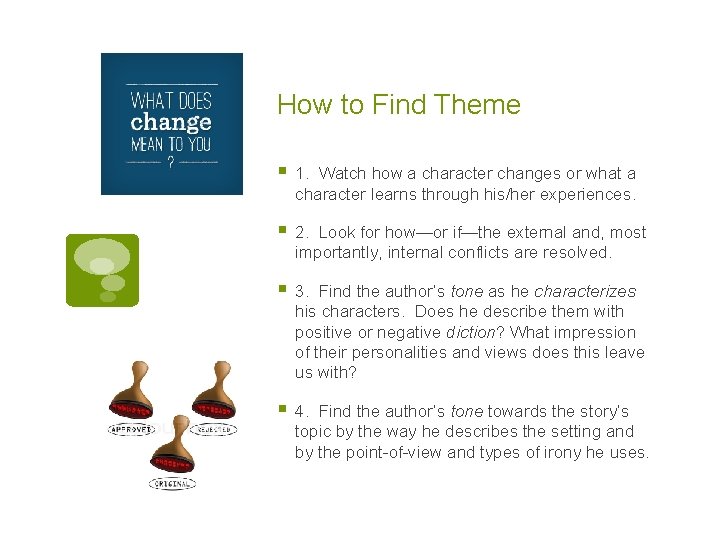
How to Find Theme § 1. Watch how a character changes or what a character learns through his/her experiences. § 2. Look for how—or if—the external and, most importantly, internal conflicts are resolved. § 3. Find the author’s tone as he characterizes his characters. Does he describe them with positive or negative diction? What impression of their personalities and views does this leave us with? § 4. Find the author’s tone towards the story’s topic by the way he describes the setting and by the point-of-view and types of irony he uses.
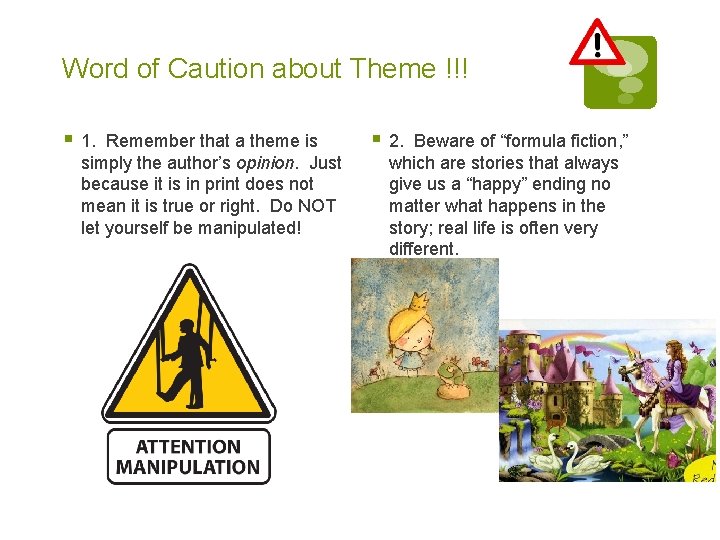
Word of Caution about Theme !!! § 1. Remember that a theme is simply the author’s opinion. Just because it is in print does not mean it is true or right. Do NOT let yourself be manipulated! § 2. Beware of “formula fiction, ” which are stories that always give us a “happy” ending no matter what happens in the story; real life is often very different.