
WHAT DOES CONGRESS CONSIDER Two Types of Bills


WHAT DOES CONGRESS CONSIDER? Two Types of Bills Private Bills About individuals or places Ex: Veteran’s Benefits Public Bills Apply to the entire nation Ex: Health care, Social Security
RESOLUTIONS Resolutions -formal statements expressing a lawmakers’ opinions or decisions- many do not have the force of a law �Joint Resolutions: are passed by both houses of Congress – become laws if signed by the President Used to propose constitutional amendments and to designate $ for a special purpose
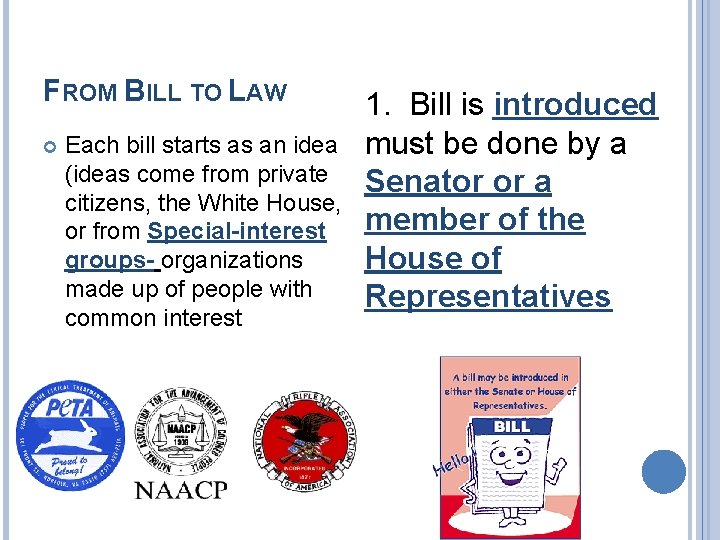
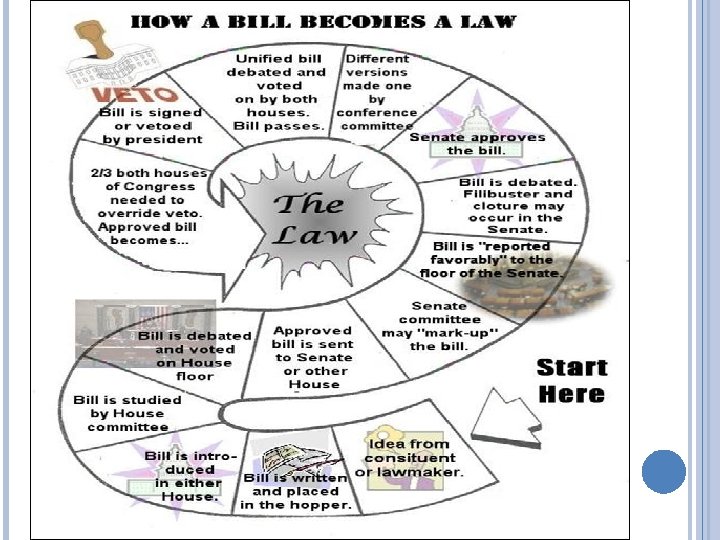
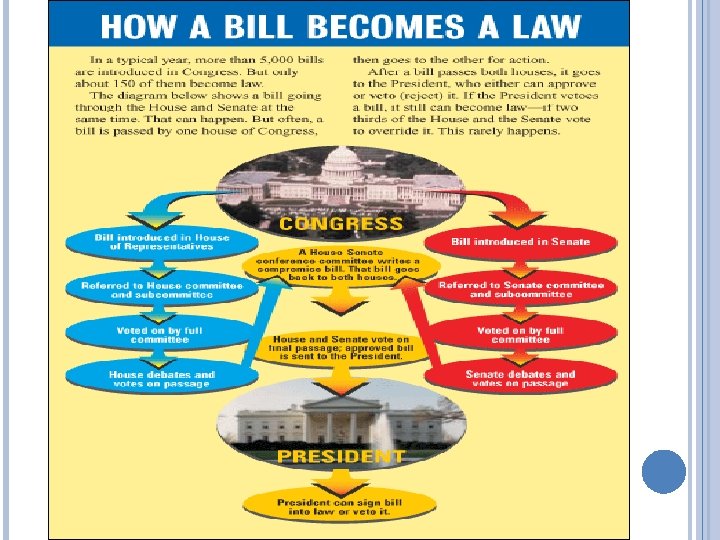
FROM BILL TO LAW Each bill starts as an idea (ideas come from private citizens, the White House, or from Special-interest groups- organizations made up of people with common interest 1. Bill is introduced must be done by a Senator or a member of the House of Representatives
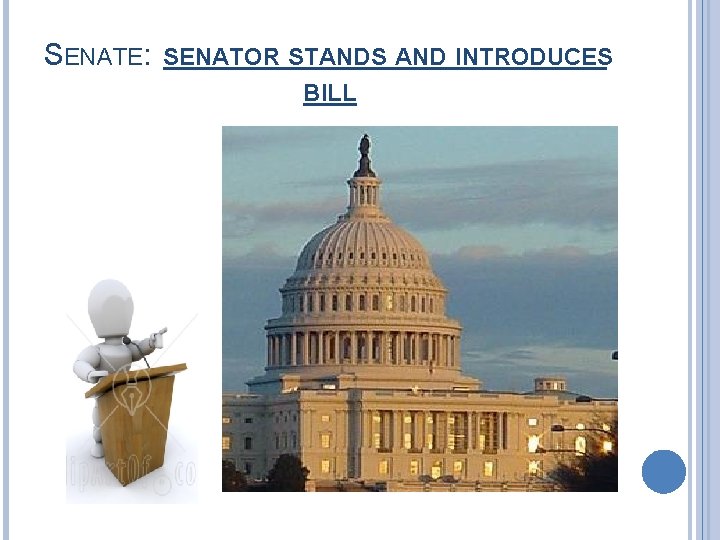
SENATE: SENATOR STANDS AND INTRODUCES BILL
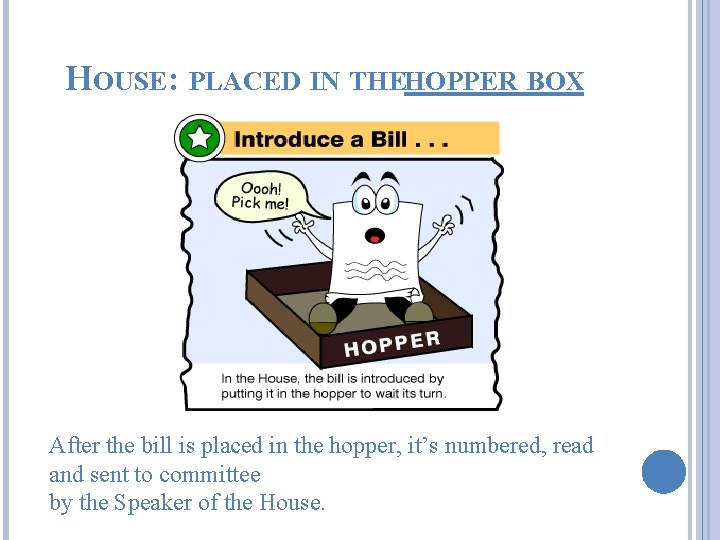
HOUSE: PLACED IN THEHOPPER BOX After the bill is placed in the hopper, it’s numbered, read and sent to committee by the Speaker of the House.
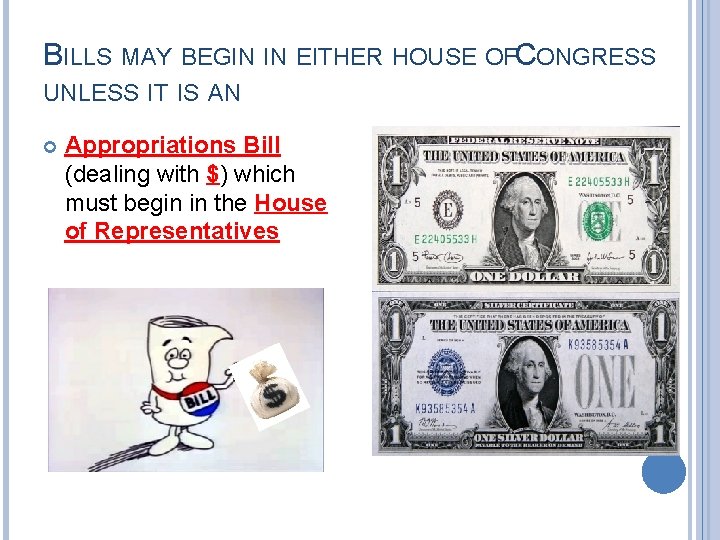
BILLS MAY BEGIN IN EITHER HOUSE OFCONGRESS UNLESS IT IS AN Appropriations Bill (dealing with $) which must begin in the House of Representatives
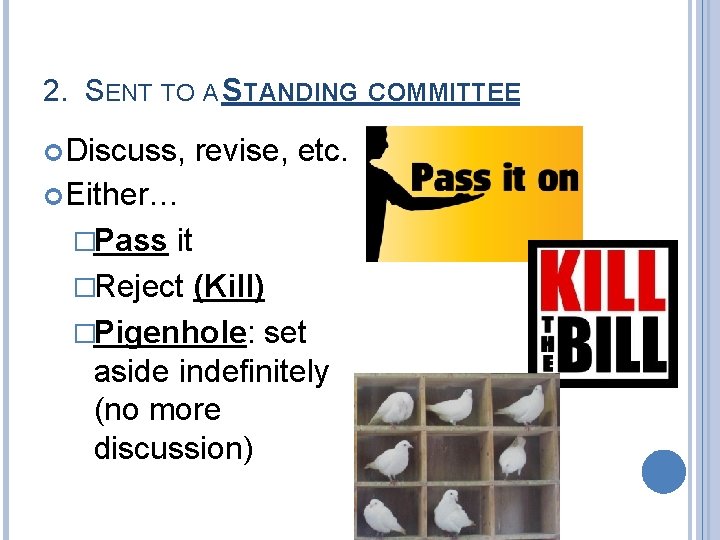
2. SENT TO A STANDING COMMITTEE Discuss, revise, etc. Either… �Pass it �Reject (Kill) �Pigenhole: set aside indefinitely (no more discussion)
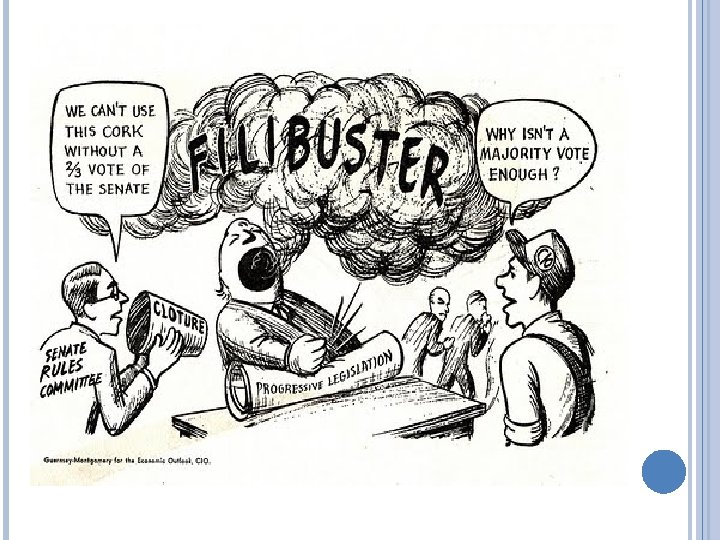
3. SENT TO THE FLOOR OF THE HOUSE FOR DEBATE House of Representatives Accept amendments relevant to the bill The House Rules Committee Sets time limits and rules for debate Senate Allow riders – completely unrelated amendments to be tacked on to the bill Less strict rules for debate filibuster: May only end if A) the bill dies B) there is a 3/5 vote for cloture which limits debate time
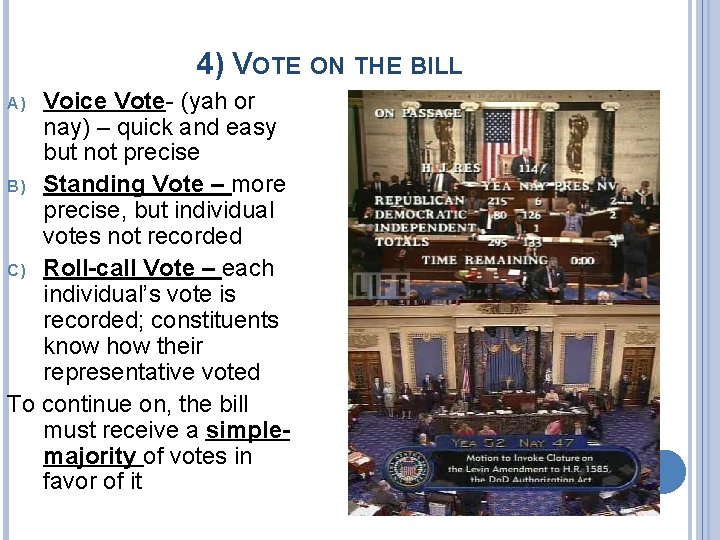
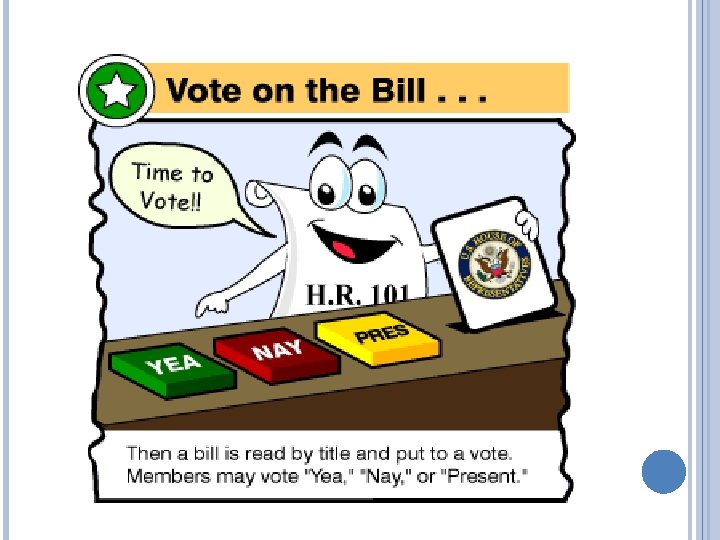
4) VOTE ON THE BILL Voice Vote- (yah or nay) – quick and easy but not precise B) Standing Vote – more precise, but individual votes not recorded C) Roll-call Vote – each individual’s vote is recorded; constituents know how their representative voted To continue on, the bill must receive a simplemajority of votes in favor of it A)
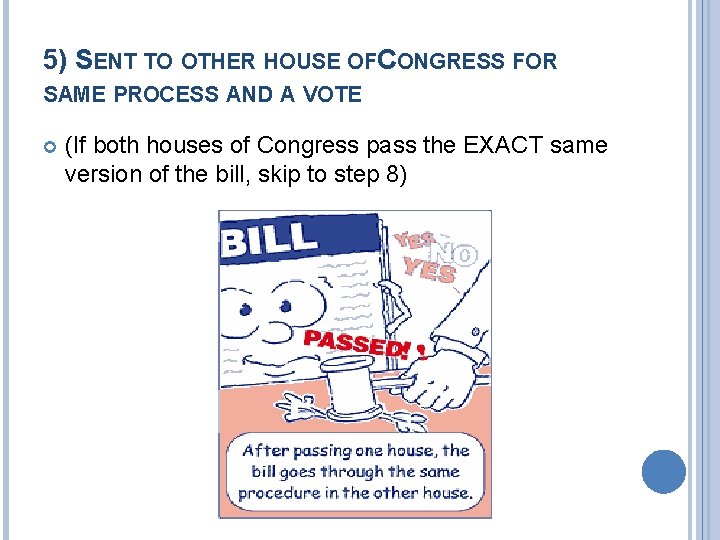
5) SENT TO OTHER HOUSE OFCONGRESS FOR SAME PROCESS AND A VOTE (If both houses of Congress pass the EXACT same version of the bill, skip to step 8)
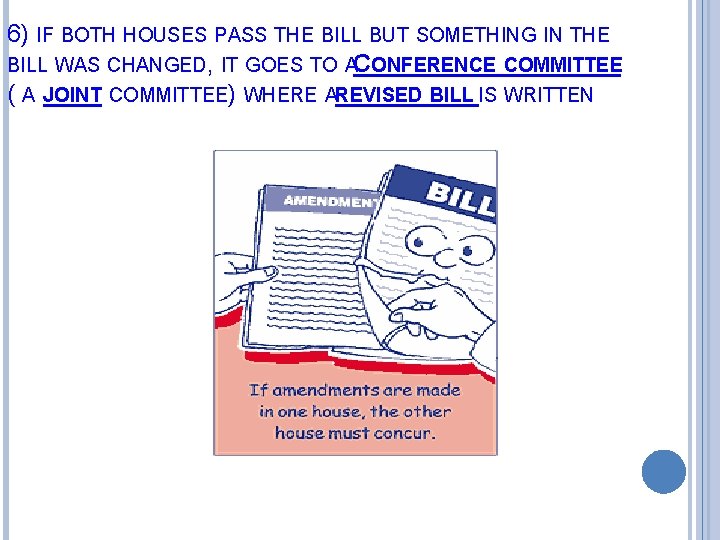
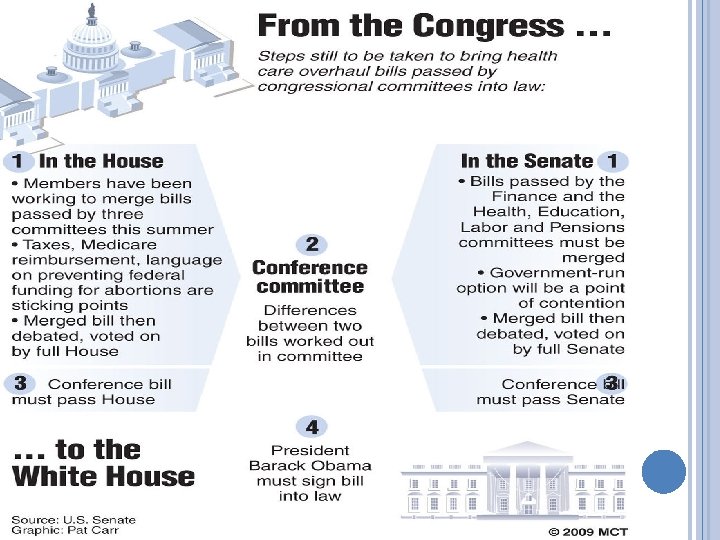
6) IF BOTH HOUSES PASS THE BILL BUT SOMETHING IN THE BILL WAS CHANGED, IT GOES TO ACONFERENCE COMMITTEE ( A JOINT COMMITTEE) WHERE AREVISED BILL IS WRITTEN
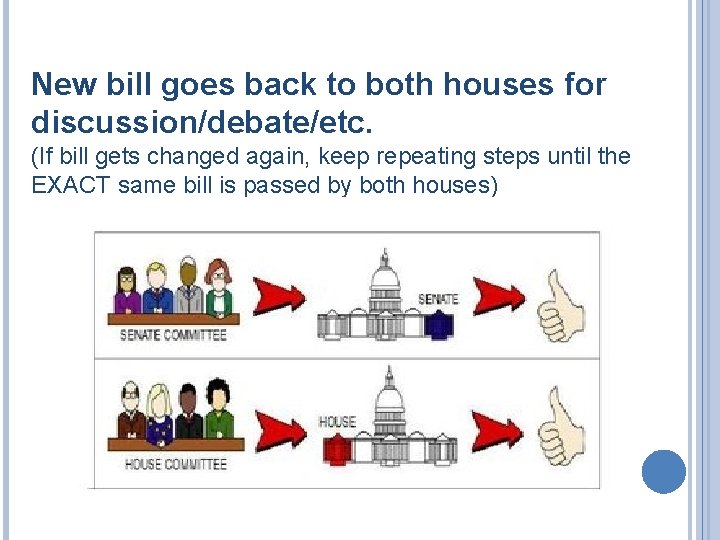
New bill goes back to both houses for discussion/debate/etc. (If bill gets changed again, keep repeating steps until the EXACT same bill is passed by both houses)
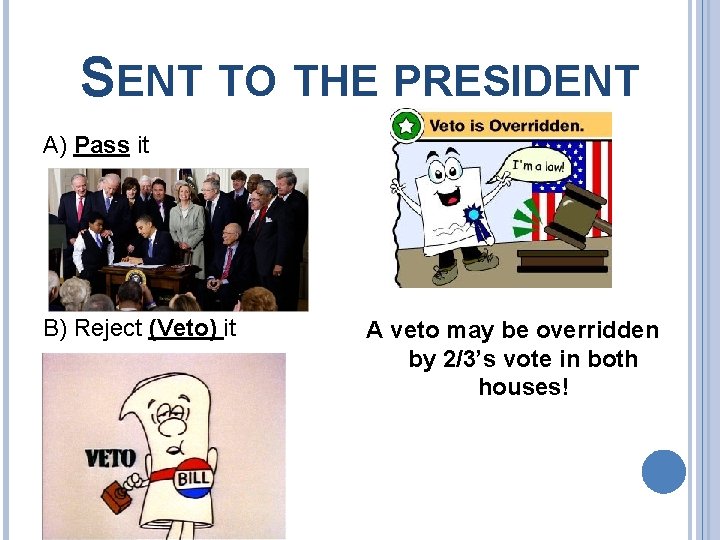
SENT TO THE PRESIDENT A) Pass it B) Reject (Veto) it A veto may be overridden by 2/3’s vote in both houses!
C) Ignore it for 10 days Congress IS in session: becomes law without the President signing it O T VE Congress IS NOT in session: pocket veto (killing legislation)
- Slides: 21