
What does a Formal Outline look like I
- Slides: 3
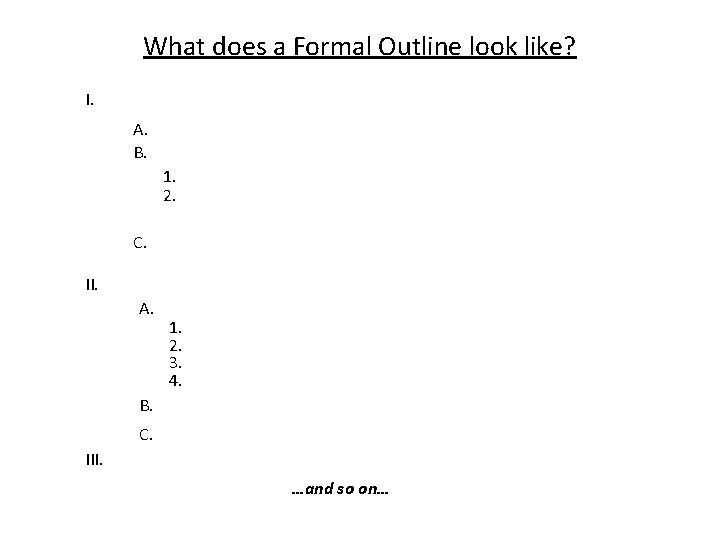
What does a Formal Outline look like? I. A. B. 1. 2. C. II. A. 1. 2. 3. 4. B. C. III. …and so on…
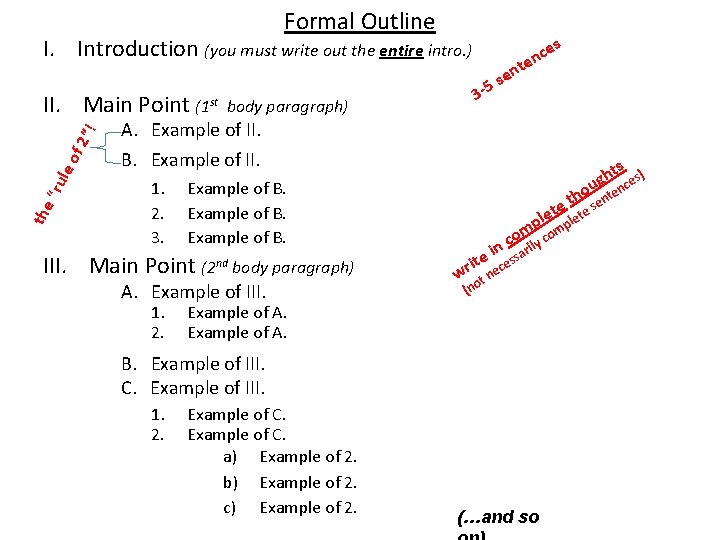
Formal Outline I. Introduction (you must write out the entire intro. ) the “ru le o f 2 ”! II. Main Point (1 st te sen 3 -5 body paragraph) es c n A. Example of II. B. Example of II. 1. 2. 3. Example of B. III. Main Point (2 nd body paragraph) A. Example of III. 1. 2. ts h ug ho ente t e s t e l p e rit w t (no omly co c n ri i a ss ce ne Example of A. B. Example of III. C. Example of III. 1. 2. Example of C. a) Example of 2. b) Example of 2. c) Example of 2. e let p m (…and so s) e nc
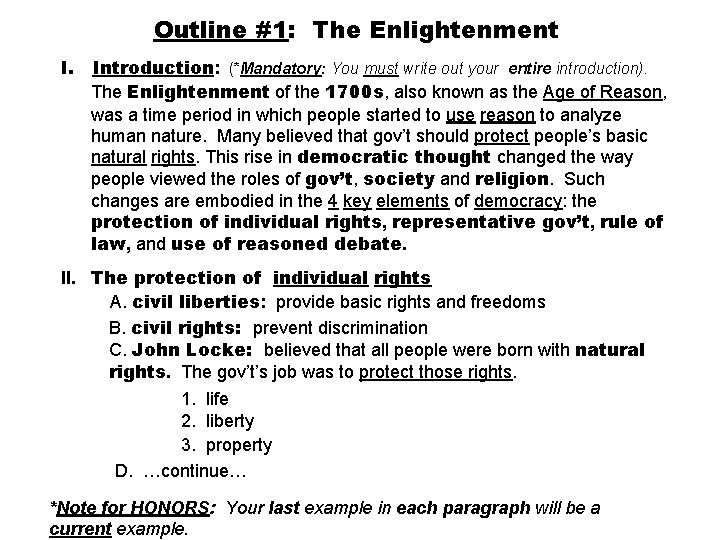
Outline #1: The Enlightenment I. Introduction: (*Mandatory: You must write out your entire introduction). The Enlightenment of the 1700 s, also known as the Age of Reason, was a time period in which people started to use reason to analyze human nature. Many believed that gov’t should protect people’s basic natural rights. This rise in democratic thought changed the way people viewed the roles of gov’t, society and religion. Such changes are embodied in the 4 key elements of democracy: the protection of individual rights, representative gov’t, rule of law, and use of reasoned debate. II. The protection of individual rights A. civil liberties: provide basic rights and freedoms B. civil rights: prevent discrimination C. John Locke: believed that all people were born with natural rights. The gov’t’s job was to protect those rights. 1. life 2. liberty 3. property D. …continue… *Note for HONORS: Your last example in each paragraph will be a current example.