
What do we know and what we want
















- Slides: 38
What do we know and what we want to know on care leavers Rami Benbenishty Bar Ilan University Anat Zeira Hebrew University
This Presentation
Sources for the presentation • Literature review • Studies: – Follow up of a cohort of care leavers – CBS – Evaluation of intervention programs – National need assessment – Follow up of alumni – Longitudinal follow up – Young person centers – Youth in Civic-National Service – Adolescents in school
Scientific Background
Emerging Adulthood • Adolescence starts early and continues for a longer period • Young persons get married later and explore longer • Emerging adulthood for care leavers is tougher: shorter and steeper • Findings on outcomes of alumni are distressing
External Resources and Stressors • • Family Peers Staff Over time- colleagues, bosses
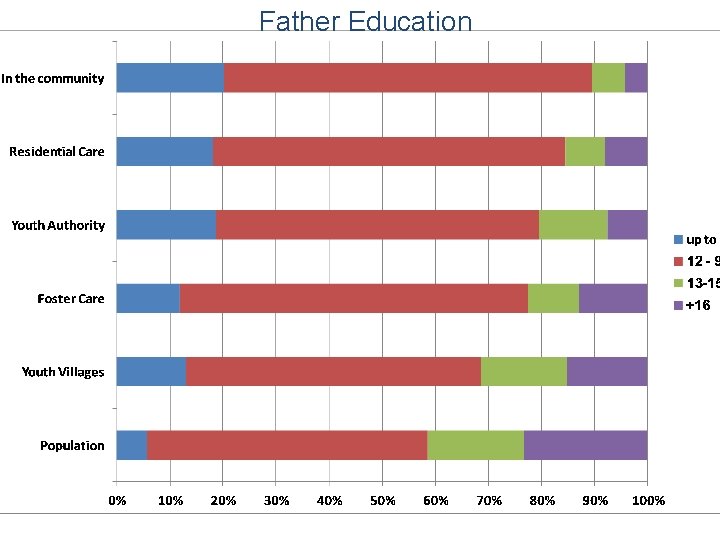
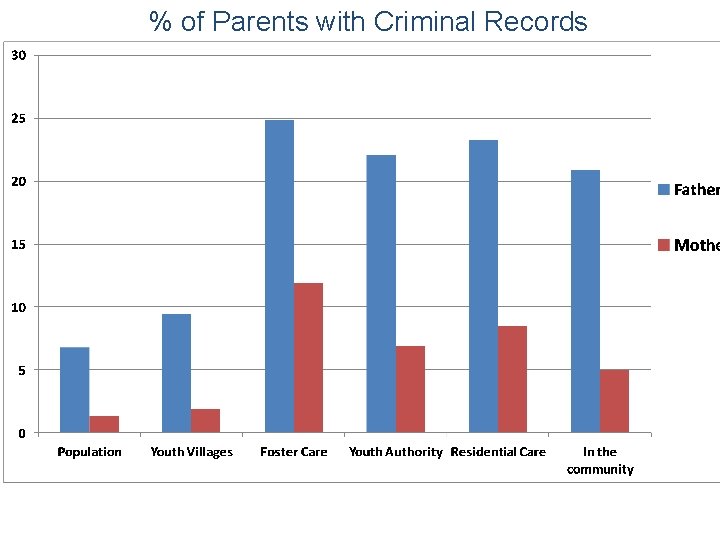
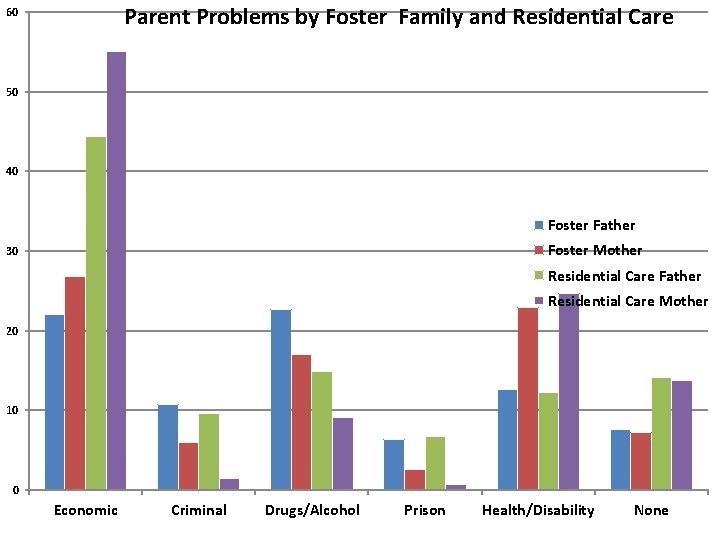
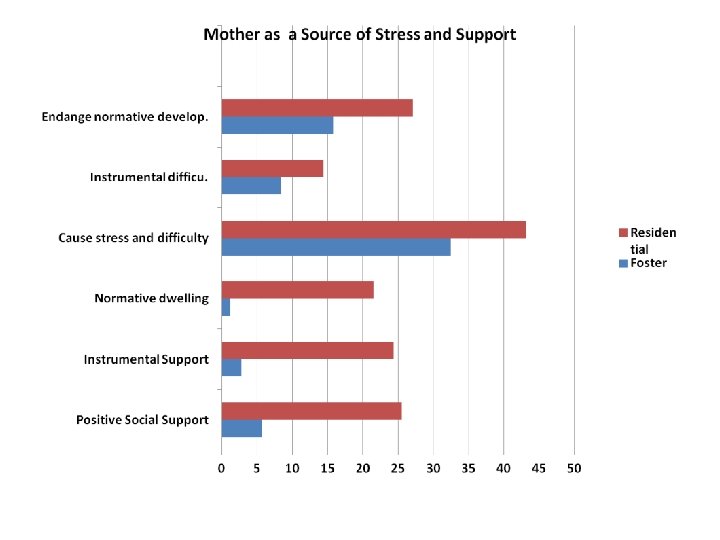
Family Status
Father Education
% of Parents with Criminal Records
Parent Problems by Foster Family and Residential Care 60 50 40 Foster Father Foster Mother 30 Residential Care Father Residential Care Mother 20 10 0 Economic Criminal Drugs/Alcohol Prison Health/Disability None
Towards Leaving Care
Main issues • • Readiness Needs Future Perceptions Resources for the future- Education
Readiness to leave care pertains to the adolescent’s • ability to provide independently for basic needs, • feel comfortable with her/himself • have satisfying relationships with significant others in the family, community and the society at large (Maluccio, Krieger & Pine, 1990). Tangible Intangible
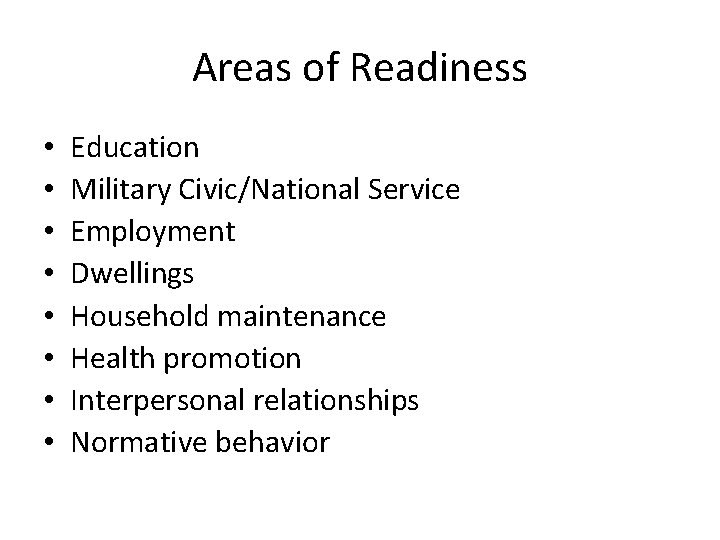
Areas of Readiness • • Education Military Civic/National Service Employment Dwellings Household maintenance Health promotion Interpersonal relationships Normative behavior
Workers’ assessments of readiness in EDUCATION Residential Study occupation Enter high education Matriculation Complete 12 years Sure Think Study occupation Foster Enter high education Matriculation Complete 12 years 0 10 20 30 40 50 60 70 80 90 100
Workers’ assessments of readiness – FINANCIAL SKILLS Shop responsibly and wisely Residential Avoid impulsive buying and debts Plan andkeep to budget Use credit responsively Have bank account Sure Shop responsibly and wisely Think Foster Avoid impulsive buying and debts Plan andkeep to budget Use credit responsively Have bank account 0 20 40 60 80 100
Workers assessment of readines: NORMATIVE BEHAVIORS Residential Drugs Alcohol Criminal behavior Violence Sure Drugs Think Foster Alcohol Criminal behavior Violence 0 10 20 30 40 50 60 70 80 90 100
On the Verge of Leaving Care
Education • Low achievements early on • Higher chances to be in a: – Vocational school – Special education – Drop out – In treatment
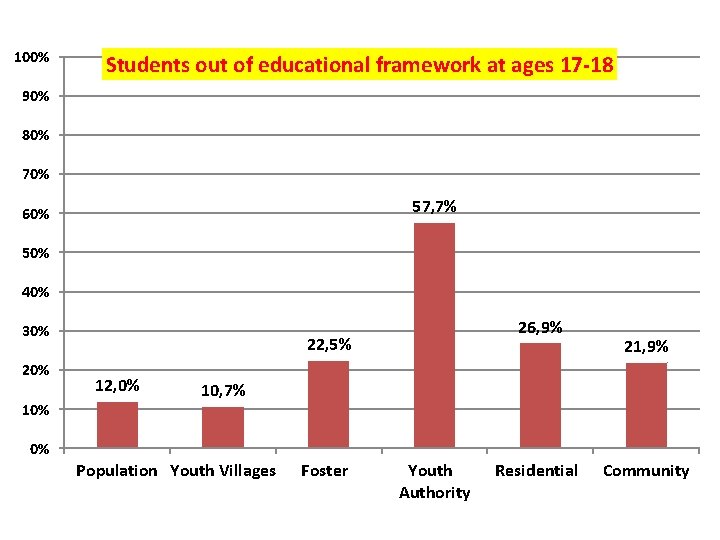
100% Students out of educational framework at ages 17 -18 90% 80% 70% 57, 7% 60% 50% 40% 30% 20% 10% 26, 9% 22, 5% 12, 0% 21, 9% 10, 7% 0% Population Youth Villages Foster Youth Authority Residential Community
100% Matriculation and eligibility for higher education 90% No matriculation 80% 70% Not eligible 60% Eligible 50% 40% 30% 20% 10% 0% Population Youth villages Foster Youth authority Residential Community
20% Giving Birth by Age 19 18% 16% 14% 13, 2% 10, 6% 10% 8% 6, 9% 6% 4, 6% 4% 2% 2, 8% 1, 7% 0% Population Youth Villages Foster Youth Authority Residential Community
Main needs identified by residential workers on the verge of leaving care • • Financial aid for continuing education Financial aid for housing and independent living Vocational training Employment skills Job search skills Help in military status as a ‘lone soldier’ Helping residential care to provide housing
After Leaving Care
Care Leavers’ Lives World Findings • • Education Employment Criminal involvement Substance use Mental health, suicide attempts Physical health Early parenting Welfare dependent
Care Leavers’ Lives Findings in Israel • We are in the first stages • What we know now: – Retrospective assessments are positive – Their current situation does not seem as bad as in other reports in the world – We are unable to reach a small group; probably in bad situation- especially Ethiopian origin – Difficulties in the military service – Economic difficulties
Legislation, Policy and Programs
Examples of legislation • USA – 1986 – Aging out of Care – 1999 - Chafee Foster Care Independent Act • UK – The Children Act • Israel – ? ? ?
Elements of programs in the US and UK • • • Preparation while in care Housing Health insurance Education Life skills enhancement Personal mentoring / support / follow up Advocacy, complaints Empowerment and representation Resource centers
Barriers to the design of programs in Israel • Difficulties surrounding transitions between: • Ages • Agencies / departments • Ministries (welfare, education, housing, defense, immigrant absorption) • Local authorities • Government – third sector
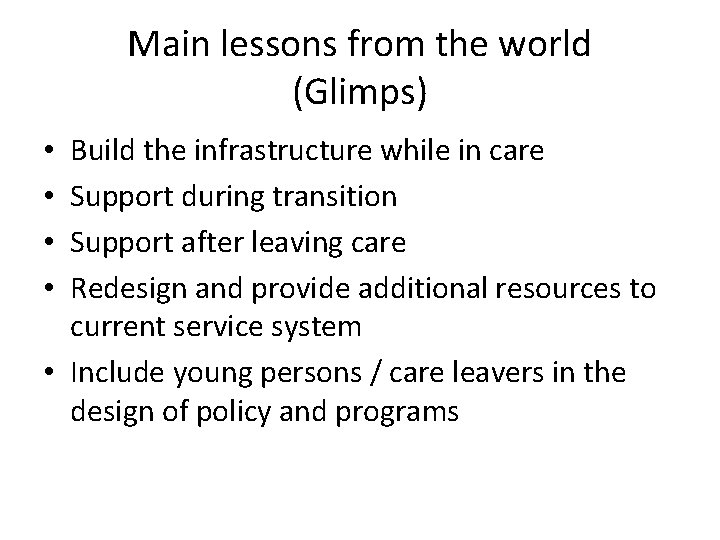
Main lessons from the world (Glimps) Build the infrastructure while in care Support during transition Support after leaving care Redesign and provide additional resources to current service system • Include young persons / care leavers in the design of policy and programs • •
Some Israeli Points • Changing scene in education – Yes, We Can • Use the military as a leverage • Civic-National Service – An emerging opportunity
And finally, an infomercial • The challenges – Science • Use knowledge as the basis for policy and programs • Monitor the status of youth in care and after leaving care • Evaluate policy and programs – International collaboration • • • Share Adopt critically Evaluate Modify Share
Toda Shalom & Lhitraout Rami Benbenishty ramibenben@gmail. com Anat Zeira, msanatz@huji. ac. il