
What do volcano locations and plate boundaries have
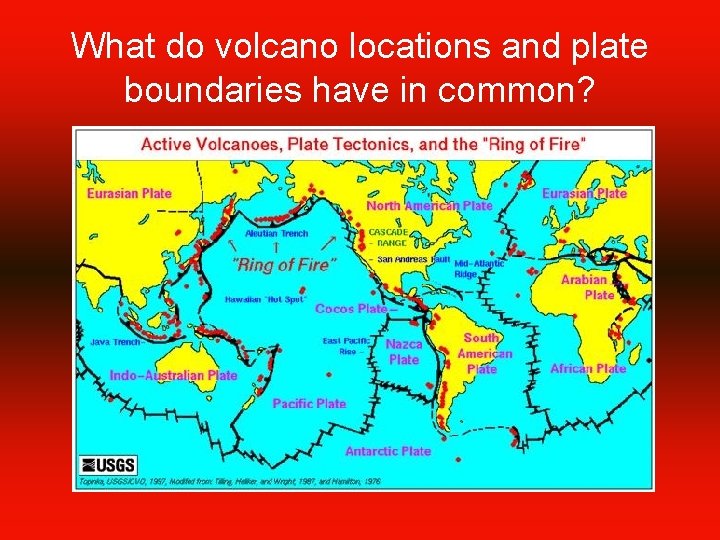
What do volcano locations and plate boundaries have in common?
Volcanoes EQ: How are volcanoes related to plate tectonics?
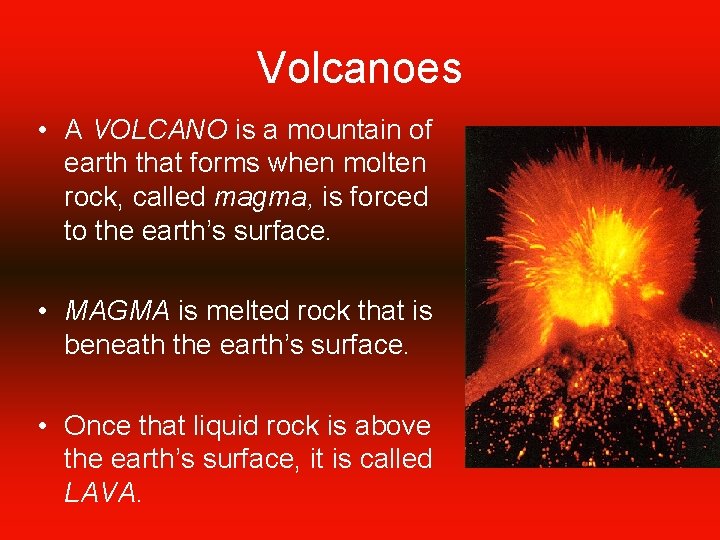
Volcanoes • A VOLCANO is a mountain of earth that forms when molten rock, called magma, is forced to the earth’s surface. • MAGMA is melted rock that is beneath the earth’s surface. • Once that liquid rock is above the earth’s surface, it is called LAVA.
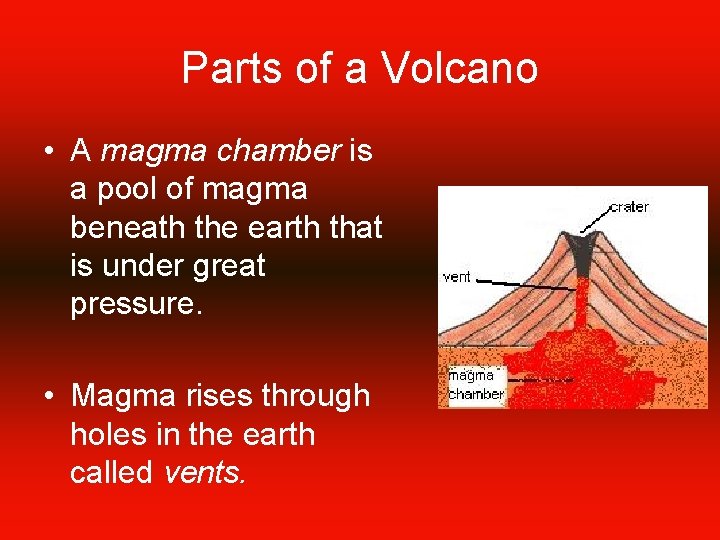
Parts of a Volcano • A magma chamber is a pool of magma beneath the earth that is under great pressure. • Magma rises through holes in the earth called vents.
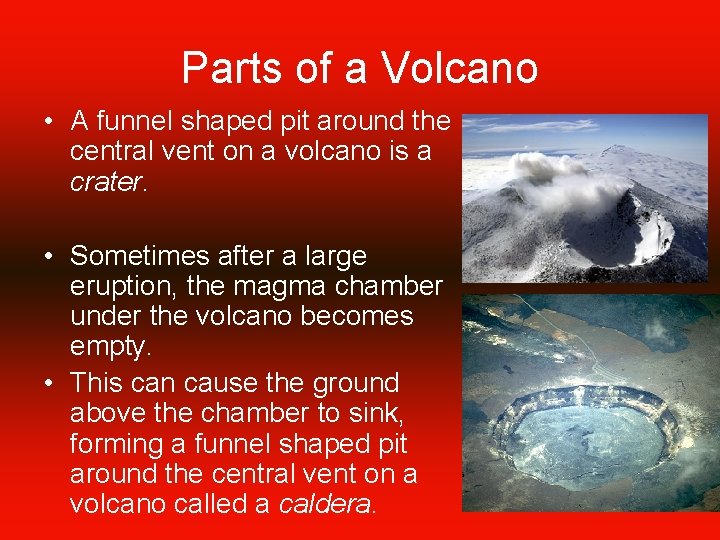
Parts of a Volcano • A funnel shaped pit around the central vent on a volcano is a crater. • Sometimes after a large eruption, the magma chamber under the volcano becomes empty. • This can cause the ground above the chamber to sink, forming a funnel shaped pit around the central vent on a volcano called a caldera.
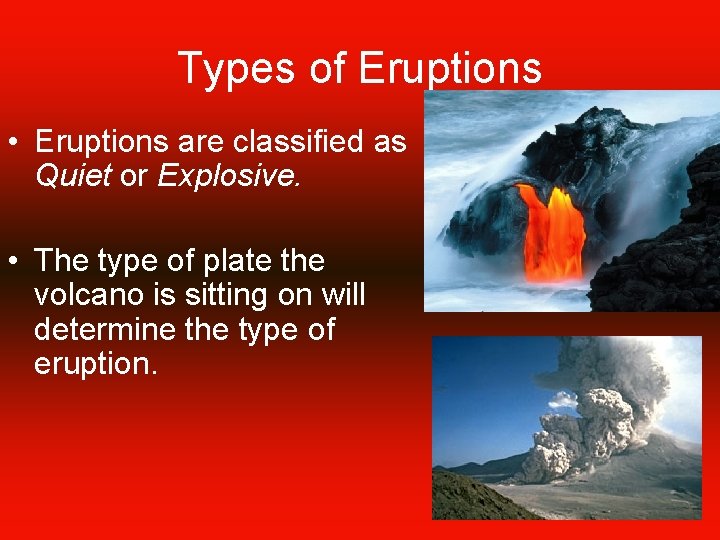
Types of Eruptions • Eruptions are classified as Quiet or Explosive. • The type of plate the volcano is sitting on will determine the type of eruption.
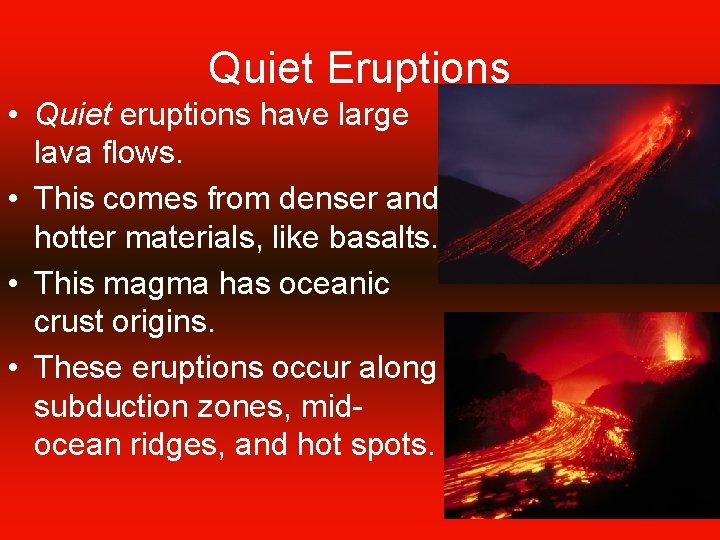
Quiet Eruptions • Quiet eruptions have large lava flows. • This comes from denser and hotter materials, like basalts. • This magma has oceanic crust origins. • These eruptions occur along subduction zones, midocean ridges, and hot spots.
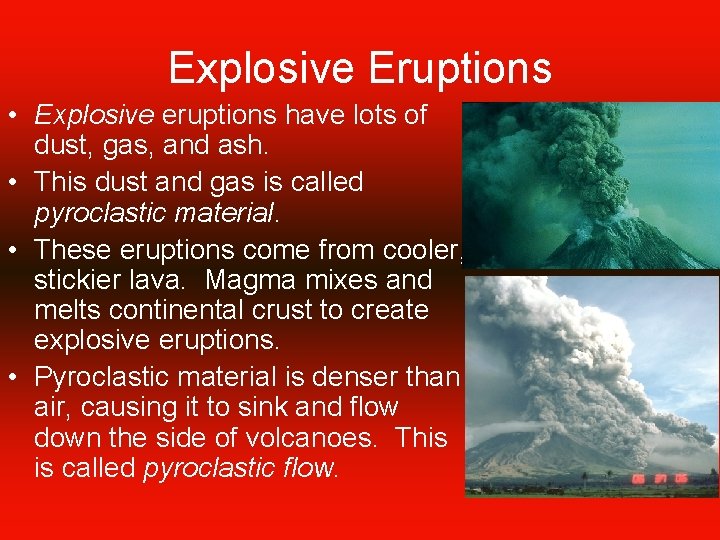
Explosive Eruptions • Explosive eruptions have lots of dust, gas, and ash. • This dust and gas is called pyroclastic material. • These eruptions come from cooler, stickier lava. Magma mixes and melts continental crust to create explosive eruptions. • Pyroclastic material is denser than air, causing it to sink and flow down the side of volcanoes. This is called pyroclastic flow.
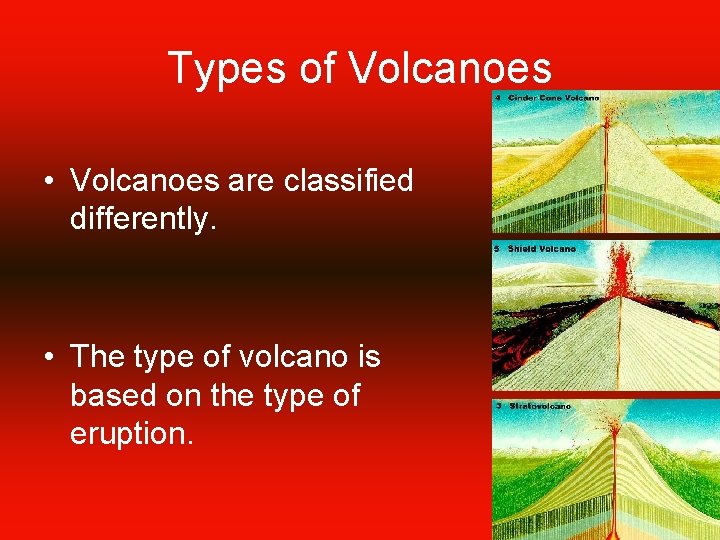
Types of Volcanoes • Volcanoes are classified differently. • The type of volcano is based on the type of eruption.
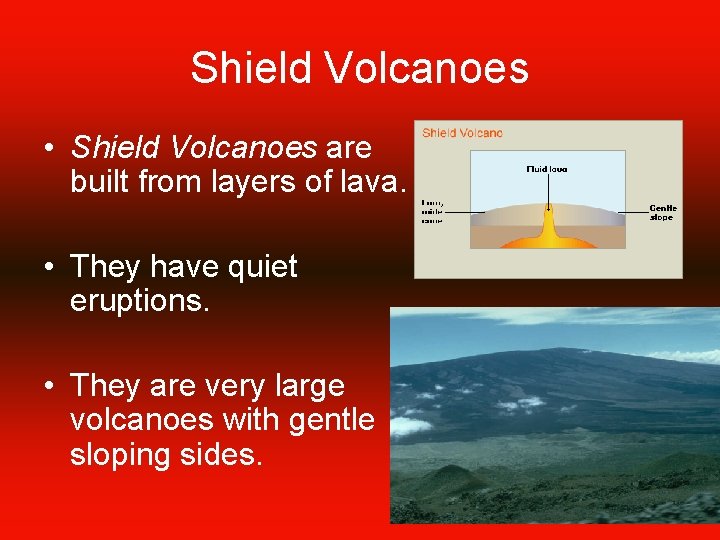
Shield Volcanoes • Shield Volcanoes are built from layers of lava. • They have quiet eruptions. • They are very large volcanoes with gentle sloping sides.
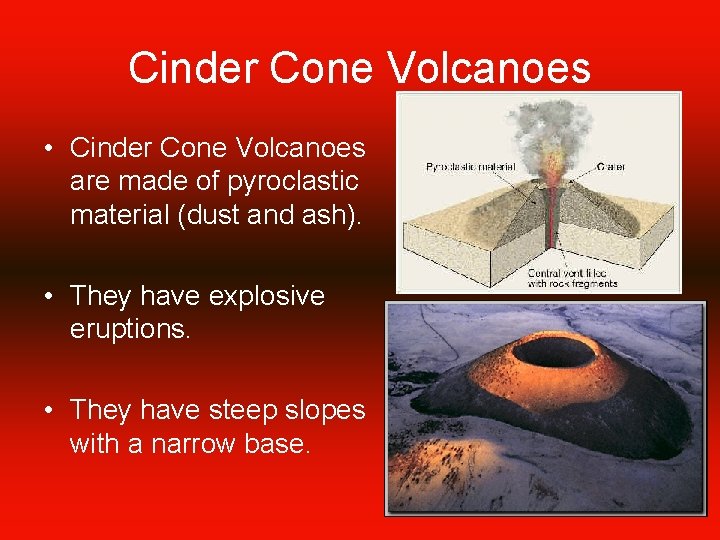
Cinder Cone Volcanoes • Cinder Cone Volcanoes are made of pyroclastic material (dust and ash). • They have explosive eruptions. • They have steep slopes with a narrow base.

Stratovolcano • Stratovolcanoes, or composite volcanoes, have eruptions of both lava and pyroclastic material. • They have both quiet and explosive eruptions. • They have broad sides that get steeper towards the top.
Closure • 1. How are volcanoes and plate tectonics related? • 2. What is the difference between a quiet and explosive eruption? • 3. What types of volcanoes are there? What types of eruptions do they have?
- Slides: 13