
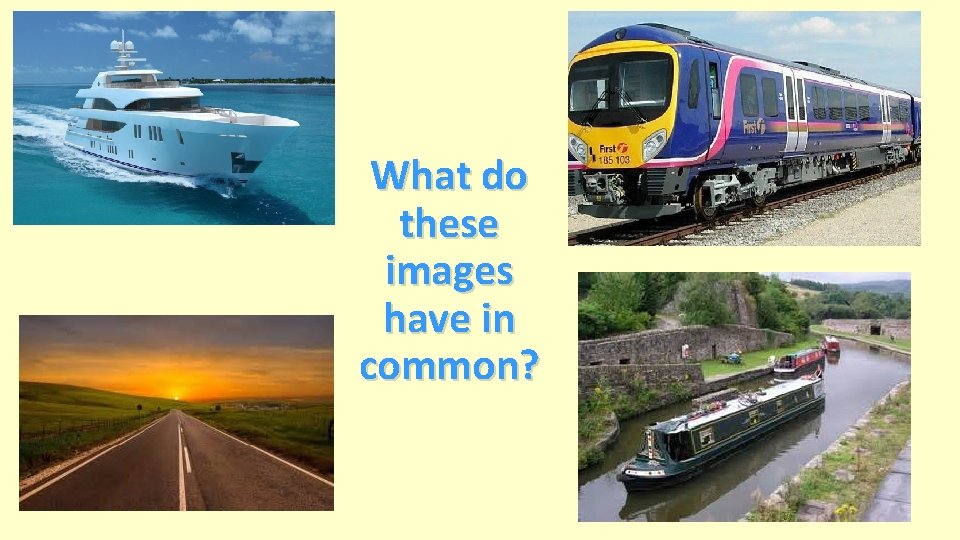
What do these images have in common What




- Slides: 15
What do these images have in common?
What were roads like in 1750? LO: To identify the problems in transporting goods by road before 1750.
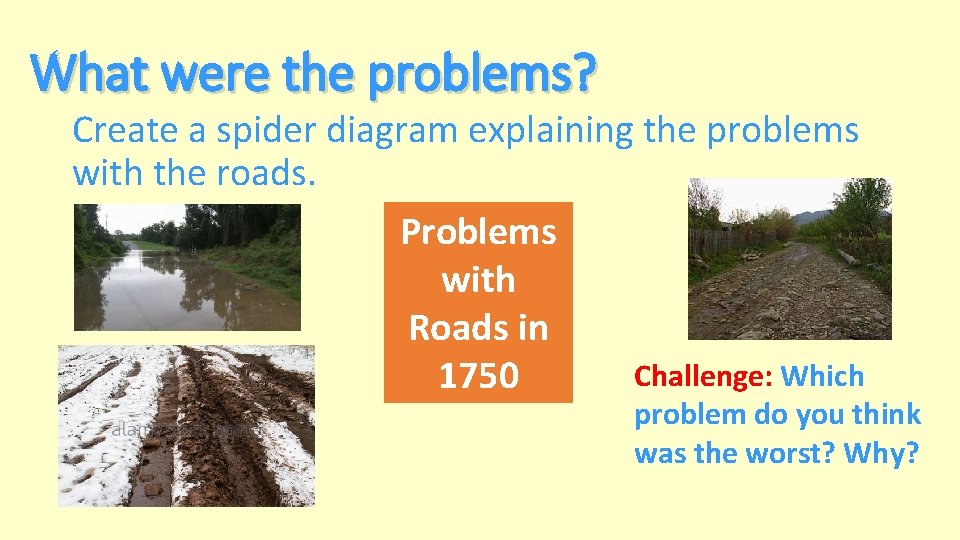
What were the problems? Create a spider diagram explaining the problems with the roads. Problems with Roads in Challenge: Which 1750 problem do you think was the worst? Why?
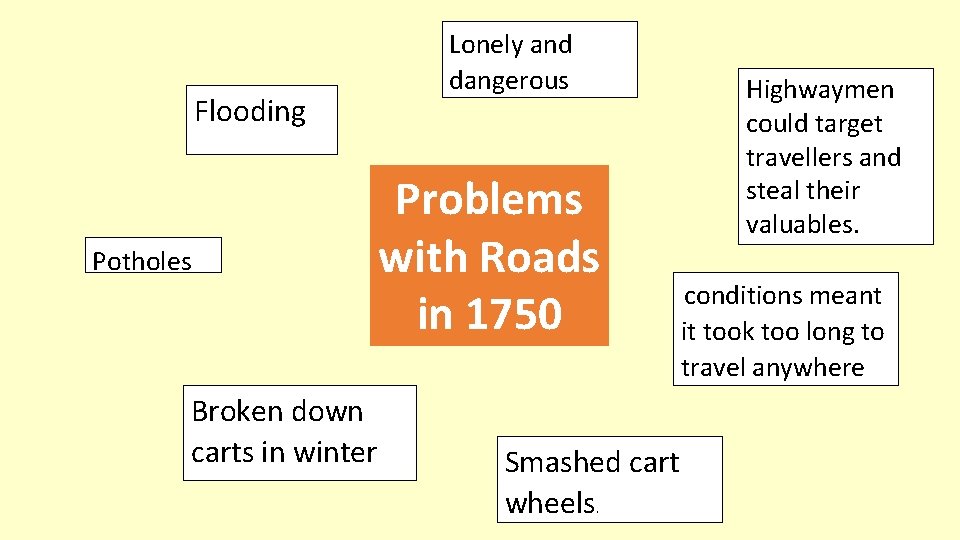
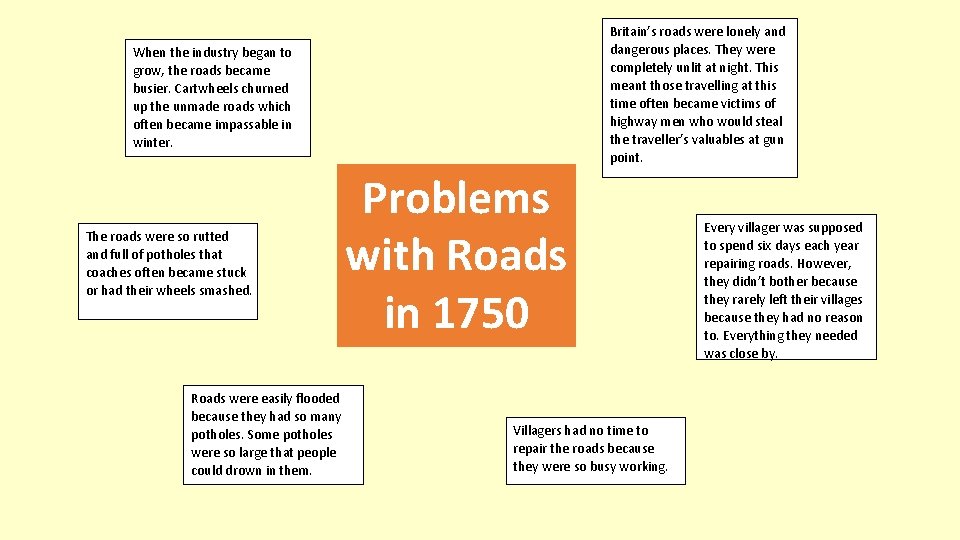
Flooding Potholes Broken down carts in winter Lonely and dangerous Problems with Roads in 1750 Smashed cart wheels. Highwaymen could target travellers and steal their valuables. conditions meant it took too long to travel anywhere
Why were there so many problems with the roads? Discuss this question in pairs and come up with some ideas.
Why were the so many problems with the roads? • Nobody was taking care of the roads • Every villager was supposed to spend 6 days a year maintaining roads but they were often too busy working • Villagers were not bothered about fixing roads because they had no reason to travel before 1750 (they bought all their goods from local craftsmen). • As industry grew, more and more people began to use the roads The carts would churn up the mud.
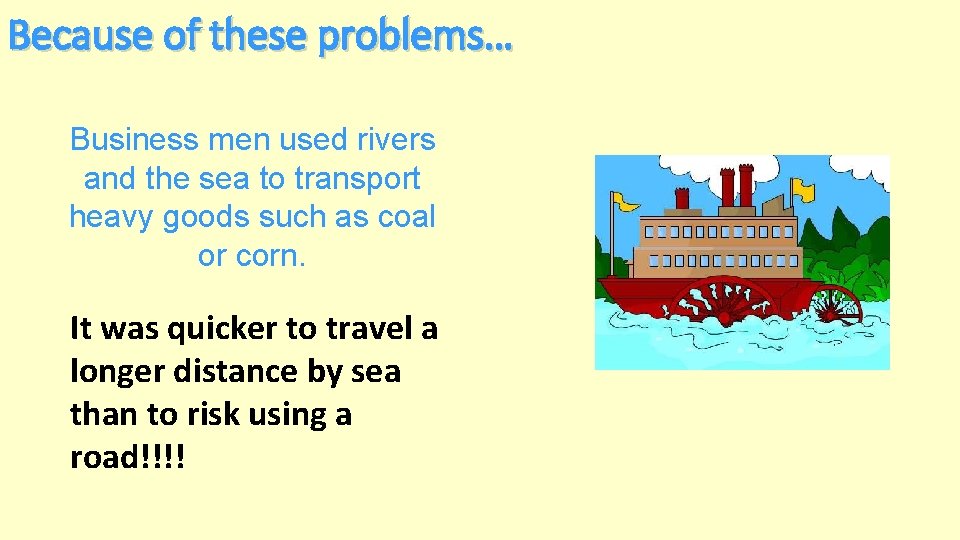
Because of these problems… Business men used rivers and the sea to transport heavy goods such as coal or corn. It was quicker to travel a longer distance by sea than to risk using a road!!!!
How would YOU solve these problems? How would you solve these problems? Write your ideas down in your books. “I would solve these problems by…”
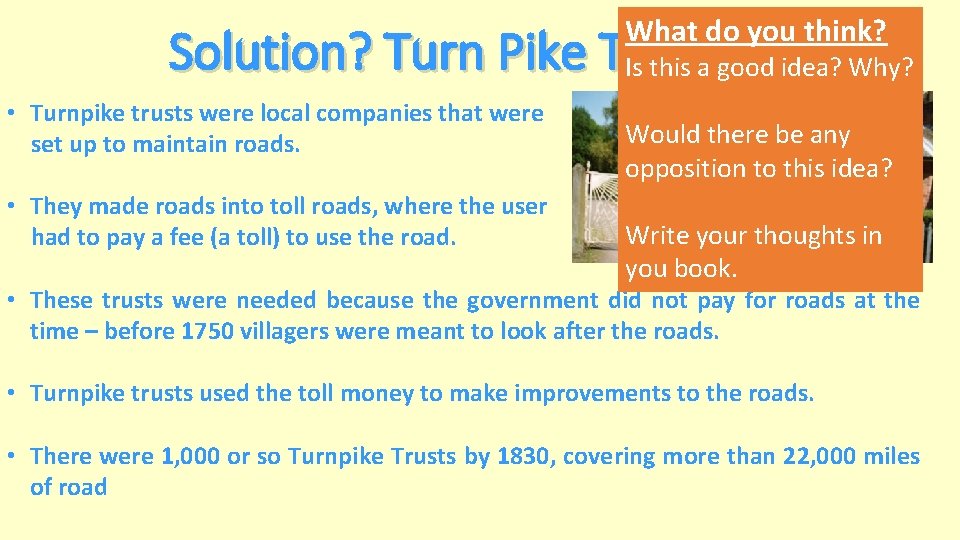
What do you think? Solution? Turn Pike Trusts Is this a good idea? Why? • Turnpike trusts were local companies that were set up to maintain roads. • They made roads into toll roads, where the user had to pay a fee (a toll) to use the road. Would there be any opposition to this idea? Write your thoughts in you book. • These trusts were needed because the government did not pay for roads at the time – before 1750 villagers were meant to look after the roads. • Turnpike trusts used the toll money to make improvements to the roads. • There were 1, 000 or so Turnpike Trusts by 1830, covering more than 22, 000 miles of road
Plenary In your books: • 3 things you have learnt today. • 1 thing you would still like to know.
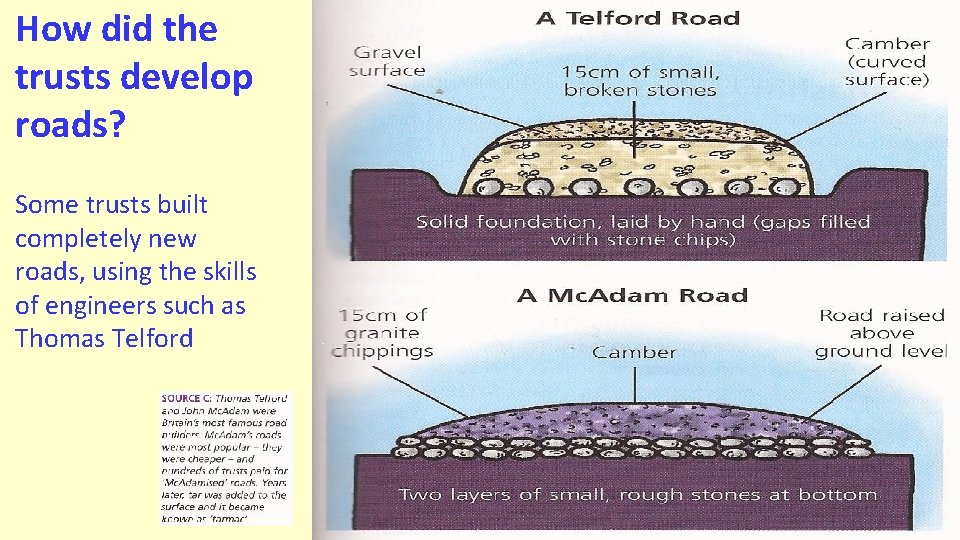
How did the trusts develop roads? Some trusts built completely new roads, using the skills of engineers such as Thomas Telford
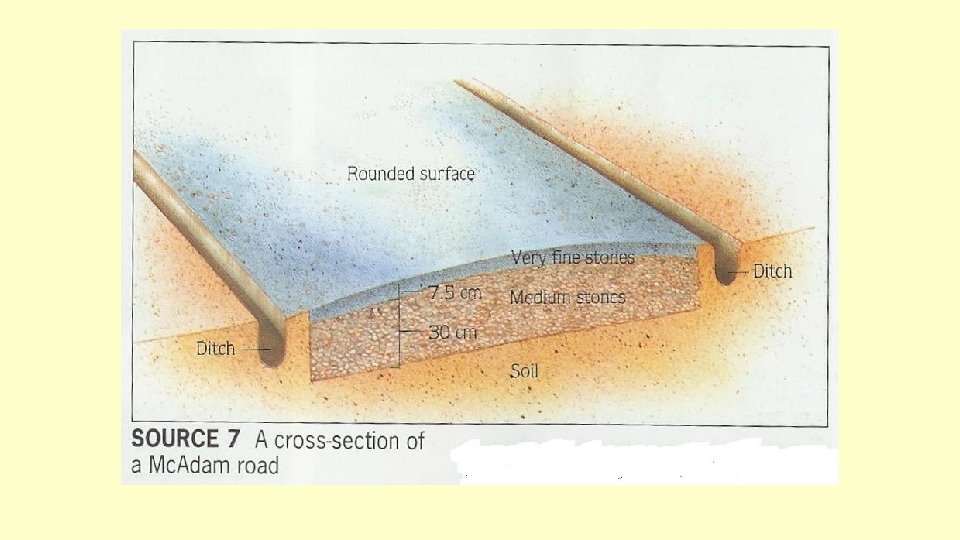
How did the trust develop roads? Surveyor John Mc. Adam came up with a new way of building roads by using small, tightly packed stones, higher in the centre and with drainage ditches at each side. He never used tar on his roads, but that came later and we still use the term ‘tarmacadam’ or ‘tarmac’ roads today. very fine stones medium stones ditch
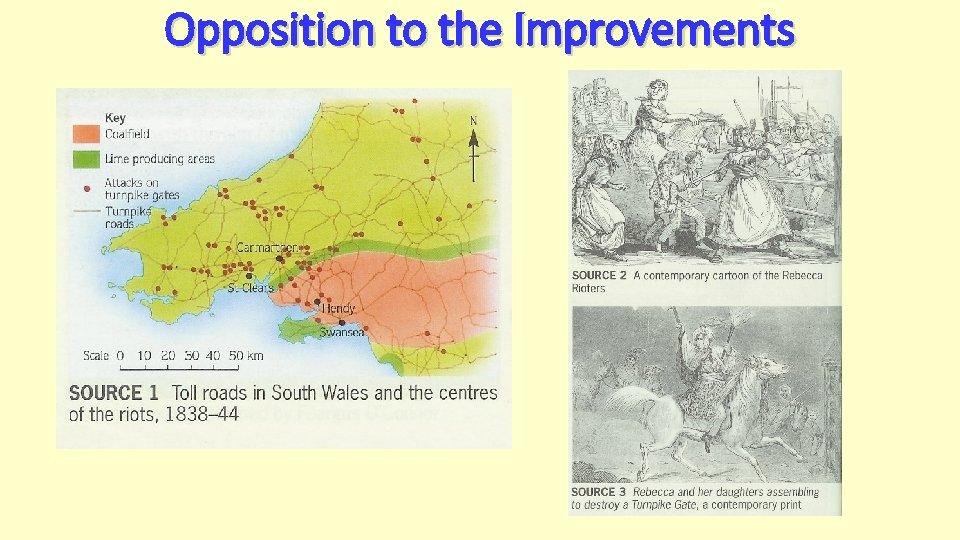
Opposition to the Improvements
Britain’s roads were lonely and dangerous places. They were completely unlit at night. This meant those travelling at this time often became victims of highway men who would steal the traveller’s valuables at gun point. When the industry began to grow, the roads became busier. Cartwheels churned up the unmade roads which often became impassable in winter. The roads were so rutted and full of potholes that coaches often became stuck or had their wheels smashed. Roads were easily flooded because they had so many potholes. Some potholes were so large that people could drown in them. Problems with Roads in 1750 Villagers had no time to repair the roads because they were so busy working. Every villager was supposed to spend six days each year repairing roads. However, they didn’t bother because they rarely left their villages because they had no reason to. Everything they needed was close by.