
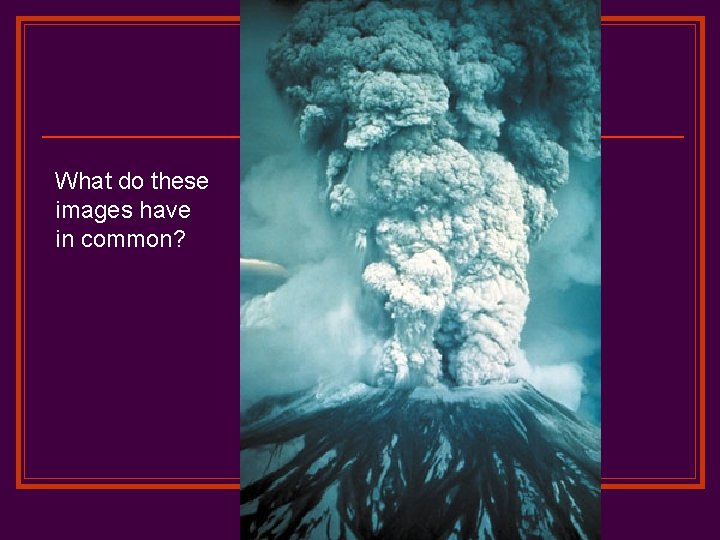
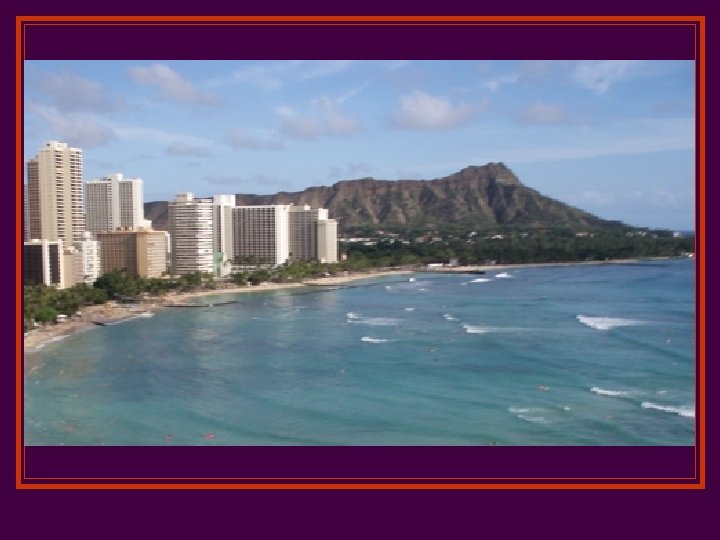
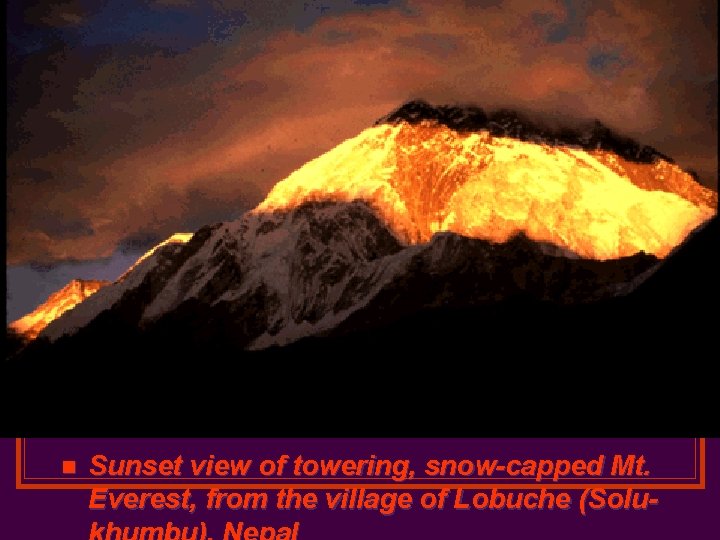
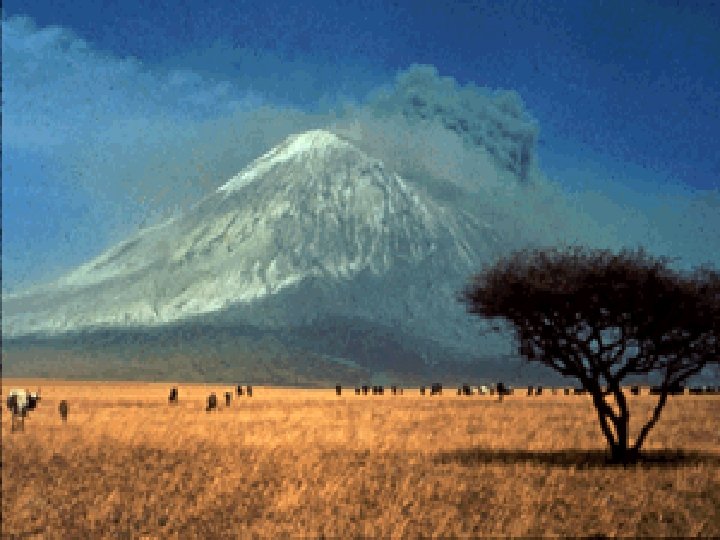
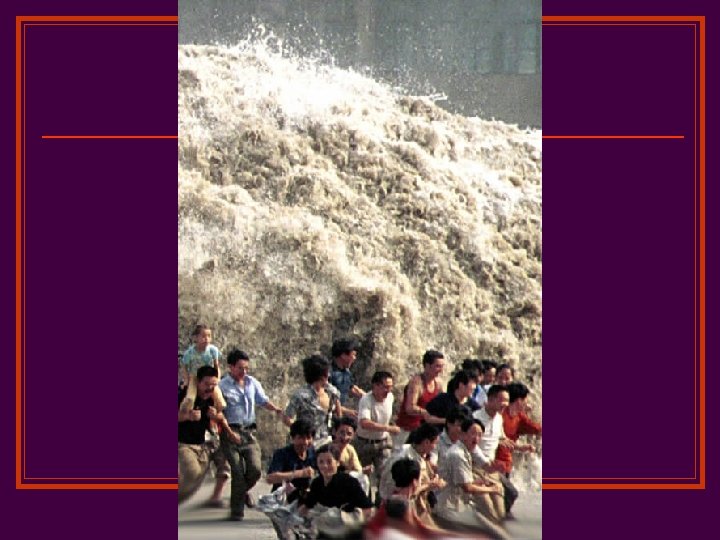
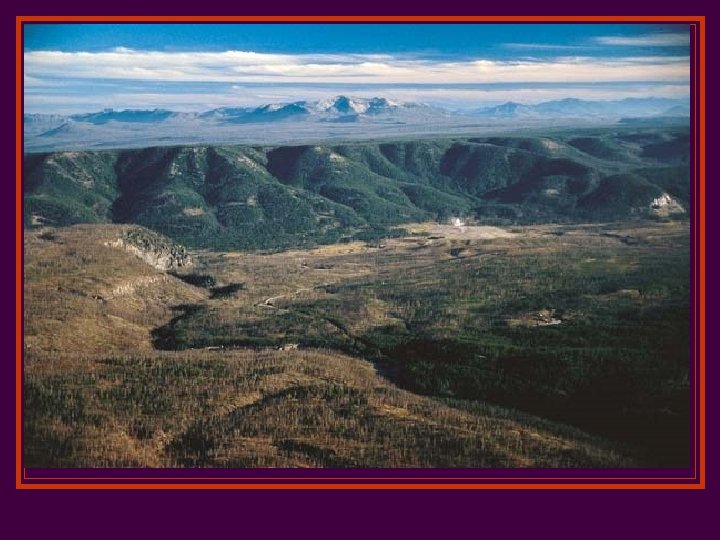
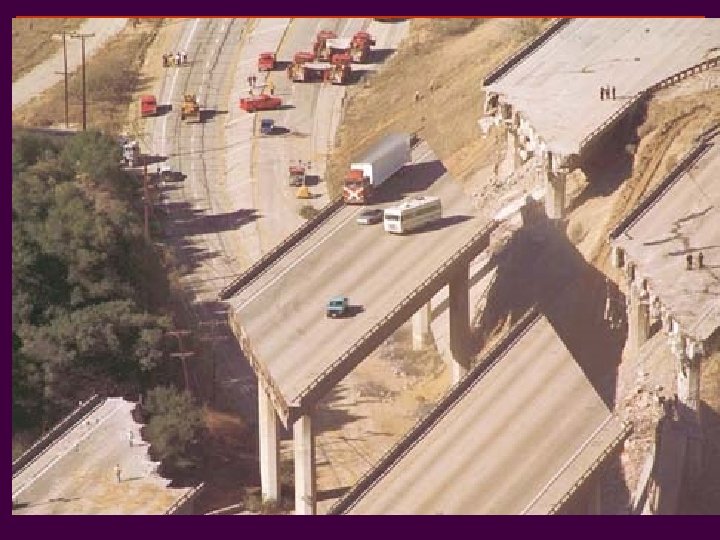
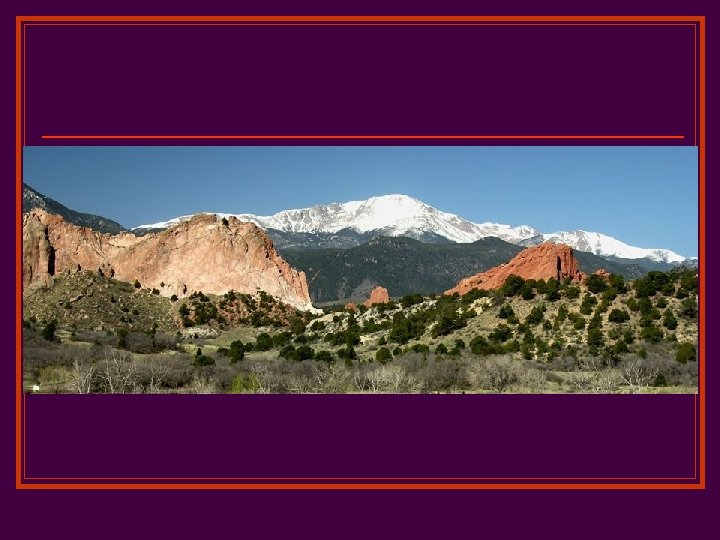
What do these images have in common n
- Slides: 36
What do these images have in common?
n Sunset view of towering, snow-capped Mt. Everest, from the village of Lobuche (Solu-
Plate Tectonics And Plate Boundaries
What is the Theory of Plate Tectonics? n. Earth's crust is made up of plates that ride on top of the asthenosphere n. The plates move due to convection currents in the mantle
What evidence supports this theory? n distribution of earthquakes and volcanoes n sea-floor spreading
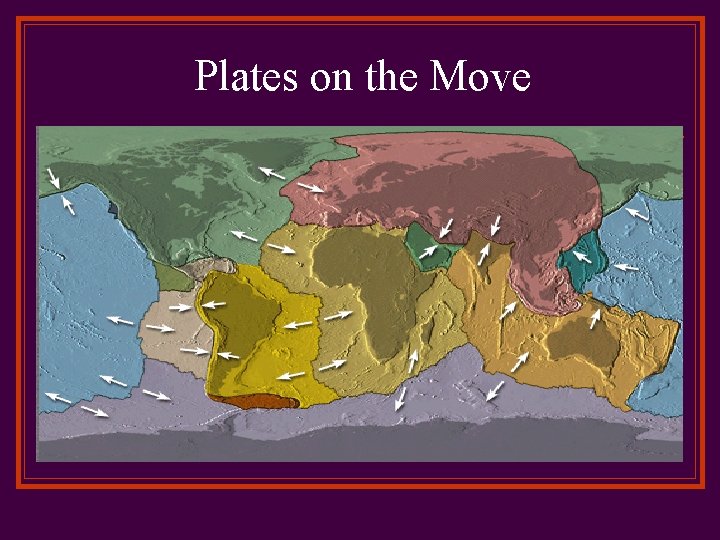
Plates on the Move
How does it work? The lithospheric plates “float” on the asthenosphere. n The asthenosphere is a solid layer of the mantle that has low viscosity and can flow like a liquid n
Forces behind Plate Tectonics Slab-pull: old oceanic crust is cold and dense, it sinks into the asthenosphere and pulls the trailing lithosphere behind. n Ridge-push: Results from the elevated position of a oceanic ridge system and gravity pushes the lithosphere down and away from the ridge. n Slab-pull is most likely the more important force n
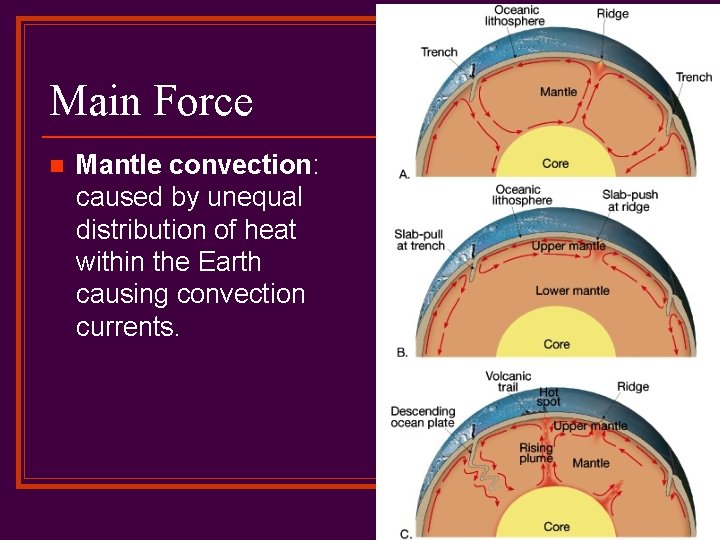
Main Force n Mantle convection: caused by unequal distribution of heat within the Earth causing convection currents.
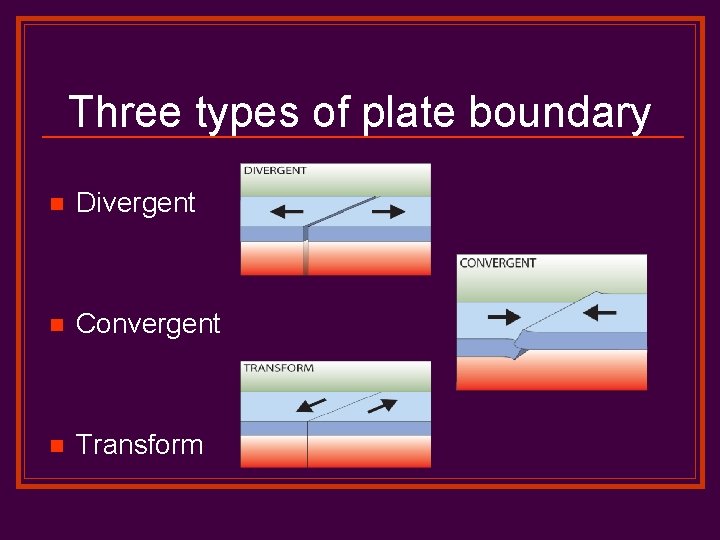
Plate Boundaries Three main types n Convergent: two plates colliding together n Divergent: plates are moving apart n Transform: plates are sliding past one another n
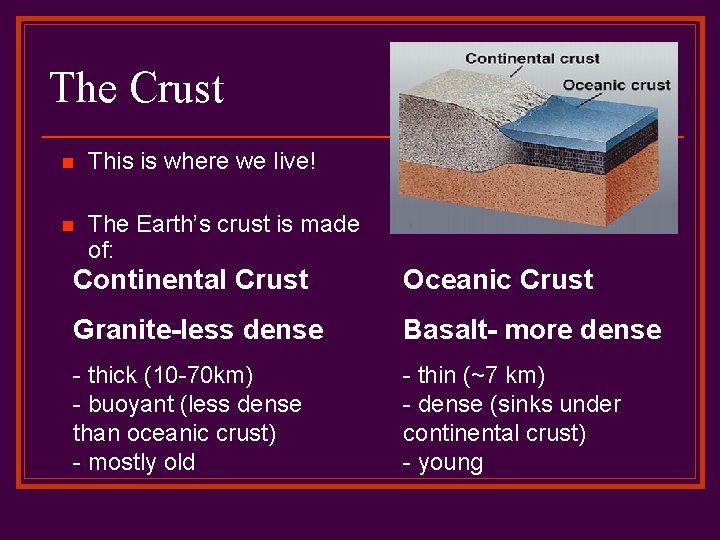
The Crust n This is where we live! n The Earth’s crust is made of: Continental Crust Oceanic Crust Granite-less dense Basalt- more dense - thick (10 -70 km) - buoyant (less dense than oceanic crust) - mostly old - thin (~7 km) - dense (sinks under continental crust) - young
Three types of plate boundary n Divergent n Convergent n Transform
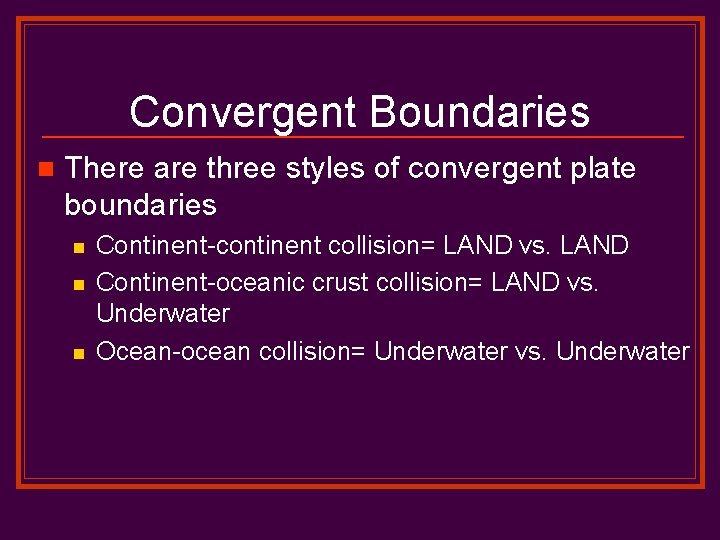
Convergent Boundaries n There are three styles of convergent plate boundaries n n n Continent-continent collision= LAND vs. LAND Continent-oceanic crust collision= LAND vs. Underwater Ocean-ocean collision= Underwater vs. Underwater
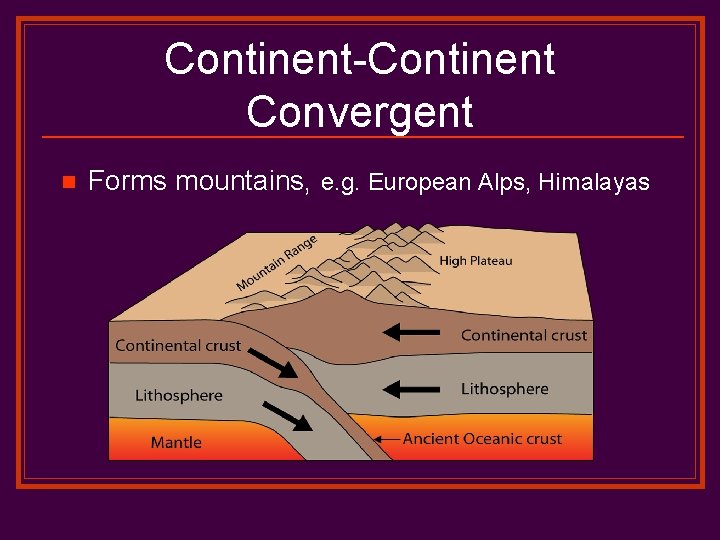
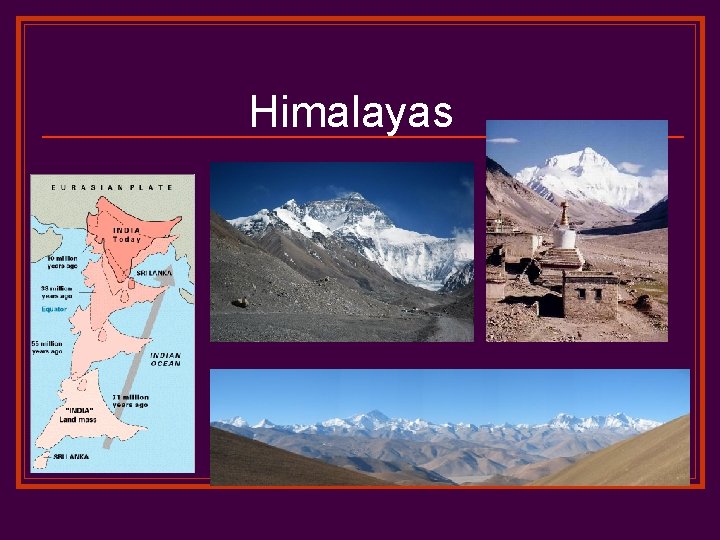
Continent-Continent Convergent n Forms mountains, e. g. European Alps, Himalayas
Himalayas
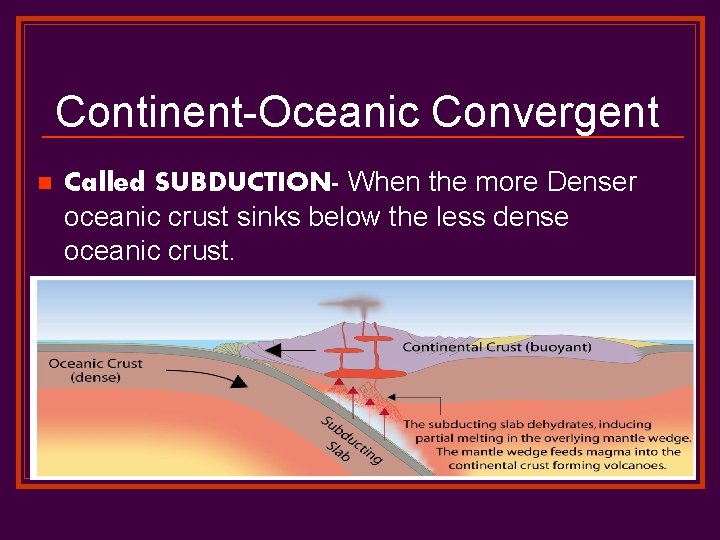
Continent-Oceanic Convergent n Called SUBDUCTION- When the more Denser oceanic crust sinks below the less dense oceanic crust.
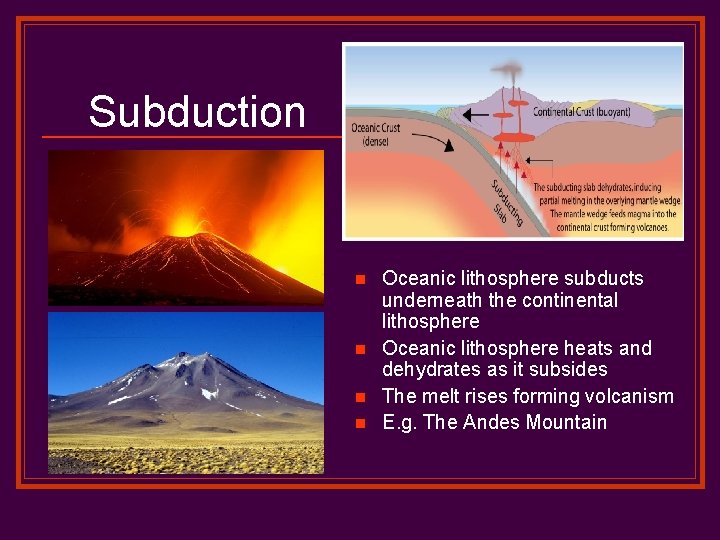
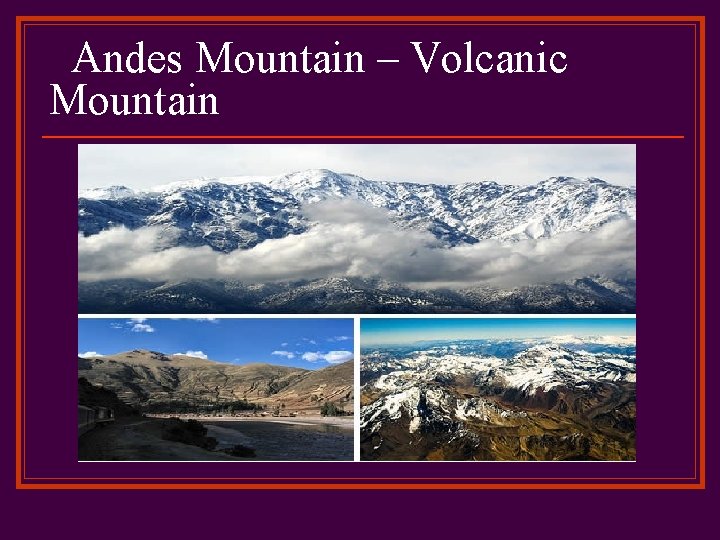
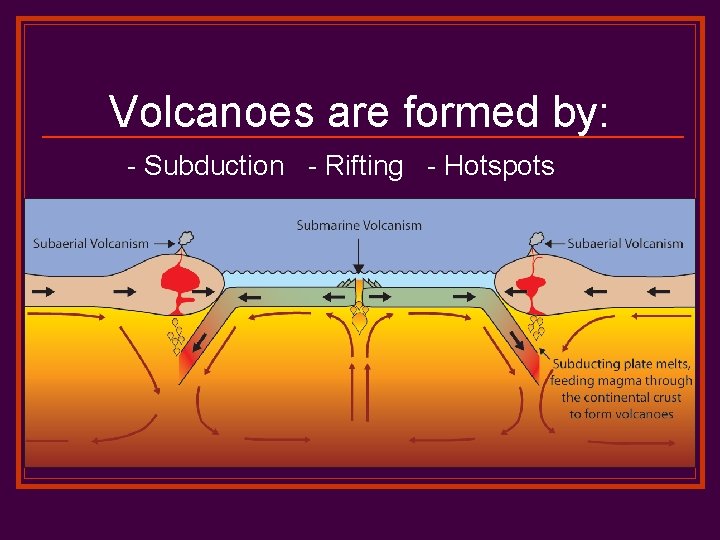
Subduction n n Oceanic lithosphere subducts underneath the continental lithosphere Oceanic lithosphere heats and dehydrates as it subsides The melt rises forming volcanism E. g. The Andes Mountain
Andes Mountain – Volcanic Mountain
Volcanoes are formed by: - Subduction - Rifting - Hotspots
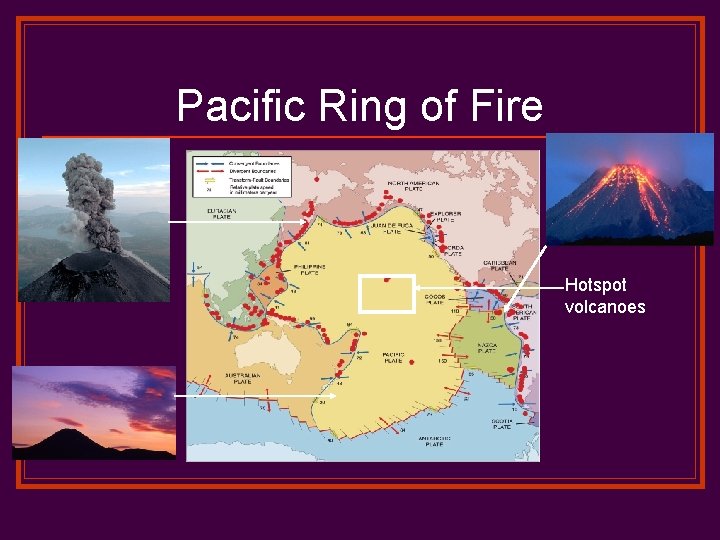
Pacific Ring of Fire Hotspot volcanoes
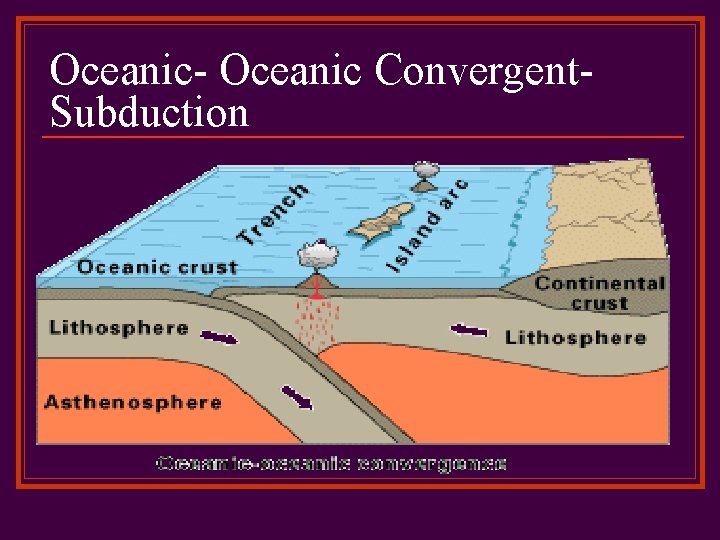
Oceanic- Oceanic Convergent. Subduction
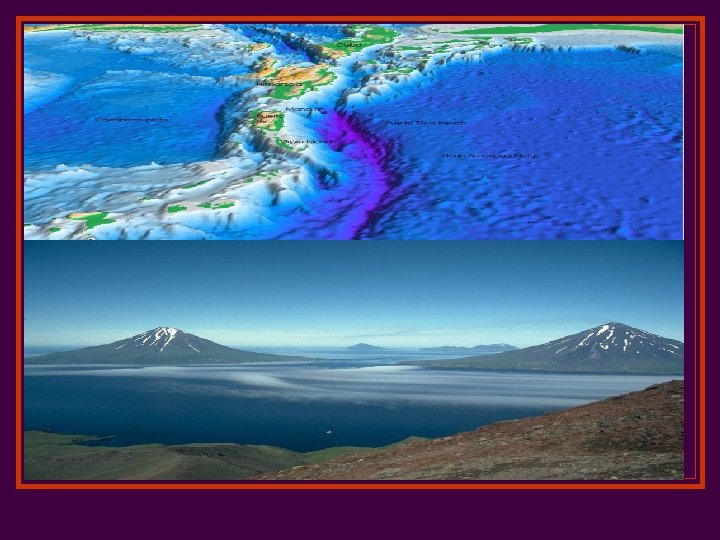
Ocean-Ocean Plate Convergent n n n When two oceanic plates collide, one runs over the other which causes it to sink into the mantle forming a subduction zone. The subducting plate is bent downward to form a very deep depression in the ocean floor called a trench. The worlds deepest parts of the ocean are found along trenches. n n E. g. The Mariana Trench is 11 km deep! Aleutians Island- volcanic Island Arc
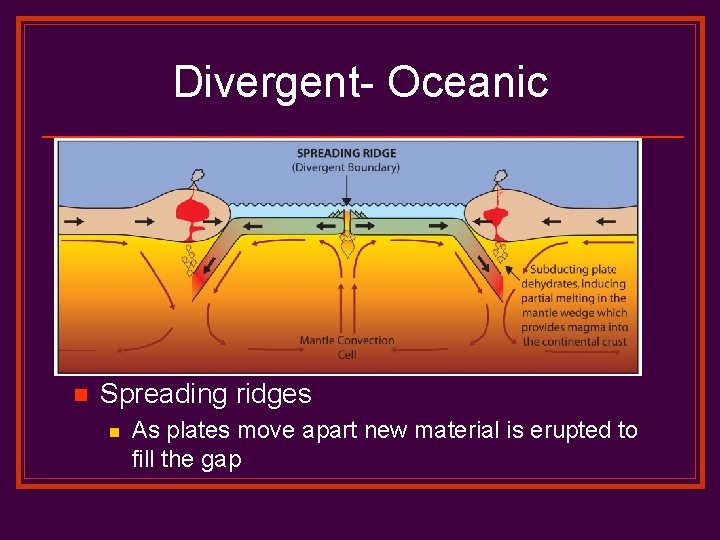
Divergent- Oceanic n Spreading ridges n As plates move apart new material is erupted to fill the gap
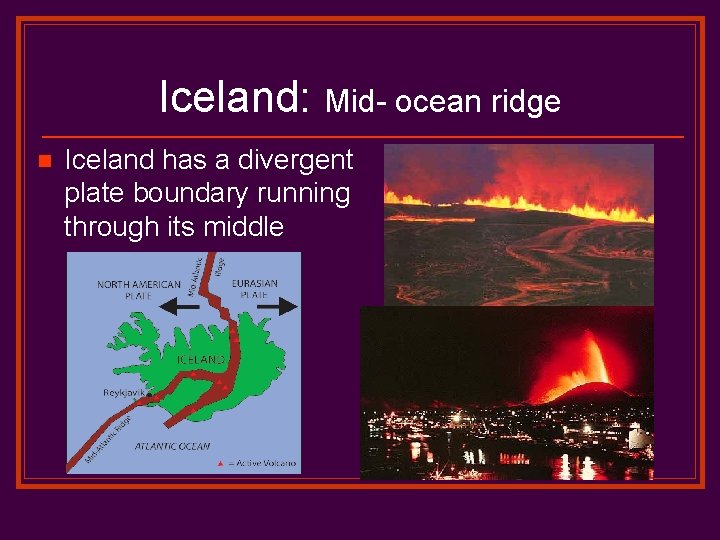
Iceland: Mid- ocean ridge n Iceland has a divergent plate boundary running through its middle
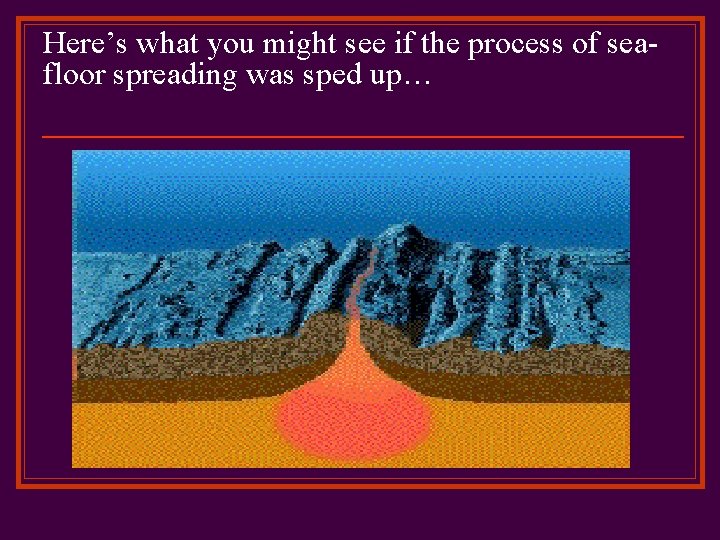
Here’s what you might see if the process of seafloor spreading was sped up…
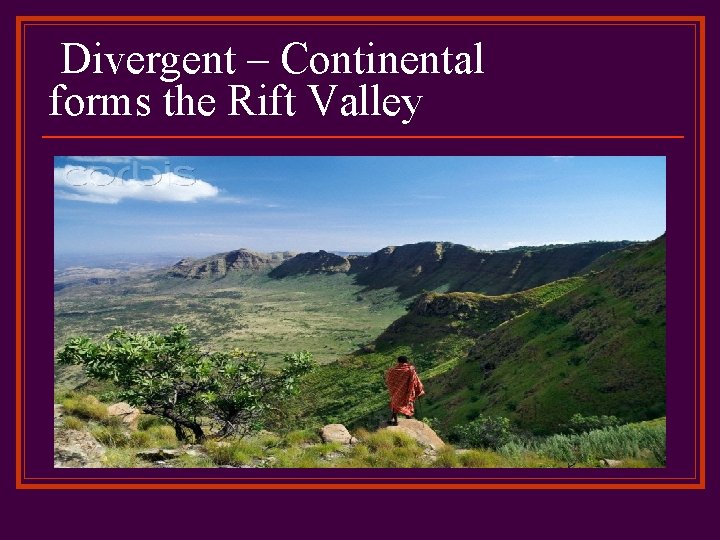
Divergent – Continental forms the Rift Valley
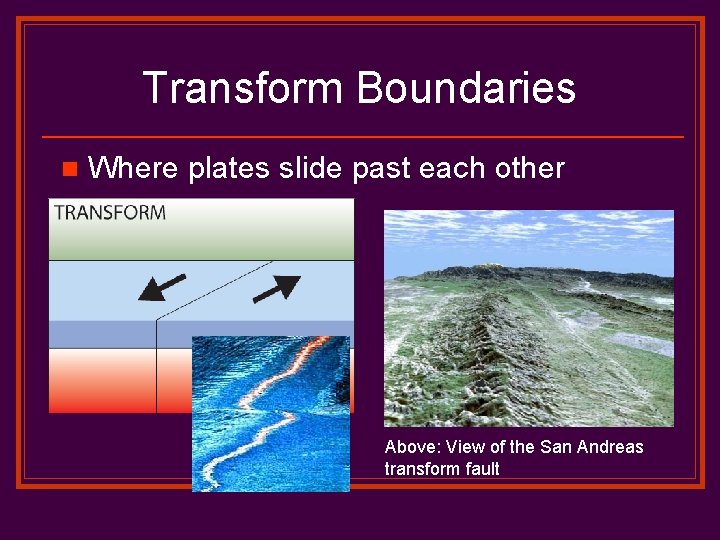
Transform Boundaries n Where plates slide past each other Above: View of the San Andreas transform fault
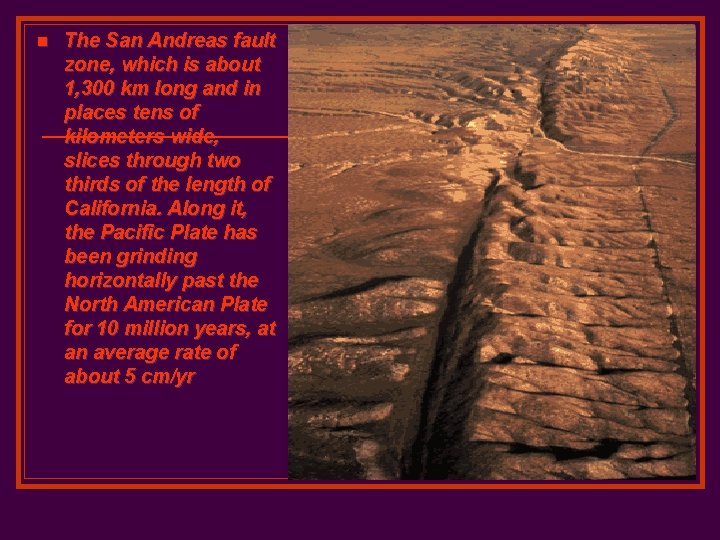
n The San Andreas fault zone, which is about 1, 300 km long and in places tens of kilometers wide, slices through two thirds of the length of California. Along it, the Pacific Plate has been grinding horizontally past the North American Plate for 10 million years, at an average rate of about 5 cm/yr
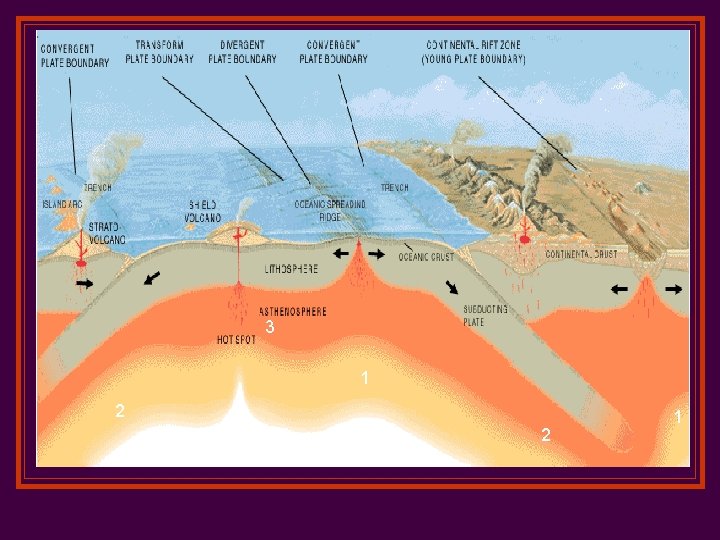
Most geological activity occurs along plate boundaries n n n Divergent plate boundaries - 1 Convergent plate boundaries - 2 Transform plate boundaries - 3 3 1 2 2 4 1