
What Do Students Know about the Ocean Assessing
What Do Students Know about the Ocean? Assessing Ocean Literacy at the California State University Maritime Academy Cal Maritime Ocean Initiative Alex Parker, Colin Dewey, Steven Runyon, and Cynthia Cudabeck The California State University, Maritime Academy Maritime Education Summit October 18, 2014
Next Steps First • Assess Ocean Literacy at other maritime colleges • Strategize with others on how to promote the Ocean across the curriculum • Serve as a clearing house for undergraduate ocean curriculum Cal Maritime Ocean Initiative
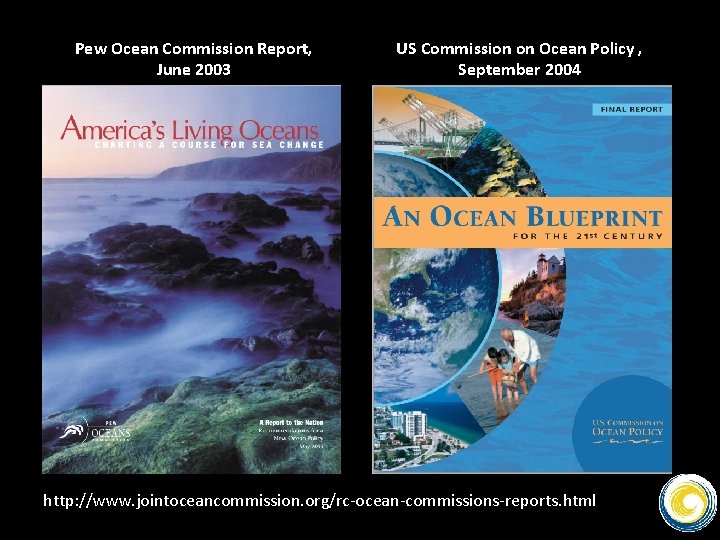
Pew Ocean Commission Report, June 2003 US Commission on Ocean Policy , September 2004 http: //www. jointoceancommission. org/rc-ocean-commissions-reports. html
“…a new era of ocean literacy that links people to the marine environment. Through enhanced marine education and awareness, we can inspire the next generation of scientists, fisherman, farmers, business and political leaders – indeed all citizens – with a greater understanding and appreciation for the oceans”. The Pew Oceans Commission 2003, p. 91. “While most people do not recognize the number of benefits the ocean provides, …, many do feel a positive connection with it… This connection can be a powerful tool for increasing awareness of, interest in, and responsible action toward the marine environment, and is critical to building an ocean stewardship ethic, strengthening the nation’s science literacy, and creating a new generation of ocean leaders. ” U. S. Commission on Ocean Policy 2004 p. 122 http: //www. jointoceancommission. org/rc-ocean-commissions-reports. html
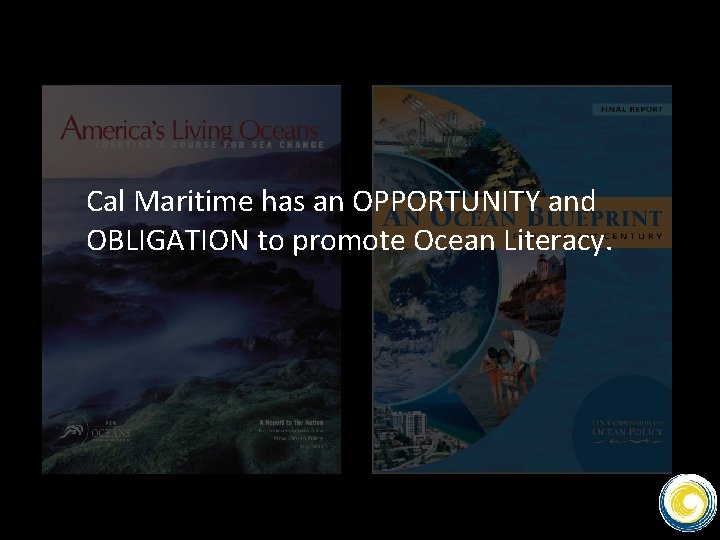
Cal Maritime has an OPPORTUNITY and OBLIGATION to promote Ocean Literacy.
In 2014 we started the Cal Maritime Ocean Initiative with the goals of: 1. Promoting ocean literacy and an ocean stewardship ethic among maritime professionals. 2. Integrating the ocean across the maritime curriculum. Cal Maritime Ocean Initiative
Questions How “Ocean Literate” are Cal Maritime students? To what extent does the Cal Maritime curriculum build “Ocean Literacy” skills? How can we best increase “Ocean Literacy” in our curriculum?
Defining Ocean Literacy “…having an understanding of the ocean’s influence on you—and your influence on the ocean“. The Center for Ocean Education Excellence (COSEE) was established in part to develop a framework for improving ocean literacy outcomes.
Defining Ocean Literacy An ocean literate person: 1) understands the essential principles and fundamental concepts about the ocean. 2) can communicate about the ocean in a meaningful way. 3) is able to make informed and responsible decisions regarding the ocean and its resources. – COSEE, 2013
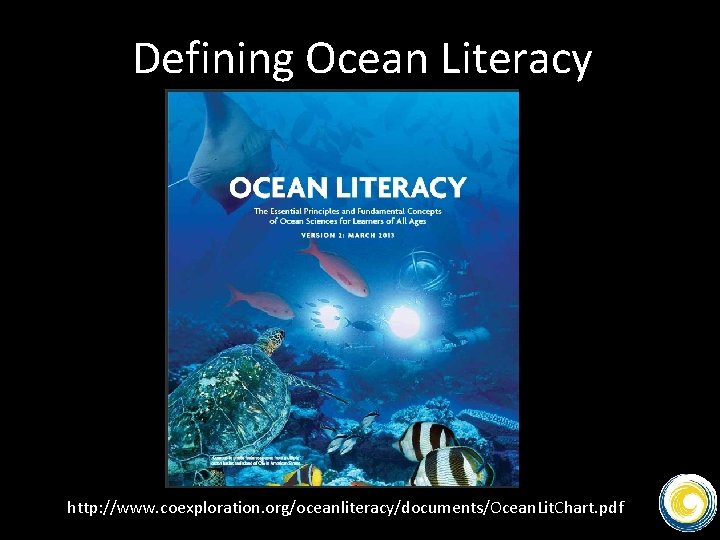
Defining Ocean Literacy http: //www. coexploration. org/oceanliteracy/documents/Ocean. Lit. Chart. pdf
Defining Ocean Literacy 7 Principles of Ocean Literacy 1. The earth has one big ocean with many features. 2. The ocean and life in the ocean shape the features of the earth. 3. The ocean is a major influence on weather and climate. 4. The ocean made the earth habitable. 5. The ocean supports a great diversity of life and ecosystems. 6. The ocean and humans are inextricably interconnected. 7. The ocean is largely unexplored.
Phase I: Incoming Class Survey Administered to incoming students during summer 2014 (n = 314). Response rate 54% Incentives for Completion - 14 Multiple Choice –Ocean Content Areas - 21 Likert-type Scale – Ocean attitudes and values 2 Essays: What interests you? How do your actions influence ocean? http: //tinyurl. com/cma-1313
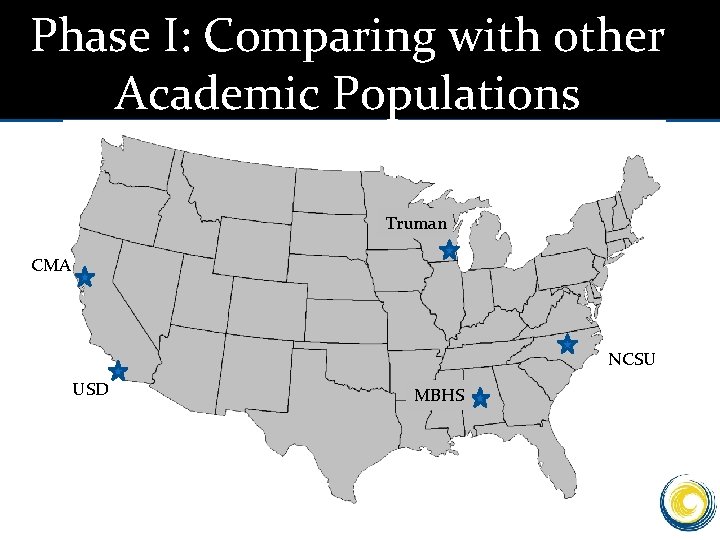
Phase I: Comparing with other Academic Populations Truman CMA NCSU USD MBHS
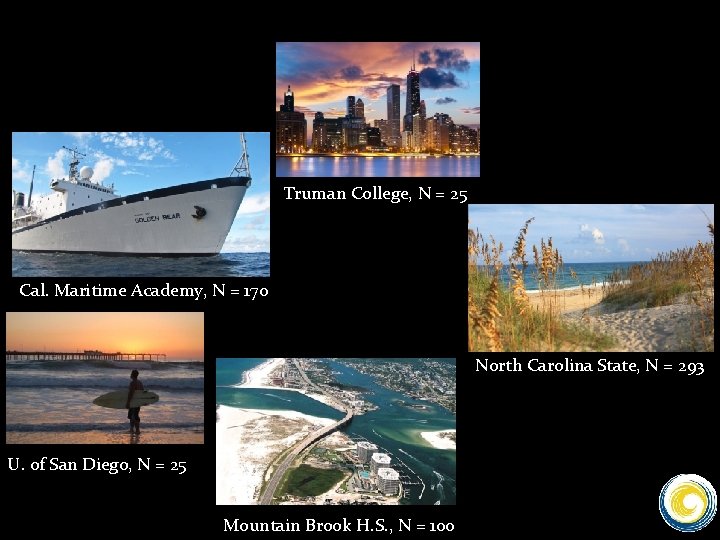
Truman College, N = 25 Cal. Maritime Academy, N = 170 North Carolina State, N = 293 U. of San Diego, N = 25 Mountain Brook H. S. , N = 100
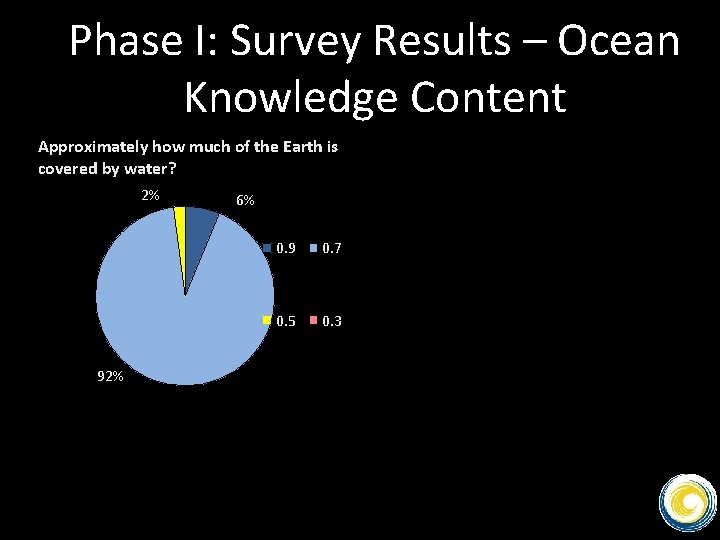
Phase I: Survey Results – Ocean Knowledge Content Approximately how much of the Earth is covered by water? 2% 6% 0. 9 0. 5 0. 7 Approximately what fraction of the total water on Earth is in the ocean? 0. 3 22 1 2 16 99. 99% 97% 92% 72% 34% 60 4%
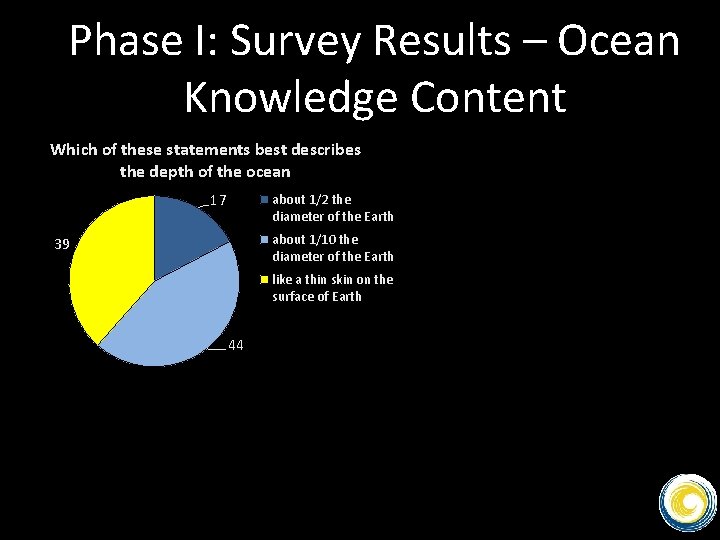
Phase I: Survey Results – Ocean Knowledge Content Which of these statements best describes the depth of the ocean 17 about 1/2 the diameter of the Earth about 1/10 the diameter of the Earth 39 like a thin skin on the surface of Earth 5 44 Which of these distances is closest to the average depth of the ocean? 13 55 27 as far away as the moon the size of the USA halfway across town the length of a football field
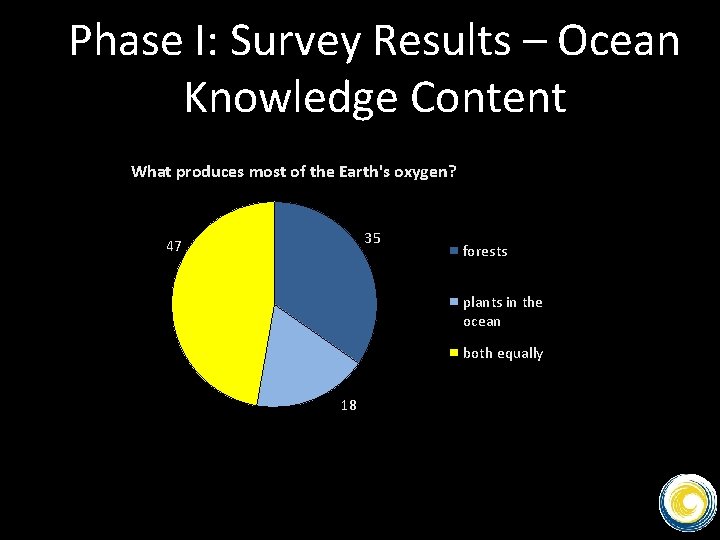
Phase I: Survey Results – Ocean Knowledge Content What produces most of the Earth's oxygen? 35 47 forests plants in the ocean both equally 18
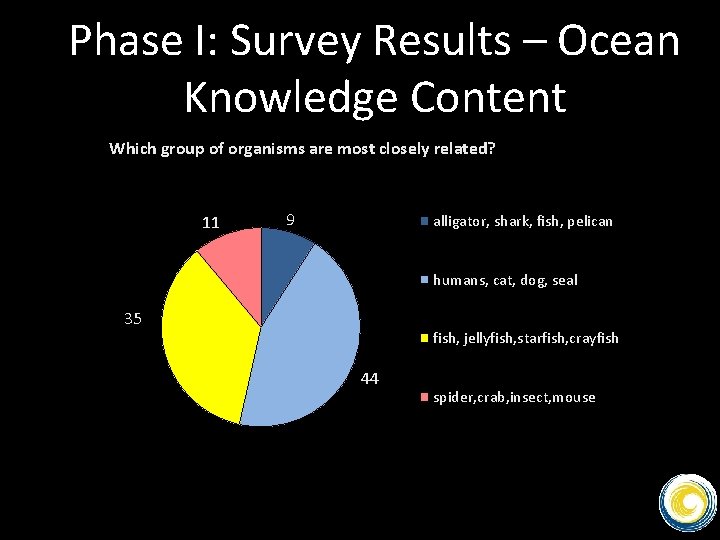
Phase I: Survey Results – Ocean Knowledge Content Which group of organisms are most closely related? 11 9 alligator, shark, fish, pelican humans, cat, dog, seal 35 fish, jellyfish, starfish, crayfish 44 spider, crab, insect, mouse
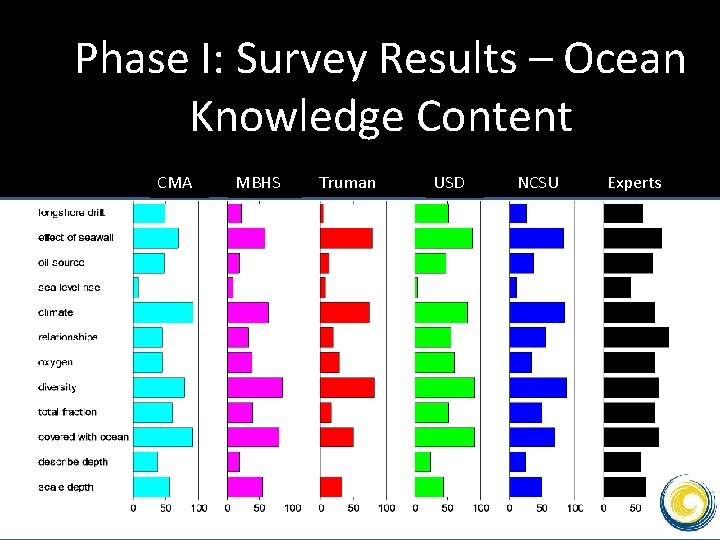
Phase I: Survey Results – Ocean Knowledge Content CMA MBHS Truman USD NCSU Experts
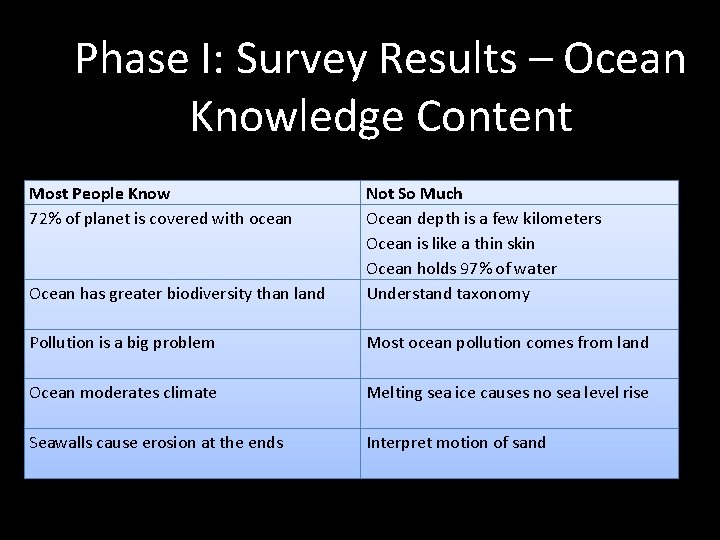
Phase I: Survey Results – Ocean Knowledge Content Most People Know 72% of planet is covered with ocean Ocean has greater biodiversity than land Not So Much Ocean depth is a few kilometers Ocean is like a thin skin Ocean holds 97% of water Understand taxonomy Pollution is a big problem Most ocean pollution comes from land Ocean moderates climate Melting sea ice causes no sea level rise Seawalls cause erosion at the ends Interpret motion of sand
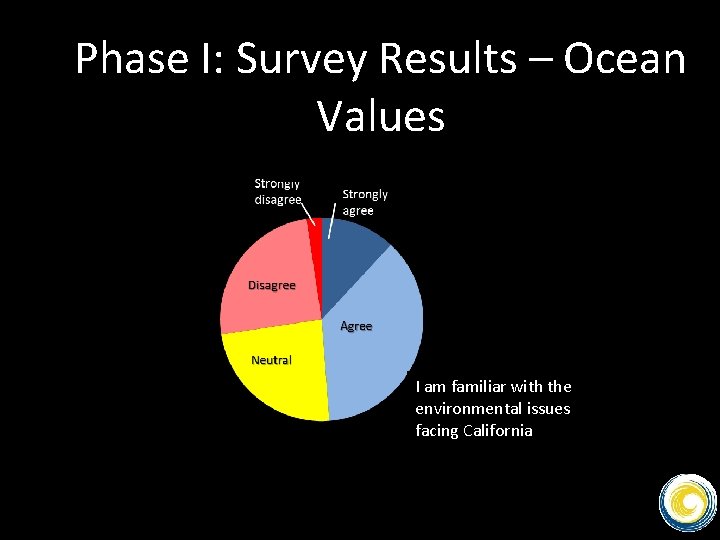
Phase I: Survey Results – Ocean Values I am familiar with the environmental issues facing California
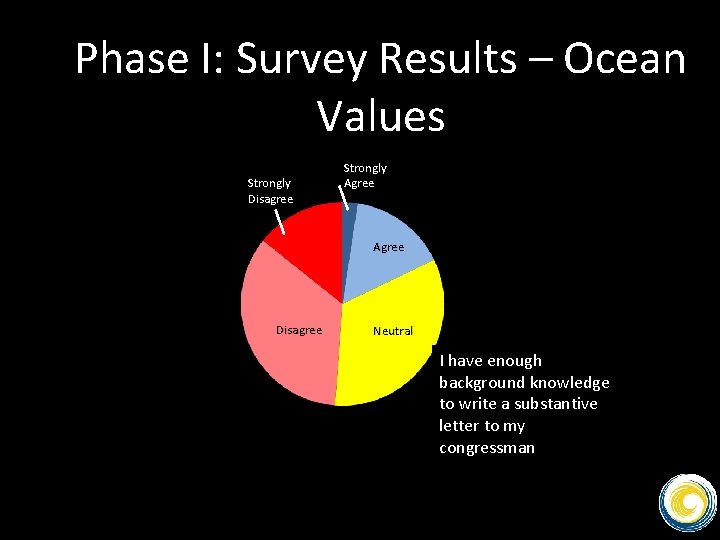
Phase I: Survey Results – Ocean Values Strongly Disagree Strongly Agree Disagree Neutral I have enough background knowledge to write a substantive letter to my congressman
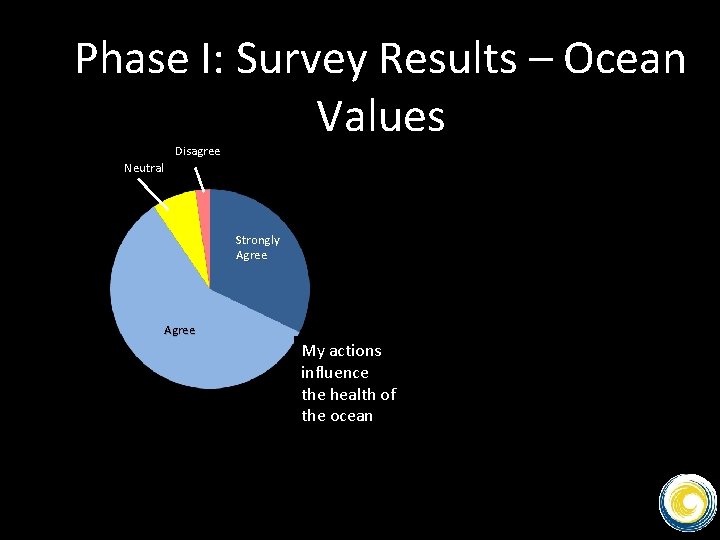
Phase I: Survey Results – Ocean Values Disagree Neutral Disagree Strongly Disagree Neutral Strongly Agree Disagree My actions influence the health of the ocean I have a personal responsibility to work for the health of the ocean
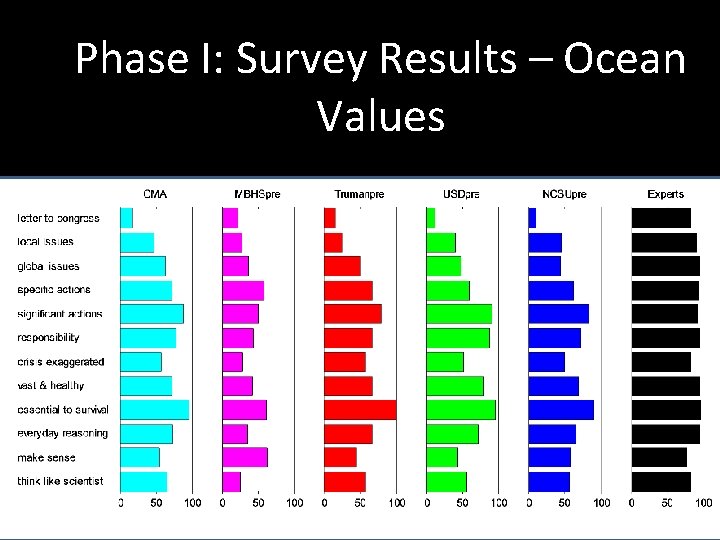
Phase I: Survey Results – Ocean Values
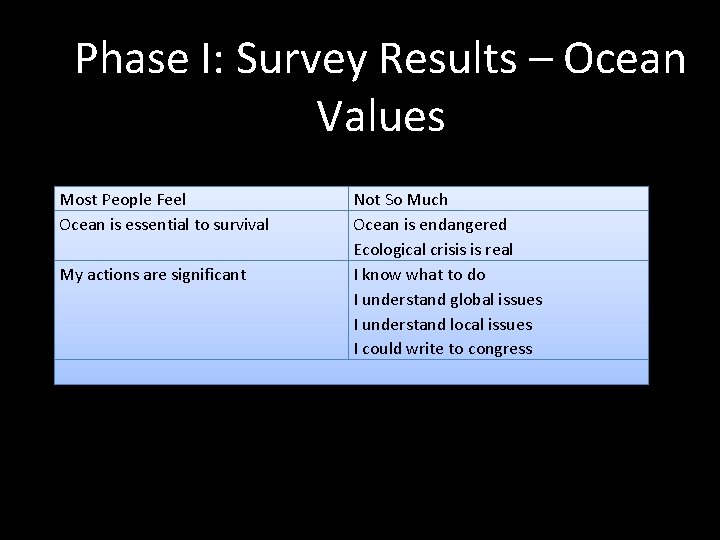
Phase I: Survey Results – Ocean Values Most People Feel Ocean is essential to survival My actions are significant Not So Much Ocean is endangered Ecological crisis is real I know what to do I understand global issues I understand local issues I could write to congress
Next Steps To what extent does the Cal Maritime curriculum build “Ocean Literacy” skills? How can we best increase “Ocean Literacy” in our curriculum?
Next Steps Spring 2015 survey of graduating seniors. 2014 – 2015 “Ocean Literacy” Faculty Learning Community representing each academic area
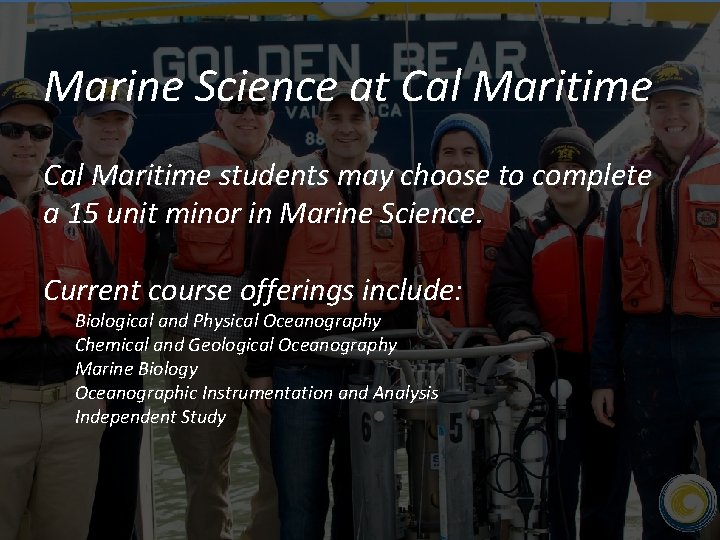
Marine Science at Cal Maritime students may choose to complete a 15 unit minor in Marine Science. Current course offerings include: Biological and Physical Oceanography Chemical and Geological Oceanography Marine Biology Oceanographic Instrumentation and Analysis Independent Study
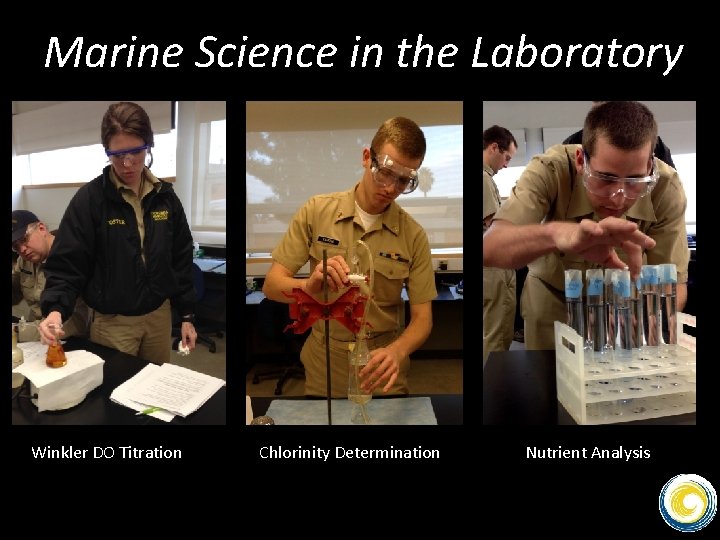
Marine Science in the Laboratory Winkler DO Titration Chlorinity Determination Nutrient Analysis
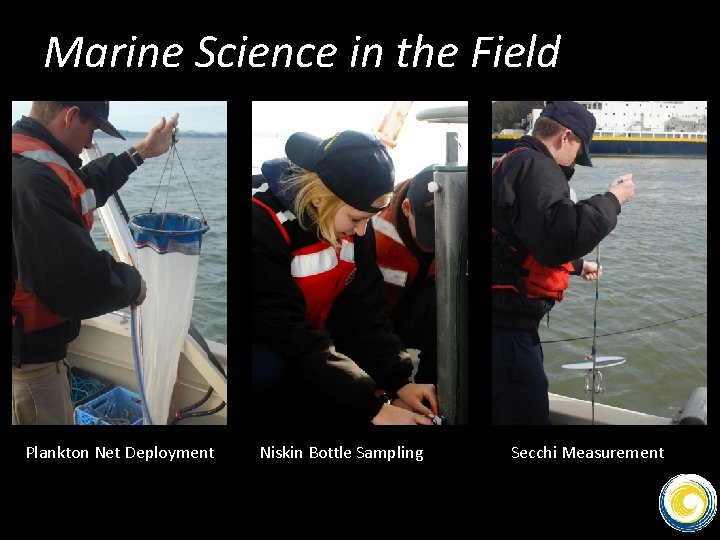
Marine Science in the Field Plankton Net Deployment Niskin Bottle Sampling Secchi Measurement
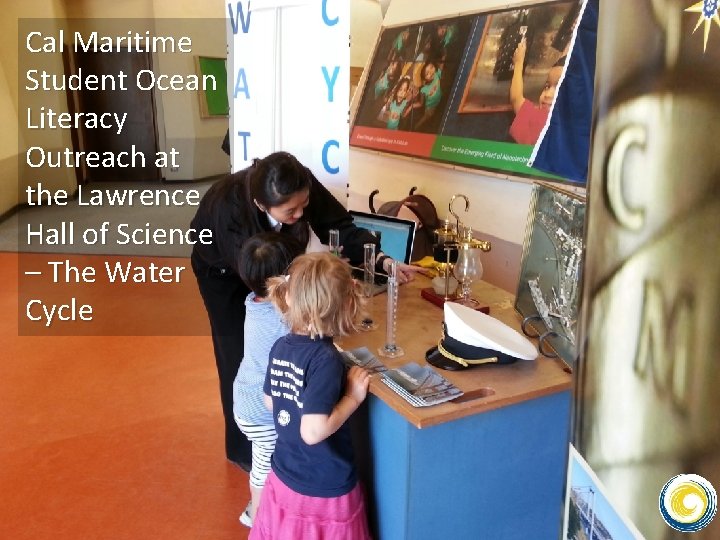
Cal Maritime Student Ocean Literacy Outreach at the Lawrence Hall of Science – The Water Cycle
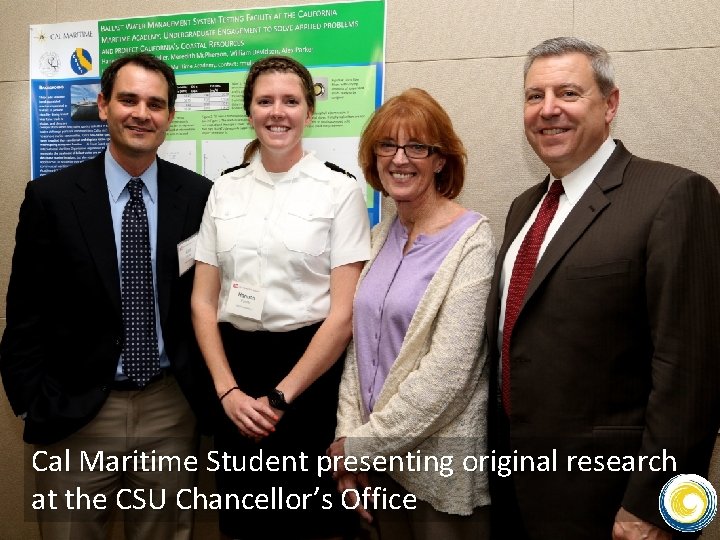
Cal Maritime Student presenting original research at the CSU Chancellor’s Office
Next Steps How do we support Ocean Literacy across the curriculum?
Next Steps • Assess Ocean Literacy at other maritime colleges • Strategize with others on how to promote the Ocean across the curriculum • Serve as a clearing house for undergraduate ocean curriculum Cal Maritime Ocean Initiative
- Slides: 34