
What do I know What is atherosclerosis What
- Slides: 13
What do I know? What is atherosclerosis? What causes atherosclerosis to occur? What effect does atherosclerosis have on arteries and blood pressure? Which cardiovascular diseases is atherosclerosis associated with?
Higher Human Biology Unit 2 Physiology and Health 2. Thrombosis
What do I need to know? What is thrombosis? What effect does a ruptured atheroma have on thrombus formation? What are the roles of thrombin, fibrinogen and fibrin in thrombus formation? How is a thrombus different to an embolus? What effect does a thrombosis have on the heart and brain? What is peripheral vascular disease? Describe two examples of peripheral vascular disease
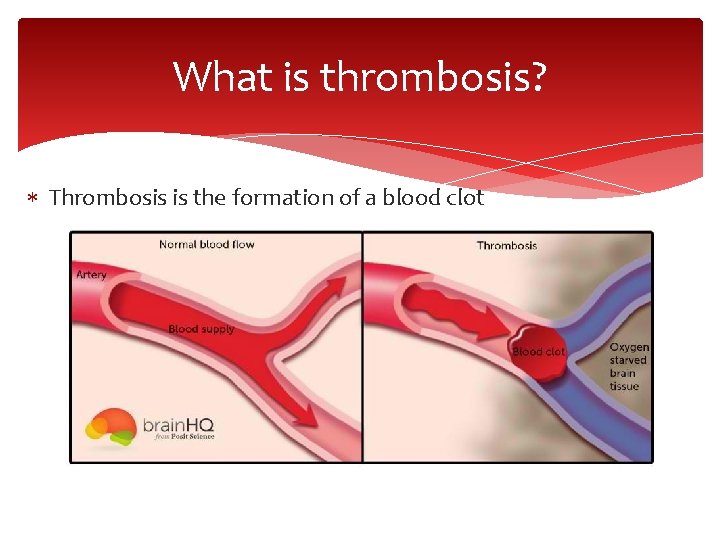
What is thrombosis? Thrombosis is the formation of a blood clot
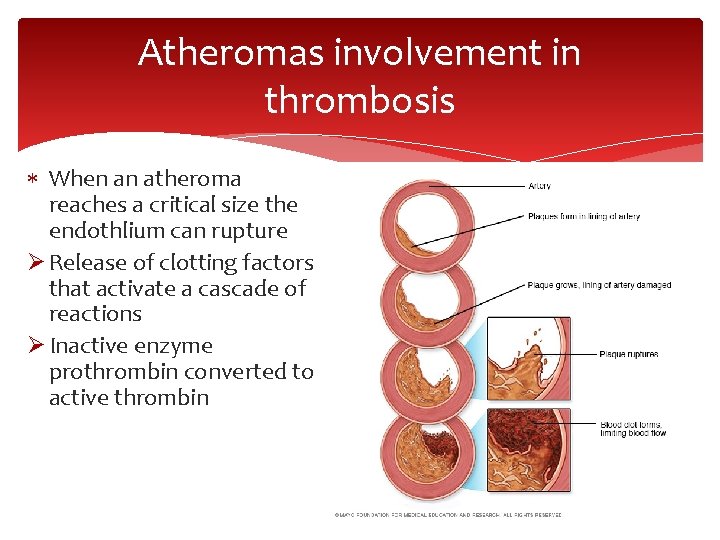
Atheromas involvement in thrombosis When an atheroma reaches a critical size the endothlium can rupture Ø Release of clotting factors that activate a cascade of reactions Ø Inactive enzyme prothrombin converted to active thrombin
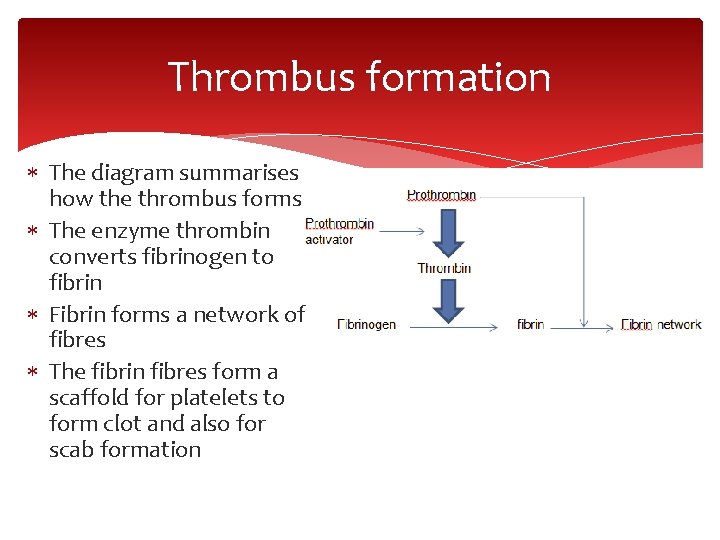
Thrombus formation The diagram summarises how the thrombus forms The enzyme thrombin converts fibrinogen to fibrin Fibrin forms a network of fibres The fibrin fibres form a scaffold for platelets to form clot and also for scab formation
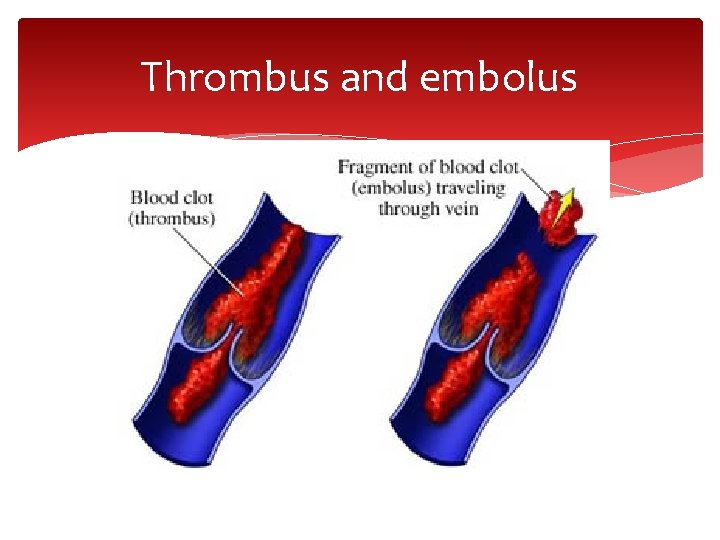
Thrombus and embolus
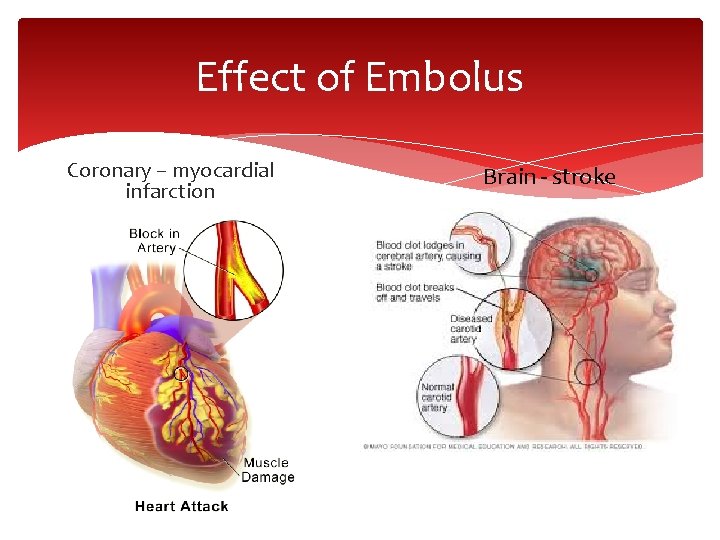
Effect of Embolus Coronary – myocardial infarction Brain - stroke
Effects of an embolus - theory Coronary thrombosis Travelling embolus lodges in coronary artery Myocardial infarction occurs – heart attack Muscle tissue no blood supply Deprived of oxygen Muscle tissue dies Brain thrombosis Travelling embolus lodges in artery of brain Stroke occurs Brain tissue no blood supply Deprived of oxygen Brain tissue dies
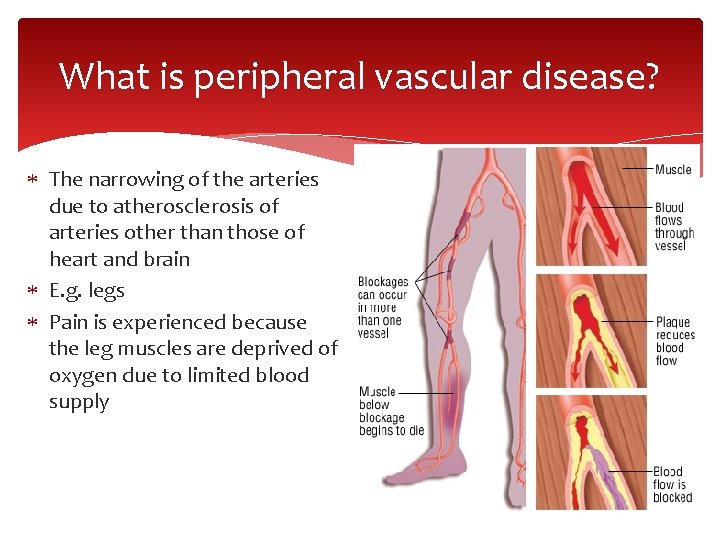
What is peripheral vascular disease? The narrowing of the arteries due to atherosclerosis of arteries other than those of heart and brain E. g. legs Pain is experienced because the leg muscles are deprived of oxygen due to limited blood supply
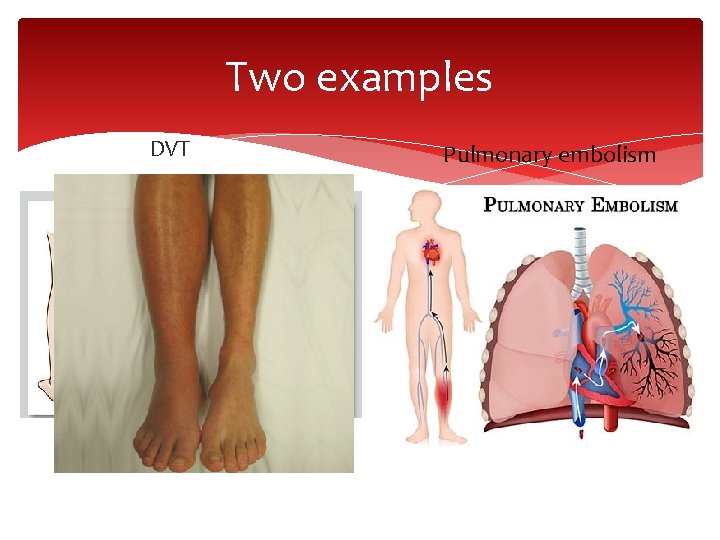
Two examples Deep vein thrombosis Clot forms in vein commonly in leg Pulmonary embolism Caused when part of a clot/thrombus splits off and travels to lung via vena cava and pulmonary artery Symptoms: chest pain difficulty breathing palpitations Treatment: anticoagulants
Two examples DVT Pulmonary embolism
Activities Testing your knowledge Qs p 186 No’s 1, 2 and 4