
What do all organisms need to survive Evolution
- Slides: 18
What do all organisms need to survive?
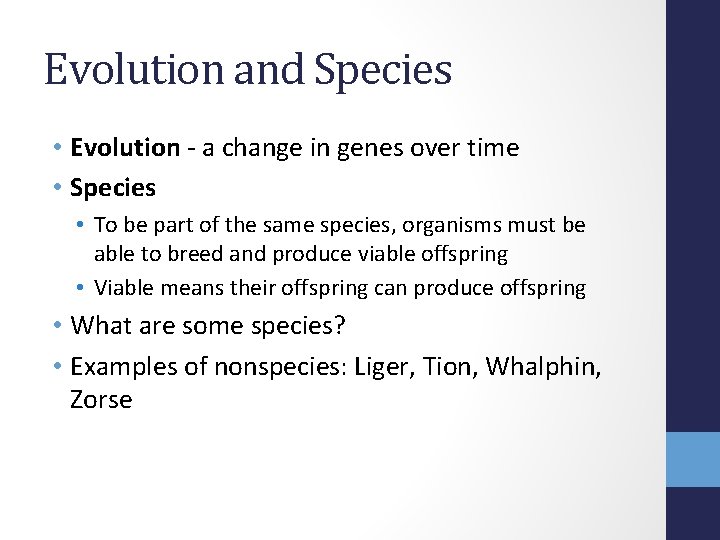
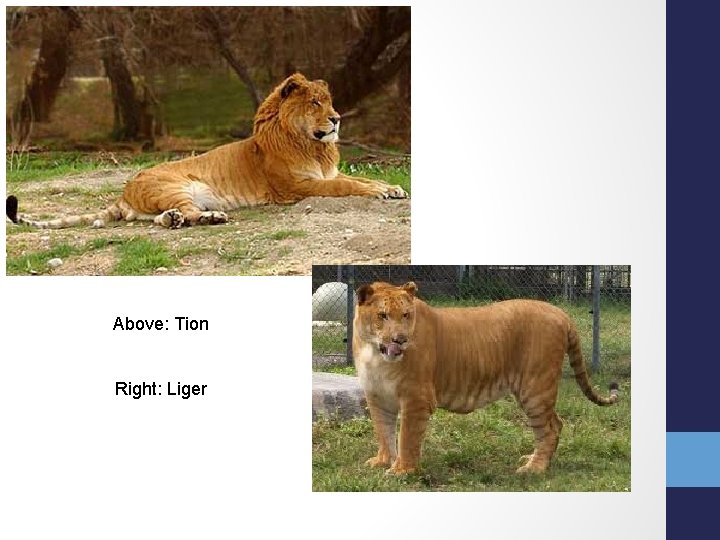
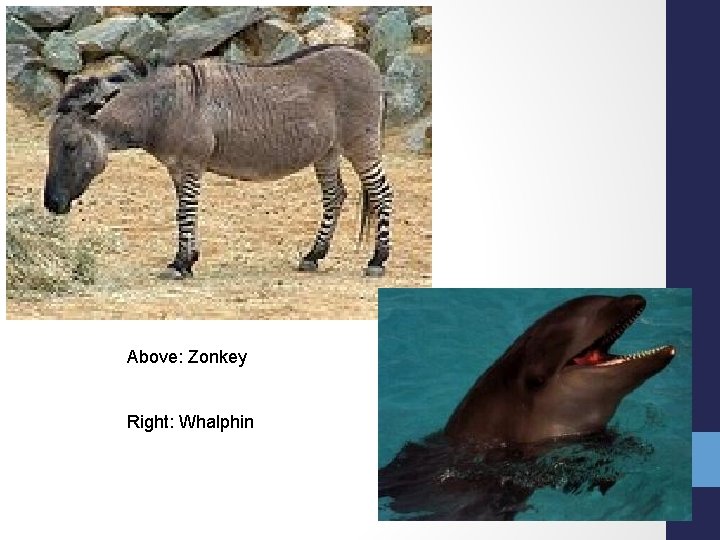
Evolution and Species • Evolution - a change in genes over time • Species • To be part of the same species, organisms must be able to breed and produce viable offspring • Viable means their offspring can produce offspring • What are some species? • Examples of nonspecies: Liger, Tion, Whalphin, Zorse
Above: Tion Right: Liger
Above: Zonkey Right: Whalphin
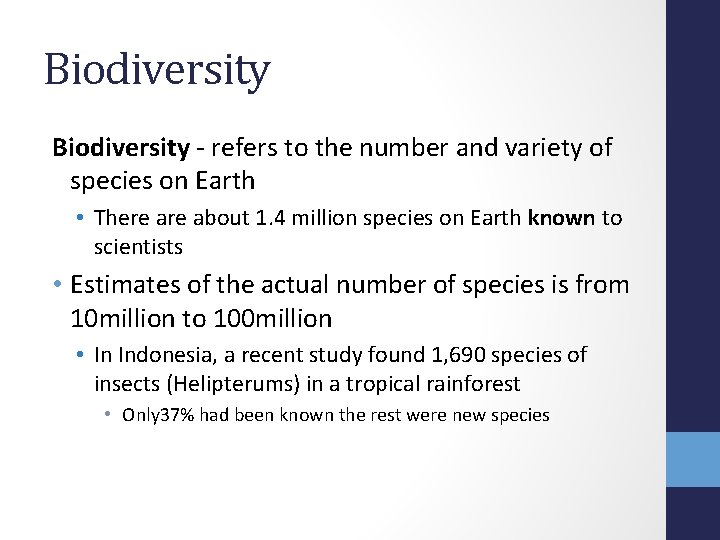
Biodiversity - refers to the number and variety of species on Earth • There about 1. 4 million species on Earth known to scientists • Estimates of the actual number of species is from 10 million to 100 million • In Indonesia, a recent study found 1, 690 species of insects (Helipterums) in a tropical rainforest • Only 37% had been known the rest were new species
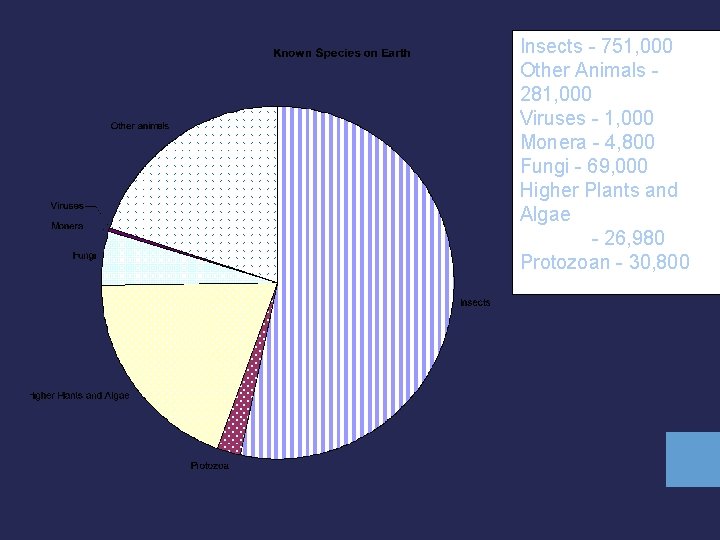
Insects - 751, 000 Other Animals 281, 000 Viruses - 1, 000 Monera - 4, 800 Fungi - 69, 000 Higher Plants and Algae - 26, 980 Protozoan - 30, 800
Rapid Extinctions • Extinctions have been caused throughout time by changes in the climate • Ice ages and warming of the Earth • Name some species that have disappeared because of rapid extinctions: • The biggest cause of extinctions today are humans • Many species are becoming endangered because of human action • Many scientists fear we are living during another mass extinction, caused not by climate change but by people • It is estimated that by the year 2100, 25% of all organisms on Earth will become extinct
How Humans are Causing Extinctions • The human population rate increases at apprx 260, 000 people per day • Because humans change the environment so rapidly and dramatically, we are causing other species to become extinct at an accelerated rate • Species don’t have time to adapt
Main Causes • Habitat Destruction • As population grows, we need more land for homes and resources • By developing land, we destroy the habitats of other species • Habitats are where organisms live and interact with each other and the surrounding world • 75% of extinctions occurring now are caused by habitat destruction • many organisms are adapted to live in a particular ecosystem, once that habitat is gone, they die
Ex: Florida Panther (cougar, mountain lion) • 200 yrs ago, panthers ranged from Alaska to South America • they need large ranges and protective cover for feeding and resting as well as large source of prey • Today, much of the panthers habitat has been broken up by development, roads, canals and fences • The only cougar population East of the Mississippi River is the Florida Panther • Only about 50 remain in the wild • It is one of the most endangered species in North America • there are more extinctions occurring in tropical climates where land is being developed for farming and cattle grazing • at least 50% of the world’s species live in tropical rainforests
• Hunting • unregulated hunting may lead to a species extinction • American Buffalo (bison) were almost hunted to extinction in the 1800 s • In 1906 only ~300 buffalo remained • Many were killed for their tongues (a delicacy) and the rest of the body was left to decay • Today laws protect buffalo and their population has grown to ~130, 000 which is better but still not good enough • Legal hunting is not a major cause of extinction in countries with hunting laws • Agencies work together to make sure only a certain number game animals are killed each year • Deer, turkey, bear, fishing, rabbit In developing nations, illegal hunting, poaching can threaten animals with extinction
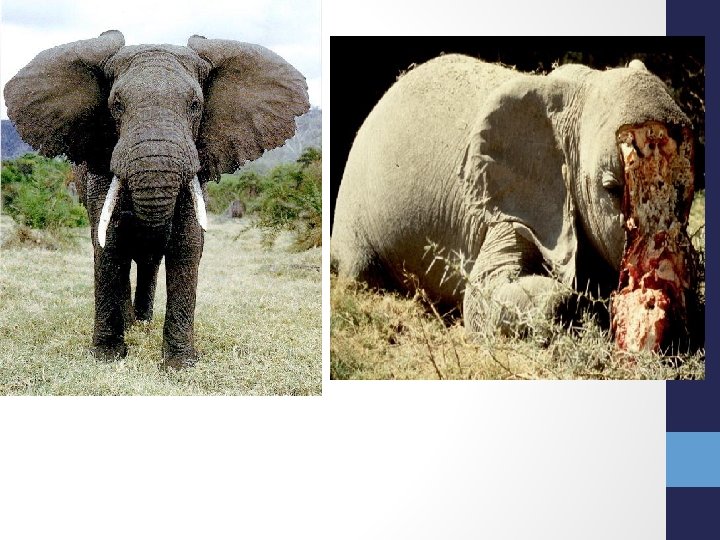
• In developing nations, illegal hunting, poaching, can threaten animals with extinction • Poaching is a serious problem in developing countries where animal meat or parts is money for poor families • African elephants are poached for ivory • Poachers would kill elephants, cut their tusks and leave the rest to rot • Same thing with white rhinos
Exotic and Invasive Species • A species that is not native to a particular region are exotic • Many exotic species are brought into an area by people for aesthetic reasons • Plants – people think they look pretty • Animals – make cool pets • Many exotic species will out compete native species for habitats and niches, driving native species to extinction • These are called invasive species • Ex: Melaleuca – a tree in FL that was brought in from Australia and is taking the place of native trees in the Everglades • Ex: Zebra mussels out compete native mussels in the Susquehanna • Ex: Mile – a – Minute which is plant accidentally introduced in the 1930 s, has a very fast growth rate and uses up nutrients before native plants
Trophic Cascade • Trophic cascades occur when predators in a food web suppress the abundance and/or alter traits (e. g. , behavior) of their prey, thereby releasing the next lower trophic level from predation • Top Down Cascade- when the top predator in an ecosystem is affected • Ex: Yellowstone Wolves • Bottom Up Cascade- when the primary producers (plants) are affecting • Ex: Development, invasive species
Value of Biodiversity • Extinction is a gradual process but humans are speeding up that process • Why should we care so much? • Biodiversity is important to ecosystems • Each species has a role to play in its ecosystem and is dependent on others species for survival • As species begin to disappear, the ecosystem changes and eventually may collapse • Some species are so important to the functioning of an ecosystem, they are called keystone species • If the keystone species disappears, the whole ecosystem would collapse • Ex: Sea Otters (Pacific Coast)
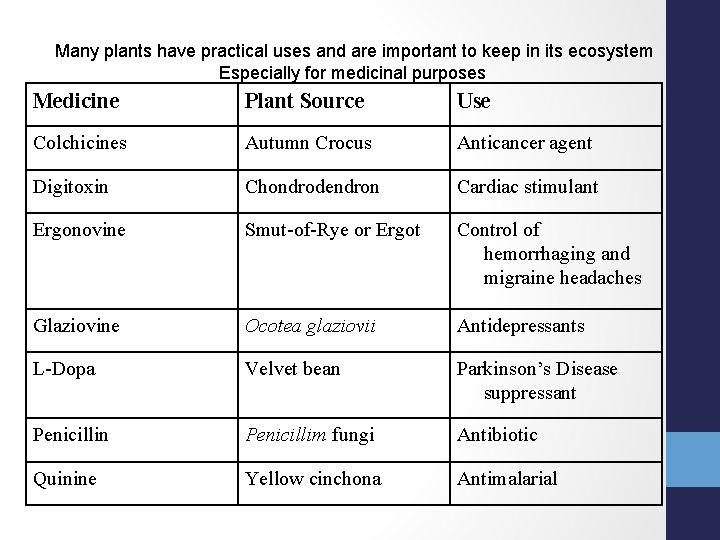
Many plants have practical uses and are important to keep in its ecosystem Especially for medicinal purposes Medicine Plant Source Use Colchicines Autumn Crocus Anticancer agent Digitoxin Chondrodendron Cardiac stimulant Ergonovine Smut-of-Rye or Ergot Control of hemorrhaging and migraine headaches Glaziovine Ocotea glaziovii Antidepressants L-Dopa Velvet bean Parkinson’s Disease suppressant Penicillin Penicillim fungi Antibiotic Quinine Yellow cinchona Antimalarial
• Many scientists are concerned that the loss of biodiversity will limit the development of future treatments • There may be species in the rainforest to help treat debilitating diseases that haven’t been discovered yet • Undiscovered plant species may provide new food • The world’s population relies on rice, wheat and corn for over half of its food • Researchers are always looking for new food sources or wild species that can be crossed with crops to produce species that are pest and drought resistant • Aesthetic Reasons • When species become extinct, we lost objects of fascination, wonder and beauty • Time spent in nature with other living organism can renew our sense of connection with the world around us and renew our appreciation