
What Difference Can Great Leadership make The Role


- Slides: 27
What Difference Can Great Leadership make? The Role of Principals in Closing the Achievement Gap Pedro A. Noguera, Ph. D. UCLA
The Reproduction Dilemma • Rather than reducing poverty education is implicated in the reproduction of inequality across generations • Education policies have failed to disrupt these patterns – We have ignored gaps in opportunity • We need new high leverage strategies that place equity as the central goal and improve conditions for teaching and learning
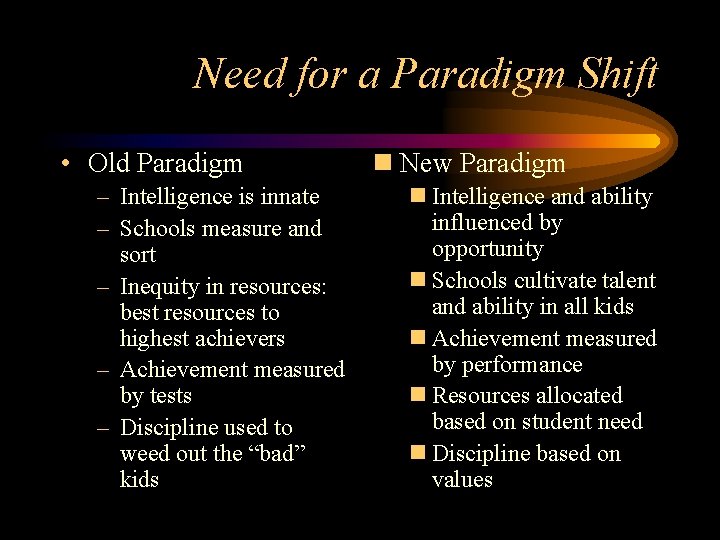
Need for a Paradigm Shift • Old Paradigm – Intelligence is innate – Schools measure and sort – Inequity in resources: best resources to highest achievers – Achievement measured by tests – Discipline used to weed out the “bad” kids n New Paradigm n Intelligence and ability influenced by opportunity n Schools cultivate talent and ability in all kids n Achievement measured by performance n Resources allocated based on student need n Discipline based on values
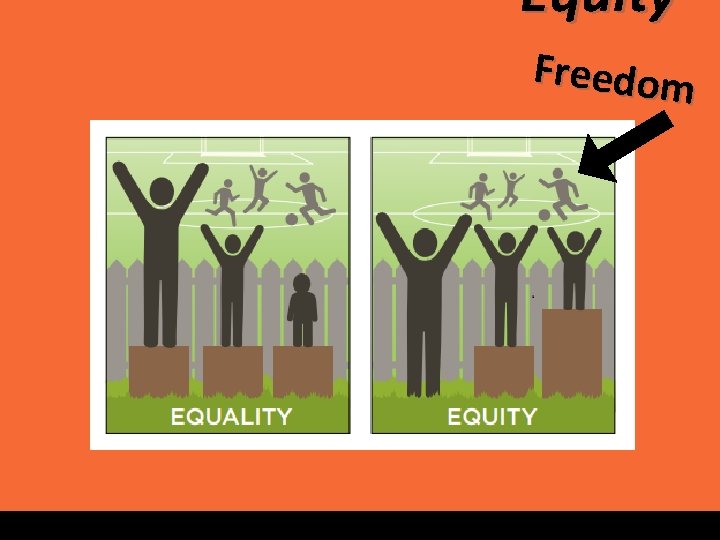
Making equity central • Equity is: – Giving students the support they need to be successful • Academic and social – Recognizing that not all students are the same • They learn in different ways and at different paces • Pervasive inequality makes pursuit of equity difficult but essential • Staying focused on outcomes – academic and developmental
Equity is not: - Lowering standards or expectations - Treating all children the same - Something only schools serving poor children of color should be concerned about - Choosing which students to serve – disadvantaged or affluent
Equity Freedom
Equity requires a balance between technical and adaptive work • Technical work - A focus on managing the operations of the system, insuring that procedures are working and that employees are in compliance with policy. • Adaptive work - A focus on the dynamic and complex nature of the work, its substance, meaning and purpose. Work guided by a long term vision, with medium and short term goals. Leaders are actively engaged in trying to achieve their goals in a constantly changing environment – Ron Hiefitz - Leadership on the Line
Skills Needed by Principals • Instructional leadership - adaptive • Knowledge of finance and budget management technical • Public relations- adaptive • Human Resources - both • Data management/analysis - technical • Strategic planning - both • Knowledge of social welfare service delivery both
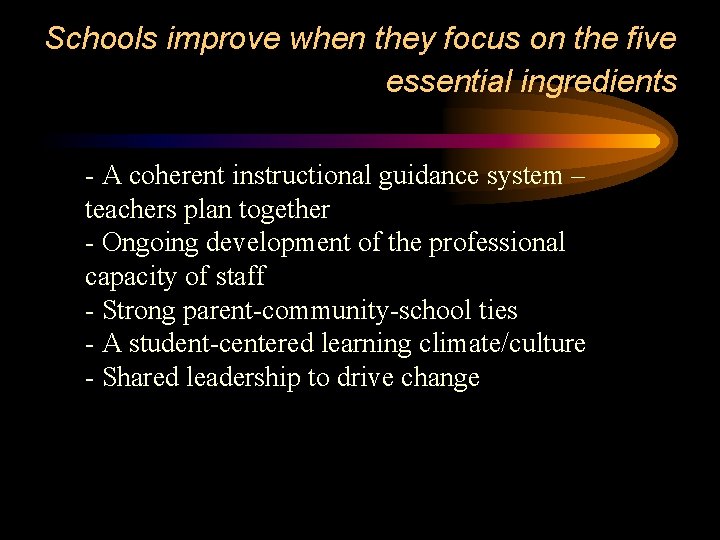
Schools improve when they focus on the five essential ingredients - A coherent instructional guidance system – teachers plan together - Ongoing development of the professional capacity of staff - Strong parent-community-school ties - A student-centered learning climate/culture - Shared leadership to drive change
Pursuing Equity and Excellence at Brockton HS: Adams scholarship winners 2016
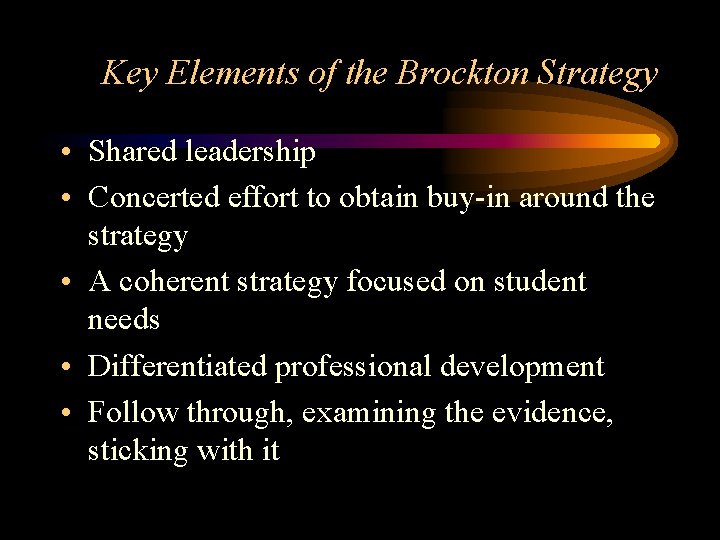
Key Elements of the Brockton Strategy • Shared leadership • Concerted effort to obtain buy-in around the strategy • A coherent strategy focused on student needs • Differentiated professional development • Follow through, examining the evidence, sticking with it
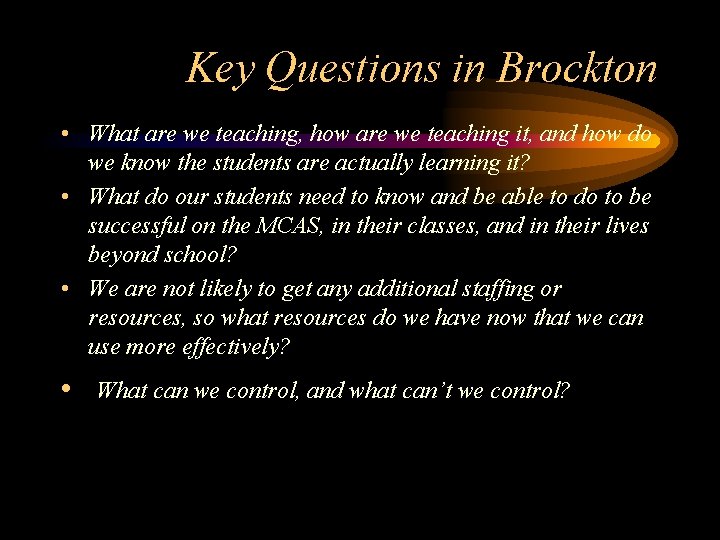
Key Questions in Brockton • What are we teaching, how are we teaching it, and how do we know the students are actually learning it? • What do our students need to know and be able to do to be successful on the MCAS, in their classes, and in their lives beyond school? • We are not likely to get any additional staffing or resources, so what resources do we have now that we can use more effectively? • What can we control, and what can’t we control?
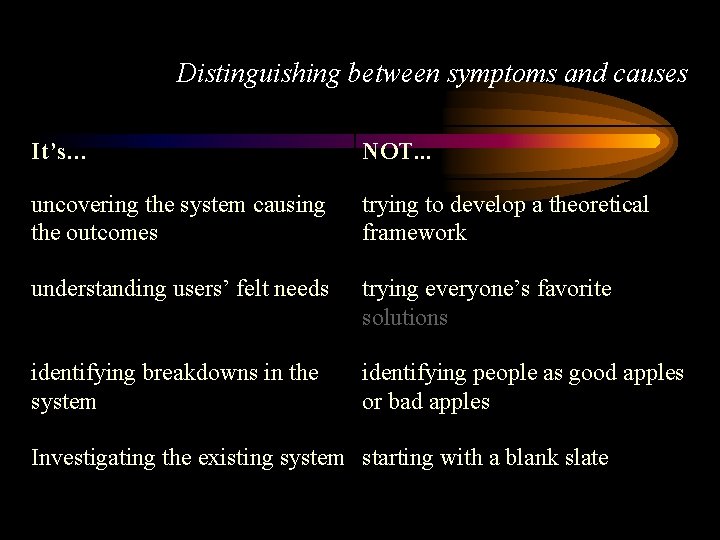
Distinguishing between symptoms and causes It’s… NOT. . . uncovering the system causing the outcomes trying to develop a theoretical framework understanding users’ felt needs trying everyone’s favorite solutions identifying breakdowns in the system identifying people as good apples or bad apples Investigating the existing system starting with a blank slate
Turn Around at Brockton High • “Brockton High School has every excuse for failure, serving a city plagued by crime, poverty, housing foreclosures, and homelessness… But Brockton High, by far the state’s largest public high school with 4, 200 students, has found a success in recent years that has eluded many of the state’s urban schools: MCAS scores are soaring, earning the school state recognition as a symbol of urban hope. ” • James Vaznis, Boston Globe Oct 9, 2009.
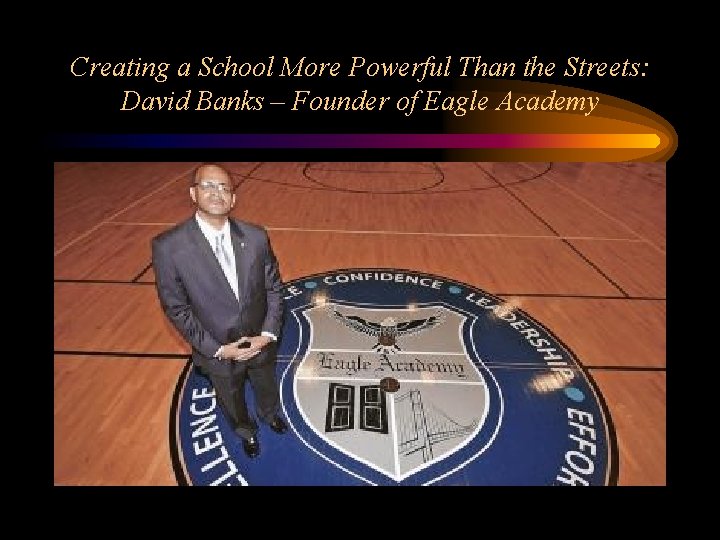
Creating a School More Powerful Than the Streets: David Banks – Founder of Eagle Academy
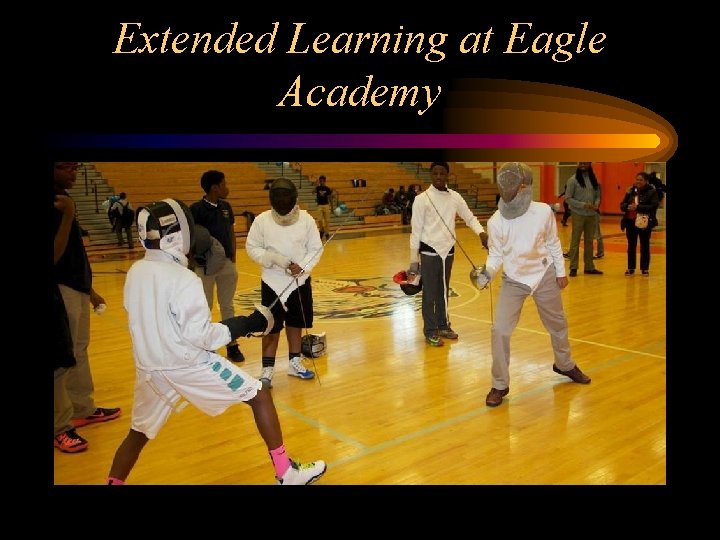
Extended Learning at Eagle Academy
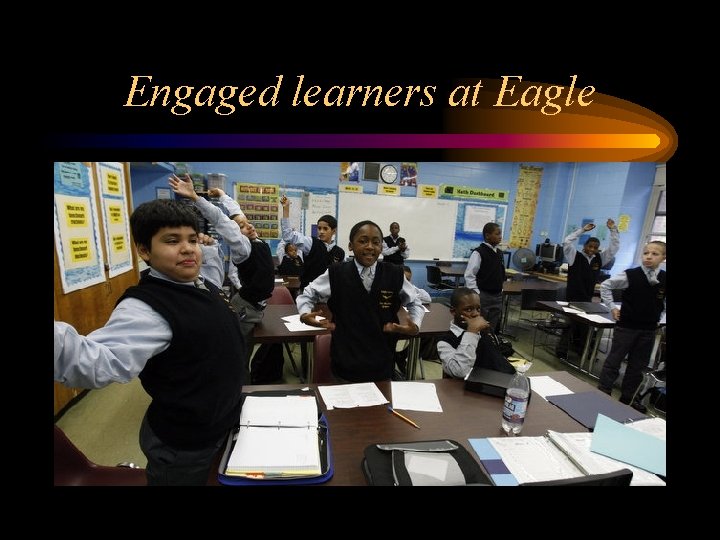
Engaged learners at Eagle
Key to Success at Eagle Academy: Ongoing focus on capacity building – Improve instruction through ongoing, differentiated professional development: • Content - subject matter coaches • Pedagogy- curriculum alignment, various instructional strategies • Rapport with students – Strong school-community partnerships • • Health and social services Extracurricular activities Immigrant services - language and culture Mentoring and youth services
Creating a culture that supports teaching and learning - Rituals that reinforce core values – induction ceremony, town hall meetings - Shared practices and common expectations - Generating and sustaining buy-in among staff around shared goals and strategies – Clear and measureable goals – Time to deliberate, collaborate and process • Building team work with staff, students and parents – Maintain high morale • Developing the intrinsic motivation of students to learn
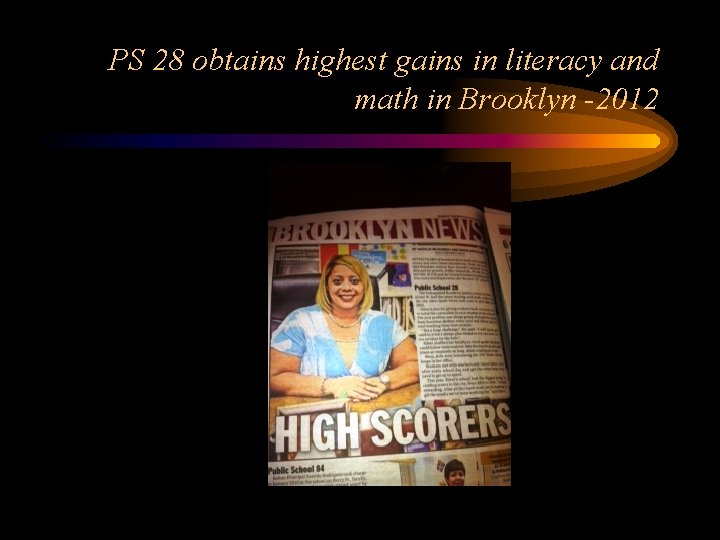
PS 28 obtains highest gains in literacy and math in Brooklyn -2012
Key Elements of PS 28 Strategy • • Instructional leadership Parental support Community partnerships Ongoing focus on building the capacity of teachers • Individualized support for students
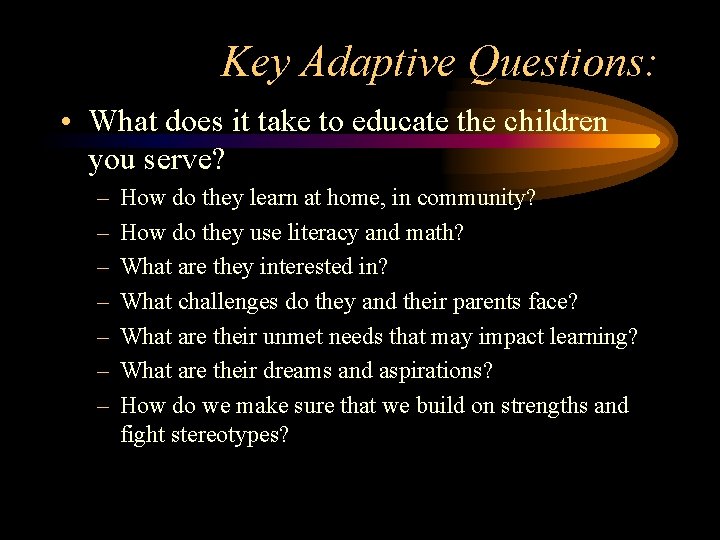
Key Adaptive Questions: • What does it take to educate the children you serve? – – – – How do they learn at home, in community? How do they use literacy and math? What are they interested in? What challenges do they and their parents face? What are their unmet needs that may impact learning? What are their dreams and aspirations? How do we make sure that we build on strengths and fight stereotypes?
50 Books for Boys American Reading Company
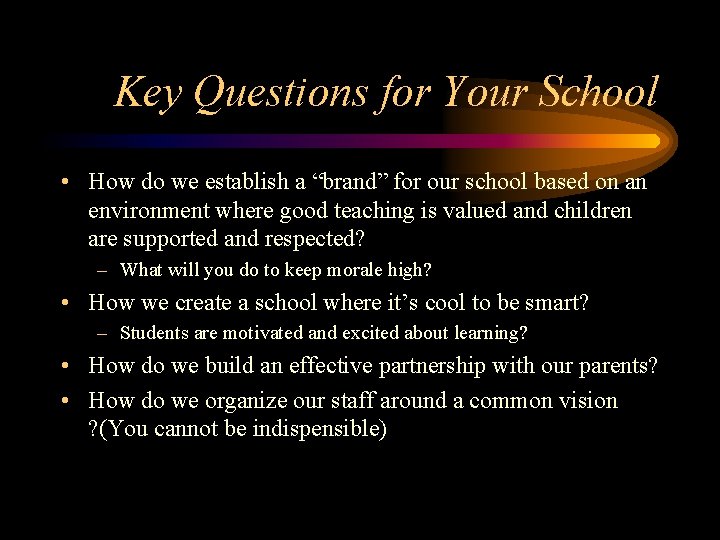
Key Questions for Your School • How do we establish a “brand” for our school based on an environment where good teaching is valued and children are supported and respected? – What will you do to keep morale high? • How we create a school where it’s cool to be smart? – Students are motivated and excited about learning? • How do we build an effective partnership with our parents? • How do we organize our staff around a common vision ? (You cannot be indispensible)
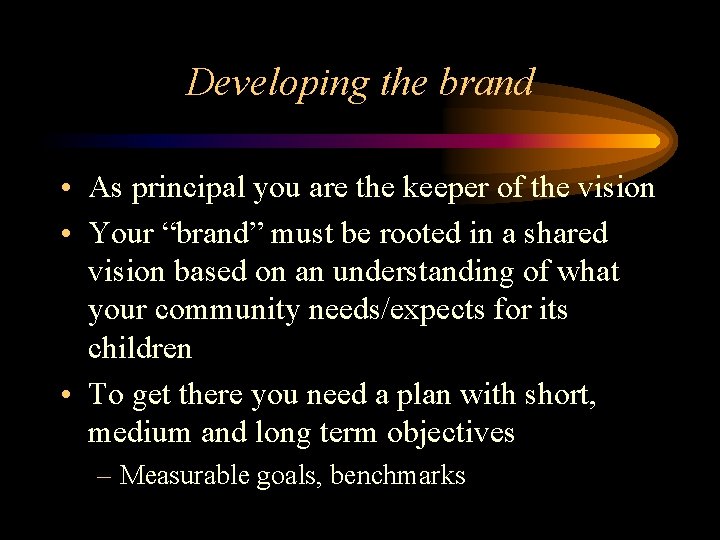
Developing the brand • As principal you are the keeper of the vision • Your “brand” must be rooted in a shared vision based on an understanding of what your community needs/expects for its children • To get there you need a plan with short, medium and long term objectives – Measurable goals, benchmarks
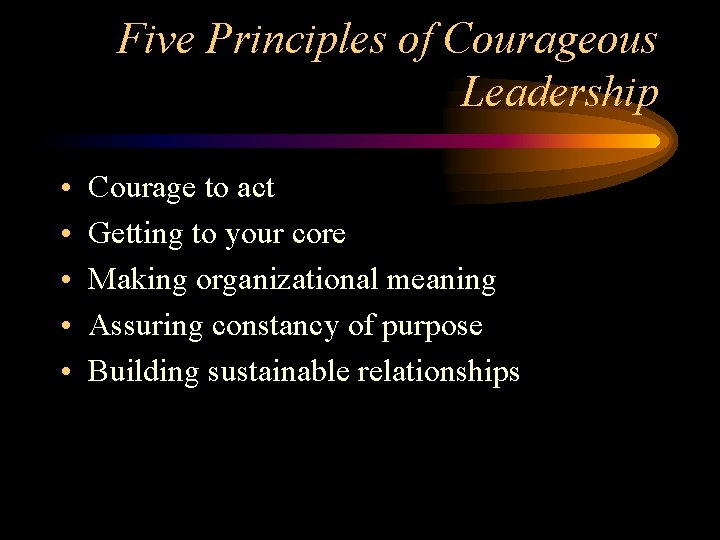
Five Principles of Courageous Leadership • • • Courage to act Getting to your core Making organizational meaning Assuring constancy of purpose Building sustainable relationships
Today’s challenges require proactive leadership • Achieving Excellence and Equity • Reducing racial disparities - Eliminating the predictability of achievement patterns • Addressing the social needs of poor and immigrant children • Doing more with less • Working under political pressure • Restoring public confidence and support – prevent losing students to charters and private schools