
What determines the violence of an eruption Composition


- Slides: 16
What determines the violence of an eruption? Composition of the magma determine the “violence” or explosiveness of a volcanic eruption
Composition of Magma • Temperature: most rock melt at 800 -1200 C • Pressure: increases with depth, as pressure increases temperature rock melts increases • Dissolved gases: H 2 O vapor, CO 2, SO 2, H 2 SO 4 As amount increases, exclusivity increases The above three factors control the viscosity of magma
What is Viscosity? • measure of a material’s resistance to flow Think of Syrup & Water
Factors affecting viscosity Viscosity – dependent on both silica content and temperature. • Temperature - Hotter magmas are less viscous (Compare difference between cold & hot syrup)
Factors affecting viscosity • Composition - Silica (Si. O 2 ) content More silica, > viscosity : (thick & stick) gases trapped, explosive eruptions (Rhyolitic Lava) Less silica, < viscosity : (thin & runny) flow easily, nonexplosive eruptions (Basaltic Lava )
Generalized Types Of Lava Basaltic Lava Andestic Lava Rhyolitic Lava
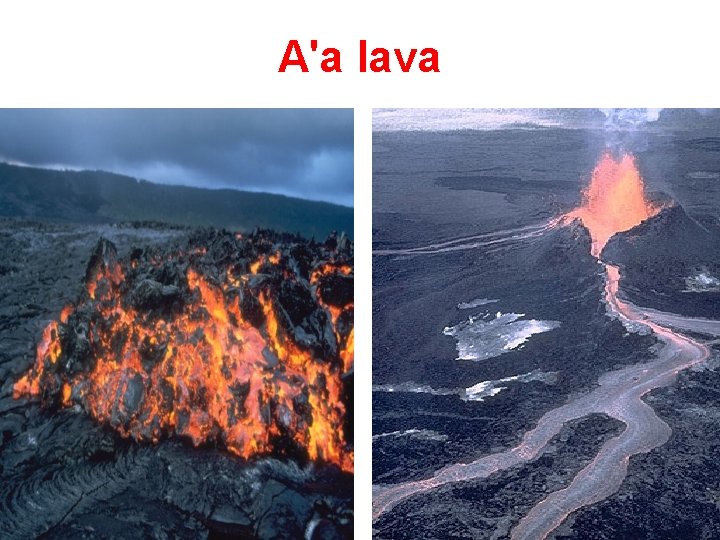
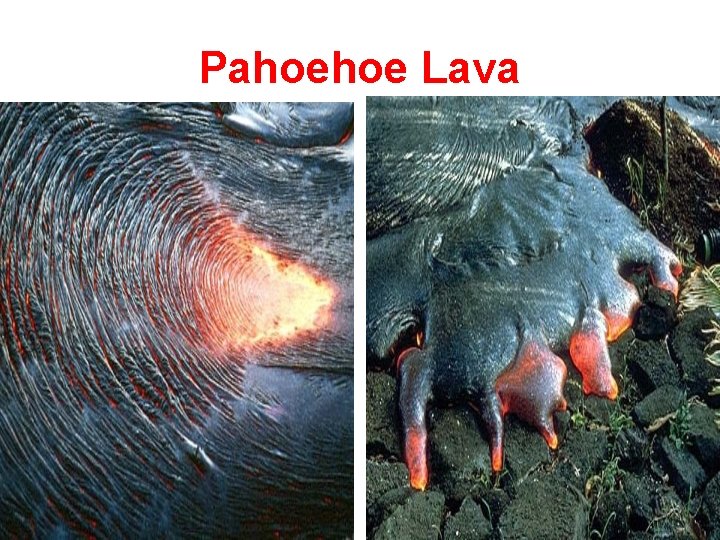
Basaltic Lava low viscosity flow rapidly for great distances nonexplosive eruption primarily from shield volcanoes (Example Hawaiian Volcanoes) • Subdivided into flow types – A'a lava: rough, jagged blocky texture – Pahoehoe Lava: resembles a twisted or rope texture • •
A'a lava
Pahoehoe Lava
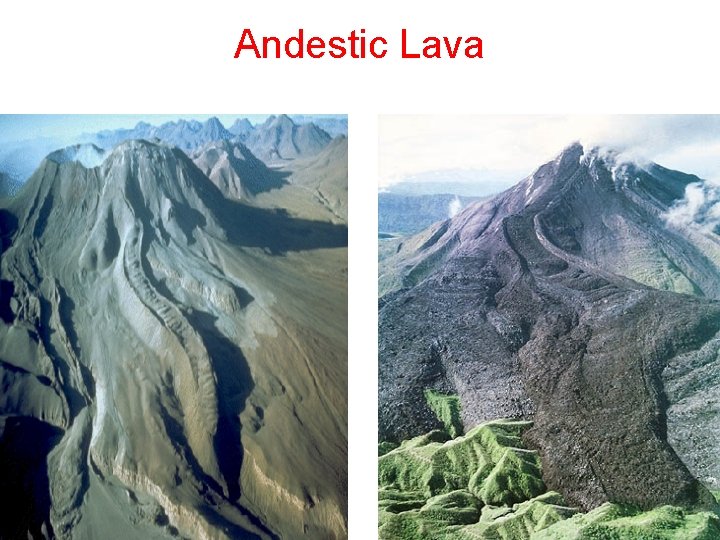
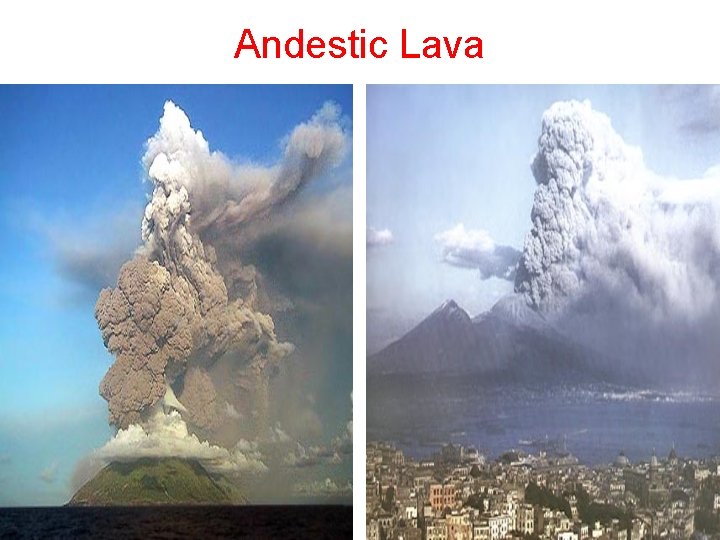
Andestic Lava • 50 -60% Silica • Massive explosions, huge volumes of ash & debris • generally produces blocky lava • Composite (stratovolcanoes) forming the Aleutian islands in Alaska, the crest of the Cascade Mountains in the Pacific Northwest
Andestic Lava
Andestic Lava
Rhyolitic Lava • • • More than 60% Silica high viscosities and high gas contents generally ooze out of the volcano's The best known examples Yellowstone Most recent eruptions 640, 000 years ago
• Refer to text p 510
ANY QUESTIONS?