
What characteristics make Archaea more like eukaryotes than
- Slides: 36
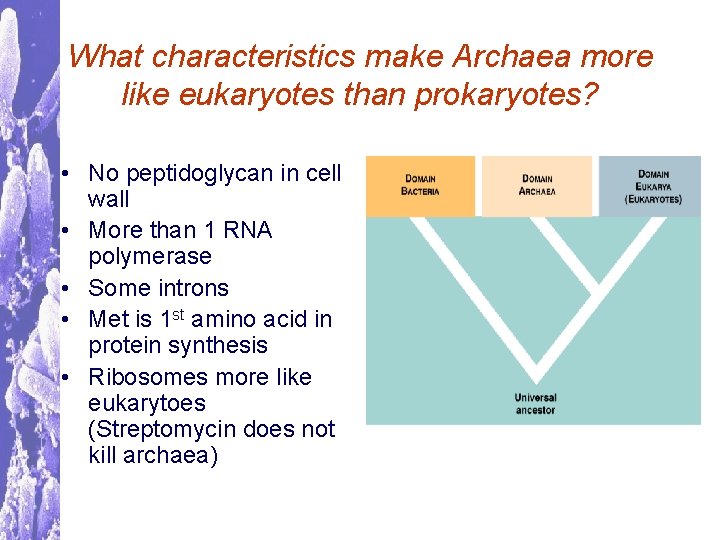
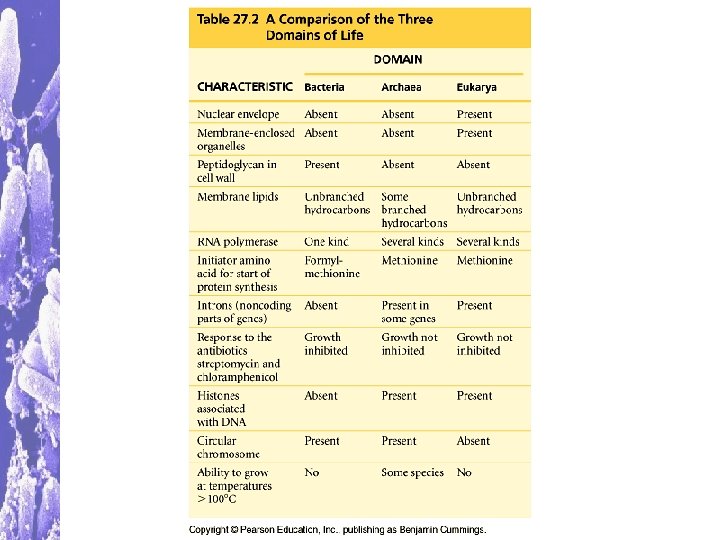
What characteristics make Archaea more like eukaryotes than prokaryotes? • No peptidoglycan in cell wall • More than 1 RNA polymerase • Some introns • Met is 1 st amino acid in protein synthesis • Ribosomes more like eukarytoes (Streptomycin does not kill archaea)
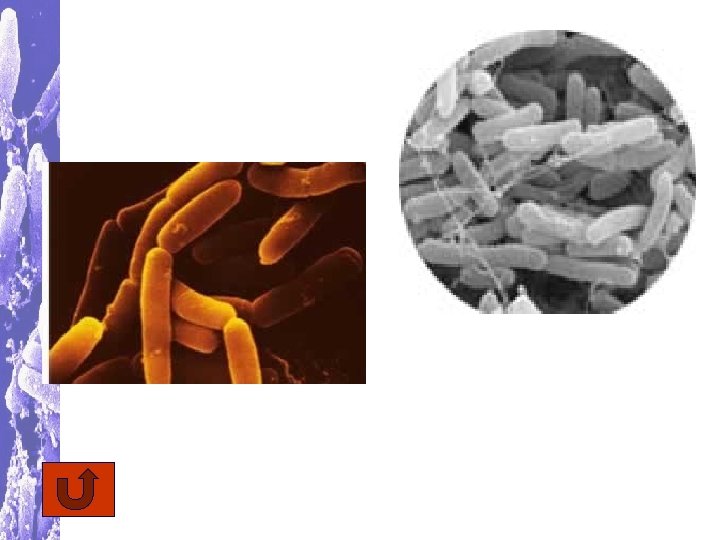
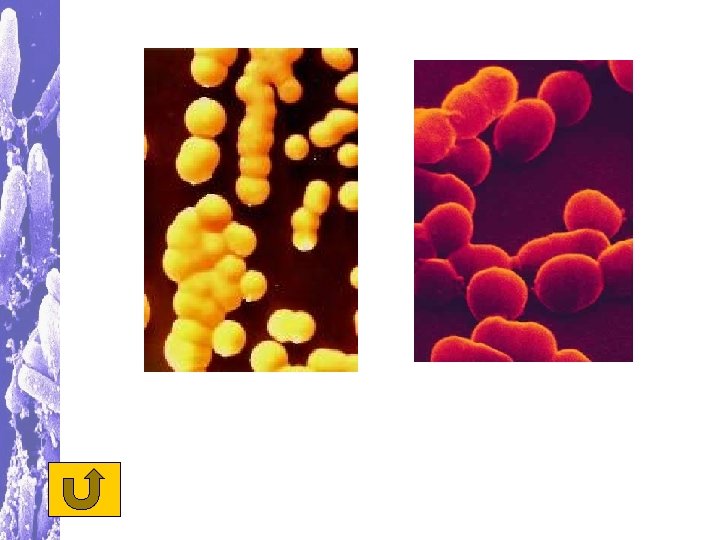
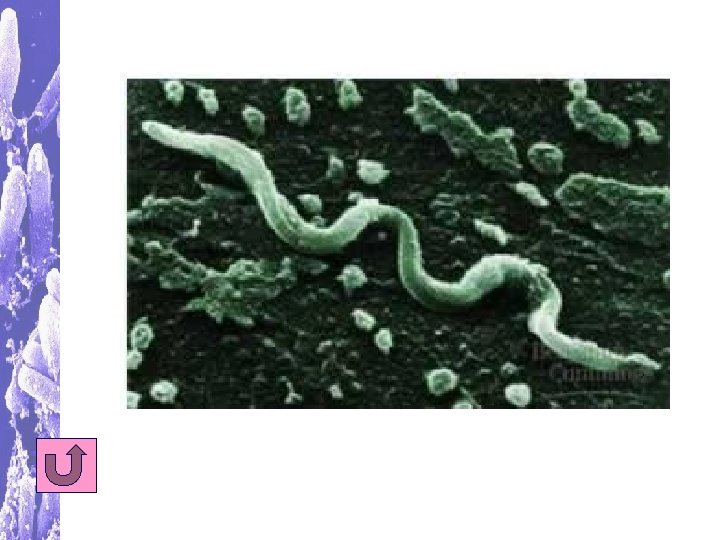
Morphology • Cocci • Bacilli • Spirilla
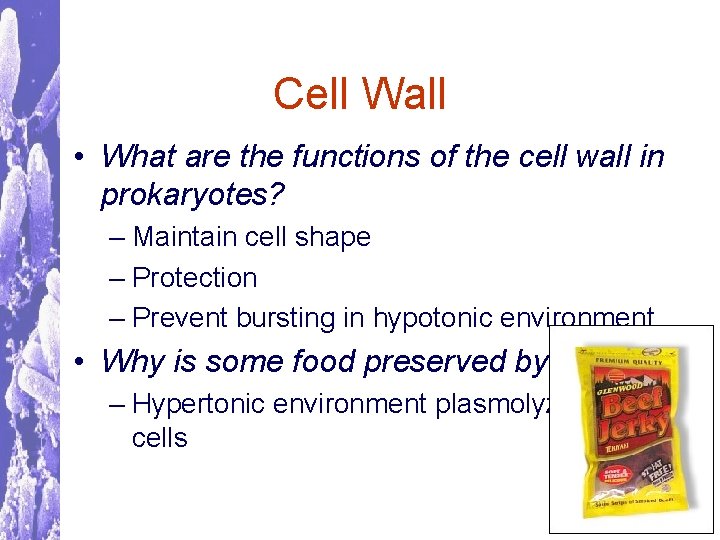
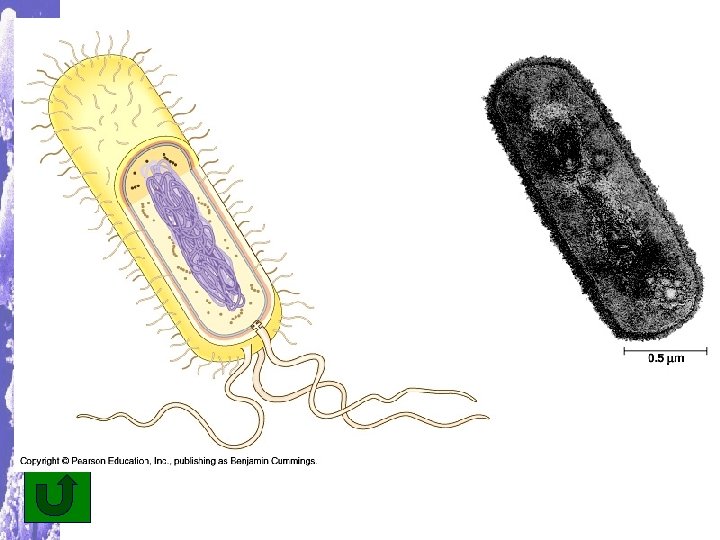
Cell Wall • What are the functions of the cell wall in prokaryotes? – Maintain cell shape – Protection – Prevent bursting in hypotonic environment • Why is some food preserved by salting it? – Hypertonic environment plasmolyzes bacterial cells
Cell Wall Structure • What is the composition of prokaryotic cell walls? – Peptidoglycan – Exact components vary among species • Some antibiotics work by preventing formation of cross-links in peptidoglycan – Ex. - Penicillin
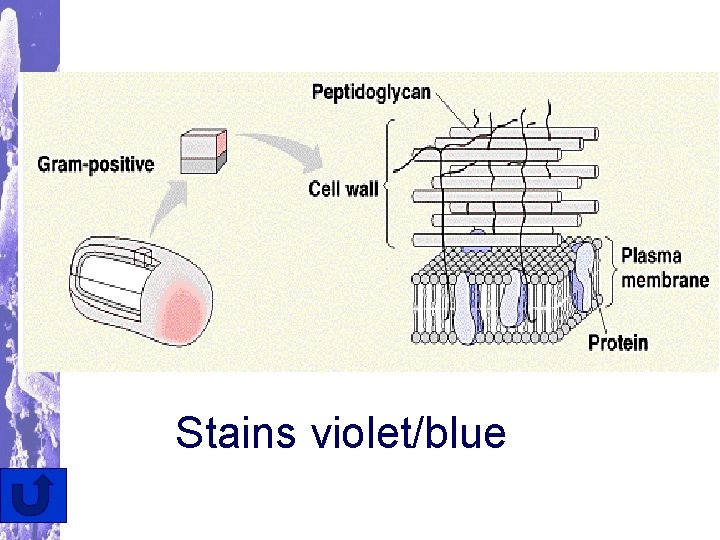
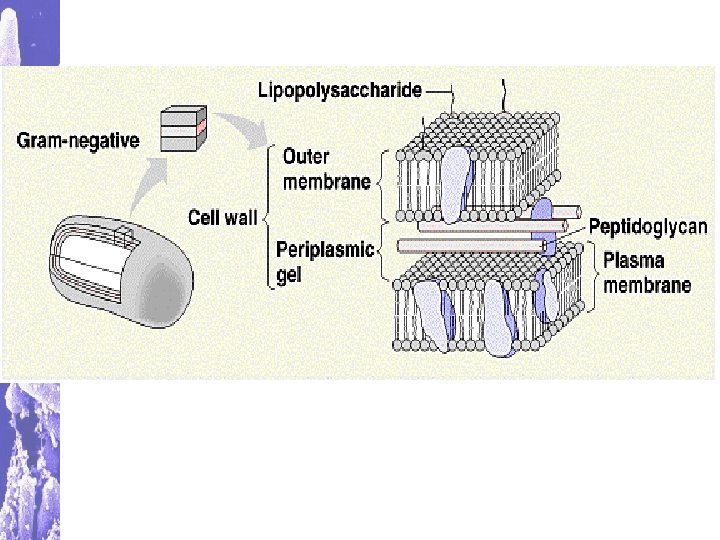
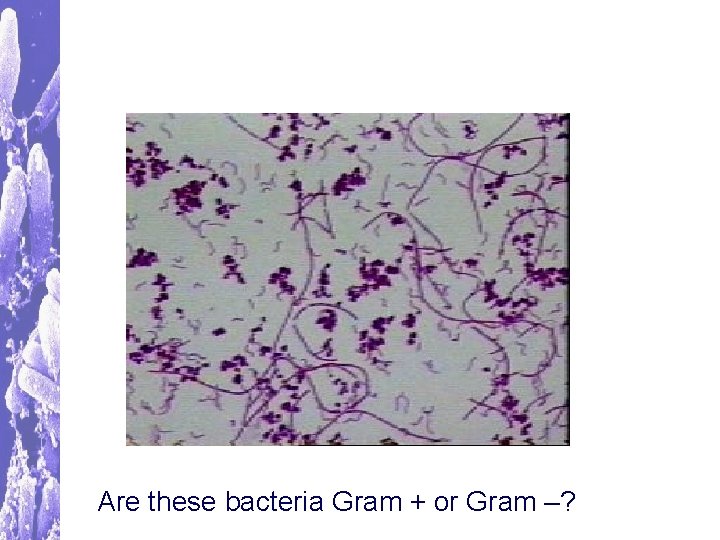
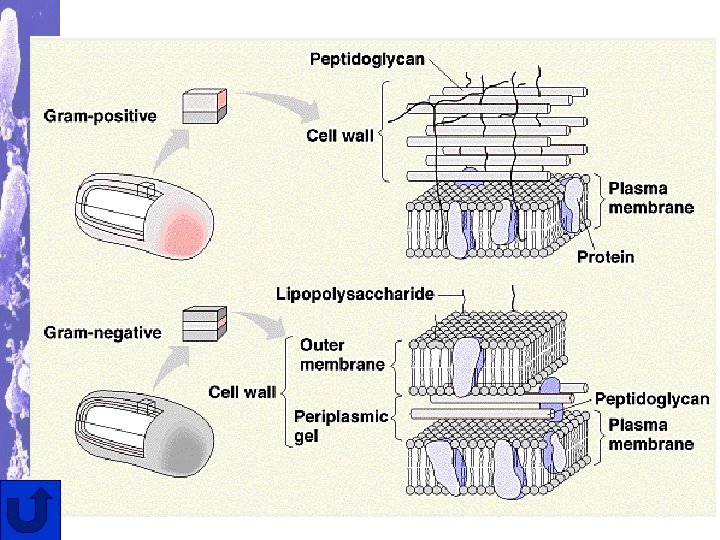
Gram+/Gram • Gram positive bacteria: – – Stains blue/violet Simple cell walls with lots of peptidoglycan Purple/blue stain is trapped in cell wall Less threatening pathogens: tooth decay, strep throat • Gram negative bacteria – – More complex cell walls with less peptidoglycan Blue dye washes out so they stain pink (first dye) Outer membrane covers cell wall More pathogenic than gram+: typhus, gonorrhea
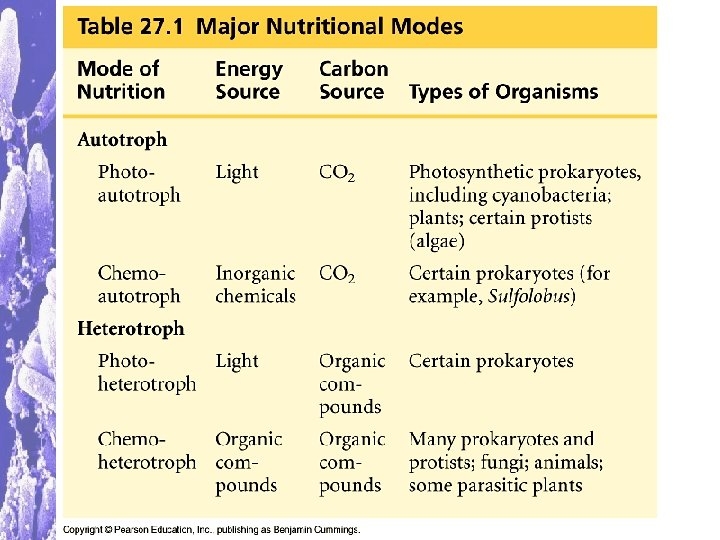
Metabolic Diversity • What are the four possible modes of bacterial nutrition? – Photoautotrophs – Chemoautotrophs – Photoheterotrophs – Chemoheterotrophs – most bacteria are in this group
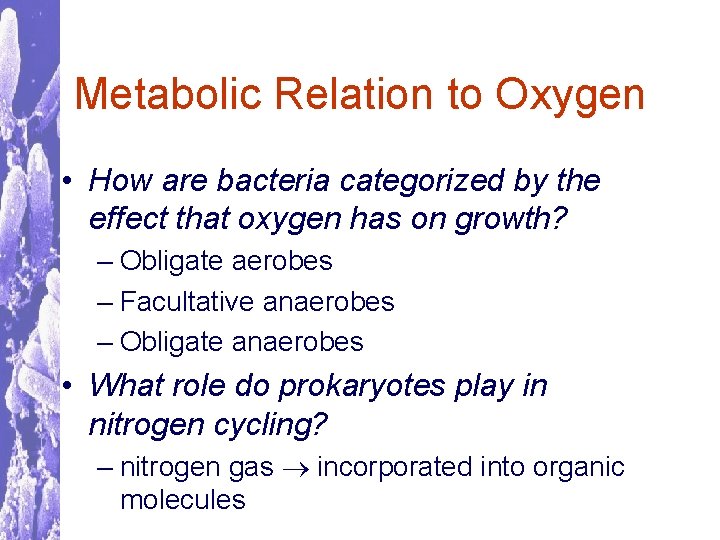
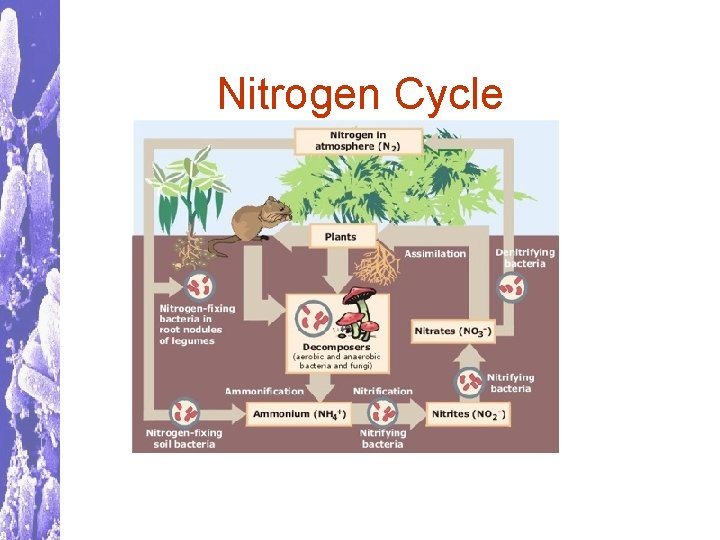
Metabolic Relation to Oxygen • How are bacteria categorized by the effect that oxygen has on growth? – Obligate aerobes – Facultative anaerobes – Obligate anaerobes • What role do prokaryotes play in nitrogen cycling? – nitrogen gas incorporated into organic molecules
Nitrogen Cycle
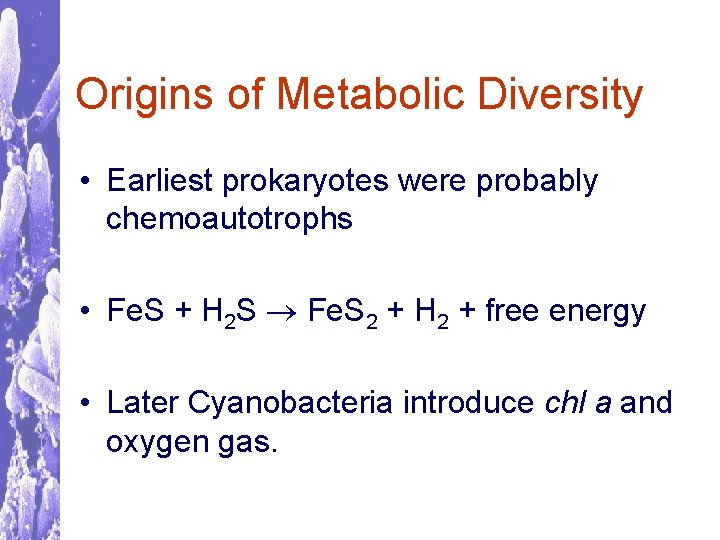
Origins of Metabolic Diversity • Earliest prokaryotes were probably chemoautotrophs • Fe. S + H 2 S Fe. S 2 + H 2 + free energy • Later Cyanobacteria introduce chl a and oxygen gas.
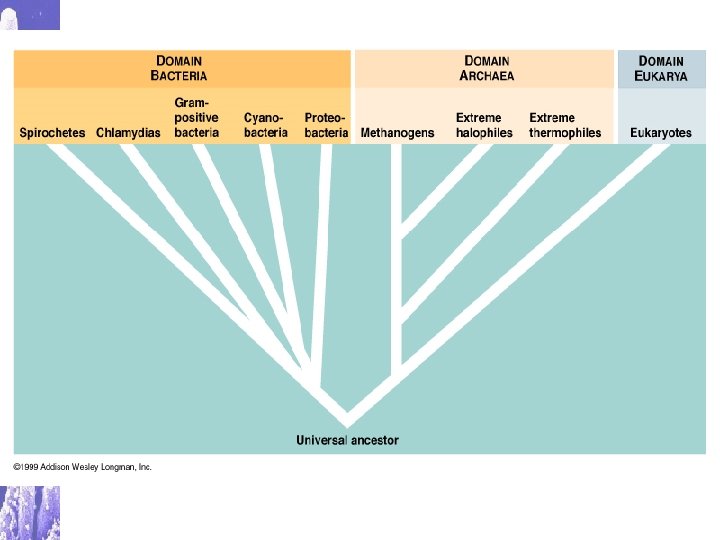
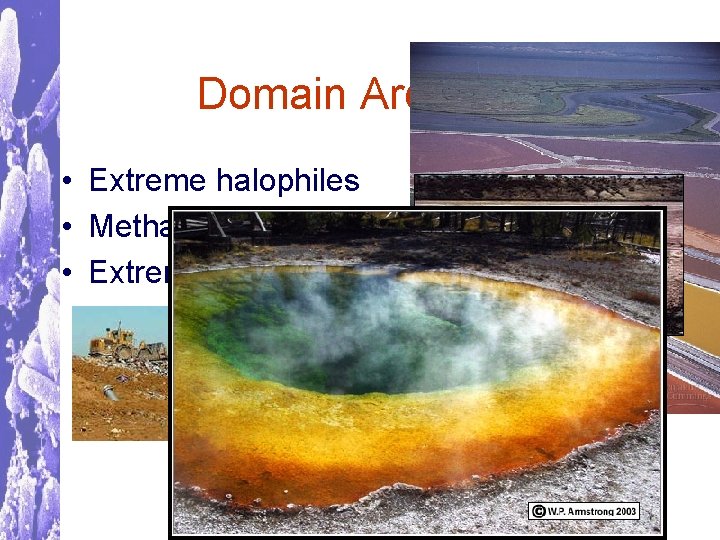
Domain Archaea • Extreme halophiles • Methanogens • Extreme thermophiles
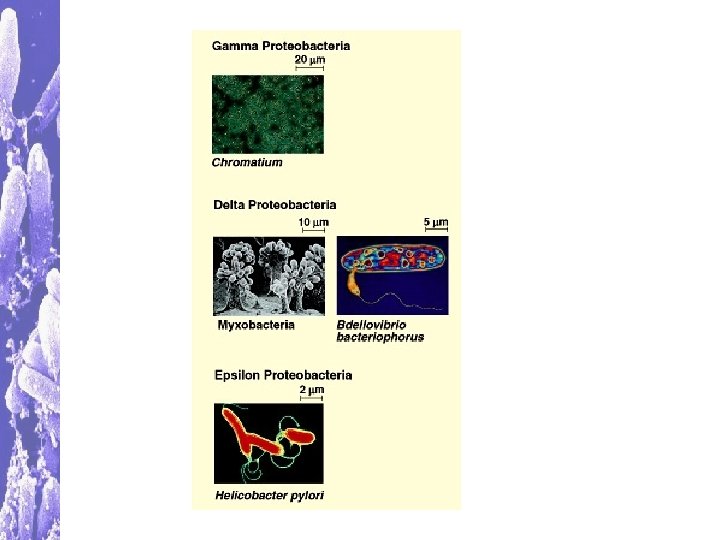
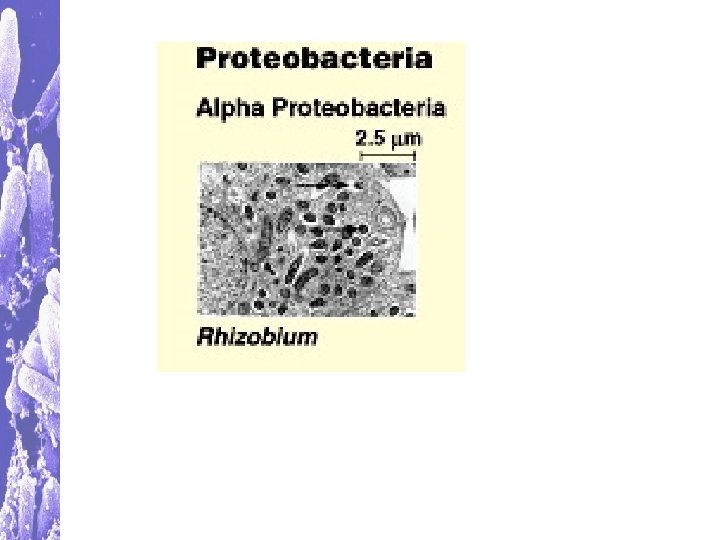
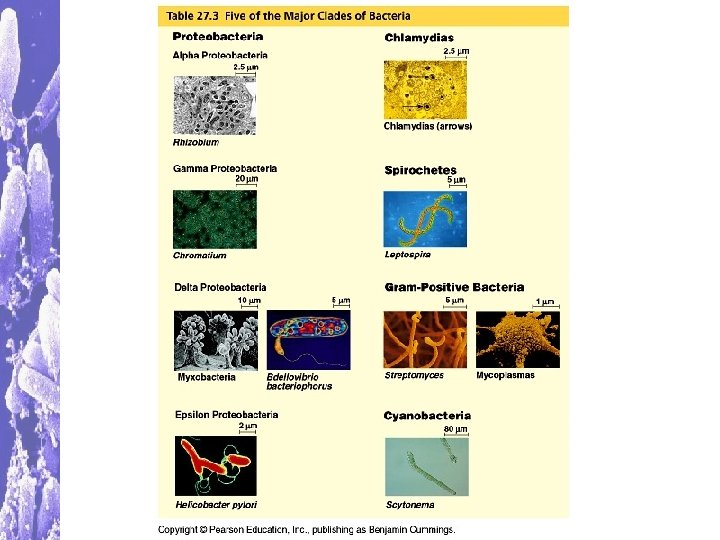
Eubacteria • Proteobacteria – – Chemoautotrophic free living – chemical cycling role, example: Rhizobium in root nodules of legumes – Gamma proteobacteria – autotrophic and heterotrophic, includes enteric bacteria e. g. : E. coli and Salmonella
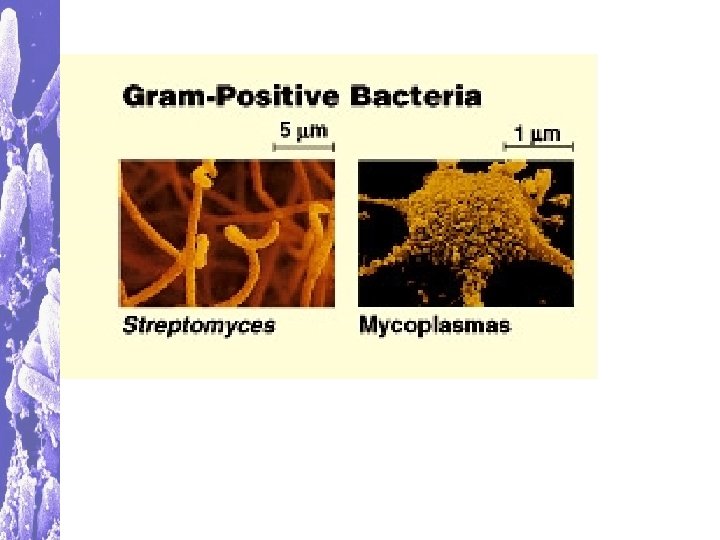
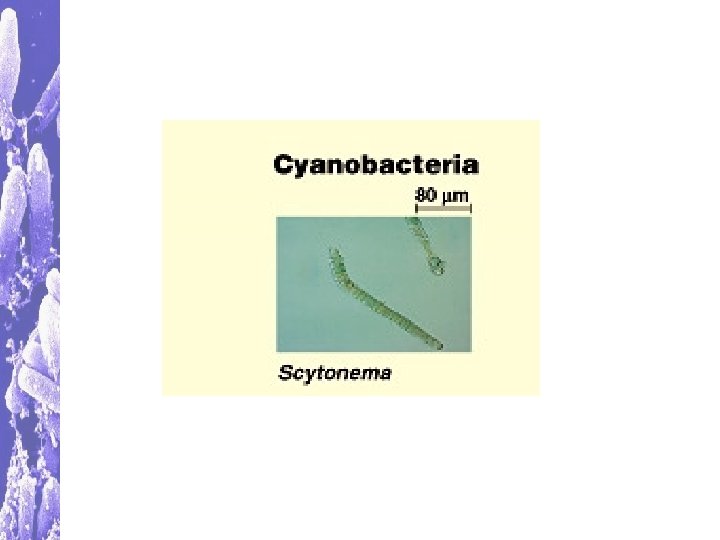
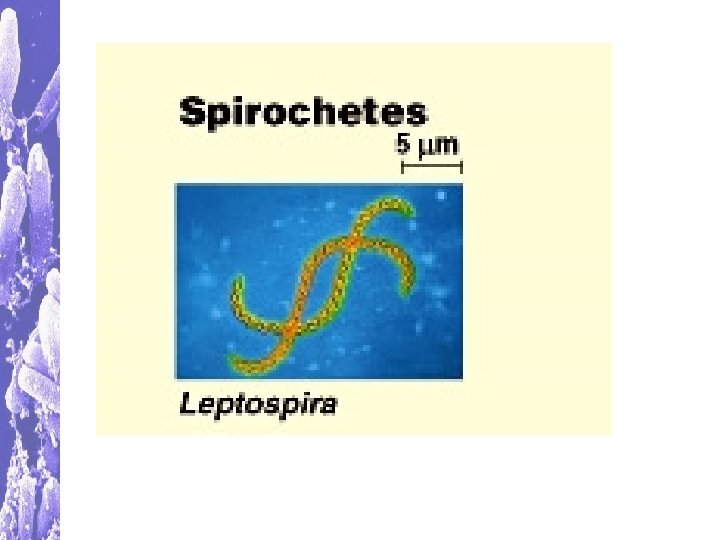
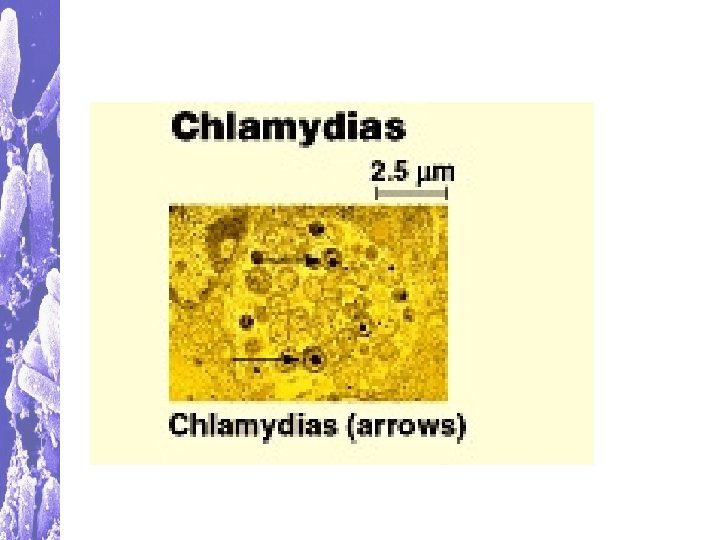
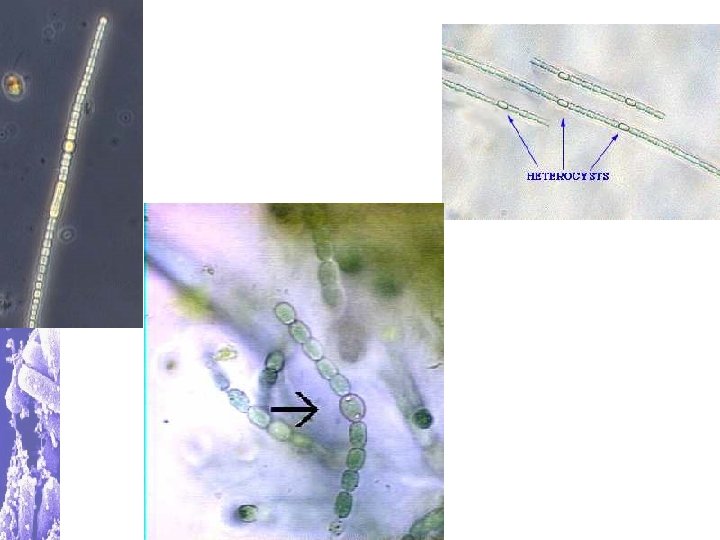
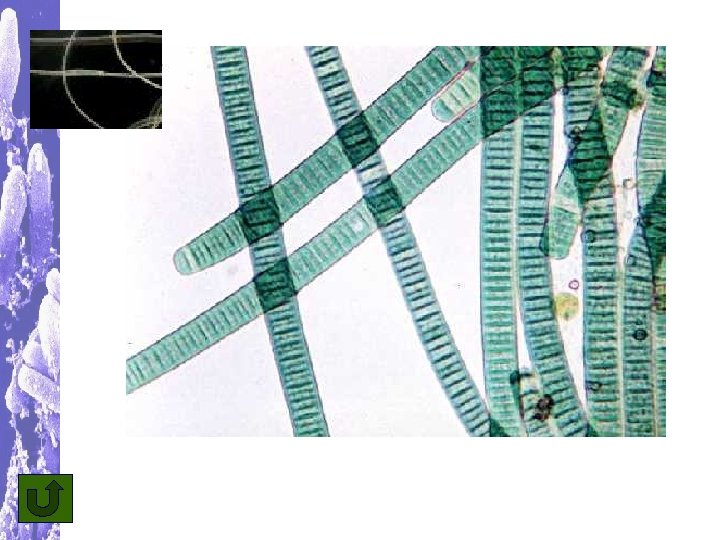
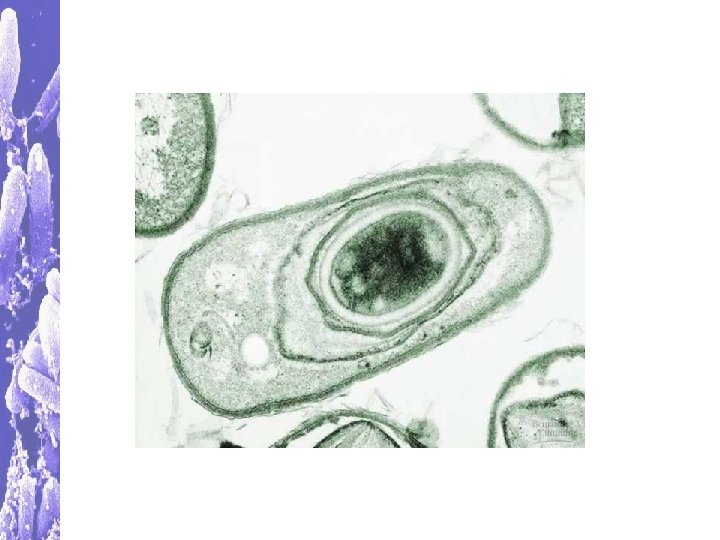
• Gram Positive Bacteria: (some are not) – Endospore forming bacteria – Bacillus – Mycoplasmas- smallest bacteria, lack cell walls – Actinomycetes, found in soil, resemble fungi, e. g. Streptomyces source of antibiotics • Cyanobacteria – photoautotrophs with chl a, some have heterocysts for nitrogen fixation, examples: Oscillatoria, and Anabaena • Spirochetes – helical heterotrophs e. g. syphilis • Chlamydias – parasites of animals, gram neg. cell walls, cause chlamydia STD and typhus
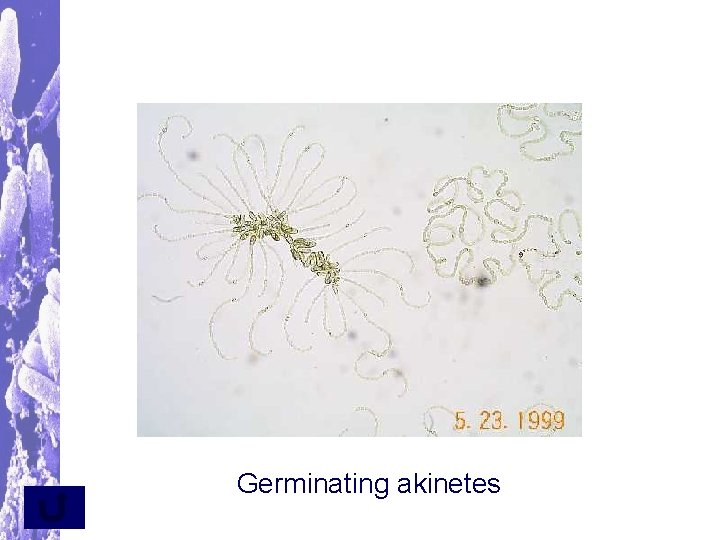
Germinating akinetes
Stains violet/blue
Are these bacteria Gram + or Gram –?
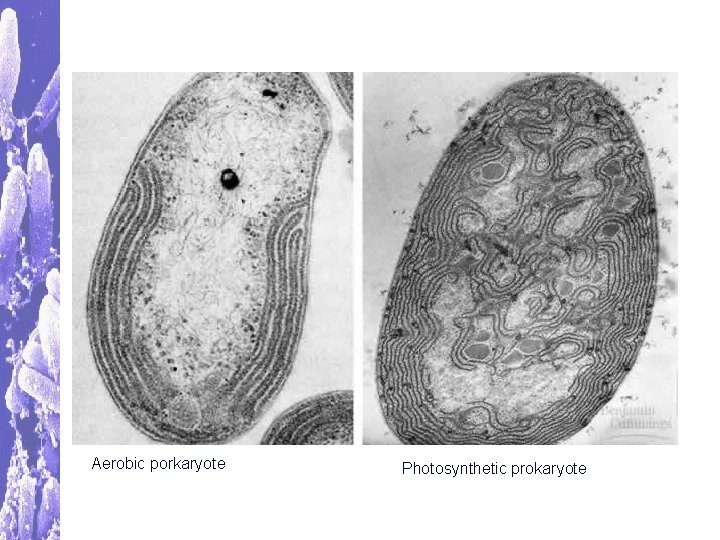
Aerobic porkaryote Photosynthetic prokaryote