
What can we learn from an insect label
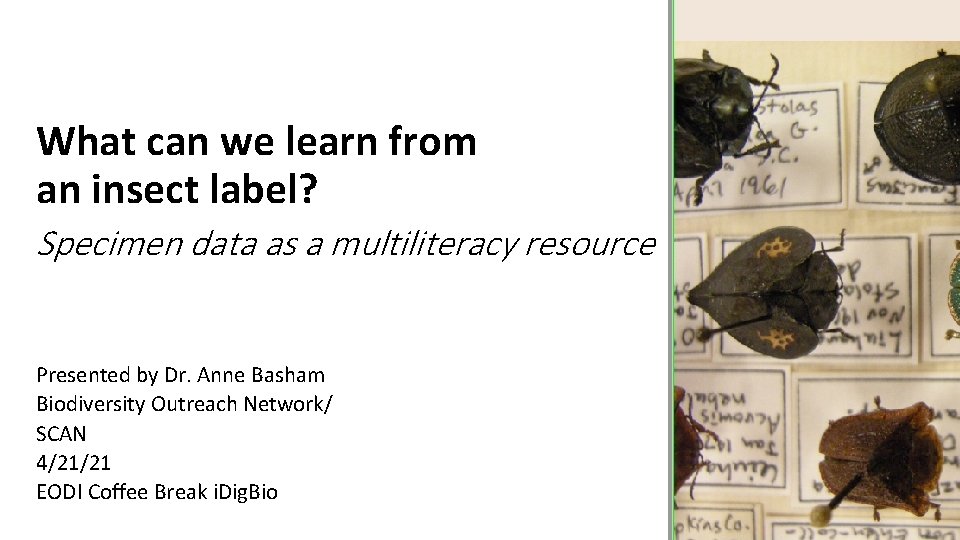
What can we learn from an insect label? Specimen data as a multiliteracy resource Presented by Dr. Anne Basham Biodiversity Outreach Network/ SCAN 4/21/21 EODI Coffee Break i. Dig. Bio
Key objectives of this talk 1. Defining multiliteracy. 2. Is the specimen label a good multiliteracy resource? 3. Applying a multiliteracy model with museum collections
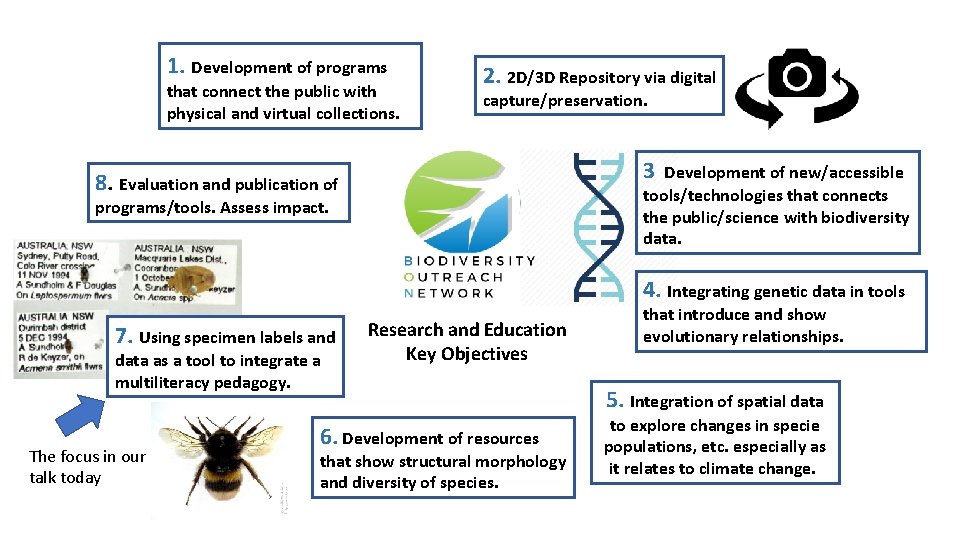
1. Development of programs that connect the public with physical and virtual collections. 2. 2 D/3 D Repository via digital capture/preservation. . 3. Development of new/accessible 8. Evaluation and publication of tools/technologies that connects the public/science with biodiversity data. programs/tools. Assess impact. 4. Integrating genetic data in tools 7. Using specimen labels and data as a tool to integrate a multiliteracy pedagogy. The focus in our talk today Research and Education Key Objectives 6. Development of resources that show structural morphology and diversity of species. that introduce and show evolutionary relationships. 5. Integration of spatial data to explore changes in specie populations, etc. especially as it relates to climate change. .

How do we define multiliteracy? Multiliteracy was a term proposed in 1996 by a group of ten academics known as the “New London Group” (NLG). They proposed that due to the rapid changes of globalization, technology and cultural diversity there was a need for a new pedagogy to address these changes. Multiliteracy is a concept of understanding and communicating information through different modalities of learning.
Why we need to start thinking about multiliteracy --Multiliteracy promotes equity and accessibility. --Multiliteracy promotes inclusion. --Serves different types of learners.
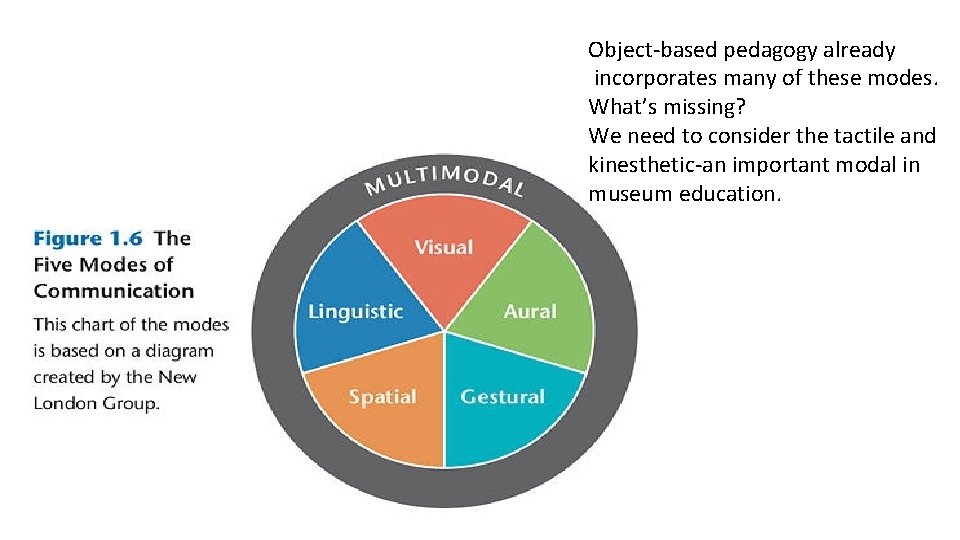
Object-based pedagogy already incorporates many of these modes. What’s missing? We need to consider the tactile and kinesthetic-an important modal in museum education.
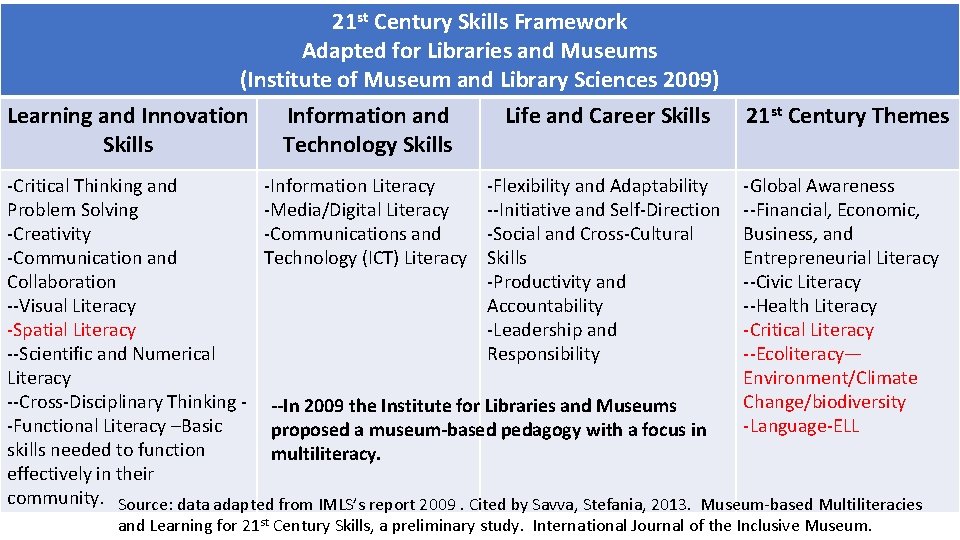
21 st Century Skills Framework Adapted for Libraries and Museums (Institute of Museum and Library Sciences 2009) Learning and Innovation Skills Information and Technology Skills Life and Career Skills 21 st Century Themes -Critical Thinking and -Information Literacy -Flexibility and Adaptability -Global Awareness Problem Solving -Media/Digital Literacy --Initiative and Self-Direction --Financial, Economic, -Creativity -Communications and -Social and Cross-Cultural Business, and -Communication and Technology (ICT) Literacy Skills Entrepreneurial Literacy Collaboration -Productivity and --Civic Literacy --Visual Literacy Accountability --Health Literacy -Spatial Literacy -Leadership and -Critical Literacy --Scientific and Numerical Responsibility --Ecoliteracy— Literacy Environment/Climate --Cross-Disciplinary Thinking - --In 2009 the Institute for Libraries and Museums Change/biodiversity -Functional Literacy –Basic -Language-ELL proposed a museum-based pedagogy with a focus in skills needed to function multiliteracy. effectively in their community. Source: data adapted from IMLS’s report 2009. Cited by Savva, Stefania, 2013. Museum-based Multiliteracies and Learning for 21 st Century Skills, a preliminary study. International Journal of the Inclusive Museum.
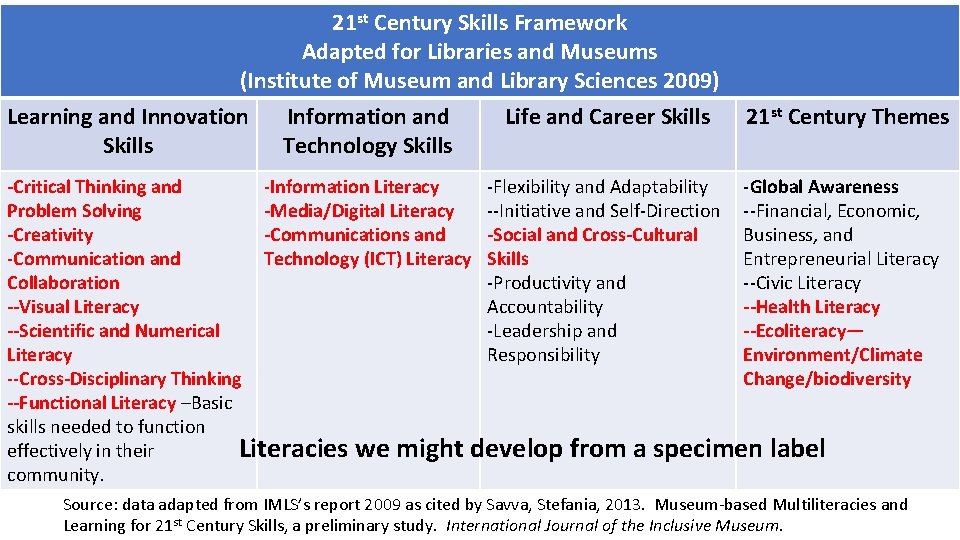
21 st Century Skills Framework Adapted for Libraries and Museums (Institute of Museum and Library Sciences 2009) Learning and Innovation Skills Information and Technology Skills Life and Career Skills 21 st Century Themes -Critical Thinking and -Information Literacy -Flexibility and Adaptability -Global Awareness Problem Solving -Media/Digital Literacy --Initiative and Self-Direction --Financial, Economic, -Creativity -Communications and -Social and Cross-Cultural Business, and -Communication and Technology (ICT) Literacy Skills Entrepreneurial Literacy Collaboration -Productivity and --Civic Literacy --Visual Literacy Accountability --Health Literacy --Scientific and Numerical -Leadership and --Ecoliteracy— Literacy Responsibility Environment/Climate --Cross-Disciplinary Thinking Change/biodiversity --Functional Literacy –Basic skills needed to function Literacies we might develop from a specimen label effectively in their community. Source: data adapted from IMLS’s report 2009 as cited by Savva, Stefania, 2013. Museum-based Multiliteracies and Learning for 21 st Century Skills, a preliminary study. International Journal of the Inclusive Museum.
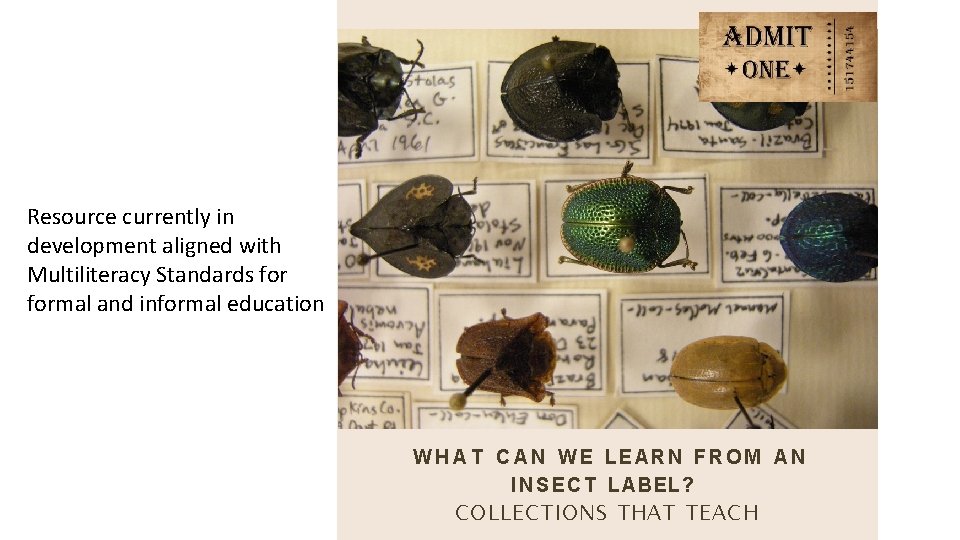
Resource currently in development aligned with Multiliteracy Standards formal and informal education W H A T C A N W E LEARN F R O M A N I N S E C T LABEL? COLLECTIONS THAT TEACH
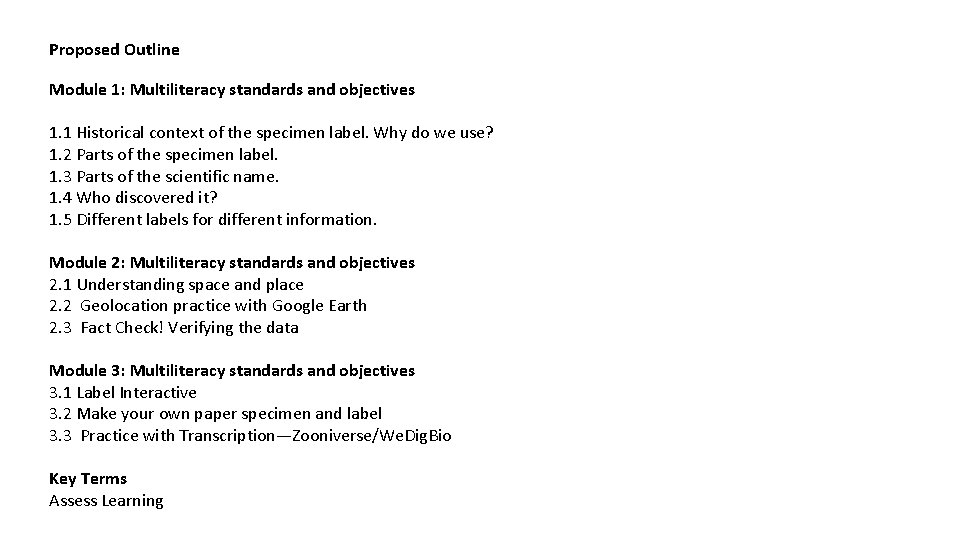
Proposed Outline Module 1: Multiliteracy standards and objectives 1. 1 Historical context of the specimen label. Why do we use? 1. 2 Parts of the specimen label. 1. 3 Parts of the scientific name. 1. 4 Who discovered it? 1. 5 Different labels for different information. Module 2: Multiliteracy standards and objectives 2. 1 Understanding space and place 2. 2 Geolocation practice with Google Earth 2. 3 Fact Check! Verifying the data Module 3: Multiliteracy standards and objectives 3. 1 Label Interactive 3. 2 Make your own paper specimen and label 3. 3 Practice with Transcription—Zooniverse/We. Dig. Bio Key Terms Assess Learning
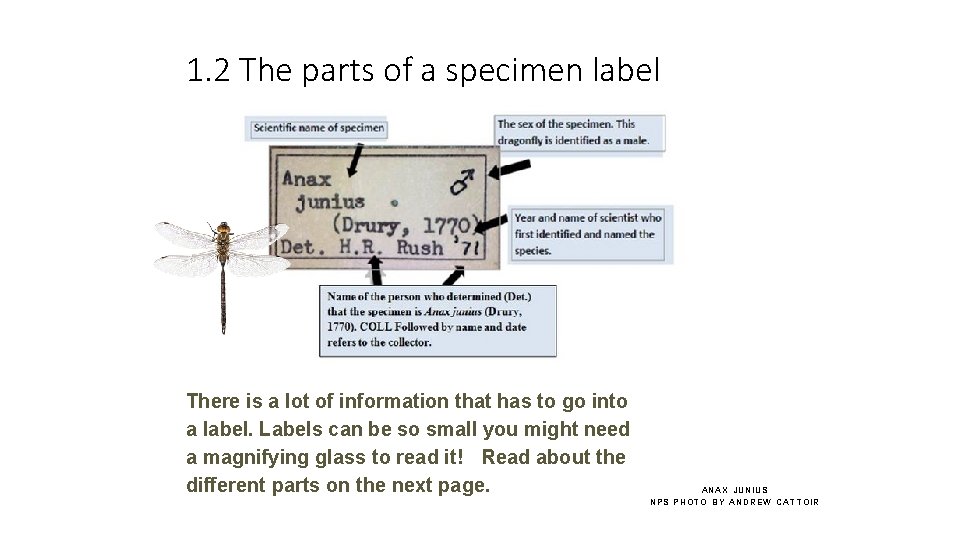
1. 2 The parts of a specimen label There is a lot of information that has to go into a label. Labels can be so small you might need a magnifying glass to read it! Read about the different parts on the next page. ANAX JUNIUS NPS PHOTO BY ANDREW CATTOIR
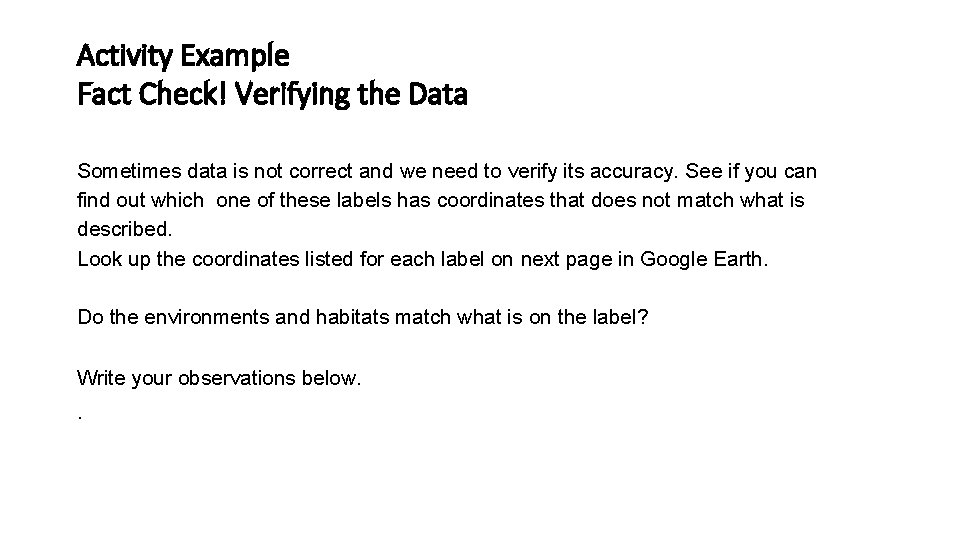
Activity Example Fact Check! Verifying the Data Sometimes data is not correct and we need to verify its accuracy. See if you can find out which one of these labels has coordinates that does not match what is described. Look up the coordinates listed for each label on next page in Google Earth. Do the environments and habitats match what is on the label? Write your observations below. .
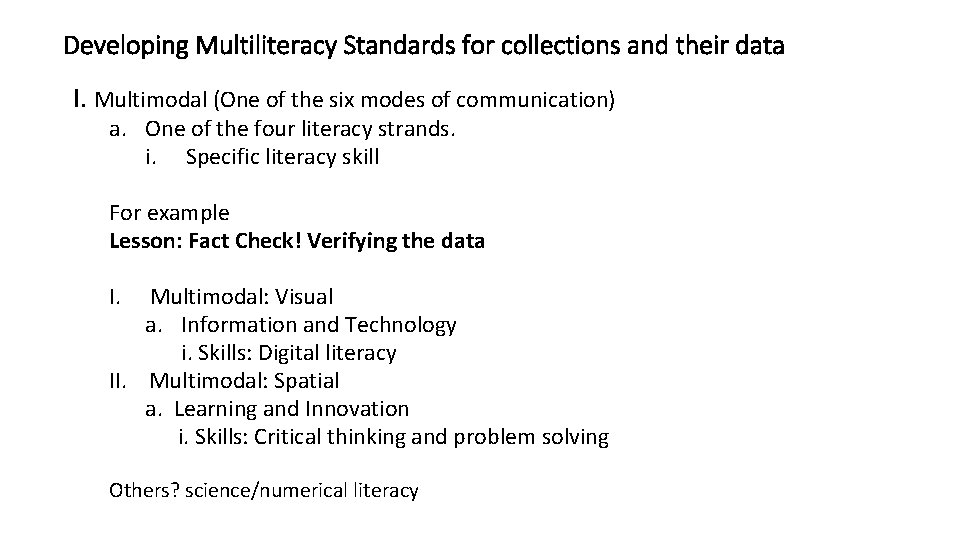
Developing Multiliteracy Standards for collections and their data I. Multimodal (One of the six modes of communication) a. One of the four literacy strands. i. Specific literacy skill For example Lesson: Fact Check! Verifying the data I. Multimodal: Visual a. Information and Technology i. Skills: Digital literacy II. Multimodal: Spatial a. Learning and Innovation i. Skills: Critical thinking and problem solving Others? science/numerical literacy
What might be some other benefits of a multiliteracy standards in informal education. • Would provide a framework for evaluation and assessment. • Museum education and other informal learning experiences have typically been difficult to assess by way of outcome and impact without having specific parameters for which to measure.
Key Take Away -Can you think of some ways that your collection can be used as a multiliteracy resource? -How many different types of literacy might you develop?
References • Savva, Stefania, (2013). “Museum-based Multiliteracies and Learning for 21 st Century Skills, a preliminary study”. International Journal of the Inclusive Museum. DOI: 10. 18848/1835 -2014/CGP/v 06 i 02/44444
Resources More information on specimen labels. • https: //entmuseum. ucr. edu/specimen_preparation/ index. html • Smithsonian label and transcription instructions • https: //transcription. si. edu/instructions-entomology#collector • https: //bionomia. net/taxa
• We welcome collaboration and feedback on this resource! THANK YOU Visit www. bon-earth. org Contact: Anne@bon-earth. org
- Slides: 18