
What can archaeological evidence tell us about life
What can archaeological evidence tell us about life in Roman Britain? Key Stage 2: History Learning Aims and Outcomes • To select and record information about Roman ways of life • To use the terms 'invade' and 'settle' • To learn how evidence can tell you about Roman life • To ask and answer questions about what survived from the Roman settlement of Britain • To present information to show an understanding of the impact of Roman settlement on Britain
We can find out lots about the Romans by looking at archaeological evidence It's an archaeologist’s job to look at evidence, such as artefacts and buildings, from the past and to try and interpret them! Could YOU be an archaeologist?
Step 1: Learn to speak ‘archaeologist’ To be an archaeologist you need to learn some words Archaeology: The study of new the lives of people in the past Evidence: Information to support an idea/interpretation Artefact: Any object made or changed by people Interpret: To try and explain what something means Excavate: To dig up and record archaeological
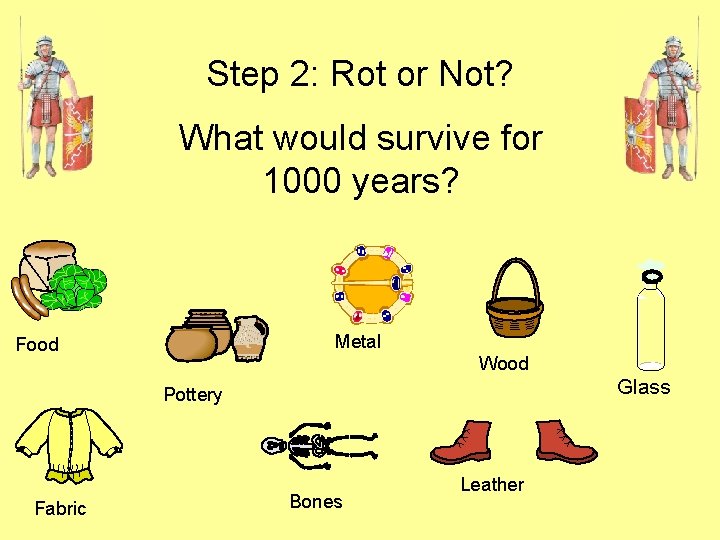
Step 2: Rot or Not? What would survive for 1000 years? Metal Food Wood Glass Pottery Fabric Bones Leather

Step 2: Rot or Not? Rot Food Fabric Not Wood Leather Pottery Glass Metal Bones
Step 2: Rot or Not? Extension Activity The ‘Rubbish Bag Game’ All archaeologists are detectives – for the Rubbish Bag Game select clean, safe pieces of ‘rubbish’ and place them in a black bin bag. Pupils take it in turns to pick out a piece of ‘rubbish’, then the whole class have to work out what it is and who might have used it/thrown it away. Deliberately choose bits of ‘rubbish’ so that pupils can build up a picture of the person/family that threw them away.
Step 2: Rot or Not? Extension Activity The ‘Rubbish Bag Game’ Once the rubbish bag is empty ask pupils to think about which items would survive being buried in the ground for 1000 s of years – would it Rot or Not? Any items that they don’t think would survive get taken away, so you now have a much smaller pile of ‘rubbish’. Pupils then reassess the evidence and start to understand that archaeologists can only work with what they’ve got – there’s a lot that they don’t know, but have to make ‘educated guesses’ about.
Step 3: Find EVIDENCE from the past Look at the pictures on the next 8 slides They are all types of archaeological evidence Choose 3 pictures that you think could be used as evidence to answer the question Did the Romans settle in Britain?

The remains of a Roman fort called Housesteads in Northumberland

The remains of a Roman fort called Wallsend in Tyne & Wear
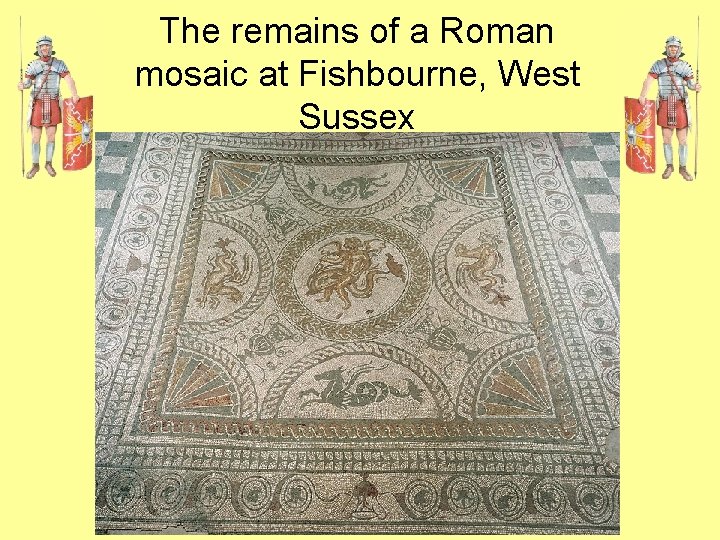
The remains of a Roman mosaic at Fishbourne, West Sussex
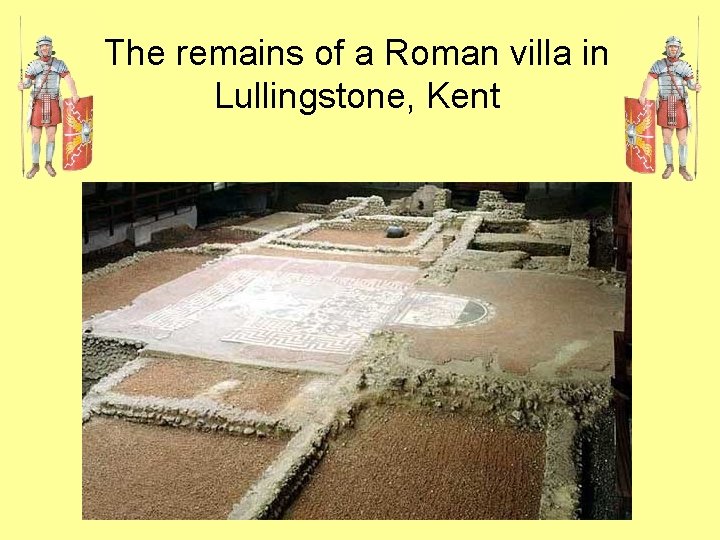
The remains of a Roman villa in Lullingstone, Kent
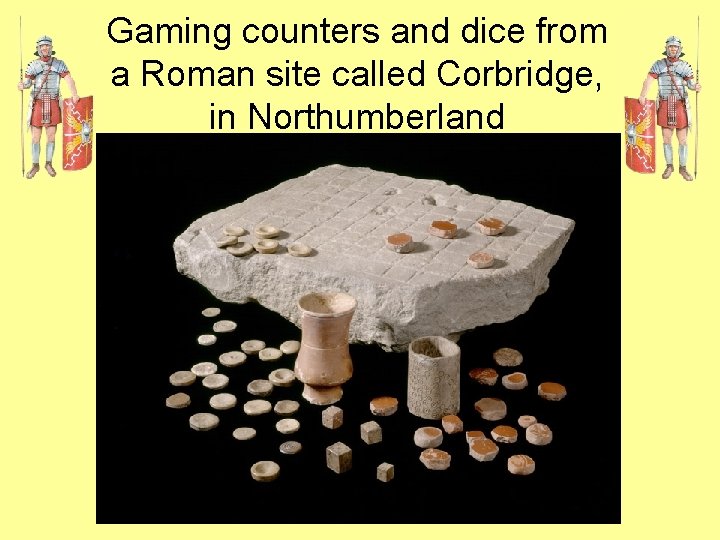
Gaming counters and dice from a Roman site called Corbridge, in Northumberland
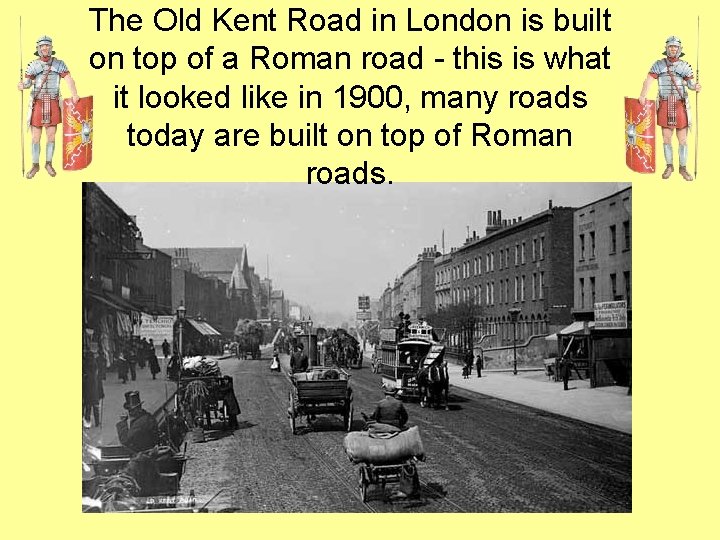
The Old Kent Road in London is built on top of a Roman road - this is what it looked like in 1900, many roads today are built on top of Roman roads.
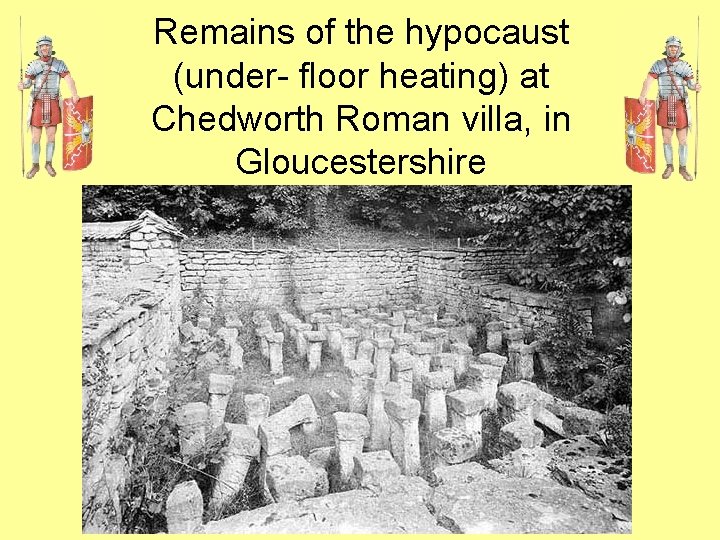
Remains of the hypocaust (under- floor heating) at Chedworth Roman villa, in Gloucestershire
Step 4: Present your findings An important part of being an archaeologist is telling other people about what you have discovered! Use the accompanying worksheet to record your findings or fill in your choices as a class in the table on the next slide - you can copy and paste the pictures above straight into the table
Step 4: Present your findings An important part of being an archaeologist is telling other people about what you have discovered! Use the accompanying worksheet to record your findings or fill in your choices as a class in the table on the next slide - you can copy and paste the pictures above straight into the table
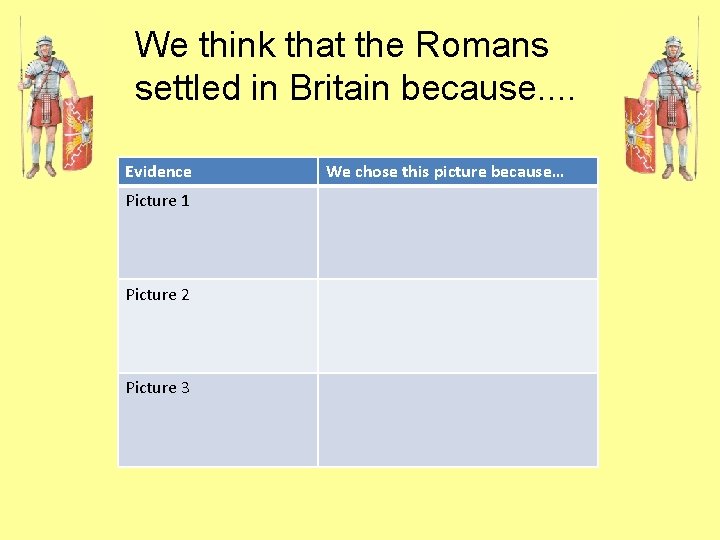
We think that the Romans settled in Britain because. . Evidence Picture 1 Picture 2 Picture 3 We chose this picture because…
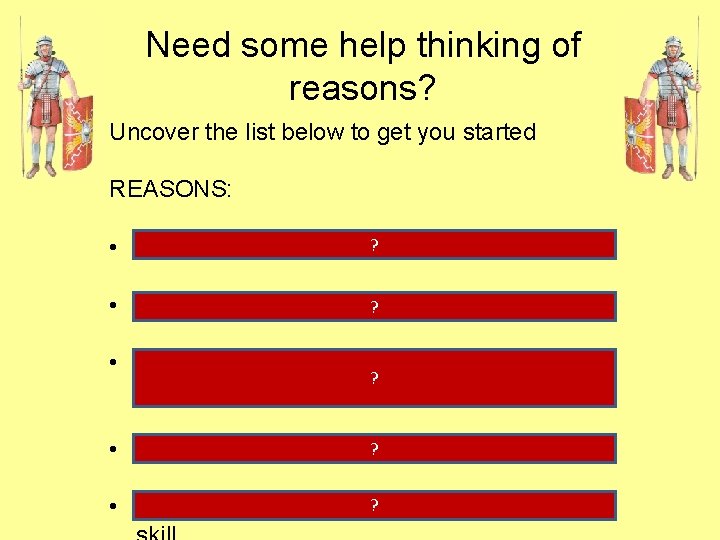
Need some help thinking of reasons? Uncover the list below to get you started REASONS: ? • Villas were very expensive to build • Forts made of stone took a long time to build ? • Hypocaust (under floor heating) was an ? expensive luxury ? • Mosaics were very expensive ? • Road building took a long time and a lot of
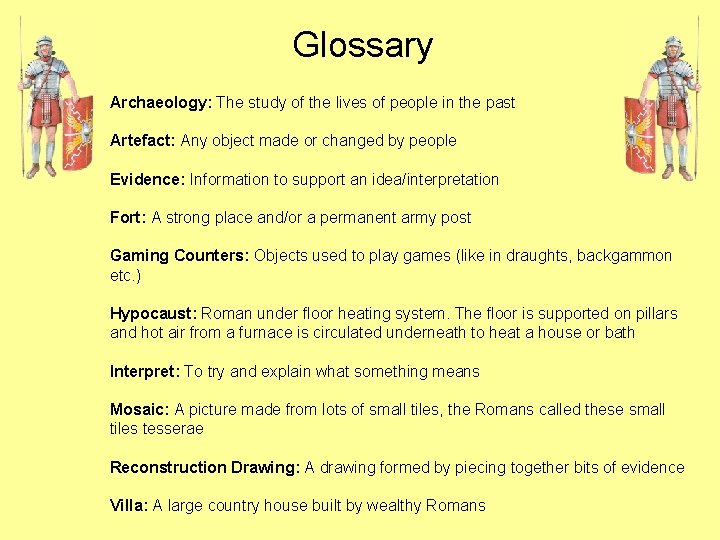
Glossary Archaeology: The study of the lives of people in the past Artefact: Any object made or changed by people Evidence: Information to support an idea/interpretation Fort: A strong place and/or a permanent army post Gaming Counters: Objects used to play games (like in draughts, backgammon etc. ) Hypocaust: Roman under floor heating system. The floor is supported on pillars and hot air from a furnace is circulated underneath to heat a house or bath Interpret: To try and explain what something means Mosaic: A picture made from lots of small tiles, the Romans called these small tiles tesserae Reconstruction Drawing: A drawing formed by piecing together bits of evidence Villa: A large country house built by wealthy Romans
Find more teaching resources at: Historic. England. org. uk/Education
- Slides: 21