
What are your memories of GCSE History What

- Slides: 25
What are your memories of GCSE History? What are your first impressions of GCSE History from the last few weeks? Richard Kennett, Redland Green School, Bristol http: //kenradical. wordpress. com @kenradical
Teaching GCSE History effectively Richard Kennett Subject Leader in Education for History Redland Green School, Bristol Richard Kennett, Redland Green School, Bristol http: //kenradical. wordpress. com @kenradical
Aims of the session • What are the current History GCSEs on offer? • How is GCSE History changing in the next few years? • What are the essentials of GCSE History? Richard Kennett, Redland Green School, Bristol http: //kenradical. wordpress. com @kenradical
GCSE (the one the current Year 11 are doing) Two main types: • Modern World • Schools History Project From the OCR and Edexcel specifications work out what you can and cannot teach and what the key differences are. Richard Kennett, Redland Green School, Bristol http: //kenradical. wordpress. com @kenradical
What makes KS 4 unique? Read through the GCSE Assessment Objectives. Compare them to the (now defunct) KS 3 Levels. • What is similar? • What is different? • What level does it most represent? Richard Kennett, Redland Green School, Bristol http: //kenradical. wordpress. com @kenradical
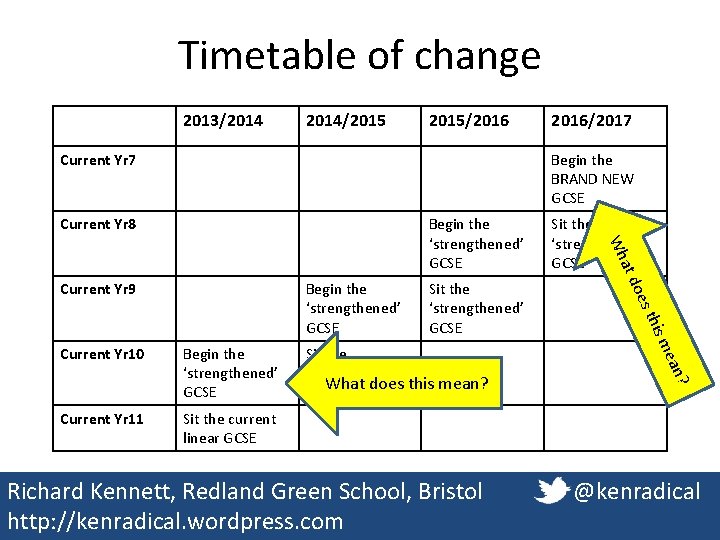
Timetable of change 2013/2014/2015/2016 Current Yr 7 2016/2017 Begin the BRAND NEW GCSE Current Yr 8 Sit the current linear GCSE Richard Kennett, Redland Green School, Bristol http: //kenradical. wordpress. com an? Current Yr 11 Sit the ‘strengthened’ What does this mean? GCSE me Begin the ‘strengthened’ GCSE this Current Yr 10 Sit the ‘strengthened’ GCSE oes Begin the ‘strengthened’ GCSE at d Current Yr 9 Sit the ‘strengthened’ GCSE Wh Begin the ‘strengthened’ GCSE @kenradical
That’s the mechanics. Now how do you teach effectively? What do Burn and Fordham argue? Richard Kennett, Redland Green School, Bristol http: //kenradical. wordpress. com @kenradical
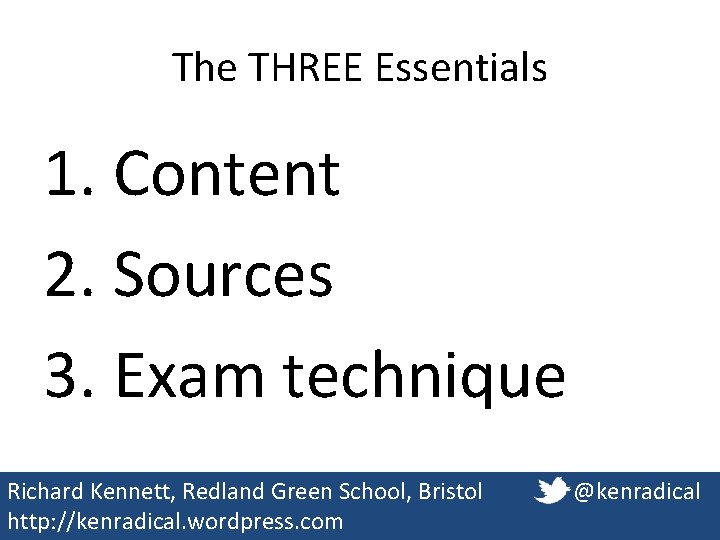
The THREE Essentials 1. Content 2. Sources 3. Exam technique Richard Kennett, Redland Green School, Bristol http: //kenradical. wordpress. com @kenradical
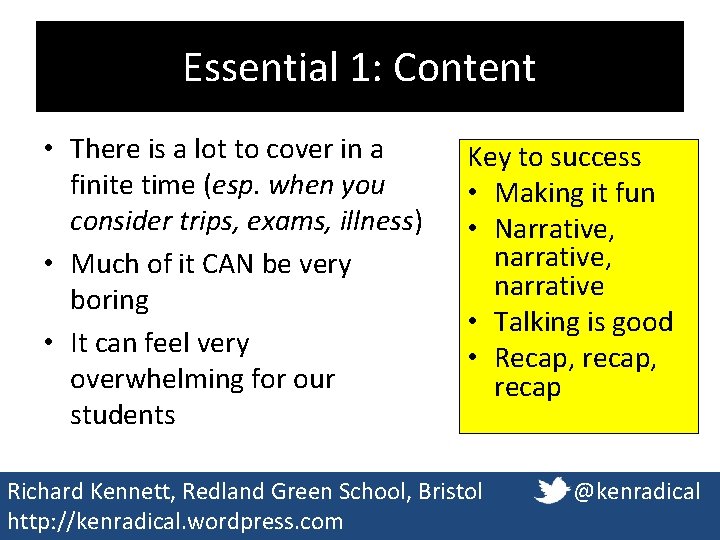
Essential 1: Content • There is a lot to cover in a finite time (esp. when you consider trips, exams, illness) • Much of it CAN be very boring • It can feel very overwhelming for our students Key to success • Making it fun • Narrative, narrative • Talking is good • Recap, recap Richard Kennett, Redland Green School, Bristol http: //kenradical. wordpress. com @kenradical
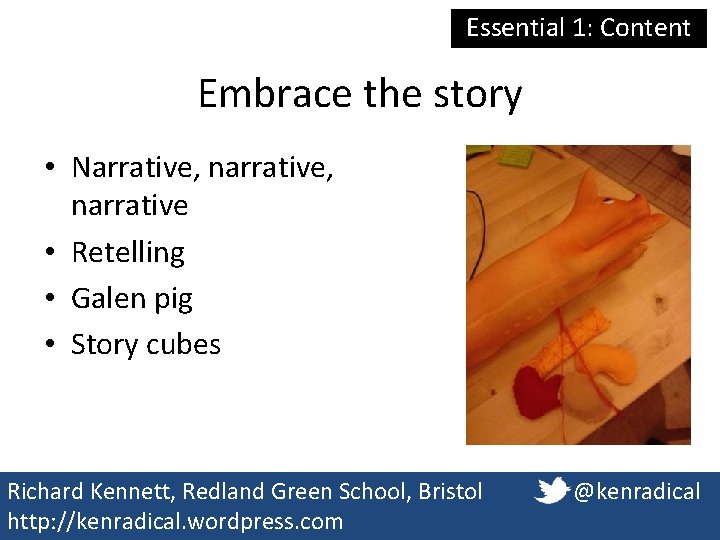
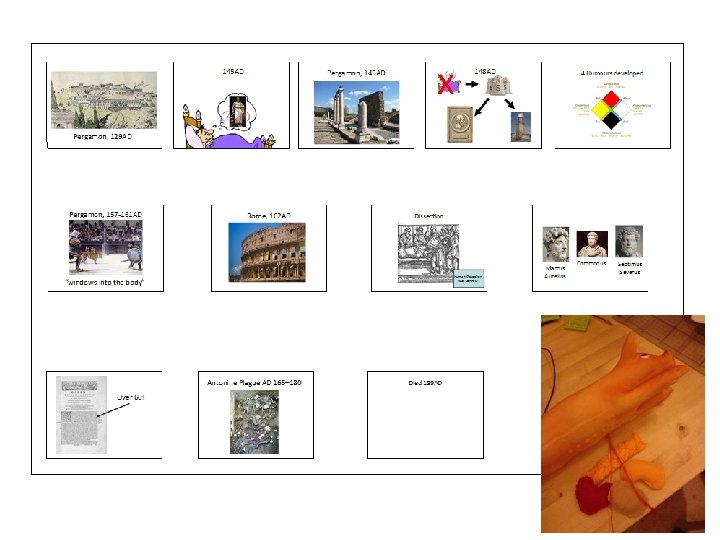
Essential 1: Content Embrace the story • Narrative, narrative • Retelling • Galen pig • Story cubes Richard Kennett, Redland Green School, Bristol http: //kenradical. wordpress. com @kenradical
Essential 1: Content Embrace textbooks • They are written by the experts – often the examiners • You’d be silly to avoid them • BUT over use them and you will turn the kids off • Variety is the spice of life • Think about entertaining or imaginative ways of using them TASK: Plan my lesson. What could you do with this? How might you provide challenge for the top ability? How could you support the low ability? Richard Kennett, Redland Green School, Bristol http: //kenradical. wordpress. com @kenradical
Essential 1: Content Embrace chronology • Not just making bloody timelines • Sense of period is key • Visualising the past http: //kenradical. wordpress. com/2012/10/01/sense-ofperiod-summing-up-an-erain-a-100 -words/ Richard Kennett, Redland Green School, Bristol http: //kenradical. wordpress. com @kenradical
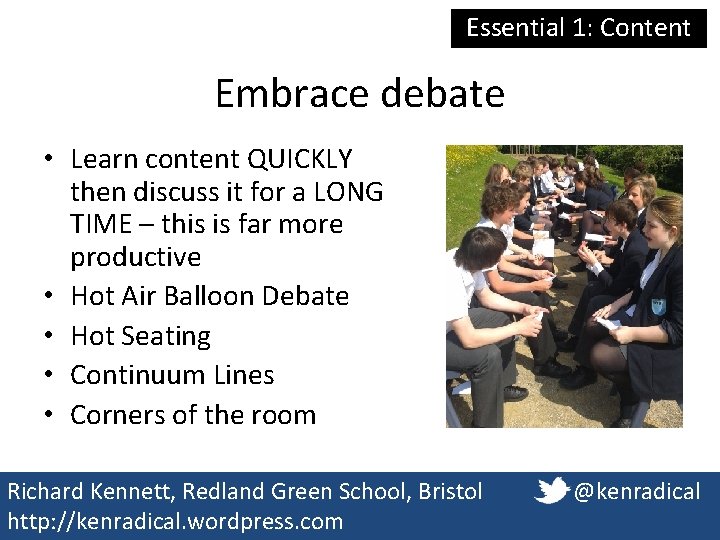
Essential 1: Content Embrace debate • Learn content QUICKLY then discuss it for a LONG TIME – this is far more productive • Hot Air Balloon Debate • Hot Seating • Continuum Lines • Corners of the room Richard Kennett, Redland Green School, Bristol http: //kenradical. wordpress. com @kenradical
Essential 2: Source work • Fundamental to exam success • Brings lessons alive • Lends itself to independent learning Key to success • Picking out the minutiae • Linking to context and own knowledge • Don’t focus on bias! • Trawl the internet for crackers Richard Kennett, Redland Green School, Bristol http: //kenradical. wordpress. com @kenradical
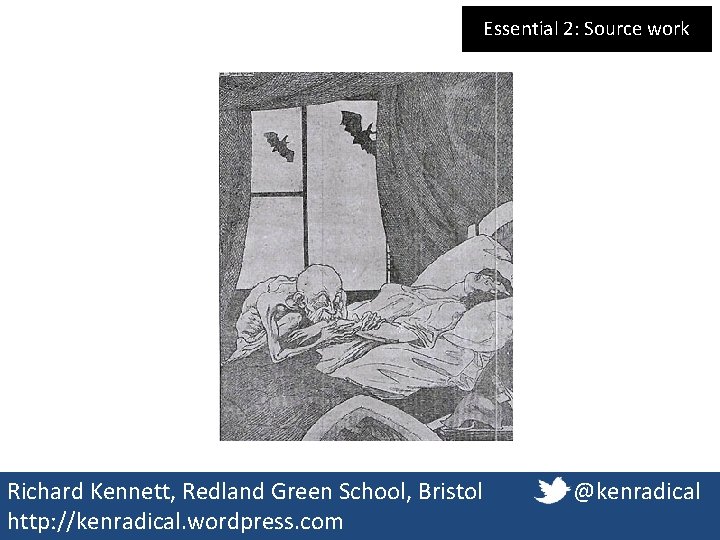
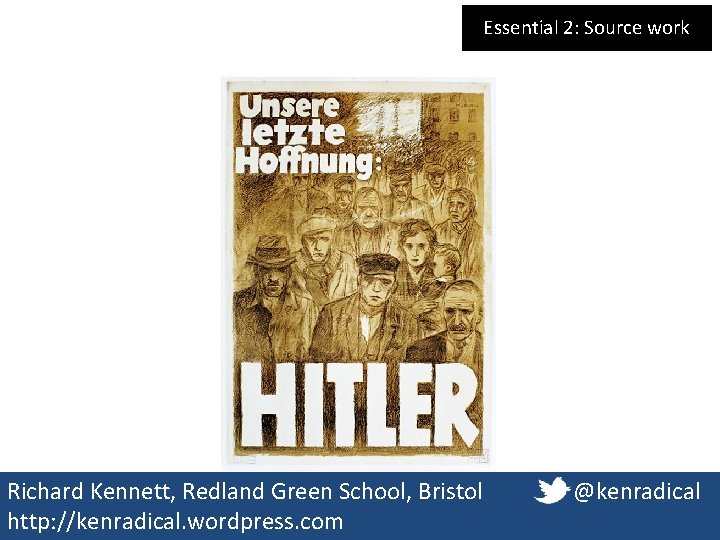
Essential 2: Source work Blind Drawing • Get into pairs. One with their back to the board. One facing it. • I will show you a source on the board. Only those facing it can see. They must describe the source to their partner. • Who can do the best picture? Richard Kennett, Redland Green School, Bristol http: //kenradical. wordpress. com @kenradical
Essential 2: Source work Richard Kennett, Redland Green School, Bristol http: //kenradical. wordpress. com @kenradical
Essential 2: Source work Richard Kennett, Redland Green School, Bristol http: //kenradical. wordpress. com @kenradical
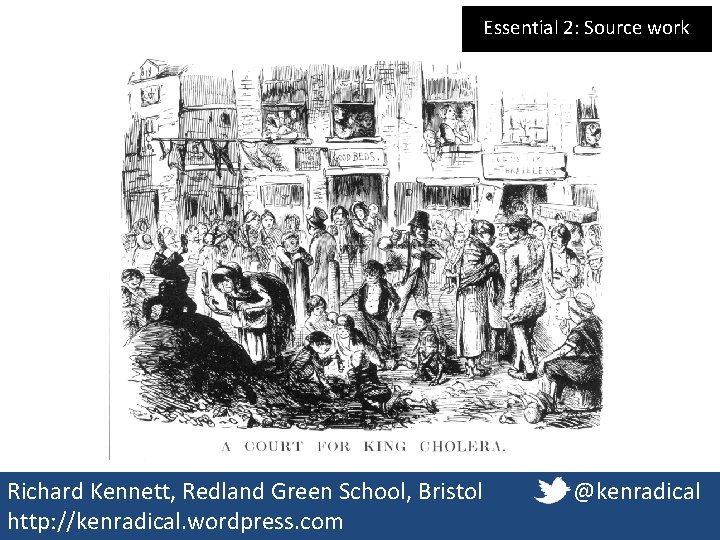
Essential 2: Source work Walk through a source On the next slide is a source from the 19 th century. As a group you must recreate the source Richard Kennett, Redland Green School, Bristol http: //kenradical. wordpress. com @kenradical
Essential 2: Source work Richard Kennett, Redland Green School, Bristol http: //kenradical. wordpress. com @kenradical
Essential 2: Source work ARK – why acronyms matter • A – Answer the question • R – Refer to the source • K – bring in your own Knowledge Richard Kennett, Redland Green School, Bristol http: //kenradical. wordpress. com http: //www. ocr. org. uk/Images/144979 question-paper-unita 951 -14 development-studywith-germany-c. 1919 -1945 -depthstudy. pdf @kenradical
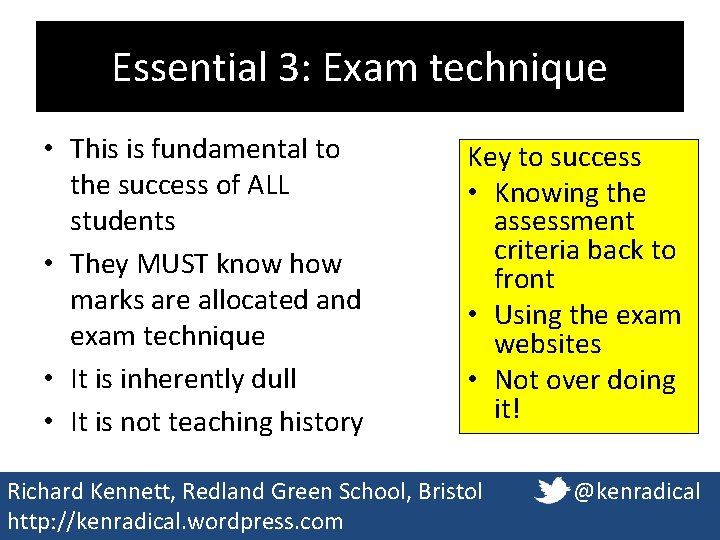
Essential 3: Exam technique • This is fundamental to the success of ALL students • They MUST know how marks are allocated and exam technique • It is inherently dull • It is not teaching history Key to success • Knowing the assessment criteria back to front • Using the exam websites • Not over doing it! Richard Kennett, Redland Green School, Bristol http: //kenradical. wordpress. com @kenradical
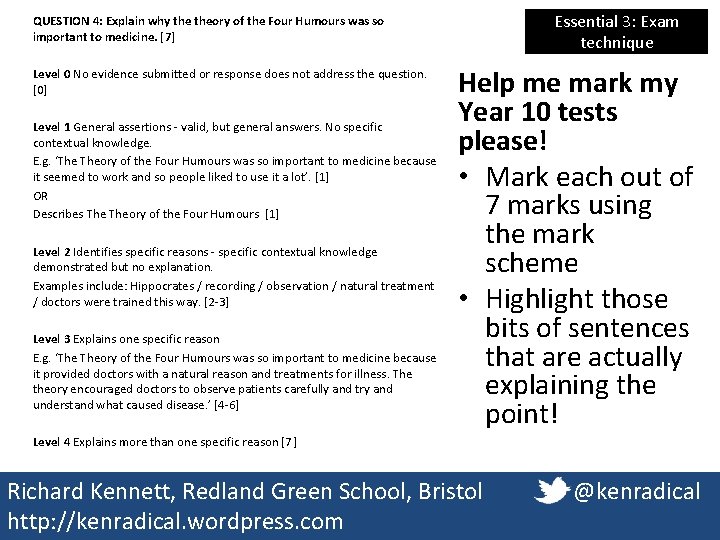
Essential 3: Exam technique QUESTION 4: Explain why theory of the Four Humours was so important to medicine. [7] Level 0 No evidence submitted or response does not address the question. [0] Level 1 General assertions - valid, but general answers. No specific contextual knowledge. E. g. ‘The Theory of the Four Humours was so important to medicine because it seemed to work and so people liked to use it a lot’. [1] OR Describes Theory of the Four Humours [1] Level 2 Identifies specific reasons - specific contextual knowledge demonstrated but no explanation. Examples include: Hippocrates / recording / observation / natural treatment / doctors were trained this way. [2 -3] Level 3 Explains one specific reason E. g. ‘The Theory of the Four Humours was so important to medicine because it provided doctors with a natural reason and treatments for illness. The theory encouraged doctors to observe patients carefully and try and understand what caused disease. ’ [4 -6] Help me mark my Year 10 tests please! • Mark each out of 7 marks using the mark scheme • Highlight those bits of sentences that are actually explaining the point! Level 4 Explains more than one specific reason [7 ] Richard Kennett, Redland Green School, Bristol http: //kenradical. wordpress. com @kenradical
Find out more…. http: //www. kenradical. wordpress. com Richard Kennett, Redland Green School, Bristol http: //kenradical. wordpress. com @kenradical
Richard Kennett, Redland Green School, Bristol http: //kenradical. wordpress. com @kenradical