
What are your goals for student assessment RUBRICS
What are your goals for student assessment?
RUBRICS FORMATIVE ASSESSMENT How can rubrics help teachers to conduct formative assessment for student learning? Luka Boeskens, Analyst, OECD
Why does this matter? What does international data say about this topic?
Why does this matter? What does international data say about this topic?

What is formative assessment? - The Garden Analogy Summative Assessment Growth Learning OF learning Formative assessment FOR learning
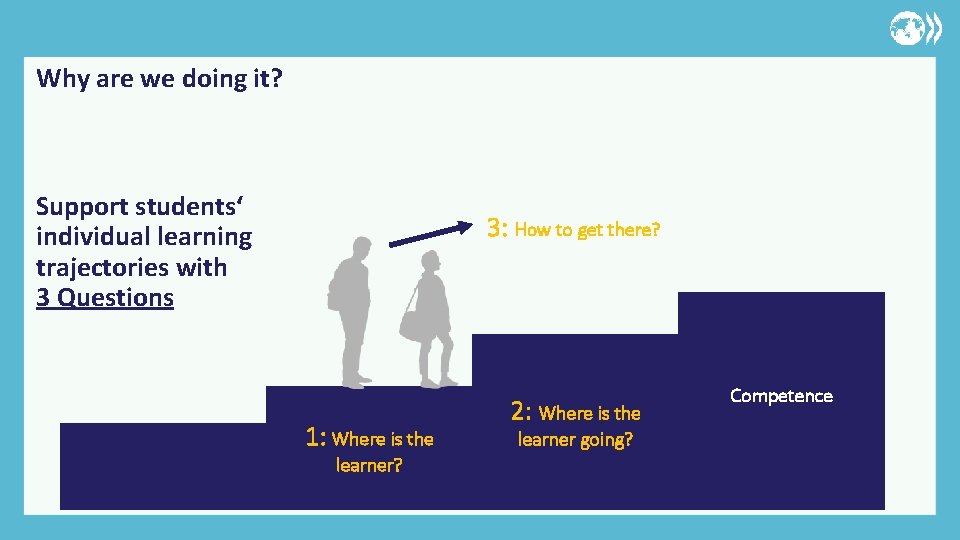
Why are we doing it? Support students‘ individual learning trajectories with 3 Questions 3: How to get there? 1: Where is the learner? 2: Where is the learner going? Competence
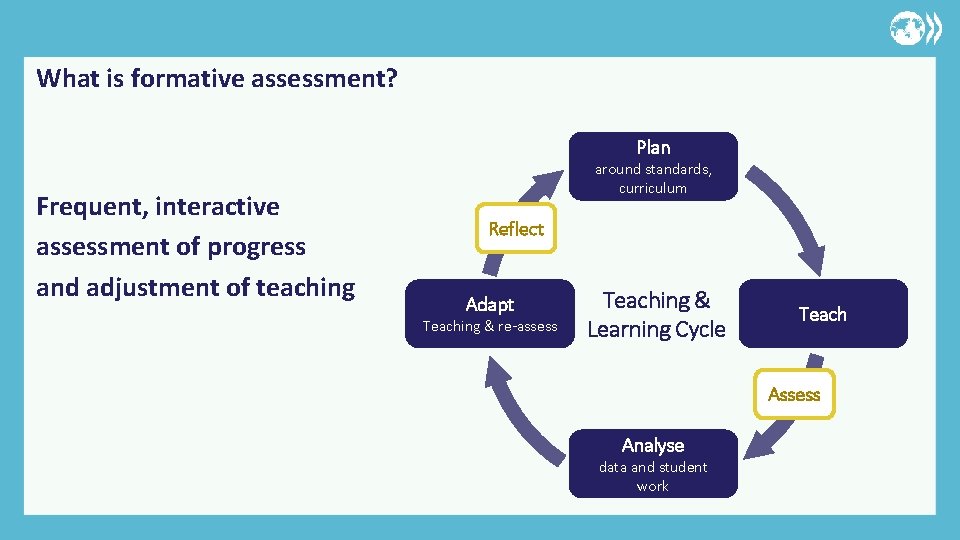
What is formative assessment? Plan Frequent, interactive assessment of progress and adjustment of teaching around standards, curriculum Reflect Adapt Teaching & re-assess Teaching & Learning Cycle Teach Assess Analyse data and student work
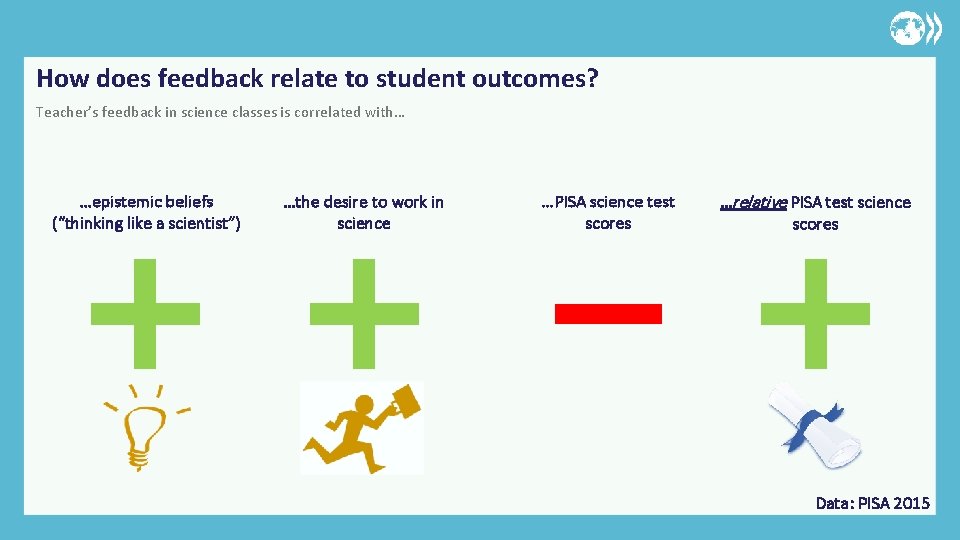
How does feedback relate to student outcomes? Teacher’s feedback in science classes is correlated with… …epistemic beliefs (“thinking like a scientist”) …the desire to work in science …PISA science test scores …relative PISA test science scores Data: PISA 2015
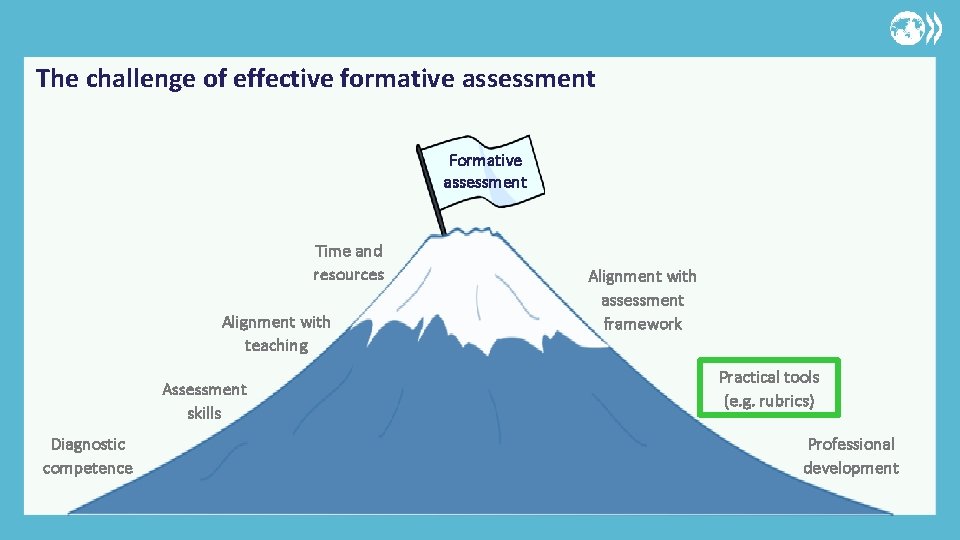
The challenge of effective formative assessment Formative assessment Time and resources Alignment with teaching Assessment skills Diagnostic competence Alignment with assessment framework Practical tools (e. g. rubrics) Professional development
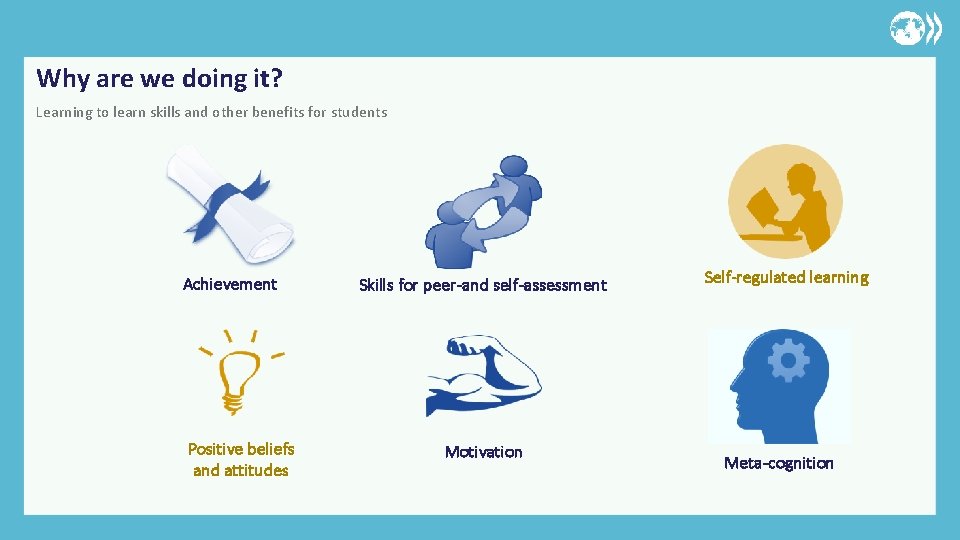
Why are we doing it? Learning to learn skills and other benefits for students Achievement Positive beliefs and attitudes Skills for peer-and self-assessment Motivation Self-regulated learning Meta-cognition
Why does this matter? What does international data say about this topic?
Raise your hands if you …
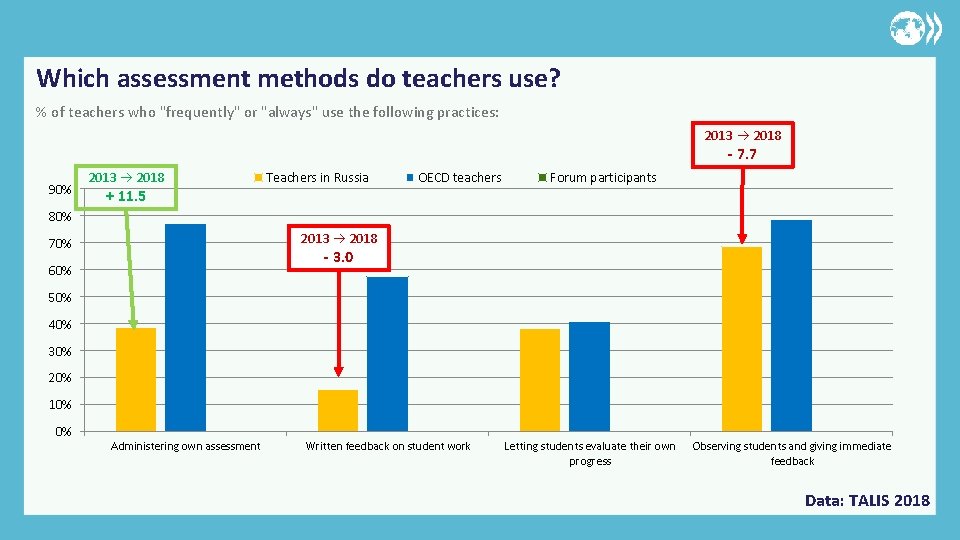
Which assessment methods do teachers use? % of teachers who "frequently" or "always" use the following practices: 2013 2018 - 7. 7 90% 2013 2018 + 11. 5 Teachers in Russia OECD teachers Forum participants 80% 2013 2018 70% - 3. 0 60% 50% 40% 30% 20% 10% 0% Administering own assessment Written feedback on student work Letting students evaluate their own progress Observing students and giving immediate feedback Data: TALIS 2018
Raise your hands if you …
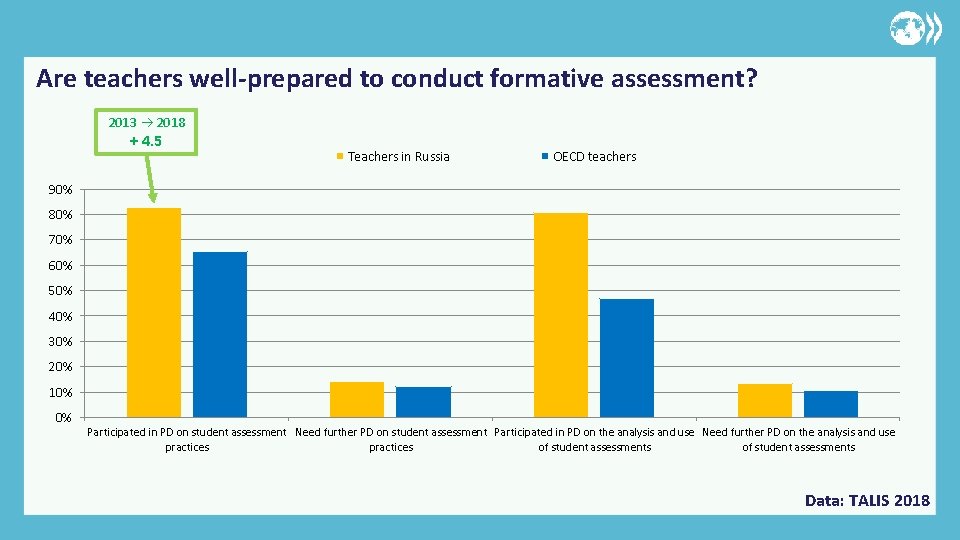
Are teachers well-prepared to conduct formative assessment? 2013 2018 + 4. 5 Teachers in Russia OECD teachers 90% 80% 70% 60% 50% 40% 30% 20% 10% 0% Participated in PD on student assessment Need further PD on student assessment Participated in PD on the analysis and use Need further PD on the analysis and use practices of student assessments Data: TALIS 2018
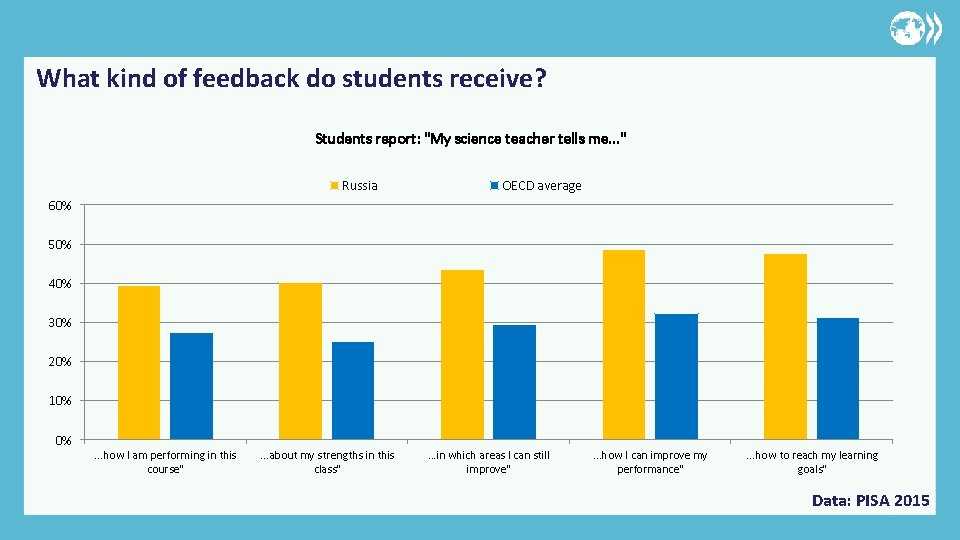
What kind of feedback do students receive? Students report: "My science teacher tells me. . . " Russia OECD average 60% 50% 40% 30% 20% 10% 0% . . . how I am performing in this course" . . . about my strengths in this class" …in which areas I can still improve" . . . how I can improve my performance" . . . how to reach my learning goals" Data: PISA 2015

Conclusion
Resources for teachers • Rubrics and lesson plans from the OECD’s Fostering Students’ Creativity and Critical Thinking project: http: //www. oecd. org/education/fostering-students-creativity-and-critical-thinking 62212 c 37 -en. htm • Formative Assessment for Students and Teachers (FAST) SCASS: http: //www. formativeassessmentpractice. org/resources/ • Council for the Curriculum, Examinations and Assessment (CCEA): http: //ccea. org. uk/curriculum/assess_progress/types_assessment/formative/assessment_lea rning • Cambridge International Education: https: //cambridge-community. org. uk/professionaldevelopment/gswafl/index. html
Evidence • OECD (2019), TALIS 2018 Results (Volume I): Teachers and School Leaders as Lifelong Learners (Chapter 2) • OECD (2016), PISA 2015 Results (Volume II): Policies and Practices for Successful Schools. • OECD (2013), Synergies for Better Learning: An International Perspective on Evaluation and Assessment (Chapter 4) • OECD (2005), Formative Assessment: Improving Learning in Secondary Classrooms. • Paniagua, A. , D. Istance (2018), Teachers as Designers of Learning Environments: The Importance of Innovative Pedagogies, Educational Research and Innovation. • Mostafa, T. , A. Echazarra and H. Guillou (2018), “The science of teaching science: An exploration of science teaching practices in PISA 2015”, OECD Education Working Papers, No. 188. (Section 6)
- Slides: 19