
What are the most important health issues while
- Slides: 16
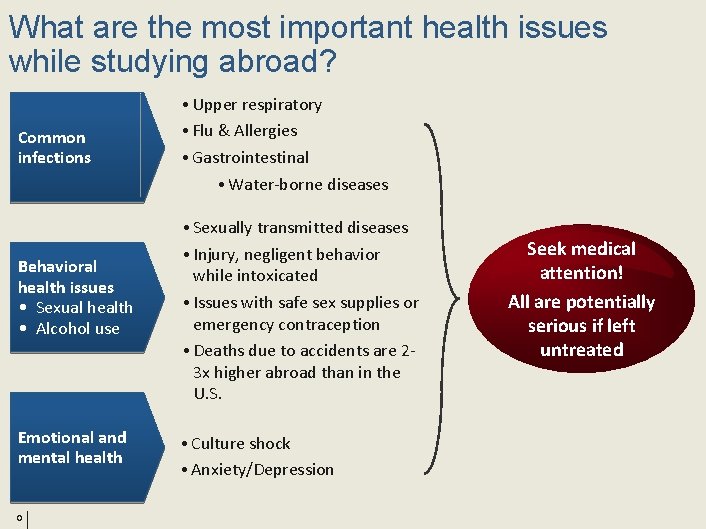
What are the most important health issues while studying abroad? • Upper respiratory Common infections • Flu & Allergies • Gastrointestinal • Water-borne diseases • Sexually transmitted diseases Behavioral health issues • Sexual health • Alcohol use Emotional and mental health 0 • Injury, negligent behavior while intoxicated • Issues with safe sex supplies or emergency contraception • Deaths due to accidents are 23 x higher abroad than in the U. S. • Culture shock • Anxiety/Depression Seek medical attention! All are potentially serious if left untreated
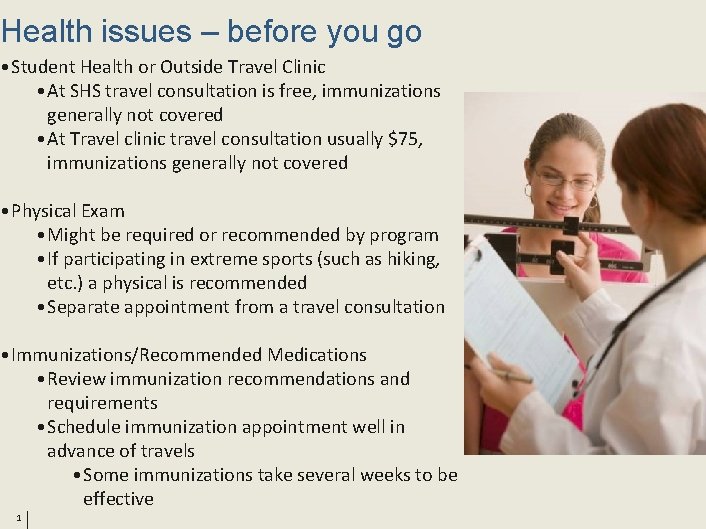
Health issues – before you go • Student Health or Outside Travel Clinic • At SHS travel consultation is free, immunizations generally not covered • At Travel clinic travel consultation usually $75, immunizations generally not covered • Physical Exam • Might be required or recommended by program • If participating in extreme sports (such as hiking, etc. ) a physical is recommended • Separate appointment from a travel consultation • Immunizations/Recommended Medications • Review immunization recommendations and requirements • Schedule immunization appointment well in advance of travels • Some immunizations take several weeks to be effective 1
Health issues – before you go continued…. • Review CDC Traveler’s Health Information • http: //wwwnc. cdc. gov/travel/ • Includes information on immunizations, malaria prone areas, rabies, etc. • Five students with animal bites last year • Discuss pre-exposure rabies vaccine with provider • Post-exposure treatment can interfere with travels/studies • Prescriptions/Medications 2 • If you take prescription medications, vitamins, over-the-counter medications • Verify that you can take these medicines across country borders • Carry with you a written prescription • Take the supply you will need for your entire trip – do not mail them to yourself • Beware of counterfeit medications – can be very harmful
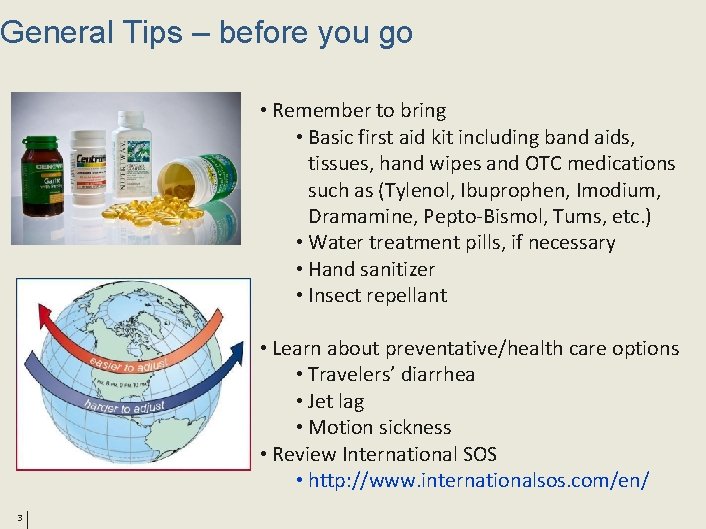
General Tips – before you go • Remember to bring • Basic first aid kit including band aids, tissues, hand wipes and OTC medications such as (Tylenol, Ibuprophen, Imodium, Dramamine, Pepto-Bismol, Tums, etc. ) • Water treatment pills, if necessary • Hand sanitizer • Insect repellant • Learn about preventative/health care options • Travelers’ diarrhea • Jet lag • Motion sickness • Review International SOS • http: //www. internationalsos. com/en/ 3
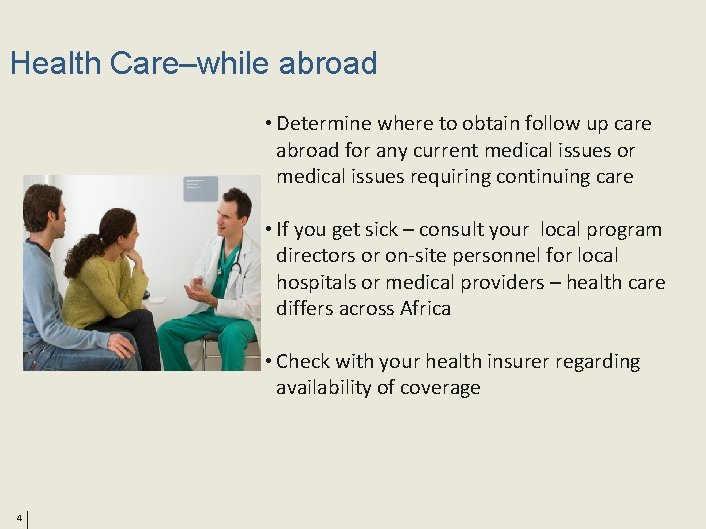
Health Care–while abroad • Determine where to obtain follow up care abroad for any current medical issues or medical issues requiring continuing care • If you get sick – consult your local program directors or on-site personnel for local hospitals or medical providers – health care differs across Africa • Check with your health insurer regarding availability of coverage 4
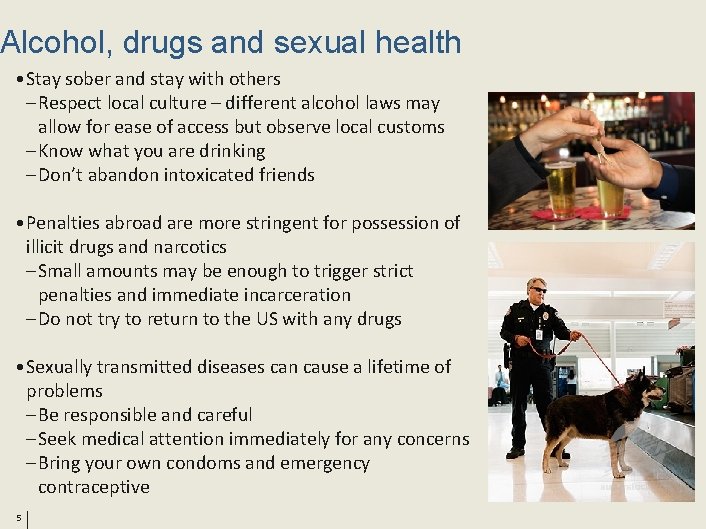
Alcohol, drugs and sexual health • Stay sober and stay with others – Respect local culture – different alcohol laws may allow for ease of access but observe local customs – Know what you are drinking – Don’t abandon intoxicated friends • Penalties abroad are more stringent for possession of illicit drugs and narcotics – Small amounts may be enough to trigger strict penalties and immediate incarceration – Do not try to return to the US with any drugs • Sexually transmitted diseases can cause a lifetime of problems – Be responsible and careful – Seek medical attention immediately for any concerns – Bring your own condoms and emergency contraceptive 5
What are the greatest safety dangers/risks while studying abroad? • Tap water differs in safety Food & Water • Food should be thoroughly cooked • 115 people per 1, 000 return early from a trip as a result of gastroenteritis Physical injuries • Drowning -13% of deaths abroad • Death of pedestrians 7% of accidents • 3, 000 killed daily worldwide in traffic accidents Traffic accidents • Leading cause of death or injury abroad • 13% involve motorcycles 6
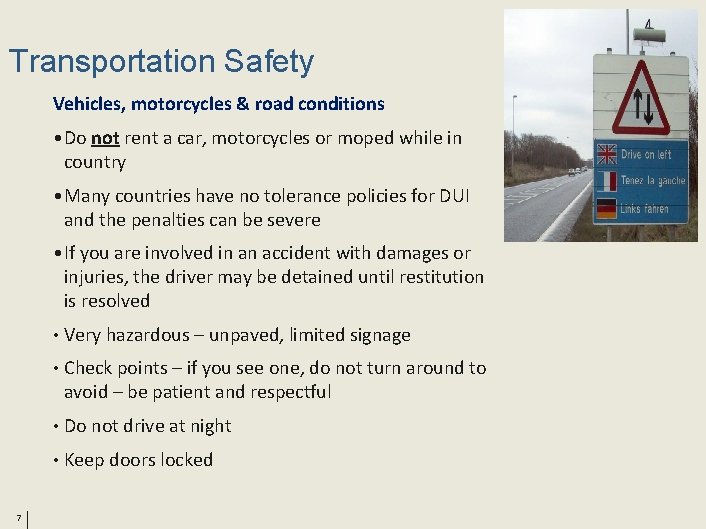
Transportation Safety Vehicles, motorcycles & road conditions • Do not rent a car, motorcycles or moped while in country • Many countries have no tolerance policies for DUI and the penalties can be severe • If you are involved in an accident with damages or injuries, the driver may be detained until restitution is resolved • Very hazardous – unpaved, limited signage • Check points – if you see one, do not turn around to avoid – be patient and respectful • Do not drive at night • Keep doors locked 7
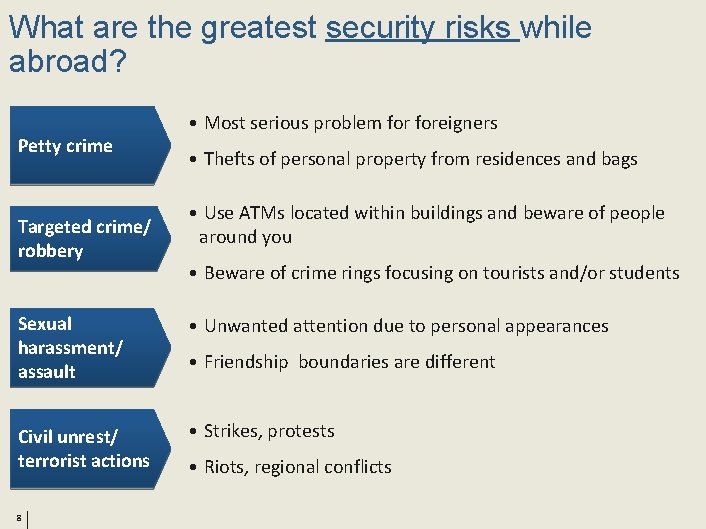
What are the greatest security risks while abroad? Petty crime Targeted crime/ robbery • Most serious problem foreigners • Thefts of personal property from residences and bags • Use ATMs located within buildings and beware of people around you • Beware of crime rings focusing on tourists and/or students Sexual harassment/ assault • Unwanted attention due to personal appearances Civil unrest/ terrorist actions • Strikes, protests 8 • Friendship boundaries are different • Riots, regional conflicts
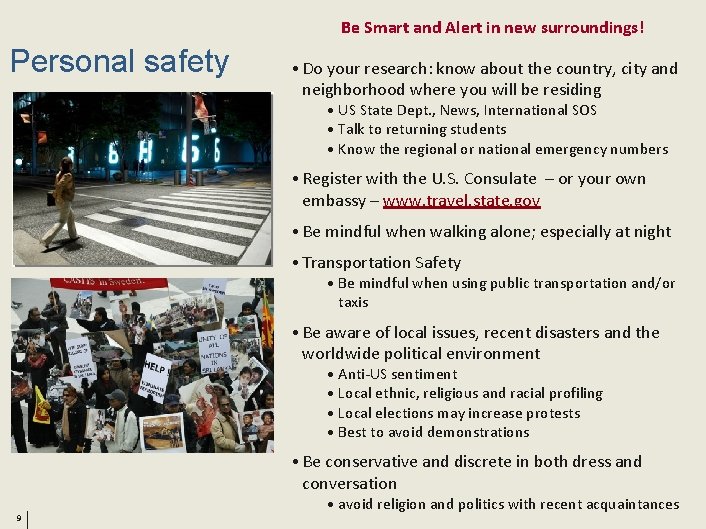
Be Smart and Alert in new surroundings! Personal safety • Do your research: know about the country, city and neighborhood where you will be residing • US State Dept. , News, International SOS • Talk to returning students • Know the regional or national emergency numbers • Register with the U. S. Consulate – or your own embassy – www. travel. state. gov • Be mindful when walking alone; especially at night • Transportation Safety • Be mindful when using public transportation and/or taxis • Be aware of local issues, recent disasters and the worldwide political environment • Anti-US sentiment • Local ethnic, religious and racial profiling • Local elections may increase protests • Best to avoid demonstrations • Be conservative and discrete in both dress and conversation 9 • avoid religion and politics with recent acquaintances
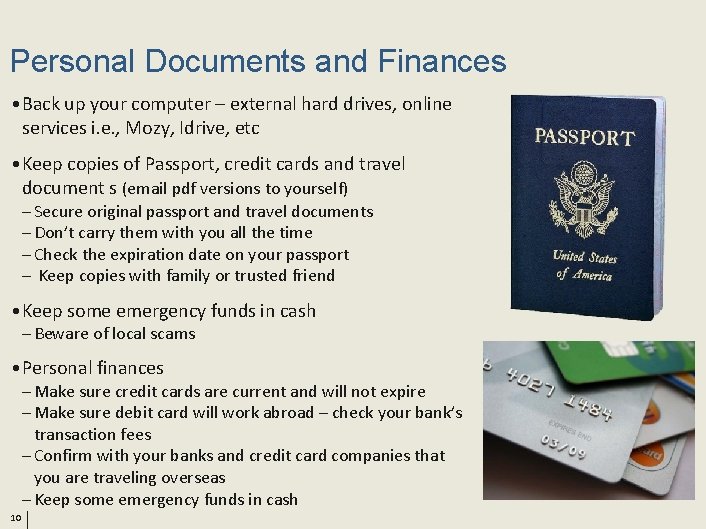
Personal Documents and Finances • Back up your computer – external hard drives, online services i. e. , Mozy, Idrive, etc • Keep copies of Passport, credit cards and travel document s (email pdf versions to yourself) – Secure original passport and travel documents – Don’t carry them with you all the time – Check the expiration date on your passport – Keep copies with family or trusted friend • Keep some emergency funds in cash – Beware of local scams • Personal finances – Make sure credit cards are current and will not expire – Make sure debit card will work abroad – check your bank’s transaction fees – Confirm with your banks and credit card companies that you are traveling overseas – Keep some emergency funds in cash 10
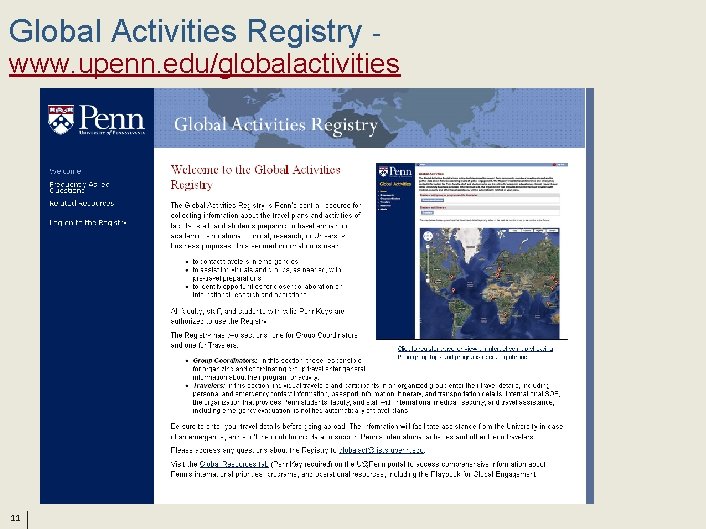
Global Activities Registry - www. upenn. edu/globalactivities 11
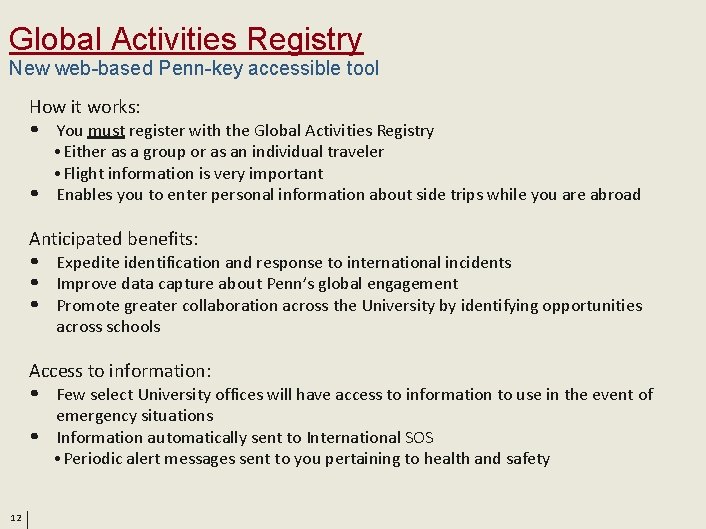
Global Activities Registry New web-based Penn-key accessible tool How it works: • You must register with the Global Activities Registry • Either as a group or as an individual traveler • Flight information is very important • Enables you to enter personal information about side trips while you are abroad Anticipated benefits: • Expedite identification and response to international incidents • Improve data capture about Penn’s global engagement • Promote greater collaboration across the University by identifying opportunities across schools Access to information: • Few select University offices will have access to information to use in the event of • 12 emergency situations Information automatically sent to International SOS • Periodic alert messages sent to you pertaining to health and safety
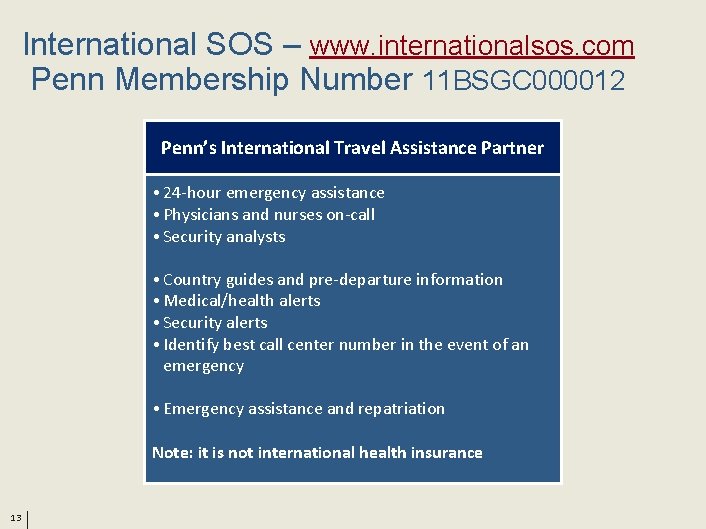
International SOS – www. internationalsos. com Penn Membership Number 11 BSGC 000012 Penn’s International Travel Assistance Partner • 24 -hour emergency assistance • Physicians and nurses on-call • Security analysts • Country guides and pre-departure information • Medical/health alerts • Security alerts • Identify best call center number in the event of an emergency • Emergency assistance and repatriation Note: it is not international health insurance 13
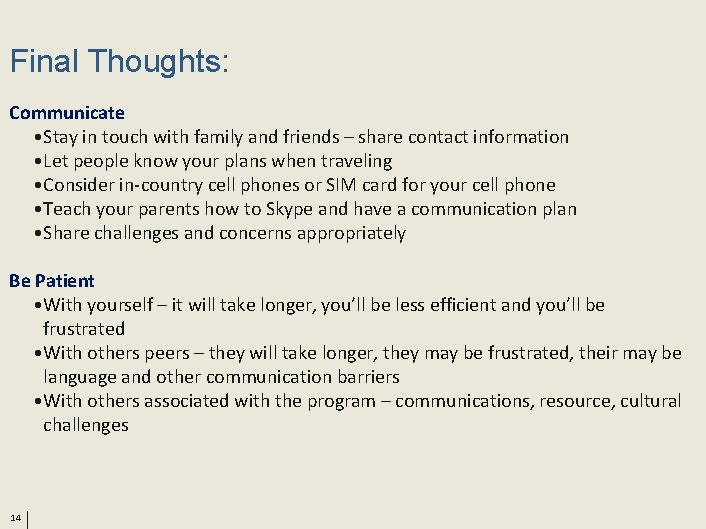
Final Thoughts: Communicate • Stay in touch with family and friends – share contact information • Let people know your plans when traveling • Consider in-country cell phones or SIM card for your cell phone • Teach your parents how to Skype and have a communication plan • Share challenges and concerns appropriately Be Patient • With yourself – it will take longer, you’ll be less efficient and you’ll be frustrated • With others peers – they will take longer, they may be frustrated, their may be language and other communication barriers • With others associated with the program – communications, resource, cultural challenges 14
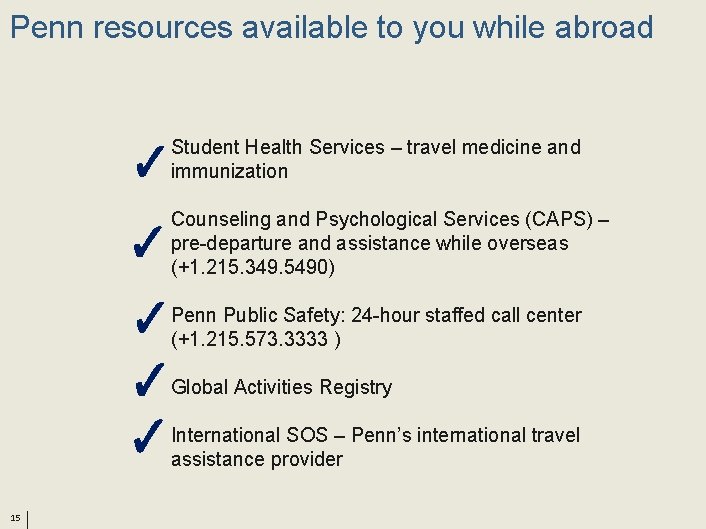
Penn resources available to you while abroad Student Health Services – travel medicine and immunization Counseling and Psychological Services (CAPS) – pre-departure and assistance while overseas (+1. 215. 349. 5490) Penn Public Safety: 24 -hour staffed call center (+1. 215. 573. 3333 ) Global Activities Registry International SOS – Penn’s international travel assistance provider 15