
WHAT ARE THE MAIN TYPES OF POLITICAL ECONOMY
- Slides: 21
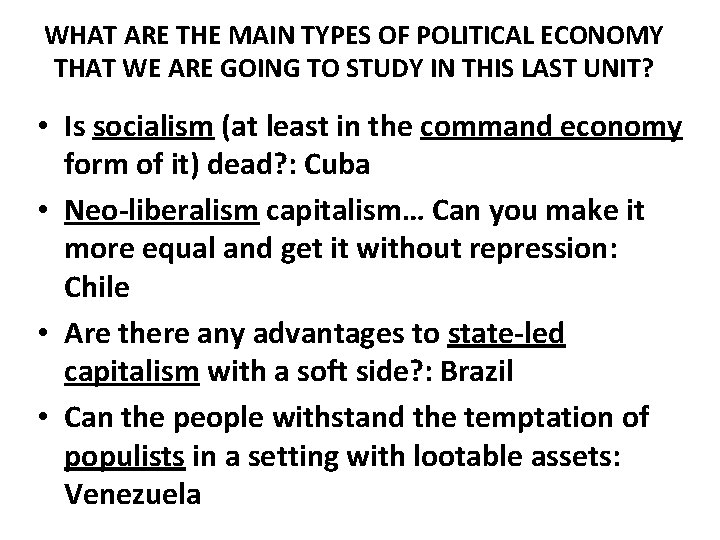
WHAT ARE THE MAIN TYPES OF POLITICAL ECONOMY THAT WE ARE GOING TO STUDY IN THIS LAST UNIT? • Is socialism (at least in the command economy form of it) dead? : Cuba • Neo-liberalism capitalism… Can you make it more equal and get it without repression: Chile • Are there any advantages to state-led capitalism with a soft side? : Brazil • Can the people withstand the temptation of populists in a setting with lootable assets: Venezuela
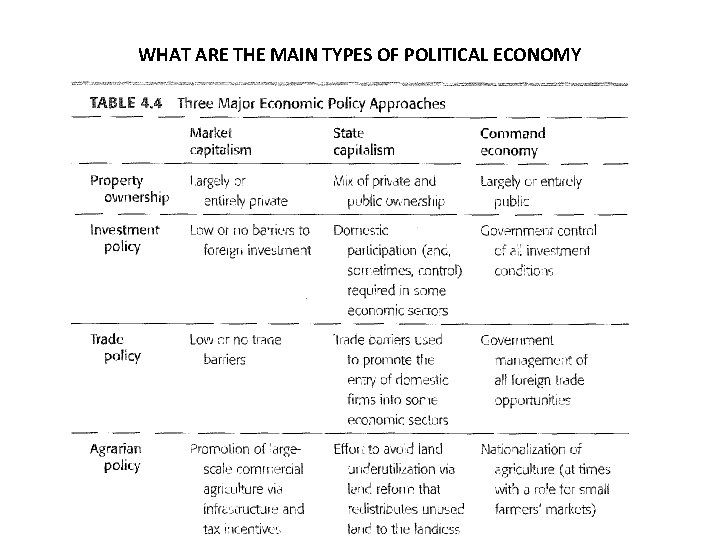
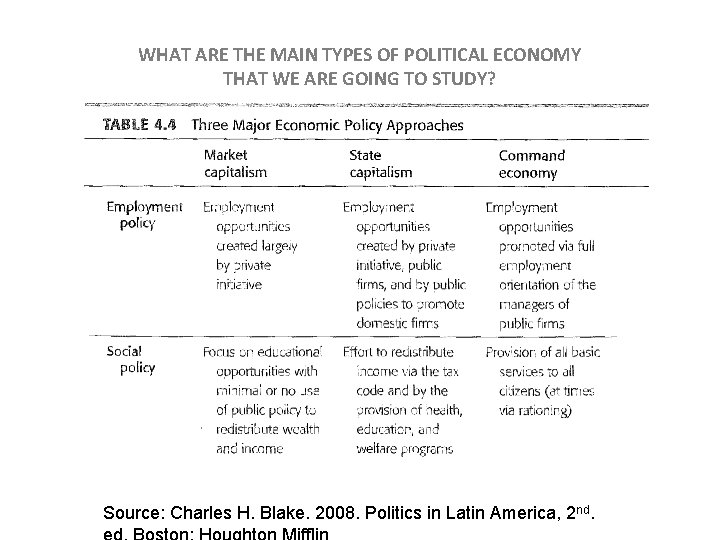
WHAT ARE THE MAIN TYPES OF POLITICAL ECONOMY THAT WE ARE GOING TO STUDY?
WHAT ARE THE MAIN TYPES OF POLITICAL ECONOMY THAT WE ARE GOING TO STUDY? Source: Charles H. Blake. 2008. Politics in Latin America, 2 nd.
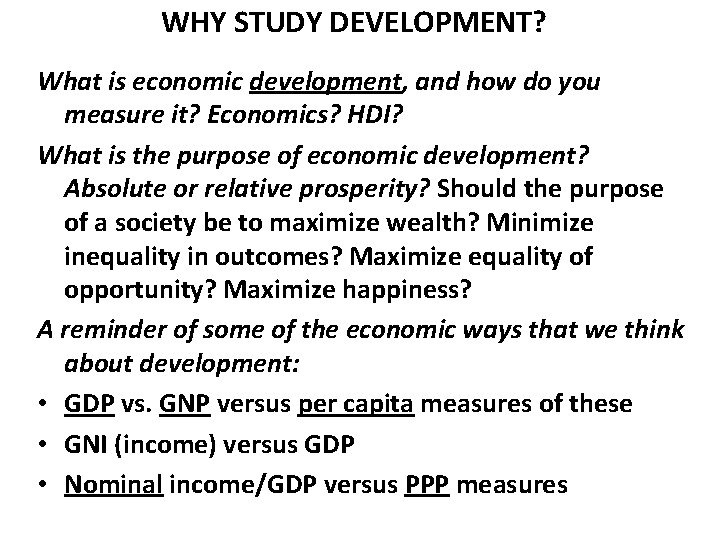
WHY STUDY DEVELOPMENT? What is economic development, and how do you measure it? Economics? HDI? What is the purpose of economic development? Absolute or relative prosperity? Should the purpose of a society be to maximize wealth? Minimize inequality in outcomes? Maximize equality of opportunity? Maximize happiness? A reminder of some of the economic ways that we think about development: • GDP vs. GNP versus per capita measures of these • GNI (income) versus GDP • Nominal income/GDP versus PPP measures
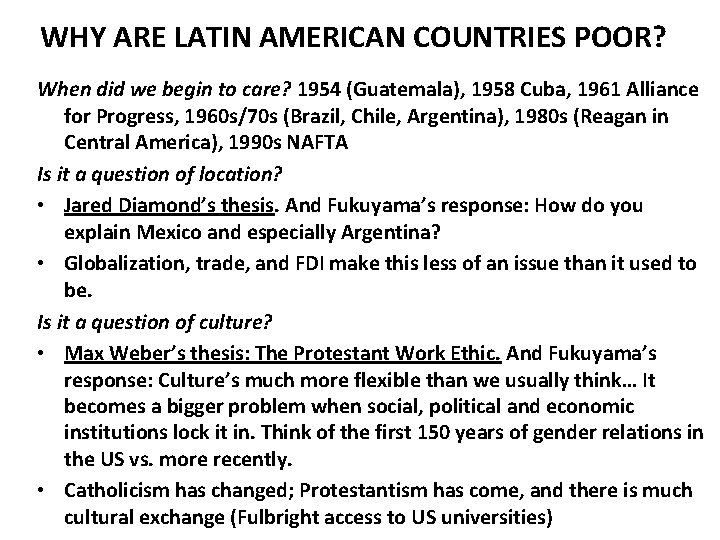
WHY ARE LATIN AMERICAN COUNTRIES POOR? When did we begin to care? 1954 (Guatemala), 1958 Cuba, 1961 Alliance for Progress, 1960 s/70 s (Brazil, Chile, Argentina), 1980 s (Reagan in Central America), 1990 s NAFTA Is it a question of location? • Jared Diamond’s thesis. And Fukuyama’s response: How do you explain Mexico and especially Argentina? • Globalization, trade, and FDI make this less of an issue than it used to be. Is it a question of culture? • Max Weber’s thesis: The Protestant Work Ethic. And Fukuyama’s response: Culture’s much more flexible than we usually think… It becomes a bigger problem when social, political and economic institutions lock it in. Think of the first 150 years of gender relations in the US vs. more recently. • Catholicism has changed; Protestantism has come, and there is much cultural exchange (Fulbright access to US universities)
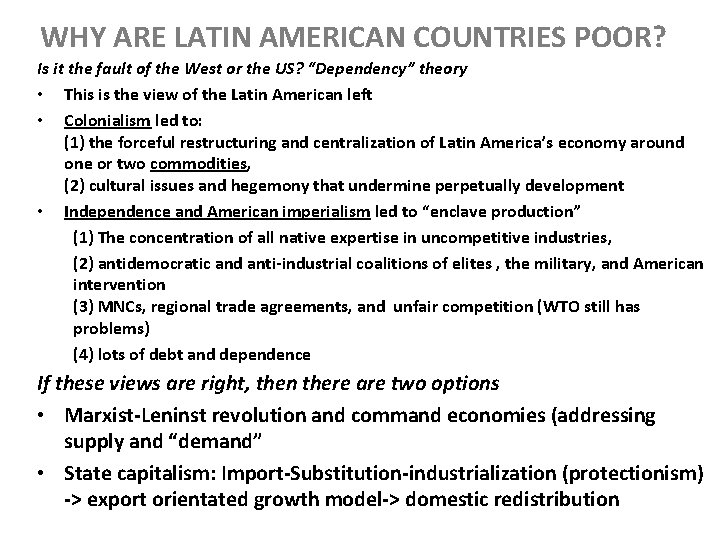
WHY ARE LATIN AMERICAN COUNTRIES POOR? Is it the fault of the West or the US? “Dependency” theory • This is the view of the Latin American left • Colonialism led to: (1) the forceful restructuring and centralization of Latin America’s economy around one or two commodities, (2) cultural issues and hegemony that undermine perpetually development • Independence and American imperialism led to “enclave production” (1) The concentration of all native expertise in uncompetitive industries, (2) antidemocratic and anti-industrial coalitions of elites , the military, and American intervention (3) MNCs, regional trade agreements, and unfair competition (WTO still has problems) (4) lots of debt and dependence If these views are right, then there are two options • Marxist-Leninst revolution and command economies (addressing supply and “demand” • State capitalism: Import-Substitution-industrialization (protectionism) -> export orientated growth model-> domestic redistribution
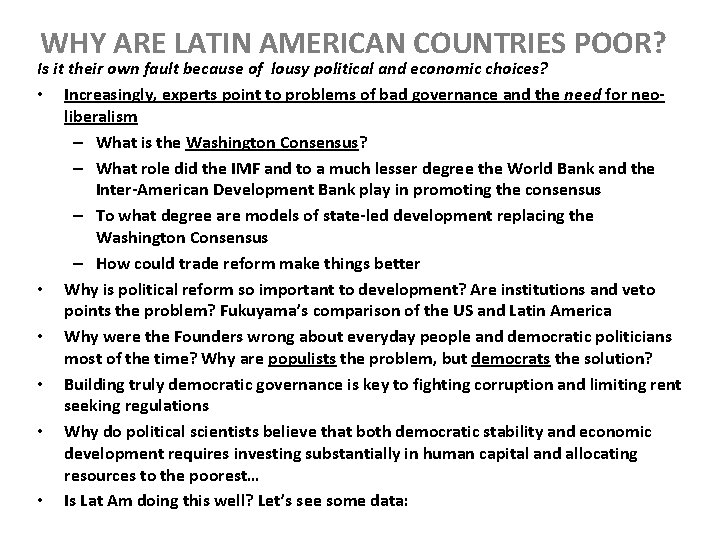
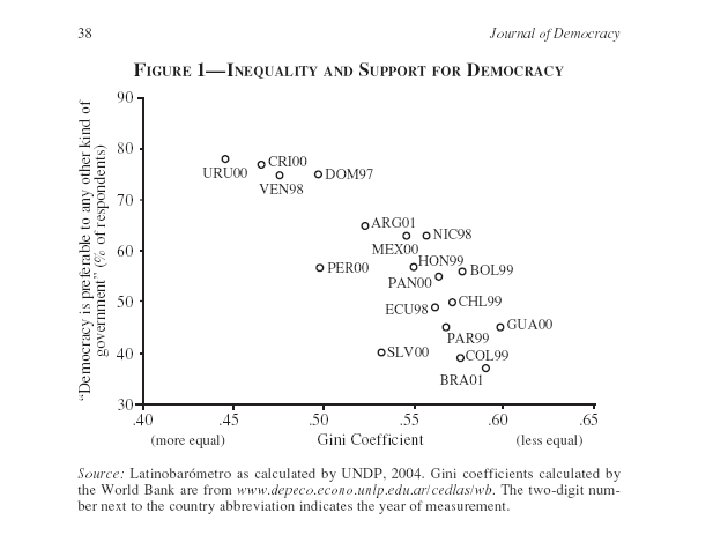
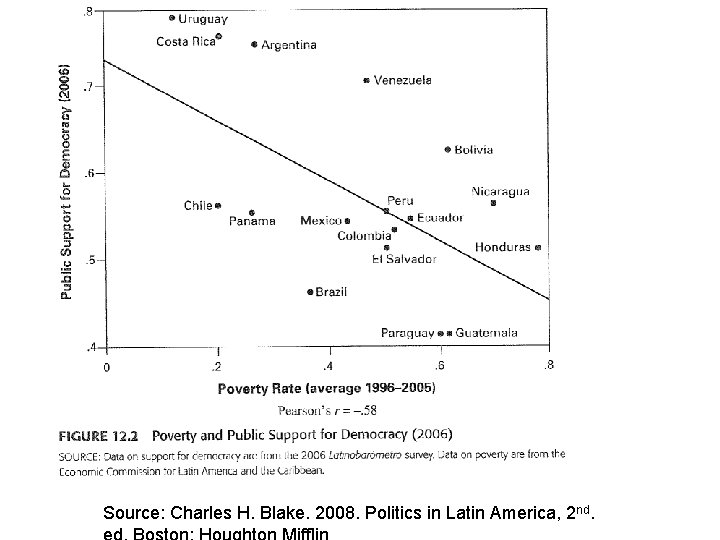
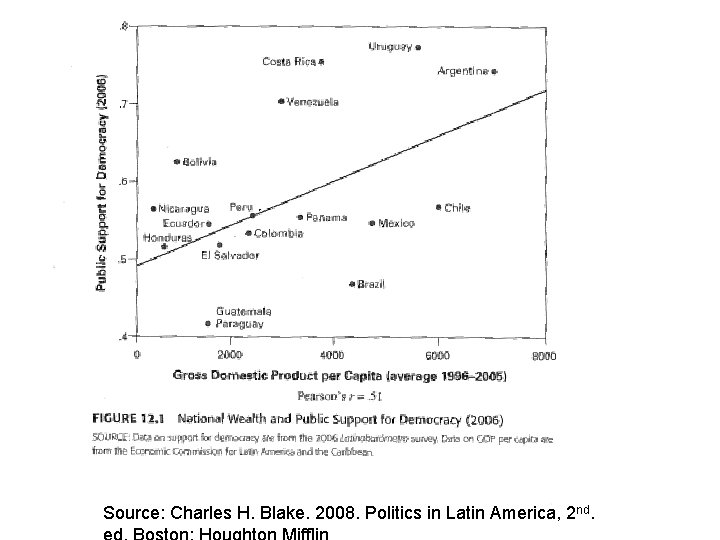
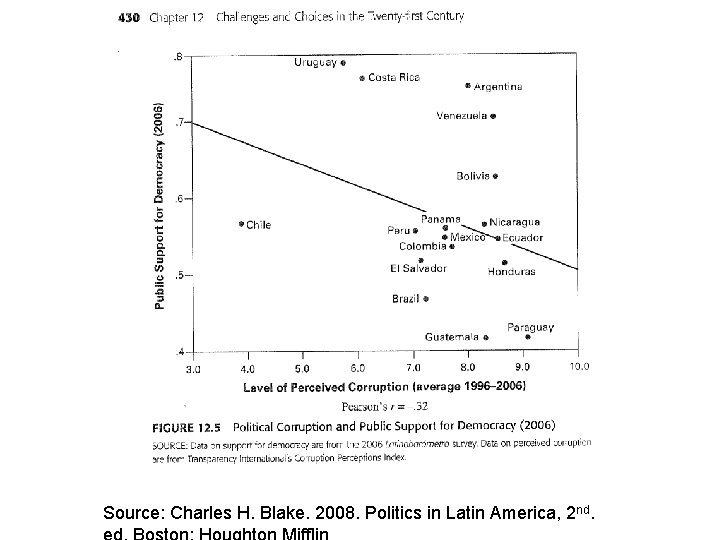
WHY ARE LATIN AMERICAN COUNTRIES POOR? Is it their own fault because of lousy political and economic choices? • Increasingly, experts point to problems of bad governance and the need for neoliberalism – What is the Washington Consensus? – What role did the IMF and to a much lesser degree the World Bank and the Inter-American Development Bank play in promoting the consensus – To what degree are models of state-led development replacing the Washington Consensus – How could trade reform make things better • Why is political reform so important to development? Are institutions and veto points the problem? Fukuyama’s comparison of the US and Latin America • Why were the Founders wrong about everyday people and democratic politicians most of the time? Why are populists the problem, but democrats the solution? • Building truly democratic governance is key to fighting corruption and limiting rent seeking regulations • Why do political scientists believe that both democratic stability and economic development requires investing substantially in human capital and allocating resources to the poorest… • Is Lat Am doing this well? Let’s see some data:
Source: Charles H. Blake. 2008. Politics in Latin America, 2 nd.
Source: Charles H. Blake. 2008. Politics in Latin America, 2 nd.
Source: Charles H. Blake. 2008. Politics in Latin America, 2 nd.
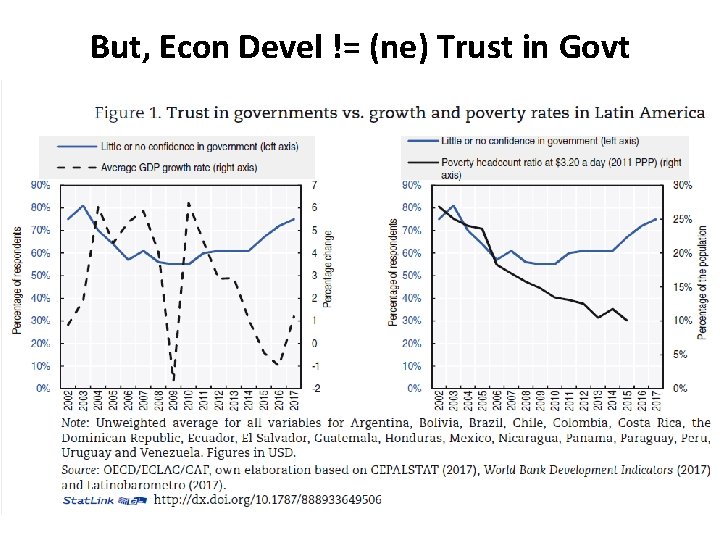
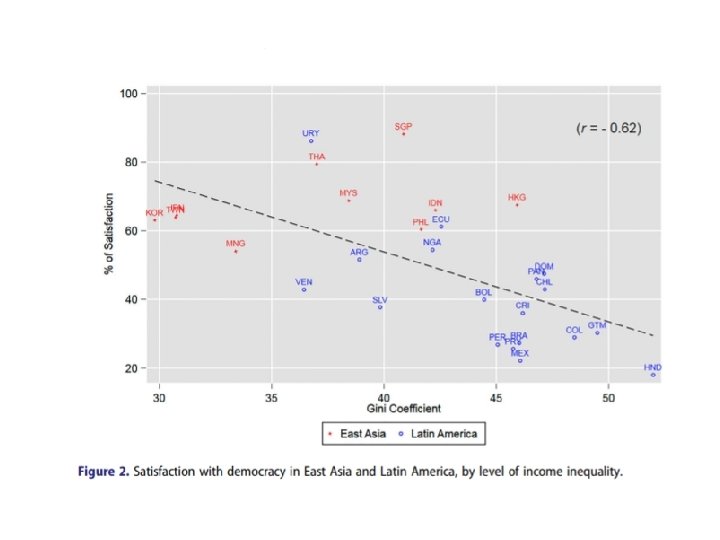
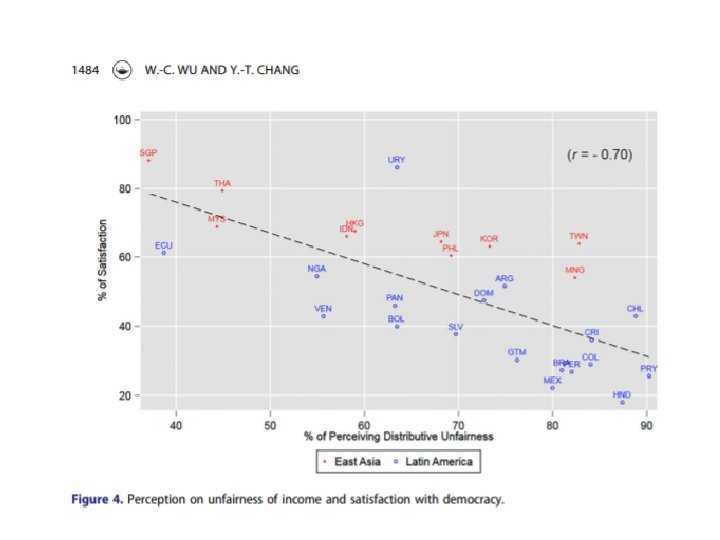
But, Econ Devel != (ne) Trust in Govt
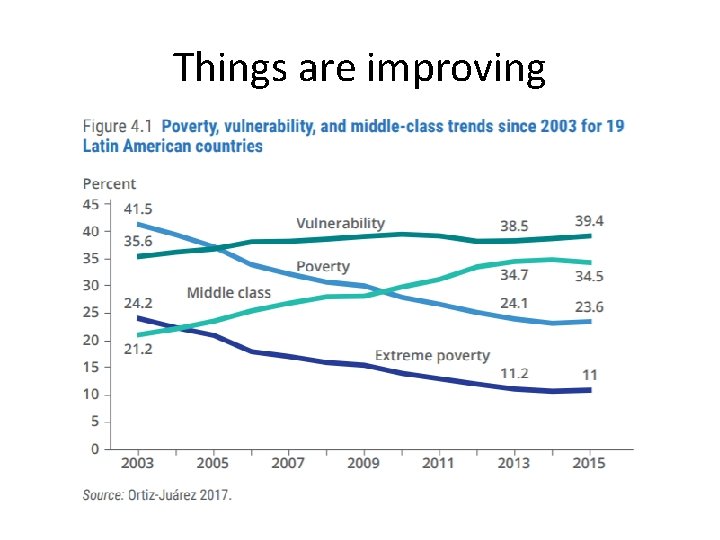
Things are improving
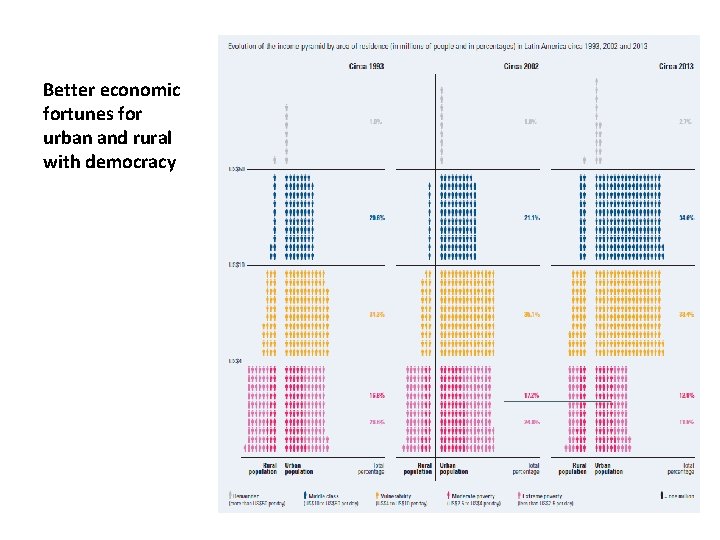
Better economic fortunes for urban and rural with democracy
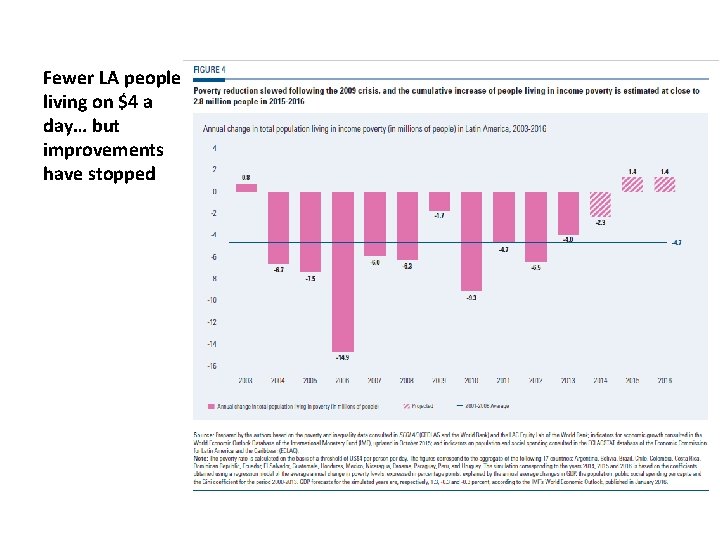
Fewer LA people living on $4 a day… but improvements have stopped
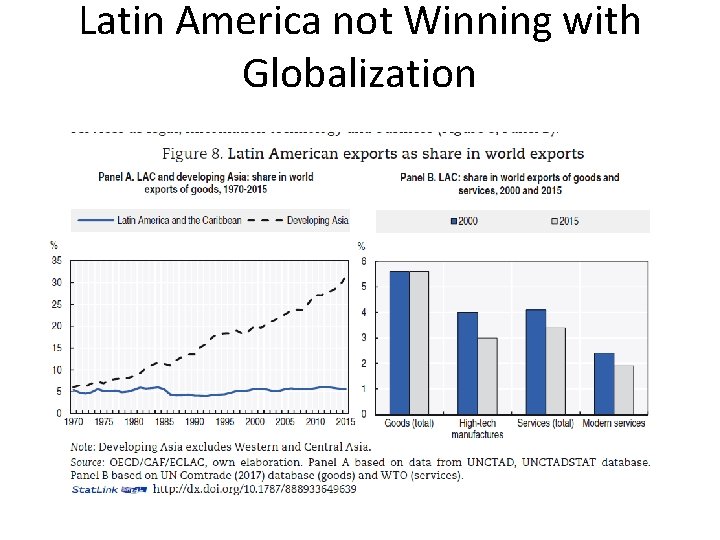
Latin America not Winning with Globalization
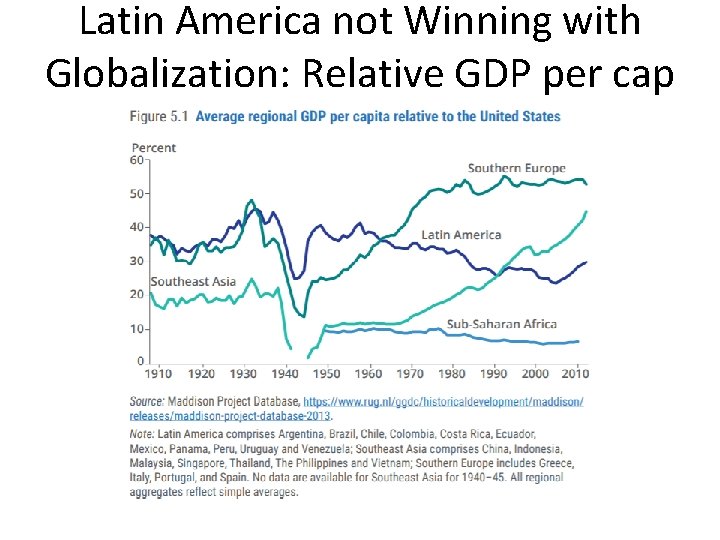
Latin America not Winning with Globalization: Relative GDP per cap