
What are the issues with MultiGNSS Enabling the
What are the issues with Multi-GNSS Enabling the National Positioning Infrastructure? John Dawson and Gary Johnston Earth Monitoring and Hazards Group

Quick Recap on Australia’s NPI Plan A national positioning capability is a key component of Australia’s future economy Hence Australian Federal Government interest
Quick Recap on Australia’s NPI Plan Australian government developed a National Positioning Infrastructure (NPI) Plan Led by Geoscience Australia Whole-of-Government approach Recognises the importance of multi-GNSS Mitigates total reliance on GPS Anticipates improved positioning capabilities through access to more GNSS signals/satellites
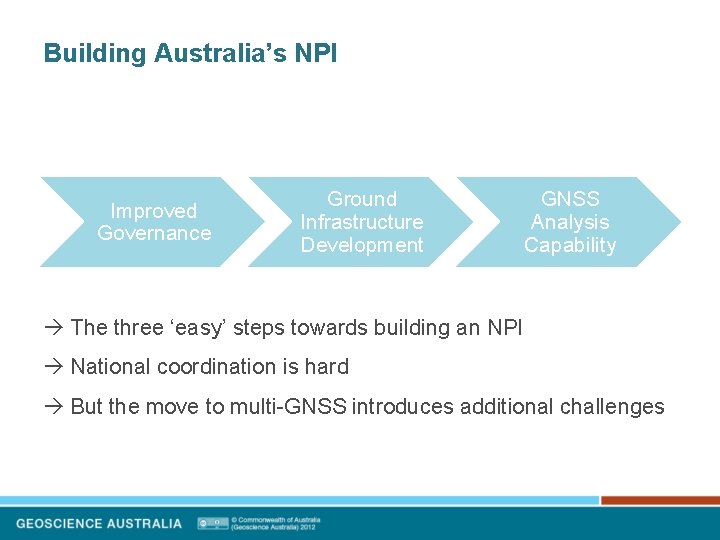
Building Australia’s NPI Improved Governance Ground Infrastructure Development GNSS Analysis Capability The three ‘easy’ steps towards building an NPI National coordination is hard But the move to multi-GNSS introduces additional challenges
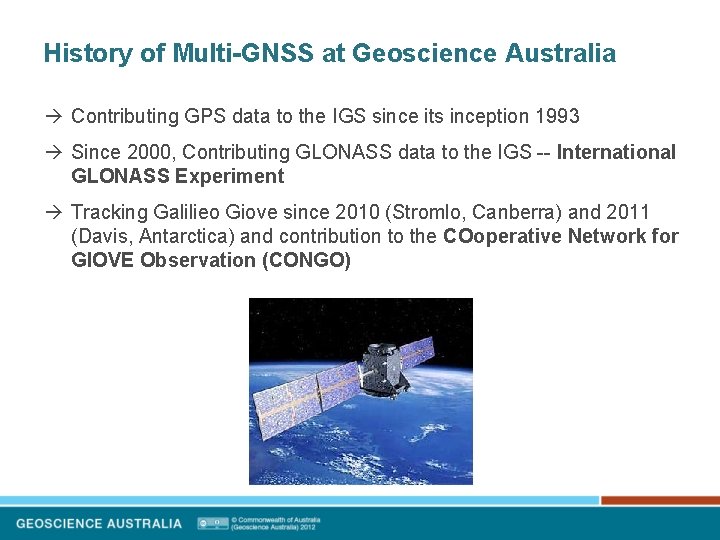
History of Multi-GNSS at Geoscience Australia Contributing GPS data to the IGS since its inception 1993 Since 2000, Contributing GLONASS data to the IGS -- International GLONASS Experiment Tracking Galilieo Giove since 2010 (Stromlo, Canberra) and 2011 (Davis, Antarctica) and contribution to the COoperative Network for GIOVE Observation (CONGO)
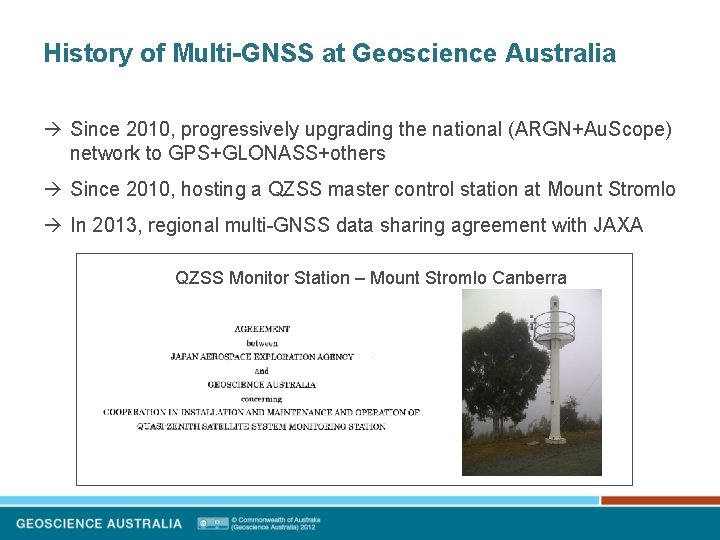
History of Multi-GNSS at Geoscience Australia Since 2010, progressively upgrading the national (ARGN+Au. Scope) network to GPS+GLONASS+others Since 2010, hosting a QZSS master control station at Mount Stromlo In 2013, regional multi-GNSS data sharing agreement with JAXA QZSS Monitor Station – Mount Stromlo Canberra
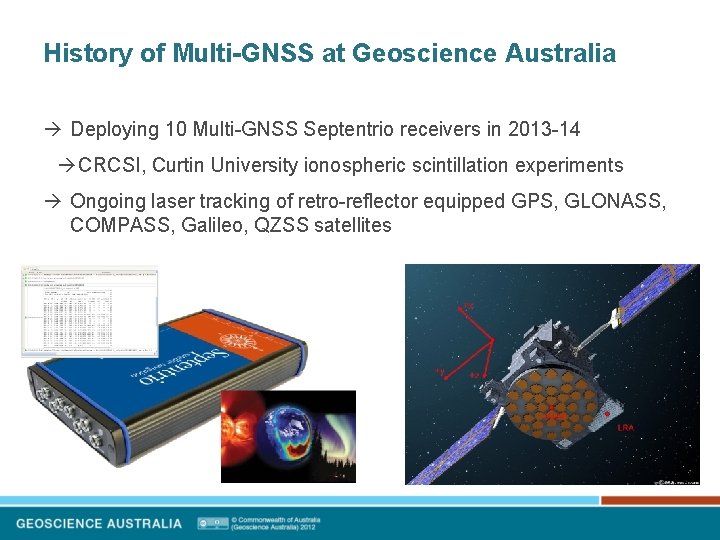
History of Multi-GNSS at Geoscience Australia Deploying 10 Multi-GNSS Septentrio receivers in 2013 -14 CRCSI, Curtin University ionospheric scintillation experiments Ongoing laser tracking of retro-reflector equipped GPS, GLONASS, COMPASS, Galileo, QZSS satellites
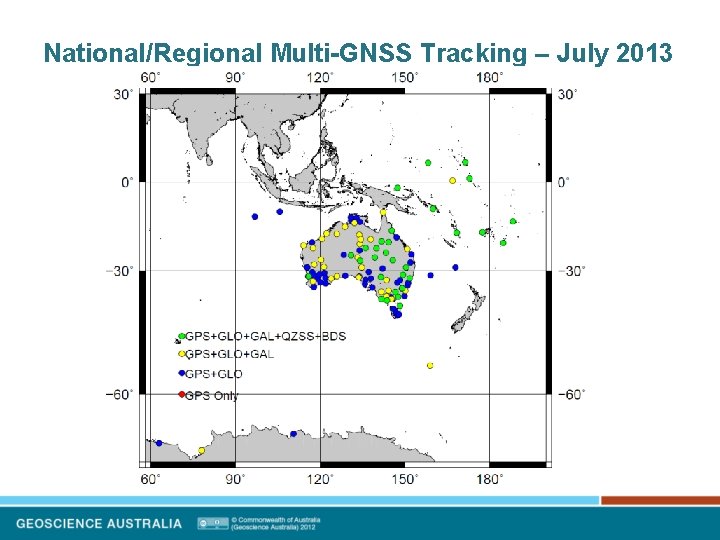
National/Regional Multi-GNSS Tracking – July 2013
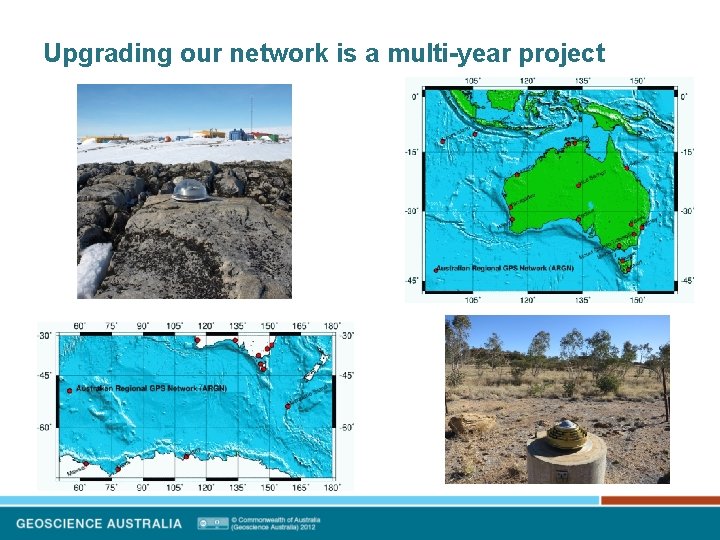
Upgrading our network is a multi-year project
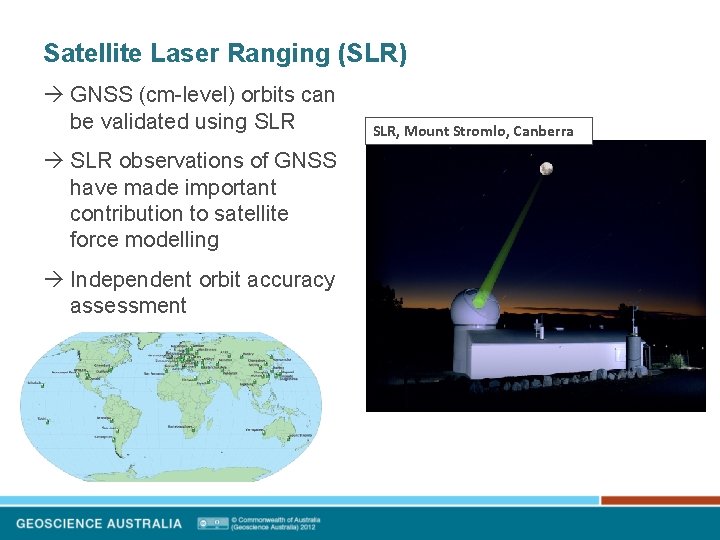
Satellite Laser Ranging (SLR) GNSS (cm-level) orbits can be validated using SLR observations of GNSS have made important contribution to satellite force modelling Independent orbit accuracy assessment SLR, Mount Stromlo, Canberra
Satellite Laser Ranging (SLR) International Laser Ranging Service (ILRS) tracking priorities as of 1 July 2013 GPS: gps 36 QZSS: qzs 1 COMPASS: compassm 3, compassi 5, compassg 1 GLONASS: glonass 129, glonass 130, glonass 102, glonass 109, glonass 110 Galileo: galileo 104, galileo 103, galileo 101, galileo 102, giovea Challenge: additional tracking of GNSS using the same SLR resources
Network Operations UNAVCO TEQC software developed and supported at UNAVCO for “translation, editing, quality check” of GNSS data Used extensively in the IGS community TEQC built into many internal Geoscience Australia data management and quality assurance processes TEQC is limited to RINEX 2. x and will not be upgraded to RINEX 3 RINEX 2. x doesn’t support the complexities of multi-GNSS Re-engineering GA’s data management and quality assurance processes while maintaining normal operations is not a trivial task
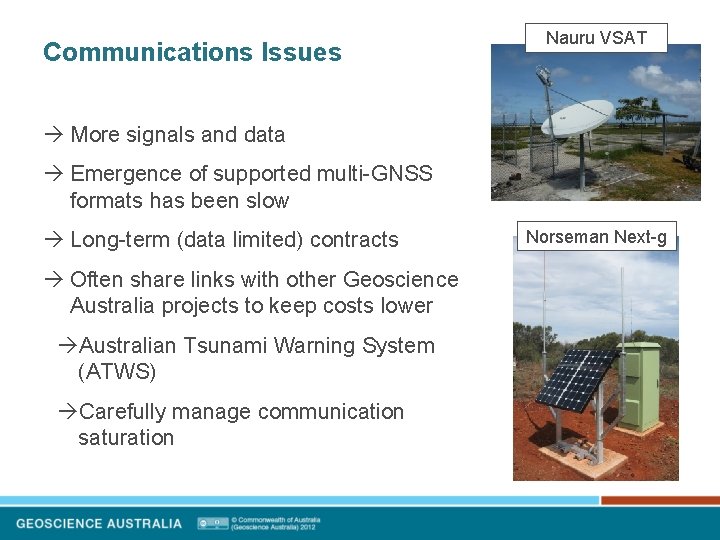
Communications Issues Nauru VSAT More signals and data Emergence of supported multi-GNSS formats has been slow Long-term (data limited) contracts Often share links with other Geoscience Australia projects to keep costs lower Australian Tsunami Warning System (ATWS) Carefully manage communication saturation Norseman Next-g
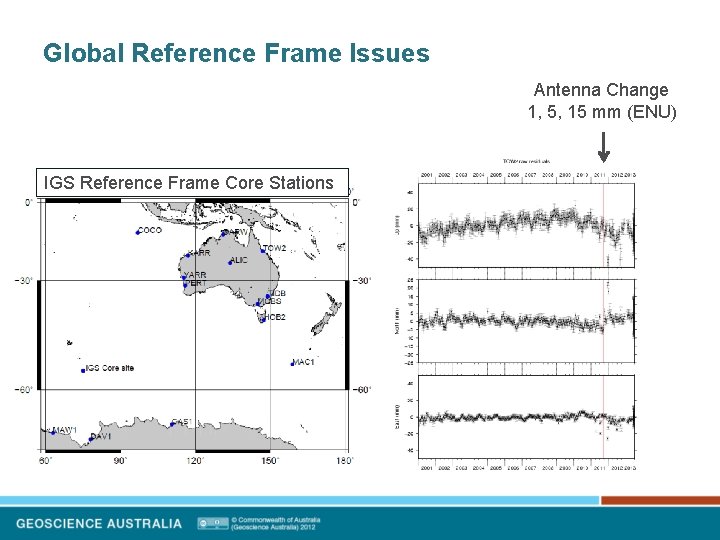
Global Reference Frame Issues Antenna Change 1, 5, 15 mm (ENU) IGS Reference Frame Core Stations
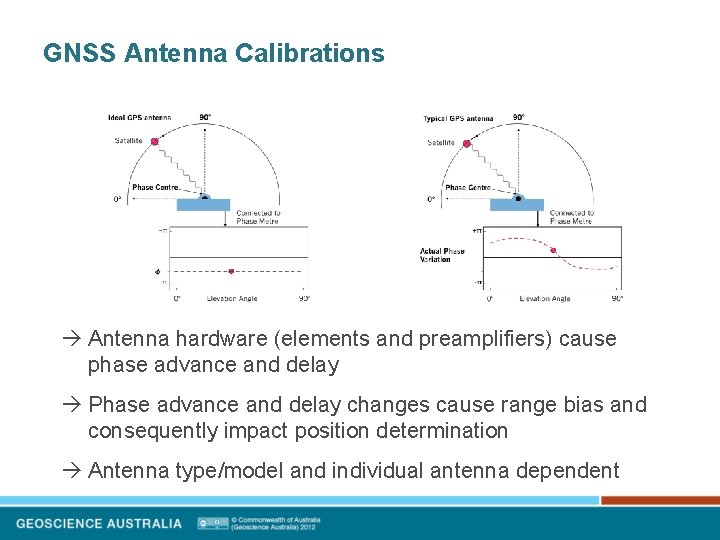
GNSS Antenna Calibrations Antenna hardware (elements and preamplifiers) cause phase advance and delay Phase advance and delay changes cause range bias and consequently impact position determination Antenna type/model and individual antenna dependent
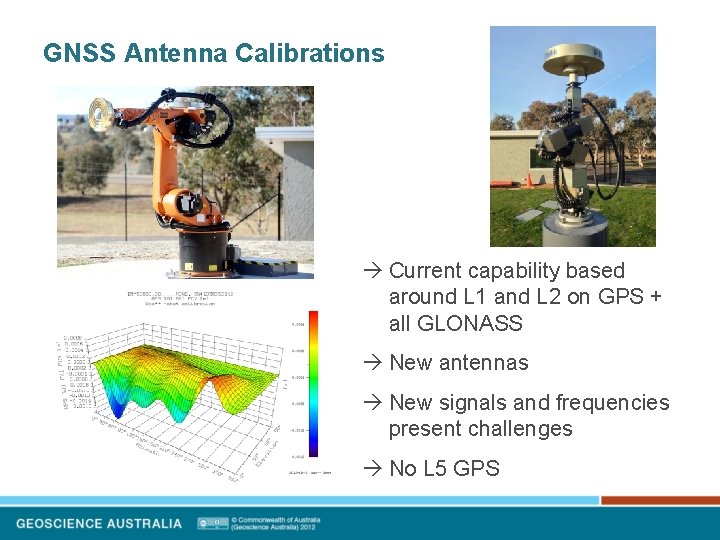
GNSS Antenna Calibrations Current capability based around L 1 and L 2 on GPS + all GLONASS New antennas New signals and frequencies present challenges No L 5 GPS
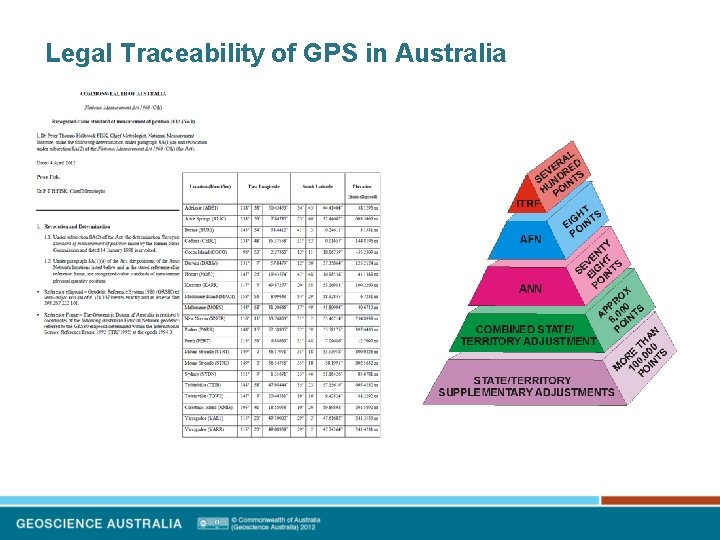
Legal Traceability of GPS in Australia
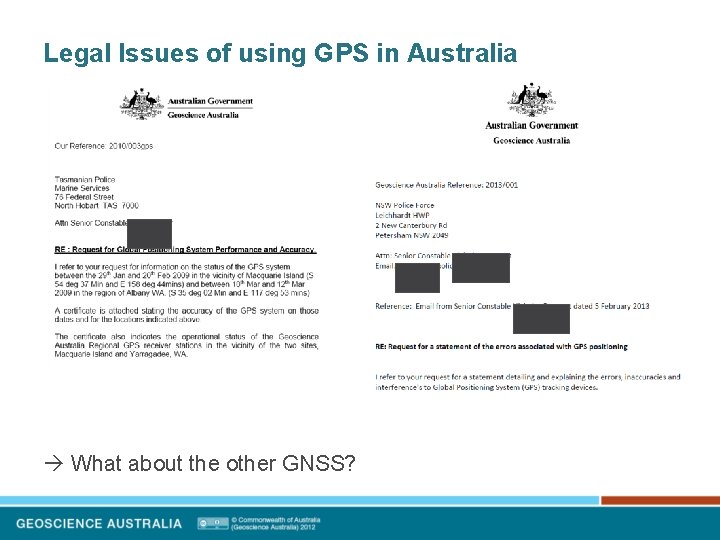
Legal Issues of using GPS in Australia What about the other GNSS?
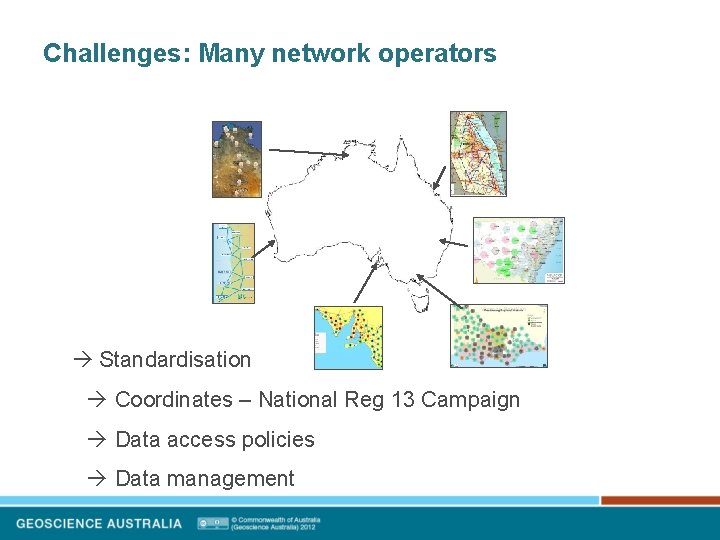
Challenges: Many network operators Standardisation Coordinates – National Reg 13 Campaign Data access policies Data management
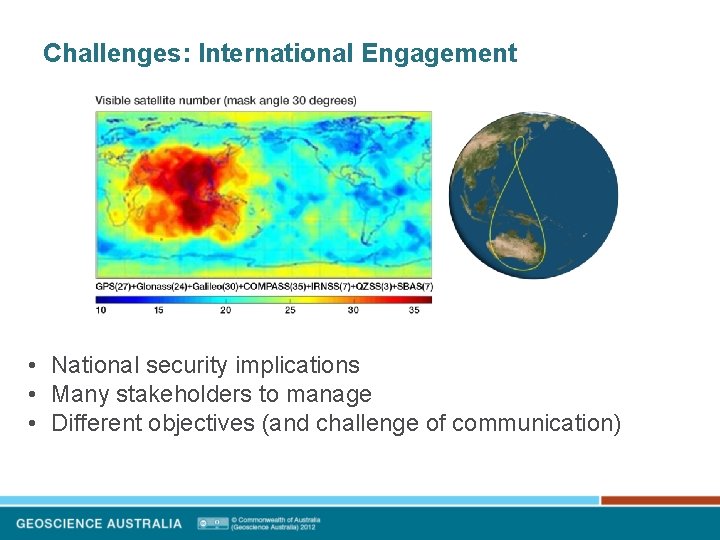
Challenges: International Engagement • National security implications • Many stakeholders to manage • Different objectives (and challenge of communication)
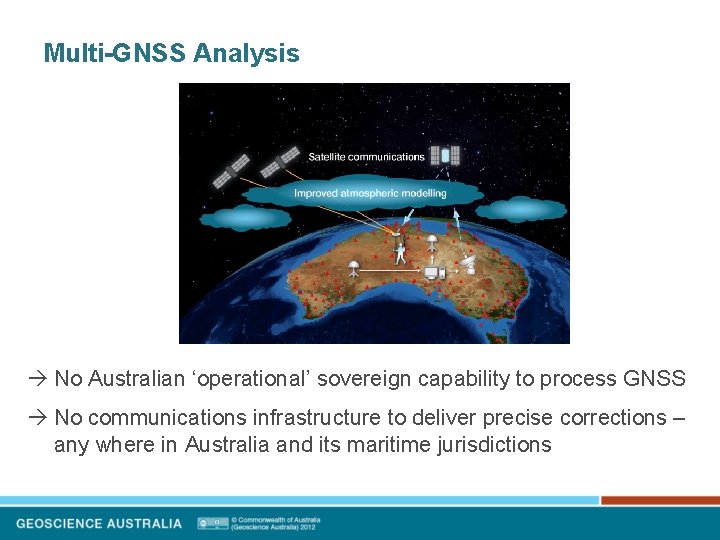
Multi-GNSS Analysis No Australian ‘operational’ sovereign capability to process GNSS No communications infrastructure to deliver precise corrections – any where in Australia and its maritime jurisdictions
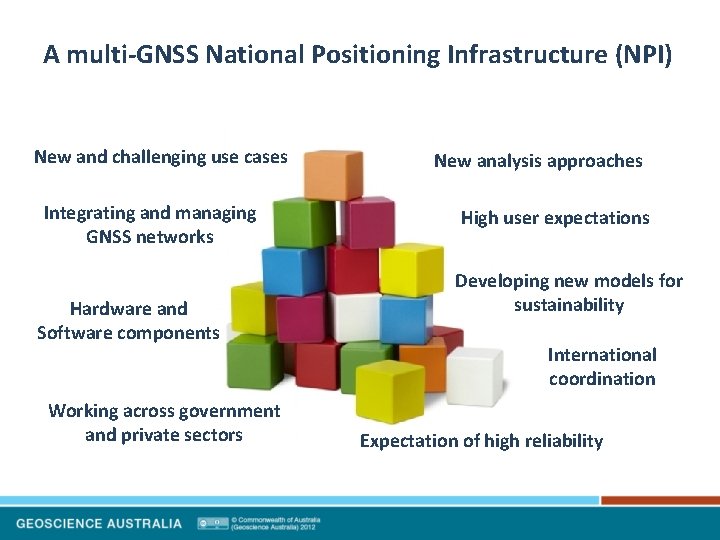
A multi-GNSS National Positioning Infrastructure (NPI) New and challenging use cases Integrating and managing GNSS networks Hardware and Software components Working across government and private sectors New analysis approaches High user expectations Developing new models for sustainability International coordination Expectation of high reliability
- Slides: 22