
WHAT ARE THE COMPONENTS OF THE BLOOD AND
WHAT ARE THE COMPONENTS OF THE BLOOD, AND WHERE ARE THEY MADE? Plasma: proteins made mainly in liver Serum is the fluid that remains after blood clots Red cells, neutrophils and platelets made in bone marrow lymphocytes made in bone marrow, lymph nodes, spleen
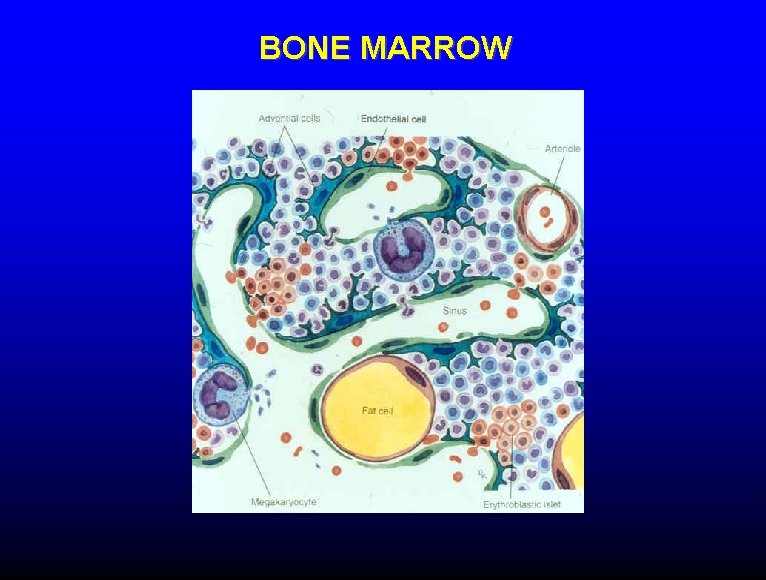
BONE MARROW
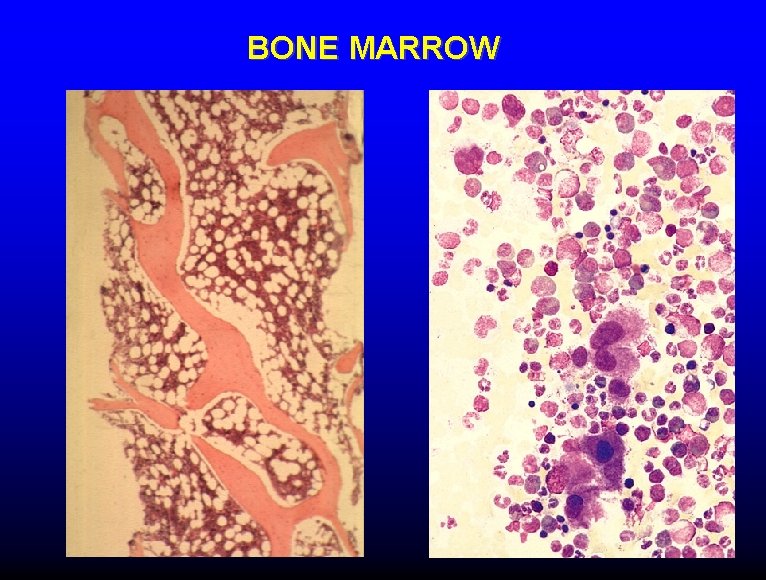
BONE MARROW
WHAT HAPPENS IN BONE MARROW? 1. Neutrophils, red cells and megakaryocytes all descended from common precursor cell called myeloid stem cell 2. Stem cells differentiate into primitive cells called blasts, which are precursors of each cell type 3. Blasts divide and mature under the influence of proteins called growth factors; as they mature they lose the ability to divide 4. Mature neutrophils and red cells enter the blood 5. Megakaryocytes break into small fragments (platelets), which enter blood
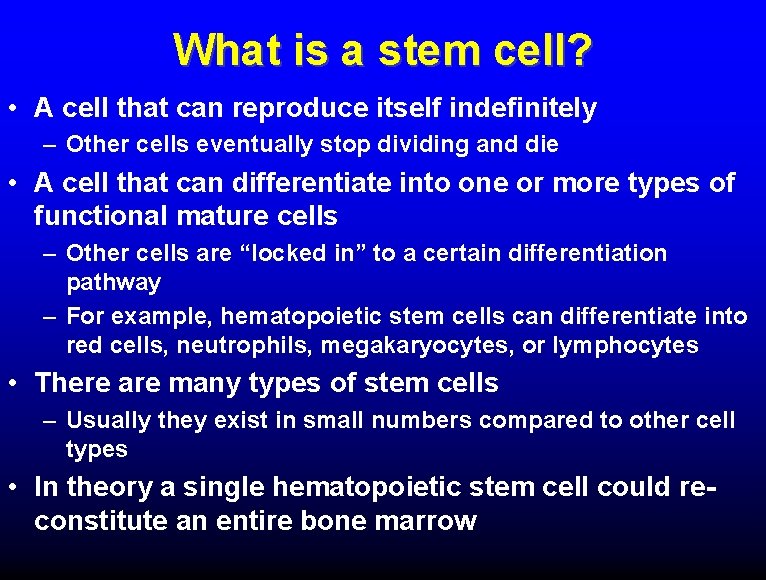
What is a stem cell? • A cell that can reproduce itself indefinitely – Other cells eventually stop dividing and die • A cell that can differentiate into one or more types of functional mature cells – Other cells are “locked in” to a certain differentiation pathway – For example, hematopoietic stem cells can differentiate into red cells, neutrophils, megakaryocytes, or lymphocytes • There are many types of stem cells – Usually they exist in small numbers compared to other cell types • In theory a single hematopoietic stem cell could reconstitute an entire bone marrow
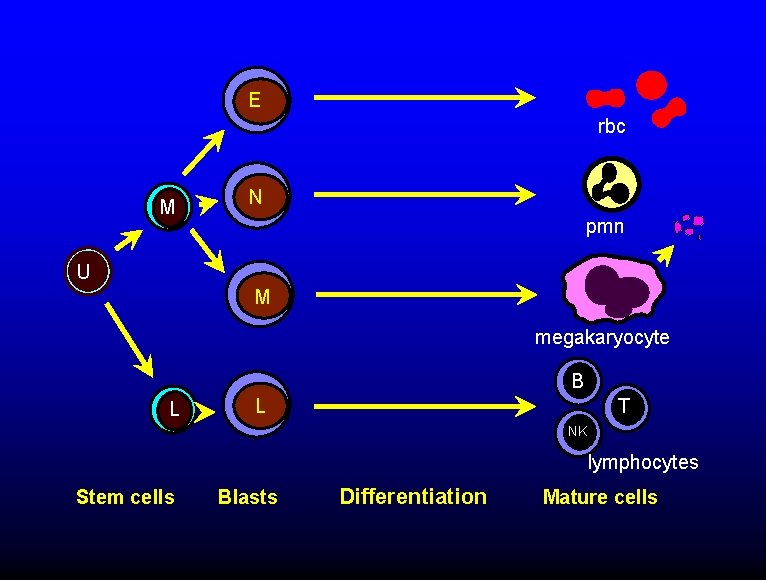
E rbc M N pmn U M megakaryocyte B L L T NK lymphocytes Stem cells Blasts Differentiation Mature cells
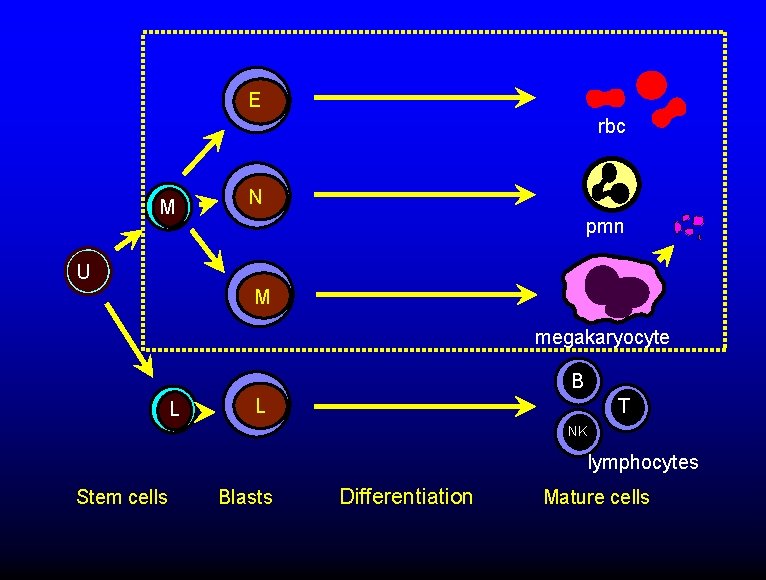
E rbc M N pmn U M megakaryocyte B L L T NK lymphocytes Stem cells Blasts Differentiation Mature cells
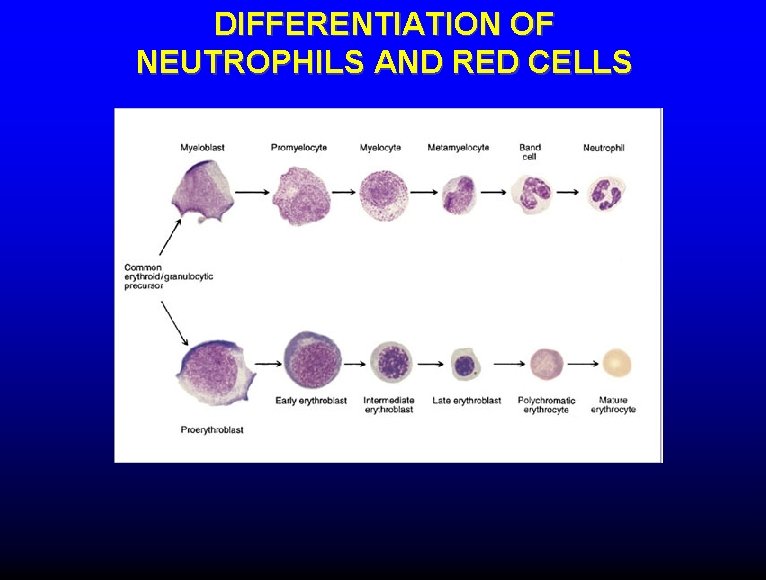
DIFFERENTIATION OF NEUTROPHILS AND RED CELLS
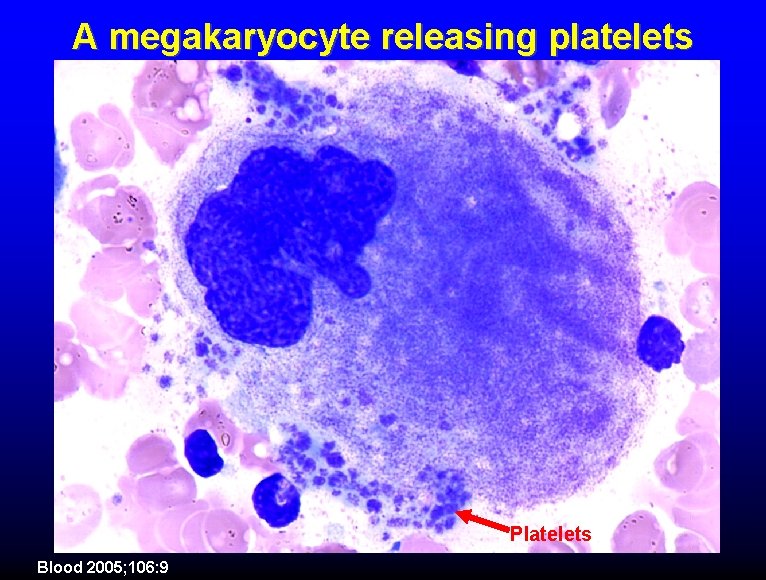
A megakaryocyte releasing platelets Platelets Blood 2005; 106: 9
HEMATOPOIETIC GROWTH FACTORS CONTROL PRODUCTION OF BLOOD CELLS • Growth factors regulate the growth, differentiation and function of cells of the hematopoietic and immune systems • Examples – Erythropoietin: stimulates red cell production – Thrombopoietin: stimulates platelet production – G-CSF: stimulates granulocyte (neutrophil) production, activates neutrophil function • These can be manufactured and given to patients to boost production of specific blood cells
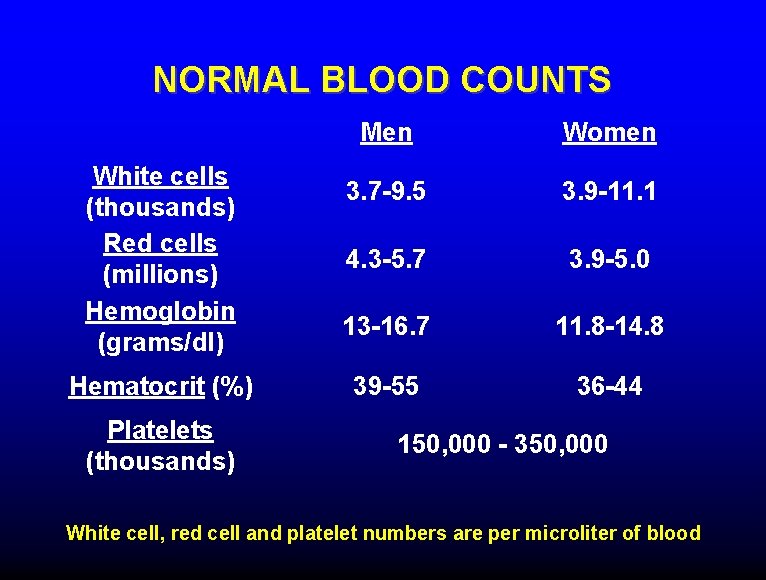
NORMAL BLOOD COUNTS White cells (thousands) Red cells (millions) Hemoglobin (grams/dl) Hematocrit (%) Platelets (thousands) Men Women 3. 7 -9. 5 3. 9 -11. 1 4. 3 -5. 7 3. 9 -5. 0 13 -16. 7 11. 8 -14. 8 39 -55 36 -44 150, 000 - 350, 000 White cell, red cell and platelet numbers are per microliter of blood
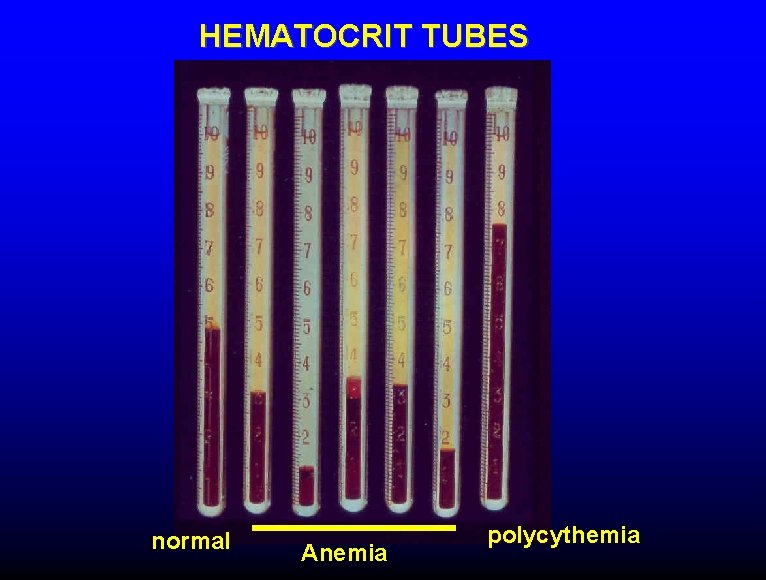
HEMATOCRIT TUBES normal Anemia polycythemia
Functions of blood • transport oxygen, nutrients & waste products • fight infection • prevent bleeding
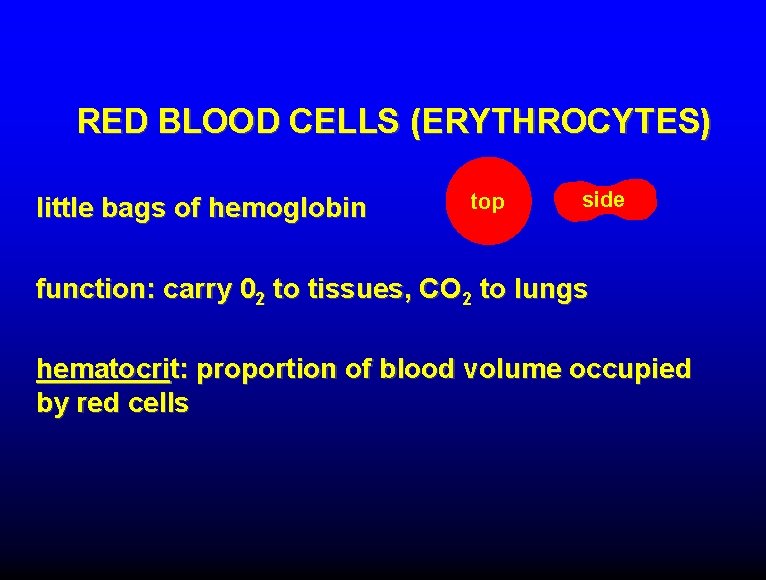
RED BLOOD CELLS (ERYTHROCYTES) little bags of hemoglobin top side function: carry 02 to tissues, CO 2 to lungs hematocrit: proportion of blood volume occupied by red cells
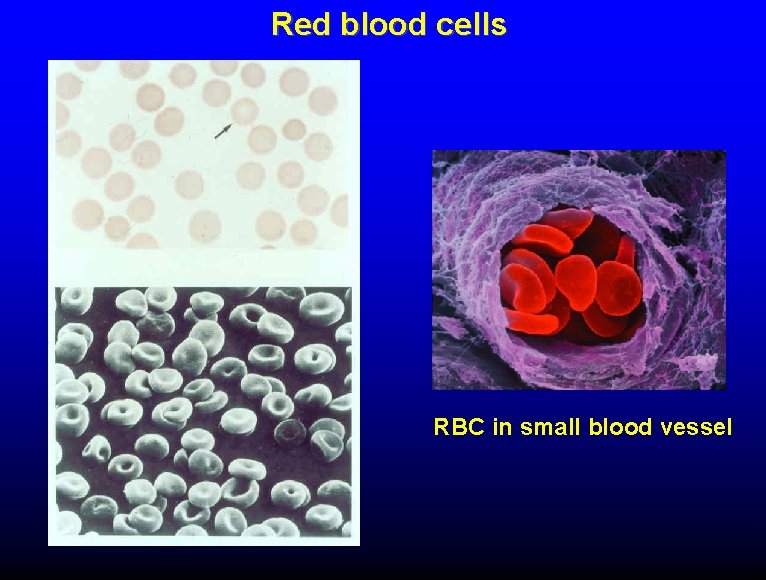
Red blood cells RBC in small blood vessel
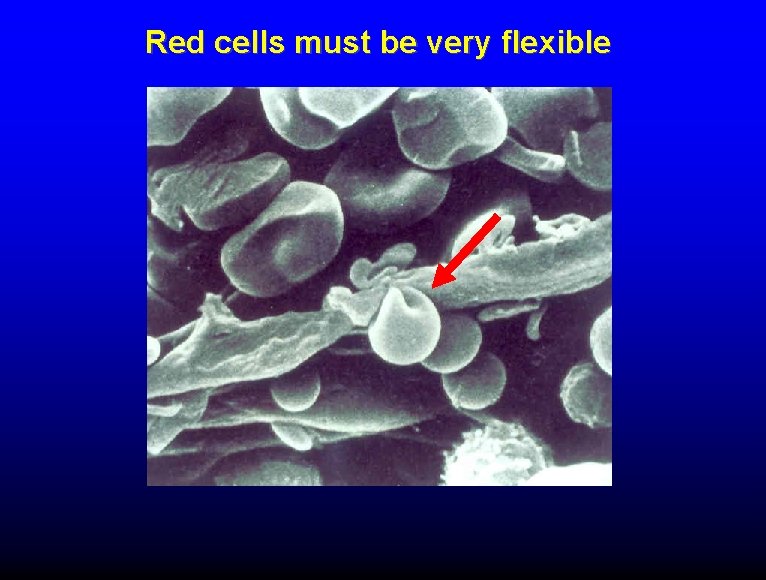
Red cells must be very flexible
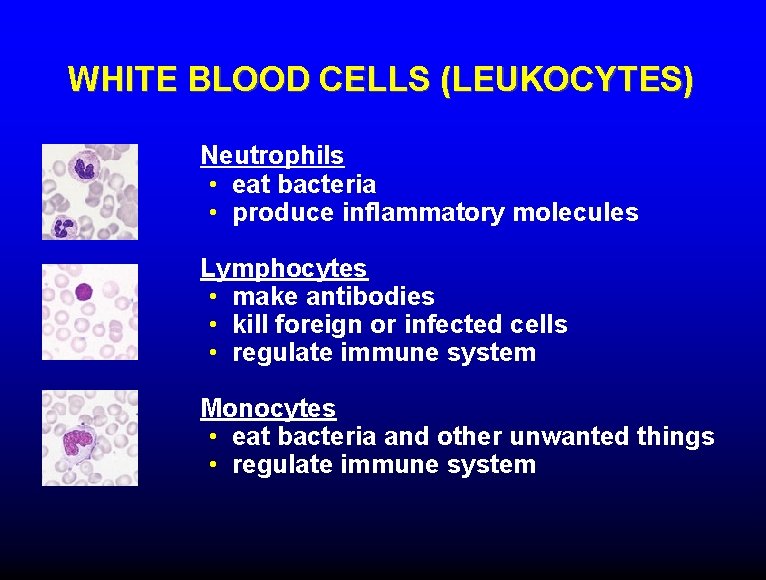
WHITE BLOOD CELLS (LEUKOCYTES) Neutrophils • eat bacteria • produce inflammatory molecules Lymphocytes • make antibodies • kill foreign or infected cells • regulate immune system Monocytes • eat bacteria and other unwanted things • regulate immune system
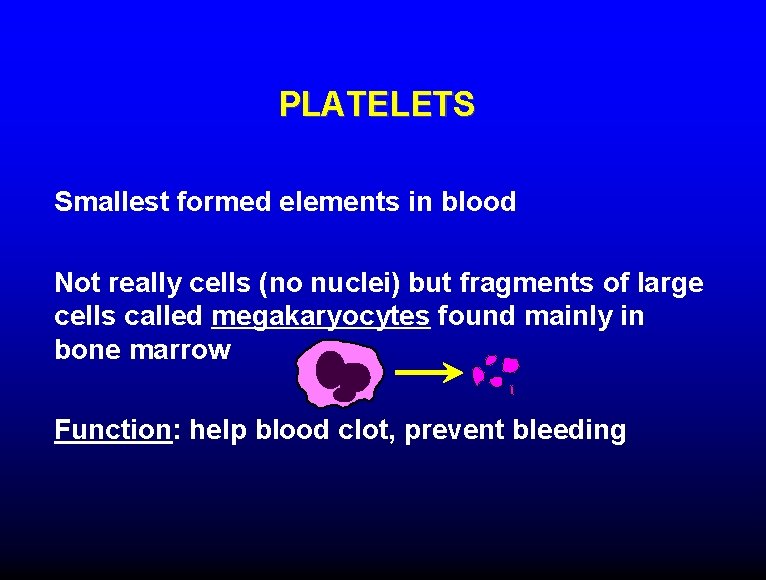
PLATELETS Smallest formed elements in blood Not really cells (no nuclei) but fragments of large cells called megakaryocytes found mainly in bone marrow Function: help blood clot, prevent bleeding
CELLS OF THE IMMUNE SYSTEM § § B lymphocytes and plasma cells T lymphocytes Natural killer (NK) lymphocytes Monocytes and macrophages
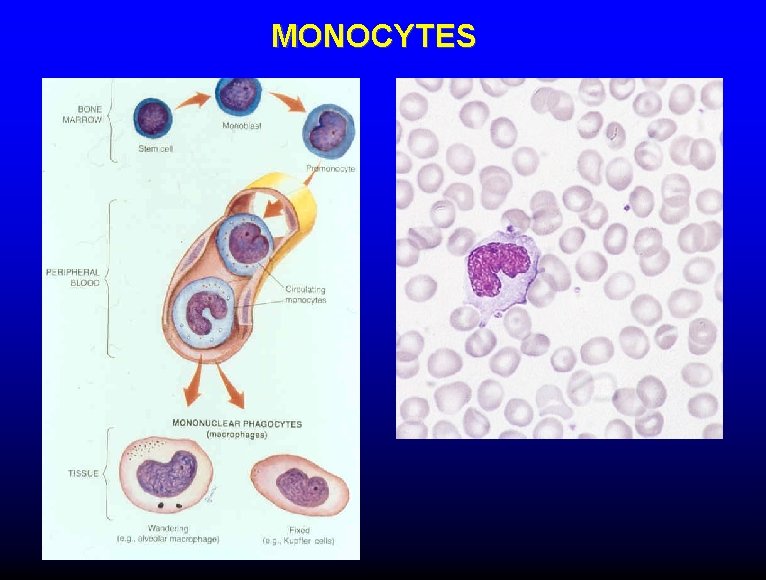
MONOCYTES
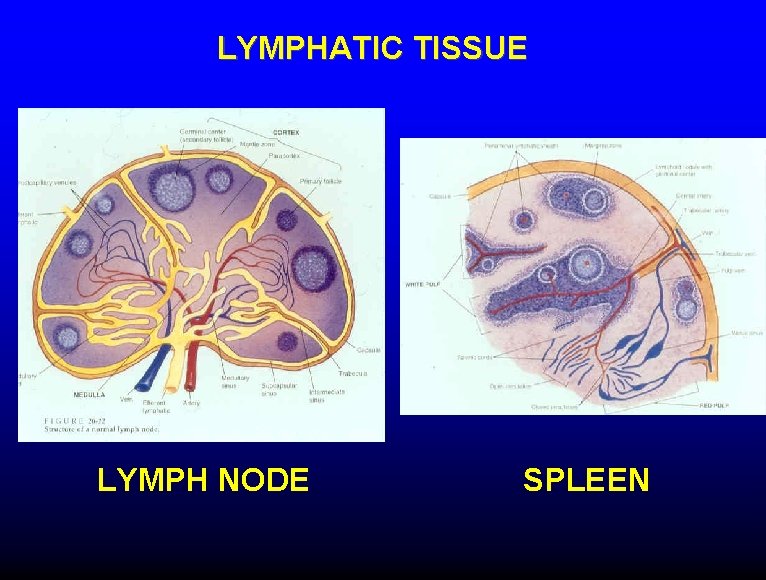
LYMPHATIC TISSUE LYMPH NODE SPLEEN
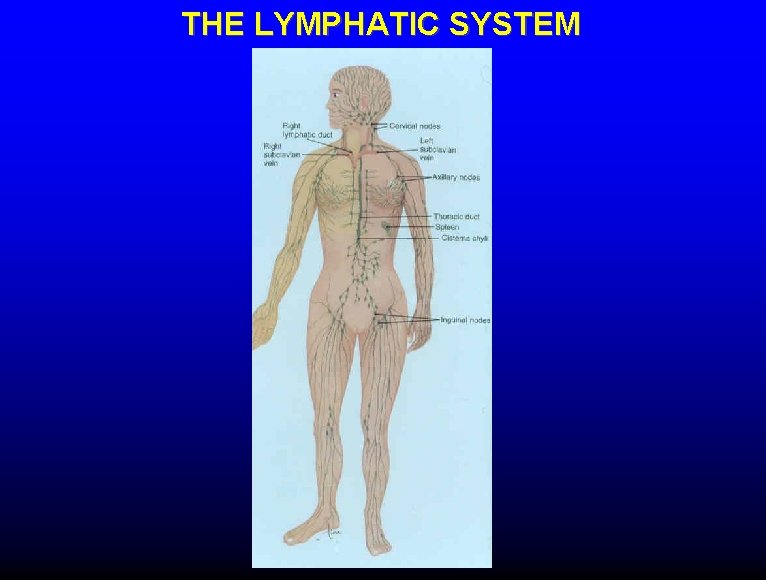
THE LYMPHATIC SYSTEM
WHERE LYMPHOMAS COME FROM or, why good lymphocytes go bad § Lymphocytes must undergo extensive rearrangement of their DNA to create a repertoire of cells capable of responding to many different antigens Ø Occasionally this rearrangement is not accomplished properly and the cell gains a growth advantage over its neighbors § Lymphocytes (especially B-cells) must undergo programmed cell death (apoptosis) when they are no longer needed Ø Occasionally this program is faulty and the cells continue to divide indefinitely
ANEMIA Definition: reduced total red cell mass Hematocrit and hemoglobin concentration usually low (exception: acute blood loss) Causes: 1. blood loss 2. red cell destruction (hemolysis) 3. decreased red cell production
ANEMIA § Macrocytic: big red cells § Normocytic: normal size red cells § Microcytic: small red cells § Reticulocytes: newly made red cells; number in blood proportional to rate of red cell production
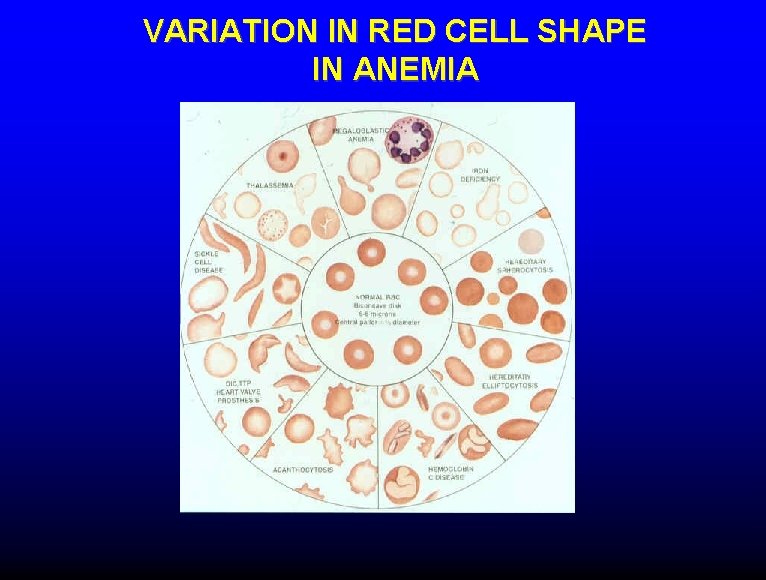
VARIATION IN RED CELL SHAPE IN ANEMIA
ANEMIA Classified by cause 1. 2. Decreased red cell production a. Stem cell damage - neutrophils, platelets often affected also b. Defective red cell maturation Increased red cell destruction (hemolysis) a. Intrinsic defect in red cell leading to shortened lifespan b. External factors in blood or blood vessels destroy red cells 3. Blood loss
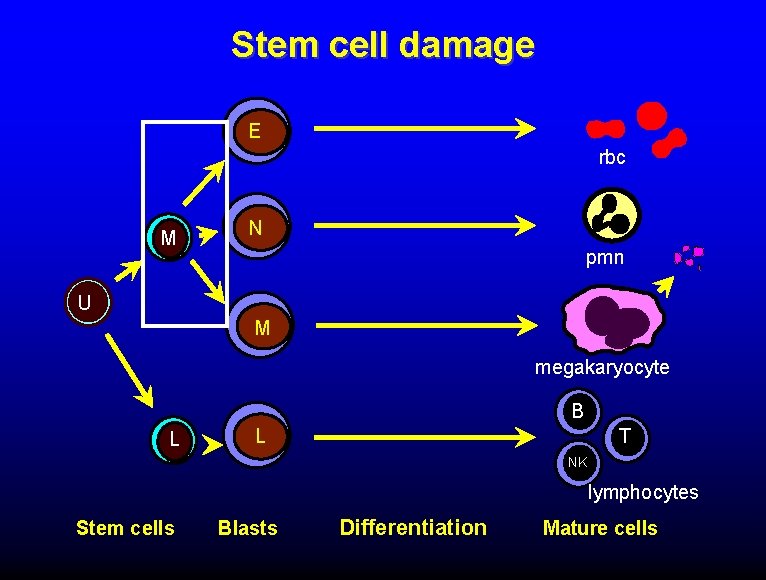
Stem cell damage E rbc M N pmn U M megakaryocyte B L L T NK lymphocytes Stem cells Blasts Differentiation Mature cells
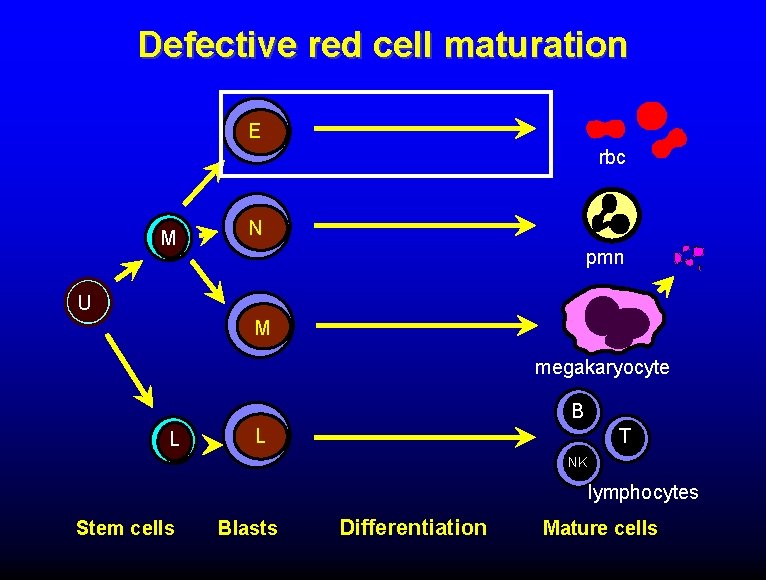
Defective red cell maturation E rbc M N pmn U M megakaryocyte B L L T NK lymphocytes Stem cells Blasts Differentiation Mature cells
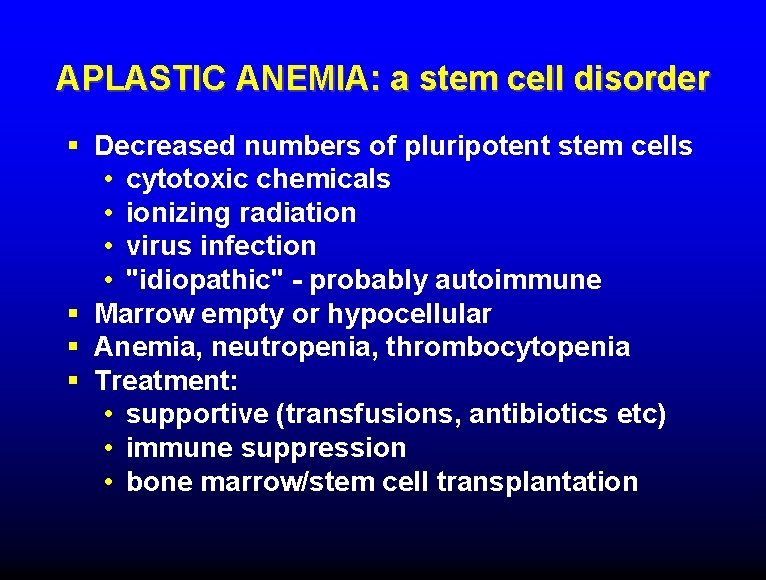
APLASTIC ANEMIA: a stem cell disorder § Decreased numbers of pluripotent stem cells • cytotoxic chemicals • ionizing radiation • virus infection • "idiopathic" - probably autoimmune § Marrow empty or hypocellular § Anemia, neutropenia, thrombocytopenia § Treatment: • supportive (transfusions, antibiotics etc) • immune suppression • bone marrow/stem cell transplantation
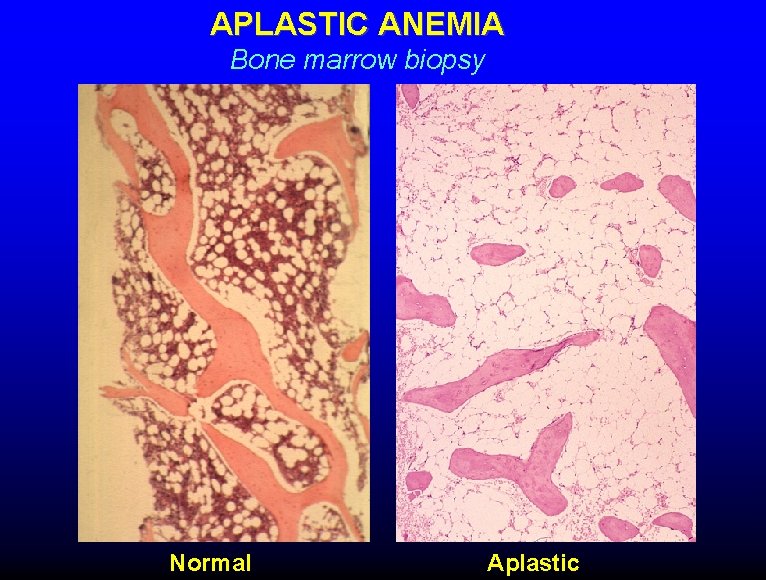
APLASTIC ANEMIA Bone marrow biopsy Normal Aplastic
ANEMIA SECONDARY TO OTHER DISEASES “Anemia of chronic disease” § § Inflammation: infection, rheumatoid arthritis, etc Kidney failure (kidneys make erythropoietin) Cancer Malnutrition § All associated with decreased stimulus for red cell production § Nothing intrinsically wrong with bone marrow Ø Anemia resolves if causative disorder cured § May be treatable with synthetic erythropoietin
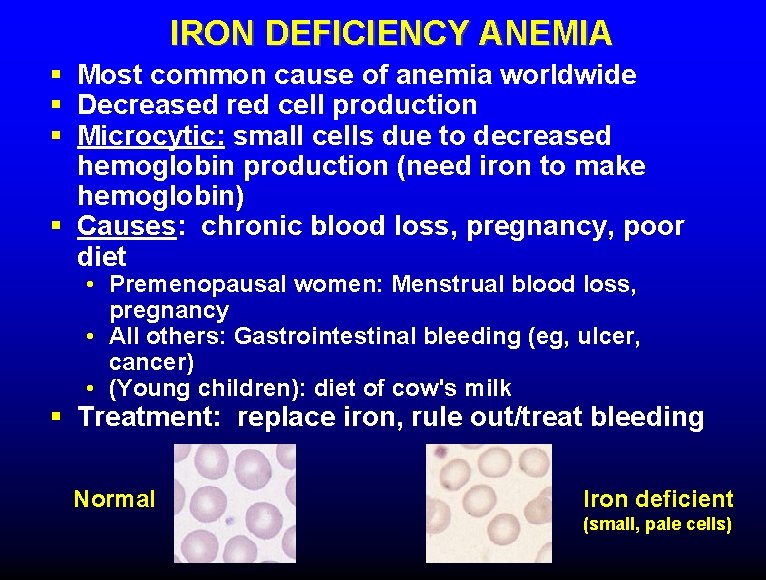
IRON DEFICIENCY ANEMIA § Most common cause of anemia worldwide § Decreased red cell production § Microcytic: small cells due to decreased hemoglobin production (need iron to make hemoglobin) § Causes: chronic blood loss, pregnancy, poor diet • Premenopausal women: Menstrual blood loss, pregnancy • All others: Gastrointestinal bleeding (eg, ulcer, cancer) • (Young children): diet of cow's milk § Treatment: replace iron, rule out/treat bleeding Normal Iron deficient (small, pale cells)
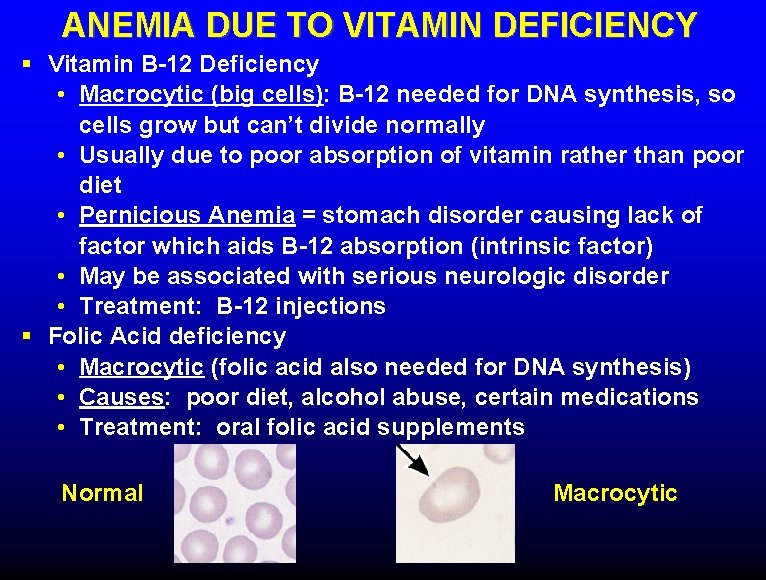
ANEMIA DUE TO VITAMIN DEFICIENCY § Vitamin B-12 Deficiency • Macrocytic (big cells): B-12 needed for DNA synthesis, so cells grow but can’t divide normally • Usually due to poor absorption of vitamin rather than poor diet • Pernicious Anemia = stomach disorder causing lack of factor which aids B-12 absorption (intrinsic factor) • May be associated with serious neurologic disorder • Treatment: B-12 injections § Folic Acid deficiency • Macrocytic (folic acid also needed for DNA synthesis) • Causes: poor diet, alcohol abuse, certain medications • Treatment: oral folic acid supplements Normal Macrocytic
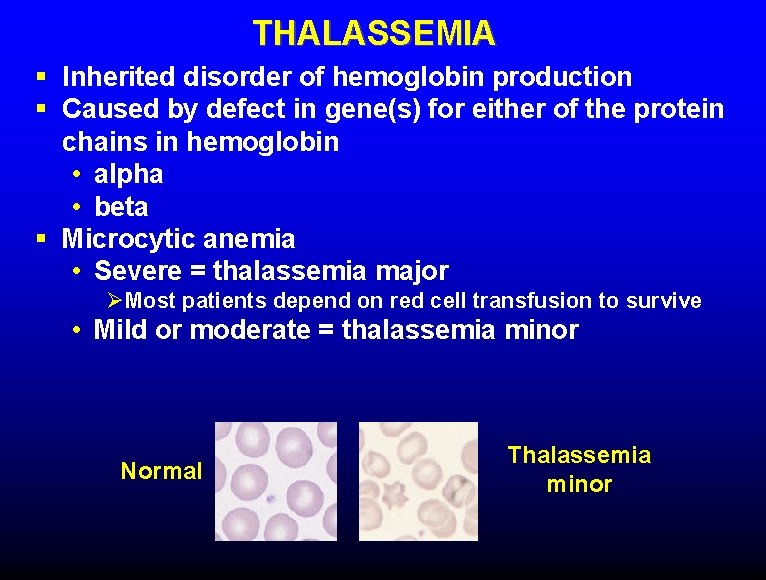
THALASSEMIA § Inherited disorder of hemoglobin production § Caused by defect in gene(s) for either of the protein chains in hemoglobin • alpha • beta § Microcytic anemia • Severe = thalassemia major ØMost patients depend on red cell transfusion to survive • Mild or moderate = thalassemia minor Normal Thalassemia minor
- Slides: 35