
What Are the Basic Components of Art Line
What Are the Basic Components of Art?
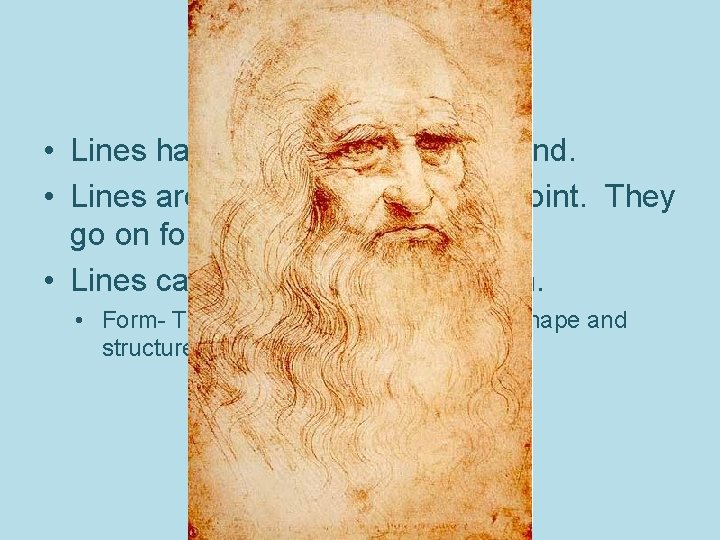
Line • Lines have a beginning and an end. • Lines are the path of a moving point. They go on forever in two directions. • Lines can be used to create form. • Form- The essence of something. The shape and structure of an object.
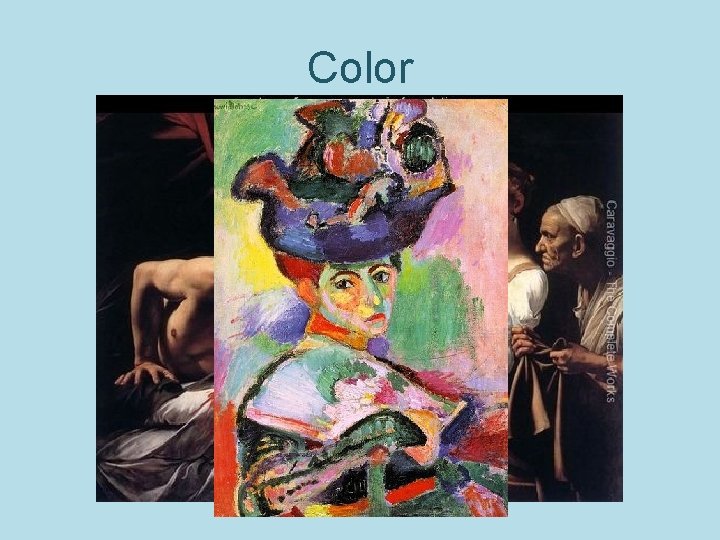
Color • Color can be naturalistic, which means it reflects real life. • Color can also be used to create a mood or feeling. • Color can be used to guide the eye.

Composition • Composition is how an artist uses line, color, and other elements to create a work of art. • Composition can guide the eye to the most important parts of the image. • Composition plays a large role in how we respond to a piece and understand its meaning.

Types of Straight Lines • Horizontal Line Creates sense of calm; suggests being static. • Vertical Line Suggests poise, balance, and support. • Diagonal Line Suggests action and creates tension. If used, they will attract attention.
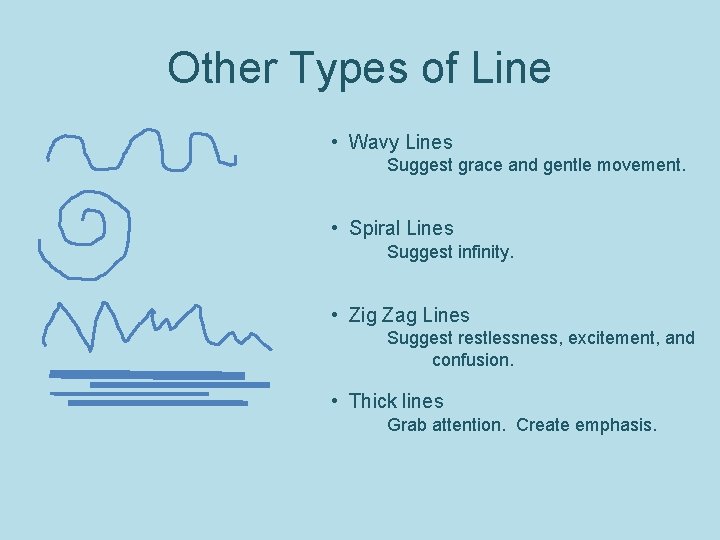
Other Types of Line • Wavy Lines Suggest grace and gentle movement. • Spiral Lines Suggest infinity. • Zig Zag Lines Suggest restlessness, excitement, and confusion. • Thick lines Grab attention. Create emphasis.
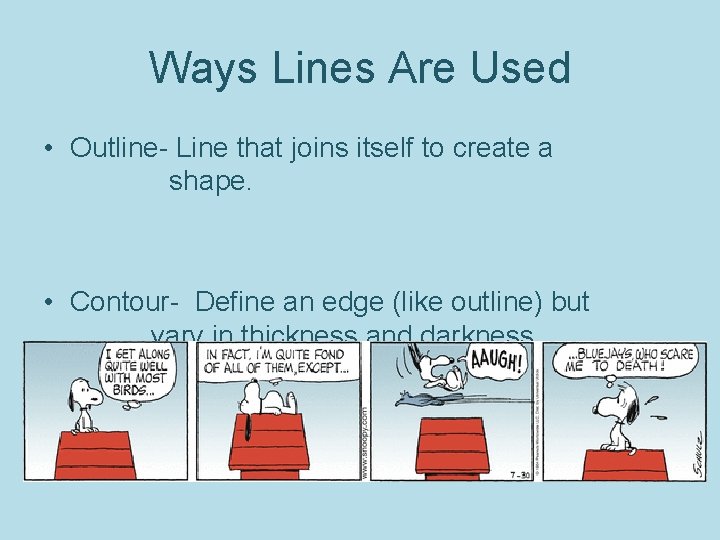
Ways Lines Are Used • Outline- Line that joins itself to create a shape. • Contour- Define an edge (like outline) but vary in thickness and darkness. Unlike outline, can define edges within a shape.
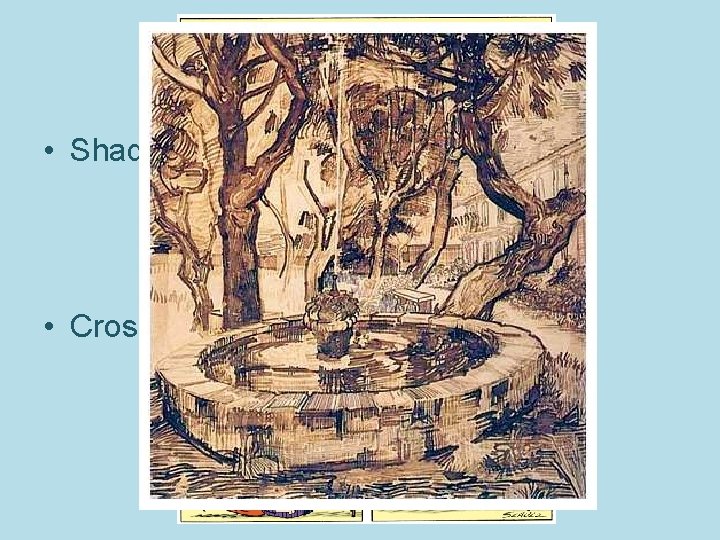
More Uses of Line • Shading- Parallel lines can suggest darkness, as if shaded. • Cross Hatching- More versatile than just using parallel lines and can create form.
Quiz 1. 2. 3. 4. 5. 6. 7. 8. 9. Name at least two of the components of art. Define line. Name one purpose of color. Define composition. What are the seven main types of line? What type of line suggests instability? What types of line suggest movement (name at least two)? What two types of line can be used to grab attention? What is the difference between an outline and a contour line? 10. Draw examples of shading with line and crosshatching.

You’re Finished! Turn your quiz into the Teal box. Thank you!
- Slides: 10