
What are the 4 groups of organic compounds
- Slides: 24
What are the 4 groups of organic compounds? Carbohydrates Lipids Proteins Nucleic acids
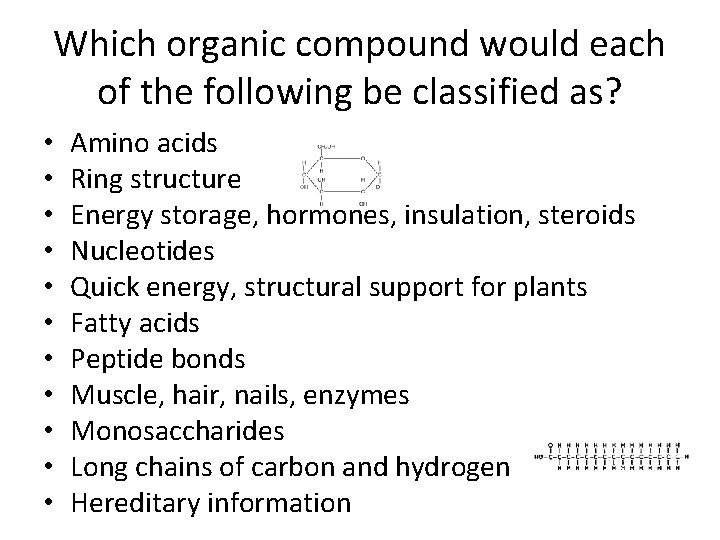
Which organic compound would each of the following be classified as? • • • Amino acids Ring structure Energy storage, hormones, insulation, steroids Nucleotides Quick energy, structural support for plants Fatty acids Peptide bonds Muscle, hair, nails, enzymes Monosaccharides Long chains of carbon and hydrogen Hereditary information
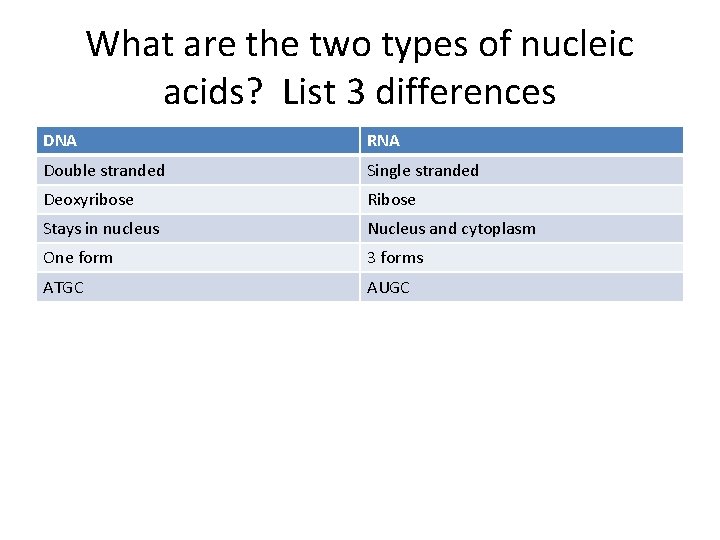
What are the two types of nucleic acids? List 3 differences DNA RNA Double stranded Single stranded Deoxyribose Ribose Stays in nucleus Nucleus and cytoplasm One form 3 forms ATGC AUGC
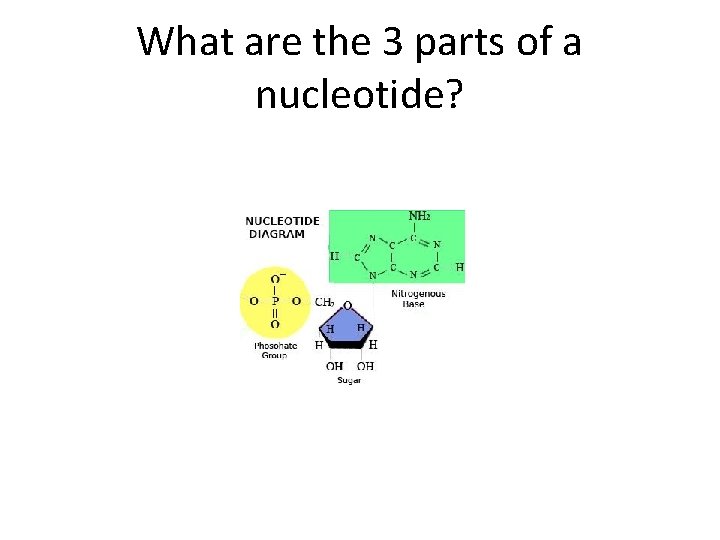
What are the 3 parts of a nucleotide?
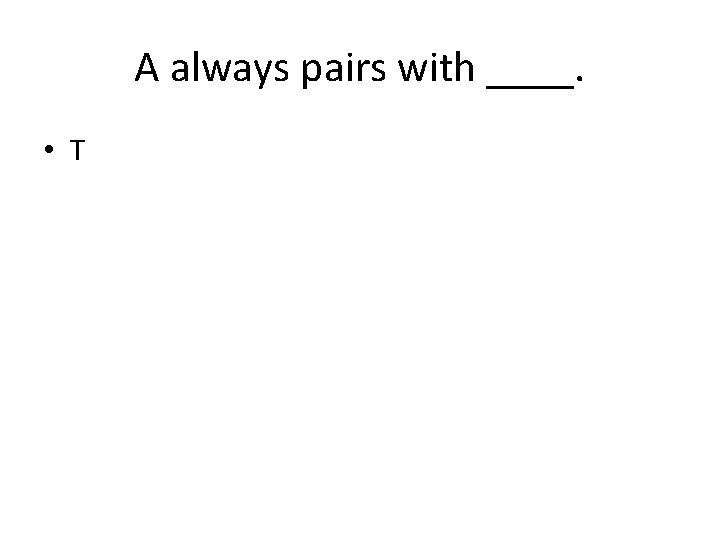
A always pairs with ____. • T
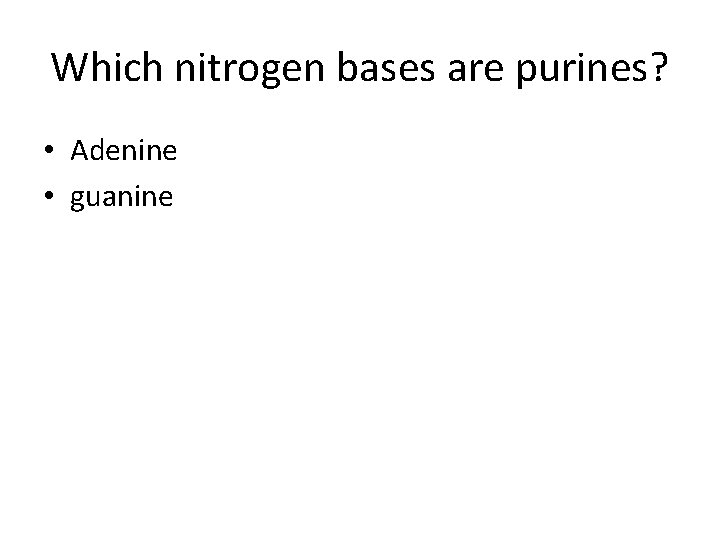
Which nitrogen bases are purines? • Adenine • guanine
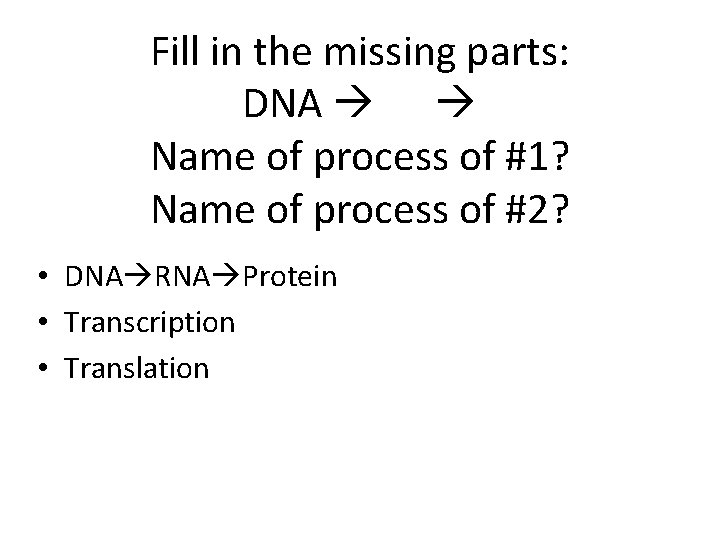
Fill in the missing parts: DNA Name of process of #1? Name of process of #2? • DNA RNA Protein • Transcription • Translation
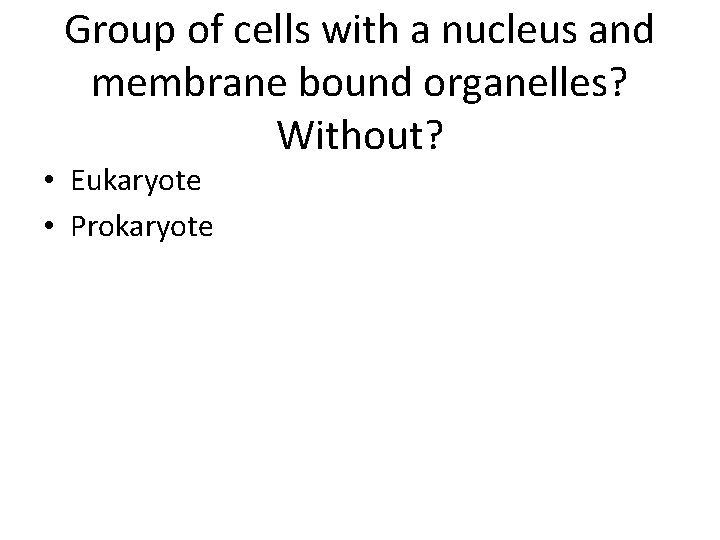
Group of cells with a nucleus and membrane bound organelles? Without? • Eukaryote • Prokaryote
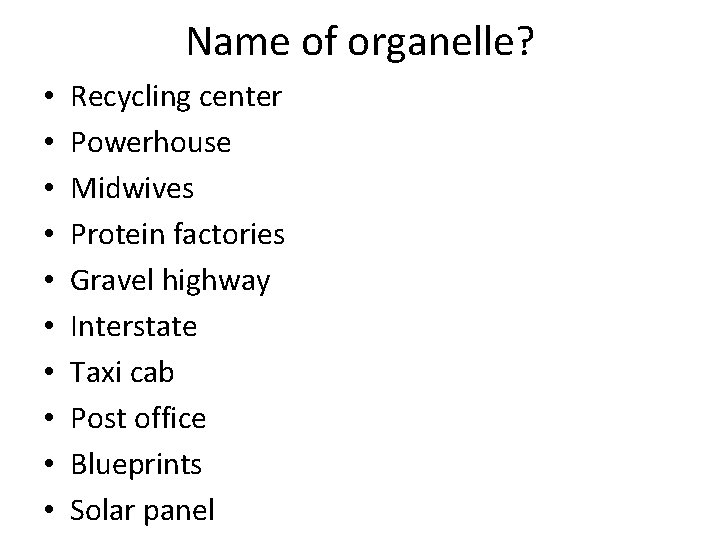
Name of organelle? • • • Recycling center Powerhouse Midwives Protein factories Gravel highway Interstate Taxi cab Post office Blueprints Solar panel
Process where molecules move from area of high to low concentration? • diffusion
Diffusion of water across a membrane? • osmosis
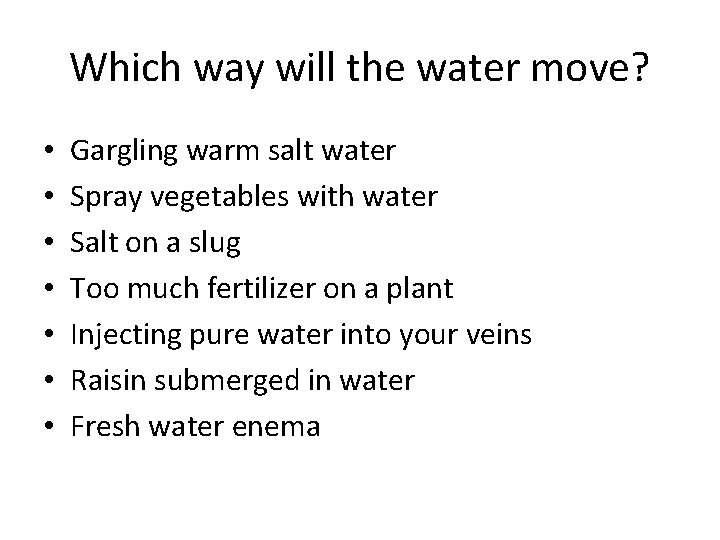
Which way will the water move? • • Gargling warm salt water Spray vegetables with water Salt on a slug Too much fertilizer on a plant Injecting pure water into your veins Raisin submerged in water Fresh water enema
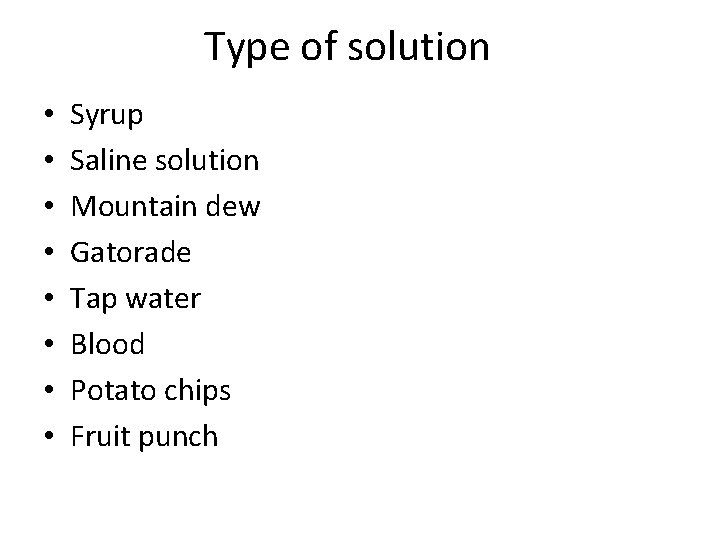
Type of solution • • Syrup Saline solution Mountain dew Gatorade Tap water Blood Potato chips Fruit punch
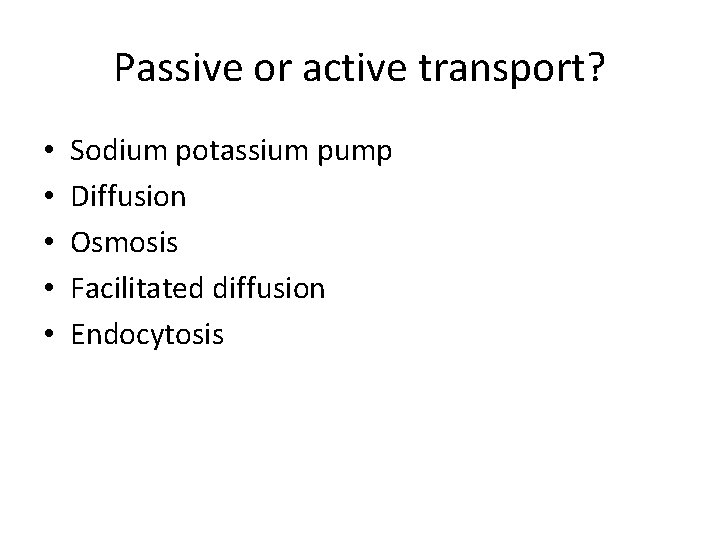
Passive or active transport? • • • Sodium potassium pump Diffusion Osmosis Facilitated diffusion Endocytosis
Cells spend most of their lives in _______. • interphase
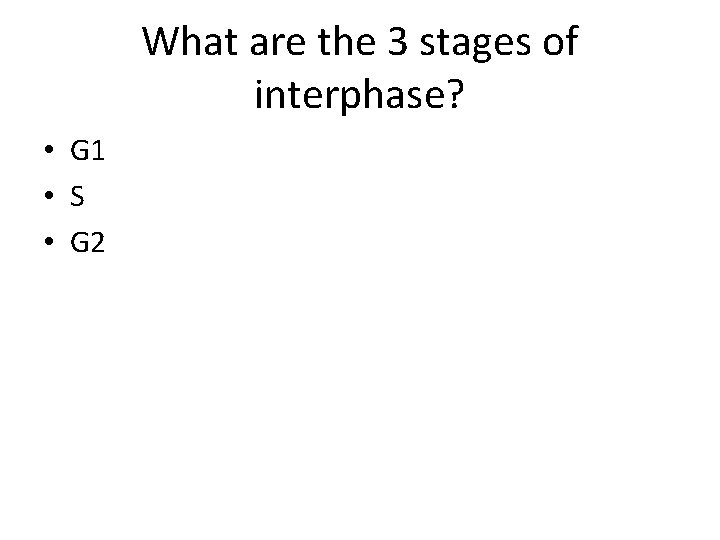
What are the 3 stages of interphase? • G 1 • S • G 2
Phases of mitosis? • • Prophase Metaphase Anaphase Telophase
Mitosis or Meiosis • • • Forms gametes Forms daughter cells that are identical to parent cell Forms diploid cells Skin cells Divides twice Forms haploid cells Forms somatic/body cells Divides once Crossing over occurs Forms daughter cells that are different from parent cell
Identify the correct scientific term: • • • Alternative forms of a gene Masks the recessive allele Both alleles are the same Physical makeup Diagram that calculates probabilities Two alleles are different Both alleles are expressed Heterozygotes show intermediate phenotype Genetic makeup
Organisms that are prokaryotes, have a cell membrane, cell wall, and circular DNA are: • Bacterial cells
What would each of the following bacteria look like under the microscope? • Streptococcus • Staphylobacillus • diplospirillum
Any agent that causes a disease is called a _____. • pathogen
Nucleic acid surrounded by a protein capsid is a _____. • virus
Viruses can go through one of two lifecycles. The one that forms the provirus is the ______ cycle. • lysogenic