
What are some similarities differences between the Korean
What are some similarities & differences between the Korean and Vietnam War
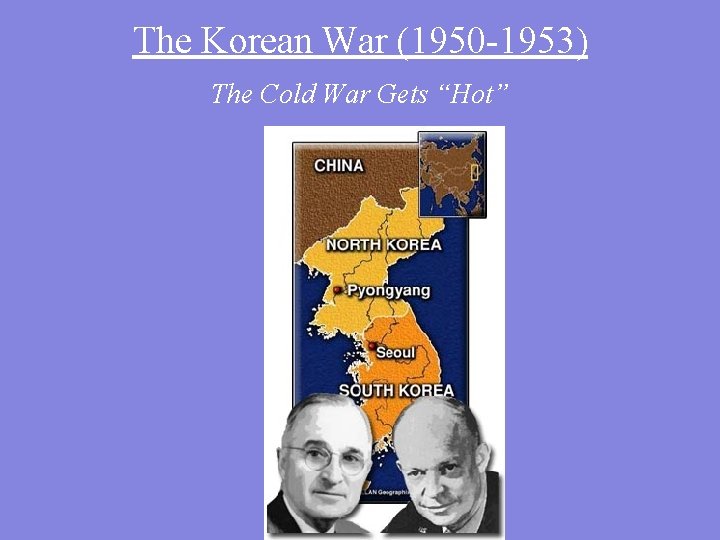
The Korean War (1950 -1953) The Cold War Gets “Hot”
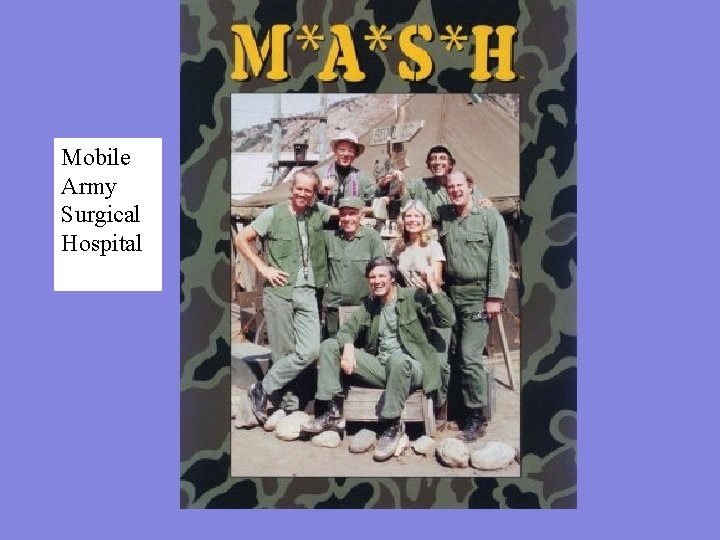
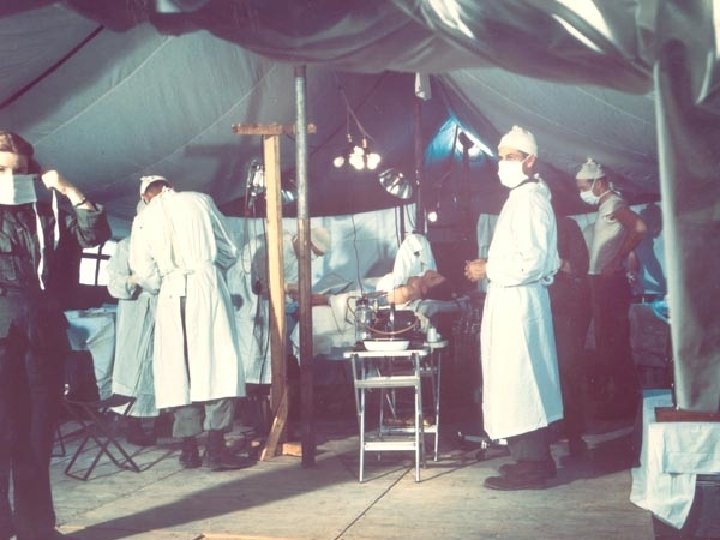
Mobile Army Surgical Hospital
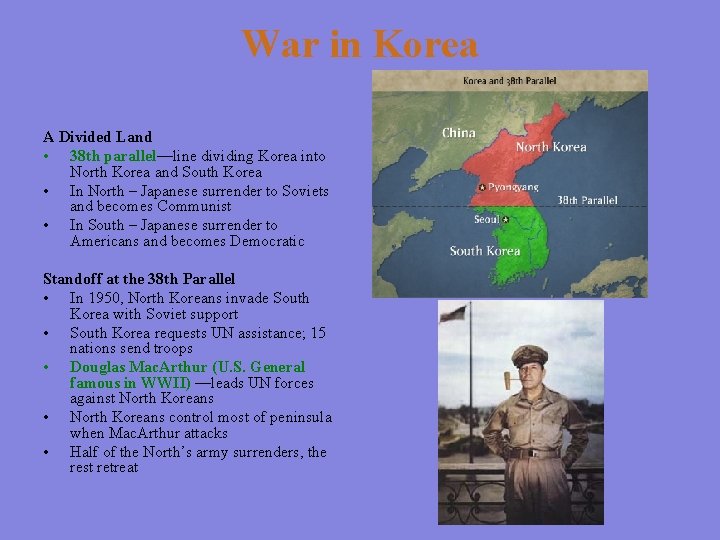
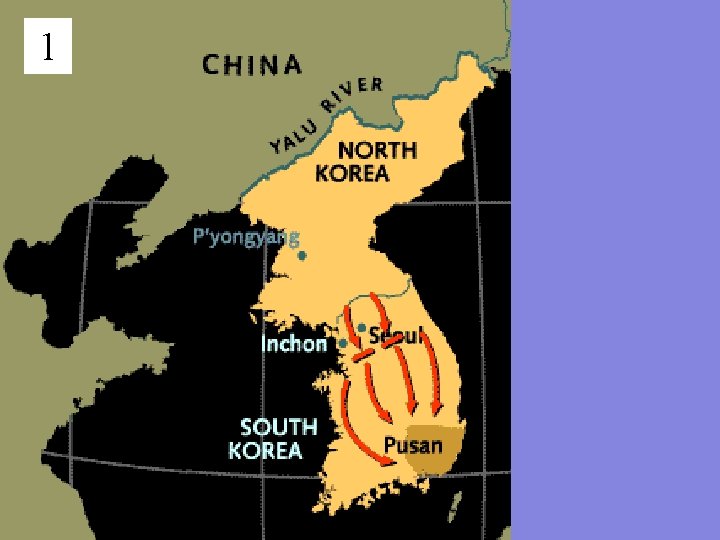
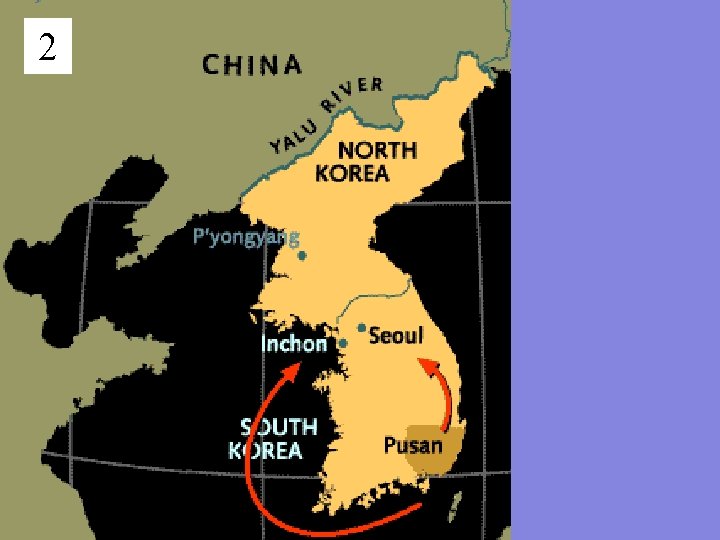
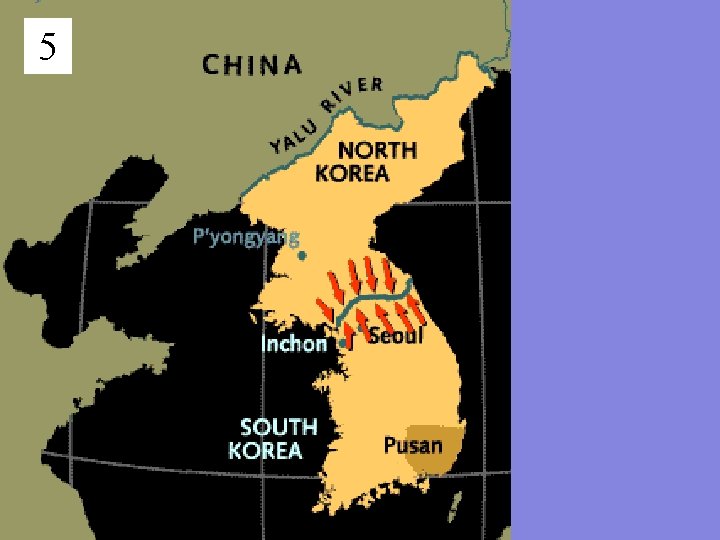
War in Korea A Divided Land • 38 th parallel—line dividing Korea into North Korea and South Korea • In North – Japanese surrender to Soviets and becomes Communist • In South – Japanese surrender to Americans and becomes Democratic Standoff at the 38 th Parallel • In 1950, North Koreans invade South Korea with Soviet support • South Korea requests UN assistance; 15 nations send troops • Douglas Mac. Arthur (U. S. General famous in WWII) —leads UN forces against North Koreans • North Koreans control most of peninsula when Mac. Arthur attacks • Half of the North’s army surrenders, the rest retreat
1
2
3

4
5
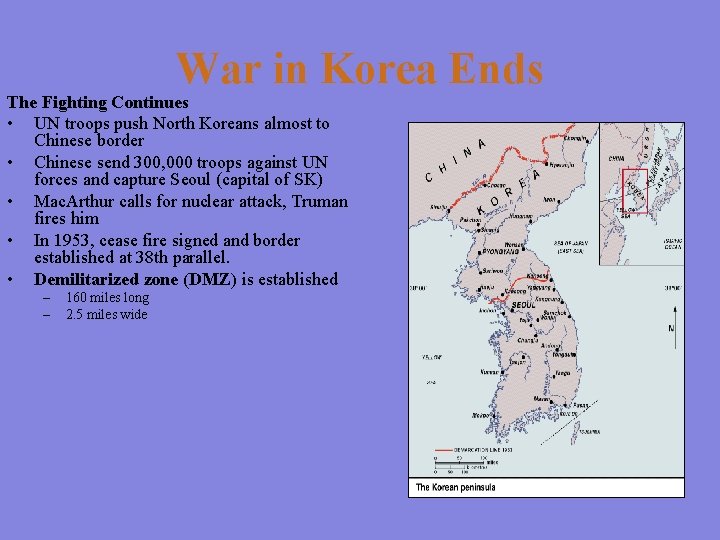
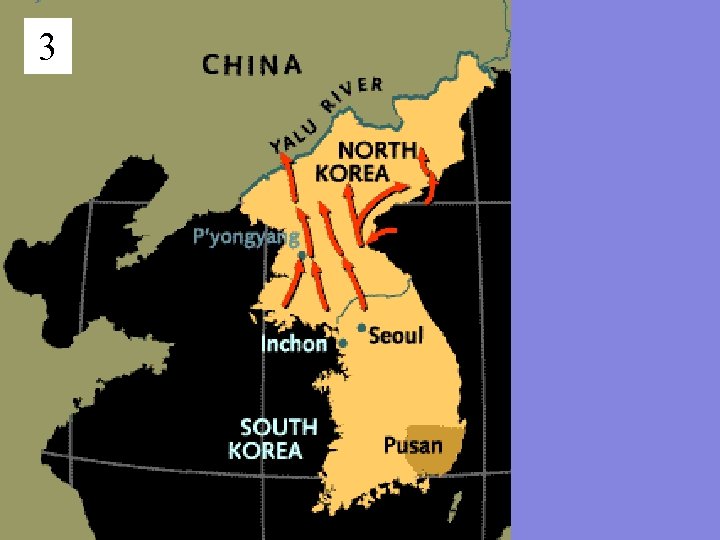
War in Korea Ends The Fighting Continues • UN troops push North Koreans almost to Chinese border • Chinese send 300, 000 troops against UN forces and capture Seoul (capital of SK) • Mac. Arthur calls for nuclear attack, Truman fires him • In 1953, cease fire signed and border established at 38 th parallel. • Demilitarized zone (DMZ) is established – – 160 miles long 2. 5 miles wide
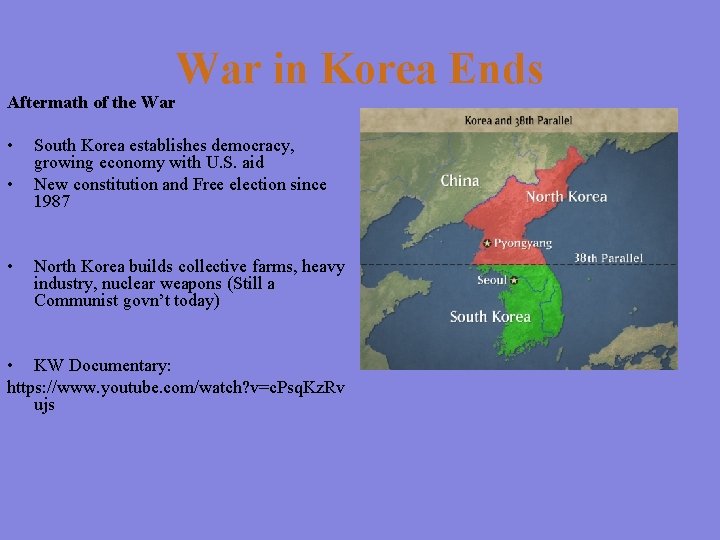
Aftermath of the War • • • War in Korea Ends South Korea establishes democracy, growing economy with U. S. aid New constitution and Free election since 1987 North Korea builds collective farms, heavy industry, nuclear weapons (Still a Communist govn’t today) • KW Documentary: https: //www. youtube. com/watch? v=c. Psq. Kz. Rv ujs
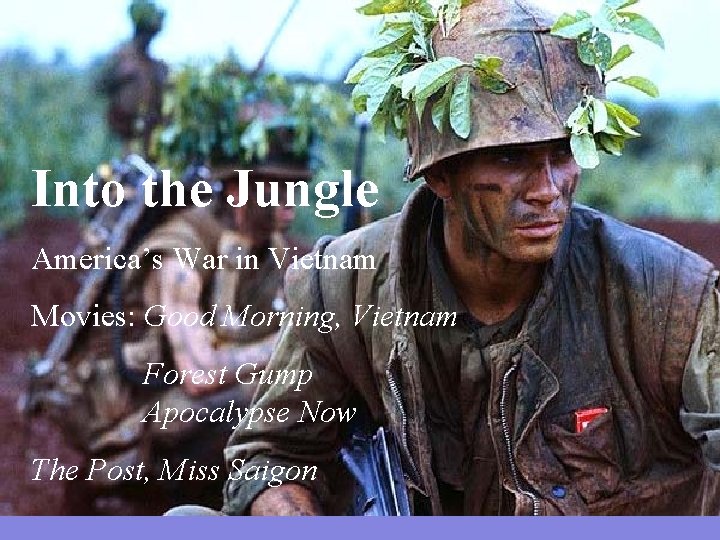
Into the Jungle America’s War in Vietnam Movies: Good Morning, Vietnam Forest Gump Apocalypse Now The Post, Miss Saigon
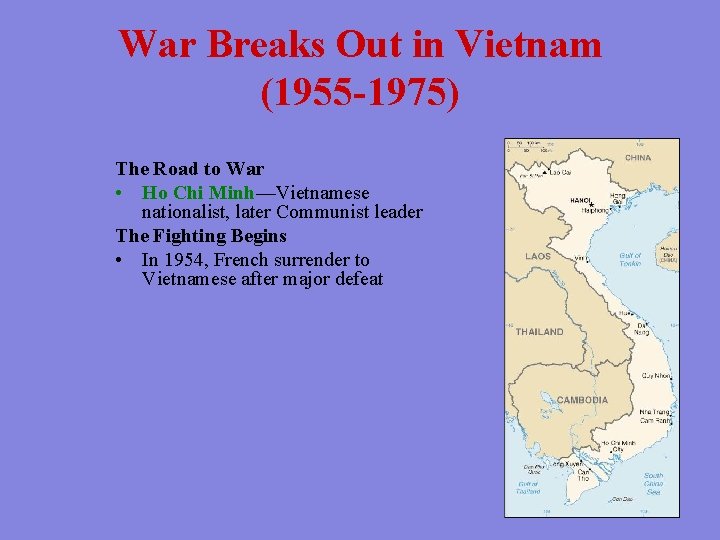
War Breaks Out in Vietnam (1955 -1975) The Road to War • Ho Chi Minh—Vietnamese nationalist, later Communist leader The Fighting Begins • In 1954, French surrender to Vietnamese after major defeat
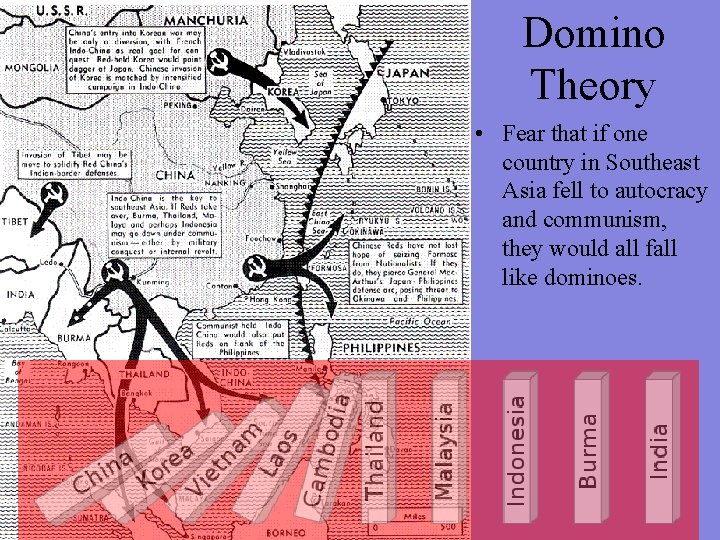
Domino Theory • Fear that if one country in Southeast Asia fell to autocracy and communism, they would all fall like dominoes.
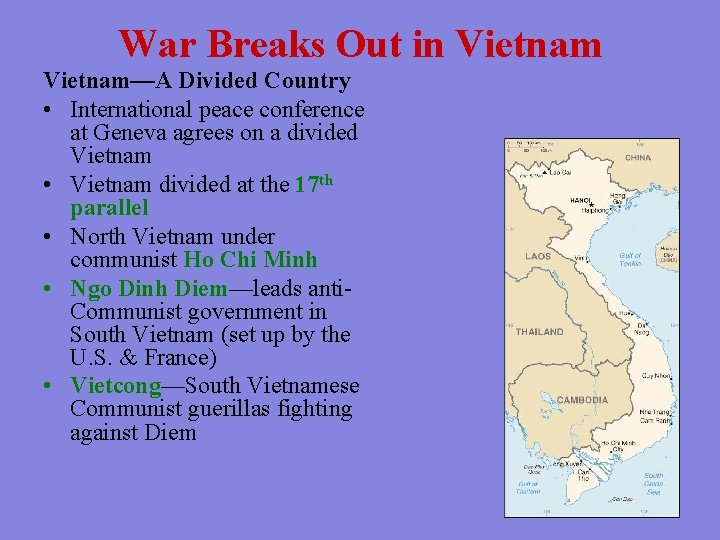
War Breaks Out in Vietnam—A Divided Country • International peace conference at Geneva agrees on a divided Vietnam • Vietnam divided at the 17 th parallel • North Vietnam under communist Ho Chi Minh • Ngo Dinh Diem—leads anti. Communist government in South Vietnam (set up by the U. S. & France) • Vietcong—South Vietnamese Communist guerillas fighting against Diem
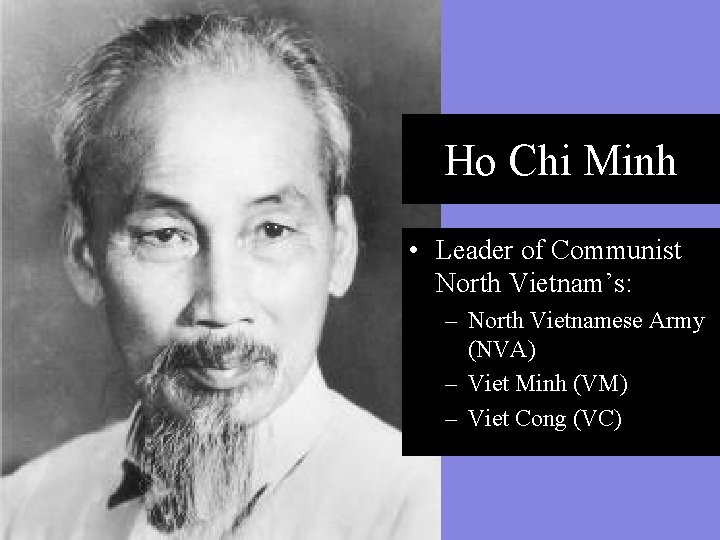
Ho Chi Minh • Leader of Communist North Vietnam’s: – North Vietnamese Army (NVA) – Viet Minh (VM) – Viet Cong (VC)
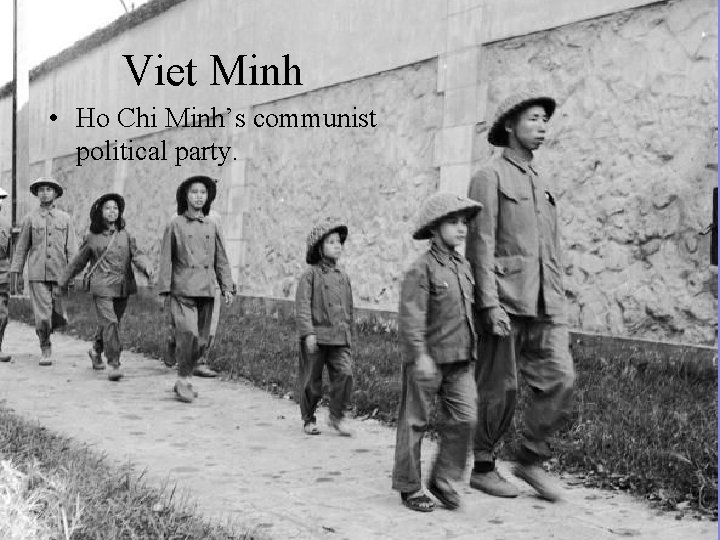
Viet Minh • Ho Chi Minh’s communist political party.
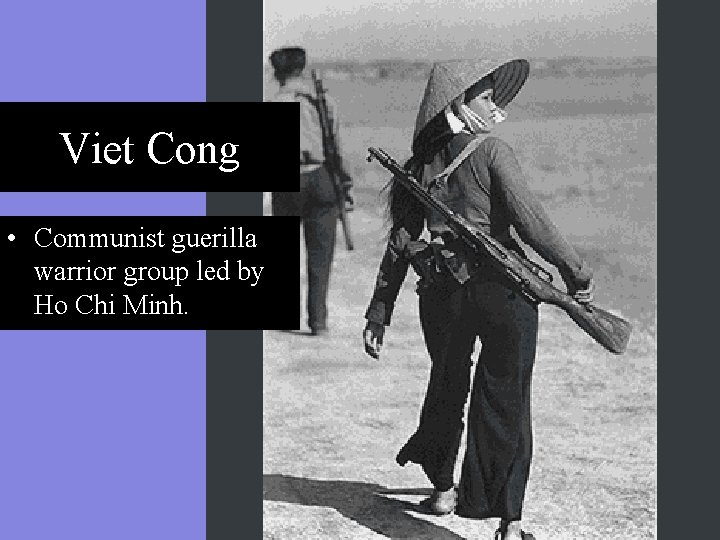
Viet Cong • Communist guerilla warrior group led by Ho Chi Minh.
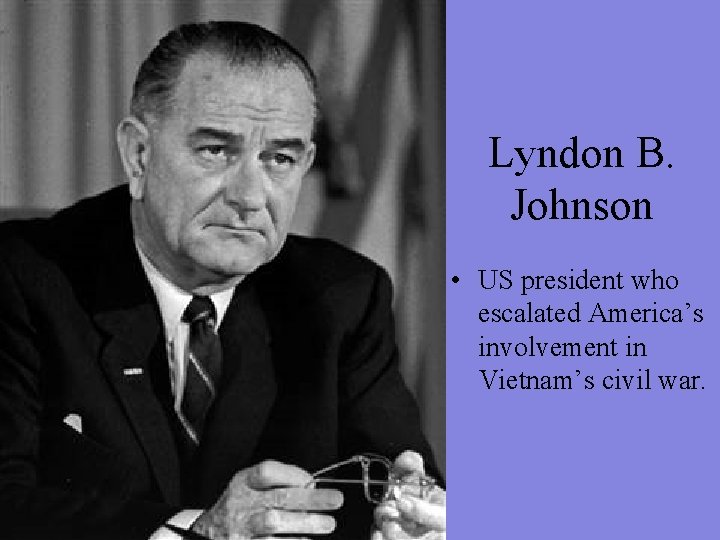
Lyndon B. Johnson • US president who escalated America’s involvement in Vietnam’s civil war.
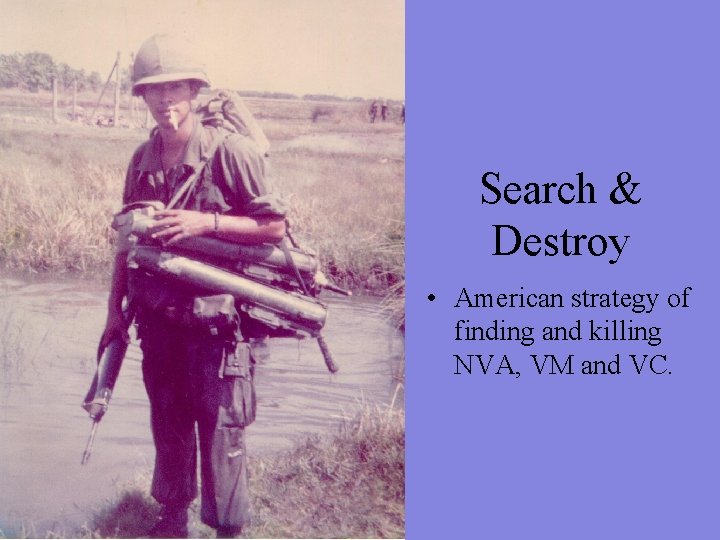
Search & Destroy • American strategy of finding and killing NVA, VM and VC.
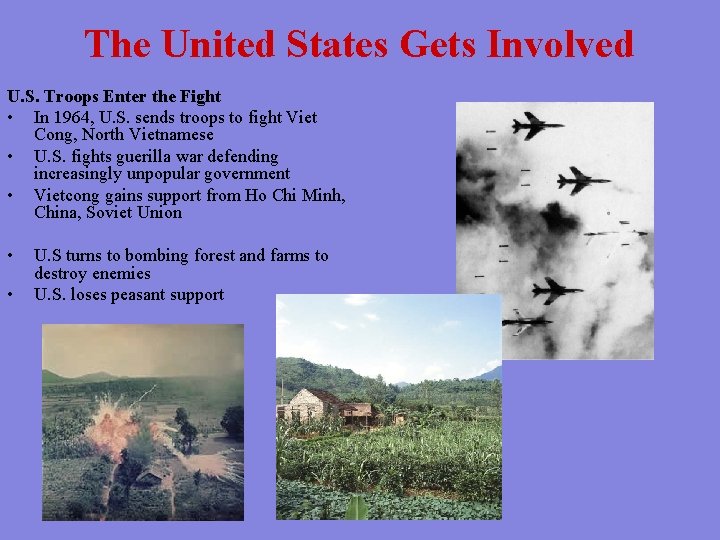
The United States Gets Involved U. S. Troops Enter the Fight • In 1964, U. S. sends troops to fight Viet Cong, North Vietnamese • U. S. fights guerilla war defending increasingly unpopular government • Vietcong gains support from Ho Chi Minh, China, Soviet Union • • U. S turns to bombing forest and farms to destroy enemies U. S. loses peasant support
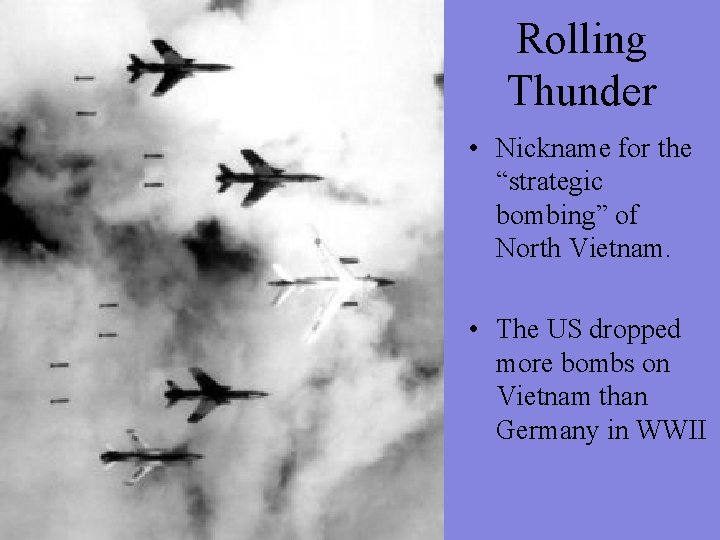
Rolling Thunder • Nickname for the “strategic bombing” of North Vietnam. • The US dropped more bombs on Vietnam than Germany in WWII
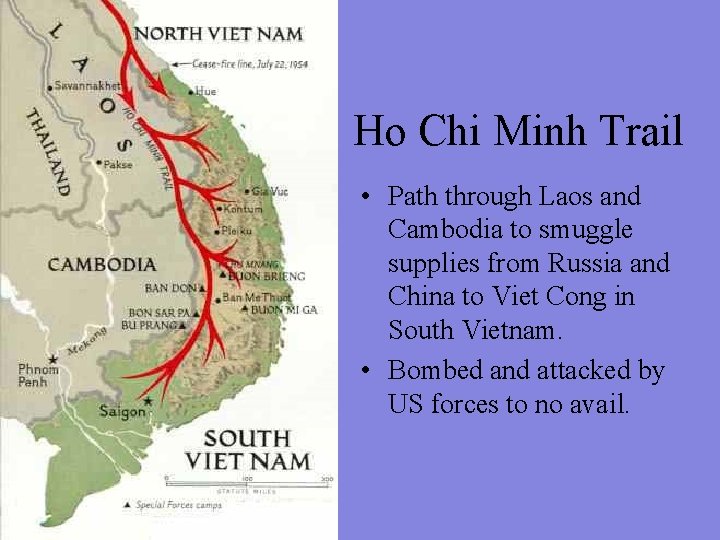
Ho Chi Minh Trail • Path through Laos and Cambodia to smuggle supplies from Russia and China to Viet Cong in South Vietnam. • Bombed and attacked by US forces to no avail.
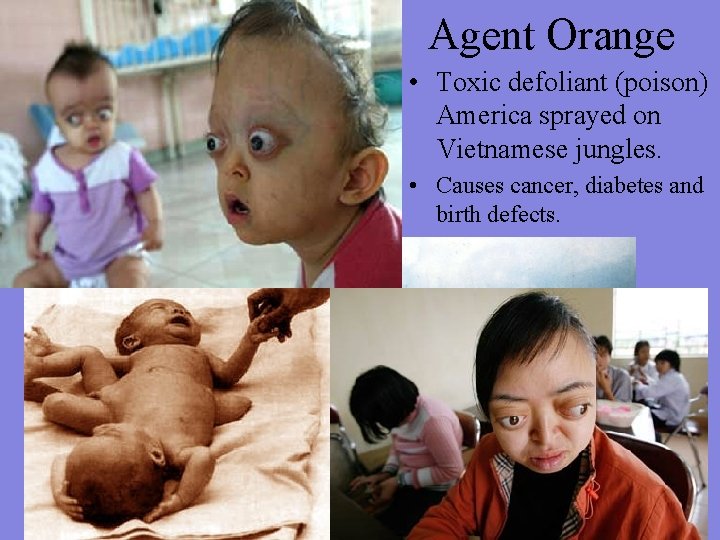
Agent Orange • Toxic defoliant (poison) America sprayed on Vietnamese jungles. • Causes cancer, diabetes and birth defects.
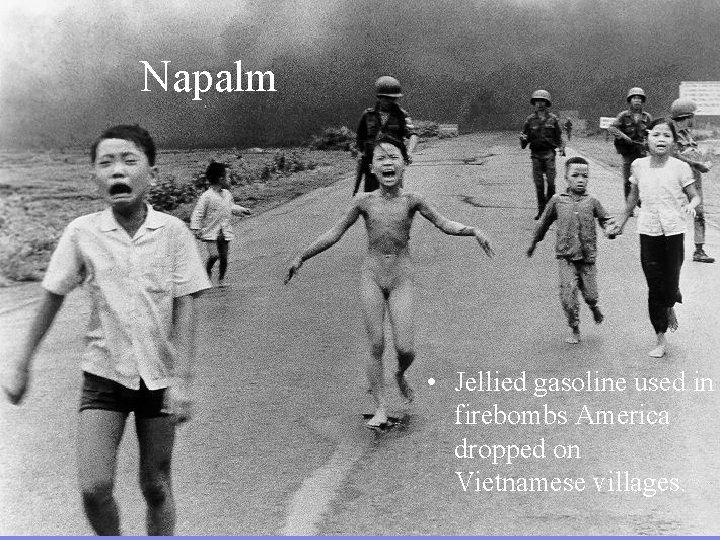
Napalm • Jellied gasoline used in firebombs America dropped on Vietnamese villages.
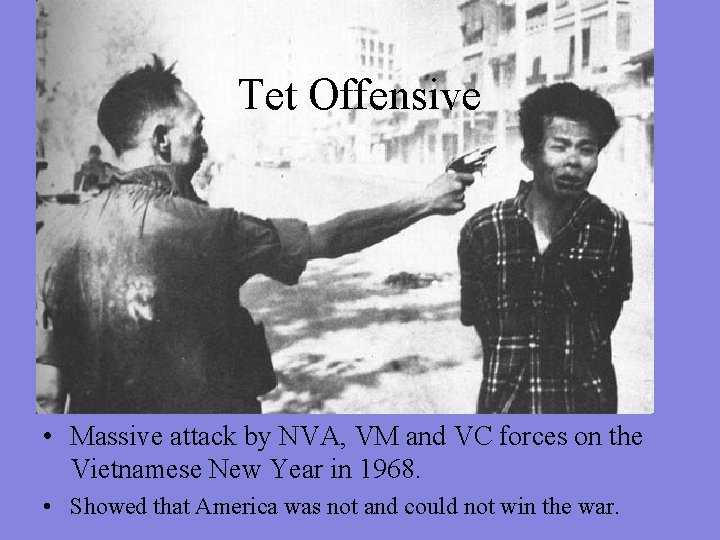
Tet Offensive • Massive attack by NVA, VM and VC forces on the Vietnamese New Year in 1968. • Showed that America was not and could not win the war.
Vietnam After the War • Saigon renamed Ho Chi Minh City; Vietnam united as Communist nation • About 1. 5 million people flee Vietnam, some settling in U. S. , Canada • In 1995, United States normalizes relations with Vietnam
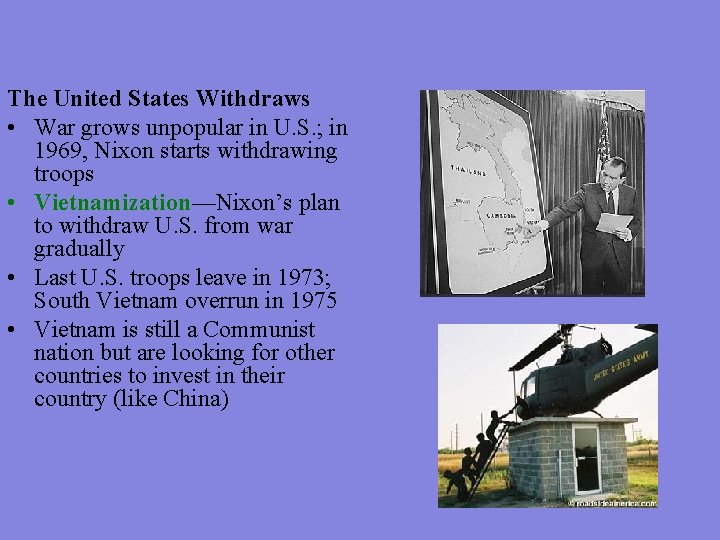
The United States Withdraws • War grows unpopular in U. S. ; in 1969, Nixon starts withdrawing troops • Vietnamization—Nixon’s plan to withdraw U. S. from war gradually • Last U. S. troops leave in 1973; South Vietnam overrun in 1975 • Vietnam is still a Communist nation but are looking for other countries to invest in their country (like China)
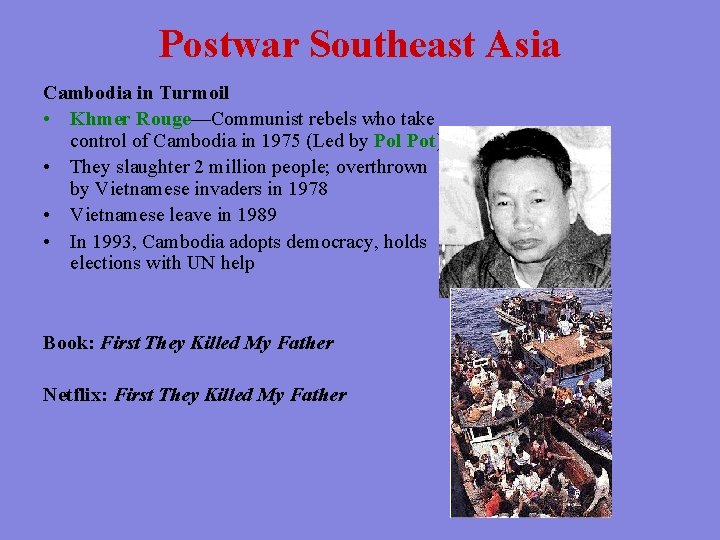
Postwar Southeast Asia Cambodia in Turmoil • Khmer Rouge—Communist rebels who take control of Cambodia in 1975 (Led by Pol Pot) • They slaughter 2 million people; overthrown by Vietnamese invaders in 1978 • Vietnamese leave in 1989 • In 1993, Cambodia adopts democracy, holds elections with UN help Book: First They Killed My Father Netflix: First They Killed My Father
- Slides: 30