
What are some physical features of a toddler
- Slides: 19
�What are some physical features of a toddler?
Preschool Physical Development
1. Of the following, which are often a toddler’s FIRST words: A. Animal sounds like “MOO” B. Verbs like “RUN” C. Adjectives like “HOT” D. Nouns like “APPLE”
2. Parents can encourage language development by: A. Being a good language model for the toddler B. Talking baby talk to the toddler C. Ignoring the child when they talk D. Correct and punish the child when they make language mistakes
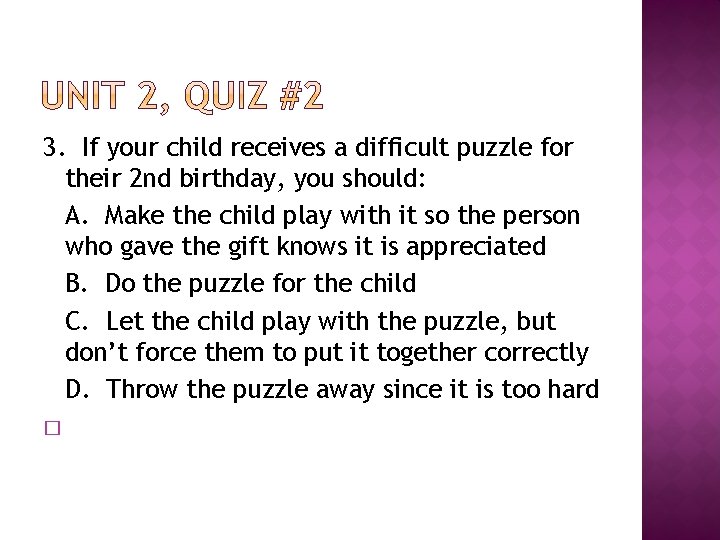
3. If your child receives a difficult puzzle for their 2 nd birthday, you should: A. Make the child play with it so the person who gave the gift knows it is appreciated B. Do the puzzle for the child C. Let the child play with the puzzle, but don’t force them to put it together correctly D. Throw the puzzle away since it is too hard �
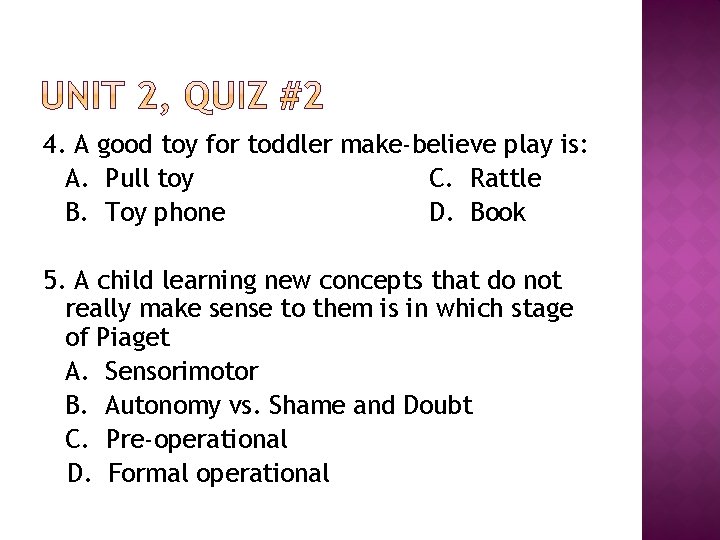
4. A good toy for toddler make-believe play is: A. Pull toy C. Rattle B. Toy phone D. Book 5. A child learning new concepts that do not really make sense to them is in which stage of Piaget A. Sensorimotor B. Autonomy vs. Shame and Doubt C. Pre-operational D. Formal operational
�Teddi �Jenny J. �Madi S. �Taylor R. �Madi �Charee �Keresha 5 B Tuesday Reality Baby Children’s Book
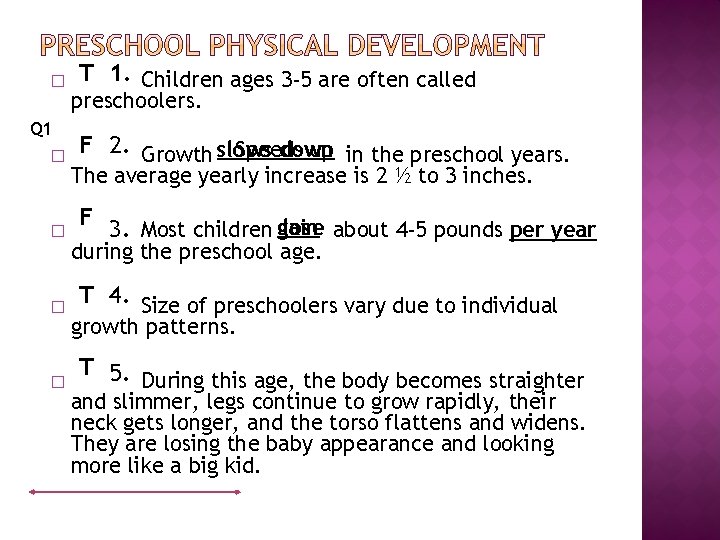
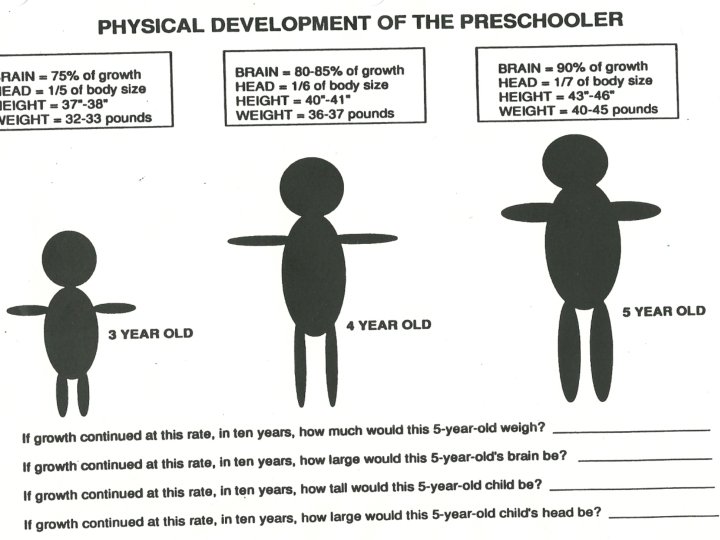
� Q 1 � � T 1. Children ages 3 -5 are often called preschoolers. F 2. Growth slows Speeds down up in the preschool years. The average yearly increase is 2 ½ to 3 inches. F 3. lose about 4 -5 pounds per year Most children gain during the preschool age. T 4. Size of preschoolers vary due to individual growth patterns. T 5. During this age, the body becomes straighter and slimmer, legs continue to grow rapidly, their neck gets longer, and the torso flattens and widens. They are losing the baby appearance and looking more like a big kid.
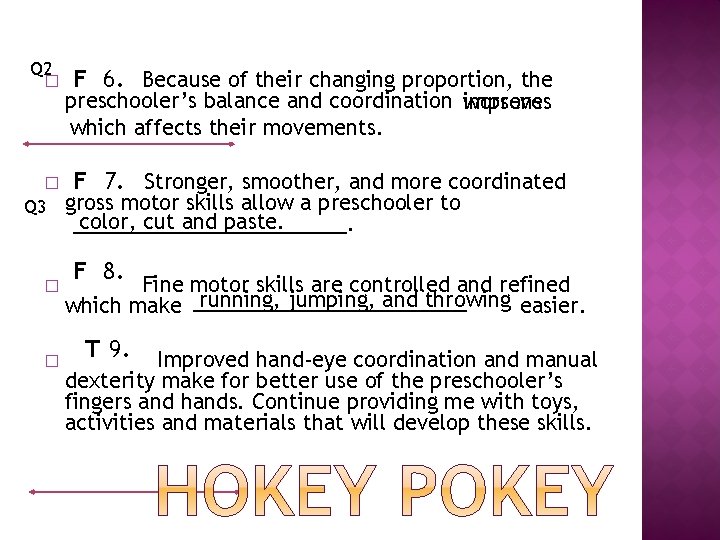
Q 2 � � Q 3 � � F 6. Because of their changing proportion, the preschooler’s balance and coordination improves worsens which affects their movements. F 7. Stronger, smoother, and more coordinated gross motor skills allow a preschooler to color, cut and paste. _____________. F 8. Fine motor skills are controlled and refined running, jumping, and throwing easier. which make _____________ T 9. Improved hand-eye coordination and manual dexterity make for better use of the preschooler’s fingers and hands. Continue providing me with toys, activities and materials that will develop these skills.
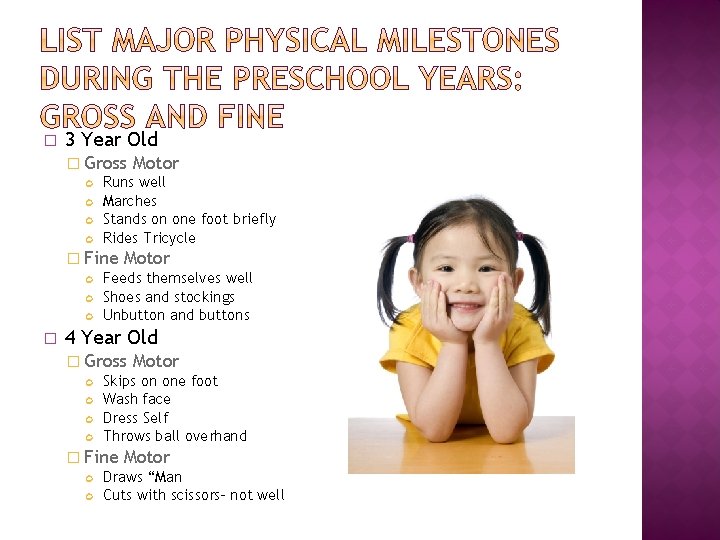
� 3 Year Old � Gross Motor Runs well Marches Stands on one foot briefly Rides Tricycle � Fine Motor Feeds themselves well Shoes and stockings Unbutton and buttons � 4 Year Old � Gross Motor Skips on one foot Wash face Dress Self Throws ball overhand � Fine Motor Draws “Man Cuts with scissors- not well
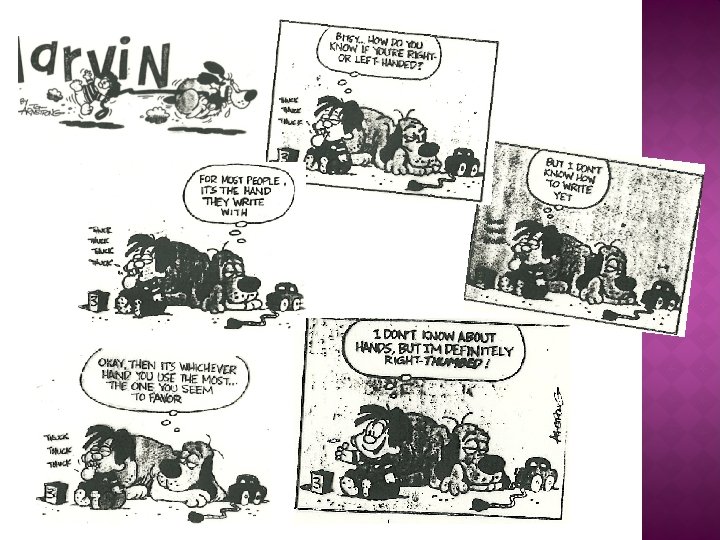
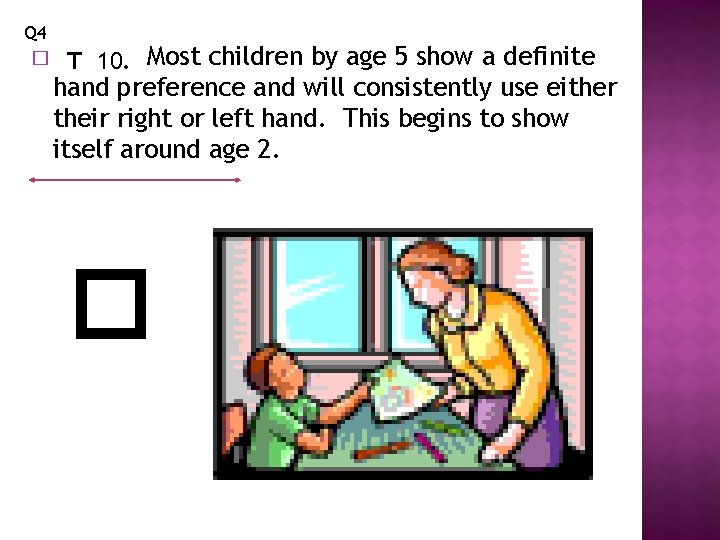
Q 4 � T 10. Most children by age 5 show a definite hand preference and will consistently use either their right or left hand. This begins to show itself around age 2. �
Q 5 � F 11. Children of this age are known for low activity level and energy. their high � F 12. This is the time a preschooler lacks interest practices in developing both their small and large motor skills. � T 13. Younger preschoolers practice developing their motor skills by participating in the activity or task again and again, over and over.
Q 6 � T 14. The amount of food a preschooler needs depends on their height and weight, their temperament, and the level of activity. � Remember that children grow from near to far, head to foot, and at their own rate, but if a caregiver suspects a weight problem (too skinny or overweight) see their doctor. � F 15. Children do better with 3 large meals not 5 or 6 small meals and snacks a day. � The child’s hand size indicates the amount of food that they should be given. � Provide nutritious meals and teach them about nutrition, like the food guide pyramid, so that they will be healthy and know how to make healthy choices. � The preschooler is always watching your example of nutrition.
Q 7 � F 16. Children have still need perfected help maintaining cleanliness habits which is great, because poorly acquired habits can continue into adulthood. � T 17. Allow a child to try new things on their own and let them know that you are available to help them only if they decide that they need it and ask for it.
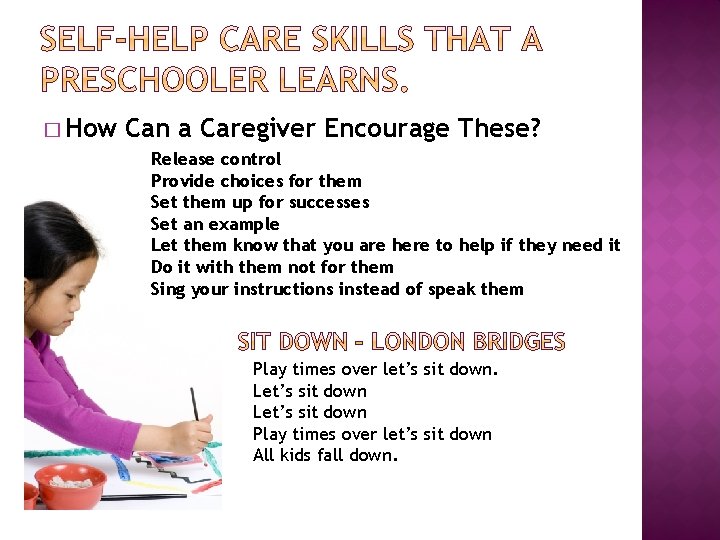
� How Can a Caregiver Encourage These? Release control Provide choices for them Set them up for successes Set an example Let them know that you are here to help if they need it Do it with them not for them Sing your instructions instead of speak them Play times over let’s sit down. Let’s sit down Play times over let’s sit down All kids fall down.
Center #1: THUMBIES PICTURE Make 4 thumbprints on the paper – anywhere you like. Using other writing utensils, turn these prints into a picture (flower, reindeer, spider…) Now write a STORY using the 4 thumbprints. The story needs to have a plot (beginning, middle, and end) and be descriptive. It needs to be 3 -5 paragraphs long with 3 -5 sentences in each paragraph. Use correct spelling and grammar. Center #2: PAPER BAG PUPPET Using ONE paper bag, some colored paper, and other supplies; create a paper bag puppet. Center #3: FRECKLE NAMES and LETTERS Hole punch a bunch of colorful dots. Write your name on a piece of paper (remember to use an uppercase letter for the first letter and a lowercase letter for the remaining letters). Outline each letter with glue and sprinkle a handful of hole punches over the paper. Shake off the excess hole punches into the container for somebody else to use later. Only using the glue and hole punches, decorate your name paper Center #4: POPSICKLE STICK PUZZLE Using at least 5 sticks, make a puzzle. Lay the popsicle sticks out and draw a large picture that covers all of the sticks. Mix the sticks up and have somebody put your puzzle together.
� Center #6: MAGIC PAINTING � Using the white crayons, draw a picture or a design on the white paper. Paint over it with your choice of water color paint. Keep the paint, paint tray, and water cups clean for the next person. � � Center #7: PRESCHOOL GAMES (Don’t Spill the Beans, Don’t Break The Ice, Toss Across, Ring Toss) � Choose a game and play it with a friend. Remember to play by the rules and to be a good sport.