
What are Natural Disasters Volcanic eruption Earthquake Cyclone
- Slides: 56
What are Natural Disasters? • • Volcanic eruption Earthquake Cyclone or Hurricane Avalanche Flood Drought Forest fire or Bushfire
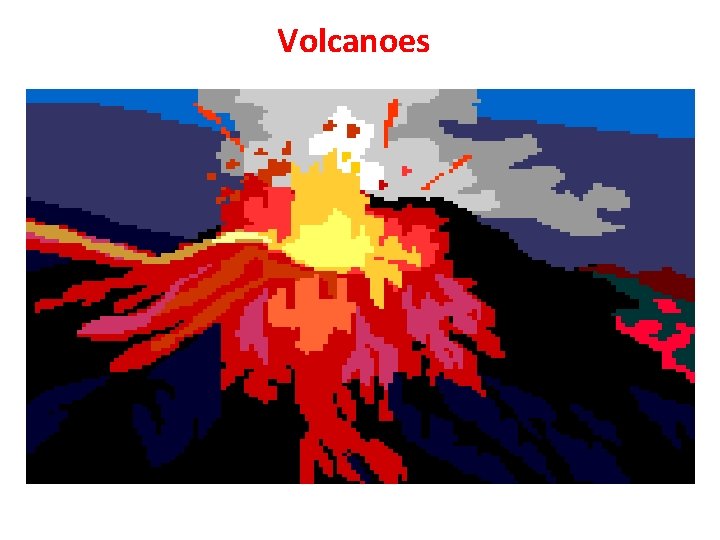
Volcanoes A volcanic eruption is the spurting out of gases and hot lava from an opening in the Earth’s crust. Pressure from deep inside the Earth forces ash, gas and molten rock to the surface.
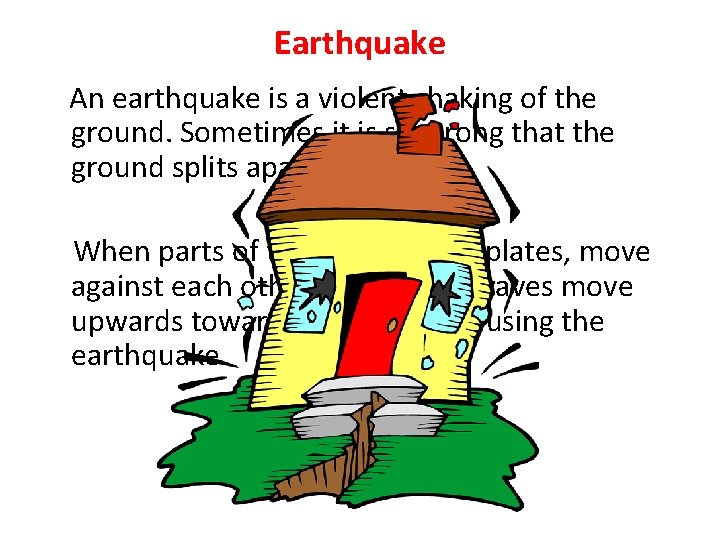
Earthquake An earthquake is a violent shaking of the ground. Sometimes it is so strong that the ground splits apart. When parts of the earth, called plates, move against each other giant shock waves move upwards towards the surface causing the earthquake.
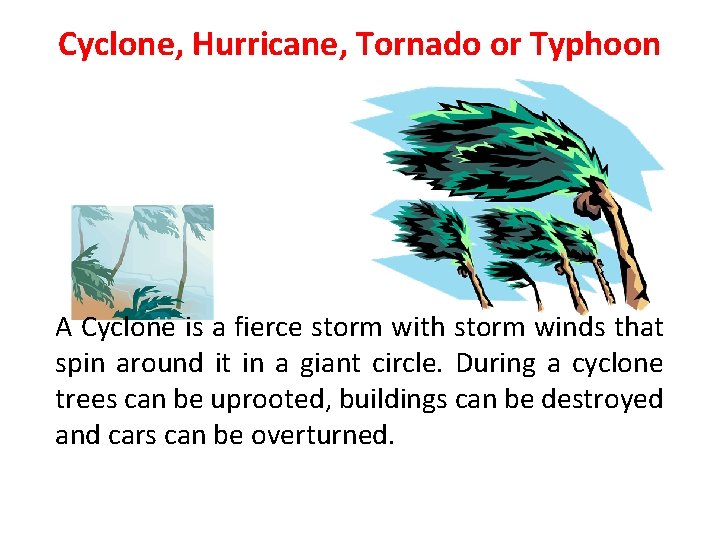
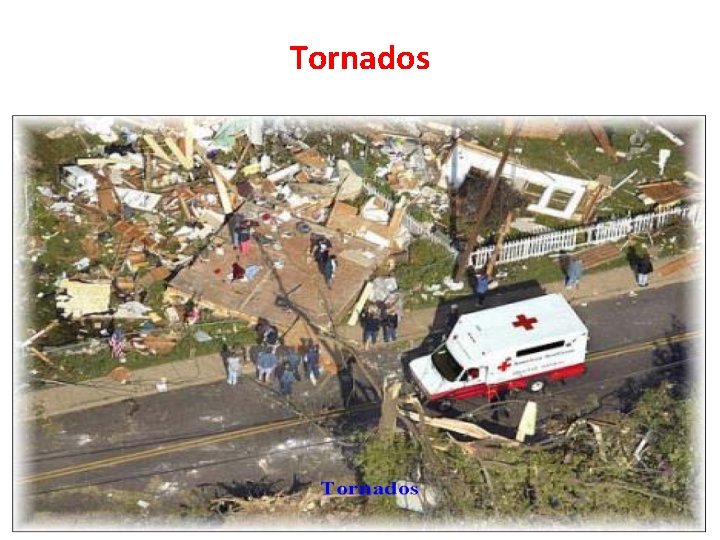
Cyclone, Hurricane, Tornado or Typhoon A Cyclone is a fierce storm with storm winds that spin around it in a giant circle. During a cyclone trees can be uprooted, buildings can be destroyed and cars can be overturned.
Avalanche An Avalanche is a movement of snow, ice and rock down a mountainside. Avalanches happen very suddenly and can move as fast as a racing car up to 124 mph. Avalanches can be caused by – • snow melting quickly • snow freezing, melting then freezing again • someone skiing • a loud noise or an earth tremor
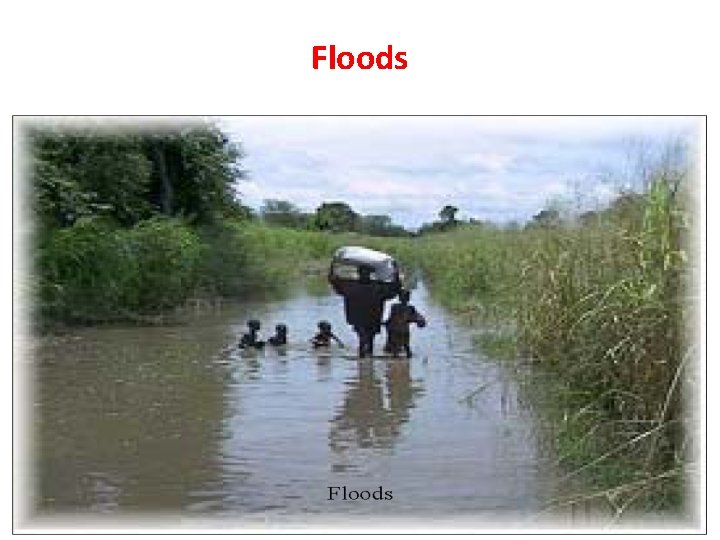
Flood A flood is caused by an overflow of water which covers the land that is usually dry. Floods are caused by heavy rain or by snow melting and the rivers burst their banks and overflow. Costal floods are caused by high tides, a rise in sea level, storm waves or tsunami (earthquakes under the sea).
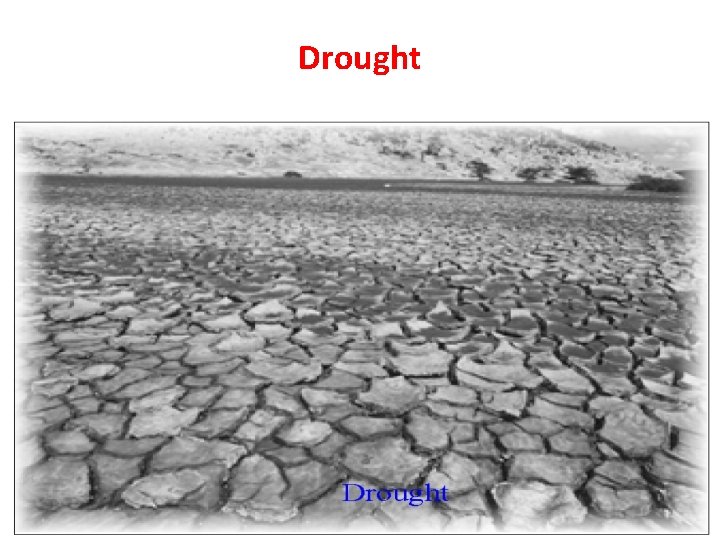
Drought A drought is the lack of rain for a long time. In 1968 a drought began in Africa. Children born during this year were five years old before rain fell again.
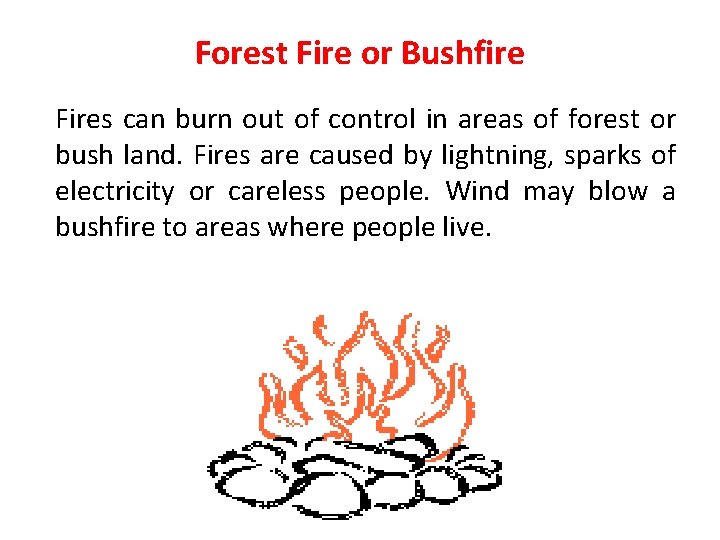
Forest Fire or Bushfire Fires can burn out of control in areas of forest or bush land. Fires are caused by lightning, sparks of electricity or careless people. Wind may blow a bushfire to areas where people live.
DEFINITIONS v. An overwhelming ecological disruption occurring on a scale sufficient to require outside assistance … PAHO 1980 v. Disasters are exceptional events which suddenly kill or injure large numbers of people… Red Cross/Red Crescent
Definitions q Any occurrence that causes damage, ecological disruption, loss of human life or deterioration of health or health services on a scale that warrants extraordinary response from outside the affected community or area v Source: WHO strategy and approaches to humanitarian action, 1995 q Man made calamity (accident or intentional) q A catastrophic event that overwhelms community’s response capabilities a
Definitions q. CRED defines a disaster as “a situation or event which overwhelms local capacity, necessitating a request to a national or international level for external assistance; an unforeseen and often sudden event that causes great damage, destruction and human suffering”
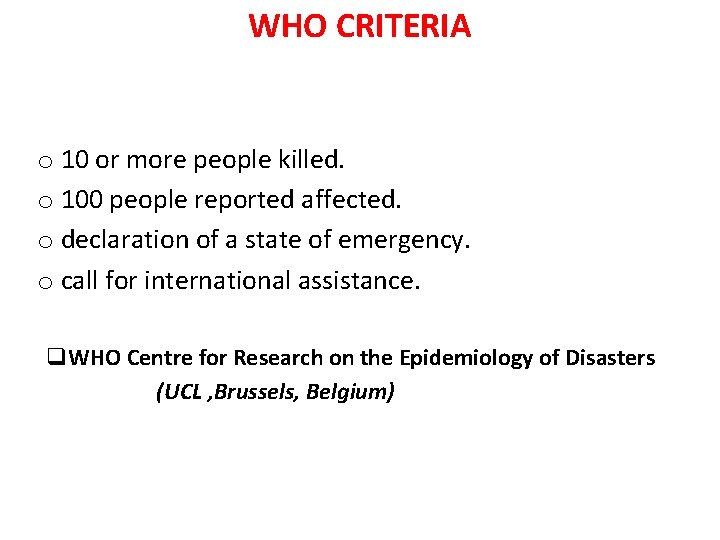
WHO CRITERIA o 10 or more people killed. o 100 people reported affected. o declaration of a state of emergency. o call for international assistance. q. WHO Centre for Research on the Epidemiology of Disasters (UCL , Brussels, Belgium)
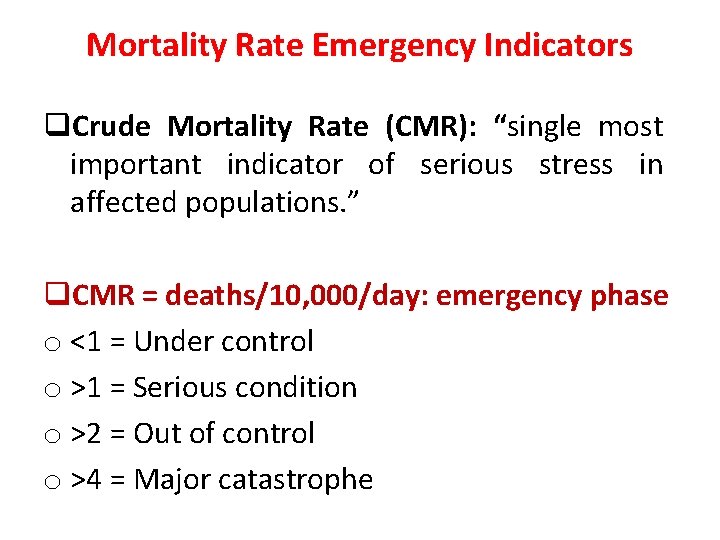
Mortality Rate Emergency Indicators q. Crude Mortality Rate (CMR): “single most important indicator of serious stress in affected populations. ” q. CMR = deaths/10, 000/day: emergency phase o <1 = Under control o >1 = Serious condition o >2 = Out of control o >4 = Major catastrophe
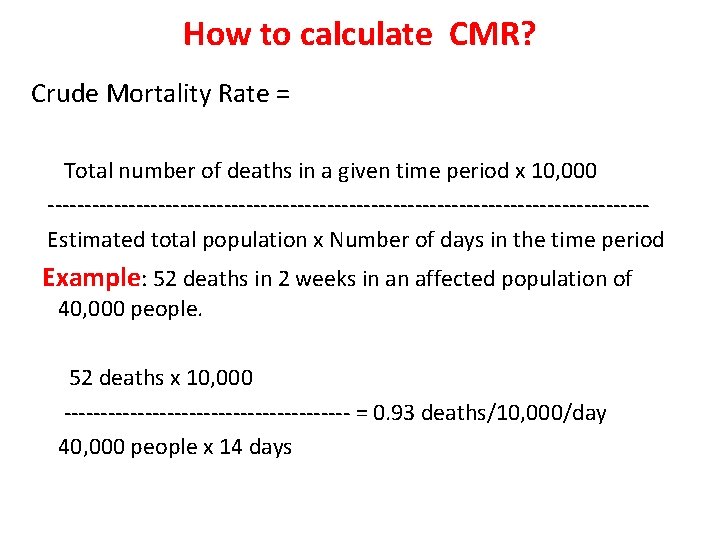
How to calculate CMR? Crude Mortality Rate = Total number of deaths in a given time period x 10, 000 -----------------------------------------Estimated total population x Number of days in the time period Example: 52 deaths in 2 weeks in an affected population of 40, 000 people. 52 deaths x 10, 000 -------------------- = 0. 93 deaths/10, 000/day 40, 000 people x 14 days
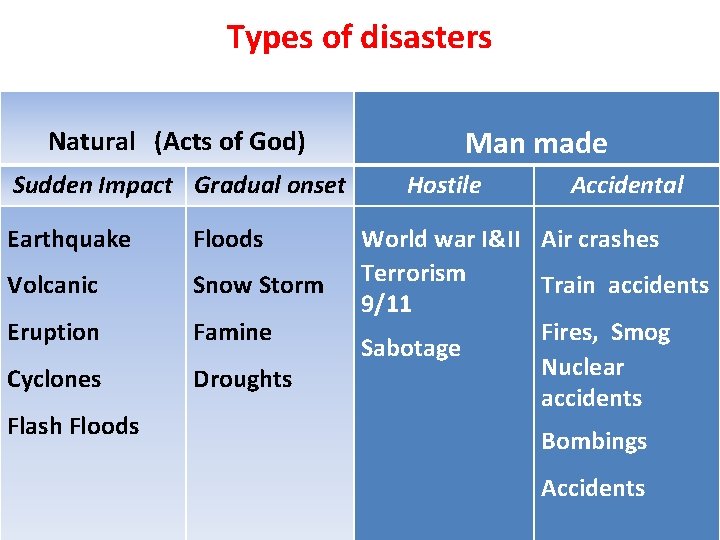
Types of disasters Natural (Acts of God) Sudden Impact Gradual onset Earthquake Floods Volcanic Snow Storm Eruption Famine Cyclones Droughts Flash Floods Man made Hostile Accidental World war I&II Air crashes Terrorism Train accidents 9/11 Fires, Smog Sabotage Nuclear accidents Bombings Accidents
Types of disaster • Meterological e. g. , storms, drought • Topological e. g. , floods, avalanches, landslides • Telluric & Tectonic e. g. , earthquakes, volcanic eruptions • Accidents • Atomic explosion • Bio-terrorism
Floods
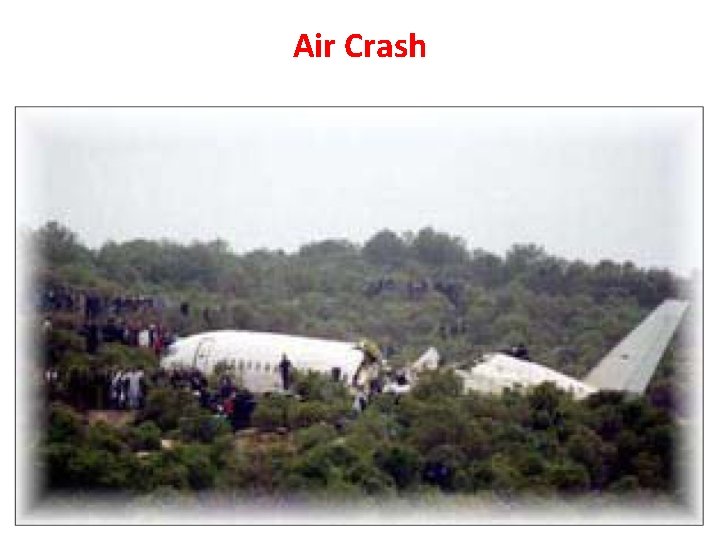
Air Crash
Tornados
Drought
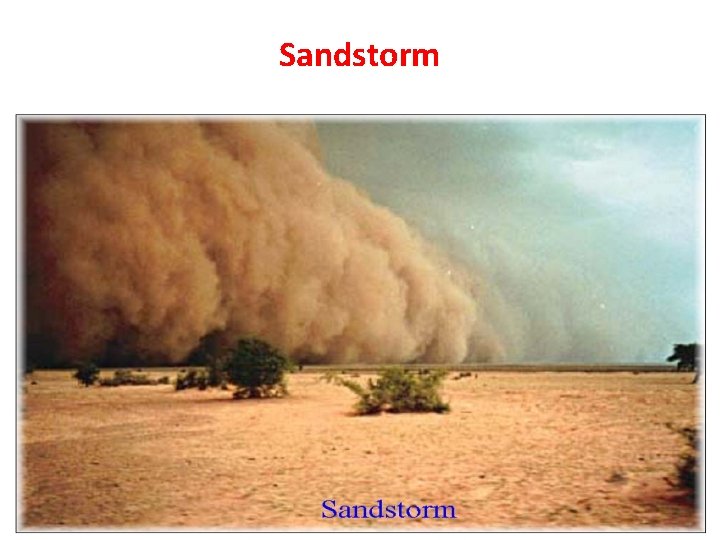
Sandstorm
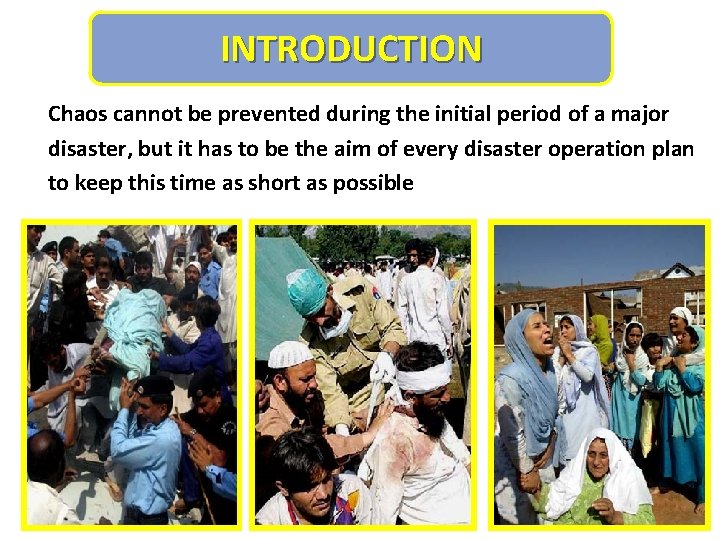
INTRODUCTION Chaos cannot be prevented during the initial period of a major disaster, but it has to be the aim of every disaster operation plan to keep this time as short as possible
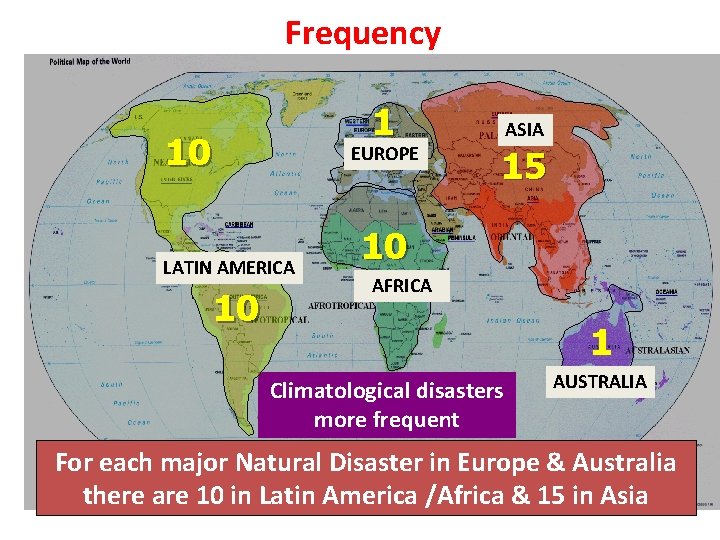
Frequency 1 10 EUROPE LATIN AMERICA 10 ASIA 15 10 AFRICA 1 Climatological disasters more frequent AUSTRALIA For each major Natural Disaster in Europe & Australia there are 10 in Latin America /Africa & 15 in Asia
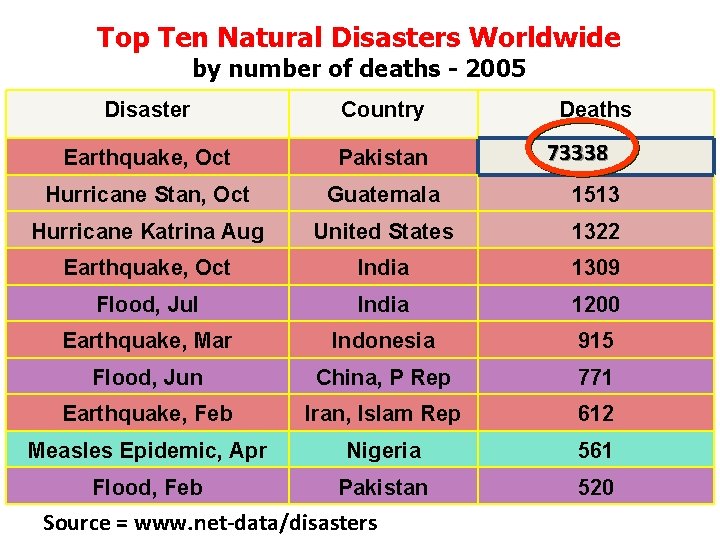
Top Ten Natural Disasters Worldwide by number of deaths - 2005 Disaster Country Earthquake, Oct Pakistan Hurricane Stan, Oct Guatemala 1513 Hurricane Katrina Aug United States 1322 Earthquake, Oct India 1309 Flood, Jul India 1200 Earthquake, Mar Indonesia 915 Flood, Jun China, P Rep 771 Earthquake, Feb Iran, Islam Rep 612 Measles Epidemic, Apr Nigeria 561 Flood, Feb Pakistan 520 Source = www. net-data/disasters Deaths 73338
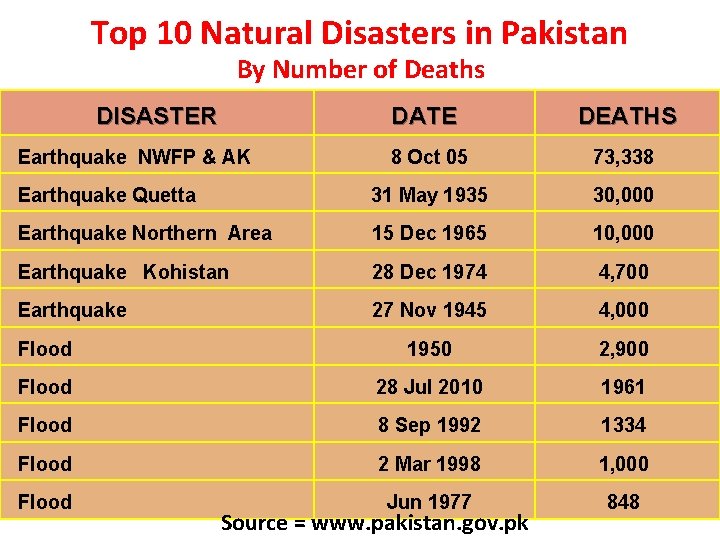
Top 10 Natural Disasters in Pakistan By Number of Deaths DISASTER DATE DEATHS 8 Oct 05 73, 338 Earthquake Quetta 31 May 1935 30, 000 Earthquake Northern Area 15 Dec 1965 10, 000 Earthquake Kohistan 28 Dec 1974 4, 700 Earthquake 27 Nov 1945 4, 000 Flood 1950 2, 900 Flood 28 Jul 2010 1961 Flood 8 Sep 1992 1334 Flood 2 Mar 1998 1, 000 Flood Jun 1977 848 Earthquake NWFP & AK Source = www. pakistan. gov. pk
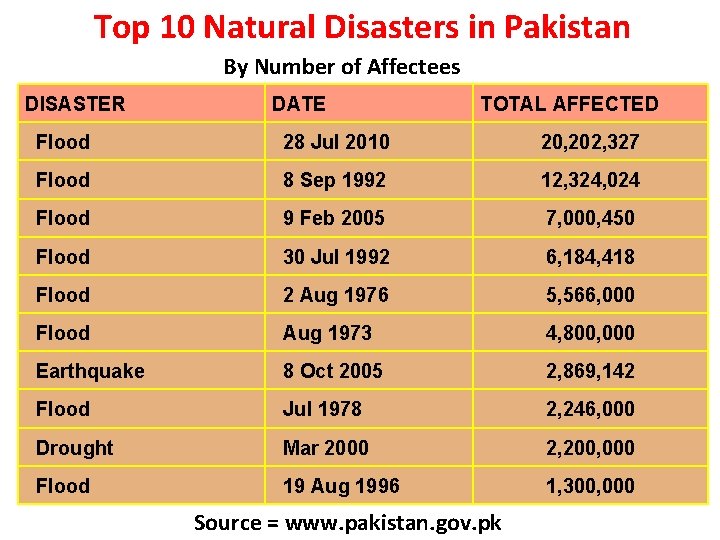
Top 10 Natural Disasters in Pakistan By Number of Affectees DISASTER DATE TOTAL AFFECTED Flood 28 Jul 2010 20, 202, 327 Flood 8 Sep 1992 12, 324, 024 Flood 9 Feb 2005 7, 000, 450 Flood 30 Jul 1992 6, 184, 418 Flood 2 Aug 1976 5, 566, 000 Flood Aug 1973 4, 800, 000 Earthquake 8 Oct 2005 2, 869, 142 Flood Jul 1978 2, 246, 000 Drought Mar 2000 2, 200, 000 Flood 19 Aug 1996 1, 300, 000 Source = www. pakistan. gov. pk
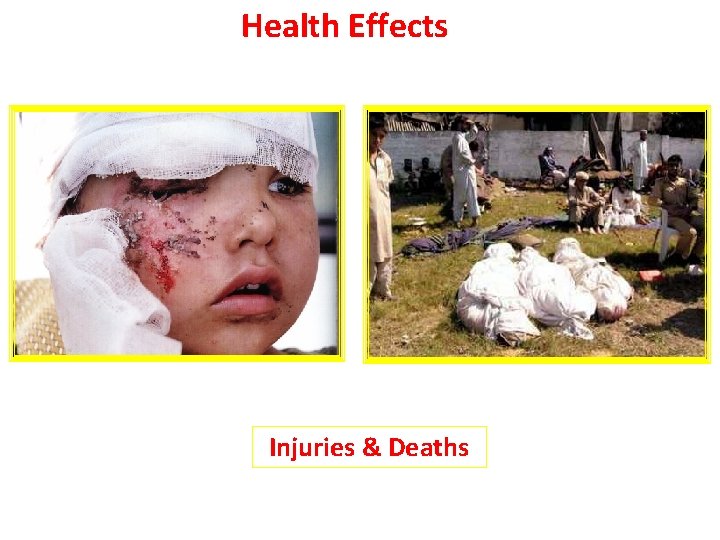
Health Effects Injuries & Deaths
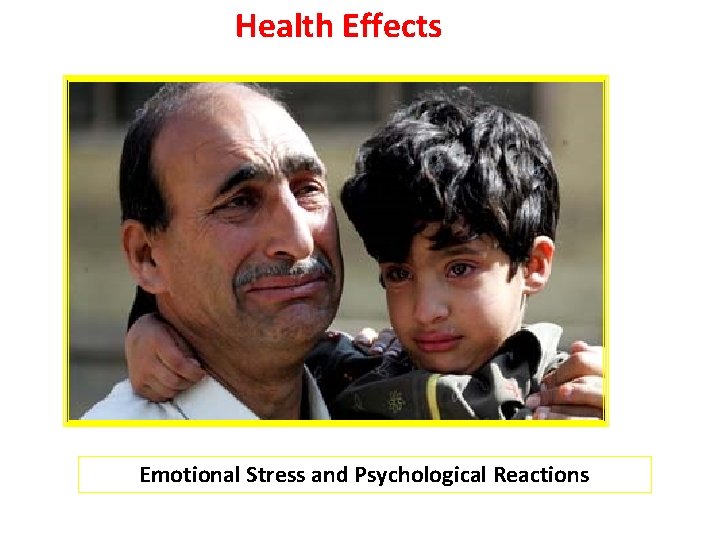
Health Effects Emotional Stress and Psychological Reactions
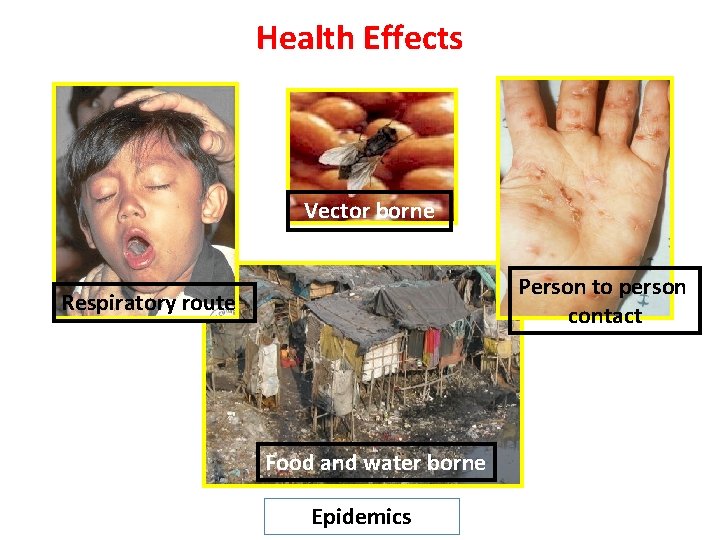
Health Effects Vector borne Person to person contact Respiratory route Food and water borne Epidemics
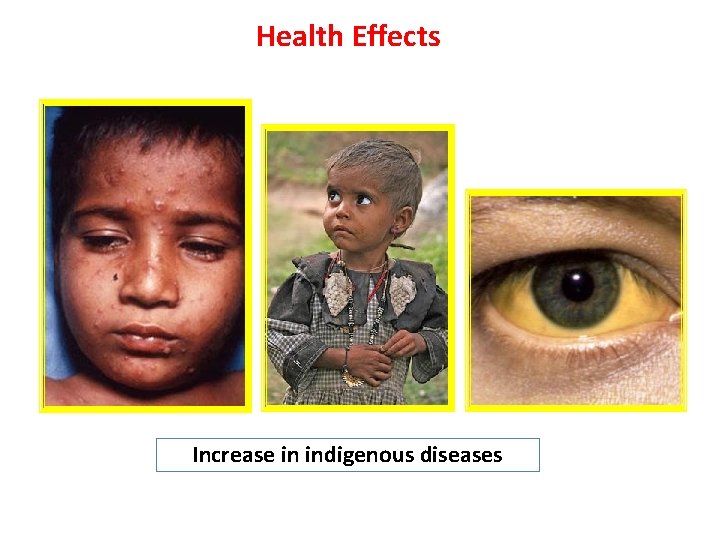
Health Effects Increase in indigenous diseases
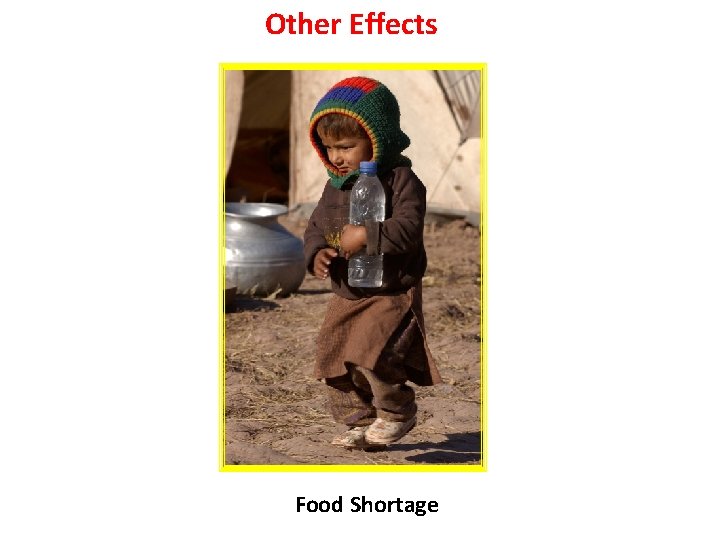
Other Effects Food Shortage
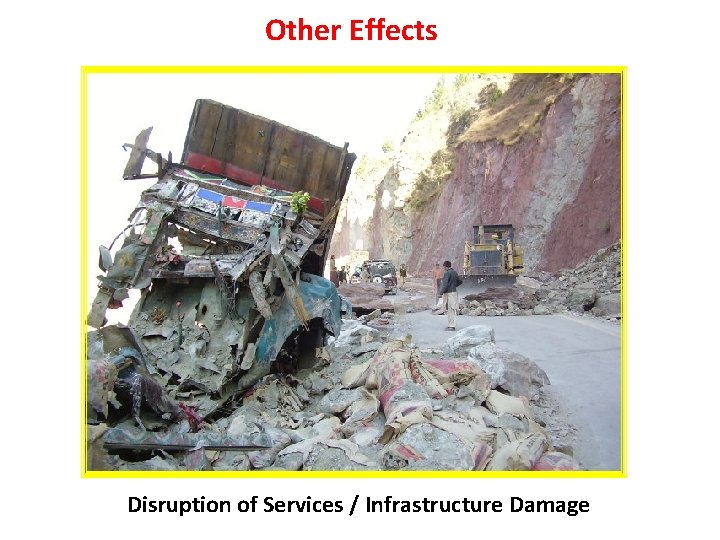
Other Effects Disruption of Services / Infrastructure Damage
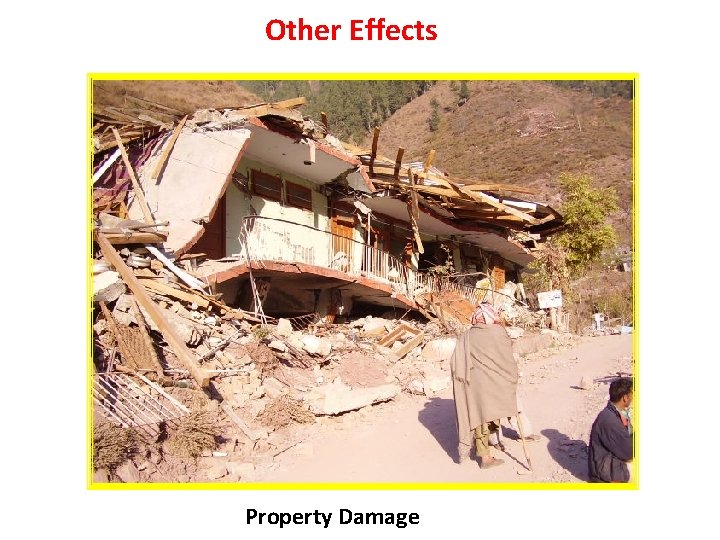
Other Effects Property Damage
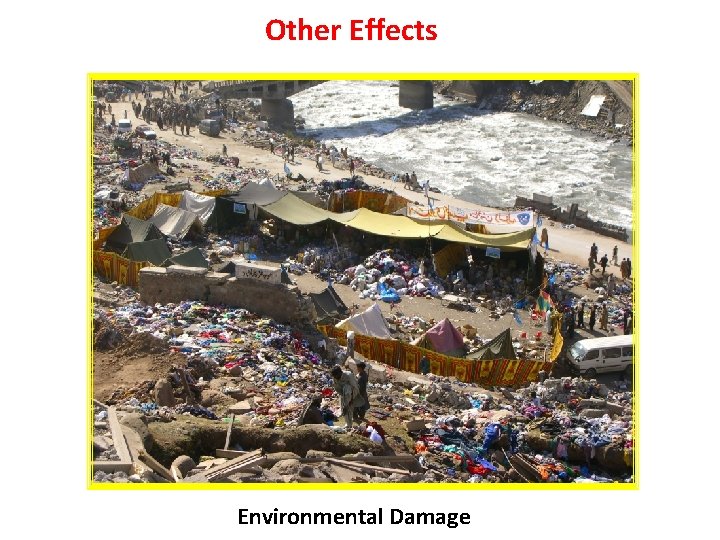
Other Effects Environmental Damage
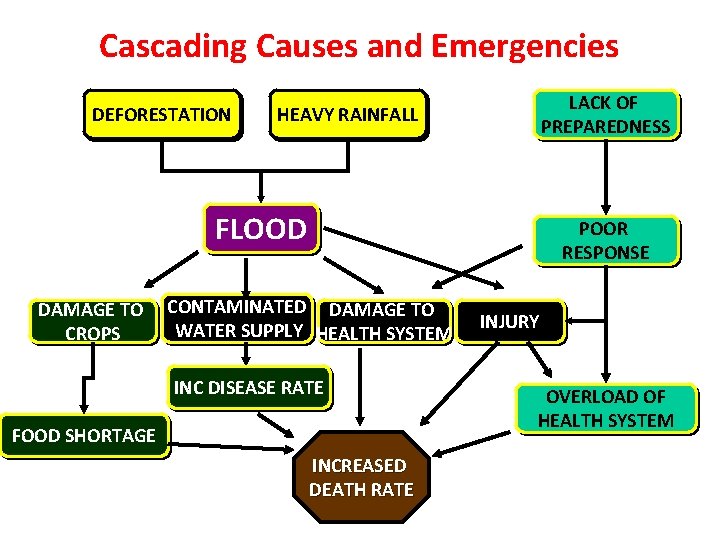
Cascading Causes and Emergencies DEFORESTATION LACK OF PREPAREDNESS HEAVY RAINFALL FLOOD DAMAGE TO CROPS POOR RESPONSE CONTAMINATED DAMAGE TO WATER SUPPLY HEALTH SYSTEM INC DISEASE RATE FOOD SHORTAGE INCREASED DEATH RATE INJURY OVERLOAD OF HEALTH SYSTEM
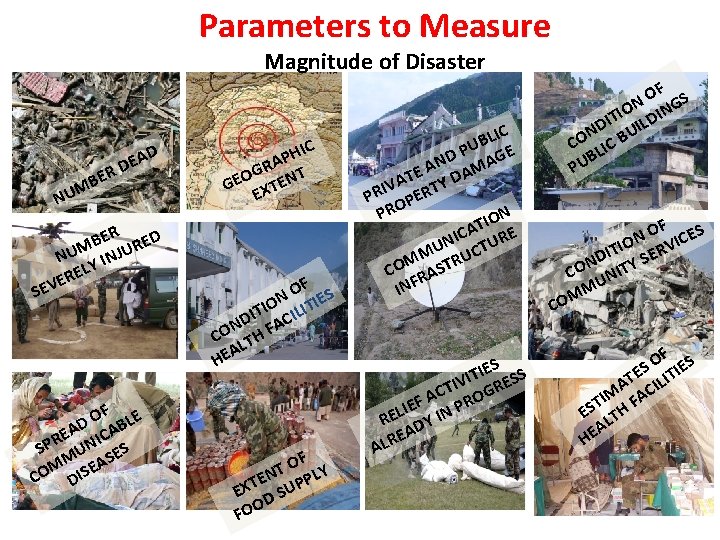
Parameters to Measure Magnitude of Disaster ER B M D A E D NU ER ED B R M NU Y INJU EL R E SEV OF LE D A ICAB E R SP UN SES MM ISEA O C D IC H P RA T G O GE XTEN E F O N TIES O I IT CILI D A N CO TH F AL E H OF Y T EN PPL T X E D SU O FO LIC B PU GE D AN AMA E AT TY D V I PR PER PRO ON I T ICA URE N MU RUCT M CO RAST INF IES SS T I TIV GRE C F A PRO E I REL DY IN EA R L A F O N NGS O I IT ILDI D N U CO LIC B B PU F O ES N C I O ITI SERV D N CO NITY U M M CO F S O ES ITIE T A CIL M I T H FA S E LT A HE
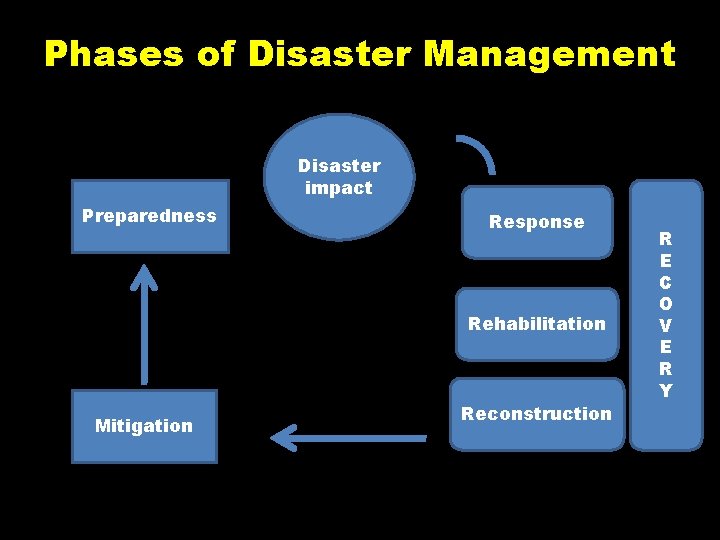
Phases of Disaster Management Disaster impact Preparedness Response Rehabilitation Mitigation Reconstruction R E C O V E R Y
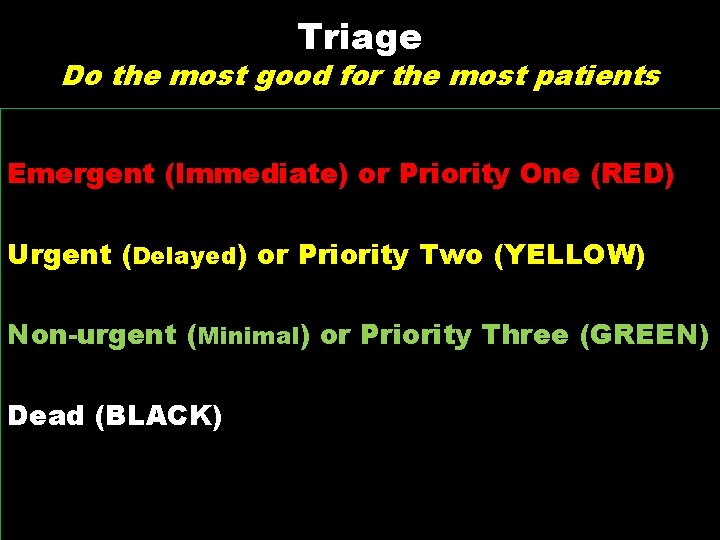
Triage Do the most good for the most patients Emergent (Immediate) or Priority One (RED) Urgent (Delayed) or Priority Two (YELLOW) Non-urgent (Minimal) or Priority Three (GREEN) Dead (BLACK)
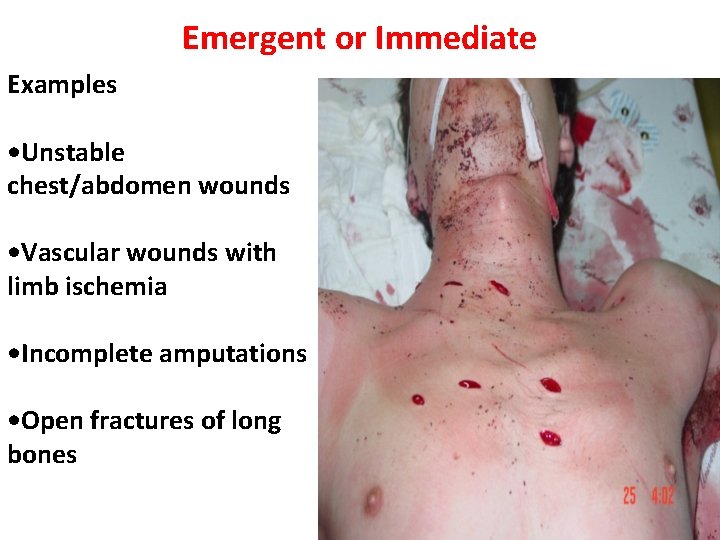
Emergent or Immediate Examples • Unstable chest/abdomen wounds • Vascular wounds with limb ischemia • Incomplete amputations • Open fractures of long bones
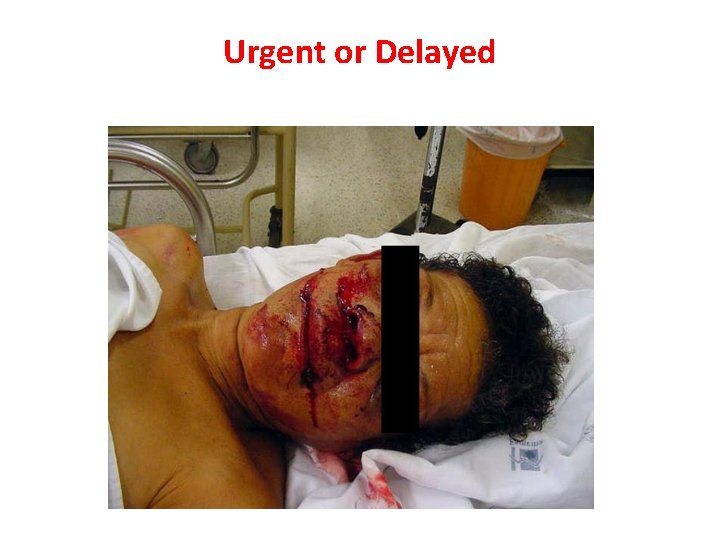
Urgent or Delayed • • Examples Stable abdominal wounds Soft tissue wounds Vascular injuries with adequate collaterals Genitourinary tract disruption Fractures requiring operative intervention Maxillofacial without airway compromise
Urgent or Delayed
Non-urgent or Minimal • Walking wounded/ walking “well” • Directed away from Triage area to minimal care area for first aid and non-specialty care • May be a source of manpower
Dead/Moribund q. Survival unlikely even with optimal care q. Should be separated from view of other casualties q. Should not be abandoned q. Comfort measures with minimal staff
Preparedness Planning how to respond for an emergency or disaster and working to increase resources available to respond effectively q. Multisectoral Activity o o o o communications health social welfare police & security search & rescue transport media
Preparedness (a stitch in time saves nine) q. Tasks o evaluate risk o adopt standards/regulations o organize communication, warning sys, coordination & response mechanism o ensure financial resources o develop public education programmes o coordinate with media o organize disaster simulation exercises
Mitigation Activities which actually eliminate or reduce the chance of occurrence or the effects of a disaster o Measures designed to either prevent hazards e. g. , protection of vulnerable population and structures o Improving structural quality of houses, schools, and other public buildings. o Safety of water supply & sewerage system
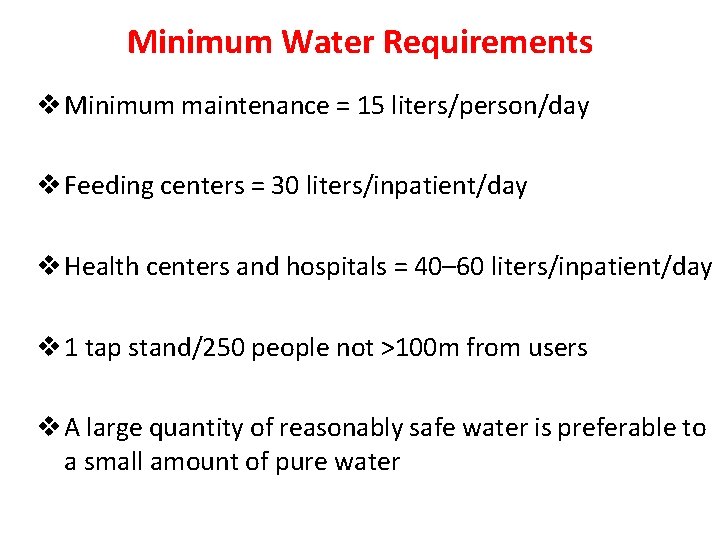
Minimum Water Requirements v Minimum maintenance = 15 liters/person/day v Feeding centers = 30 liters/inpatient/day v Health centers and hospitals = 40– 60 liters/inpatient/day v 1 tap stand/250 people not >100 m from users v A large quantity of reasonably safe water is preferable to a small amount of pure water
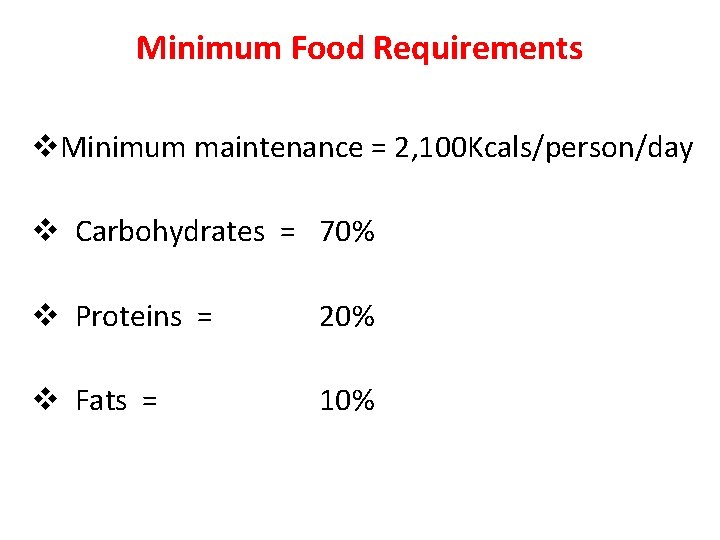
Minimum Food Requirements v. Minimum maintenance = 2, 100 Kcals/person/day v Carbohydrates = 70% v Proteins = 20% v Fats = 10%
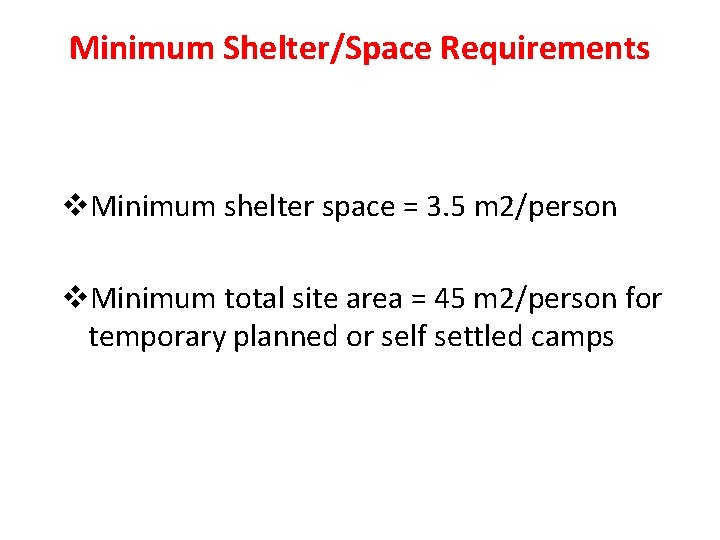
Minimum Shelter/Space Requirements v. Minimum shelter space = 3. 5 m 2/person v. Minimum total site area = 45 m 2/person for temporary planned or self settled camps
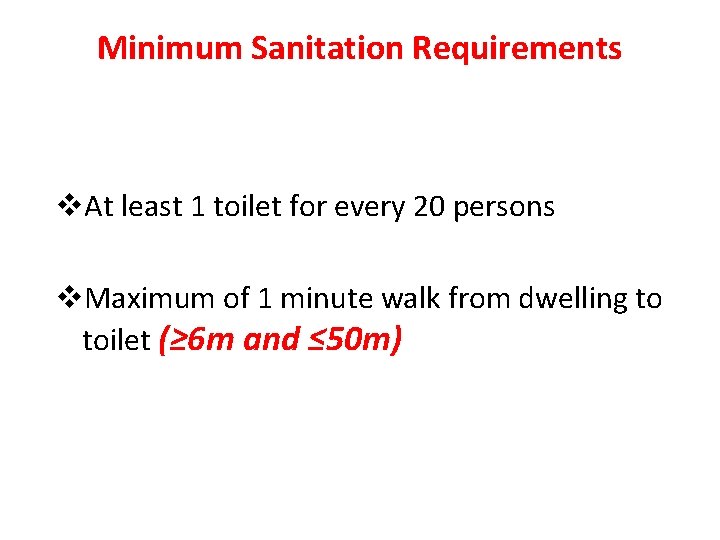
Minimum Sanitation Requirements v. At least 1 toilet for every 20 persons v. Maximum of 1 minute walk from dwelling to toilet (≥ 6 m and ≤ 50 m)
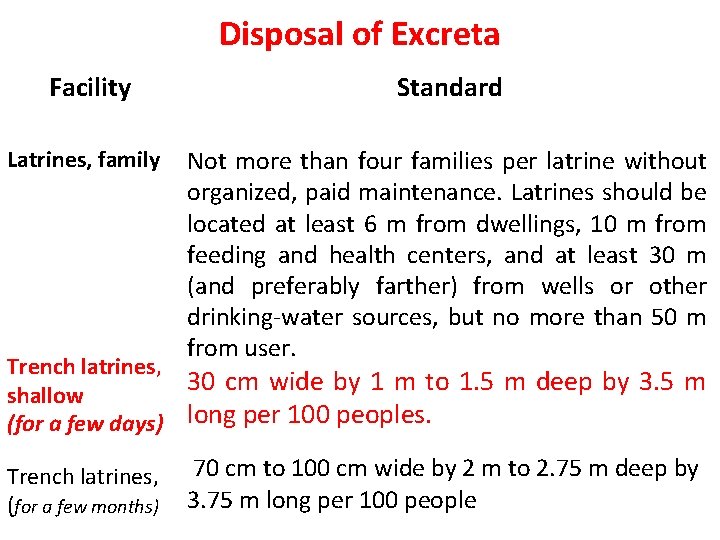
Disposal of Excreta Facility Standard Latrines, family Not more than four families per latrine without organized, paid maintenance. Latrines should be located at least 6 m from dwellings, 10 m from feeding and health centers, and at least 30 m (and preferably farther) from wells or other drinking-water sources, but no more than 50 m from user. Trench latrines, shallow (for a few days) Trench latrines, (for a few months) 30 cm wide by 1 m to 1. 5 m deep by 3. 5 m long per 100 peoples. 70 cm to 100 cm wide by 2 m to 2. 75 m deep by 3. 75 m long per 100 people
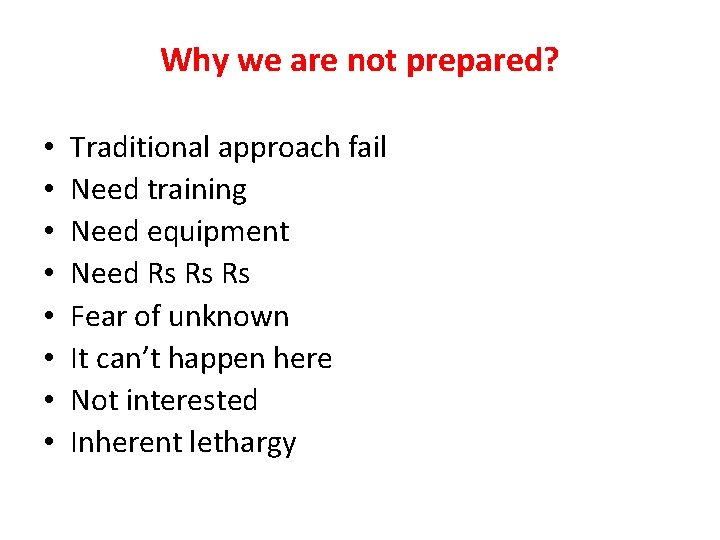
Why we are not prepared? • • Traditional approach fail Need training Need equipment Need Rs Rs Rs Fear of unknown It can’t happen here Not interested Inherent lethargy
D-I-S-A-S-T-E-R • A mnemonic which can help rescuers remember critical information about disaster response and triage.
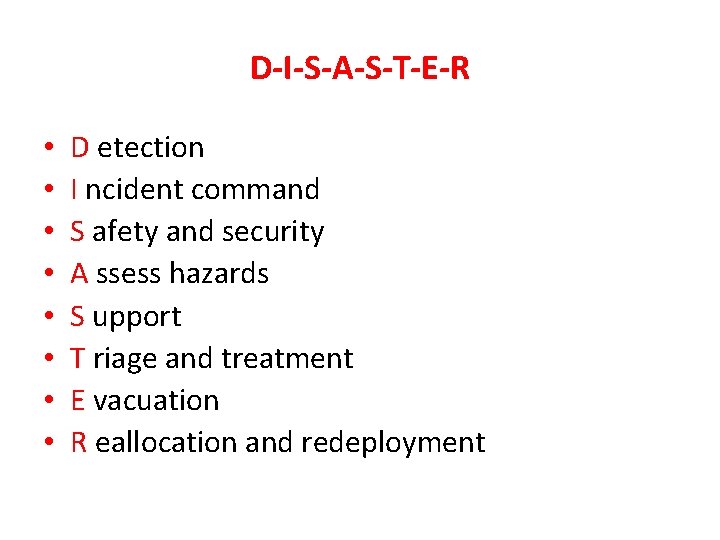
D-I-S-A-S-T-E-R • • D etection I ncident command S afety and security A ssess hazards S upport T riage and treatment E vacuation R eallocation and redeployment