
What are maps what are they used for
- Slides: 29
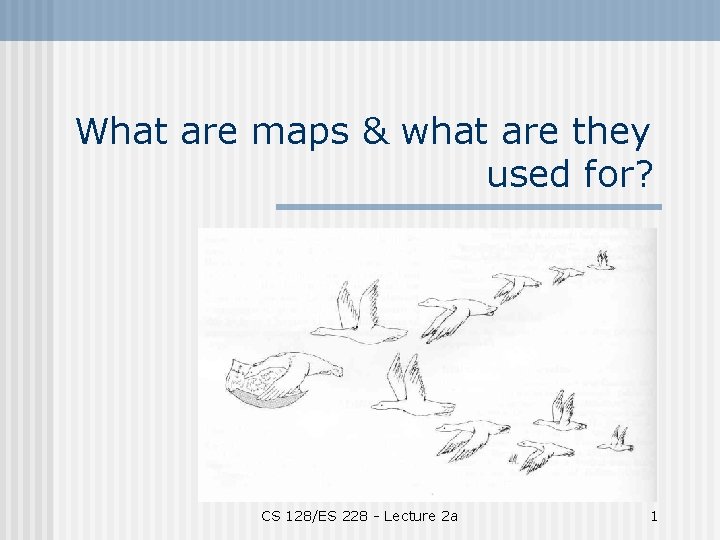
What are maps & what are they used for? CS 128/ES 228 - Lecture 2 a 1
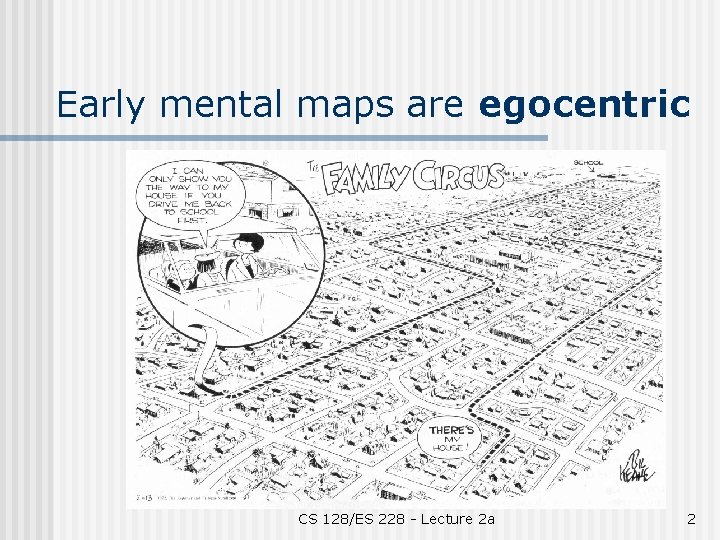
Early mental maps are egocentric CS 128/ES 228 - Lecture 2 a 2
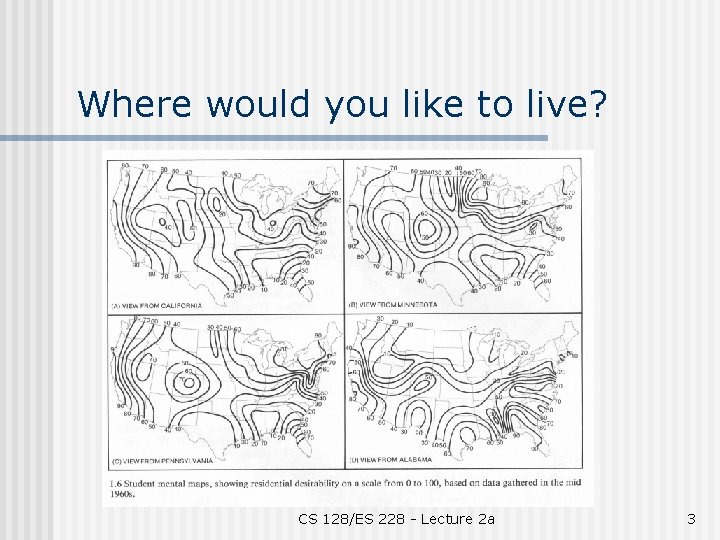
Where would you like to live? CS 128/ES 228 - Lecture 2 a 3
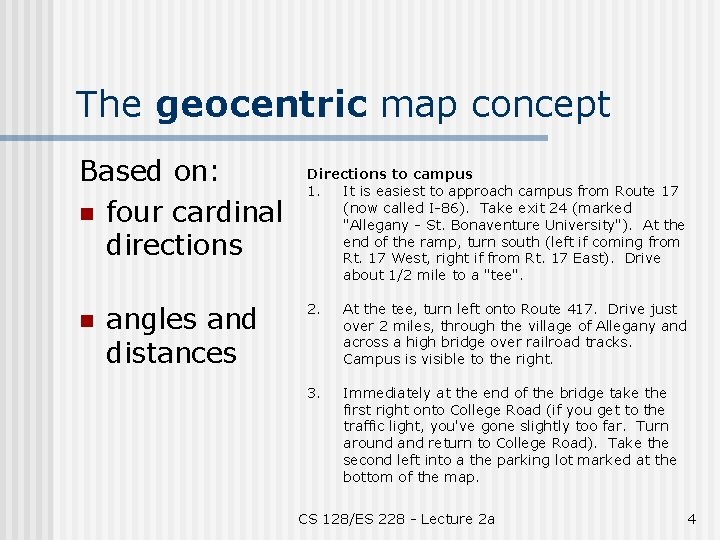
The geocentric map concept Based on: n four cardinal directions n angles and distances Directions to campus 1. It is easiest to approach campus from Route 17 (now called I-86). Take exit 24 (marked "Allegany - St. Bonaventure University"). At the end of the ramp, turn south (left if coming from Rt. 17 West, right if from Rt. 17 East). Drive about 1/2 mile to a "tee". 2. At the tee, turn left onto Route 417. Drive just over 2 miles, through the village of Allegany and across a high bridge over railroad tracks. Campus is visible to the right. 3. Immediately at the end of the bridge take the first right onto College Road (if you get to the traffic light, you've gone slightly too far. Turn around and return to College Road). Take the second left into a the parking lot marked at the bottom of the map. CS 128/ES 228 - Lecture 2 a 4
What is a map? n “Art is a lie which makes us realize the truth. ” P. Picasso n “So is a map. ” P. Muehrcke (Map Use. 2 nd ed. 1986) n “A map is a spatial model, an attempt to depict selected aspects of a geographic region on a flat plane. ” T. Georgian CS 128/ES 228 - Lecture 2 a 5
Warning!!! “Map and reality are not, cannot be identical. No aspect of map use is so obvious yet so often overlooked. Most map reading mistakes occur because the user forgets this vital fact and expects a one-to-one correspondence between map and reality. ” P. Muehrcke Map Use (p. 19) CS 128/ES 228 - Lecture 2 a 6
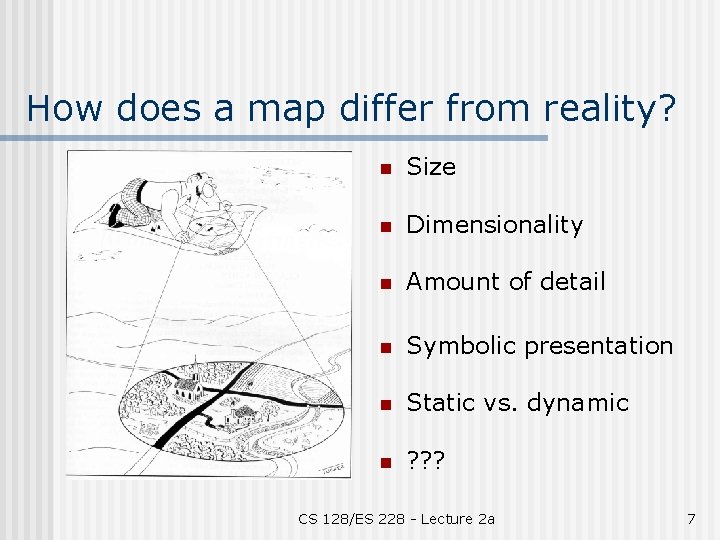
How does a map differ from reality? n Size n Dimensionality n Amount of detail n Symbolic presentation n Static vs. dynamic n ? ? ? CS 128/ES 228 - Lecture 2 a 7
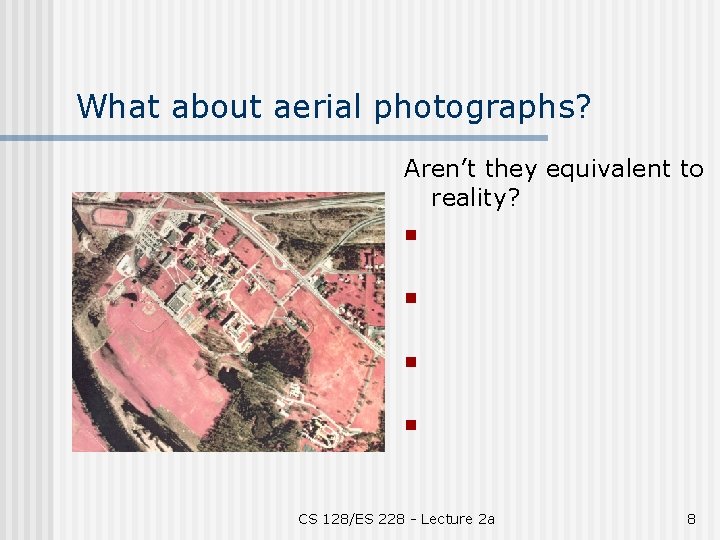
What about aerial photographs? Aren’t they equivalent to reality? n n CS 128/ES 228 - Lecture 2 a 8
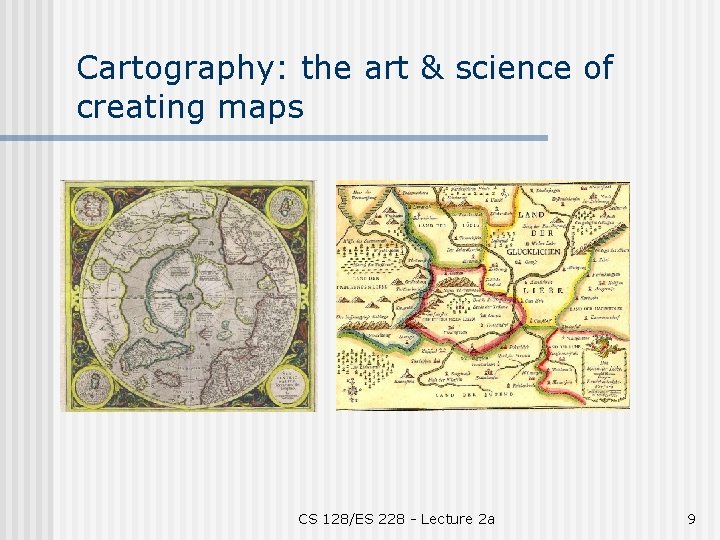
Cartography: the art & science of creating maps CS 128/ES 228 - Lecture 2 a 9
4 steps of cartography: 1. Selection 3. Exaggeration 2. Simplification 4. Symbolization For my part of this course, learn outlines!! See textbook, Box 2. 3 (p. 27) for a different list CS 128/ES 228 - Lecture 2 a 10
1. Selection Depends on: n Purpose n Data availability n Size and scale of map CS 128/ES 228 - Lecture 2 a 11
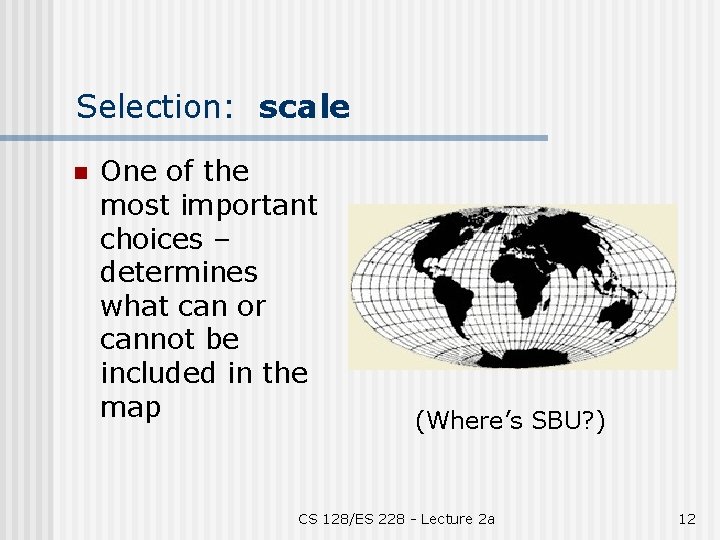
Selection: scale n One of the most important choices – determines what can or cannot be included in the map (Where’s SBU? ) CS 128/ES 228 - Lecture 2 a 12
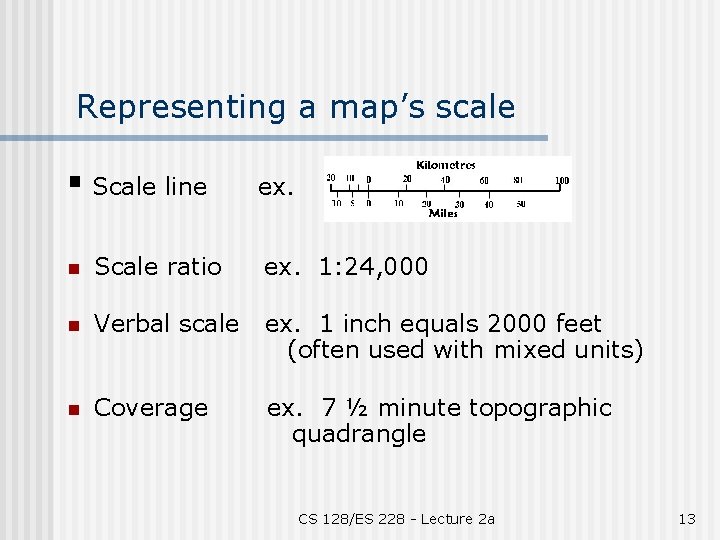
Representing a map’s scale § Scale line ex. n Scale ratio ex. 1: 24, 000 n Verbal scale ex. 1 inch equals 2000 feet (often used with mixed units) n Coverage ex. 7 ½ minute topographic quadrangle CS 128/ES 228 - Lecture 2 a 13
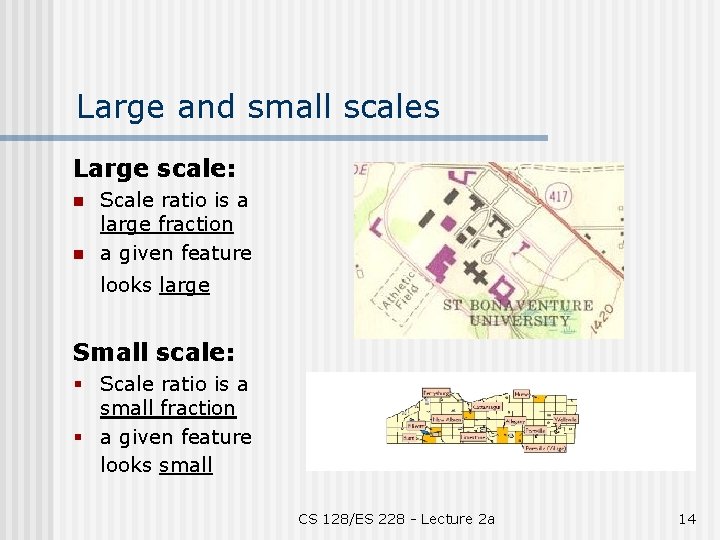
Large and small scales Large scale: n n Scale ratio is a large fraction a given feature looks large Small scale: § Scale ratio is a small fraction § a given feature looks small CS 128/ES 228 - Lecture 2 a 14
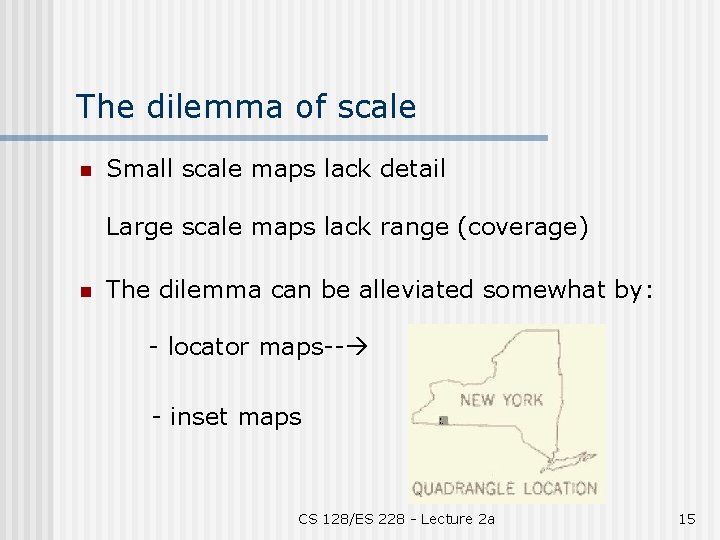
The dilemma of scale n Small scale maps lack detail Large scale maps lack range (coverage) n The dilemma can be alleviated somewhat by: - locator maps-- - inset maps CS 128/ES 228 - Lecture 2 a 15
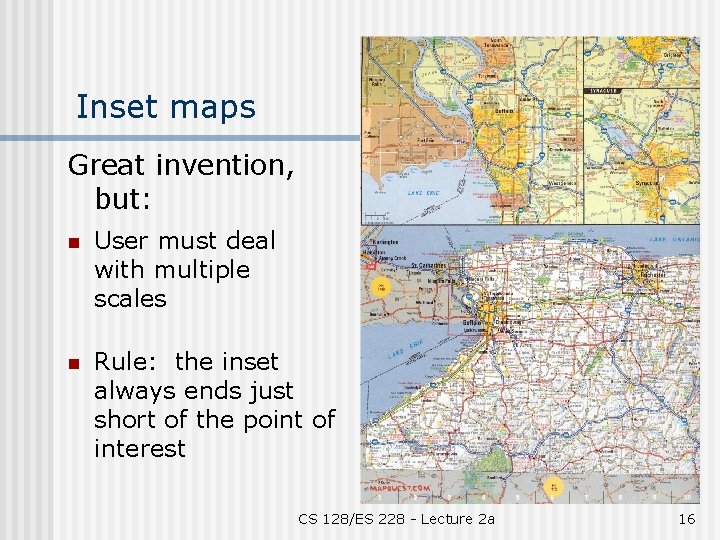
Inset maps Great invention, but: n User must deal with multiple scales n Rule: the inset always ends just short of the point of interest CS 128/ES 228 - Lecture 2 a 16
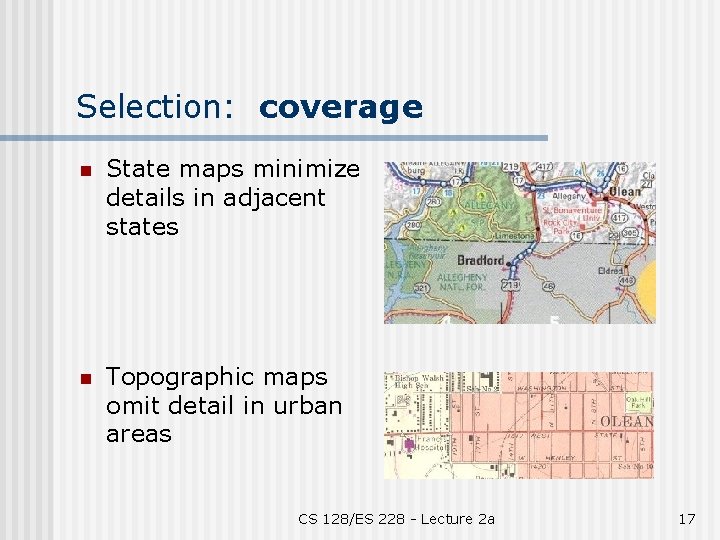
Selection: coverage n State maps minimize details in adjacent states n Topographic maps omit detail in urban areas CS 128/ES 228 - Lecture 2 a 17
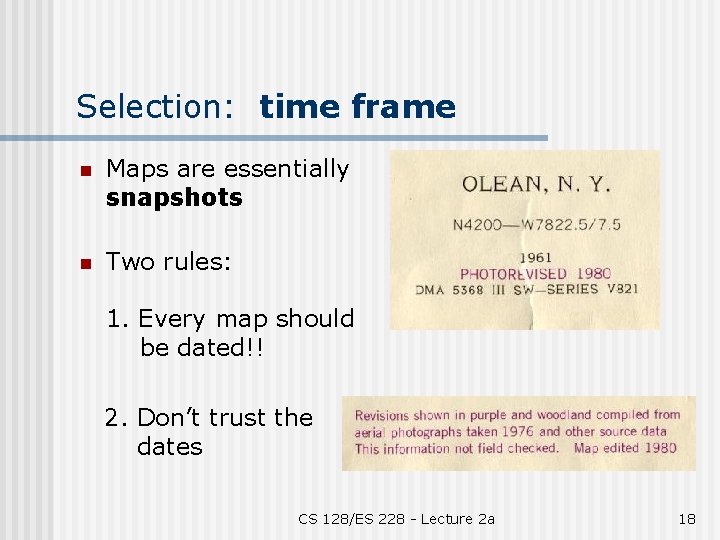
Selection: time frame n Maps are essentially snapshots n Two rules: 1. Every map should be dated!! 2. Don’t trust the dates CS 128/ES 228 - Lecture 2 a 18
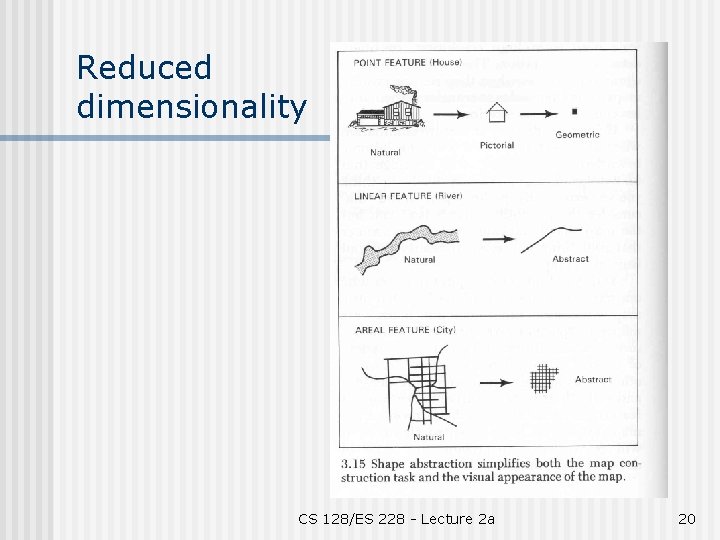
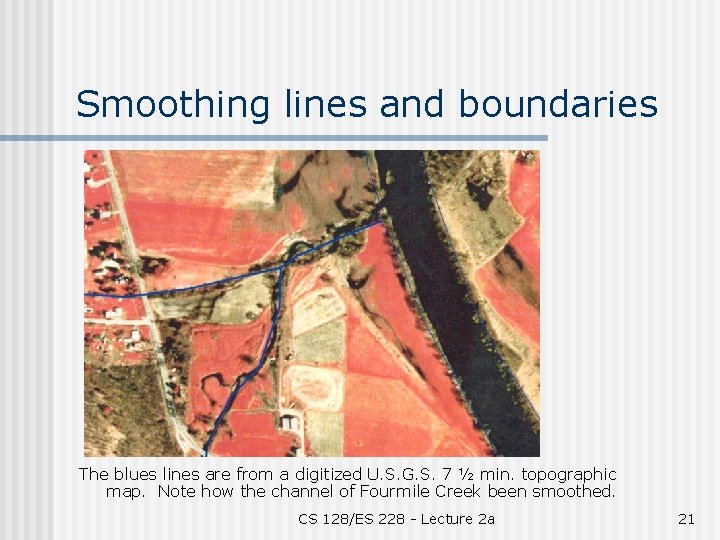
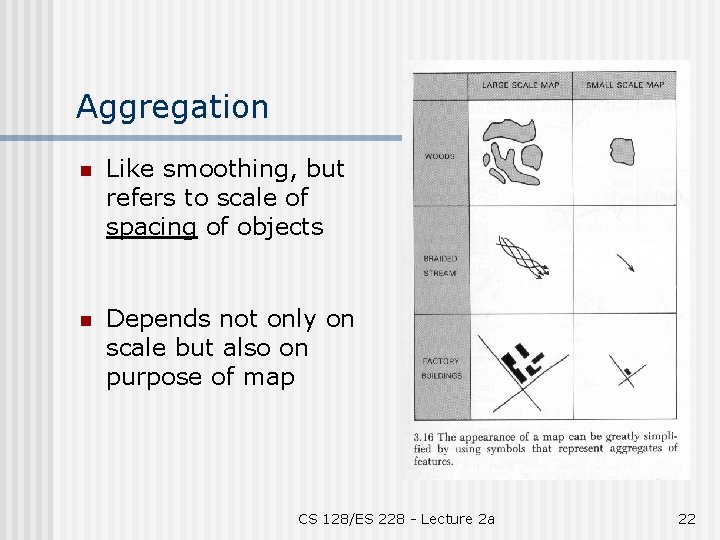
2. Simplification Begins with choice of scale Other issues: n Reduced dimensionality of line or area features n Smoothing lines and boundaries n Aggregation CS 128/ES 228 - Lecture 2 a 19
Reduced dimensionality CS 128/ES 228 - Lecture 2 a 20
Smoothing lines and boundaries The blues lines are from a digitized U. S. G. S. 7 ½ min. topographic map. Note how the channel of Fourmile Creek been smoothed. CS 128/ES 228 - Lecture 2 a 21
Aggregation n Like smoothing, but refers to scale of spacing of objects n Depends not only on scale but also on purpose of map CS 128/ES 228 - Lecture 2 a 22
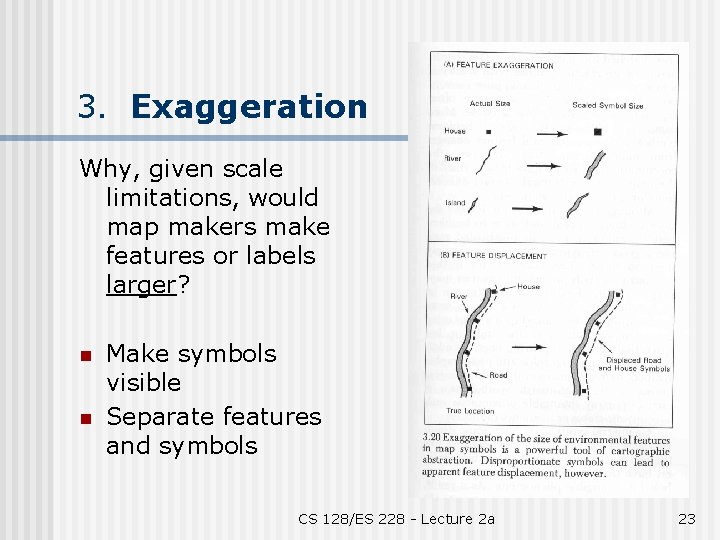
3. Exaggeration Why, given scale limitations, would map makers make features or labels larger? n n Make symbols visible Separate features and symbols CS 128/ES 228 - Lecture 2 a 23
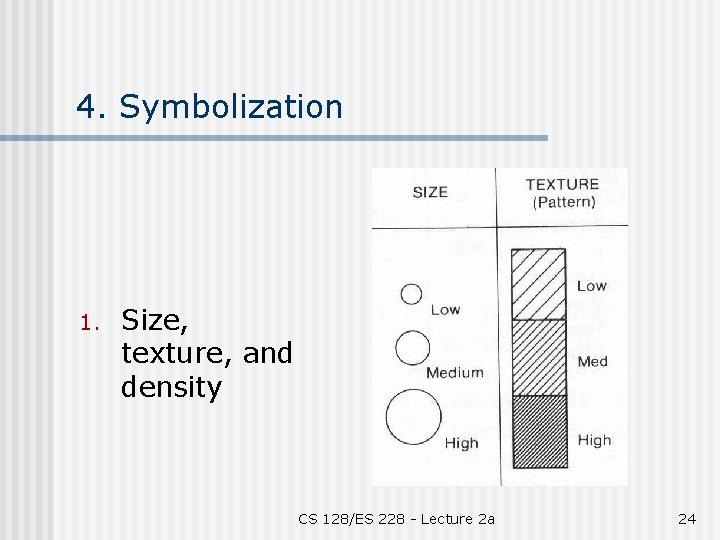
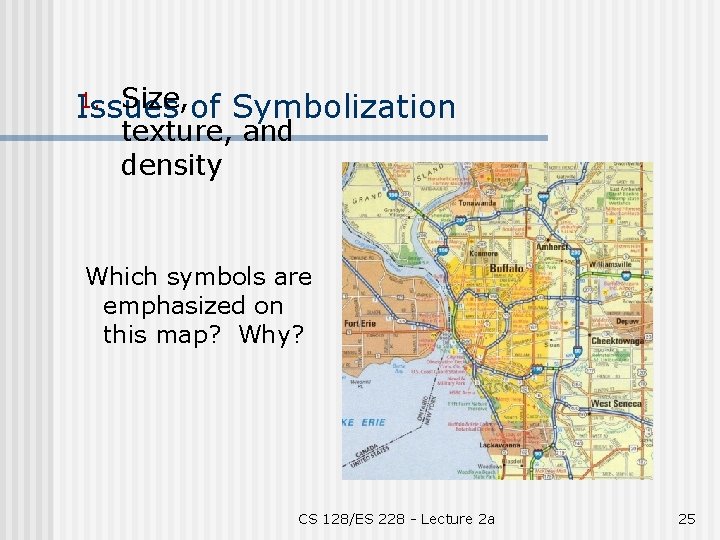
4. Symbolization 1. Size, texture, and density CS 128/ES 228 - Lecture 2 a 24
1. Size, of Symbolization Issues texture, and density Which symbols are emphasized on this map? Why? CS 128/ES 228 - Lecture 2 a 25
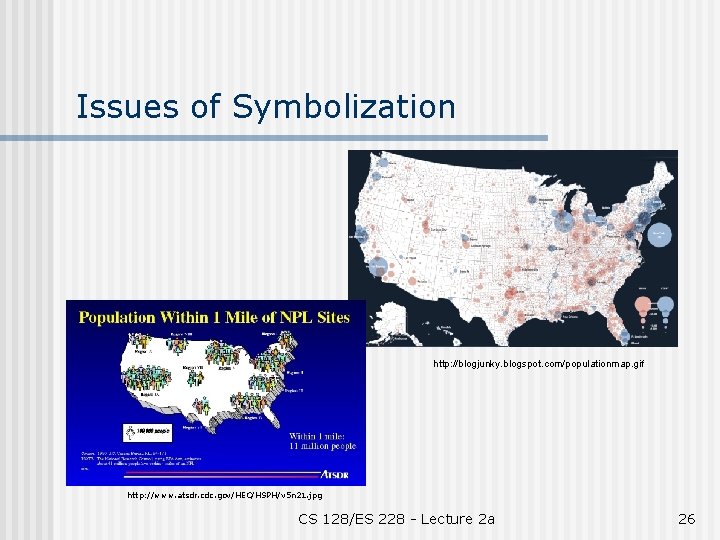
Issues of Symbolization 1. Size, texture, and density http: //blogjunky. blogspot. com/populationmap. gif http: //www. atsdr. cdc. gov/HEC/HSPH/v 5 n 21. jpg CS 128/ES 228 - Lecture 2 a 26
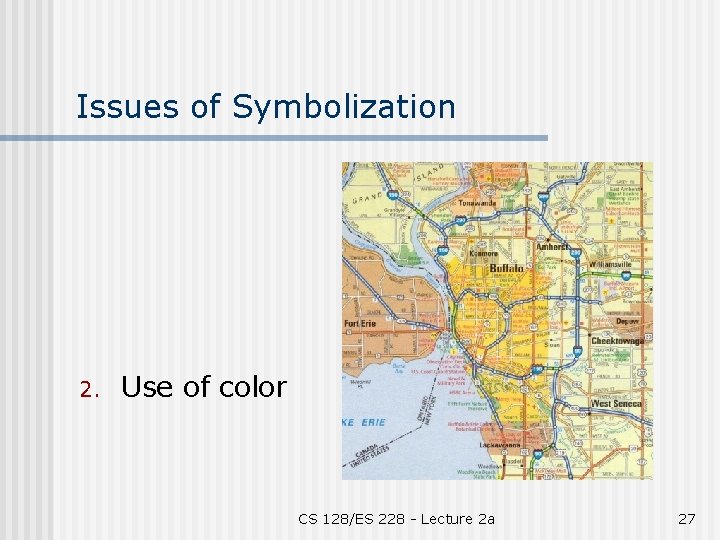
Issues of Symbolization 2. Use of color CS 128/ES 228 - Lecture 2 a 27
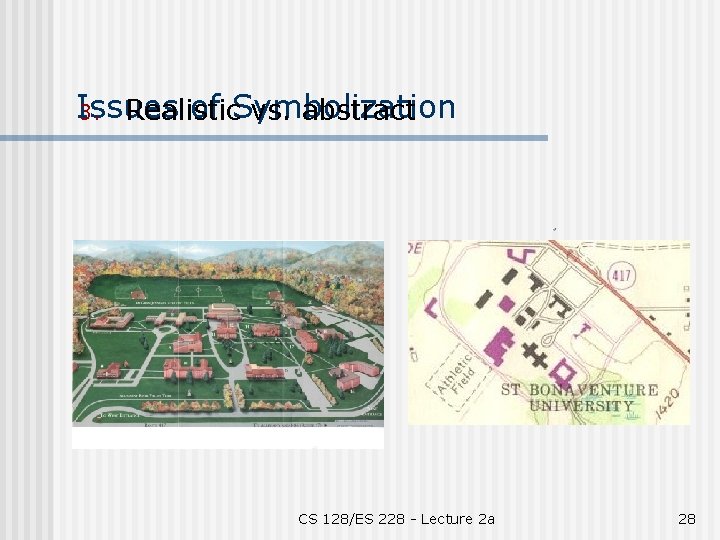
Issues of Symbolization 3. Realistic vs. abstract CS 128/ES 228 - Lecture 2 a 28
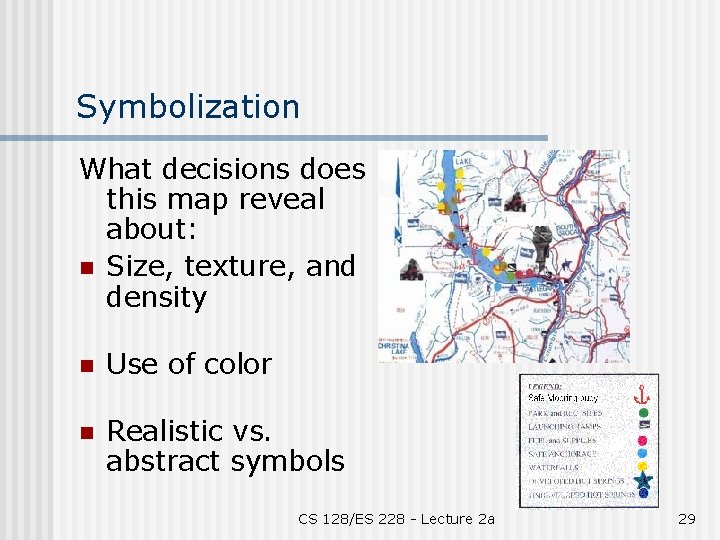
Symbolization What decisions does this map reveal about: n Size, texture, and density n Use of color n Realistic vs. abstract symbols CS 128/ES 228 - Lecture 2 a 29