
What are Genes Stretches of DNA molecules that
- Slides: 13
What are Genes? • Stretches of DNA molecules that carry the instructions for building a living thing • DNA as “blue print”
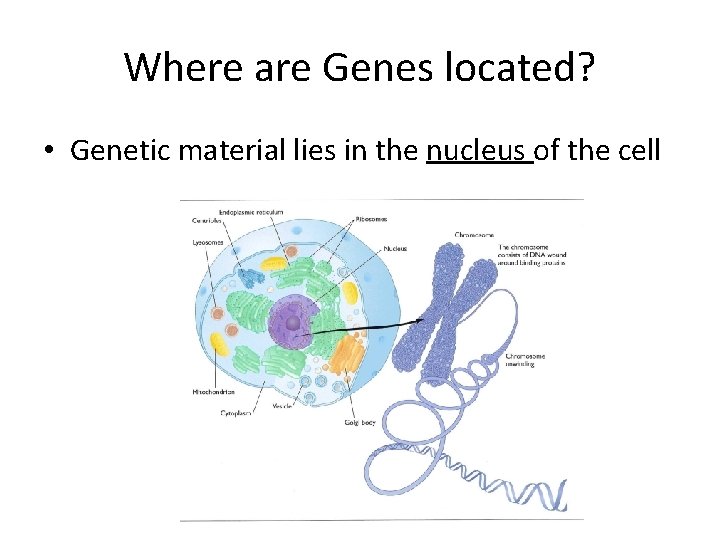
Where are Genes located? • Genetic material lies in the nucleus of the cell
What are Chromosomes? • Coiled strands of DNA molecules • Carry genetic information/instructions
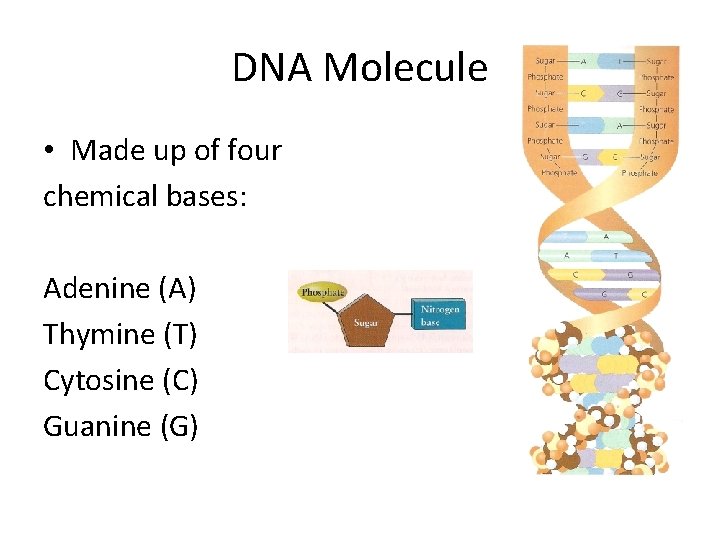
DNA Molecule • Made up of four chemical bases: Adenine (A) Thymine (T) Cytosine (C) Guanine (G)
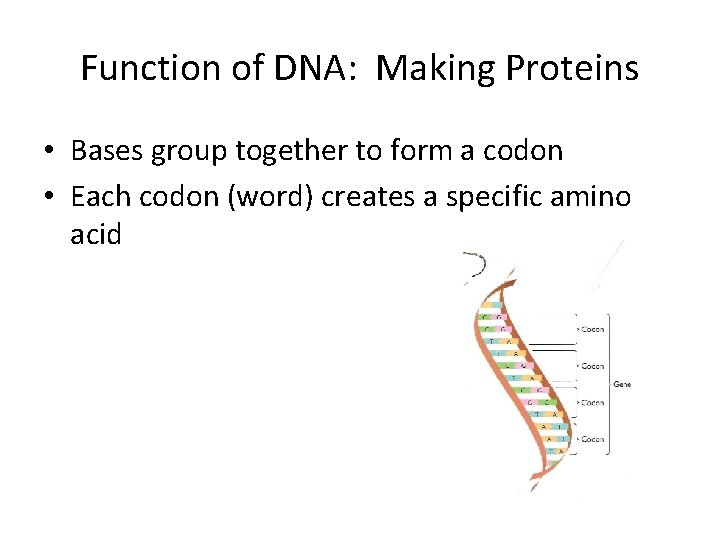
Function of DNA: Making Proteins • Bases group together to form a codon • Each codon (word) creates a specific amino acid
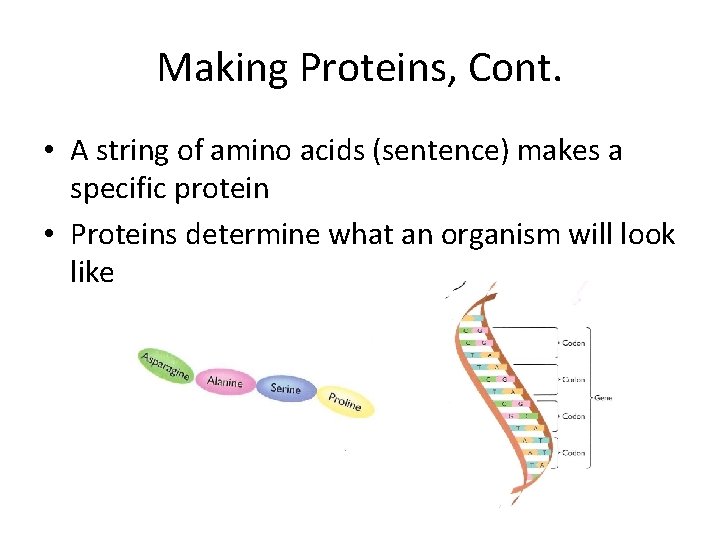
Making Proteins, Cont. • A string of amino acids (sentence) makes a specific protein • Proteins determine what an organism will look like
Function of DNA: Replication • To be passed down generation to generation, each cell must contain ALL genetic info to build & maintain cells
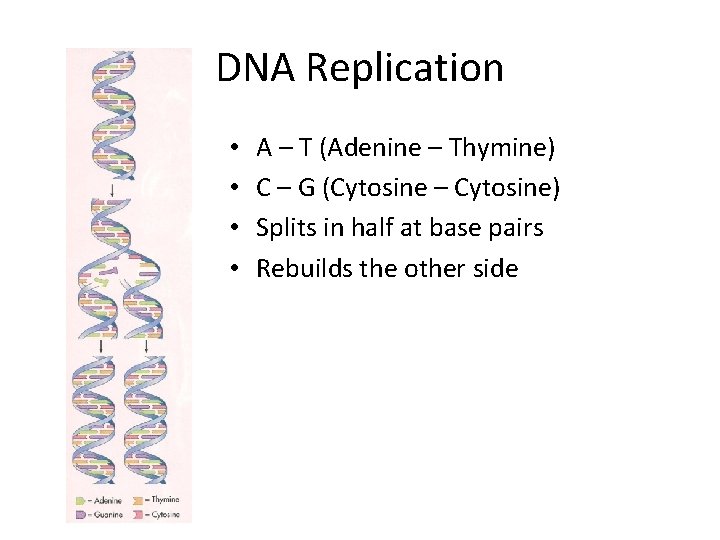
DNA Replication • • A – T (Adenine – Thymine) C – G (Cytosine – Cytosine) Splits in half at base pairs Rebuilds the other side
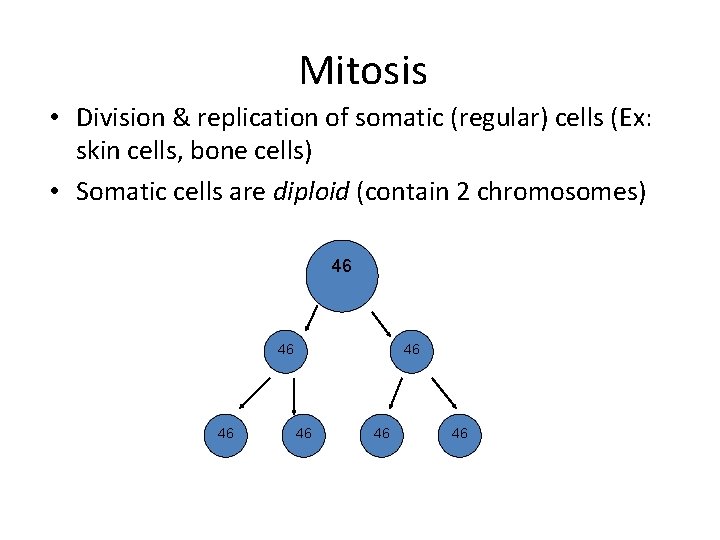
Mitosis • Division & replication of somatic (regular) cells (Ex: skin cells, bone cells) • Somatic cells are diploid (contain 2 chromosomes) 46 46
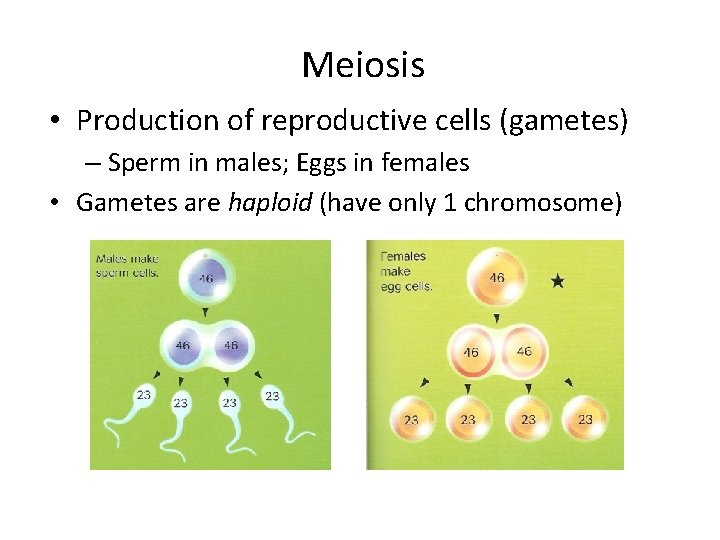
Meiosis • Production of reproductive cells (gametes) – Sperm in males; Eggs in females • Gametes are haploid (have only 1 chromosome)
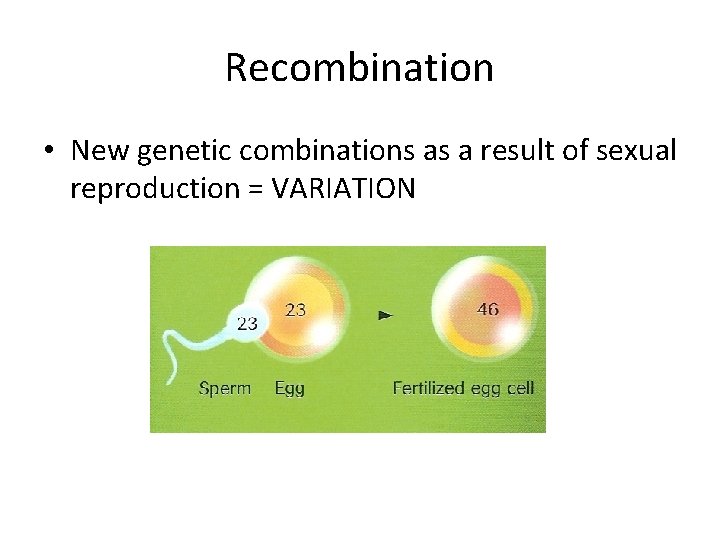
Recombination • New genetic combinations as a result of sexual reproduction = VARIATION
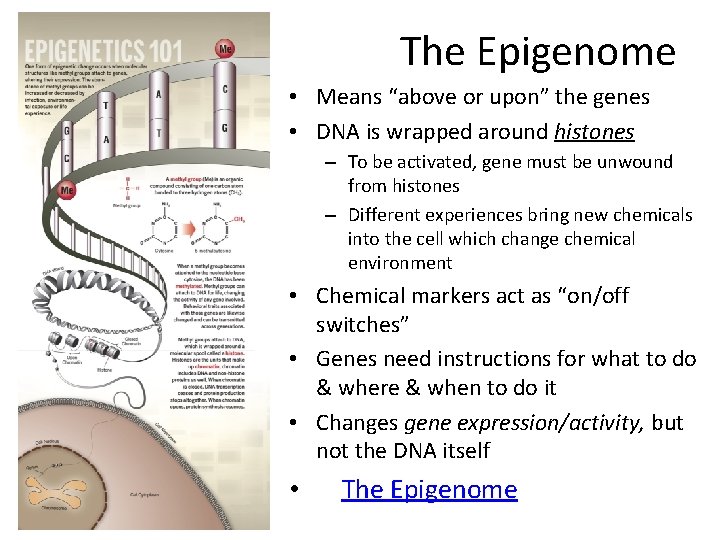
The Epigenome • Means “above or upon” the genes • DNA is wrapped around histones – To be activated, gene must be unwound from histones – Different experiences bring new chemicals into the cell which change chemical environment • Chemical markers act as “on/off switches” • Genes need instructions for what to do & where & when to do it • Changes gene expression/activity, but not the DNA itself • The Epigenome
The Epigenome • Genes have a lot more flexibility (ability to be altered for good or bad) than previously thought • This flexibility responds directly to environmental inputs – Based on people’s experiences • Stress, exposure to toxic chemicals, diet, etc • DO occur during an individual’s lifetime and may affect offspring & future generations “Epigenetics is proving we have some responsibility for the integrity of our genome” That is, our genes change our lives and our lives change our genes…