
What are elementary particles and why should we
- Slides: 34
What are elementary particles, and why should we care? Dhiman Chakraborty (dhiman@nicadd. niu. edu) Quark. Net Masterclass, NIU, 14 March, 2012
2
The fundamental questions • What is the world made of? • What holds it together? • How did it all start? • What does the future hold? • What/who else is out there? “What is it that breathes fire into the equations and makes a universe for them to describe? Why does the universe go to all the bother of existing? ” – Stephen Hawking 3
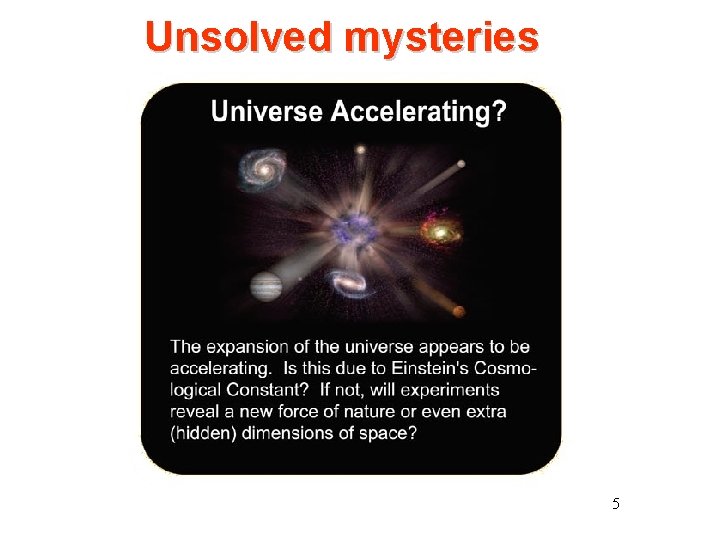
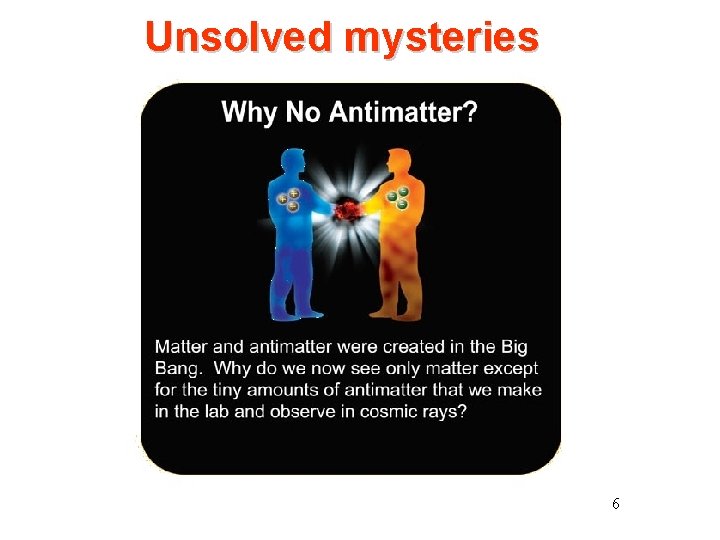
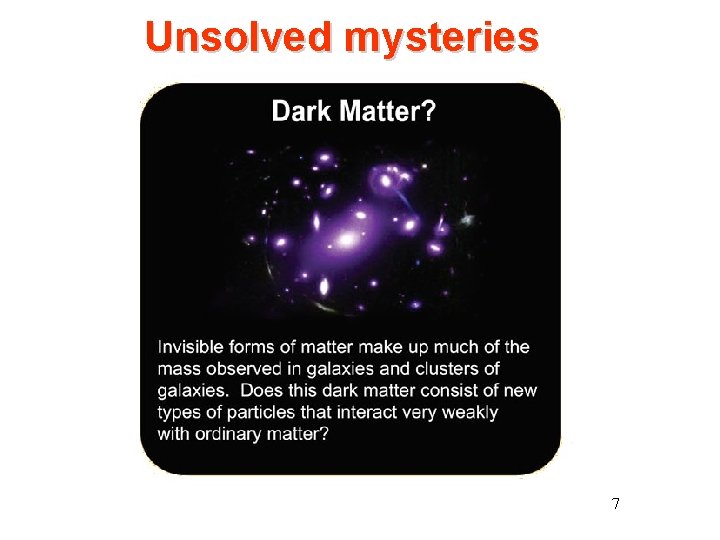
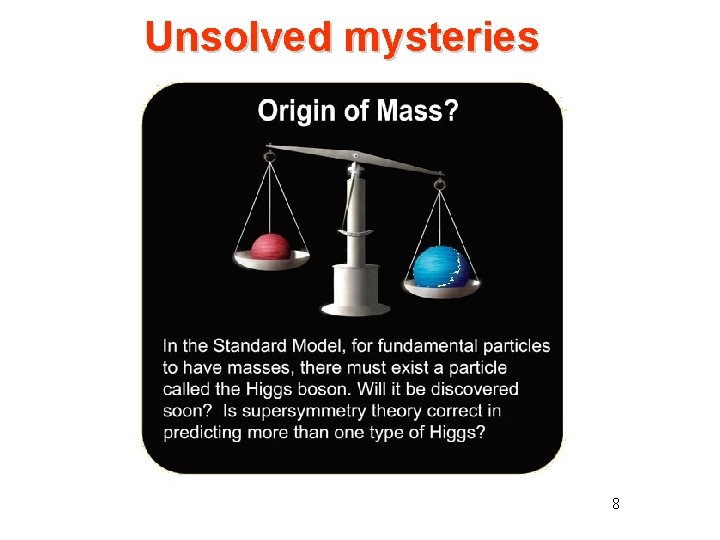
Unsolved mysteries Driven by new puzzles in the understanding of our physical world, particle physicists are finding paths to new wonders and startling discoveries. Experiments may even find hidden extra dimensions, mini black holes, and/or evidence of string theory. 4
Unsolved mysteries 5
Unsolved mysteries 6
Unsolved mysteries 7
Unsolved mysteries 8
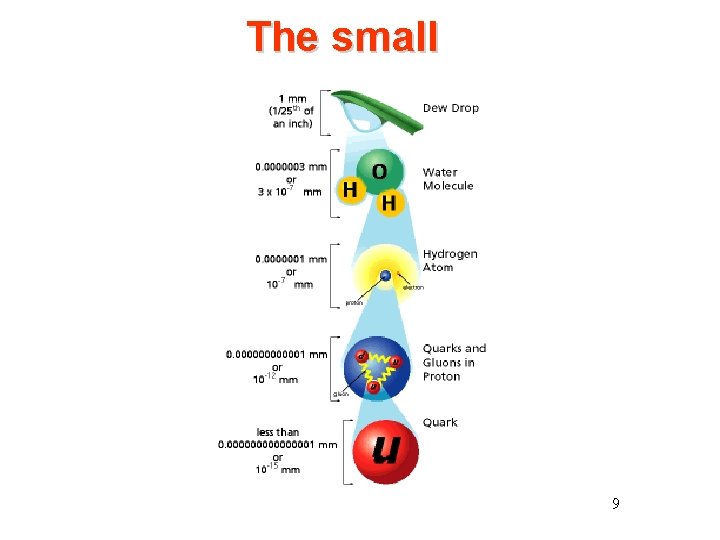
The small 9
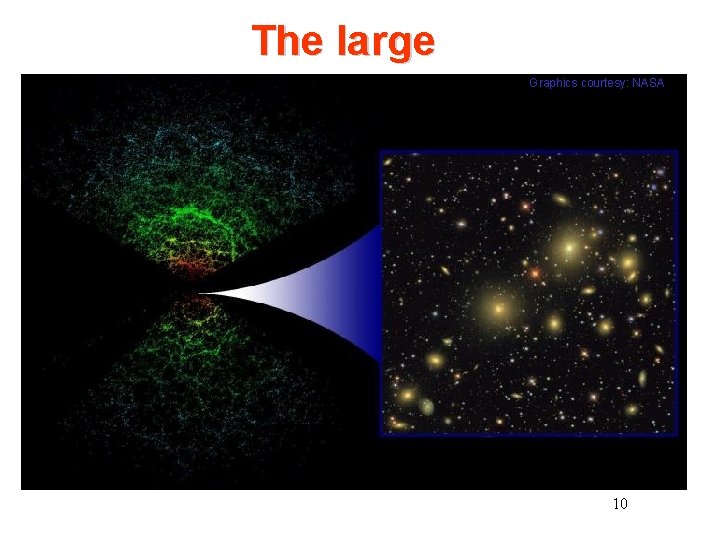
The large Graphics courtesy: NASA 10
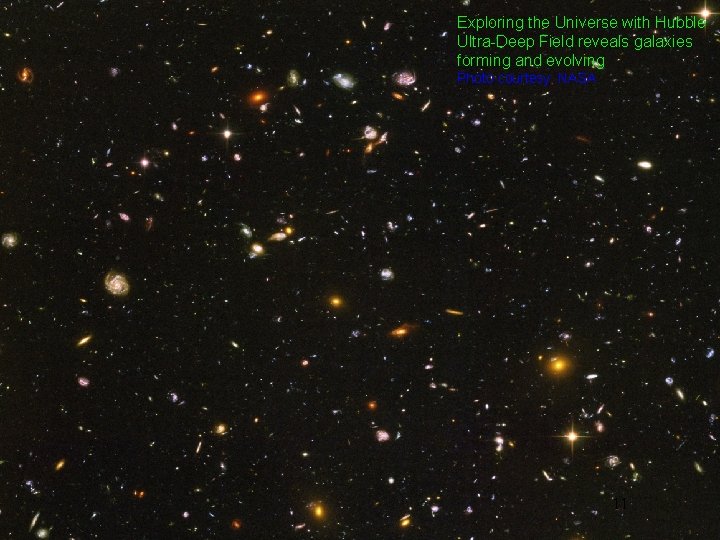
Exploring the Universe with Hubble Ultra-Deep Field reveals galaxies forming and evolving Photo courtesy: NASA 11
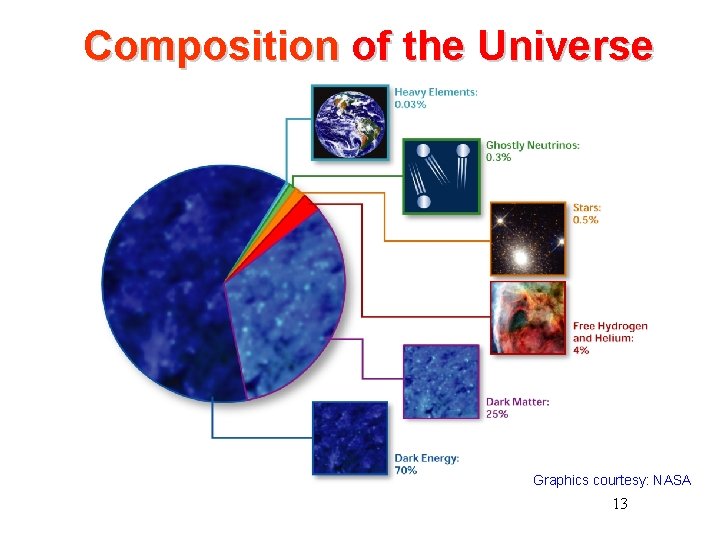
The extremes are connected • We want to explain the structure and phenomena at the largest scales (cosmology), in terms of the smallest (particle physics). • Particle physicists, in turn, are getting their cues from cosmological observations. • The two are inextricably coupled. Fortunately, they are also easier to model precisely than anything in between. Systems in biology, economics, geology etc. are far more complex. • Particle astrophysics is a rapidly growing field. • 95% of what constitutes the Universe is yet unknown/ unobserved. Some of it must be explained by particle physics. • A revolution of unparalleled proportions is around the corner. 12
Composition of the Universe Graphics courtesy: NASA 13
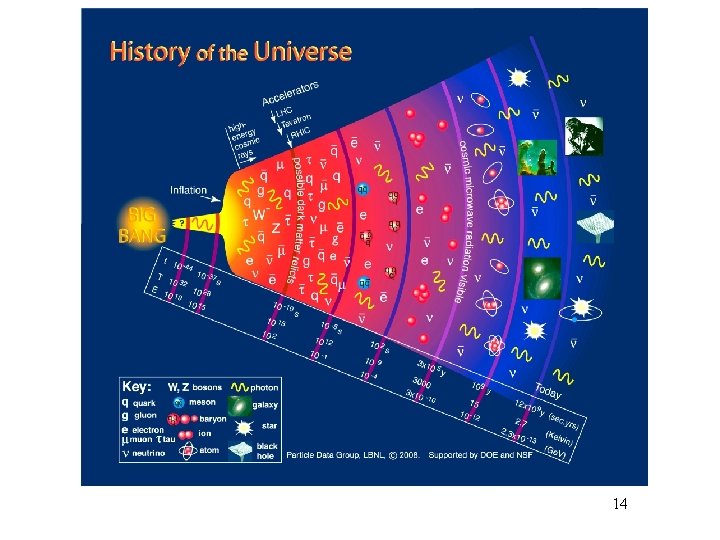
14
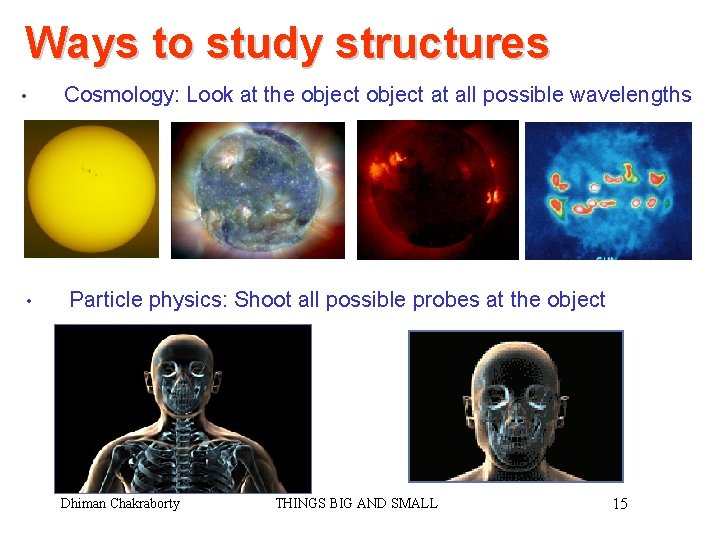
Ways to study structures • Cosmology: Look at the object at all possible wavelengths • Particle physics: Shoot all possible probes at the object Dhiman Chakraborty THINGS BIG AND SMALL 15
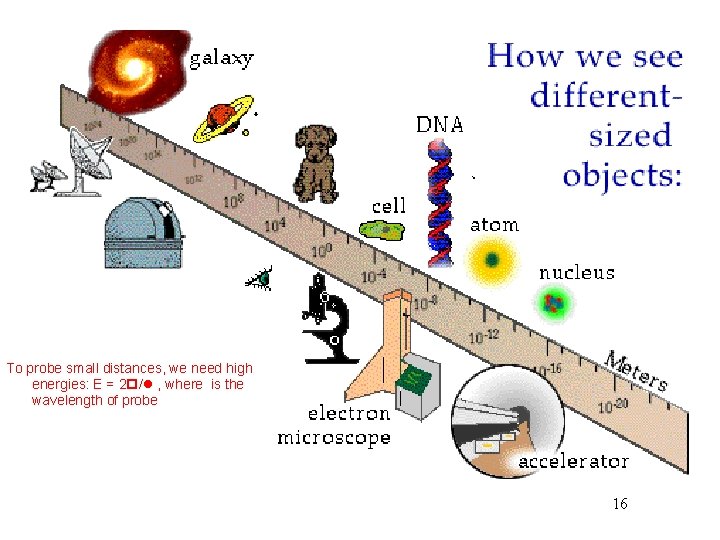
To probe small distances, we need high energies: E = 2 / , where is the wavelength of probe 16
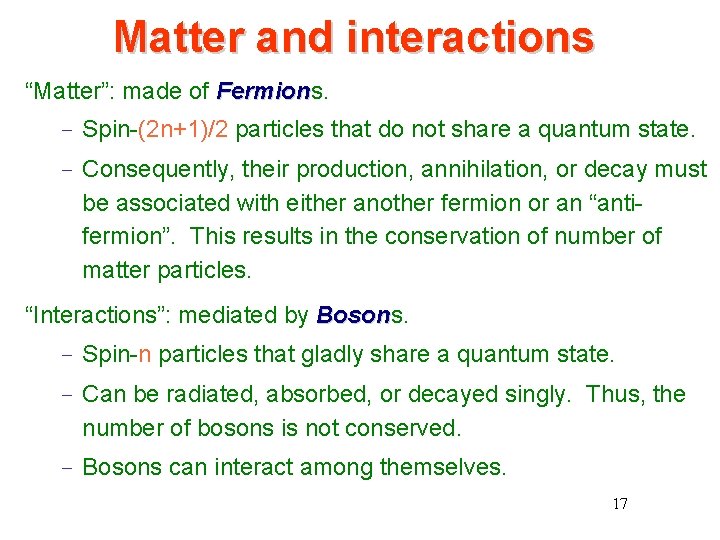
Matter and interactions “Matter”: made of Fermions. Fermion – Spin-(2 n+1)/2 particles that do not share a quantum state. – Consequently, their production, annihilation, or decay must be associated with either another fermion or an “antifermion”. This results in the conservation of number of matter particles. “Interactions”: mediated by Bosons. Boson – Spin-n particles that gladly share a quantum state. – Can be radiated, absorbed, or decayed singly. Thus, the number of bosons is not conserved. – Bosons can interact among themselves. 17
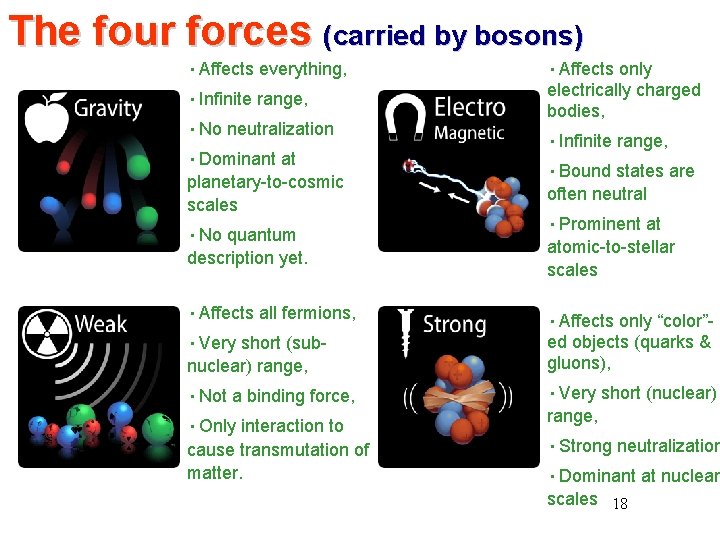
The four forces (carried by bosons) • Affects everything, • Infinite range, • No neutralization • Dominant at planetary-to-cosmic scales • No quantum description yet. • Affects all fermions, • Very short (subnuclear) range, • Not a binding force, • Only interaction to cause transmutation of matter. • Affects only electrically charged bodies, • Infinite range, • Bound states are often neutral • Prominent at atomic-to-stellar scales • Affects only “color”ed objects (quarks & gluons), • Very short (nuclear) range, • Strong neutralization • Dominant at nuclear scales 18
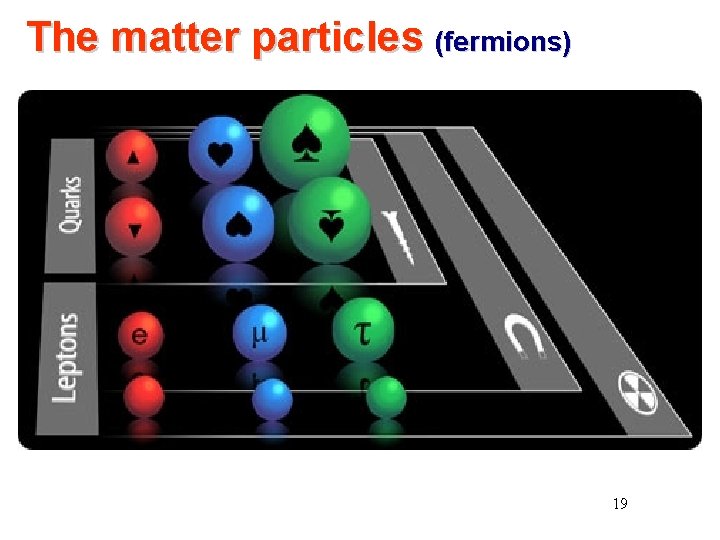
The matter particles (fermions) a 19
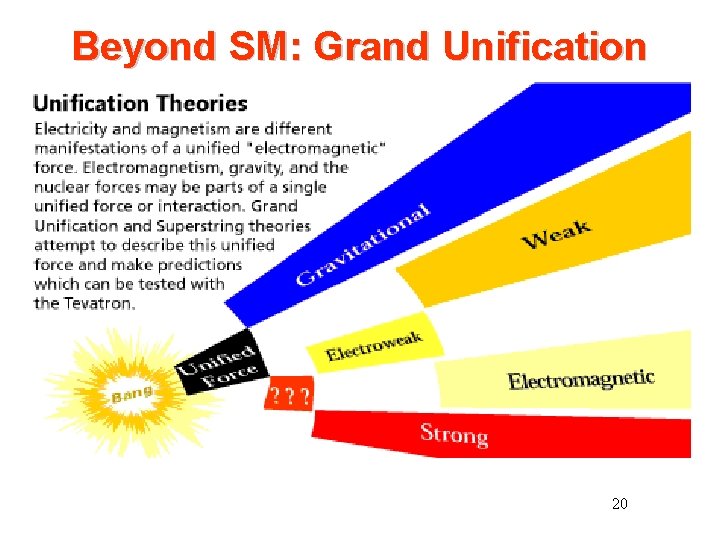
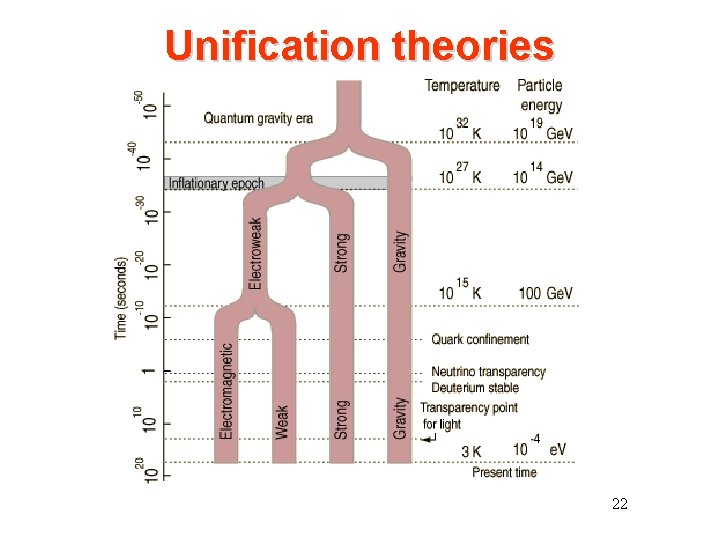
Beyond SM: Grand Unification 20
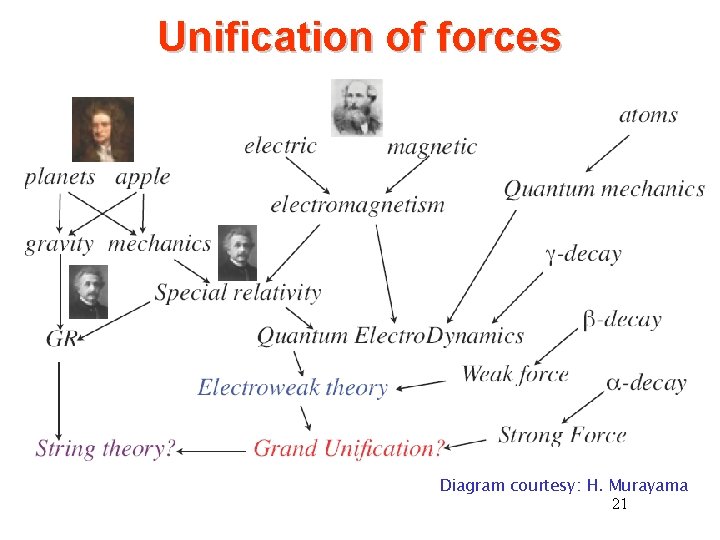
Unification of forces Diagram courtesy: H. Murayama 21
Unification theories 22
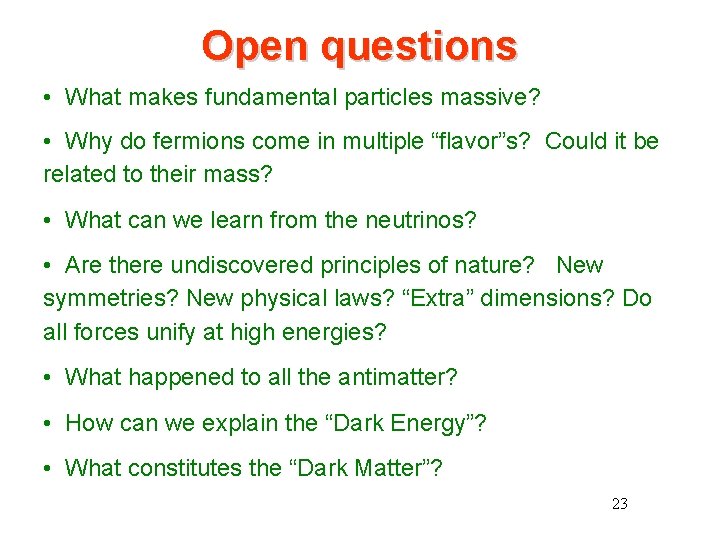
Open questions • What makes fundamental particles massive? • Why do fermions come in multiple “flavor”s? Could it be related to their mass? • What can we learn from the neutrinos? • Are there undiscovered principles of nature? New symmetries? New physical laws? “Extra” dimensions? Do all forces unify at high energies? • What happened to all the antimatter? • How can we explain the “Dark Energy”? • What constitutes the “Dark Matter”? 23
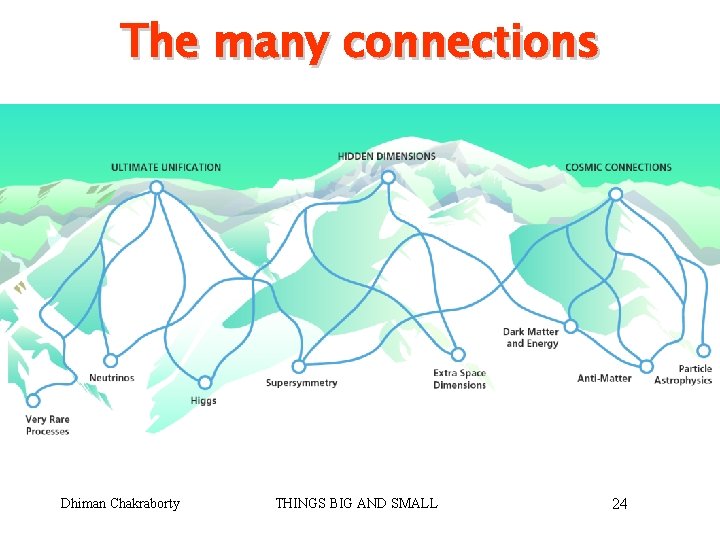
The many connections Dhiman Chakraborty THINGS BIG AND SMALL 24
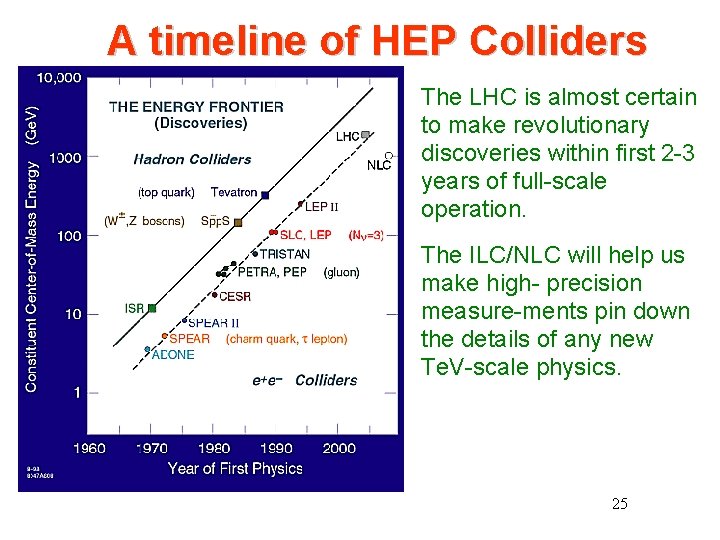
A timeline of HEP Colliders The LHC is almost certain to make revolutionary discoveries within first 2 -3 years of full-scale operation. The ILC/NLC will help us make high- precision measure-ments pin down the details of any new Te. V-scale physics. 25
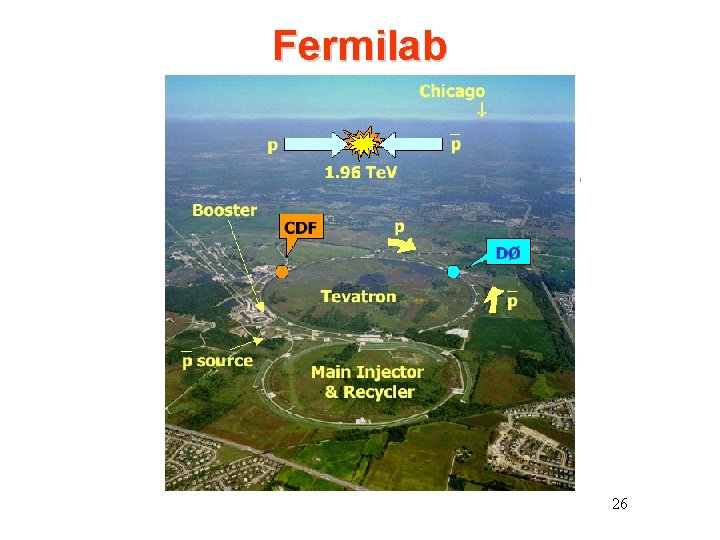
Fermilab 26
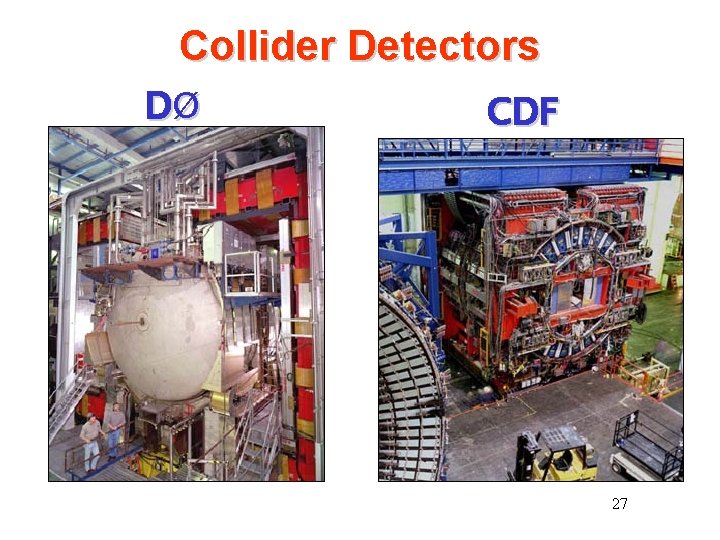
Collider Detectors DØ CDF 27
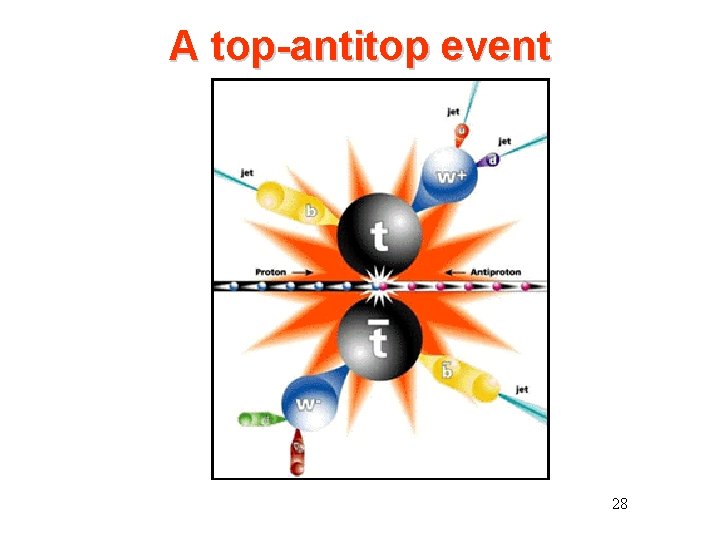
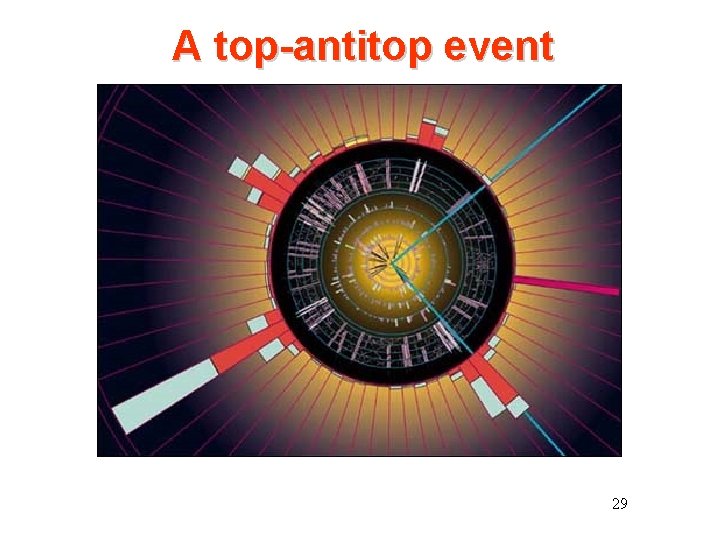
A top-antitop event 28
A top-antitop event 29
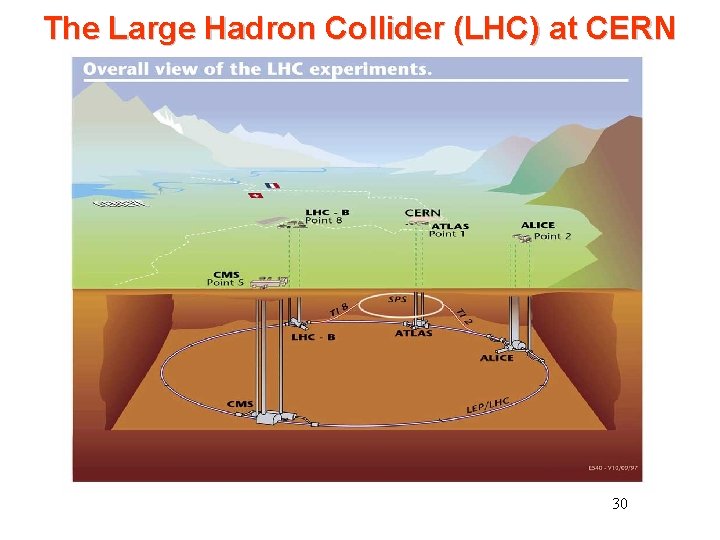
The Large Hadron Collider (LHC) at CERN 30
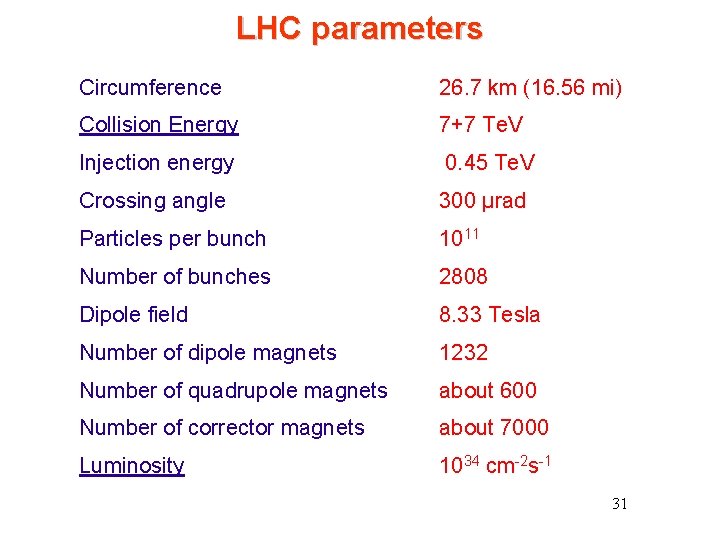
LHC parameters Circumference 26. 7 km (16. 56 mi) Collision Energy 7+7 Te. V Injection energy 0. 45 Te. V Crossing angle 300 μrad Particles per bunch 1011 Number of bunches 2808 Dipole field 8. 33 Tesla Number of dipole magnets 1232 Number of quadrupole magnets about 600 Number of corrector magnets about 7000 Luminosity 1034 cm-2 s-1 31
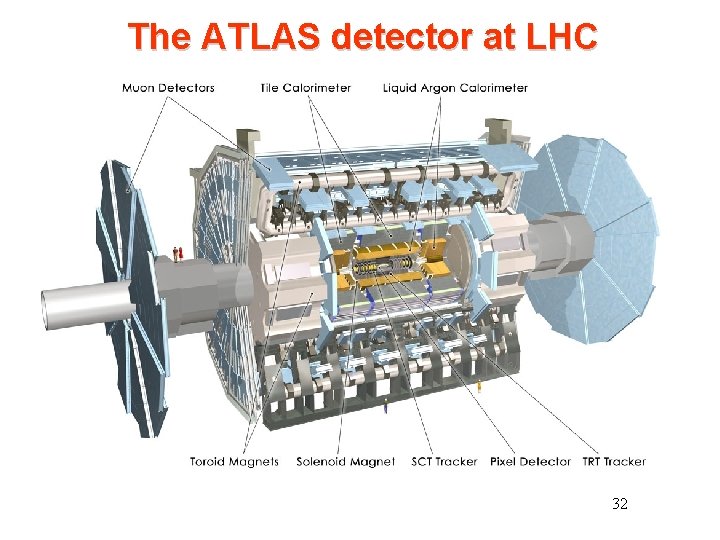
The ATLAS detector at LHC 32
Outlook • A large number of particle physics, astrophysics, and cosmology projects – both theoretical and experimental – are underway. They complement each other toward a common goal – to solve the most fundamental mysteries of nature. • It is a truly INTERNATIONAL effort. • We are living through a revolution in our understanding of the Universe on both the smallest and the largest scales. • The next decade or two will usher us into a new era of observation and comprehension. Dhiman Chakraborty THINGS BIG AND SMALL 33
THANK YOU! Feel free to contact the speaker for more information dhiman@nicadd. niu. edu 34