
What are Consumers A person who uses a
- Slides: 14
What are Consumers? • A person who uses a product or service. • If you use products regularly, you are a consumer.
The Buying Decision • What are consumers thinking when making purchases? • Depends on the product or service – TV vs. candy • Planned and researched or impulse?
Think / Pair / Share • What is the last MAJOR purchase that you had a say in making? • Think it over by yourself and, when you are ready, discuss the purchase with the person next to you. • What was the process involved in your purchase?
MOTIVATION • • • Need or want Biological – basic, physical needs Emotional – love, joy, fear Rational – thinking part of us Social – peer pressure
Need Motivation? http: //youtube. com/watch? v=Uf. WTQA 6 QPk 4
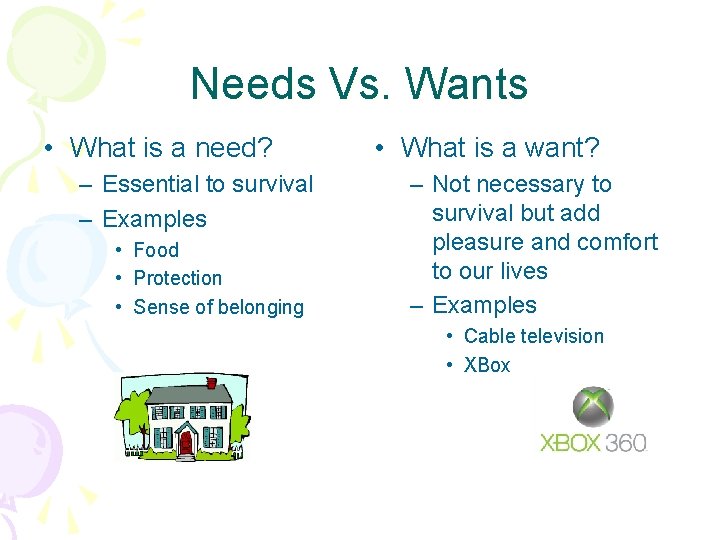
Needs Vs. Wants • What is a need? – Essential to survival – Examples • Food • Protection • Sense of belonging • What is a want? – Not necessary to survival but add pleasure and comfort to our lives – Examples • Cable television • XBox
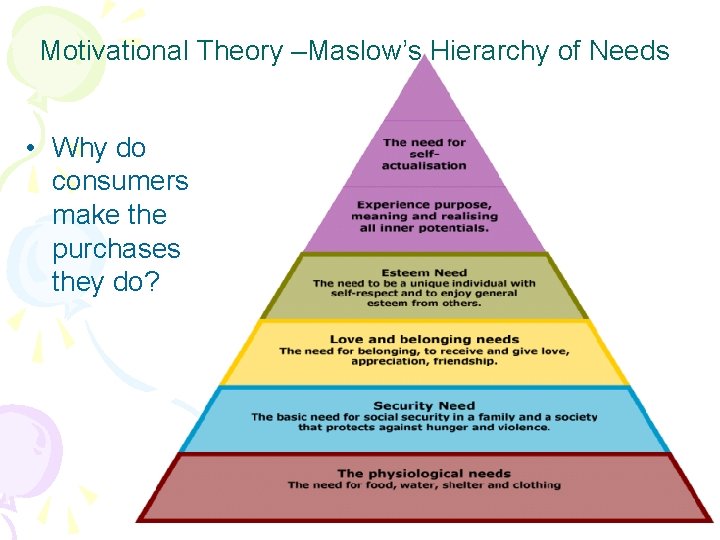
Motivational Theory –Maslow’s Hierarchy of Needs • Why do consumers make the purchases they do?
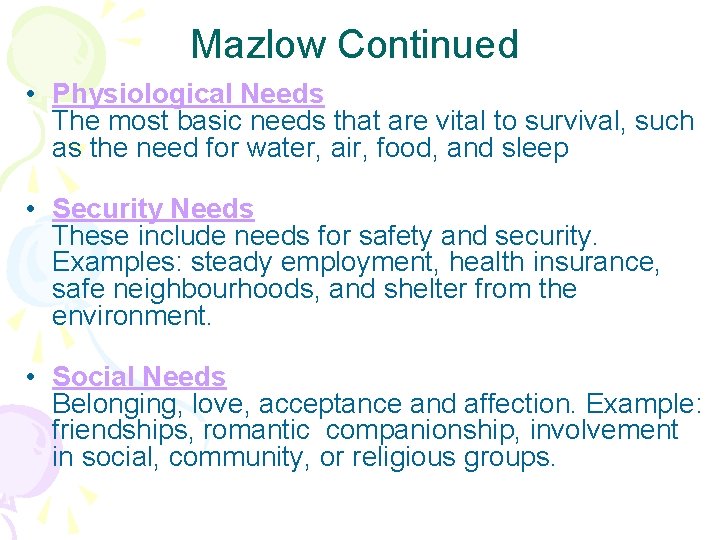
Mazlow Continued • Physiological Needs The most basic needs that are vital to survival, such as the need for water, air, food, and sleep • Security Needs These include needs for safety and security. Examples: steady employment, health insurance, safe neighbourhoods, and shelter from the environment. • Social Needs Belonging, love, acceptance and affection. Example: friendships, romantic companionship, involvement in social, community, or religious groups.
Mazlow Continued • Esteem Needs The need for things that reflect on selfesteem, personal worth, social recognition, and accomplishment. • Self-actualizing Needs These people are self-aware, concerned with personal growth, less concerned with the opinions of others, and interested fulfilling their potential.
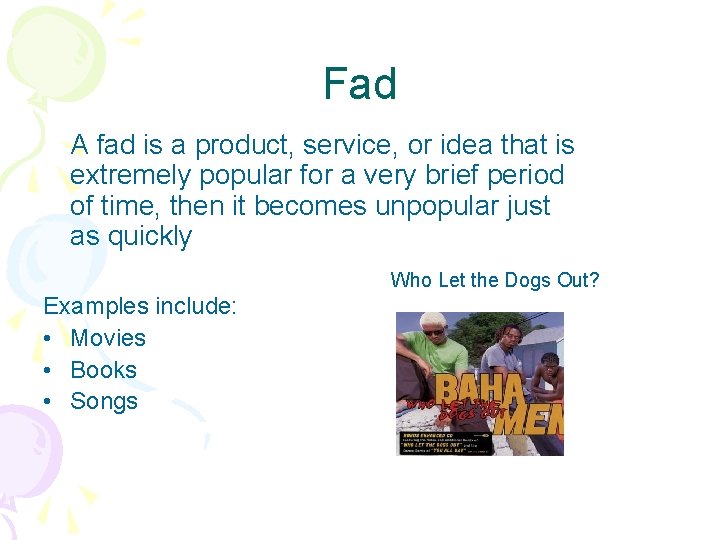
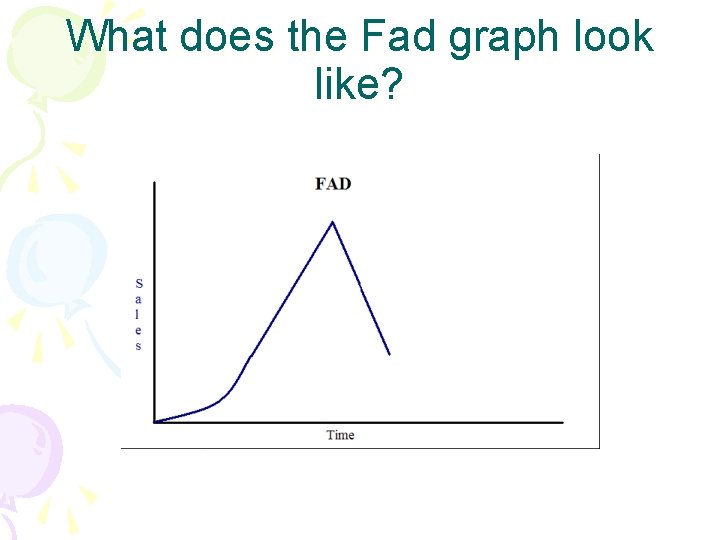
Fad A fad is a product, service, or idea that is extremely popular for a very brief period of time, then it becomes unpopular just as quickly Who Let the Dogs Out? Examples include: • Movies • Books • Songs
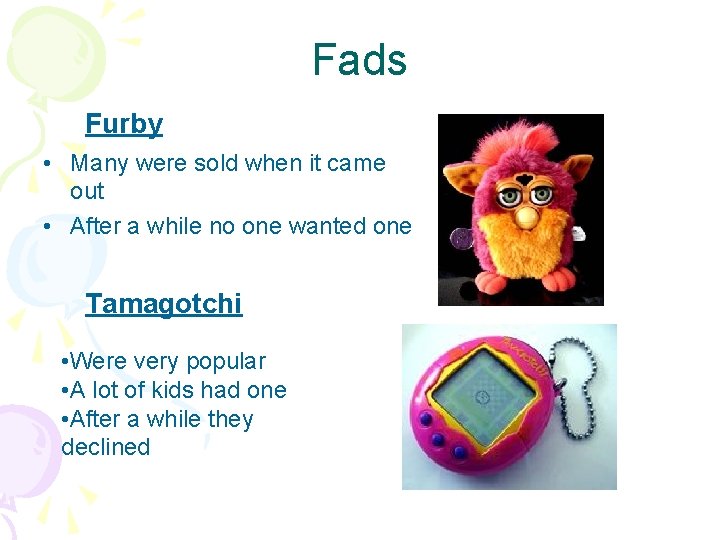
Fads Furby • Many were sold when it came out • After a while no one wanted one Tamagotchi • Were very popular • A lot of kids had one • After a while they declined
What does the Fad graph look like?
Trends • A trend is different than a fad in that it has a more lasting effect on the marketplace Example: Based on population forecasts/trends, RBC just announced they plan to open another 1000 branches before 2010 to service an ageing cliental and increasing immigrant group that prefers to do their banking at a branch.
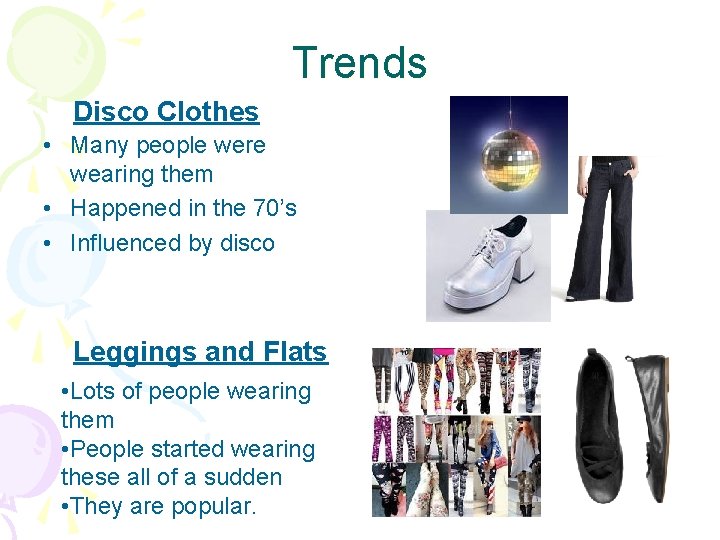
Trends Disco Clothes • Many people were wearing them • Happened in the 70’s • Influenced by disco Leggings and Flats • Lots of people wearing them • People started wearing these all of a sudden • They are popular.