
What are Civil Rights Trace how passage of
- Slides: 12
What are Civil Rights?
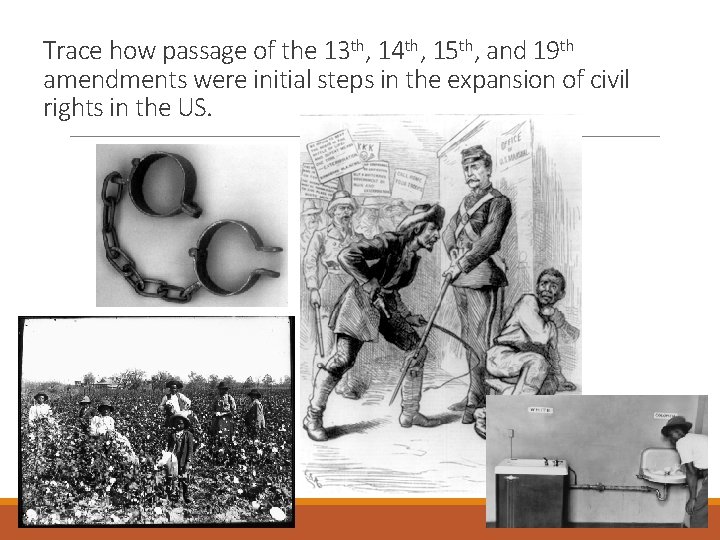
Trace how passage of the 13 th, 14 th, 15 th, and 19 th amendments were initial steps in the expansion of civil rights in the US.
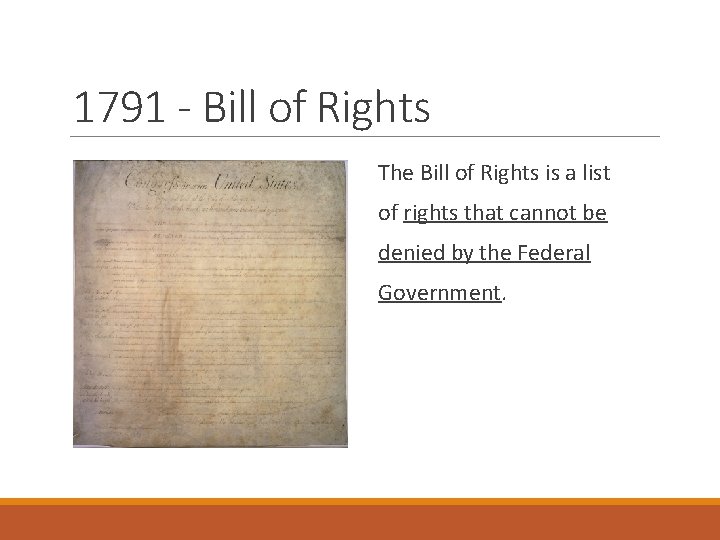
1791 - Bill of Rights The Bill of Rights is a list of rights that cannot be denied by the Federal Government.
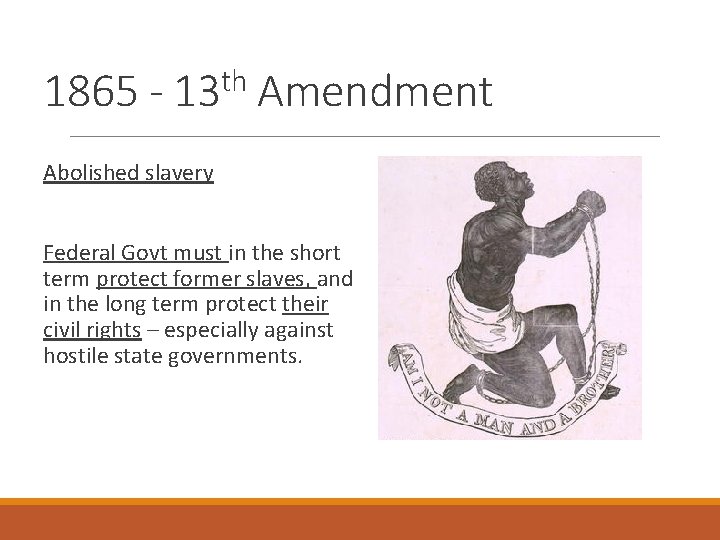
1865 - th 13 Amendment Abolished slavery Federal Govt must in the short term protect former slaves, and in the long term protect their civil rights – especially against hostile state governments.
1868 - th 14 Amendment Defined citizenship and forbid a The Federal Government state from depriving any person of will now protect citizens’ life, liberty, and property without due rights and restrain the process or depriving citizens of equal protection of the law. states from denying rights.
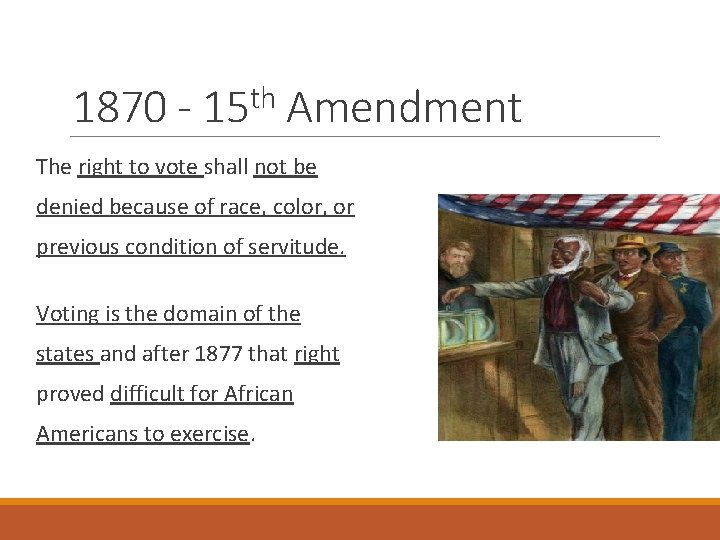
1870 - th 15 Amendment The right to vote shall not be denied because of race, color, or previous condition of servitude. Voting is the domain of the states and after 1877 that right proved difficult for African Americans to exercise.
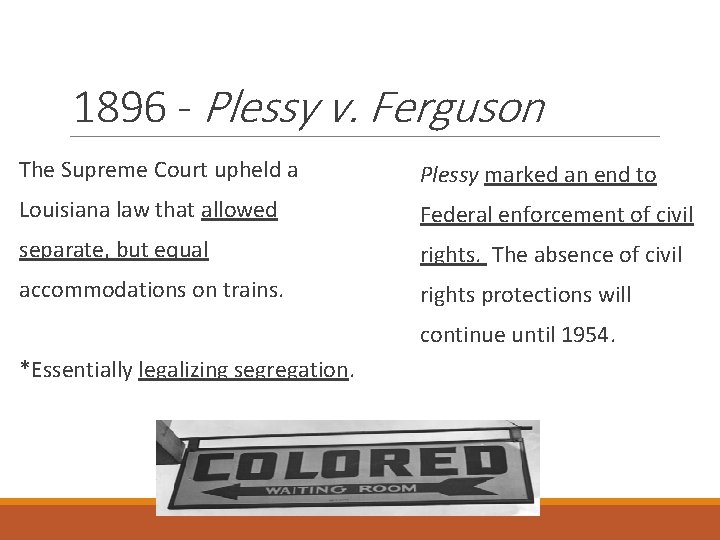
1896 - Plessy v. Ferguson The Supreme Court upheld a Plessy marked an end to Louisiana law that allowed Federal enforcement of civil separate, but equal rights. The absence of civil accommodations on trains. rights protections will continue until 1954. *Essentially legalizing segregation.
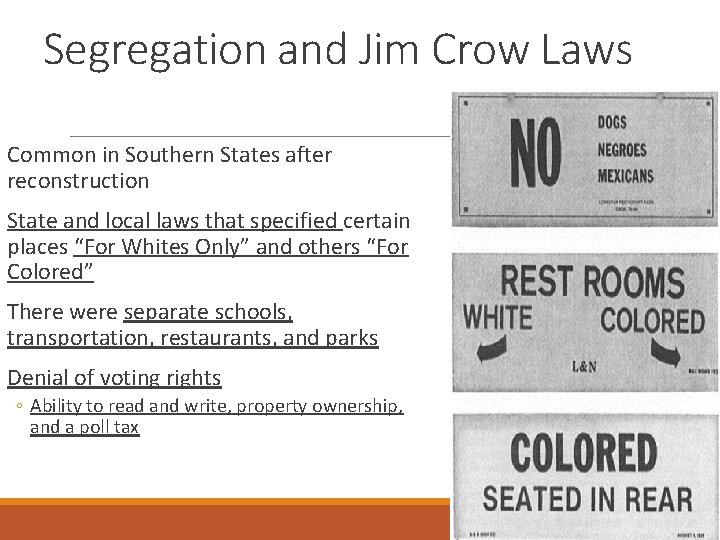
Segregation and Jim Crow Laws Common in Southern States after reconstruction State and local laws that specified certain places “For Whites Only” and others “For Colored” There were separate schools, transportation, restaurants, and parks Denial of voting rights ◦ Ability to read and write, property ownership, and a poll tax
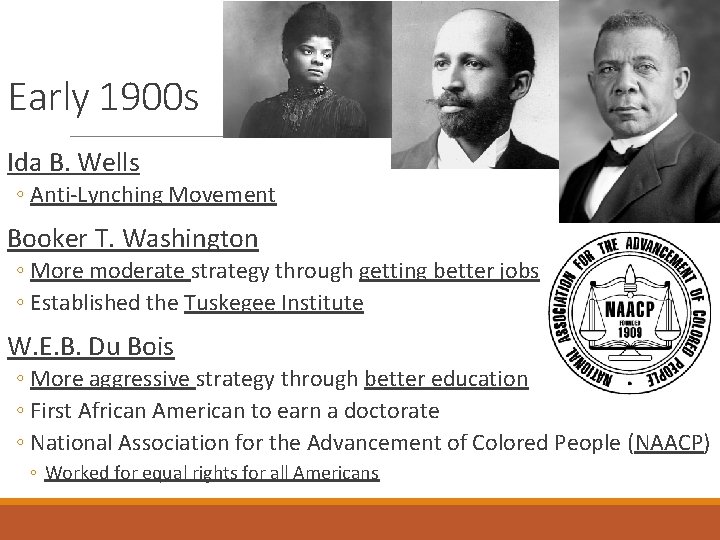
Early 1900 s Ida B. Wells ◦ Anti-Lynching Movement Booker T. Washington ◦ More moderate strategy through getting better jobs ◦ Established the Tuskegee Institute W. E. B. Du Bois ◦ More aggressive strategy through better education ◦ First African American to earn a doctorate ◦ National Association for the Advancement of Colored People (NAACP) ◦ Worked for equal rights for all Americans
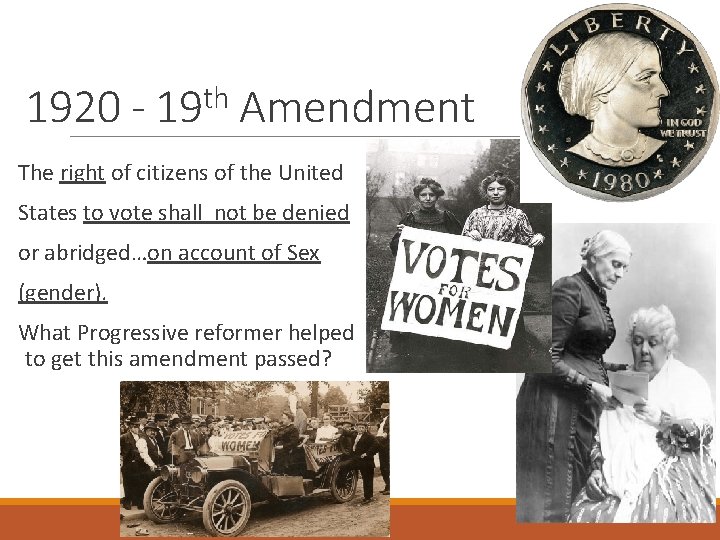
1920 - th 19 Amendment The right of citizens of the United States to vote shall not be denied or abridged…on account of Sex (gender). What Progressive reformer helped to get this amendment passed?
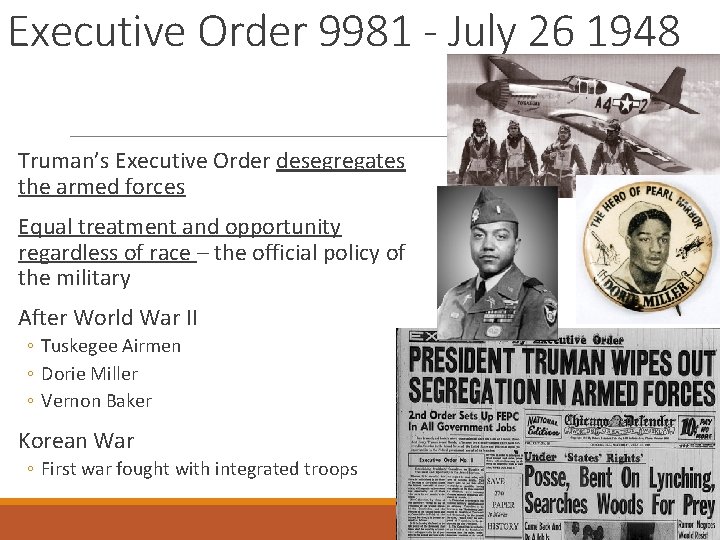
Executive Order 9981 - July 26 1948 Truman’s Executive Order desegregates the armed forces Equal treatment and opportunity regardless of race – the official policy of the military After World War II ◦ Tuskegee Airmen ◦ Dorie Miller ◦ Vernon Baker Korean War ◦ First war fought with integrated troops
Processing the Amendments Draw a visual metaphor to represent how these amendments led to the modern Civil Rights Movement.