
What are changes of state and why do
- Slides: 12
What are changes of state and why do they take place? Science Miss Couves 1
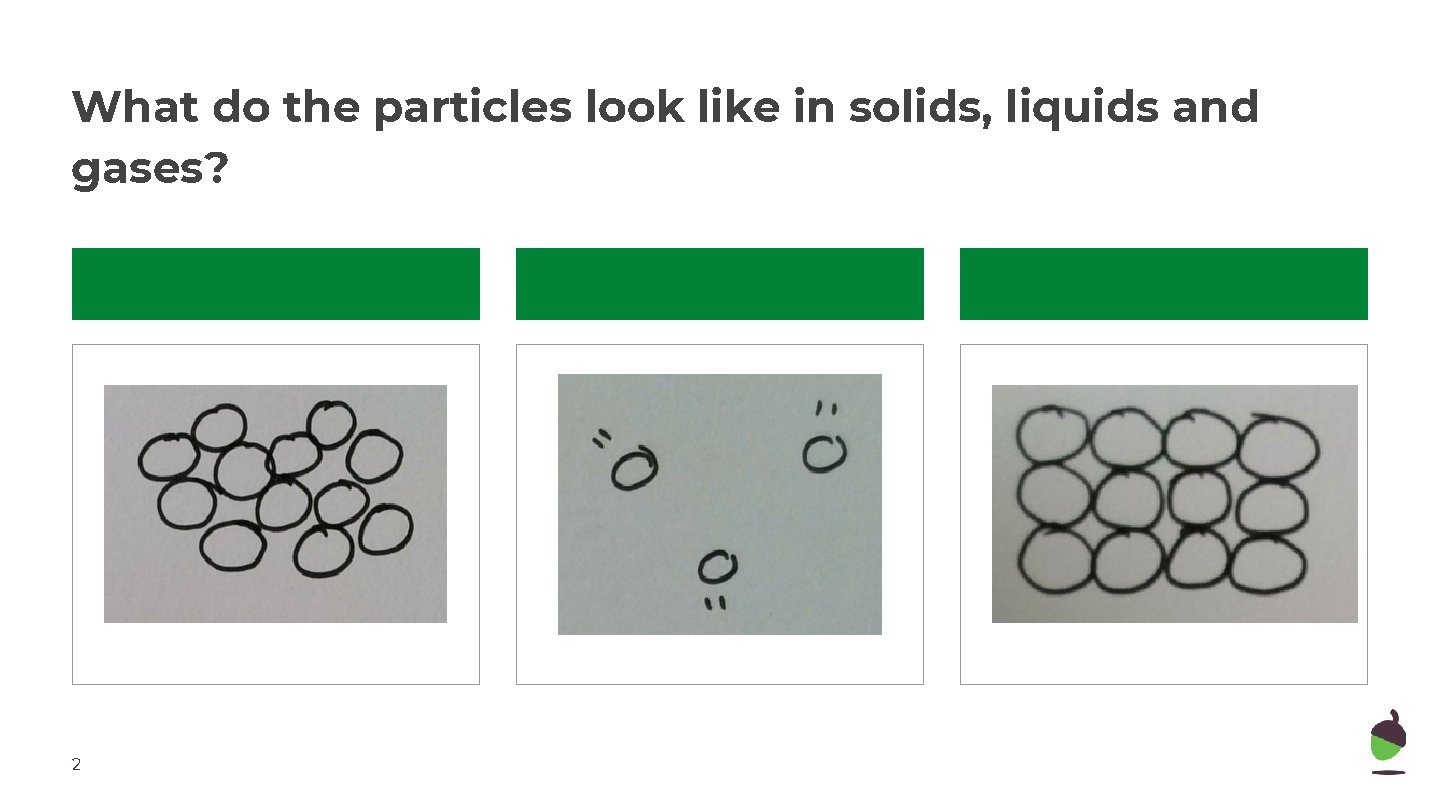
What do the particles look like in solids, liquids and gases? 2
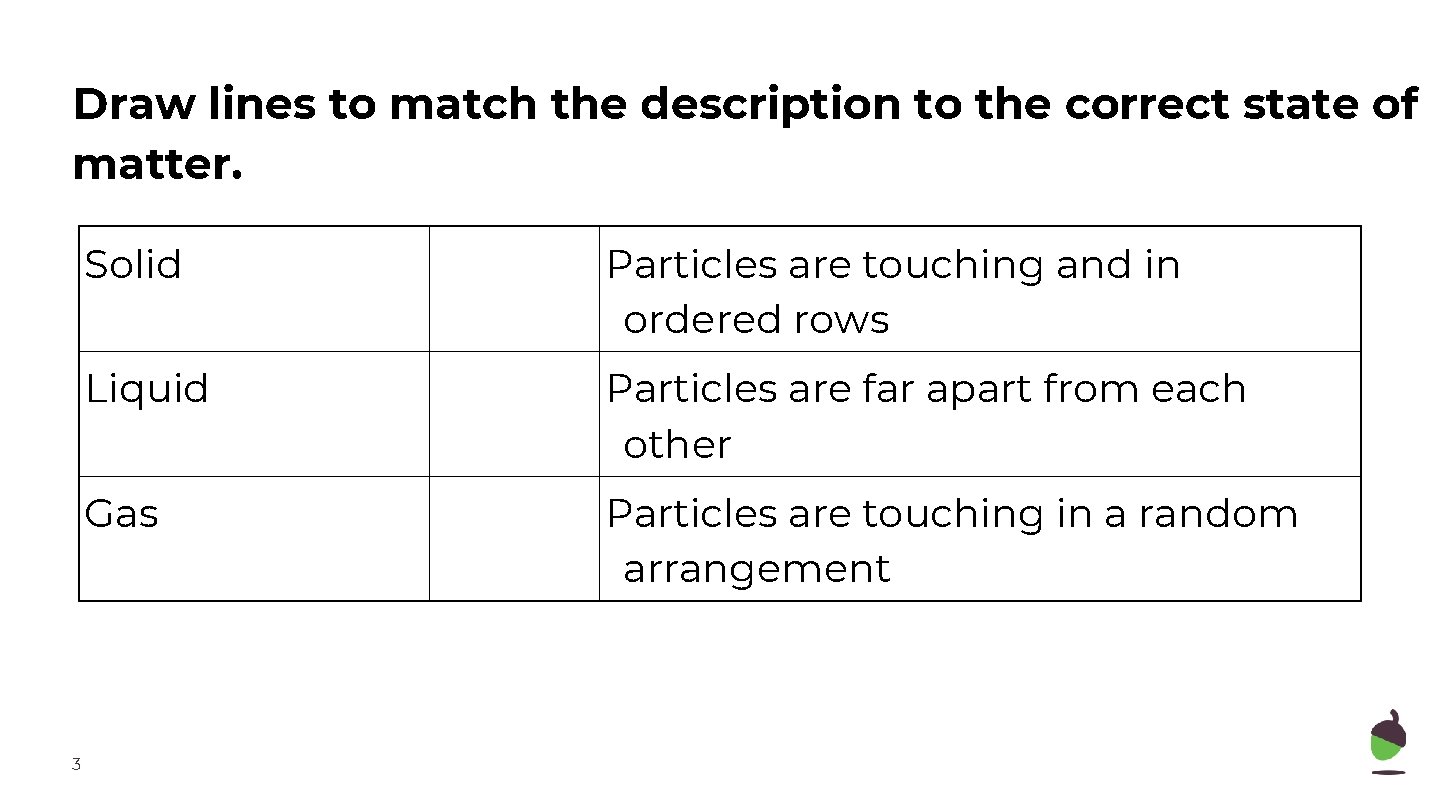
Draw lines to match the description to the correct state of matter. 3 Solid Particles are touching and in ordered rows Liquid Particles are far apart from each other Gas Particles are touching in a random arrangement
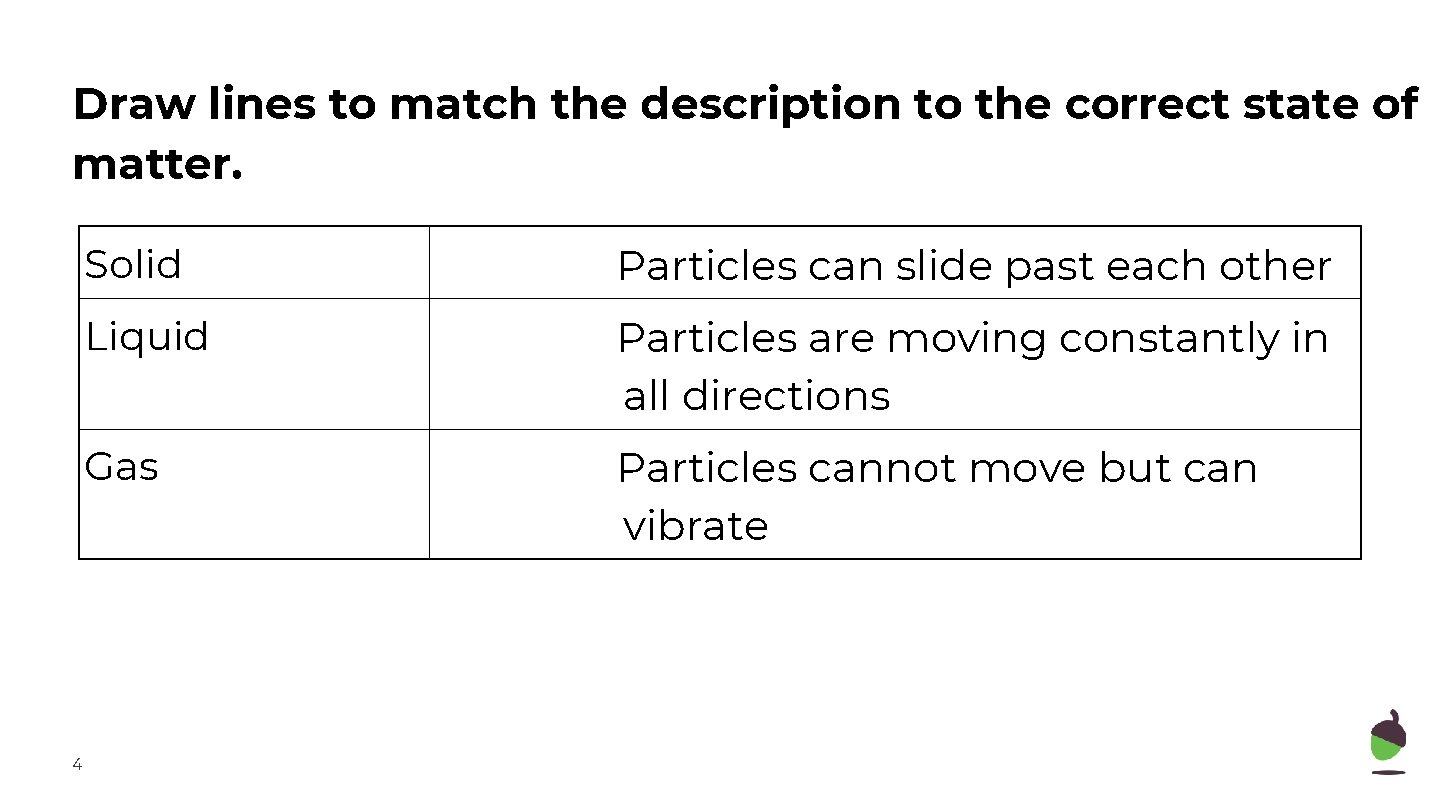
Draw lines to match the description to the correct state of matter. 4 Solid Particles can slide past each other Liquid Particles are moving constantly in all directions Gas Particles cannot move but can vibrate
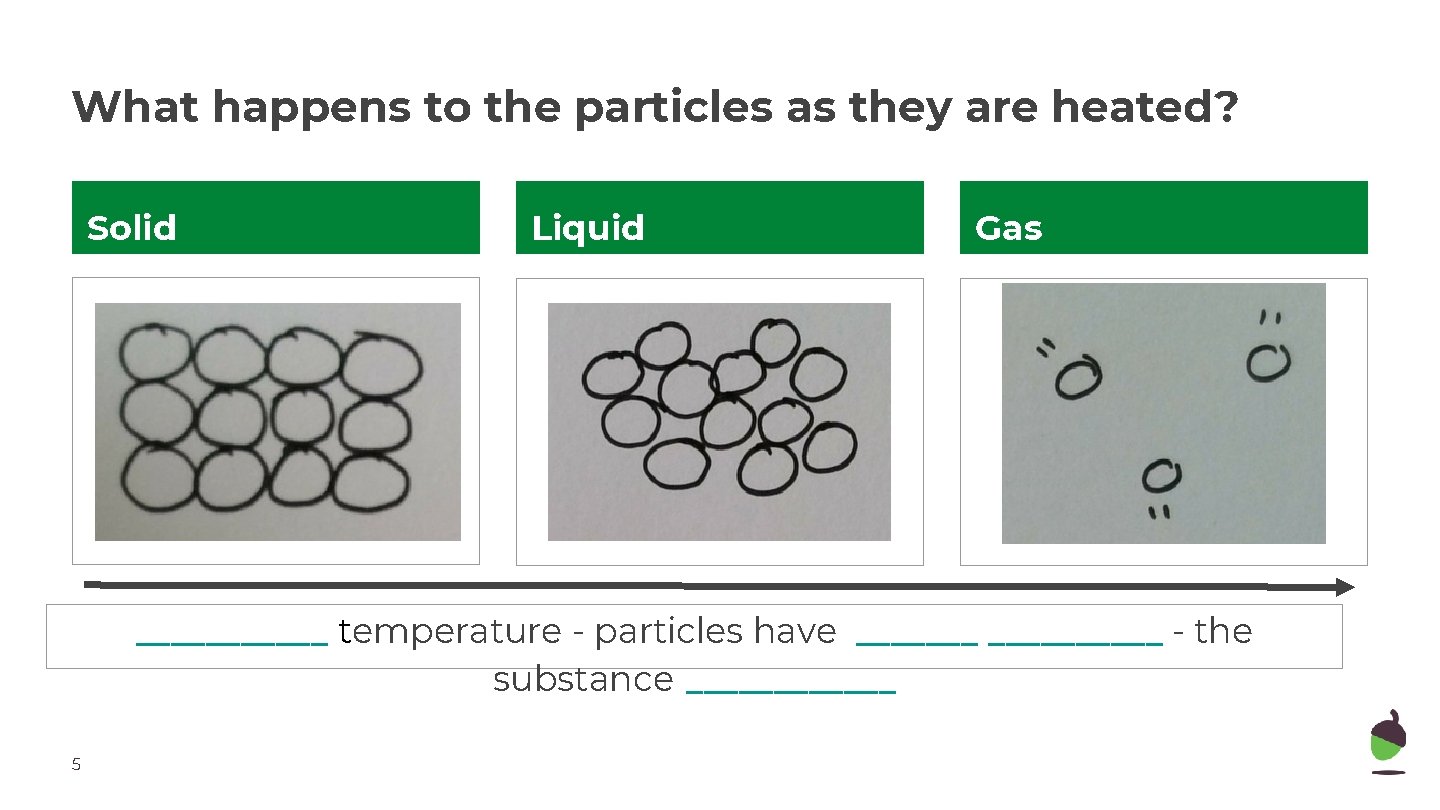
What happens to the particles as they are heated? Solid Liquid Gas ______ temperature - particles have __________ - the substance ______ 5
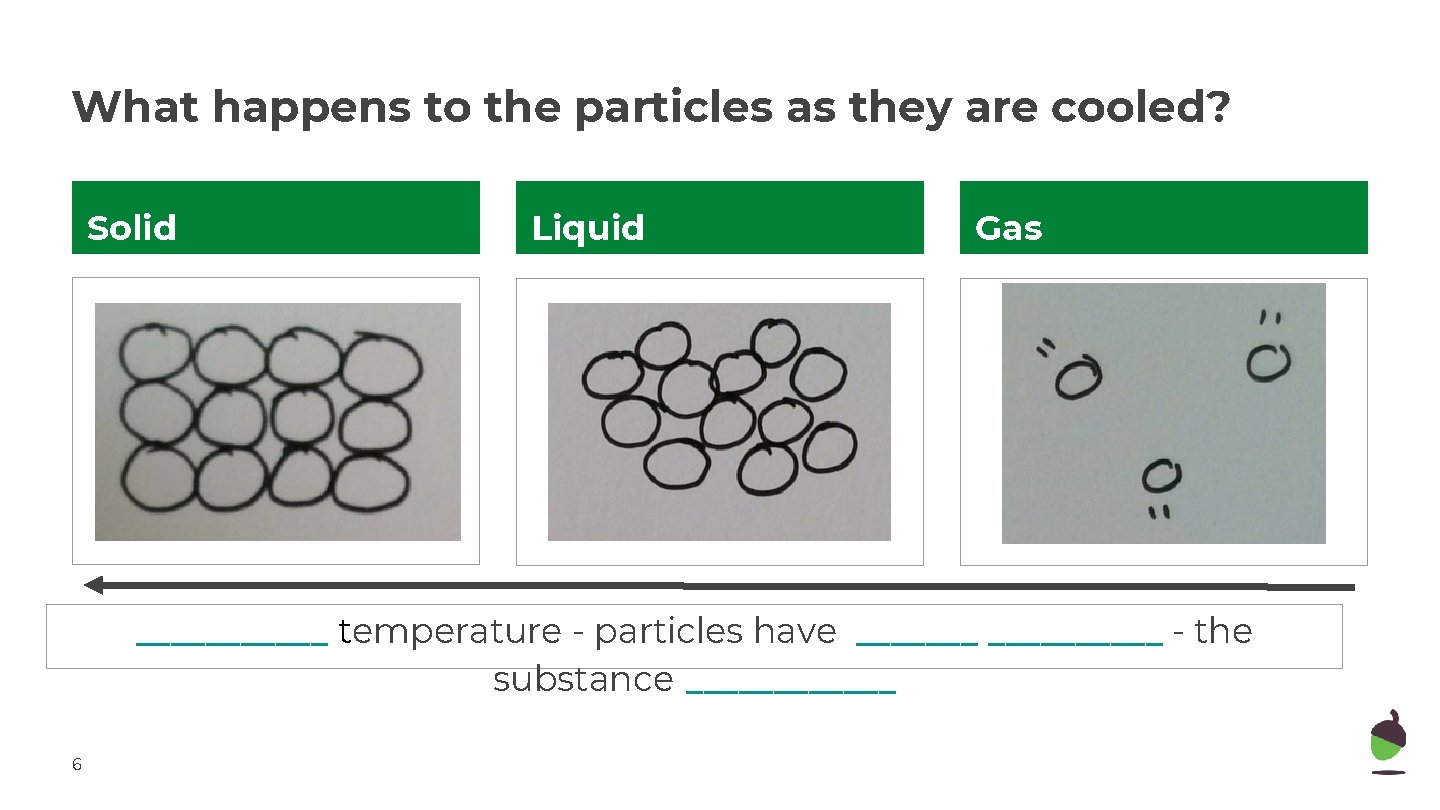
What happens to the particles as they are cooled? Solid Liquid Gas ______ temperature - particles have __________ - the substance ______ 6
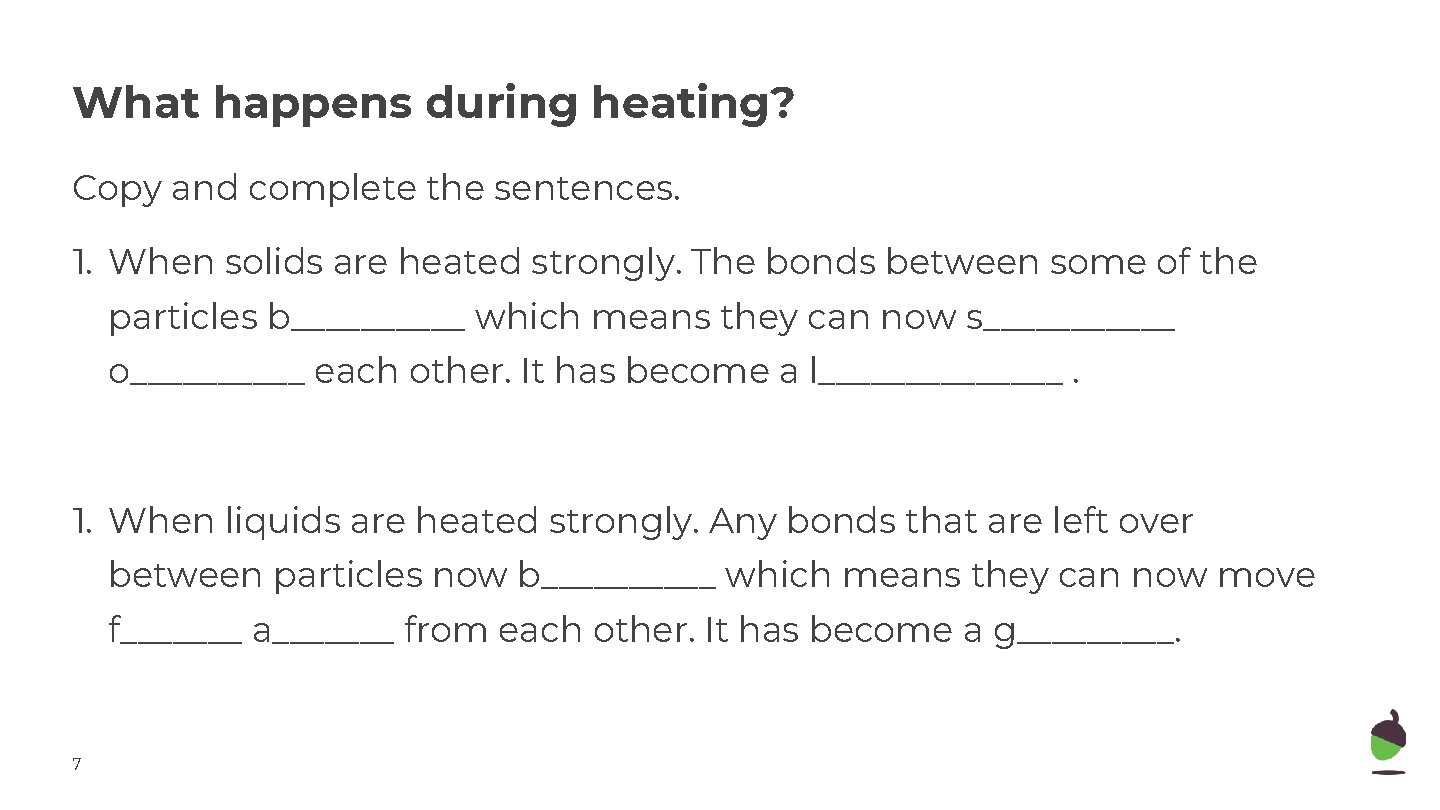
What happens during heating? Copy and complete the sentences. 1. When solids are heated strongly. The bonds between some of the particles b_____ which means they can now s______ o_____ each other. It has become a l_______. 1. When liquids are heated strongly. Any bonds that are left over between particles now b_____ which means they can now move f_______ a_______ from each other. It has become a g_____. 7
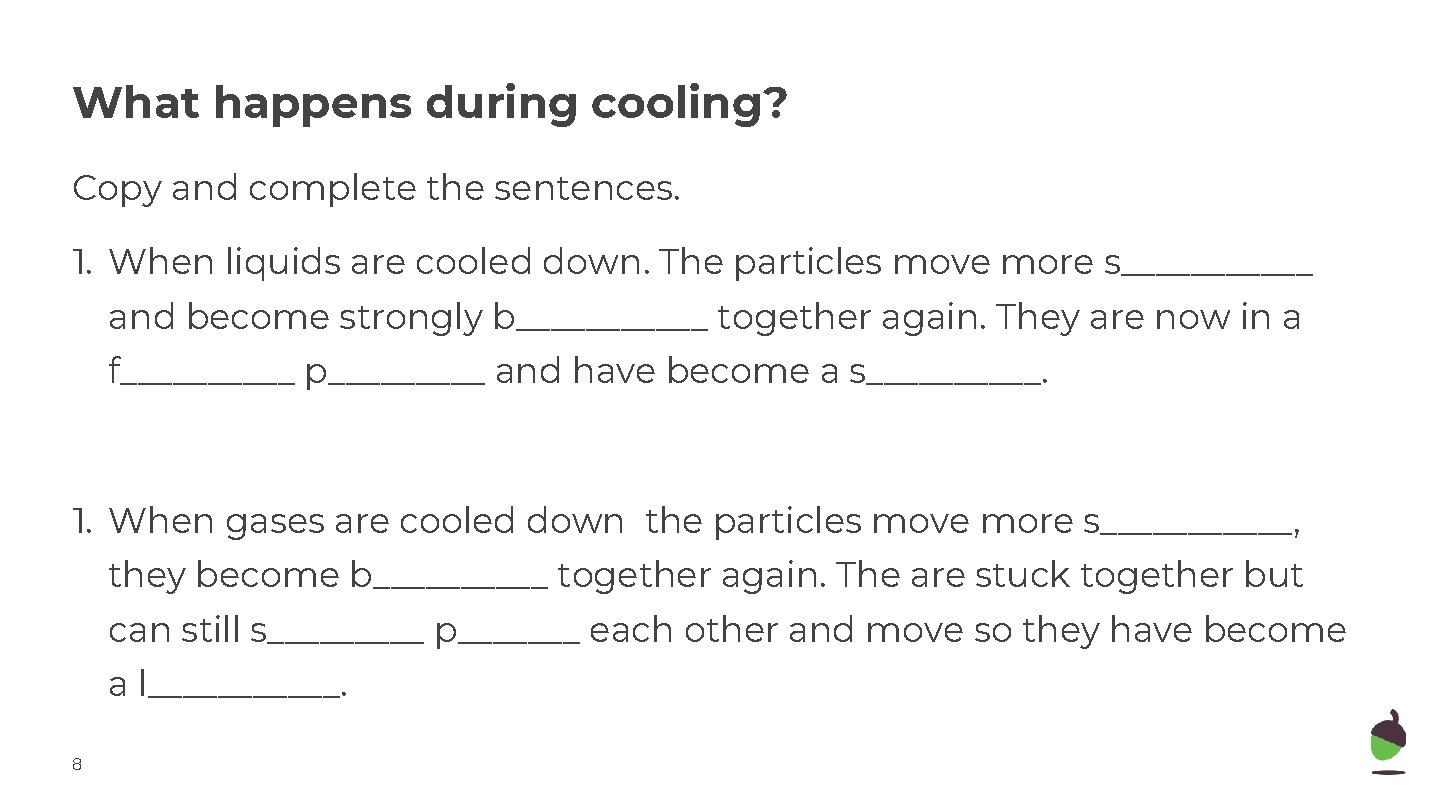
What happens during cooling? Copy and complete the sentences. 1. When liquids are cooled down. The particles move more s______ and become strongly b______ together again. They are now in a f_____ p_____ and have become a s_____. 1. When gases are cooled down the particles move more s______, they become b_____ together again. The are stuck together but can still s_____ p_______ each other and move so they have become a l______. 8
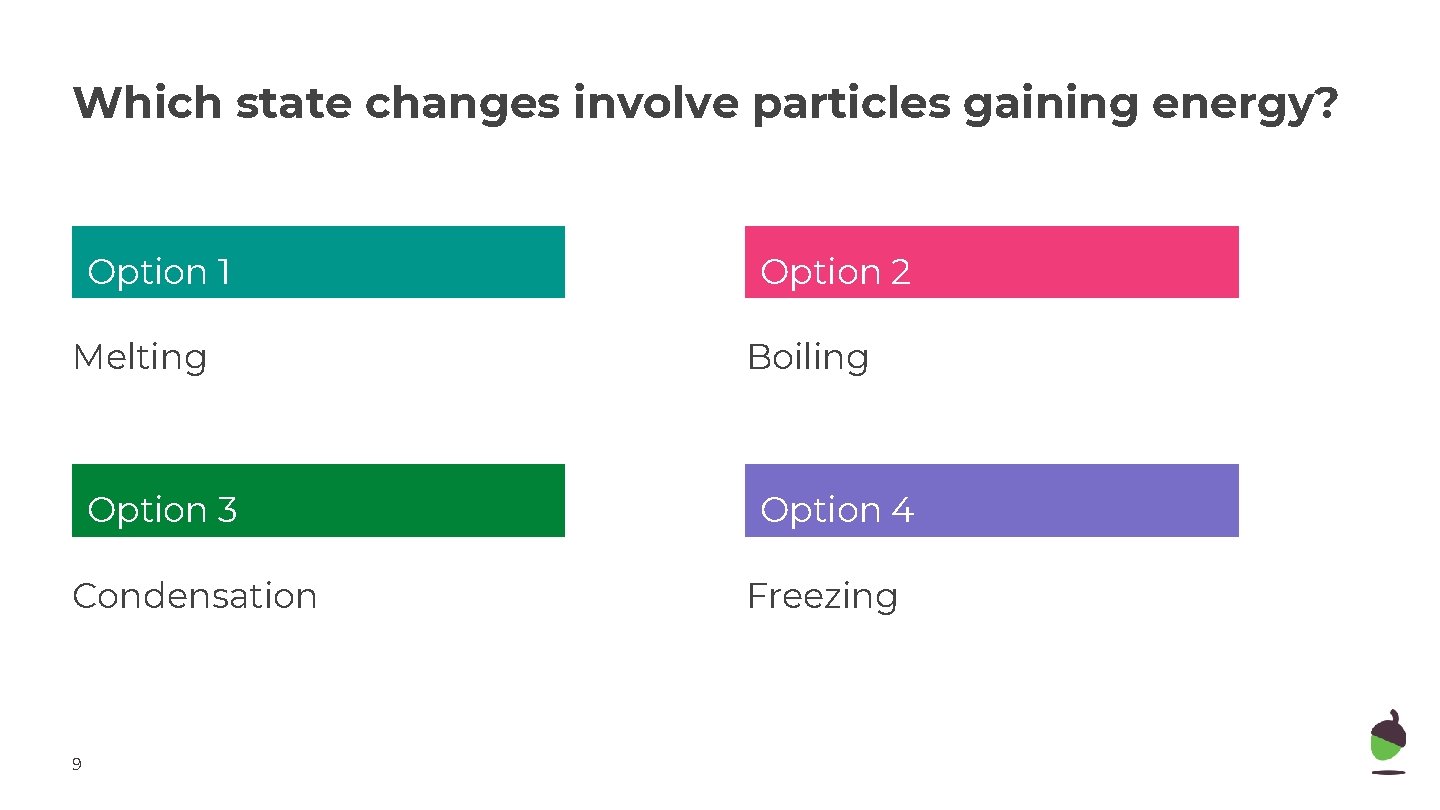
Which state changes involve particles gaining energy? Option 1 Option 2 Melting Boiling Option 33 Option 44 Condensation Freezing 9
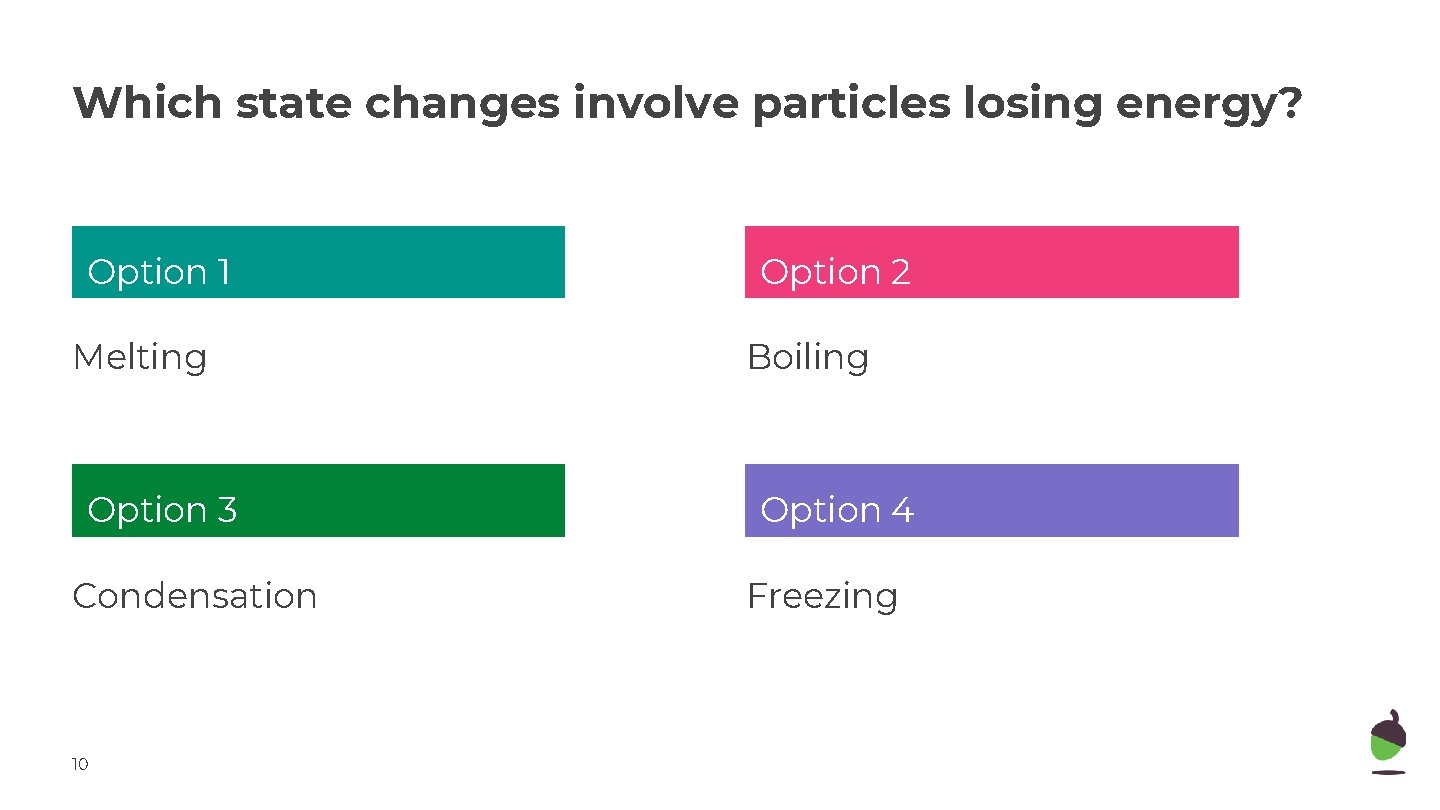
Which state changes involve particles losing energy? Option 1 Option 2 Melting Boiling Option 33 Option 44 Condensation Freezing 10
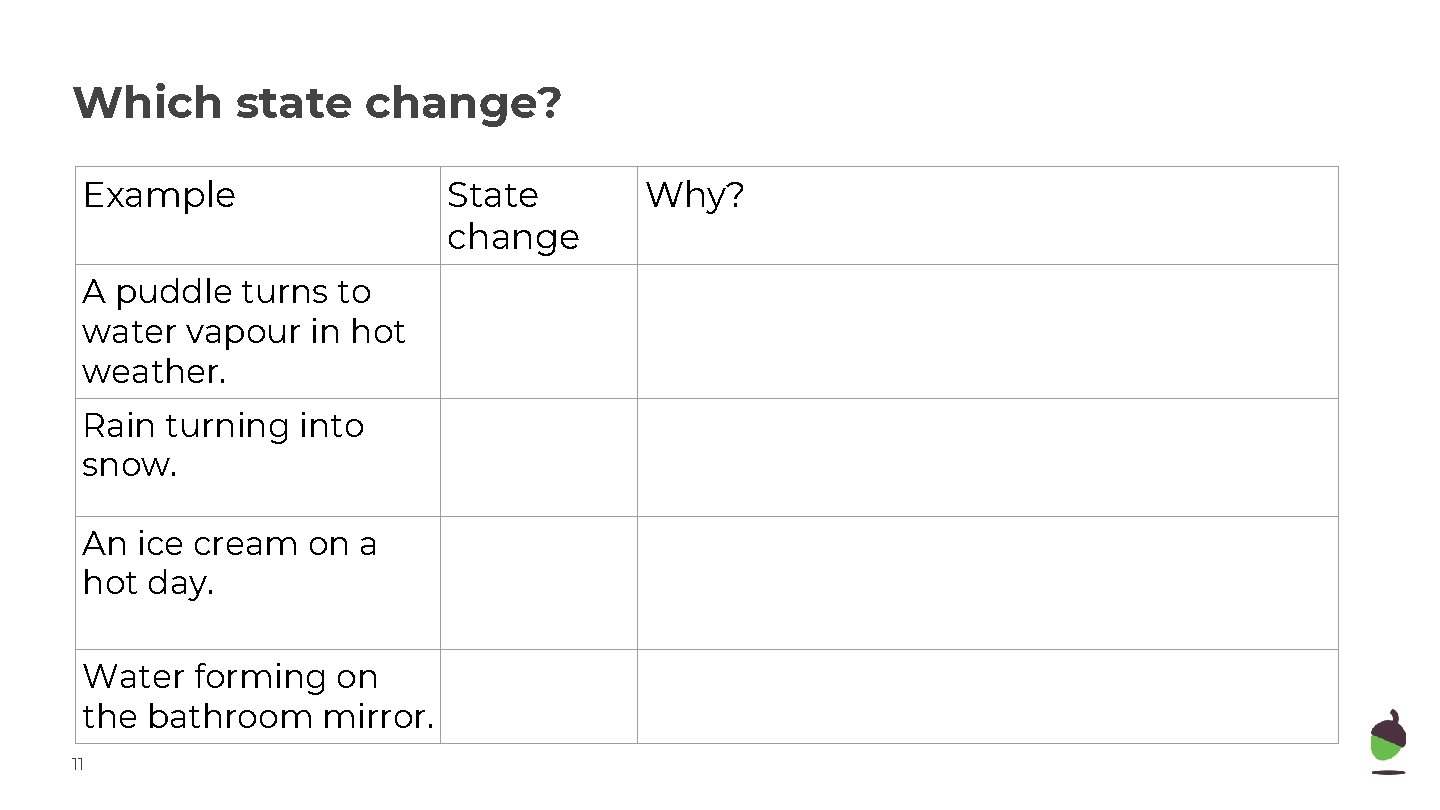
Which state change? Example A puddle turns to water vapour in hot weather. Rain turning into snow. An ice cream on a hot day. Water forming on the bathroom mirror. 11 State change Why?
What happens to the particles in chocolate if you hold on to it for too long?